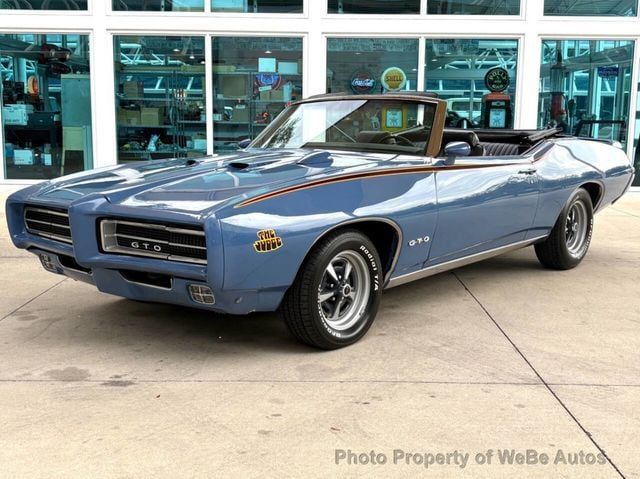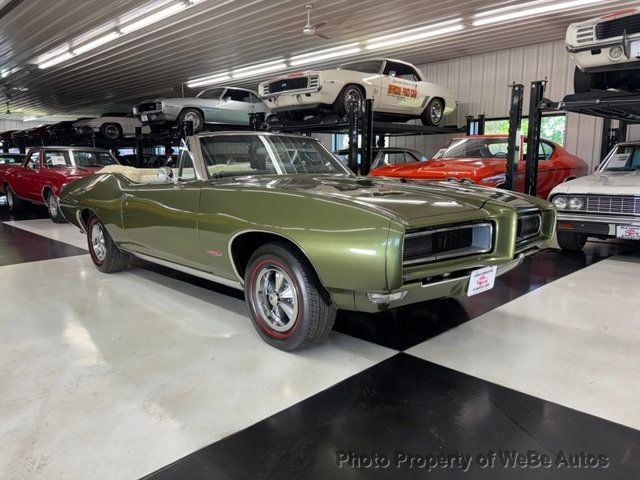
Here's the number that matters: $296. That's roughly what the GTO option added to the price of a LeMans in 1964, and for that money a buyer walked out with a 389 cubic inch V8, dual exhaust, heavy-duty suspension, and a floor shift. Everything else about this car, the catalog horsepower, the Tri-Power carburetion, the badges, is downstream of that one fact. Pontiac priced serious performance at a number a working buyer could actually finance, and that's the real spec sheet, not the one printed in the brochure.
The base 389 and what it actually made
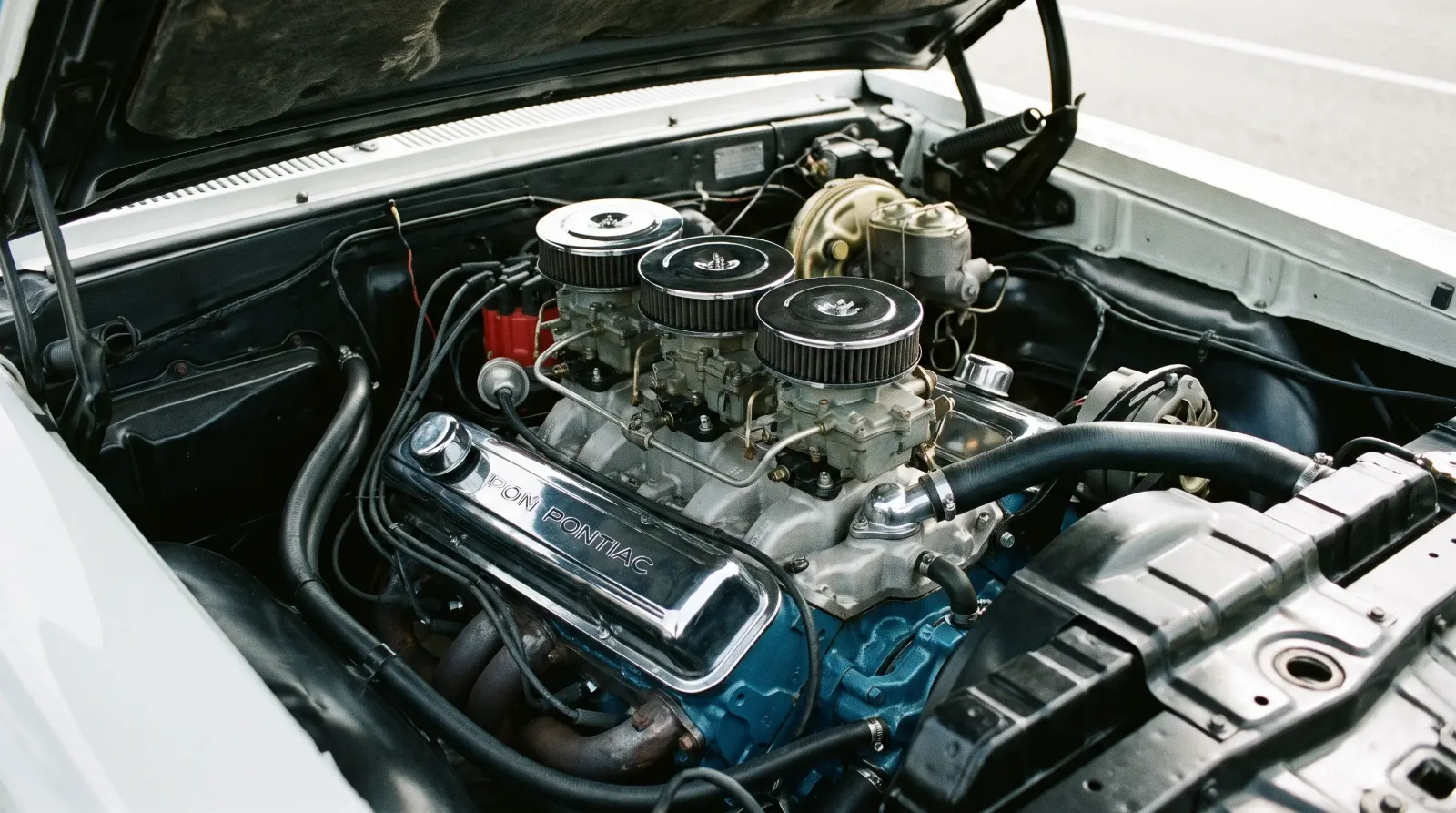
The standard GTO engine was a 389 cubic inch V8 fed by a single Carter four-barrel carburetor. Pontiac's catalog rated it at 325 horsepower at 4,800 rpm, a number that, like most factory ratings from this era, was measured under conditions generous to the manufacturer. Compression ran at 10.75:1, which meant premium fuel wasn't optional, it was required, and any GTO running on regular gas today either has a lower-compression replacement engine or is asking for detonation problems.
The engine itself traced its roots to Pontiac's full-size car lineup, not a purpose-built performance block designed from scratch for the GTO. That matters because it means the 389 arrived with a well-proven bottom end already sorted out over several prior model years in heavier applications. Dropping that same engine into a car several hundred pounds lighter than the full-size Catalina or Bonneville it came from is a big part of why the GTO felt as strong as it did, the power-to-weight math worked in the car's favor before Pontiac's engineers changed a single internal component.
| Spec | 1964 GTO, base 389 4-barrel |
|---|---|
| Displacement | 389 cubic inches |
| Induction | Single 4-barrel Carter carburetor |
| Rated horsepower | 325 hp @ 4,800 rpm |
| Rated torque | 428 lb-ft @ 3,200 rpm |
| Compression ratio | 10.75:1 |
| Standard transmission | 3-speed manual, floor shift |
| Option package price | approx. $296 over base LeMans |
Tri-Power: the option that actually mattered
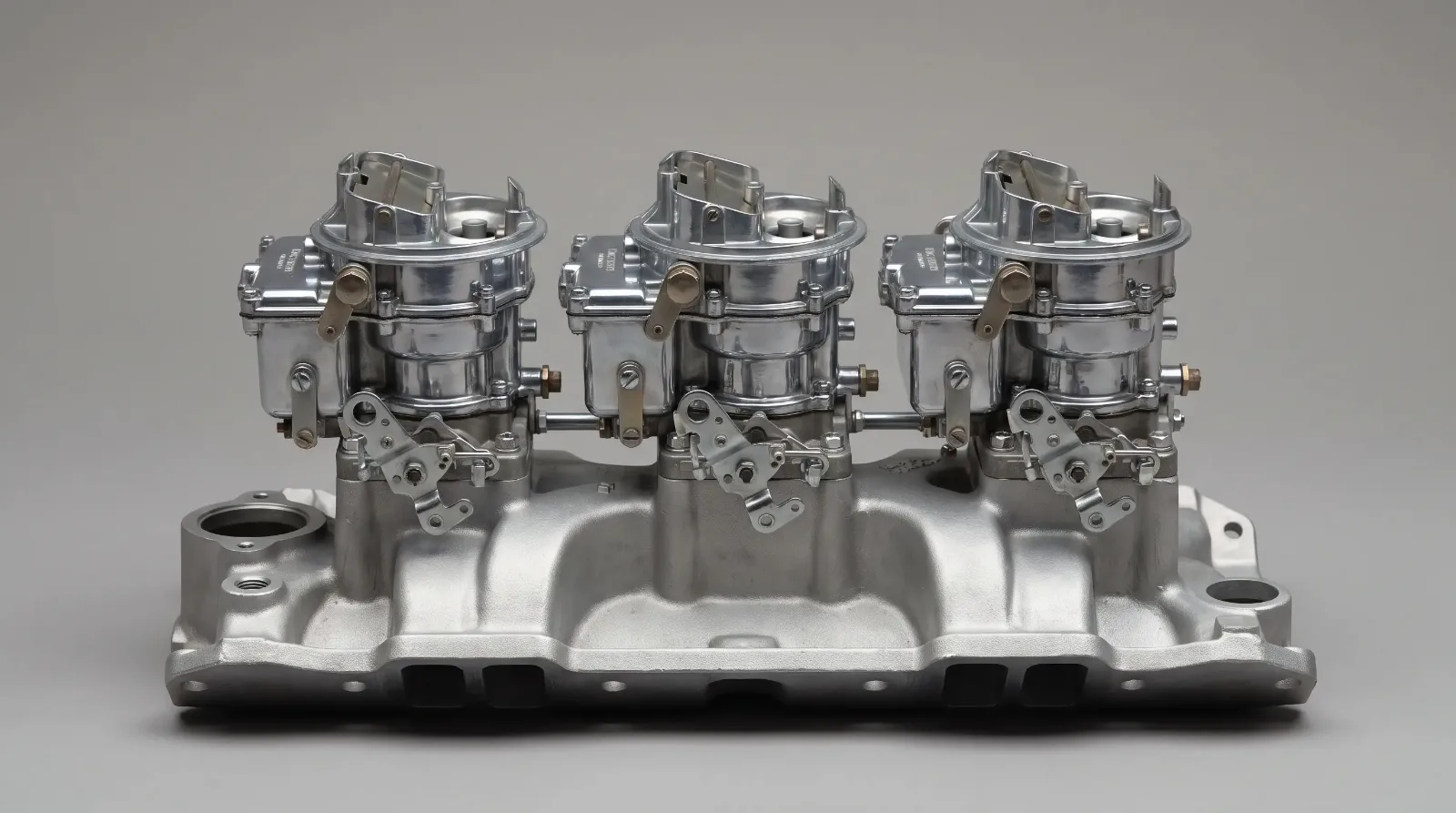
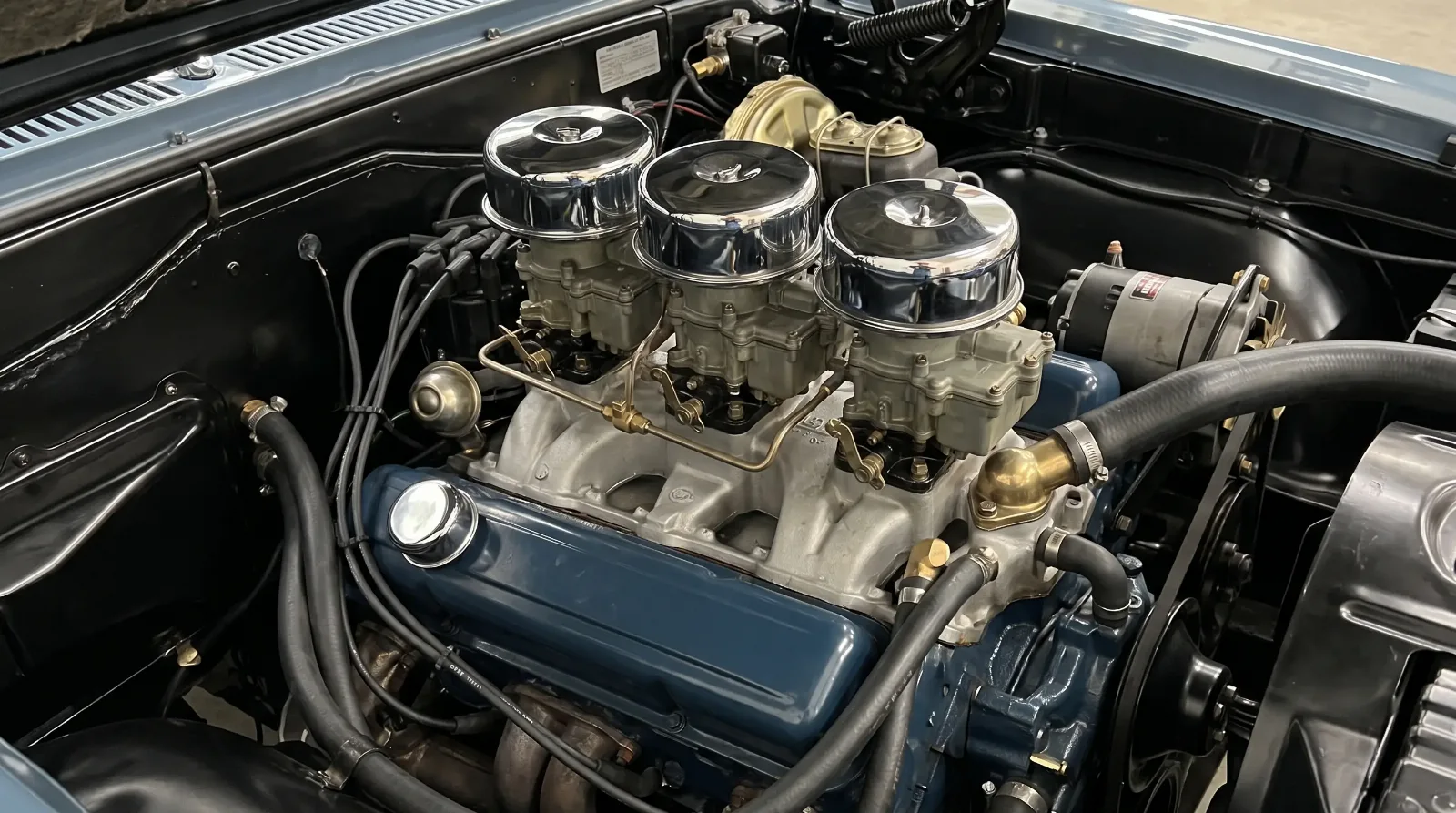
Order the Tri-Power option on top of the base GTO package and Pontiac swapped the single four-barrel for three Rochester two-barrel carburetors on an aluminum intake manifold, the center carb doing the work at part throttle and the outer two opening under full acceleration. Pontiac rated the Tri-Power 389 at 348 horsepower, a real gain over the base engine and one that showed up in the real world, not just on paper. This is the engine most GTO buyers who wanted the car for what it actually was ordered, and it's the version that shows up most often in period magazine tests and drag strip time slips from 1964.
Quarter-mile times for a well-prepped Tri-Power GTO have been reported in the low-to-mid 14-second range by various period road tests, Road & Track ran 14.1 seconds at 104 mph, Car Life recorded 14.8 seconds, though results varied significantly depending on gearing, tire choice, and how close the test car sat to a genuine stock configuration.
The Tri-Power option wasn't cheap relative to the rest of the option sheet, but the take rate on it was high enough that Pontiac clearly built and stocked the parts expecting real demand rather than treating it as a rarely-ordered curiosity. That's a meaningful data point for anyone trying to gauge how many genuinely correct Tri-Power cars should exist today versus how many have had the option added later by an enthusiastic previous owner chasing the look and the numbers without the paperwork to back it up.
What $296 didn't include, and what most buyers added anyway
The base GTO package covered the engine, exhaust, suspension, and badging. It didn't include the four-speed manual, which Pontiac offered as a separate option, nor did it include the two-speed automatic that a meaningful share of buyers checked instead. Dan Reeves has run the production numbers on transmission mix for this model year, and the split tells you something about who was actually buying these cars.
"Everybody pictures a GTO buyer rowing a Hurst shifter through a four-speed, and plenty did. But the automatic take rate on these cars was real. This wasn't purely a racer's car. It was a fast car a regular guy could drive to work Monday and still feel like he'd gotten away with something."
— Dan Reeves
The suspension and chassis side of the package
Engine numbers get most of the attention in these conversations, but the heavy-duty suspension included in the GTO option deserves more credit than it usually gets. Stiffer springs, larger-diameter front stabilizer bar, and firmer shock valving came bundled into that same $296, which meant a GTO handled meaningfully better than a standard LeMans riding on the same basic chassis. Without that suspension upgrade, all the extra horsepower in the world would have just been power the chassis couldn't put down through a corner. Pontiac understood that a fast car that handles poorly gets a bad reputation fast, and the GTO's suspension package is a big part of why period road testers came away impressed with the whole package, not just the straight-line numbers.
What to check on a surviving 1964 today
Sixty-plus years on, the biggest question on any 1964 GTO for sale is whether the engine under the hood is the one that left the factory with that car. Casting numbers on the block and heads, the date code stamped into the block, and the car's original build documentation all need to line up before you take a seller's word for it. Engine swaps happened often enough in this hobby's earlier decades, sometimes for reliability, sometimes to chase a bigger number, that a numbers-matching 389, Tri-Power or otherwise, commands a real premium over a car running a correct-type but unverified replacement engine. The gap in value between the two can be substantial, and it only grows as documented, verified cars get scarcer.
Reading the numbers honestly
Factory horsepower ratings from 1964 were gross figures, measured on a dyno without accessories, exhaust restriction, or a transmission attached, and they consistently overstate what an engine delivered at the rear wheels in a finished car. That doesn't make the GTO's numbers fiction. The 389 Tri-Power was a genuinely strong engine for its era, and in a car weighing roughly 3,200 to 3,400 pounds depending on body style and options, it moved with real authority. It just means the gap between catalog horsepower and what a stopwatch actually recorded was wider than the brochure implied, which was true of every performance car Detroit sold in 1964, not just this one.
For the story of how Pontiac's marketing engine amplified these specs well beyond the dealership, read on to see how one Michigan dealer turned factory tuning into its own legend. And for the fuller origin behind why this engine ended up in a mid-size car at all, how the GTO began traces the decision back to Pontiac's engineering staff in 1963.
Original 1964 GTOs with documented Tri-Power drivetrains remain some of the most sought-after cars from this model year. You can browse GTO listings to see current examples on the market.