
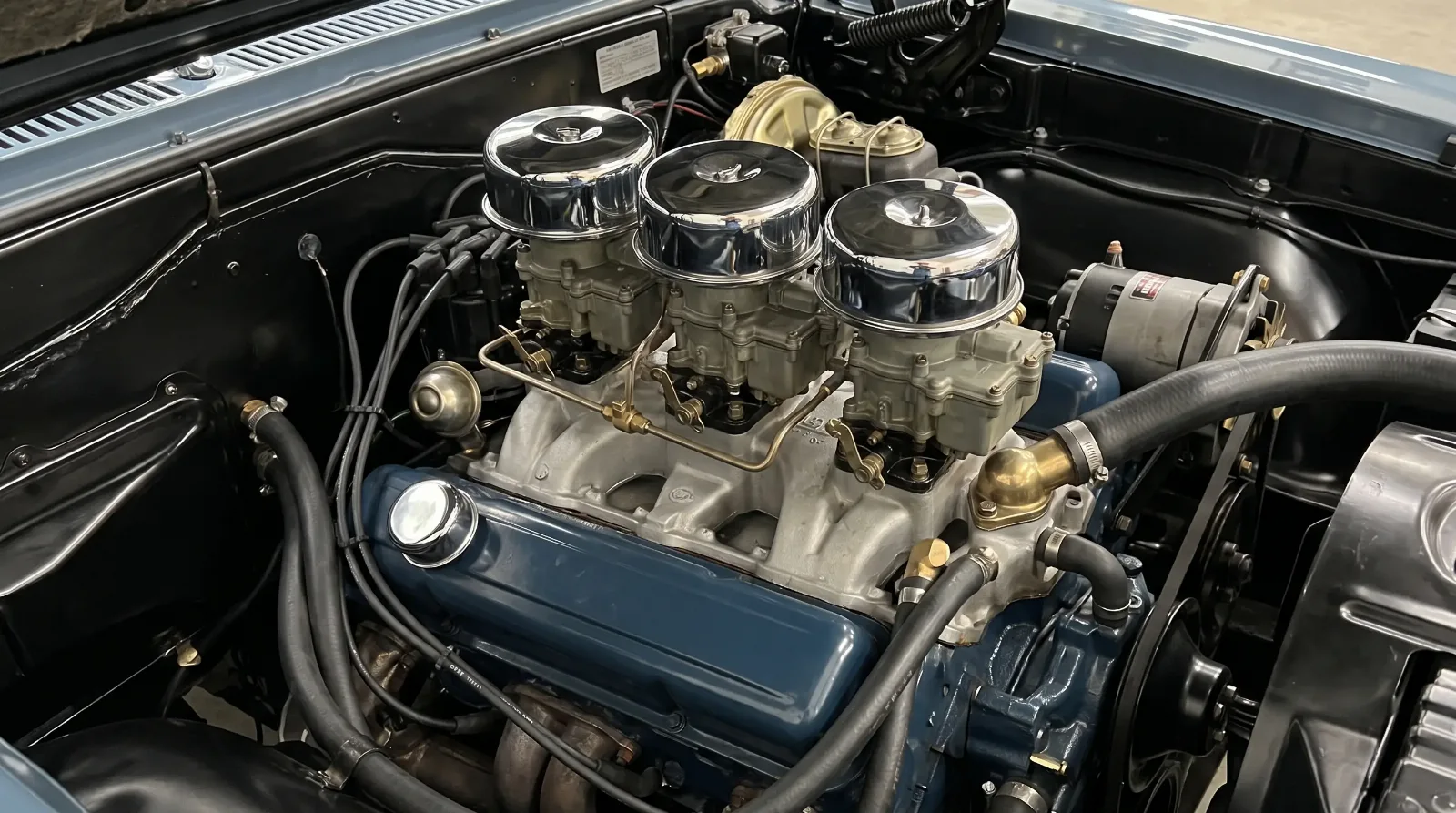
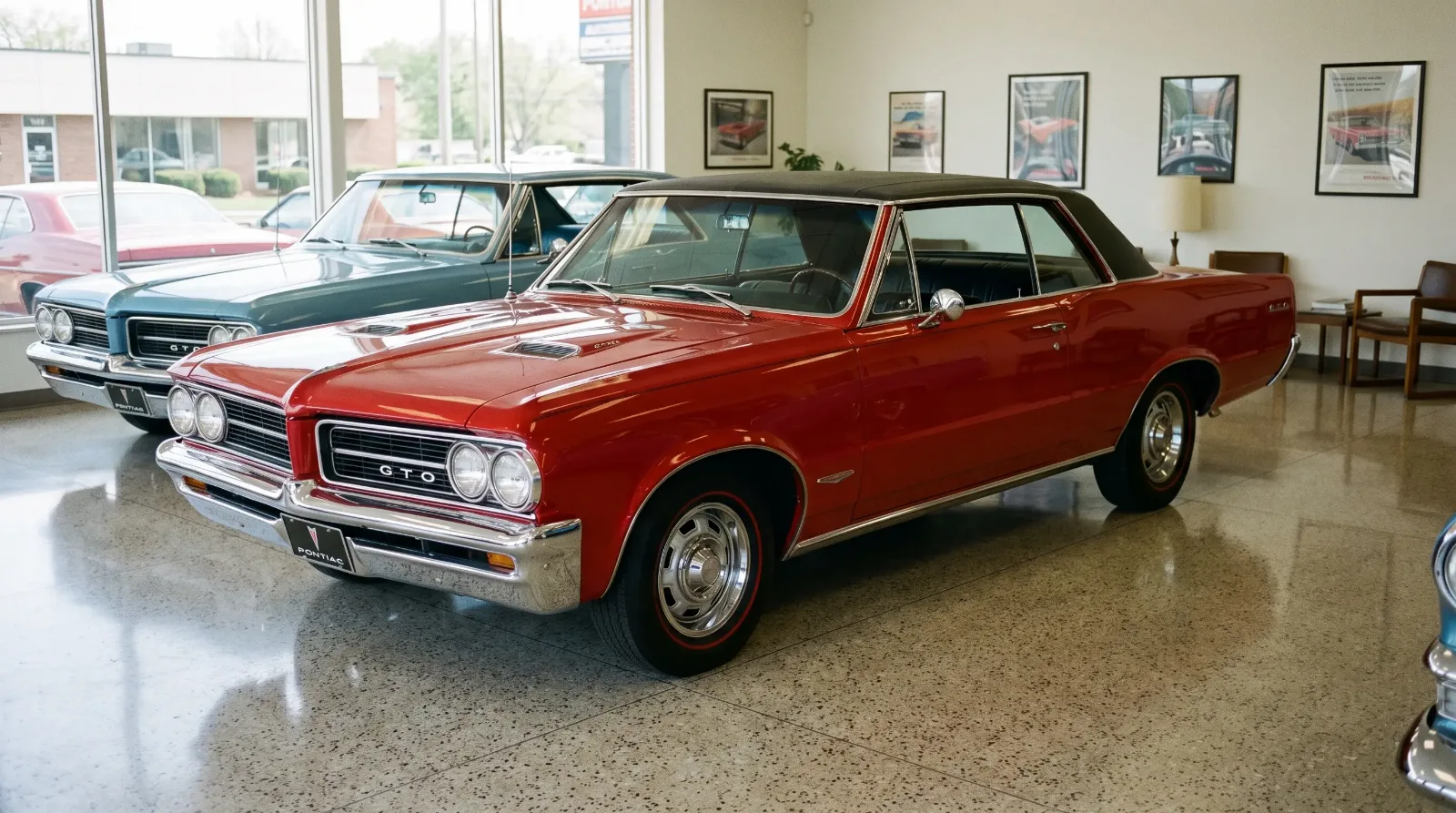
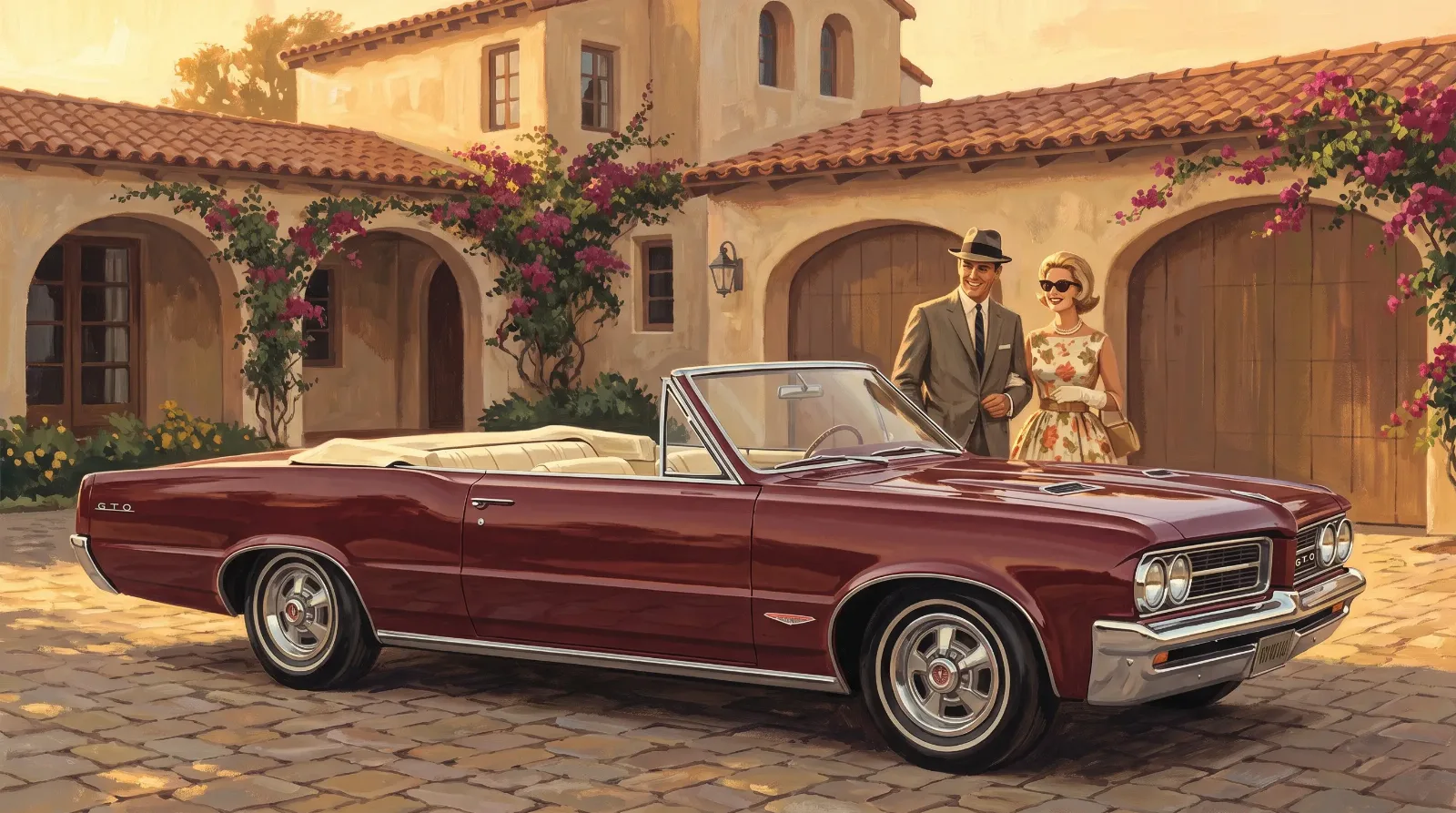
A young man walks into a Pontiac dealership in the fall of 1963. He came in thinking about a LeMans, a tidy mid-size coupe his father would approve of. On the floor sits something that looks almost the same, except for a badge that reads GTO and a hood that hints at more underneath. He asks what it is. The salesman opens the hood. Three carburetors sit on top of a 389. The young man does the math on the monthly payment, and the whole idea of what a cheap car could be quietly changes for him, and eventually for everyone.
Car Features
10 min read
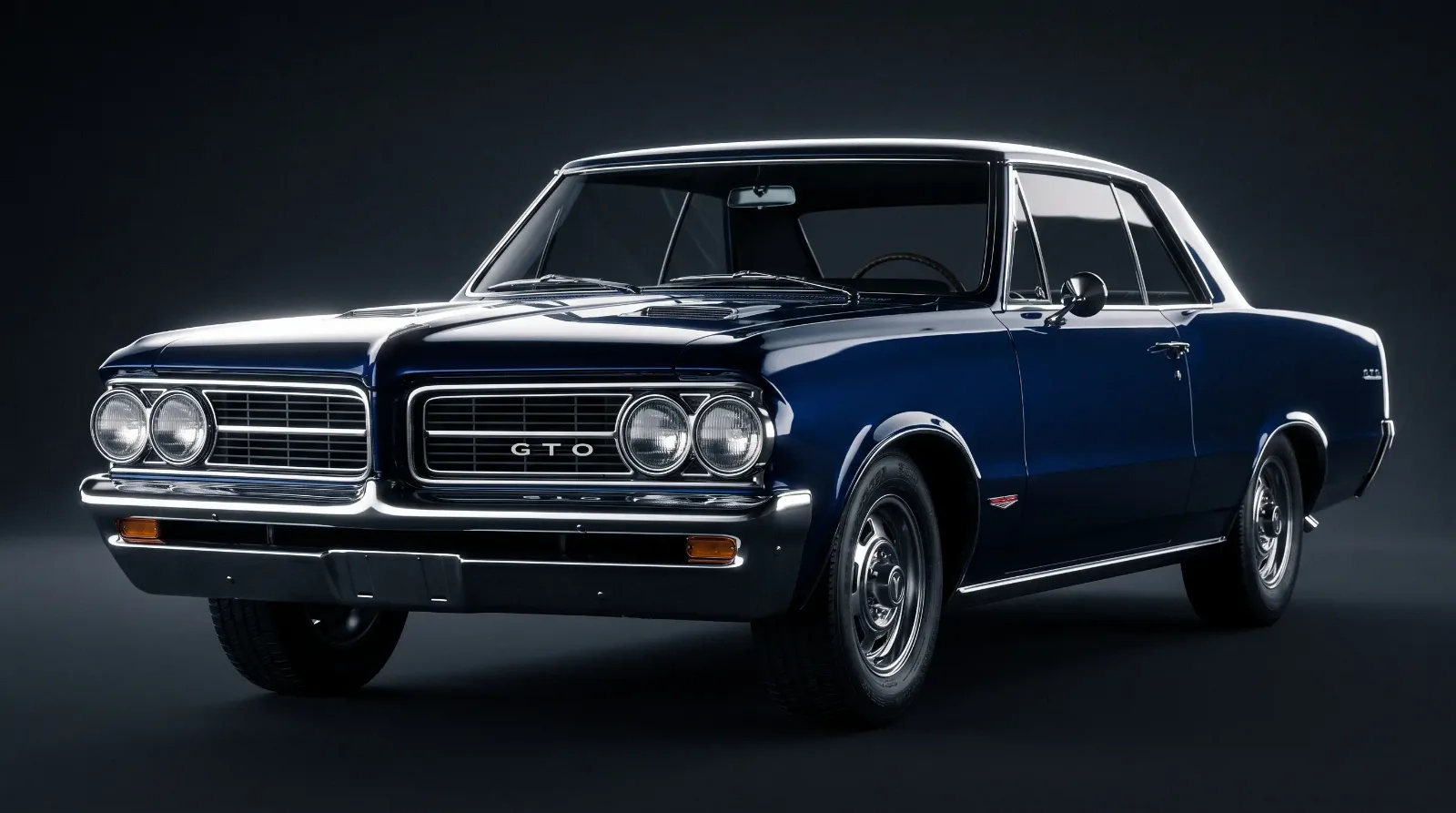
The 1964 Pontiac GTO: Birth of the Muscle Car
The 1964 Pontiac GTO started as an option package that dodged a corporate rule, and it invented the muscle car in the process.
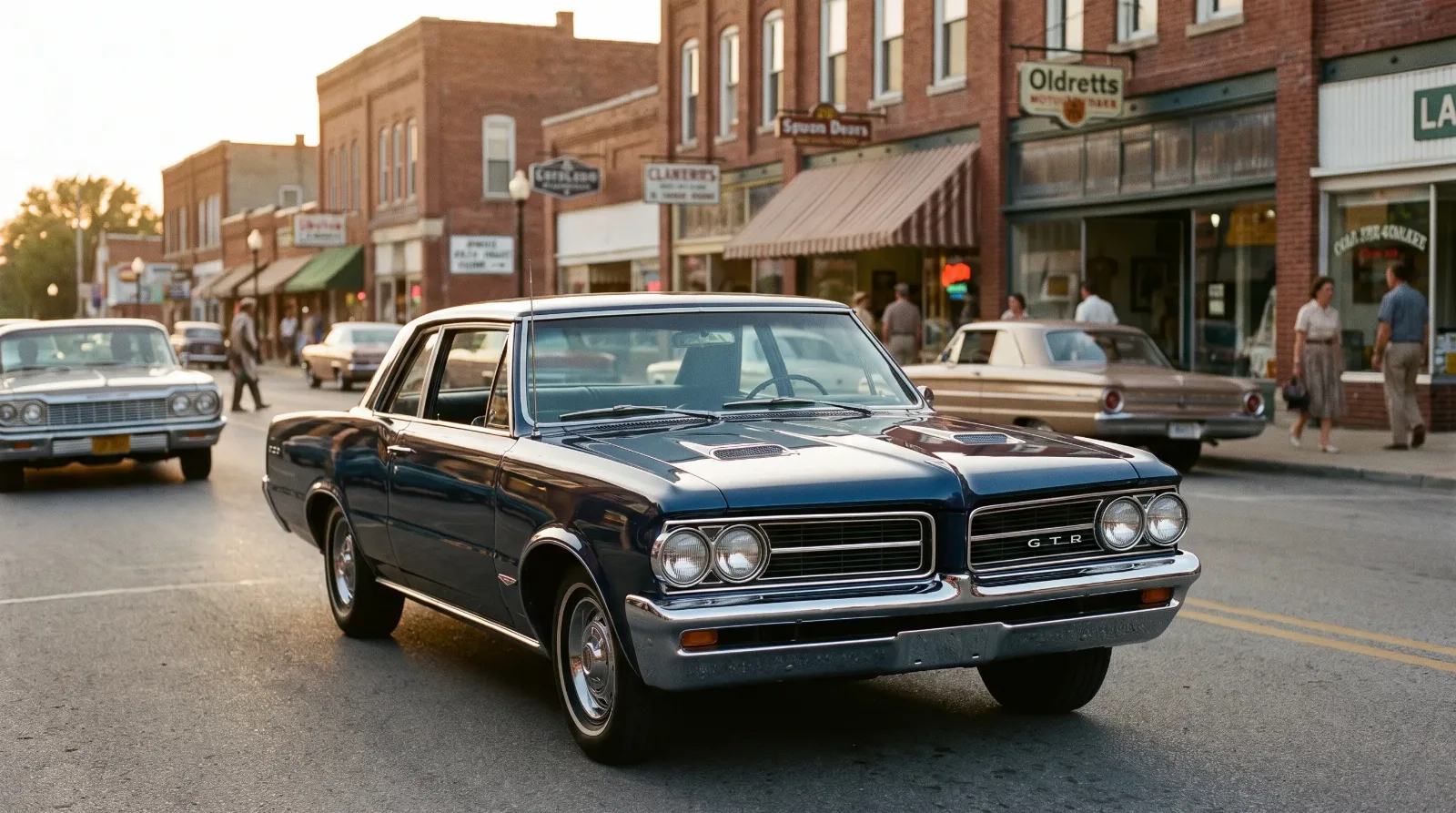
That scene played out thousands of times in 1964, and it is the real origin of the muscle car. Not a boardroom, not a racetrack. A dealership floor, a curious kid, and an engine that had no business being in that body. This is the story of how the 1964 Pontiac GTO came to sit on that floor.
The rule that started it all
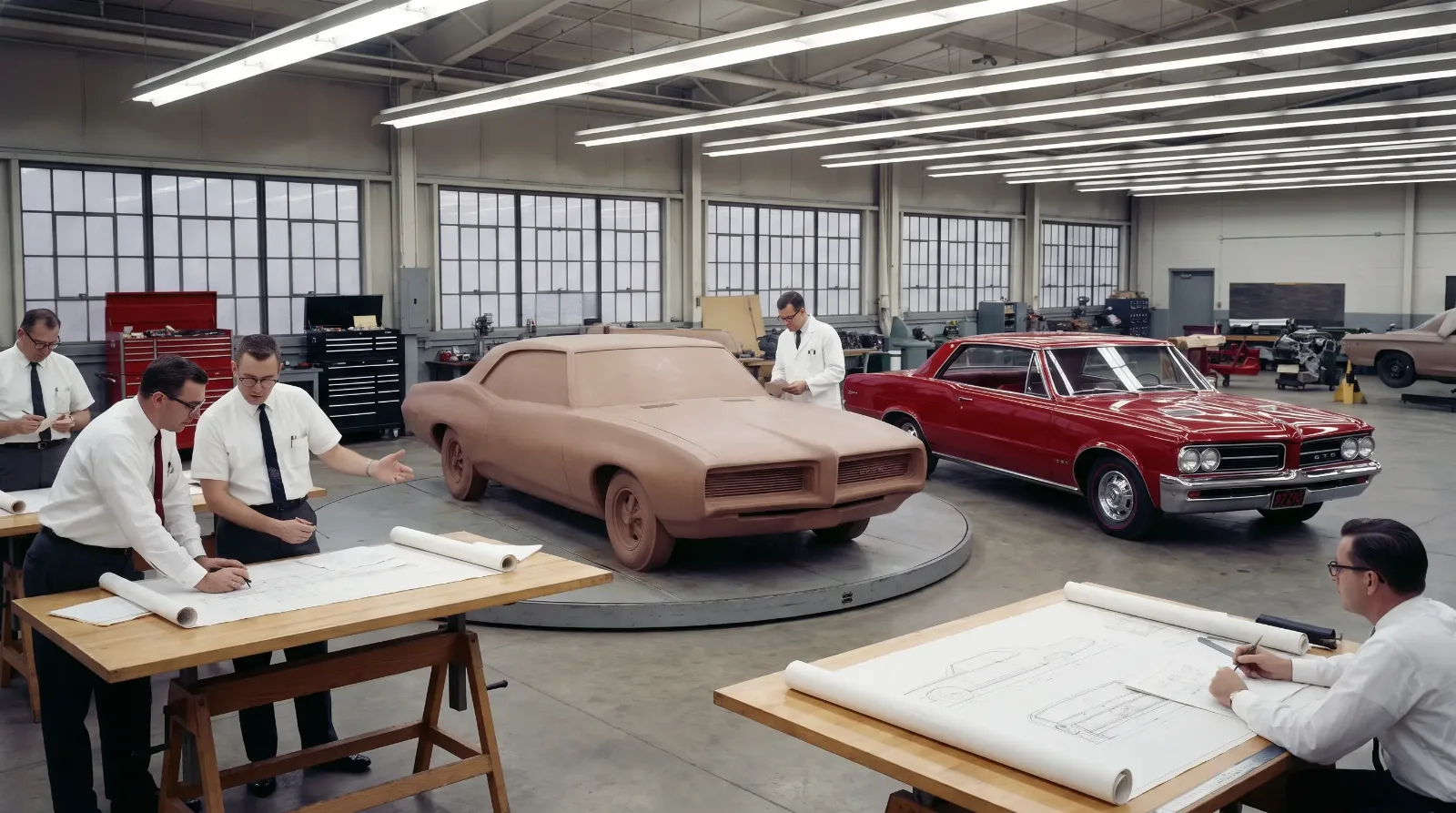
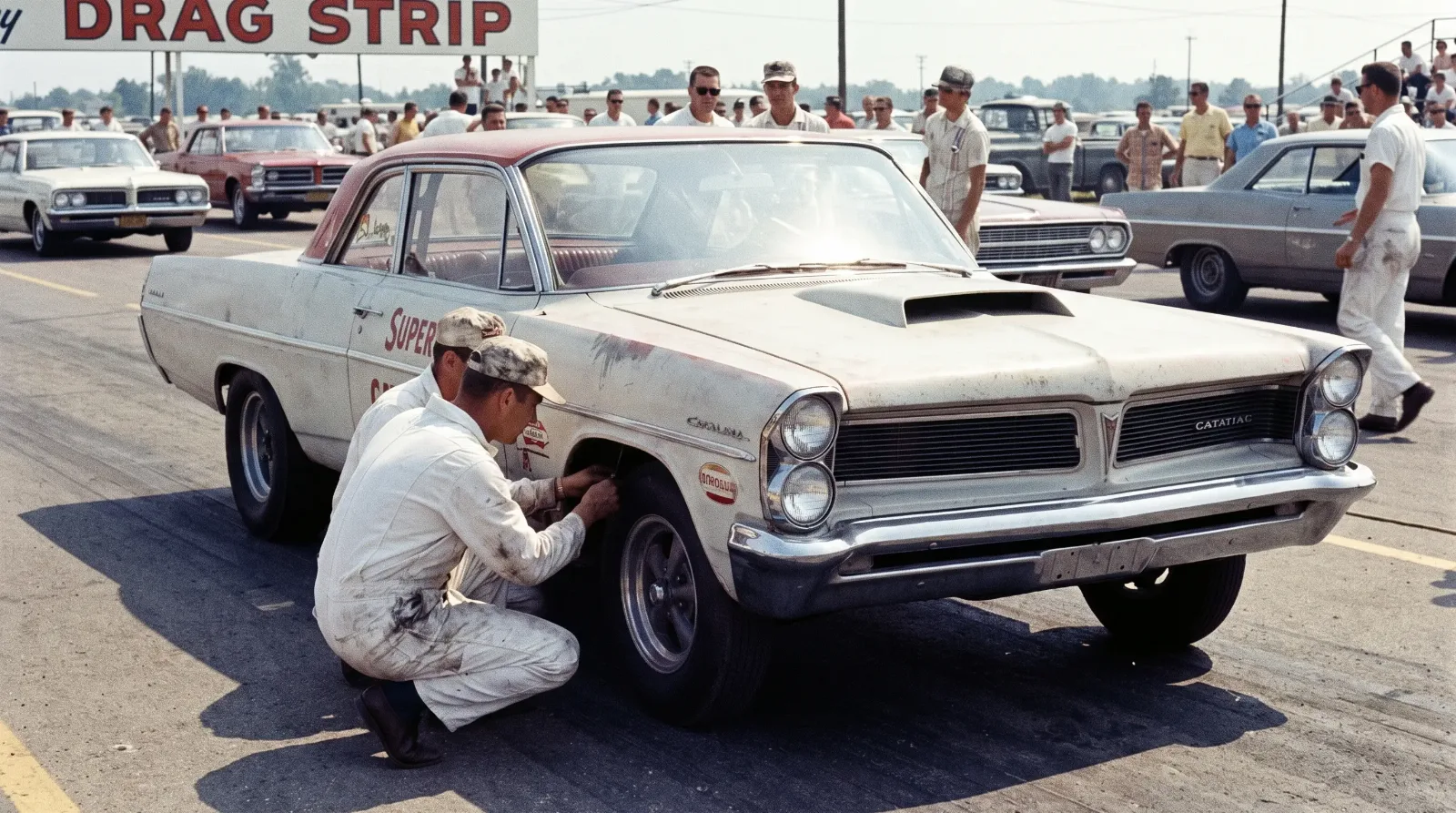
General Motors had a policy in the early 1960s that kept its intermediate cars from carrying engines above a set displacement, generally cited as 330 cubic inches. The idea was to keep the big power in the big cars. Pontiac's people saw the rule as a problem to be solved rather than a wall. John DeLorean, running Pontiac engineering at the time, and the group around him wanted the 389 in the light Tempest and LeMans body.
They found the gap in the fence. A brand-new model would have needed corporate approval, and that approval would never come for an engine that broke the displacement rule. An option package was different. It did not face the same sign-off. So the GTO arrived not as a car but as an option box you checked on a 1964 LeMans order form. The engineers put the big engine in the mid-size car by refusing to call it a new car at all.
"The GTO did not begin with a mission statement. It began with a few engineers who loved to race deciding the rule book had a loophole, and betting their careers that the buyers would agree with them."
Patrick Walsh
Borrowing a Ferrari's name
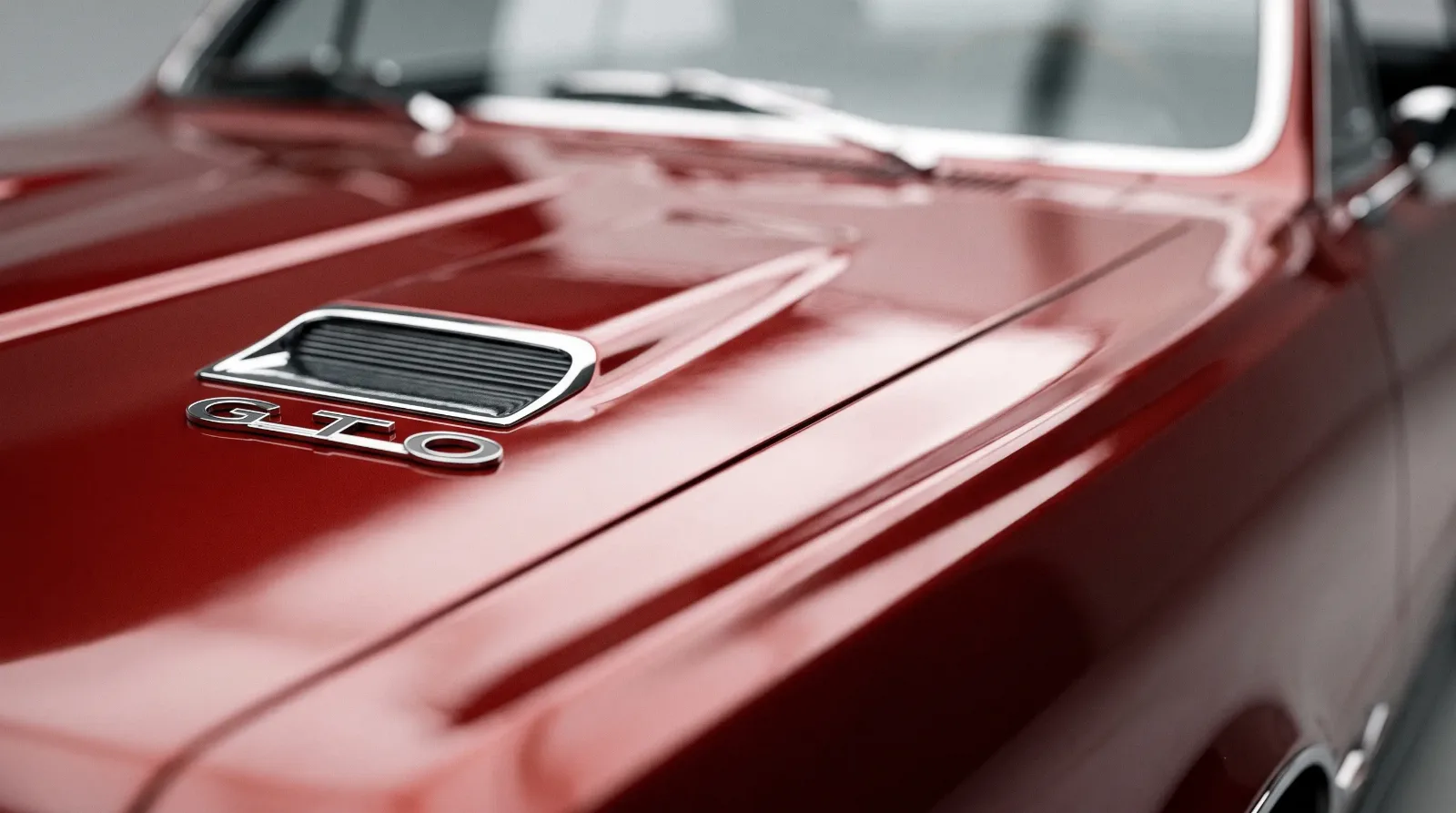
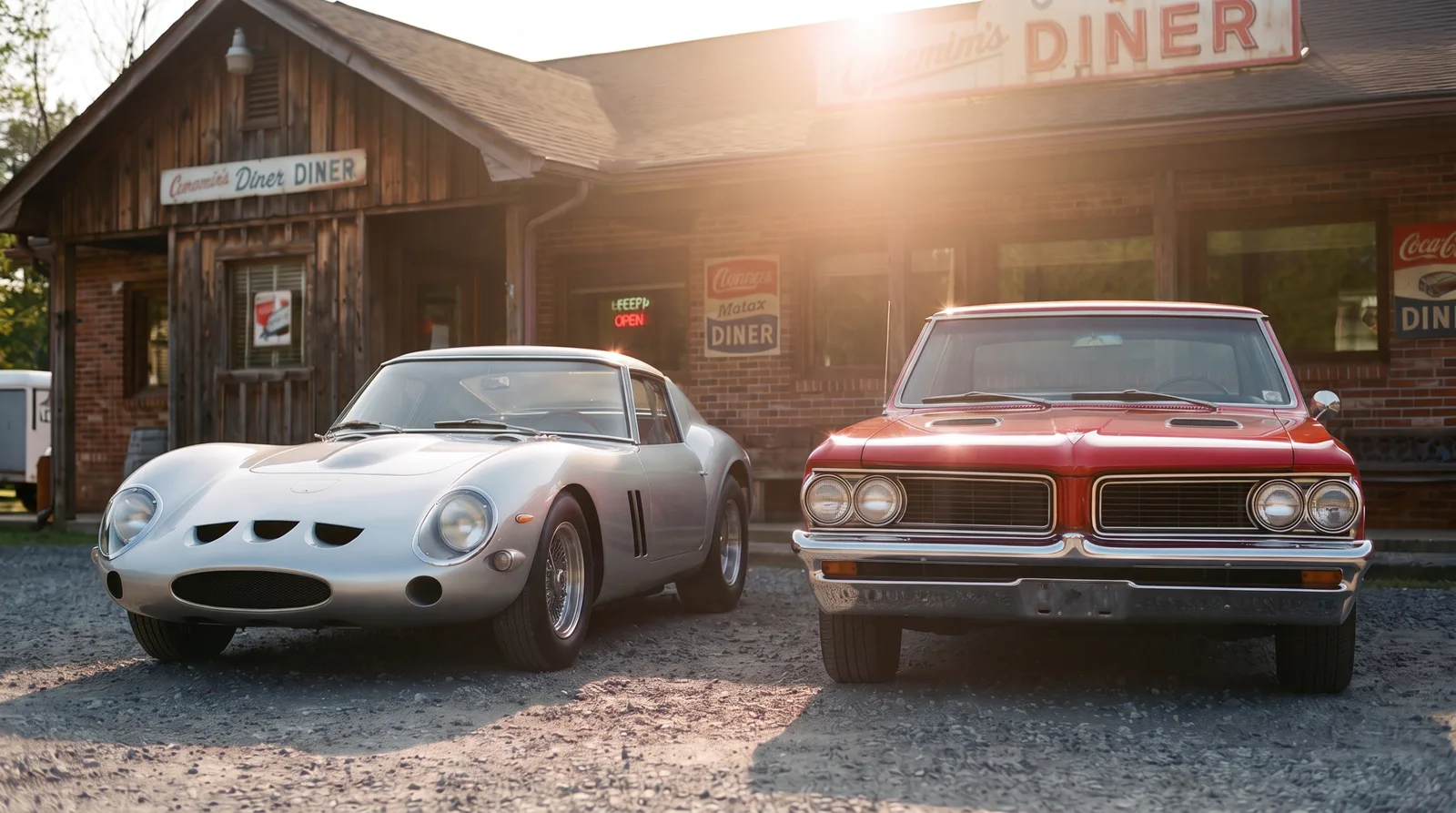
The three letters carried weight before Pontiac ever stamped them. Ferrari's 250 GTO was a homologated grand touring race car, and the initials stood for Gran Turismo Omologato. Pontiac lifted the name whole. It was audacious, and the Italian purists hated it. But the badge did something no amount of horsepower could. It gave a working-class kid in Ohio a piece of the same romance a wealthy European chased at Le Mans, for a price he could reach on a factory salary.
The people behind the car understood this. Jim Wangers, the ad man tied to the GTO's launch, treated the car as a feeling to be sold, not a spec sheet. The whole story of that name, the borrowing, and the myths around it is worth reading on its own in the name, the Ferrari borrowing, and the myths.
What was actually under the hood
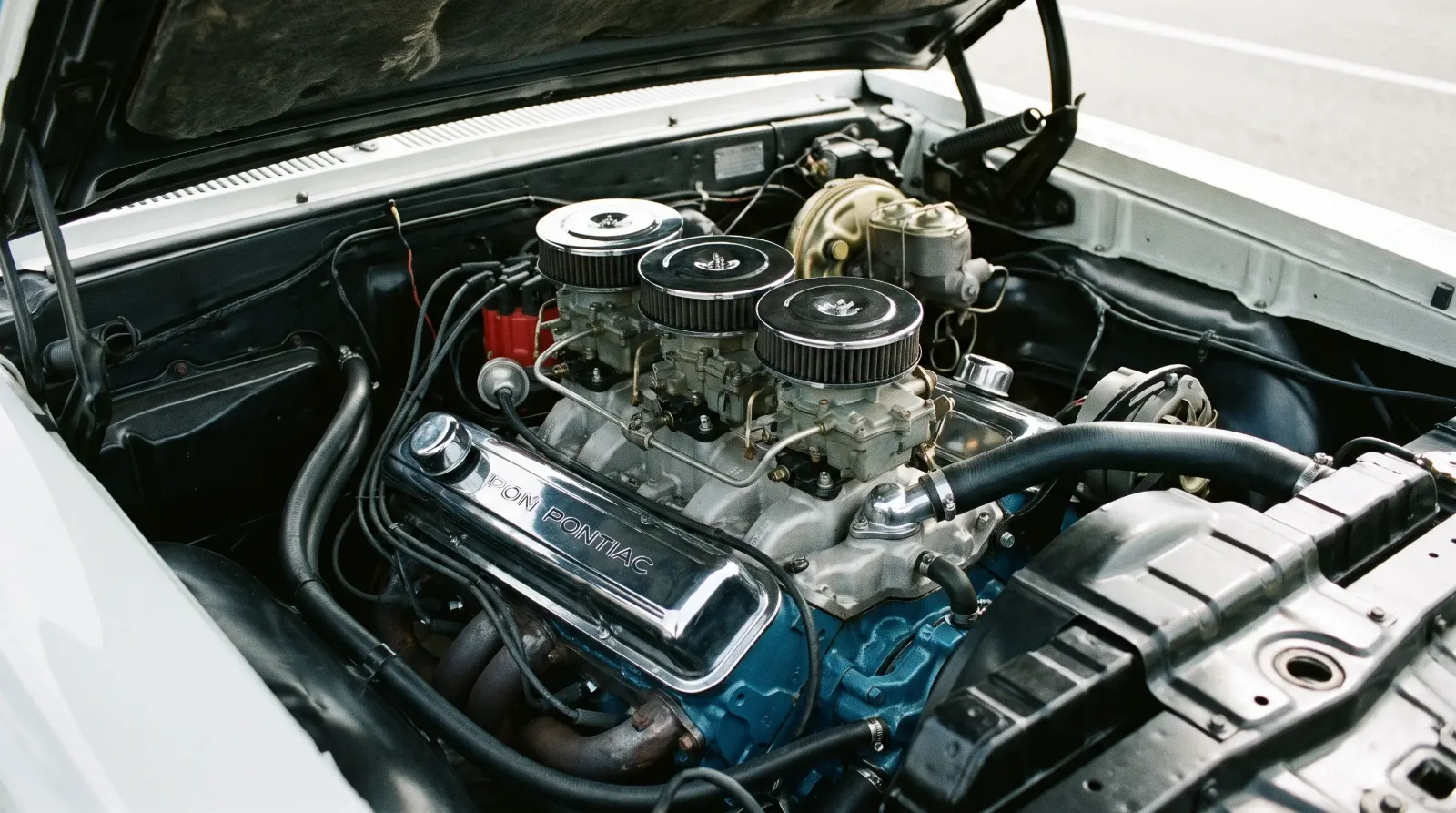
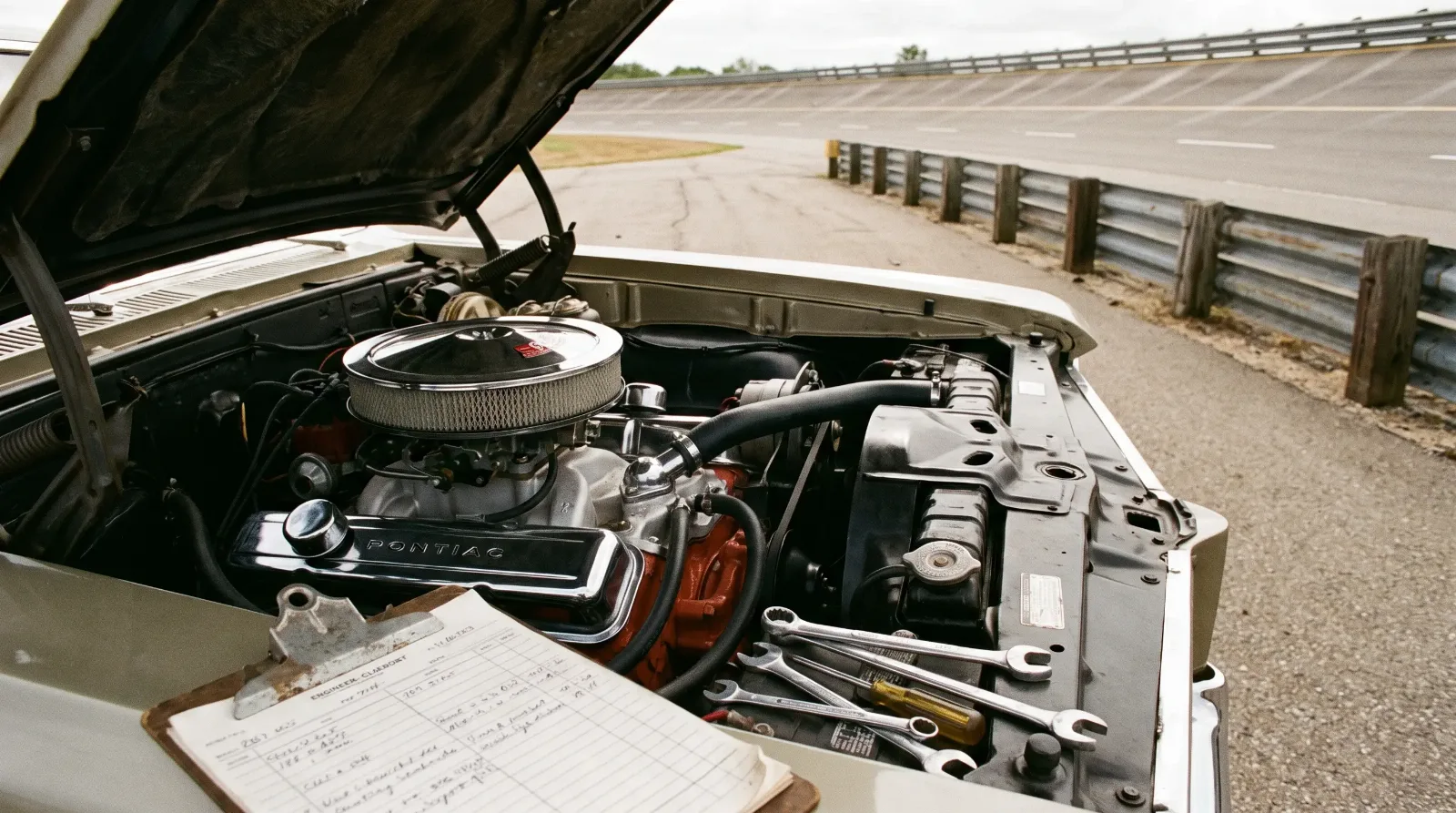
The 1964 GTO package was built on the 389 cubic inch V8. Buyers could take it with a single four-barrel carburetor or step up to the Tri-Power setup, three two-barrel carburetors that fed the engine hard when the throttle opened all the way. The four-barrel car was rated at 325 hp and the Tri-Power at 348 hp in period gross figures. Those are catalog numbers from an era that measured power generously, so read them as the language of 1964 rather than a modern dyno result.
The package was more than the engine. It brought a firmer suspension, upgraded tires, a hood with a purposeful look, and the trim that told the world what it was. A three-speed manual was standard, with a four-speed and an automatic available. This was the recipe that everyone copied: take the biggest engine that fits, stiffen what needs stiffening, dress it to look the part, and price it within reach.
| Detail | 1964 GTO |
|---|---|
| Status | Option package on the LeMans |
| Engine | 389 cubic inch V8 |
| Carburetion | Single four-barrel or Tri-Power |
| Rated power | 325-348 hp (period gross) |
| Standard transmission | Three-speed manual |
The rivals who did not see it coming
What makes the 1964 story sharper is that nobody else was ready for it. The other GM divisions had the same parts bins and the same engineers and could have built the same car, and they did not, because the corporate rule said intermediates stayed under a certain displacement and most people took the rule at its word. Pontiac read it as a dare. By the time the rest of Detroit understood what the GTO had done to the young-buyer market, the 1964 car was already selling out and the name was already on the radio. First movers get a year or two of clear road, and Pontiac used theirs.
The scramble that followed was industry-wide. Within a couple of model years every major maker had a mid-size car with an outsized engine and a loud name, aimed squarely at the buyer the GTO had revealed. That the GTO started as a rule-dodging option package rather than a sanctioned model only makes the head start more remarkable. A car that almost was not allowed to exist ended up setting the agenda for the entire American performance market for the rest of the decade.
The sales surprise
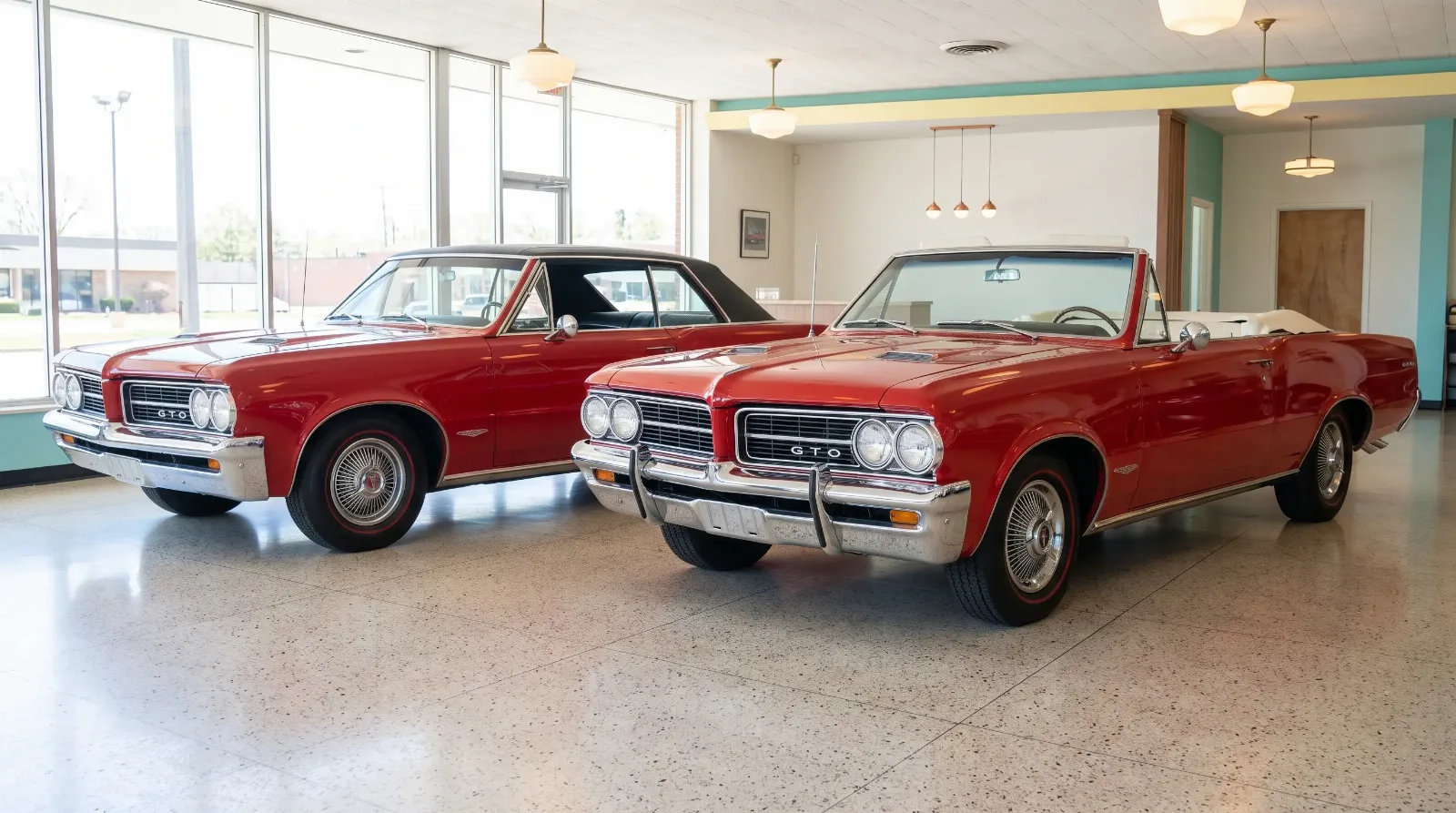
Pontiac planned a modest run. The internal expectation was cautious, in part because nobody was sure a mid-size car with a big engine would find buyers, and in part because the whole thing existed on the edge of the corporate rules. The car blew past every projection. Demand for the 1964 GTO ran far ahead of the plan, and the division scrambled to build more. Pontiac's sales side had forecast about 5,000 cars for the year. The final 1964 total came in at 32,450, more than six times the cautious estimate.
Why 1964 changed everything
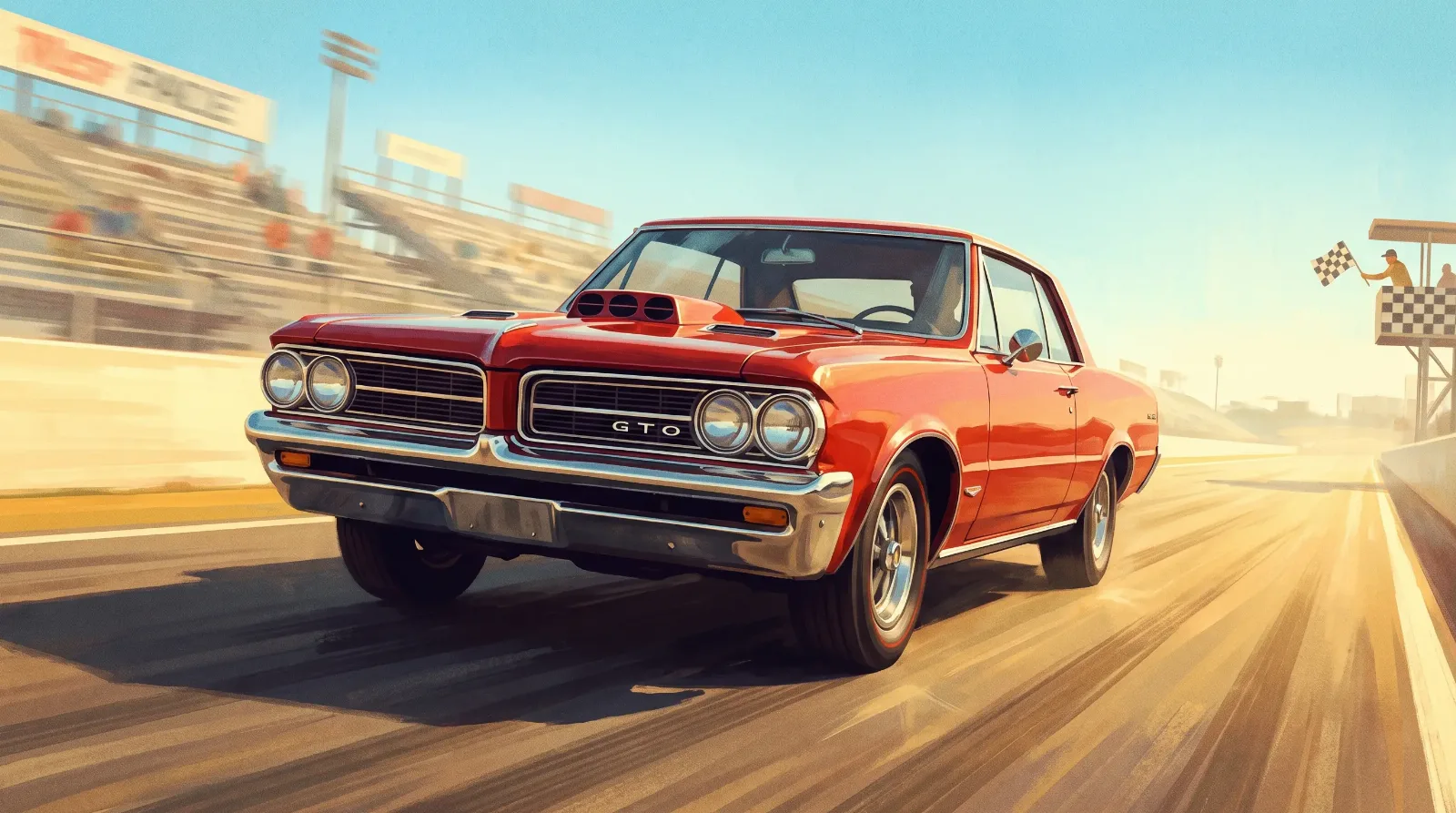
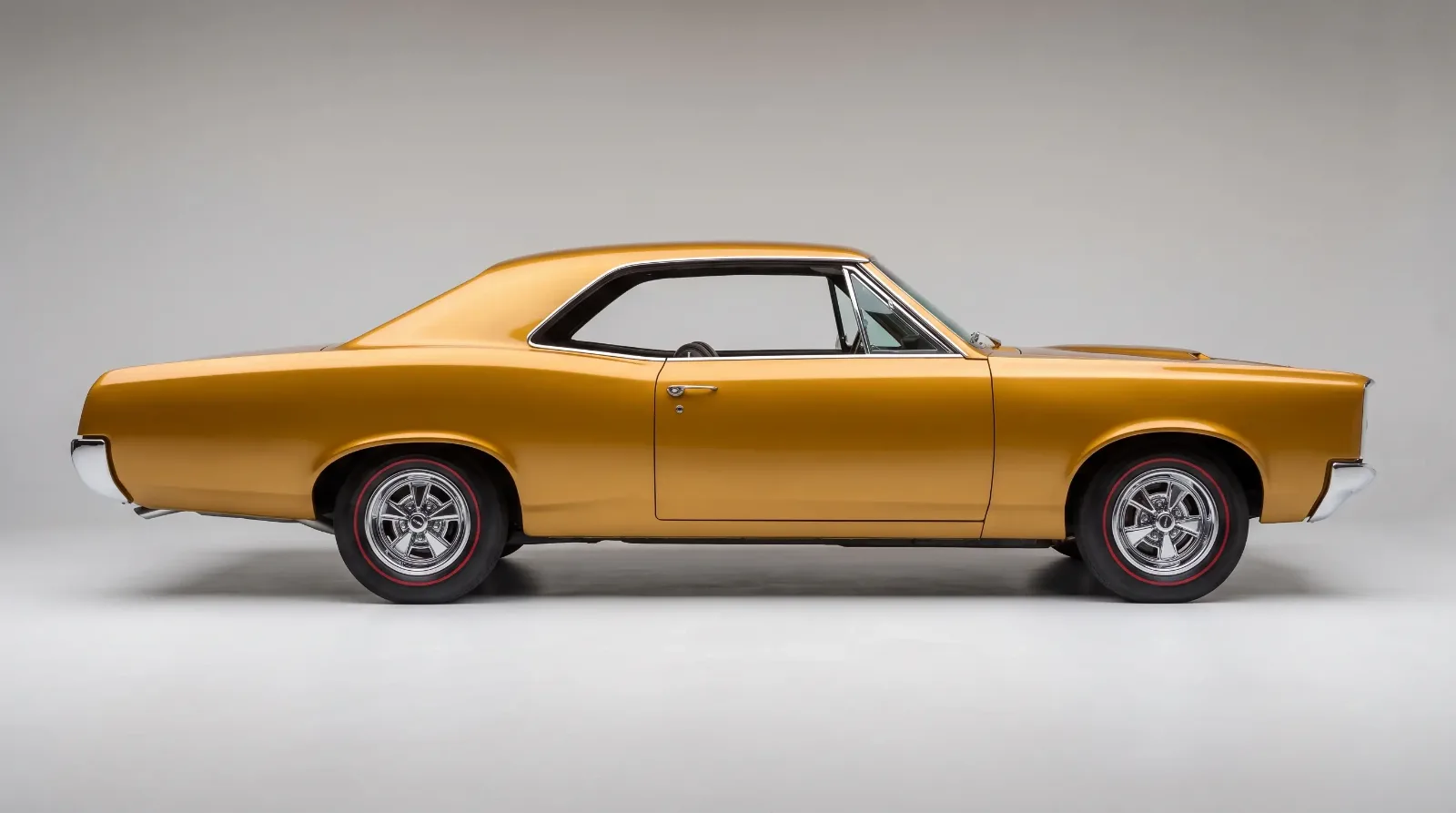
Other cars had big engines before. What the GTO did was package the whole idea, name it, price it for the young buyer, and sell it as an attitude. Within a couple of years every American maker had an answer, and the muscle car segment was a full-blown arms race. The Coke-bottle restyle that followed turned the GTO into a genuine bestseller, and you can follow that next chapter in the Coke-bottle GTO years.
The 1964 car sits at the head of all of it. Later GTOs made more power and wore better bodies, but this is the one that proved the formula worked. For the full arc from this first car to the last one in 1974, there is the full Pontiac GTO story.
The car that got its own song
Something happened in 1964 that almost never happens to a machine. The GTO crossed out of the car magazines and into the culture at large. A surf-and-hot-rod act put out a record built entirely around the car, a bouncing celebration of Tri-Power carburetors and four-on-the-floor that teenagers played until the grooves wore flat. A car does not get a hit song written about it because of its torque curve. It gets one because it has become a symbol, a shorthand for freedom and Saturday nights and the feeling of being seventeen with somewhere to go.
Pontiac fed the fire on purpose. The marketing around the GTO turned the car into a character, complete with a tiger theme that ran through the advertising and the promotional stunts of the period. There was merchandise, there was radio, there was the sense that owning one made you part of something. Jim Wangers and the people selling the car understood that they were not moving intermediates off a lot, they were selling membership in an attitude. The engineering made the GTO possible. The marketing made it a phenomenon, and 1964 is the year both halves clicked together.
The template everyone copied
Look at what the other divisions and makers did over the next three years and you are looking at the GTO's blueprint reprinted with different badges. Take an intermediate body, drop in the biggest engine the corporate parts bin allows, firm up the suspension so it can cope, dress it with a hood and trim that promise what the engine delivers, and price the whole thing where a young person with a job can reach it. That is the formula, and every one of its parts was present on the 1964 car. What followed, the arms race of the later 1960s, was everyone else solving the same equation the GTO had written first.
The genius of it was not any single piece. Big engines existed. Firm suspensions existed. What the 1964 car did was assemble the pieces into a product with a name, a price, and a personality, then aim the whole package at a buyer nobody else was taking seriously. That is why the GTO gets the credit even though it did not invent any one ingredient. It defined the dish, and the rest of the industry spent the decade cooking from its recipe.
Living with an early car today
A 1964 GTO is a plain, honest machine underneath the badge. Drum brakes, a live rear axle, a body that flexes. It stops and handles like the mid-1960s, which is to say not by modern standards, but it accelerates in a way that still surprises people who only know the numbers on paper. The Tri-Power cars are the prize and also the challenge, because the three-carb linkage rewards someone who knows how to tune it and punishes everyone else.
These first-year cars carry a premium for exactly what this story is about. They are the beginning. If you want to see what is out there and what the early cars trade for, look through the GTOs for sale and pay as much attention to the documentation as to the paint.
Sixty years later the scene at that dealership still explains the whole thing. A kid, a badge borrowed from Ferrari, and an engine that broke the rules. The muscle car did not need anything more than that to be born.
Sources and notes
Related Reading
Article
The Pontiac GTO Story: How One Car Invented the Muscle Car Era
Article
How John DeLorean Smuggled the GTO Past GM's Brass
Article
The Option-Package Loophole That Created the GTO
Article
GM's 1963 Racing Ban and the Muscle Car It Accidentally Made
Article
The 1964 Ferrari 250 GTO vs Pontiac GTO Road Test That Started a War
Article
1964 GTO Specs: 389 Tri-Power and What $296 Bought You

Article
Royal Pontiac and the Birth of the Dealer Super-Car
Article
Woodward Avenue: Where the GTO Earned Its Reputation
Article
How Car and Driver's 1964 GTO Cover Blew the Doors Open
Article
The Tempest and LeMans: The Humble Bones Under the GTO
Article
Why the 1964 GTO Is Called the First True Muscle Car
Article
Bill Collins and Russ Gee: The Engineers Behind the Goat
Article
Art Fitzpatrick's GTO Ads: Selling a Car That Didn't Exist Yet
Article
1964 GTO Production Numbers: The 5,000-Car Gamble That Hit 32,000

Article
The 'Little GTO' Song and How Ronny & the Daytonas Made It a Legend
Article
What the GTO Borrowed from the Ferrari Playbook (and What It Didn't)
Article
1966-1967 Pontiac GTO: The Coke-Bottle Years That Made It a Bestseller
Article
What Does GTO Stand For? The Name, the Ferrari Borrowing, and the Myths
Have a
Pontiac GTO
for Sale?
Reach thousands of serious classic car collectors across the US.
Sell It Here →
Are You a Classic Car Dealer?
List your full inventory and connect with targeted classic car buyers.
Join as a Dealer →

About the author
Patrick Walsh
Automotive journalist covering classic car shows, events, and the enthusiast community across North America.
Related Listings - Pontiac GTO


Comments
Be the first to comment on this article.