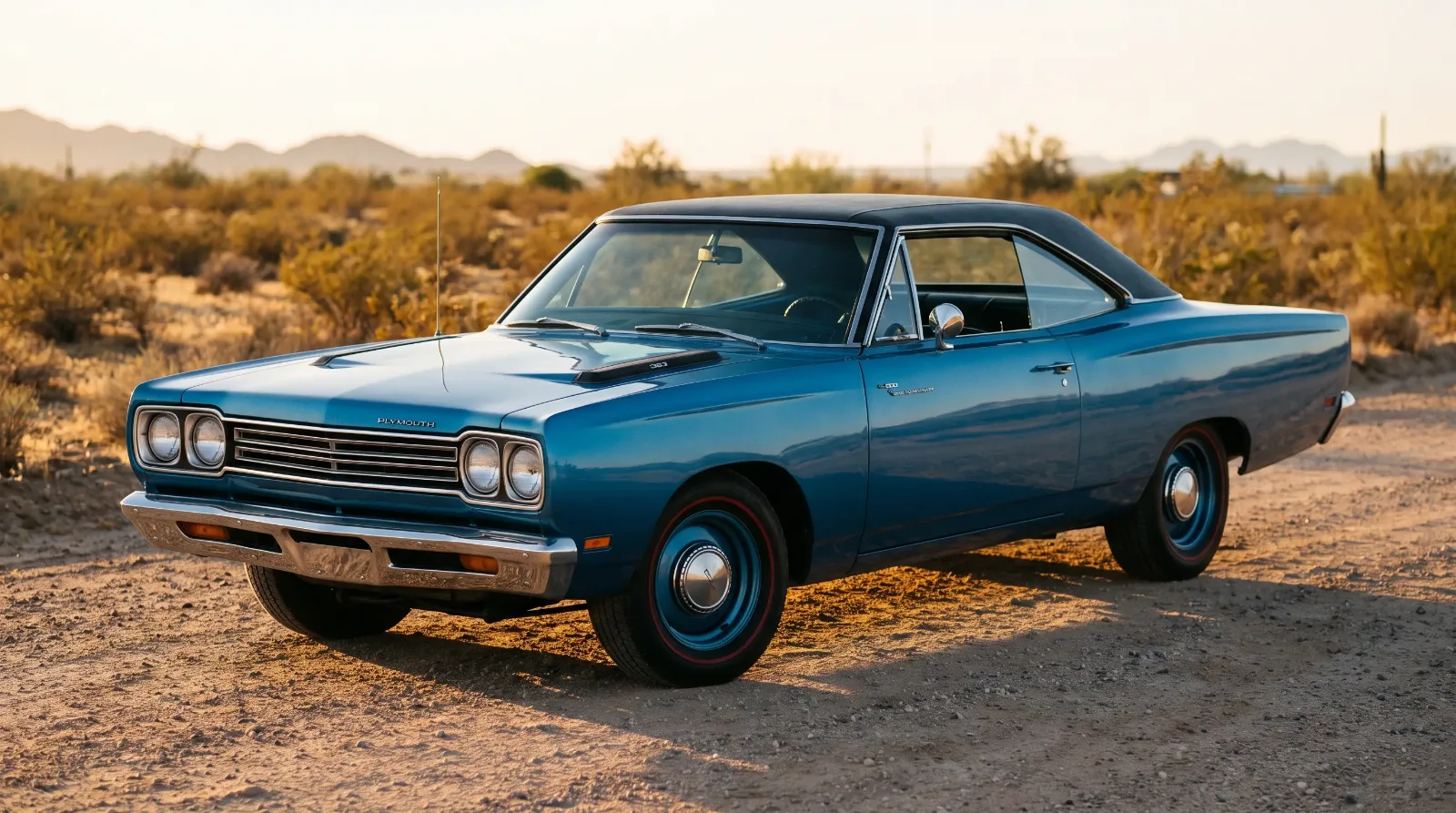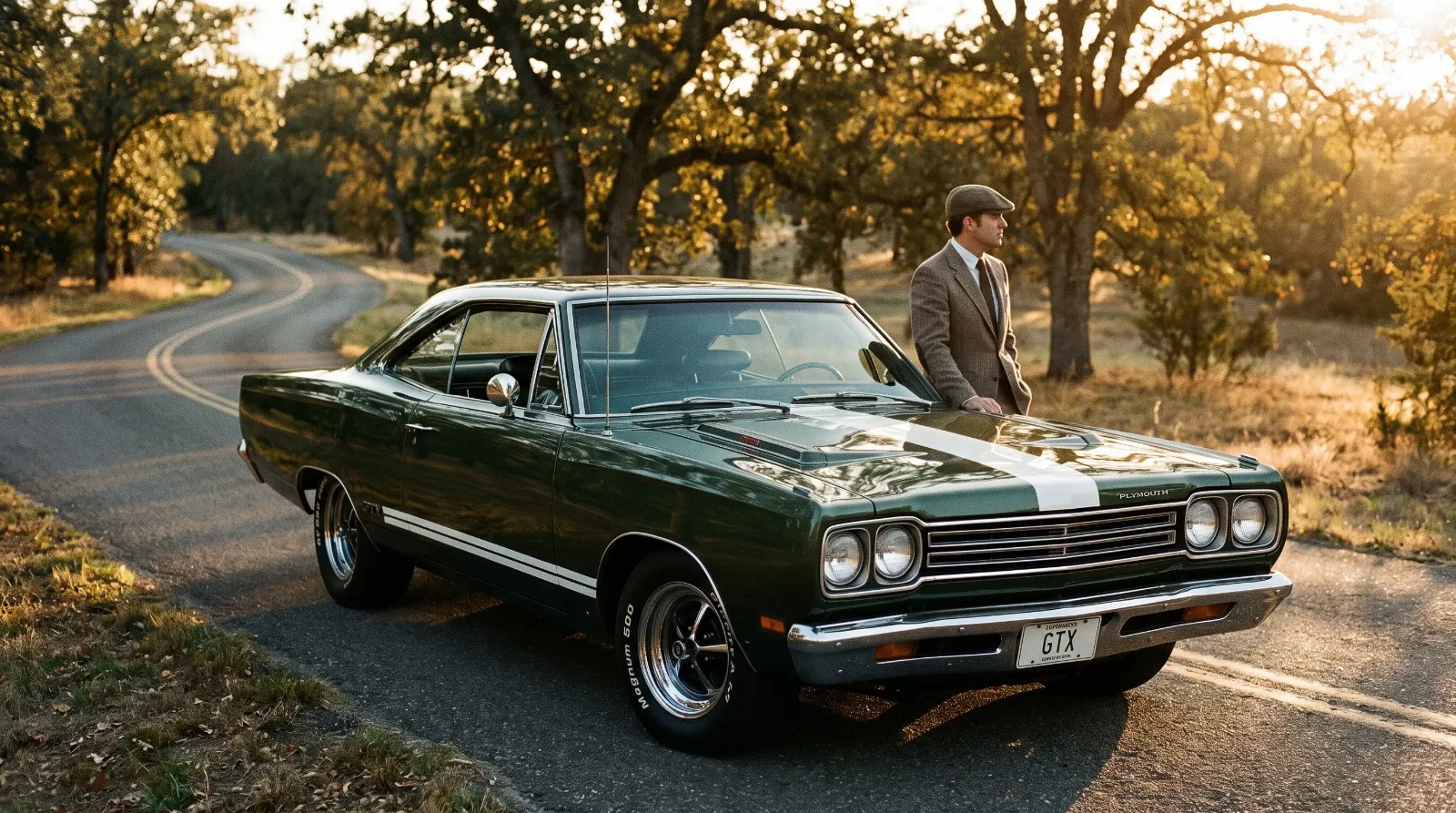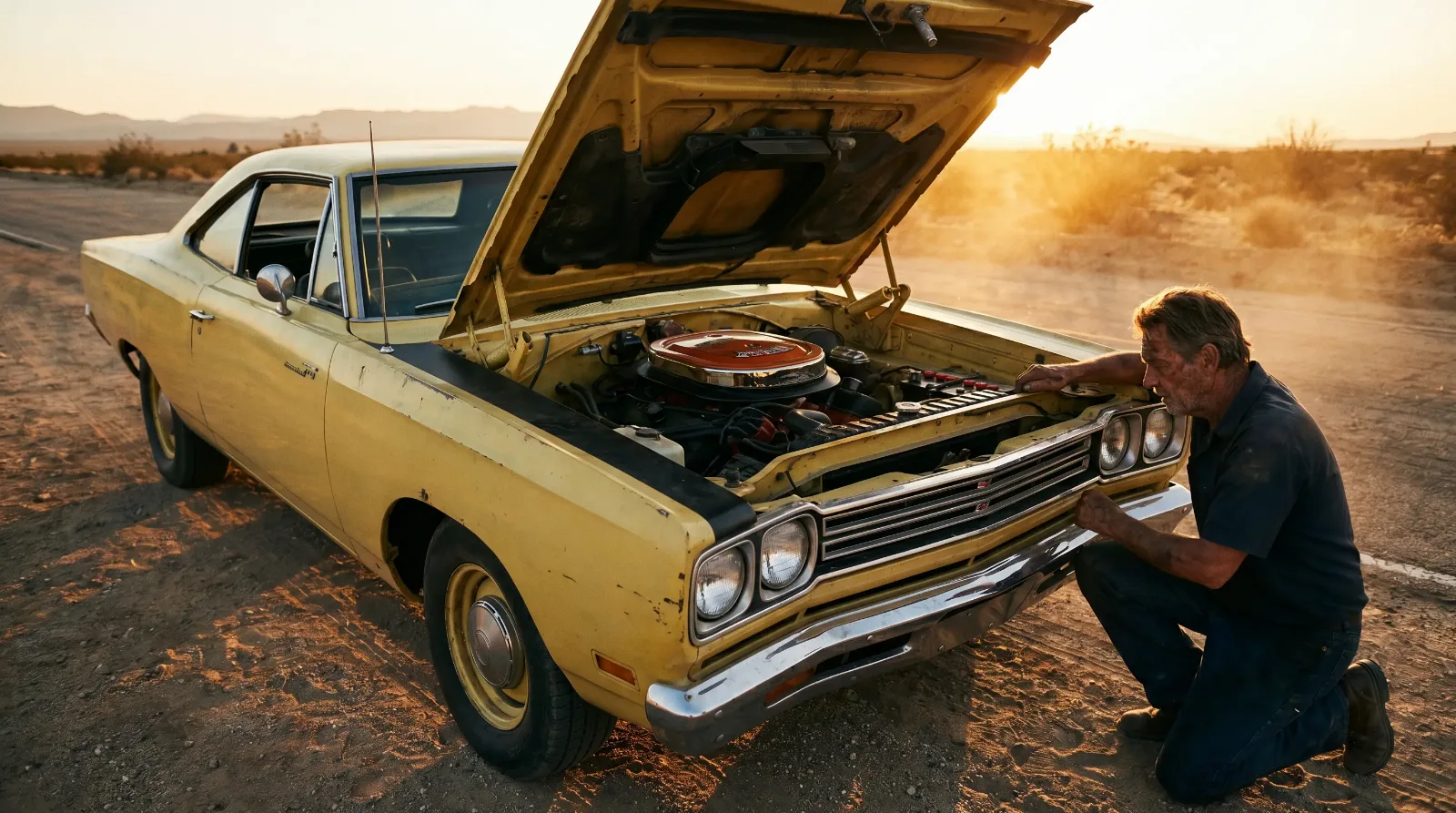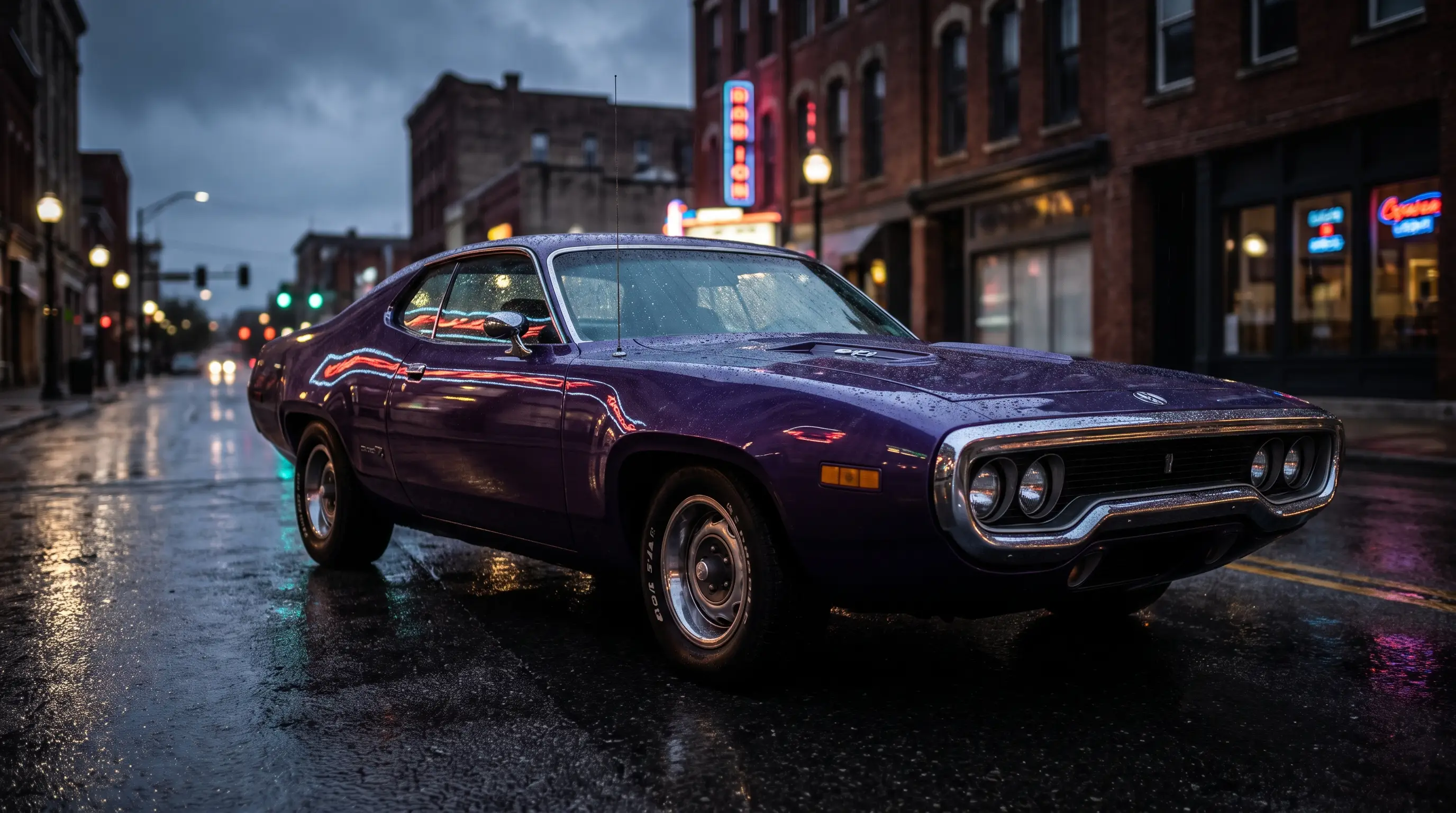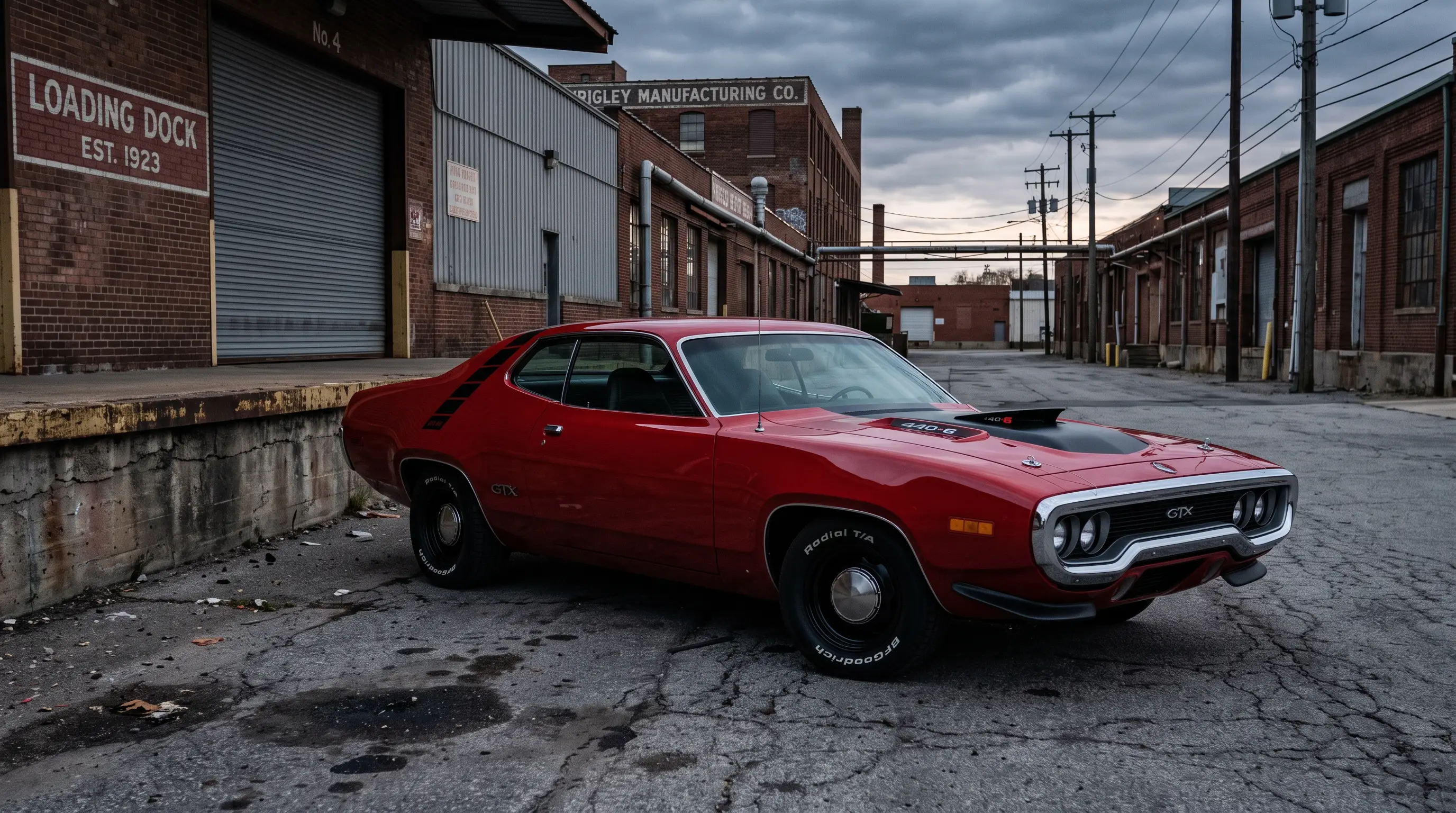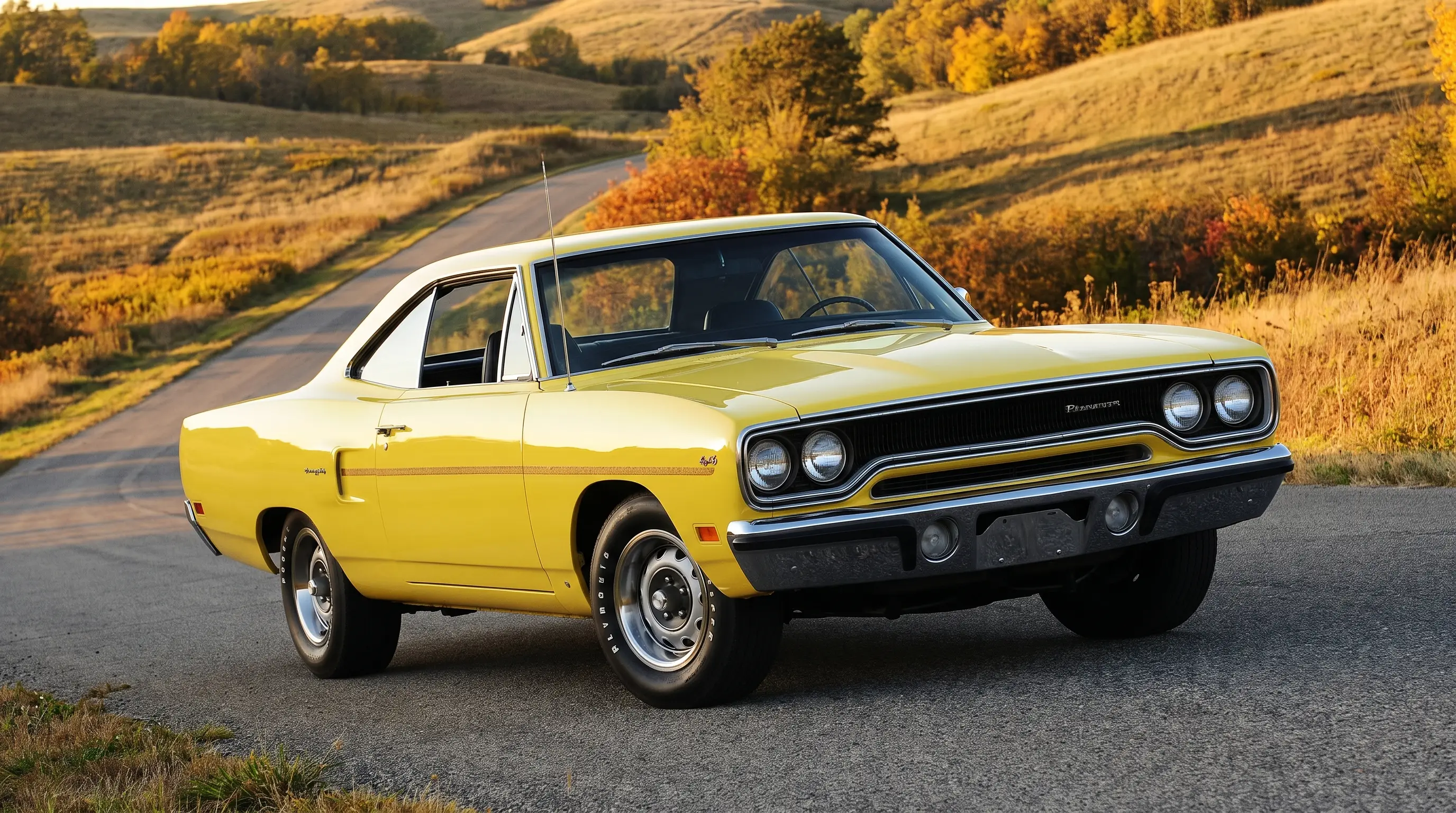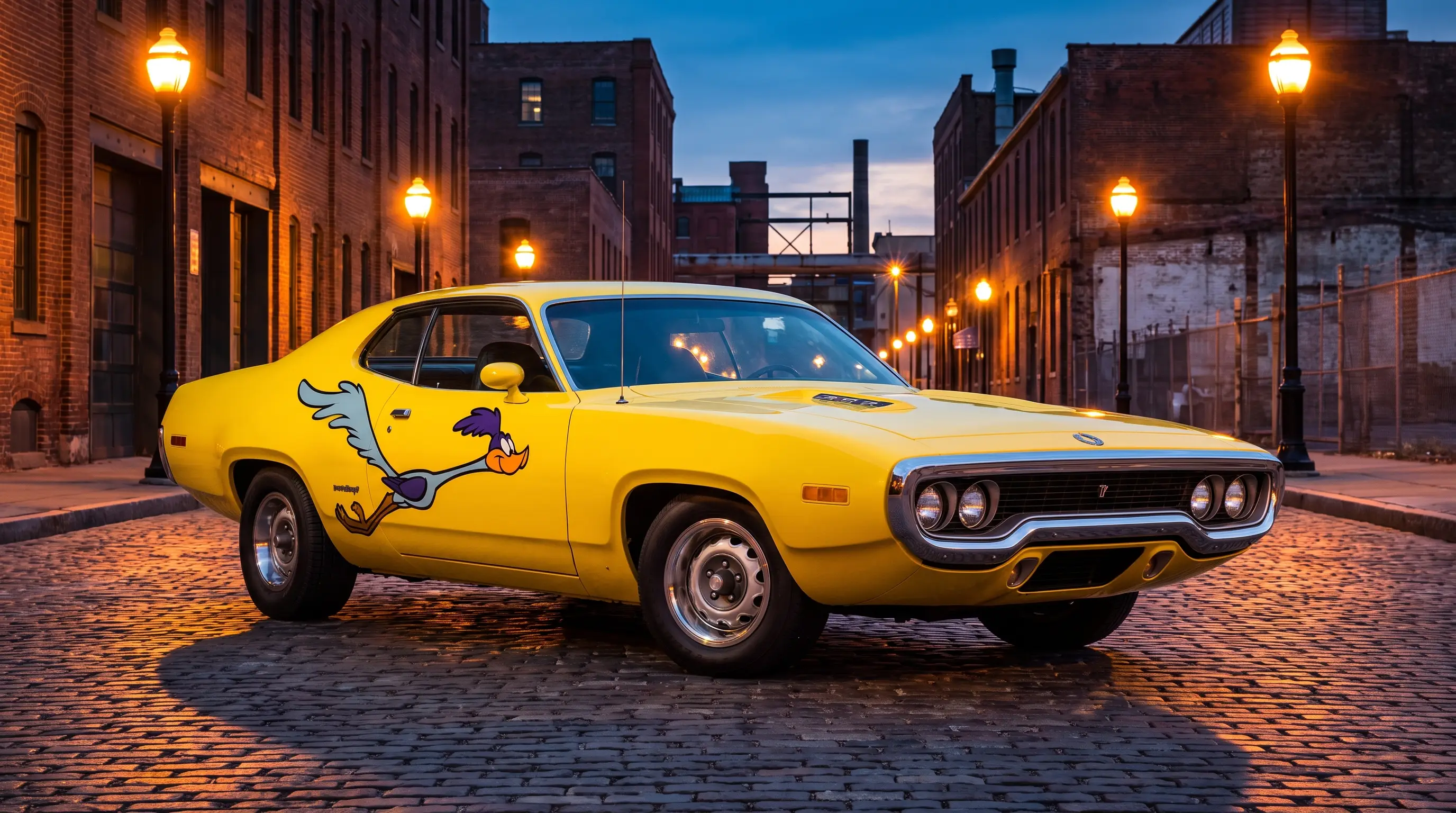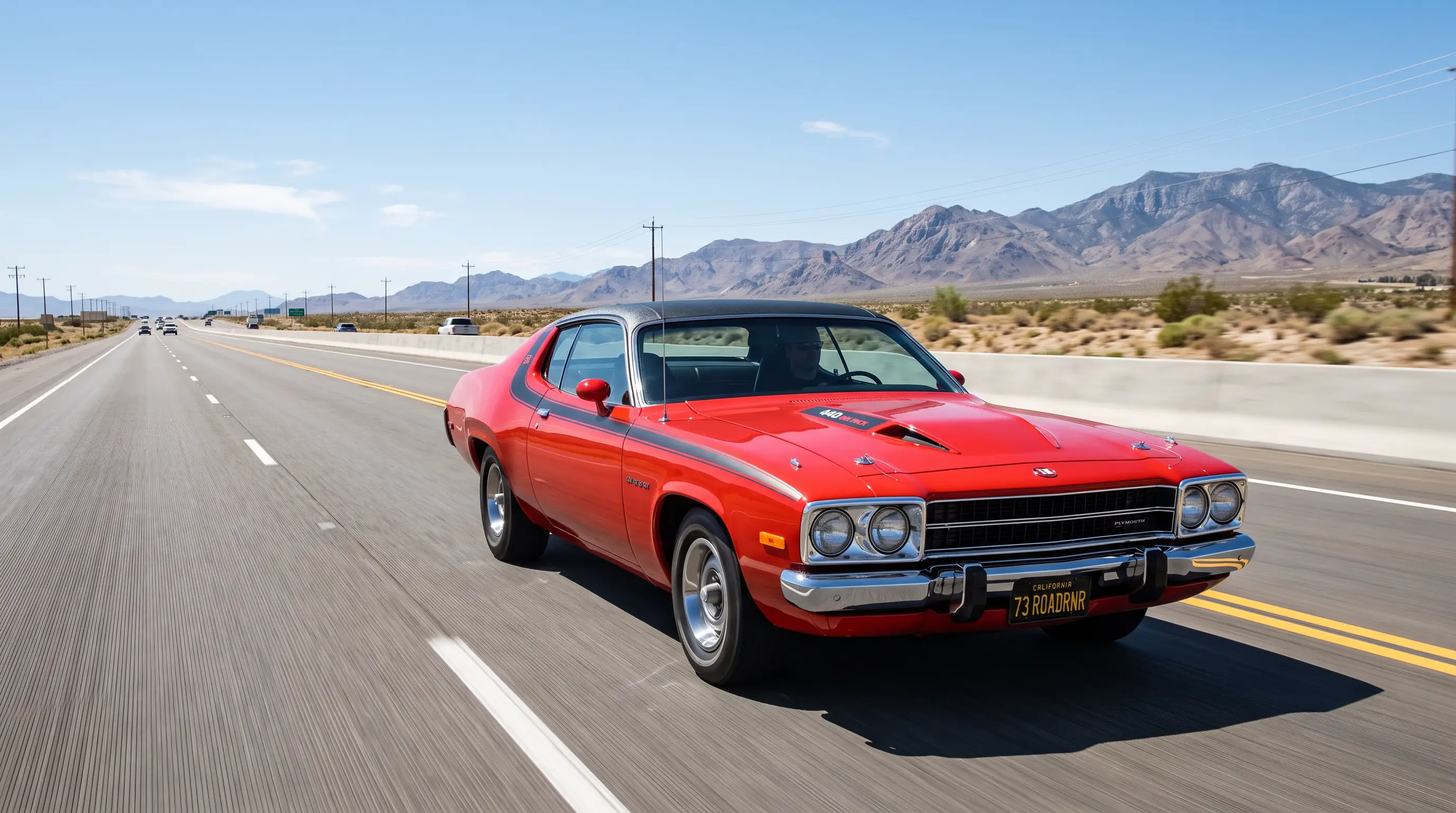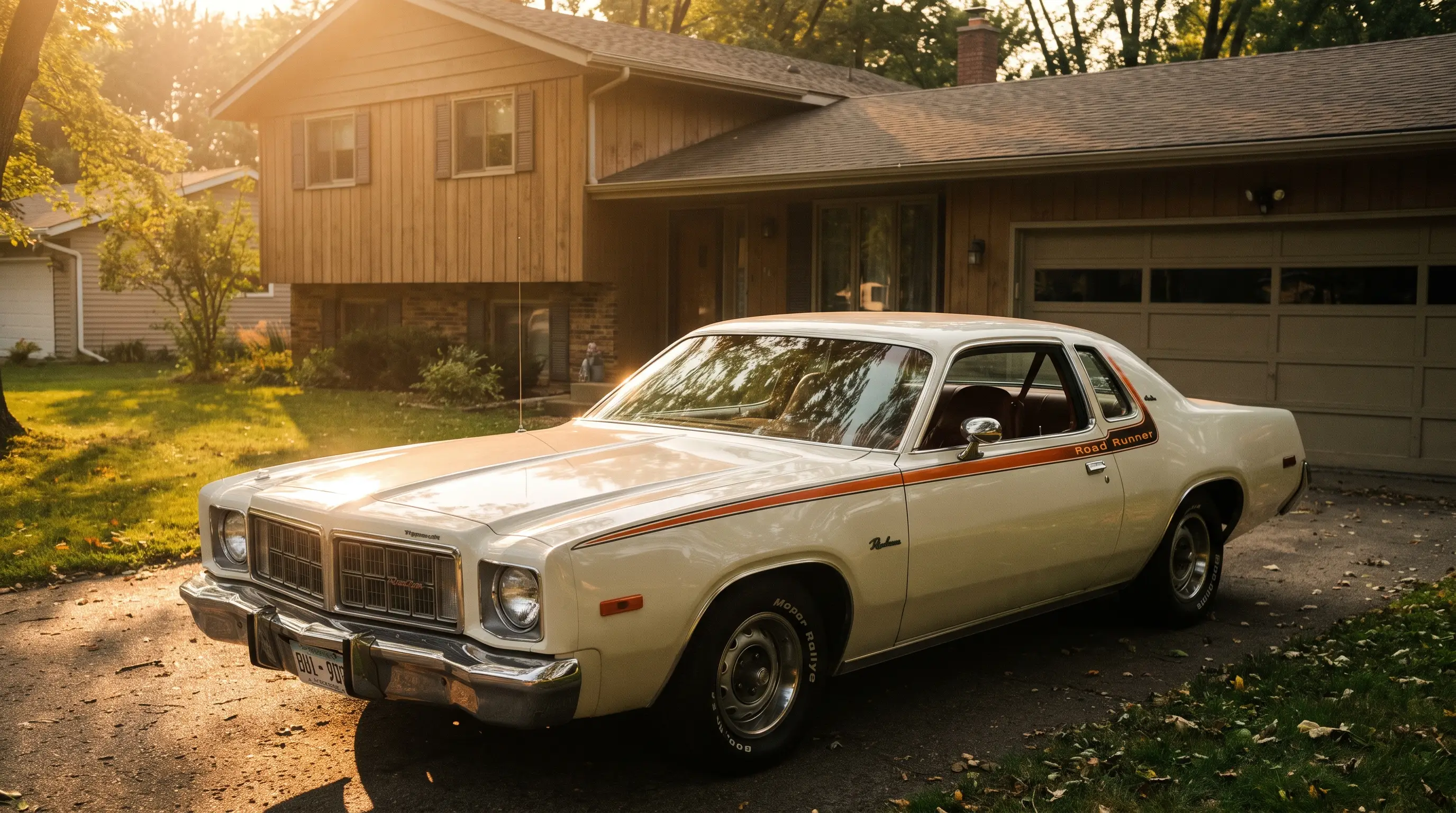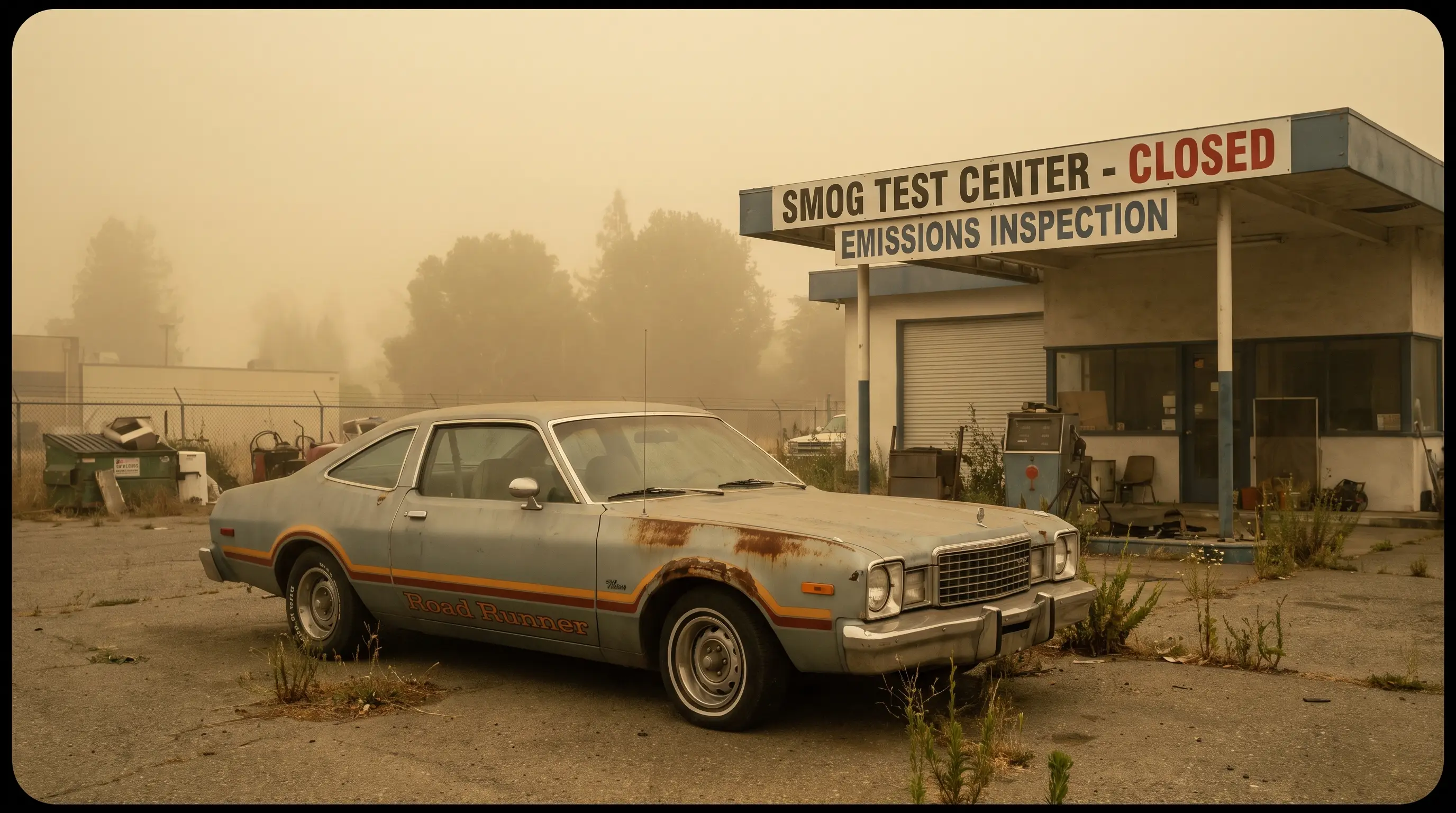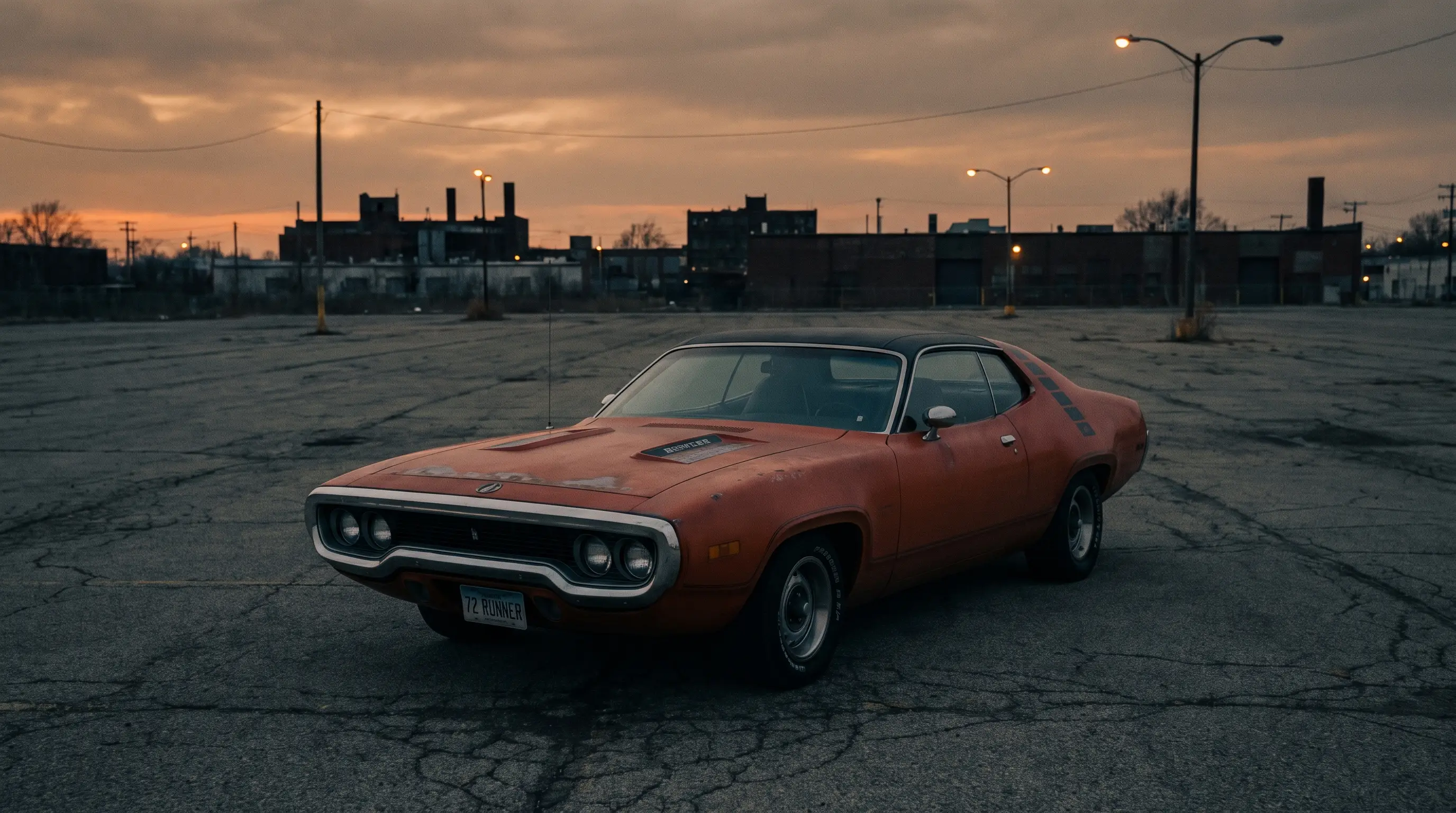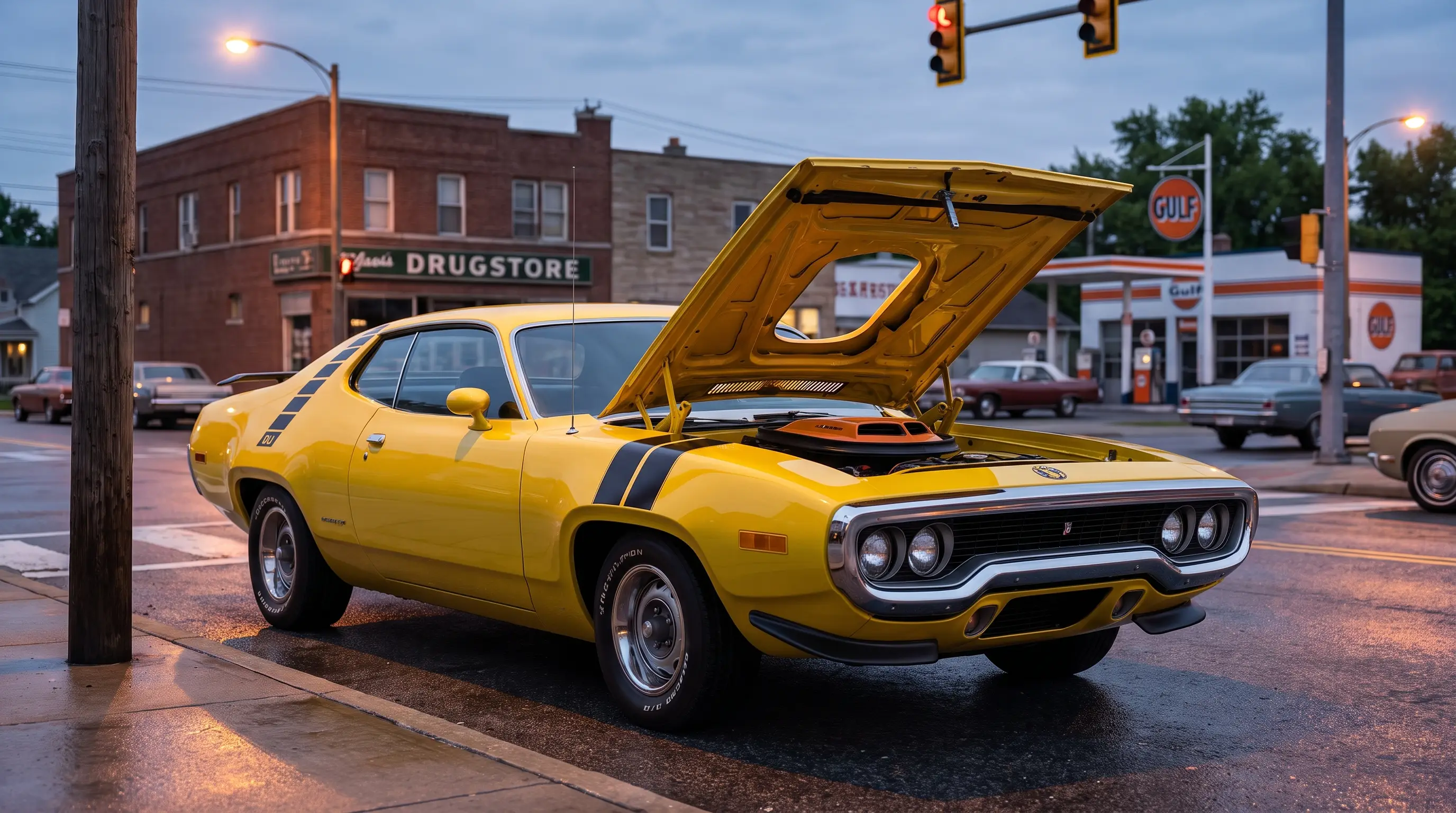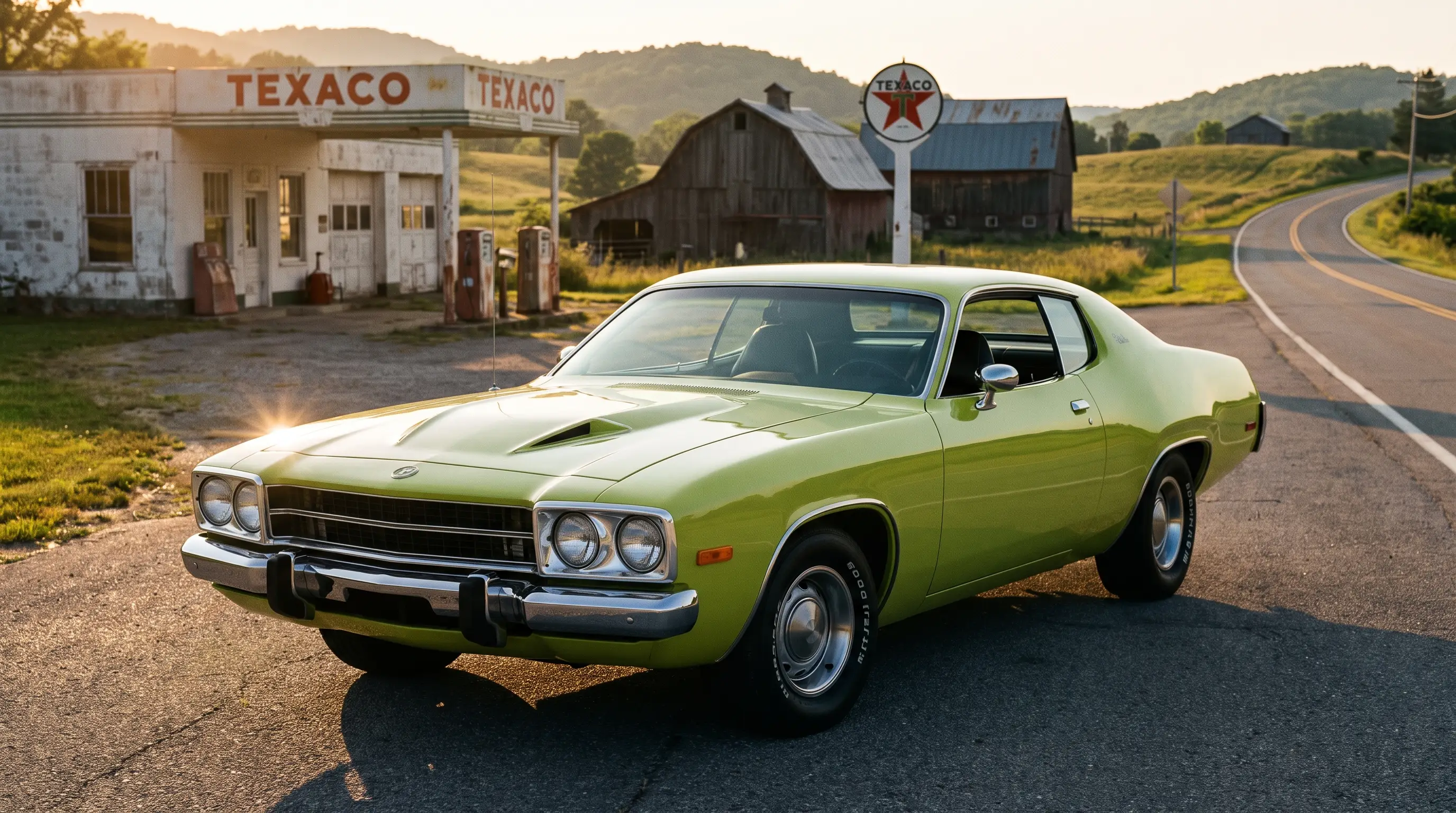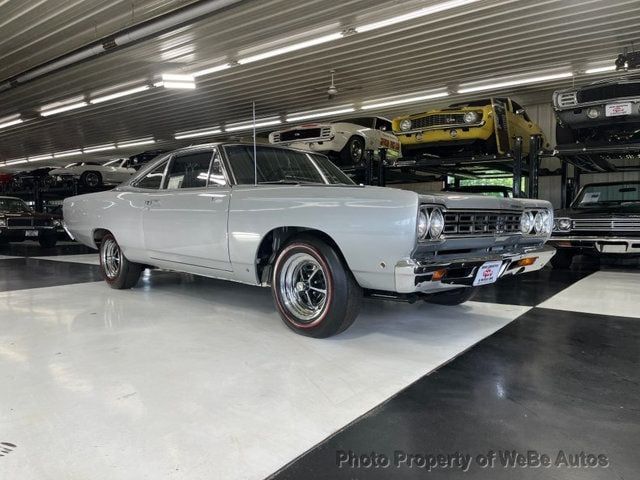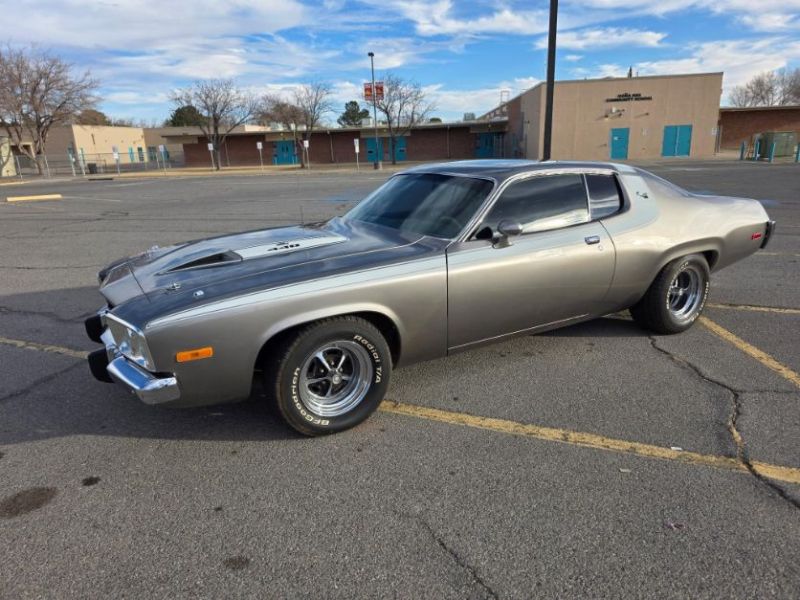
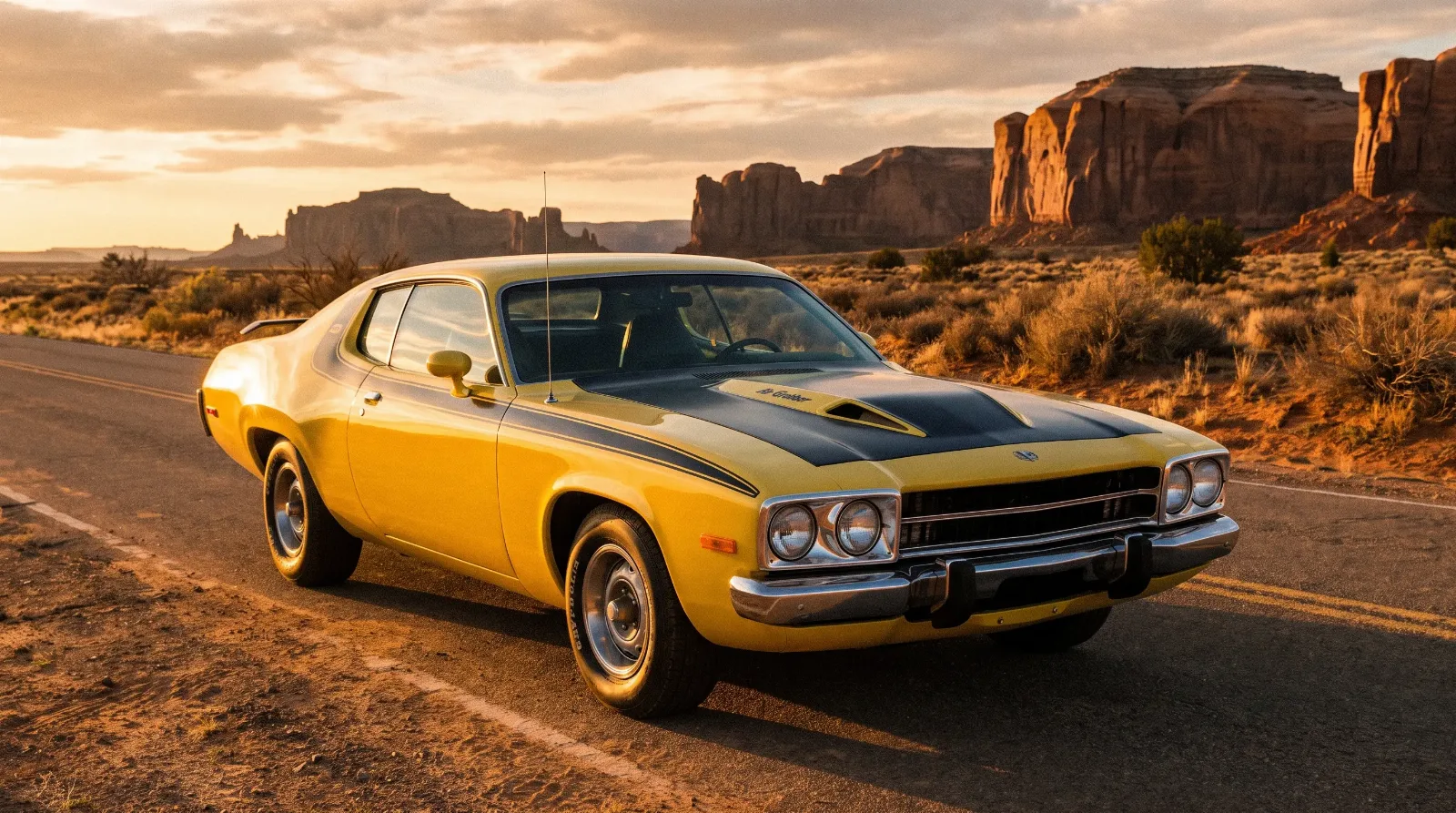
When the 1971 Plymouth Road Runner arrived in showrooms, it looked like a different animal from the crisp, upright Belvedere-based cars that had carried the name since 1968. Chrysler had given its intermediate B-body a rounded, wind-shaped restyle, and the horn that still went beep-beep was now bolted into a shape that critics of the day nicknamed the fuselage look. The truth is more complicated than the label suggests, and the years from 1971 through 1975 are where the Road Runner story stops being a simple tale of cheap speed and turns into a record of an entire performance market being legislated, insured, and priced out of existence. It is worth walking through those model years one at a time, because the paperwork tells a clearer story than the nostalgia does.
People tend to compress this whole period into a single sentence about the death of muscle. That compression loses the detail. The 1971 plymouth road runner was, on paper, one of the strongest cars the nameplate ever offered. What changed over the next four seasons was not the willingness of Plymouth engineers to build a fast car. It was the world the car had to live in.
1971: the peak nobody recognized at the time
The 1971 restyle was the work of Chrysler's studios under John Herlitz, and it gave the Road Runner a semi-fastback roofline, a body-color loop bumper on many cars, and available fender gills. Under the hood, the menu was still deep. The standard engine was the 383, and a buyer could still order the 440 with the triple two-barrel setup or, for the last time, the 426 Hemi. This was the final model year for both the Hemi and the six-barrel 440 in the Road Runner, which makes 1971 the closing chapter of the car's true high-compression era.
Production numbers tell you how quickly the market was cooling. Road Runner output for 1968 and 1969 had run into the tens of thousands, with 1970 alone accounting for over 43,000 cars. For 1971, total Road Runner production fell to 14,218 cars, and the Hemi count for that final year was tiny, just 55 cars, of which only 28 were four-speeds. That scarcity is exactly why the 1971 Hemi cars now sit at the top of the collector ladder. They were the last of their kind and almost nobody bought them when they were new, which is the usual recipe for a car becoming valuable decades later.
The restyle also brought a subtle shift in how the car was positioned. Where the 1968 model had been sold almost entirely on the promise of cheap speed, the 1971 car carried more available comfort and dress-up options, from bucket seats to a center console to the theatrical Air Grabber hood. Plymouth was reading a market that had started to want a little more polish with its performance. The base price crept upward accordingly, and the stripped-to-the-bone philosophy that launched the nameplate was already softening at the edges. None of this was decline yet. It was a company adjusting to buyers who had grown up a few years and wanted the option to spend a bit more.
One correction worth making here concerns the term fuselage itself. Enthusiasts apply it loosely to these Road Runners, but Chrysler's own fuselage design language properly belonged to the full-size C-body cars introduced in 1969. The intermediate B-body Road Runner of 1971 shared the rounded aesthetic without being a fuselage car in the strict factory sense. It is a small point, and I raise it gently, but the people who worked on these programs drew that distinction clearly, and the record should too.
For readers who want the full arc of how the nameplate reached this point, our longer plymouth road runner history lays out the 1968 origin and the 1969 and 1970 peak years that set up this restyle.
| Model year | What defined it |
|---|---|
| 1971 | New rounded B-body, last year for 426 Hemi and 440 six-barrel |
| 1972 | 383 replaced by 400, net horsepower ratings, GTX becomes a 440 option |
| 1973 | Federal 5-mph bumpers, restyled front, sales recover on volume |
| 1974 | Last year of the mid-size B-body Road Runner, 440 still listed |
| 1975 | Name moves to the smaller Fury-based body, 360 becomes the story |
1972: the year the numbers changed on paper
Nothing confuses this era more than the horsepower figures, so it is worth being precise. For 1972 the industry switched from gross horsepower, measured on an engine stand without accessories, to net horsepower, measured as installed in the car. A 1971 engine rated at, say, 300 gross horsepower might read closer to 240 net the following year with only modest real changes. Some of the drop over this period was genuine, the result of lowered compression to run on lower-octane unleaded fuel. A large part of it was simply a change in how the same power got counted. Tom's rule for anyone comparing a 1971 window sticker to a 1972 one is to never put those two numbers in the same sentence without noting which standard each used.
The mechanical changes for 1972 were real enough. The 383 gave way to the 400, a bored-out version of the same B-engine family, and compression came down across the range. The 440 survived as the top offering, and Plymouth folded the old GTX identity into the Road Runner as an option package, so a 1972 Road Runner with the 440 could wear GTX badging. That detail trips up a lot of people who assume the GTX simply vanished. It did not disappear so much as get absorbed. The Air Grabber hood, a favorite of the earlier cars, was gone by this point, another small comfort quietly deleted as budgets and priorities shifted.
1973 and 1974: bumpers, weight, and quiet endurance
Federal safety rules arrived with force in 1973, when the government mandated bumpers capable of surviving a 5-mph impact. The Road Runner, like every American car, grew heavier and blunter at the ends to meet the standard. The 1973 restyle gave the front a new grille and those substantial bumpers, and the car put on weight it never fully shed. Yet here is the part the death-of-muscle story usually skips. Road Runner sales for 1973 actually recovered, climbing to roughly 19,000 cars, well above the low point of 1971 and up sharply from 1972. Buyers were still willing to purchase a mid-size Plymouth with a performance badge, even if the performance itself was softening.
The 1974 model year was the last for the Road Runner as a true intermediate B-body car. The 440 remained on the order form, though in emissions-tuned form it was a shadow of the six-barrel monster from 1971. What kept these cars interesting was less the raw output and more the fact that they still looked and sounded like muscle cars in a year when the concept was supposedly dead. A 1974 Road Runner with the 440 was not quick by 1969 standards, but it was among the quicker things a person could still buy new with a warranty, which counts for something in the historical ledger.
Anyone weighing which of these years to chase should treat the engine story as its own subject, and the deeper look at what powered these cars is worth a look too before settling on a particular build.
1975: the name outlives the platform
The 1975 Road Runner is where purists tend to draw a line, and the reason is structural rather than snobbish. For 1975 Plymouth moved the Road Runner name off the retiring intermediate and onto the smaller Fury-based coupe, a car built on what had been the Satellite chassis lineage. The 440 was gone from the Road Runner order sheet in most configurations, and the 360 small-block became the engine that mattered. On paper this was still a Road Runner. In character it was a different proposition, a personal coupe wearing a famous badge rather than a stripped-down street brawler.
Tom's view, and it is a common one among people who work from build records rather than memory, is that 1975 is not a lesser car so much as a different car that happened to inherit the name. Judged as a mid-1970s Plymouth coupe it is perfectly respectable. Judged against a 1969 383 four-speed it is playing a completely different game. Both things can be true at once, and the collector market has largely sorted the cars accordingly, with the earlier fuselage years commanding the attention and the money.
Reading these cars as a collector
The market for 1971 through 1975 Road Runners is not one market. It is at least three. At the top sit the 1971 Hemi and six-barrel cars, rare and expensive and treated as blue-chip Mopar history. In the middle are the 1972 through 1974 440 cars, genuine performance Plymouths that are more attainable and, to a lot of buyers, more usable. At the accessible end are the small-block and 1975 cars, which offer the look and the name without the entry price of the earlier machines. Documentation separates a real 440 GTX-optioned 1972 car from a badged tribute, and that is where a factory build sheet or a broadcast sheet earns its keep.
The misconception worth correcting, gently, is the idea that these years are simply the sad decline. The record shows a company adapting year by year to compression cuts, insurance surcharges, rating changes, and federal bumper law, and still shipping a car people wanted. That is a more interesting story than a straight line downhill. If the later cars appeal to you as a way into the hobby without Hemi money, it is worth taking time to shop classic Runner listings and compare a documented 440 car against a clean small-block example before deciding which chapter of this run you actually want to own.
"People remember 1971 to 1975 as the fall, but the paperwork tells a story of engineers holding the line year after year against rules that kept moving. The cars got heavier and the ratings got honest, and the badge somehow survived it all."
- Tom Ramirez
The five years covered here are the connective tissue of the whole Road Runner saga, the stretch that carried the name from its high-compression prime into the leaner era that followed. Understanding them means separating what actually changed under the hood from what only changed on the spec sheet, and keeping the model years straight rather than smearing them into one vague memory of decline. Do that, and the fuselage-and-after Road Runners stop being a footnote and start reading as one of the more instructive chapters in how American performance survived its hardest decade.