
Three engines built the Road Runner legend, and only one of them was standard. The 383 came in every base car. The 426 Hemi grabbed the headlines. In between sat the sweet spot, the road runner 440 six barrel, and if you want the honest answer to which engine you should actually care about, it is that one. Not the Hemi. The Hemi is the trophy. The six-barrel 440 is the car most people would rather drive and can almost afford. Let me lay out the numbers and you can argue with me afterward.
Car Features
10 min read
Road Runner Engines: 383, 440 Six Barrel and the 426 Hemi
The road runner 440 six barrel is the smart money, not the Hemi. Here is the honest ranking of every engine that powered Plymouth's budget muscle car.
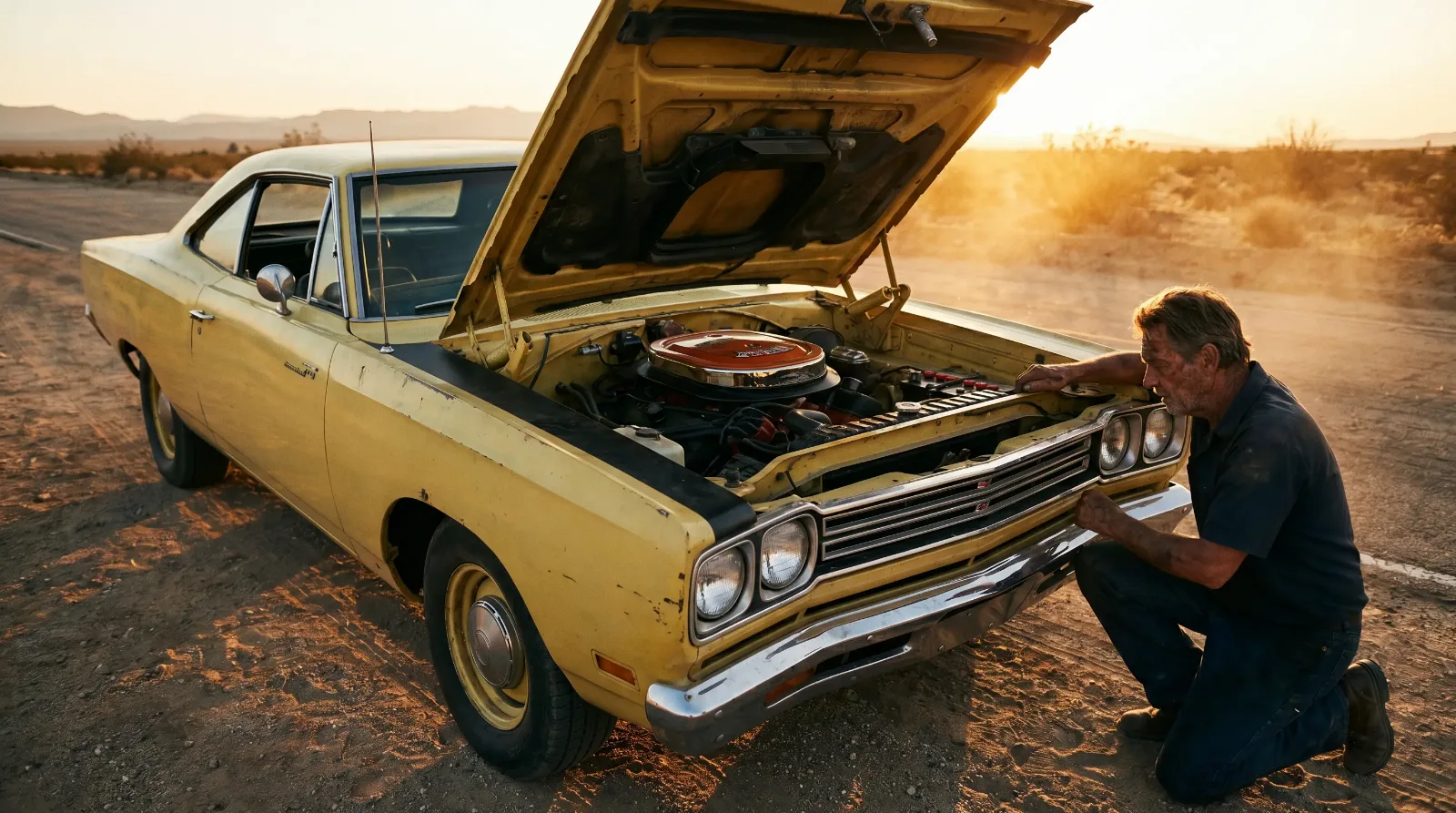
Here is the short version before the detail. Standard 383, 335 horsepower. Optional 440, 375 horsepower. The 440 with three carburetors, 390 horsepower. The 426 Hemi, 425 horsepower. Those are gross figures from the late 1960s, measured on a stand, so treat them as bragging numbers rather than gospel. The order of importance, though, is not the order of horsepower. It runs on price, rarity, and how the thing behaves when the light turns green.
The 383: the engine that mattered most
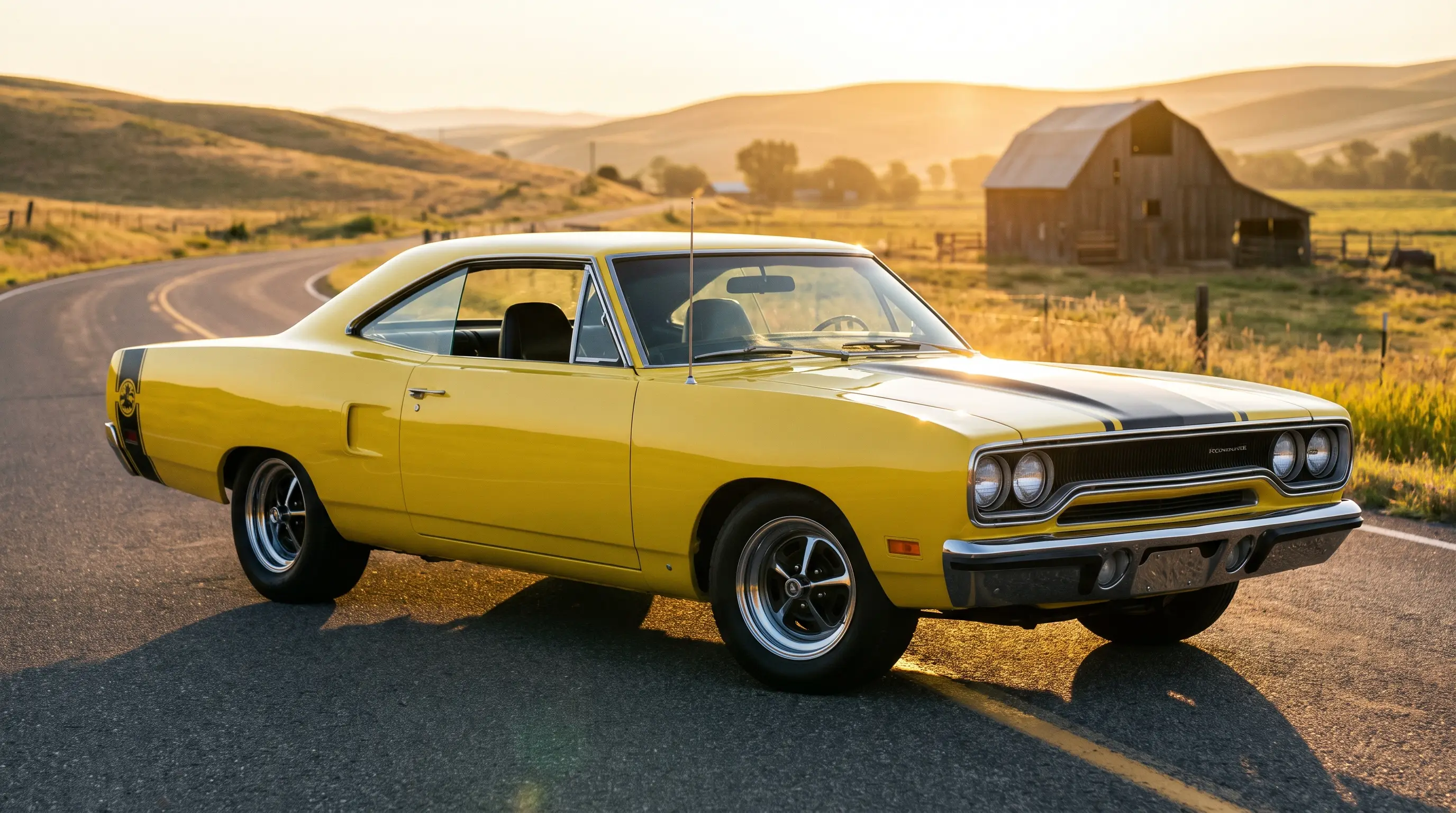
Every Road Runner conversation should start here, because most Road Runners started here. The standard 383 made 335 horsepower, and Plymouth did not build it out of leftover parts. It borrowed the camshaft, the cylinder heads, and the intake manifold from the 440, which is why a base Road Runner ran harder than a base anything else in its price class. Period road tests recorded quarter-mile times in the high 14s to mid 15s, roughly 14.7 to 15.5 seconds depending on transmission and testing conditions, out of the cheapest muscle car on the lot. That is the whole point of the car in one engine.
People skip past the 383 because it was standard and cheap. That is a mistake. The 383 is the engine that made the Road Runner a phenomenon. The Hemi sold a few hundred cars. The 383 sold tens of thousands. If you are buying today and you want the car that defined the nameplate, a documented 383 four-speed is the truest version of the thing, and it costs a fraction of what the exotic engines command. The math there is not subtle.
One more point about the 383, because it gets lost. This was not the same 383 that hauled a Fury station wagon around town. The Road Runner version breathed through the big 440's cylinder heads and used a hotter camshaft, so it made real power where the wagon engine made torque and little else. Same displacement, different intent. A lot of people hear 383 and picture a family sedan mill. The Road Runner 383 was a purpose-tuned engine that happened to share a bore and stroke with the mundane version. Do not let the number fool you.
| Engine | Gross horsepower | Notes |
|---|---|---|
| 383 cu in V8 | 335 hp | Standard, 440-spec heads and cam |
| 440 Super Commando | 375 hp | Single four-barrel, added option |
| 440 Six Barrel | 390 hp | Three two-barrels, from 1969 and a half |
| 426 Hemi | 425 hp | Top option, tiny production |
| 340 cu in V8 | 275 hp | Small-block, offered from 1971 |
The 440 Six Barrel: the smart money
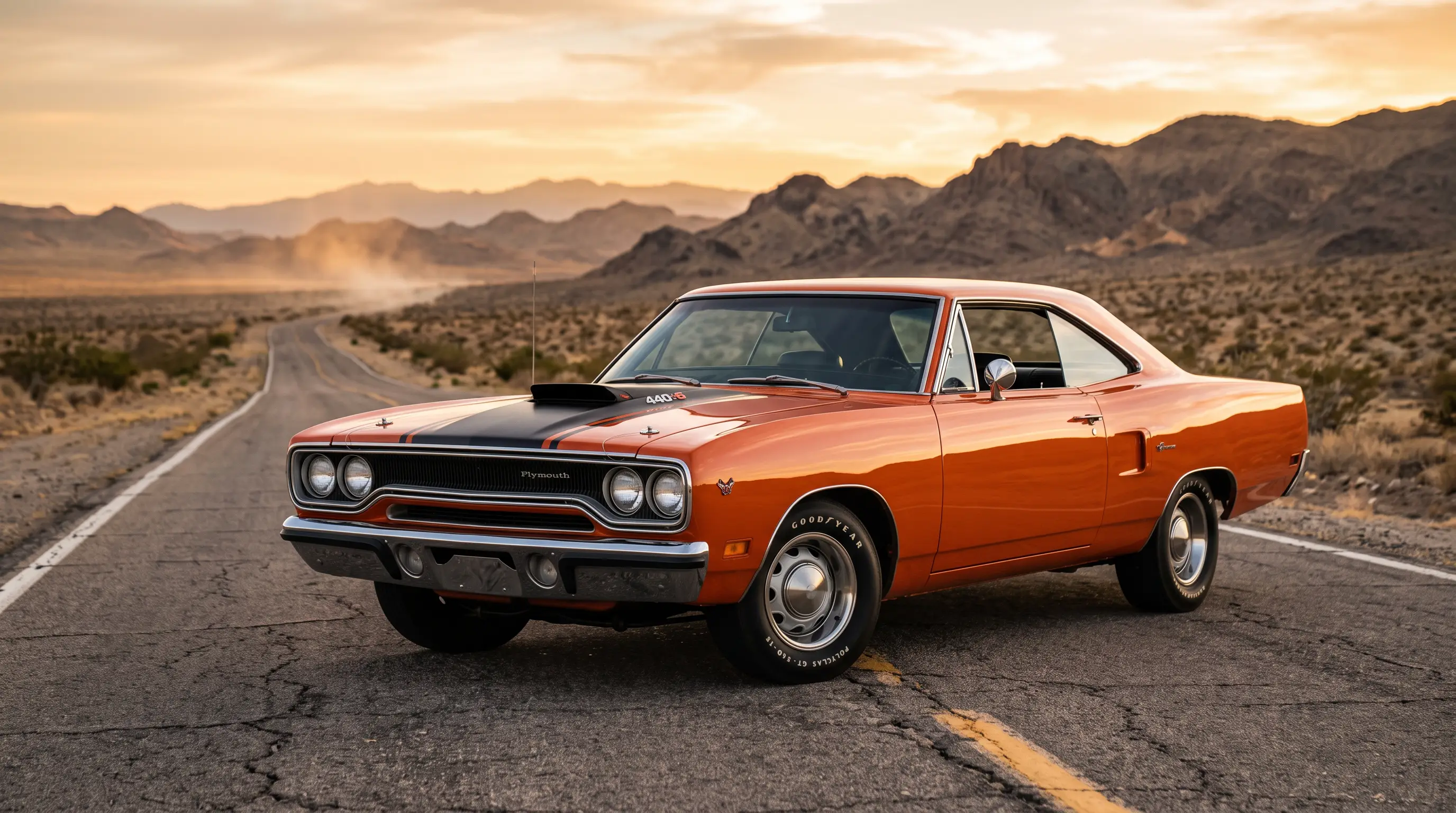
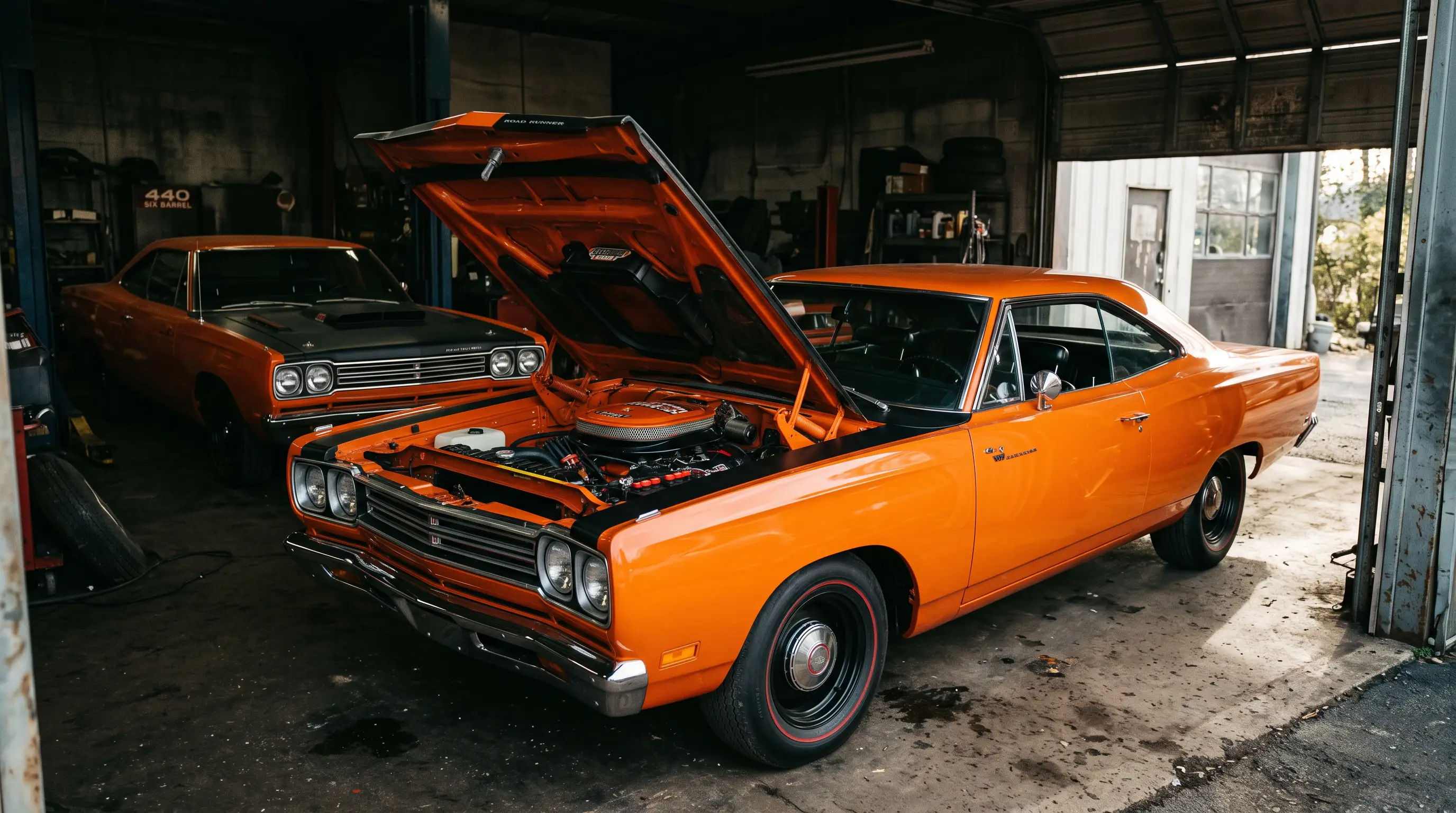
Now the good part. In the middle of the 1969 model year Plymouth released a package known internally by the code A12, and it is the most interesting engine story the Road Runner has. Take the 440, bolt on an Edelbrock aluminum intake carrying three Holley two-barrel carburetors, and rate the result at 390 horsepower. On the street the middle carburetor did the work. Floor it and the two outboard carburetors opened up and the thing pulled like something with a lot more badge value than it had.
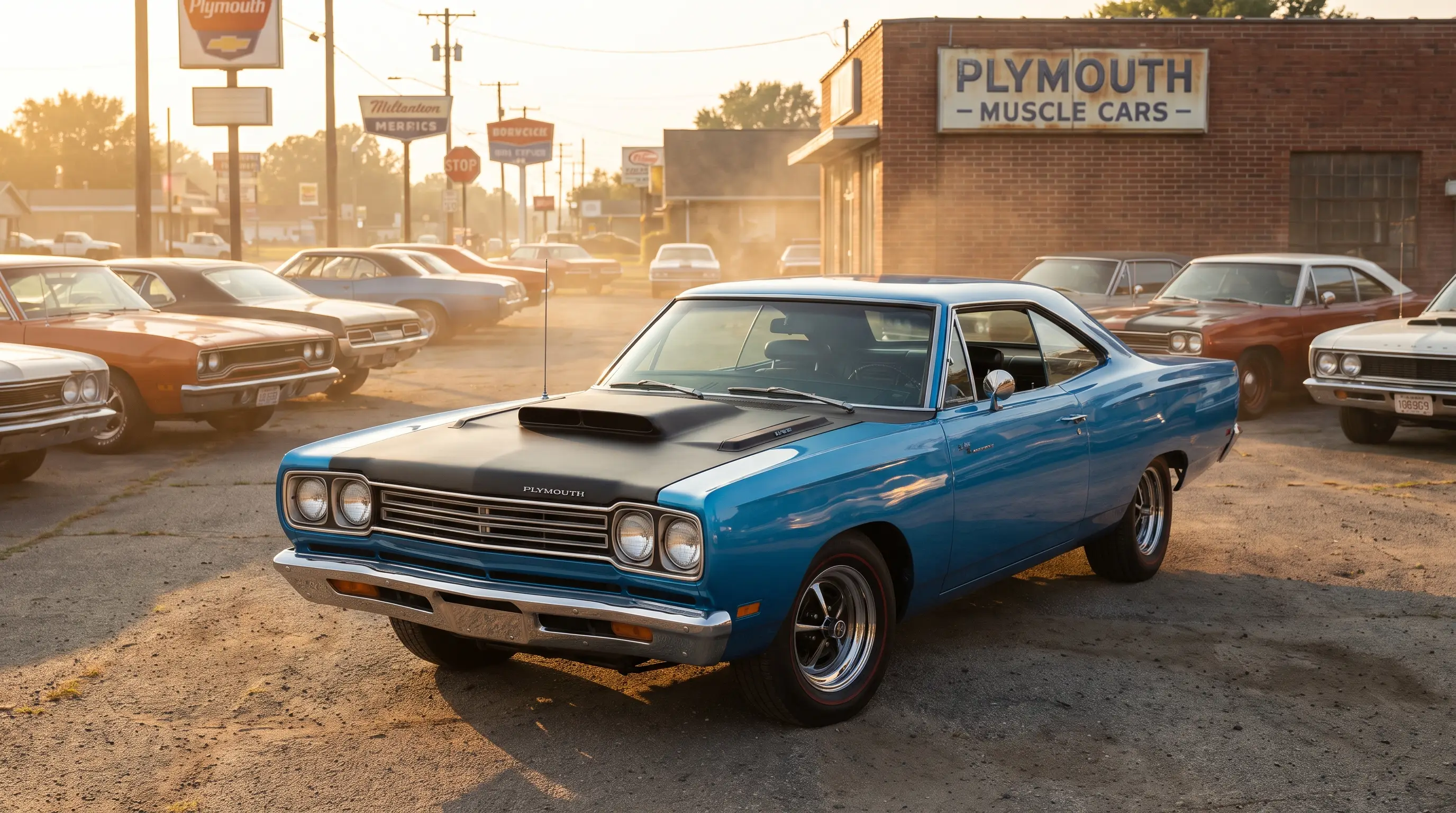
The A12 cars were their own animal. They came with a lift-off fiberglass hood, matte black and held down by four hood pins, with a scoop feeding the carburetors. No hubcaps. Just black steel wheels, because the money went into the engine and not the jewelry. That is the Road Runner idea taken to its logical end. The 440 Six Barrel gave up almost nothing to the Hemi in a straight line, cost far less new, and was far easier to live with because it did not need constant tuning to stay happy.
Here is the number that settles the argument. The 440 Six Barrel made 390 horsepower against the Hemi's 425, a gap of 35 horsepower on paper. In the quarter mile the two cars ran close enough that magazine testers argued about it. A Hot Rod Magazine head-to-head between a Hemi Cuda and a 440-6 Road Runner in period testing averaged about a tenth of a second apart over repeated runs, with the Hemi typically a shade quicker but the margin small enough to be within driver variance. The Hemi cost hundreds of dollars more and demanded far more maintenance. For most buyers, then and now, the six-barrel car is the rational choice. It is the engine I would put my own money on.
There is a torque story here too, and it matters more than the horsepower headline. The 440 was a big-inch engine that made its grunt low in the rev range, which is exactly what you want on the street and at the strip launch. The Hemi wanted revs to give its best. The 440 just pulled from idle. In a straight-line drag race off a stoplight, the kind of race these cars actually got into, the six-barrel 440 did not feel 35 horsepower slower. It felt like a freight train that happened to have a Plymouth badge. That low-end shove is why people who owned both often kept the 440.
Two carburetor setups existed over the run, and collectors care about the difference. The original 1969 and a half A12 cars used an Edelbrock aluminum intake. Starting with the 1970 model year, Chrysler switched to its own cast-iron version of the same manifold, reportedly because Edelbrock could not guarantee enough aluminum units to meet expected demand, though some early 1970 cars still received leftover aluminum Edelbrock pieces. The aluminum-intake 1969 and a half cars are the ones the serious money chases, both for the rarity and for the raw, unpolished character of that first package. If you find a genuine one with paperwork, you have found something.
The 426 Hemi: the legend that few actually bought
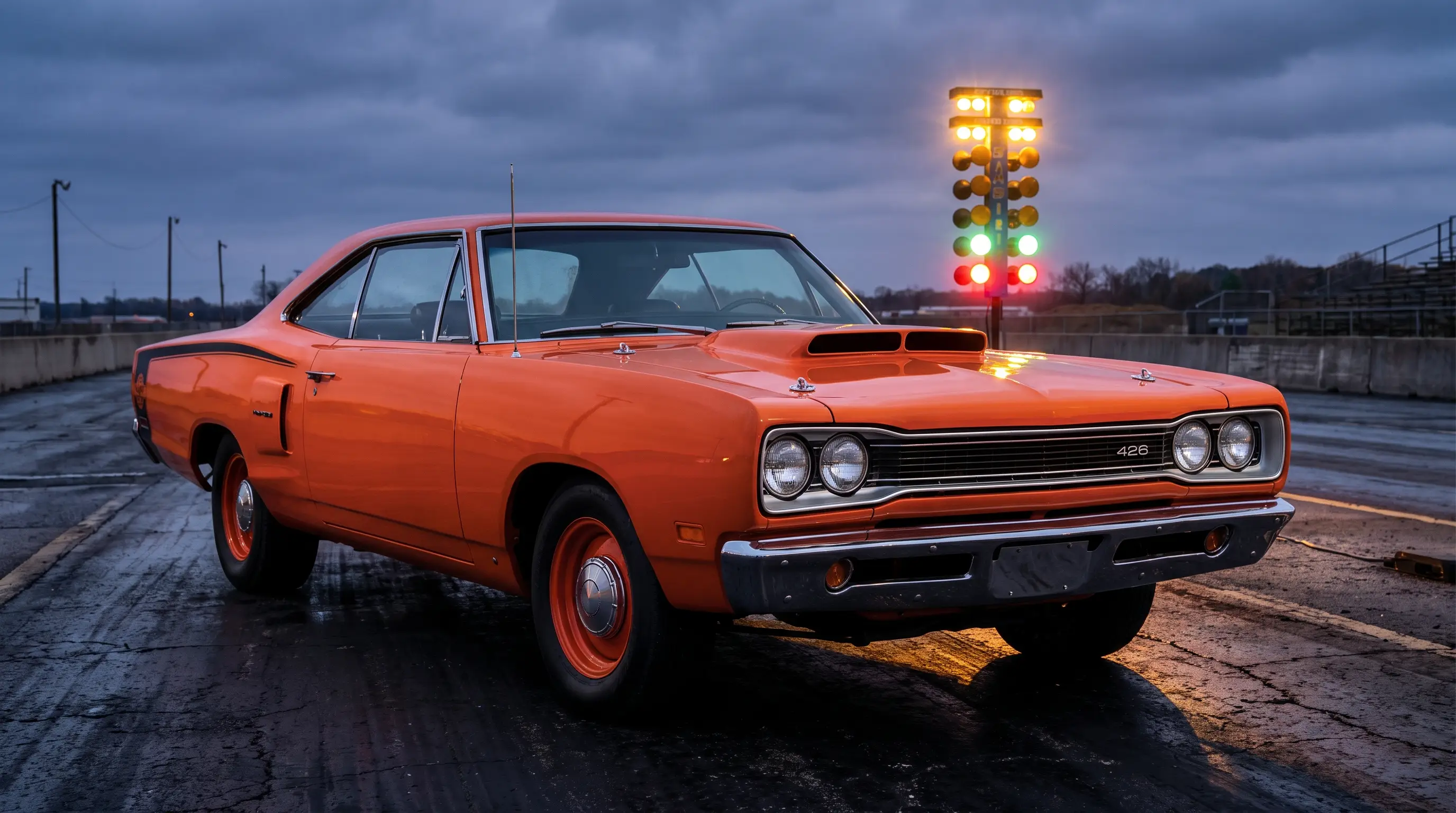
The Hemi is the engine everyone names and almost nobody bought. Rated at 425 gross horsepower, it was the most feared street engine Chrysler sold, with hemispherical combustion chambers, big valves, and a factory rating that most people believed was conservative. It made the Road Runner one of the quickest cars money could buy in 1968 and 1969, full stop.
But let me puncture the myth a little. The Hemi was a race engine sold with license plates. It ran a lumpy idle, it fouled plugs in traffic, and it needed a driver who knew what he was doing to keep it in tune. Very few Road Runner buyers checked the box, because it added a large sum to the price of a car whose entire pitch was being cheap. Hemi Road Runner production dropped fast: 1,019 in the 1968 debut year, 788 in 1969, then down to 152 in 1970 and just 55 in the final 1971 season, as insurance surcharges scared buyers off the option. That rarity is exactly why a genuine Hemi car now sells for many times what a 383 car brings.
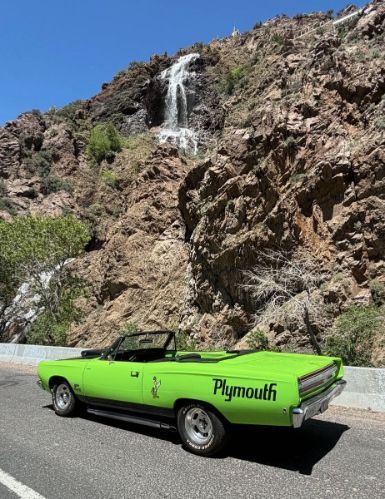
Own one if you can afford it and you want the trophy. Just be honest about what it is. A Hemi Road Runner is a collector asset and a special-occasion car. It is not the engine that made the Road Runner matter, and it never was. For the deeper history of how these engines fit into the wider nameplate, the the plymouth road runner story puts the powertrain choices in context.
The small-block chapter and the later years
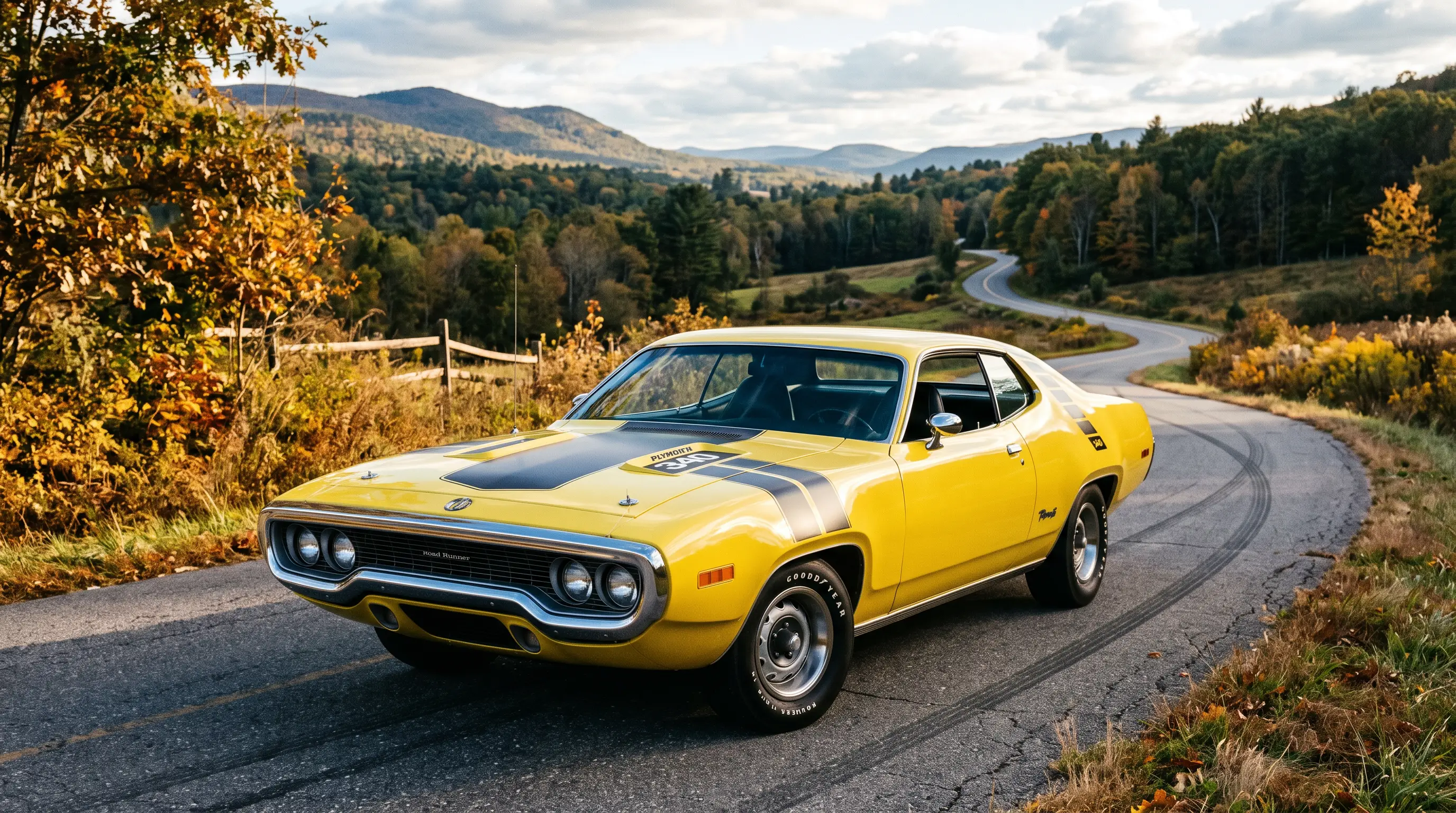
From 1971 Plymouth added the 340 small-block to the Road Runner menu, rated at 275 horsepower. Purists sniffed at it. They were wrong to. The 340 was lighter over the front wheels than the big blocks, which made the car handle better, and it was quick enough to embarrass people who only read the displacement number. It is one of the more underrated engines in the whole run.
The weight difference is the part people underrate. A big-block Road Runner carried a lot of iron over the nose, which made it plow in corners and wear out front tires. The 340 car turned in sharper and stopped shorter because it was not fighting all that mass. On a drag strip the big blocks won. On a real road with corners in it, the 340 car was the better driver's car, and quicker than its 275-horsepower rating suggested because the number was widely believed to be underrated to keep insurance companies calm. That was a common trick in those years, and the 340 was a prime example.
After 1971 the story gets messier, and the numbers get slippery. The 383 gave way to the 400 for 1972, compression dropped to swallow lower-octane fuel, and the industry switched to net horsepower ratings that made every engine look weaker overnight even when little had changed. A 1972 figure and a 1970 figure are not measured the same way, so comparing them straight is a trap. The 440 hung on through 1974 in emissions-tuned form, softer than the six-barrel monster but still the biggest engine in the class. Where the engines went from there is the next chapter, and the way the car turned from a machine into a pop-culture icon is the next chapter of this saga.
The verdict on the numbers
Rank the engines by legend and the Hemi wins. Rank them by what actually made the Road Runner a great car, and the order flips. The 383 built the reputation and sold the volume. The 440 Six Barrel is the connoisseur's pick, nearly as fast as the Hemi for a lot less trouble and a lot less money. The Hemi is the headline act that few people ever bought. The 340 is the sleeper that handles better than any of them.
My advice is simple. Buy the engine that fits how you will use the car, not the one that sounds best at a bar. A 383 or a 340 will give you the Road Runner experience for sensible money and you will drive it more. If you have the budget and you want the middle path with genuine big-block muscle, the six-barrel 440 is the one to chase. When you are ready to see what survives, look at the classic Runners on the market and compare the documented cars against the badged pretenders. The numbers will tell you which is which if you know where to look.
Sources and notes
- Plymouth Road Runner - Wikipedia
- Vintage Car Life Review: 1968 Plymouth Road Runner 383 - Curbside Classic
- The 426 Hemi vs The 440 Six Pack: Which is Faster? - Ultimate Muscle Car
- 1970 440 Aluminum or Cast Six Barrel Intake Manifold - For Plymouth Road Runners Only Forums
- 1971 Plymouth B-Body Registry - Production Figures
- 1971 Hemi Road Runner Production Notes - autoevolution
Related Reading
Article
The Plymouth Road Runner Story: How a Cartoon Bird Became Budget Muscle King
Article
1971 to 1975 Road Runner: The Fuselage Years and the Long Goodbye
Article
Beep-Beep and Beyond: The Road Runner in Cartoon and Muscle Culture
Article
The 383 Road Runner: The Everyman's Big Block
Article
The 440 Six Barrel: Three Carbs of Fury
Article
The 426 Hemi Road Runner
Article
The 340 Small-Block Road Runner
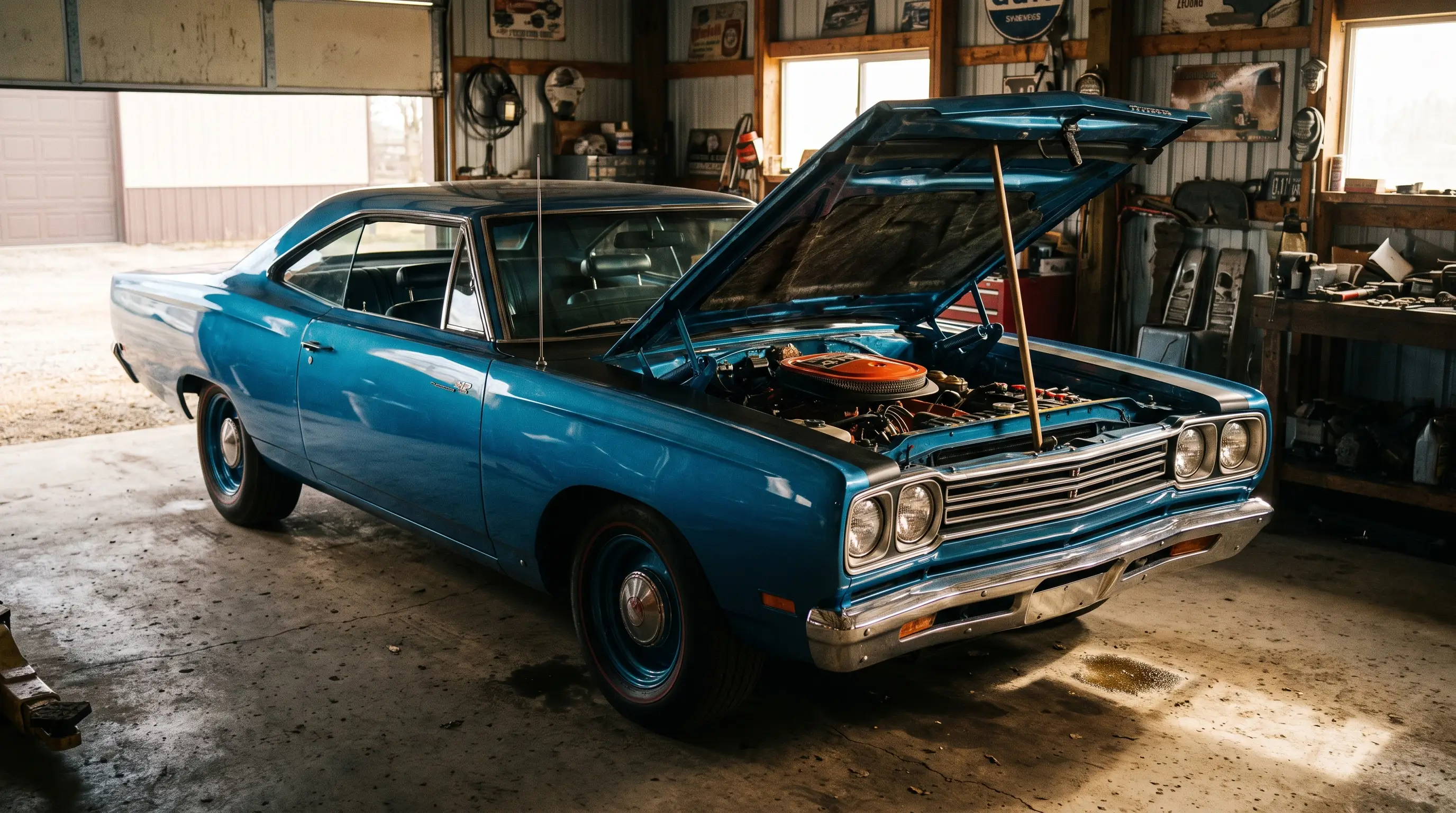
Article
The A12 Package: The Lift-Off Hood 440-6
Article
Hemi vs 440 Six Barrel in the Road Runner
Article
The Air Grabber Hood
Article
Road Runner Engine Options Year by Year
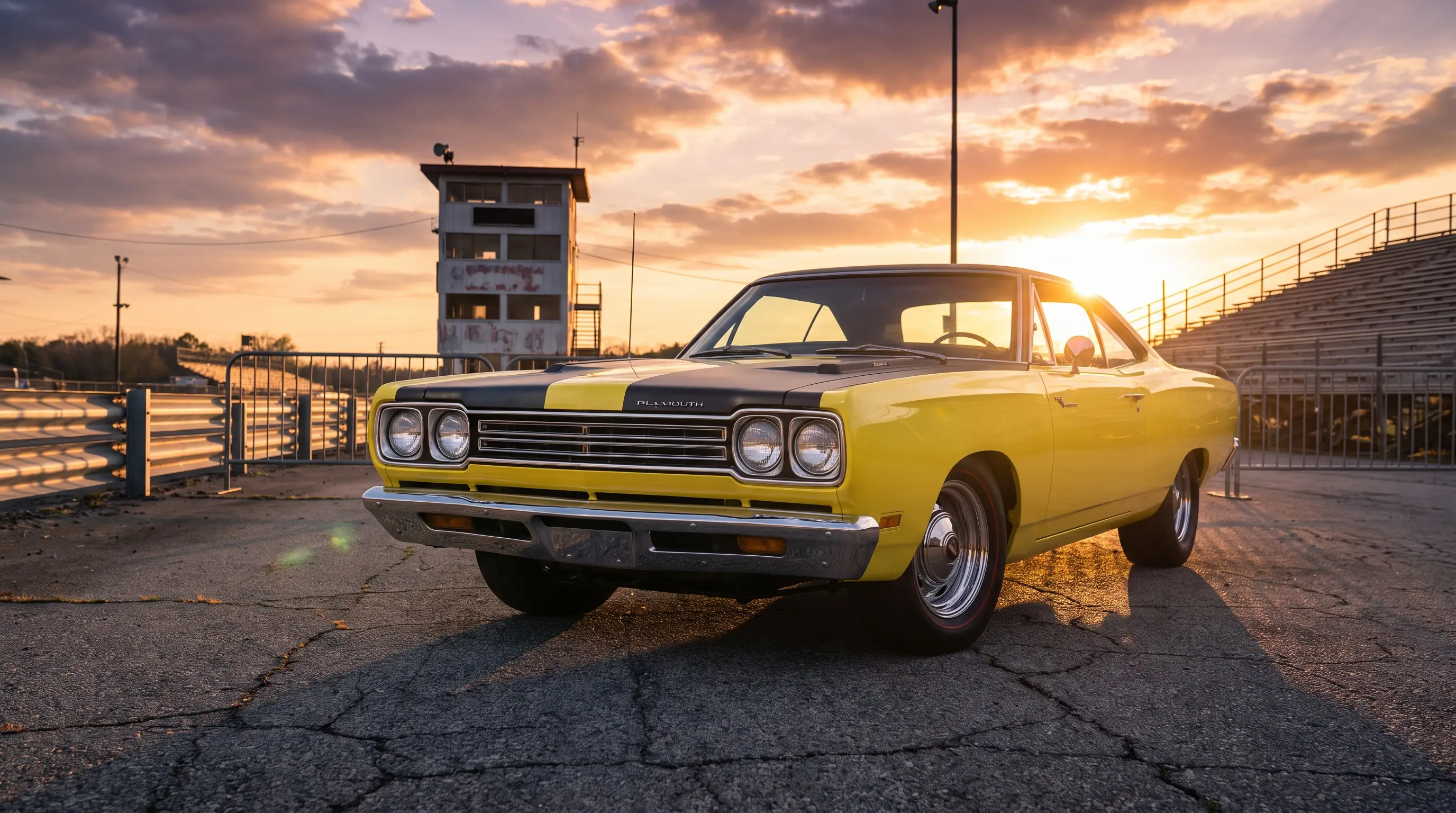
Article
How the Road Runner Made Big-Block Muscle Affordable
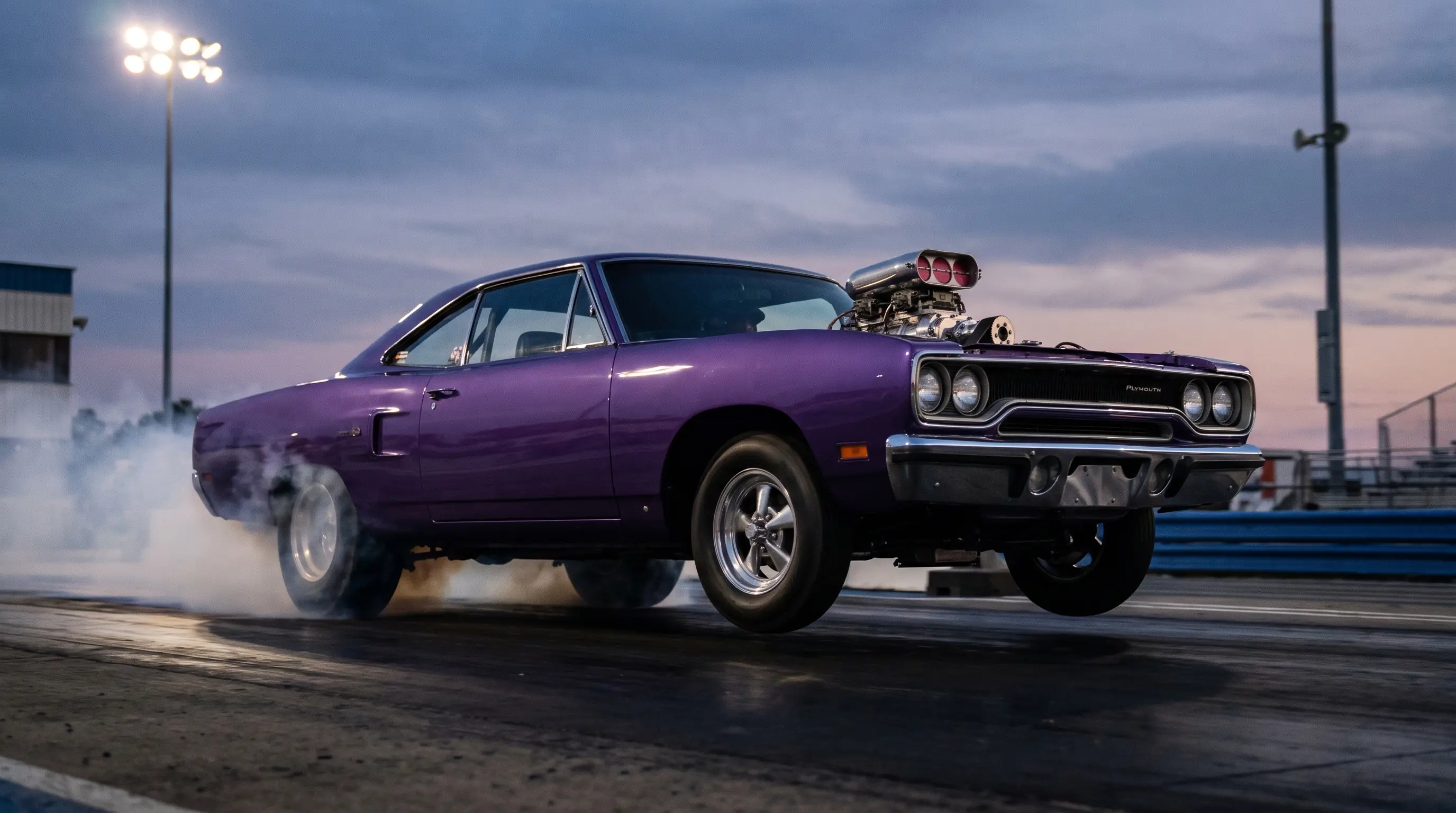
Article
Road Runner Horsepower Wars
Have a
Plymouth Road Runner
for Sale?
Reach thousands of serious classic car collectors across the US.
Sell It Here →
Are You a Classic Car Dealer?
List your full inventory and connect with targeted classic car buyers.
Join as a Dealer →

About the author
Dan Reeves
Performance engine builder from North Carolina's motorsports corridor, focused on swaps, forced induction and making real, repeatable power.
Related Listings - Plymouth Road Runner
Comments (1)
L
Lou Vincenzo
2 months ago
Best advice in any article like this: if the seller gets defensive about an independent inspection, walk away.