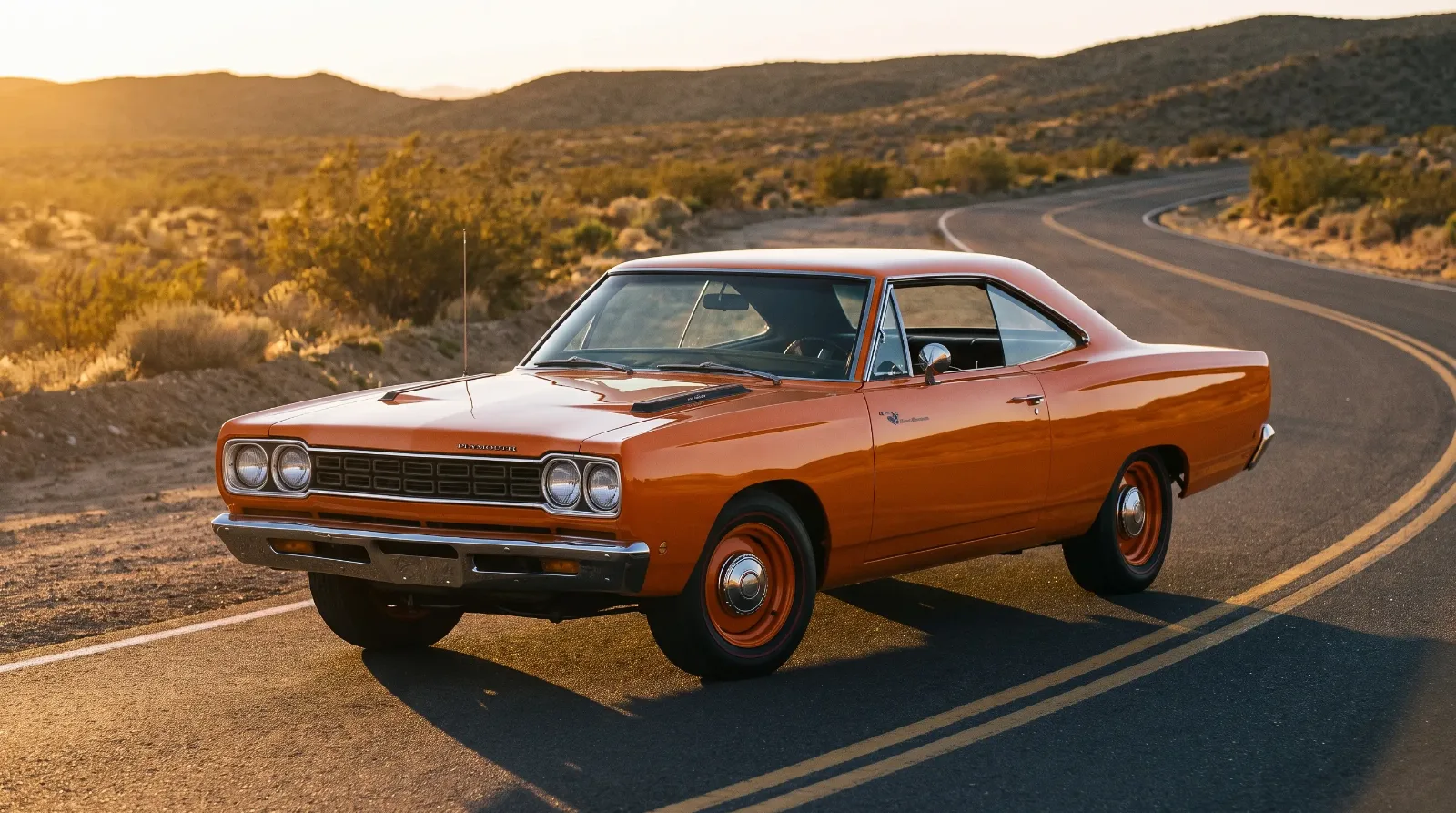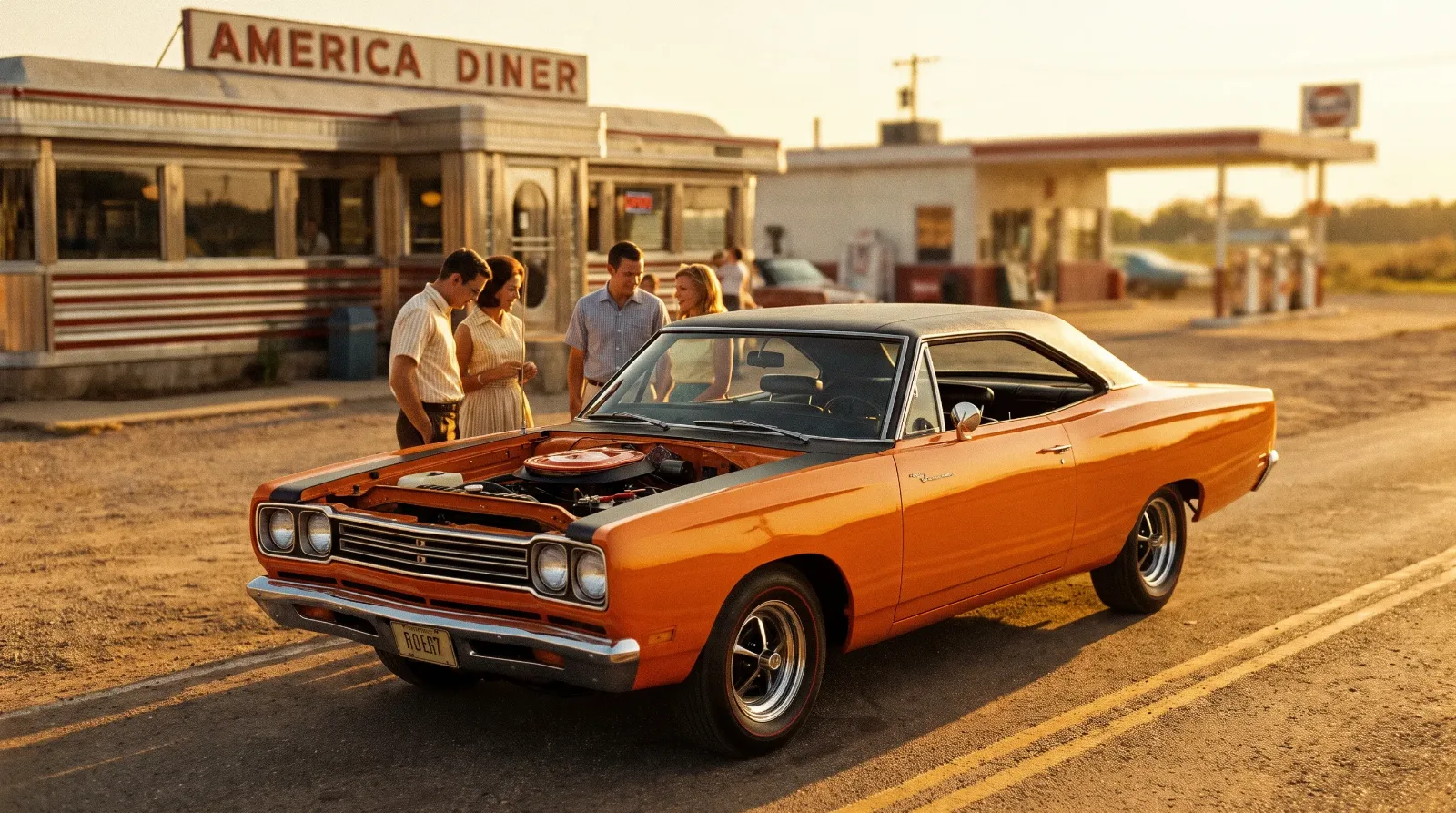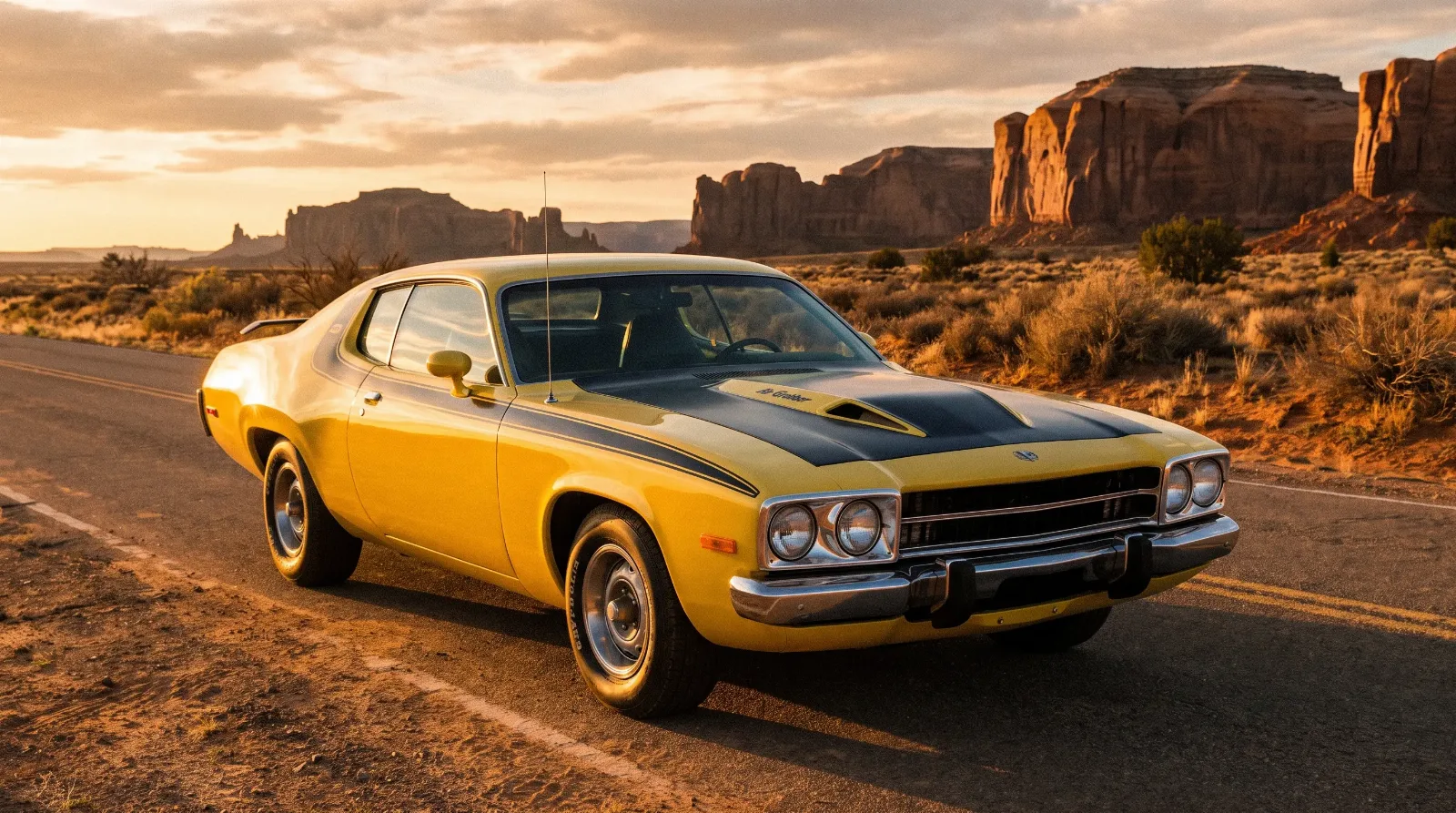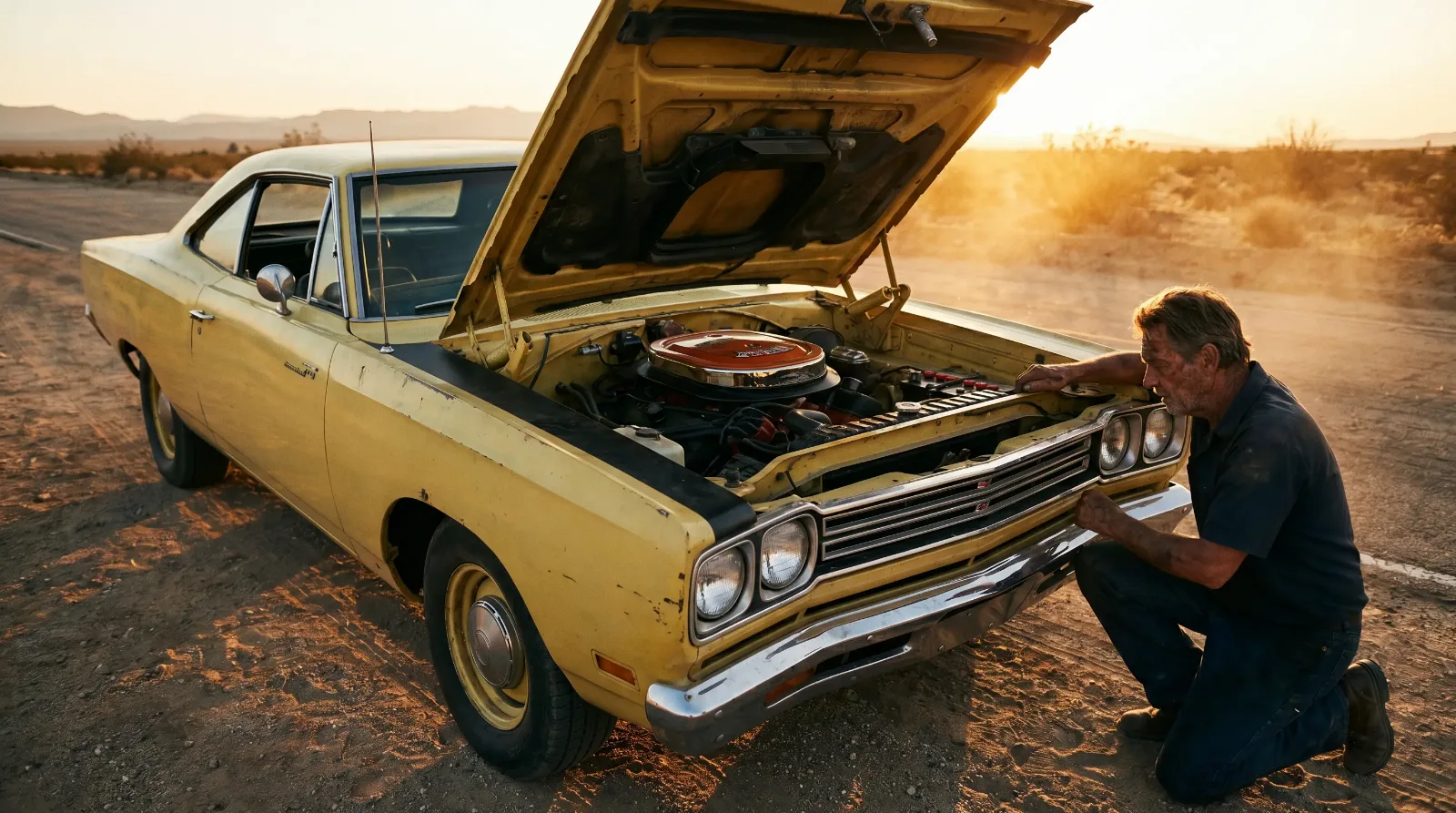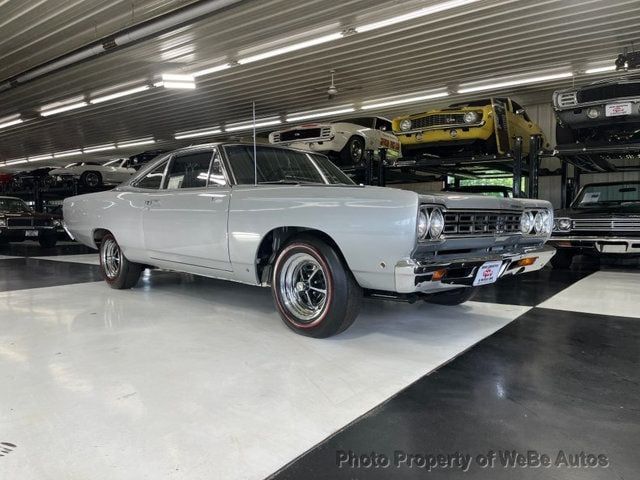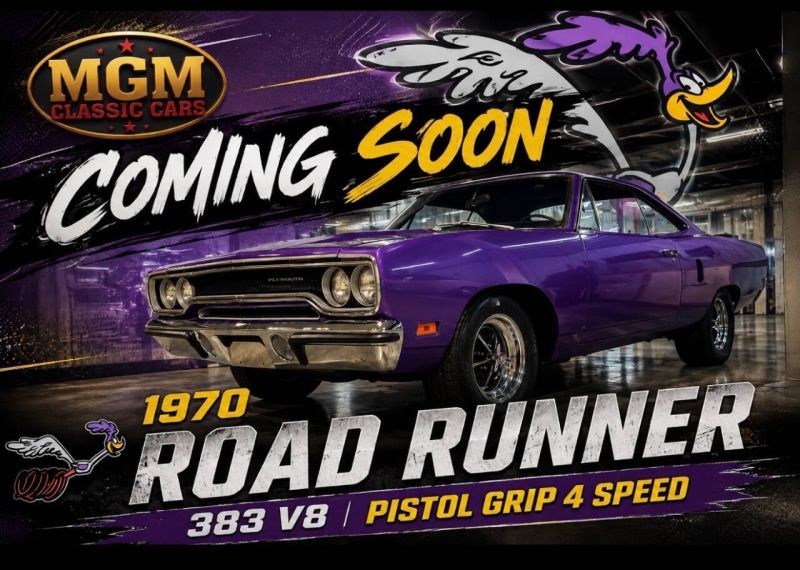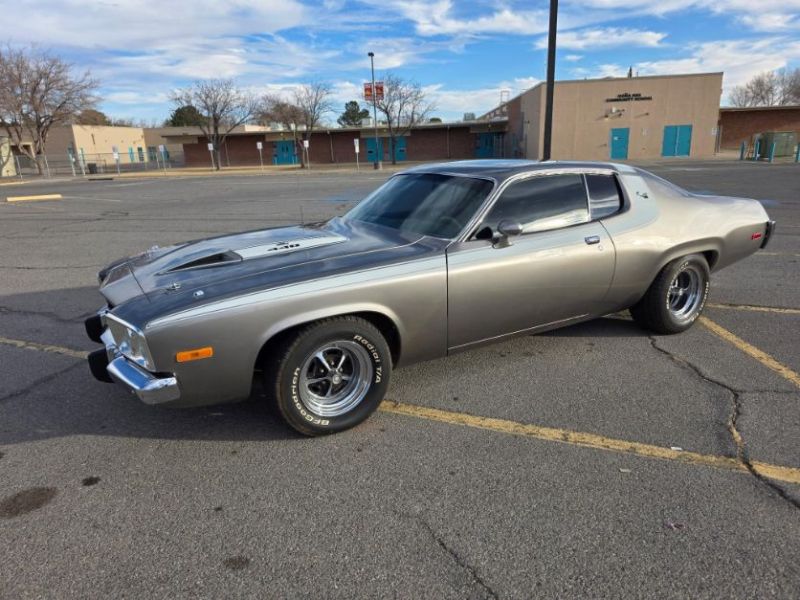
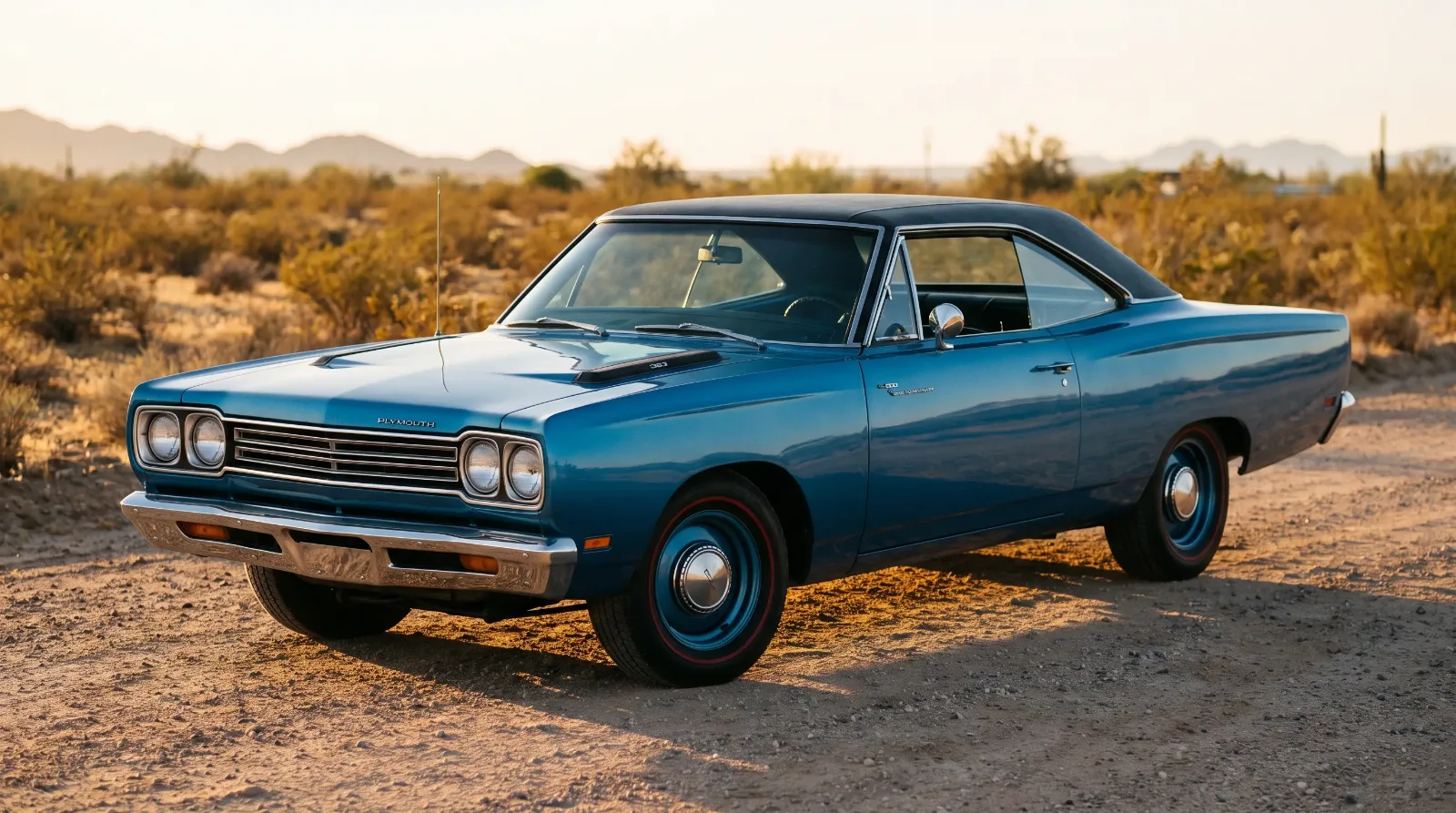
In the spring of 1968, a Plymouth product planner named Jack Smith did something that should have gotten him laughed out of a room full of Chrysler executives. He proposed paying Warner Bros. a licensing fee to name a car after a cartoon bird. Not a hawk, not a falcon, nothing with menace. A gangly desert bird whose entire personality was that it ran fast and made a fool of a coyote. The Plymouth Road Runner arrived that year as the cheapest way to buy real horsepower in America, and it worked precisely because nobody in the boardroom had the nerve to talk Smith out of the joke.
What makes the story worth telling is not that the gamble paid off. Plenty of muscle cars sold well. It is that the Road Runner solved a problem the rest of Detroit had spent the decade creating. By 1968 the muscle car had grown expensive, optioned, and heavy with chrome. A young buyer who wanted to go fast had to pay for a lot of things he did not want. Plymouth looked at that pile of extras and started throwing it out.
A cartoon bird and a licensing check
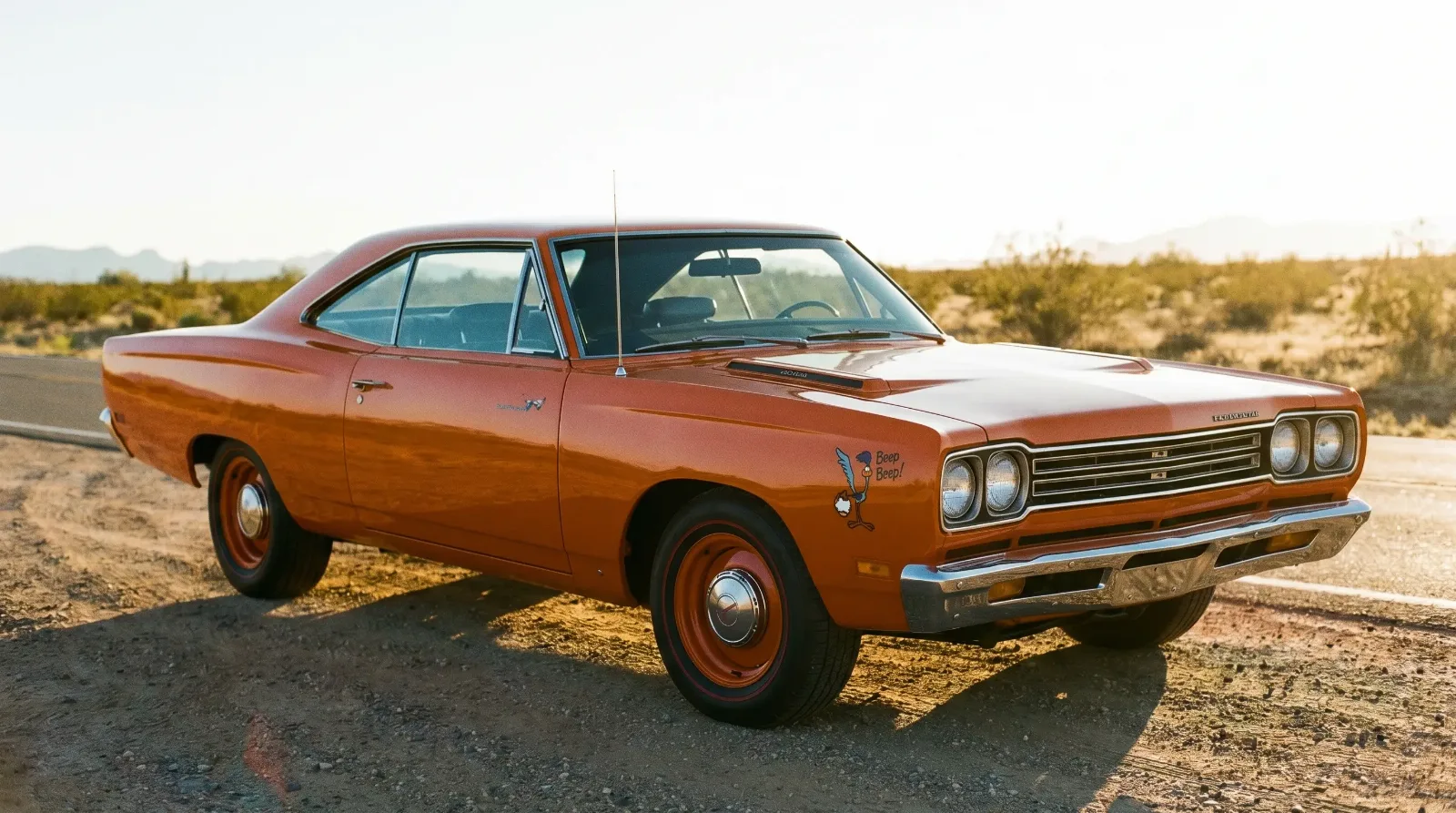
The name came first, and the name mattered more than anyone admits. Plymouth reportedly paid Warner Bros.-Seven Arts around $50,000 to use the Road Runner character and its likeness, then spent thousands more engineering a horn that went "beep beep" to match the cartoon. That horn was not a gimmick bolted on at the end. It was the thesis of the whole car stated out loud. This is not serious. This is fun. This is for the guy who watched Saturday morning cartoons and now has a job and a driver's license.
Chrysler's own people were nervous about it. The concern was that dealers and buyers would treat a comic-strip car as a punchline rather than a purchase. Instead the bird did the opposite. It gave a plain Belvedere body a face and a story, and it turned a stripped-down price leader into something a nineteen-year-old actually wanted to be seen in. The little decals of the running bird, the horn, the cartoon on the door, all of it made a cheap car feel like it was in on the same joke the buyer was.
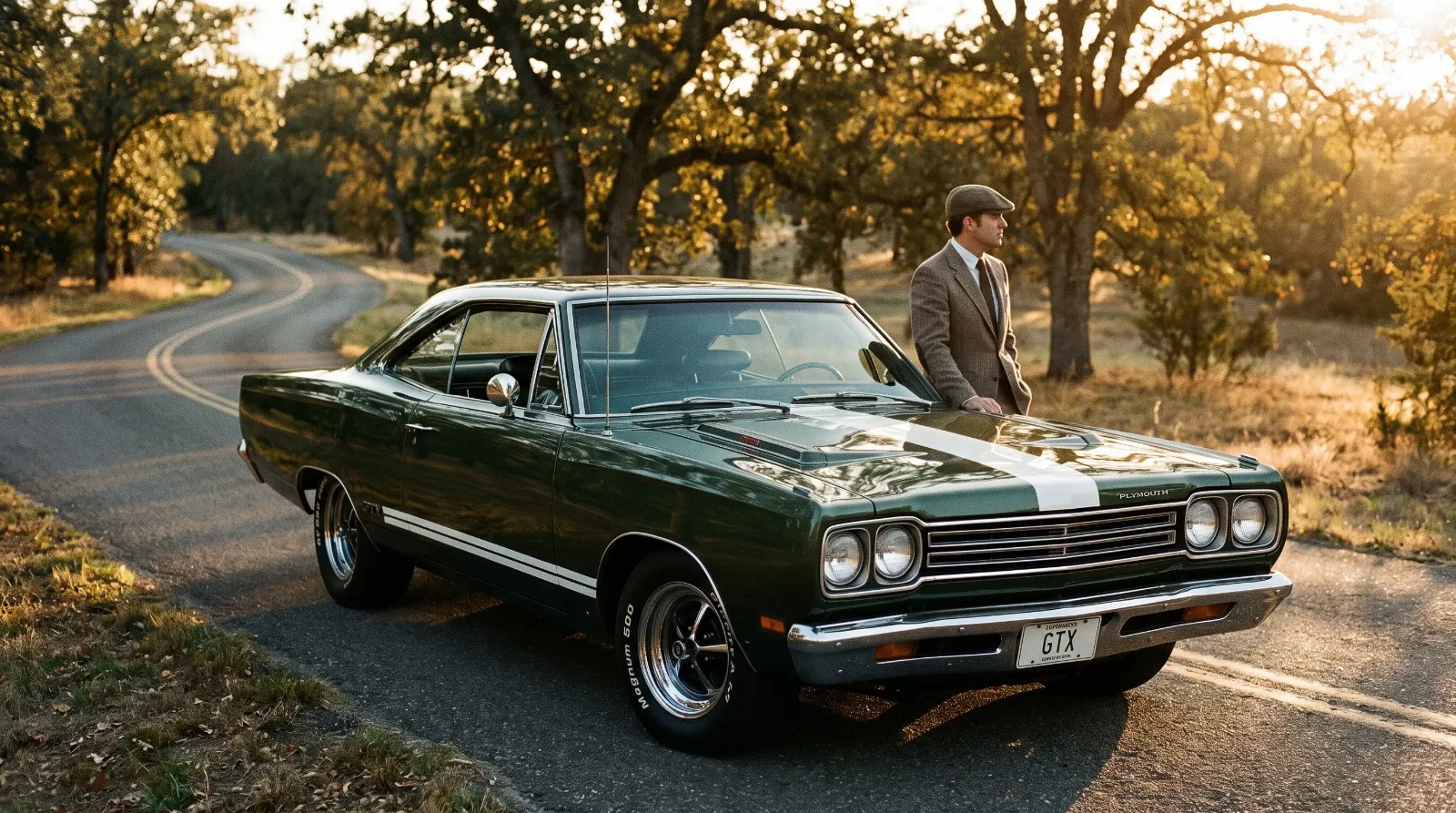
Plymouth had a serious sibling already. The GTX was the upscale performance B-body, better trimmed and more expensive, and it aimed at the buyer who wanted his speed dressed up. The Road Runner was the GTX with the tuxedo stripped off. Same bones, less money, more attitude. Positioning two cars that close together on one platform could have cannibalized both. It did not, because they sold to two different people, and the cheaper one turned out to be the one everybody remembered.
What Plymouth actually built
Underneath the cartoon was a genuinely clever piece of product planning. The 1968 Road Runner started on the mid-size B-body Belvedere, the plainest two-door Plymouth made, and then Plymouth put the effort where a young buyer would feel it. Standard equipment was a 383 cubic inch V8 rated at 335 horsepower, but this was not the ordinary 383. Plymouth fitted it with the heads, camshaft, and intake from the bigger 440, so the base engine punched well above what the badge suggested.
Everything else was deliberately basic. Bench seat. Rubber floor mats. Manual drum brakes. Roll-up windows. A three-speed manual on the floor. No carpet worth mentioning. The idea was that a buyer paid for go and skipped show, and the base price landed near $2,896, which undercut nearly every other way to get a big-block into a driveway. For the buyer who wanted more, the option sheet held the crown jewel: the 426 Hemi, rated at 425 horsepower, available for a premium that roughly doubled the cost of the car's performance content.
The genius was restraint. Ford and Chevrolet answered performance demand with longer option lists. Plymouth answered it by deciding, on the buyer's behalf, that the money belonged under the hood. A Road Runner looked cheap because it was cheap everywhere the road did not care about.
There is a discipline in that choice that gets overlooked. It is easy to build a fast car by spending money everywhere. It is much harder to build one by refusing to spend money anywhere it will not be felt at speed. Plymouth's planners had to argue, feature by feature, over what a young buyer would actually pay for, and they landed on a car that was almost aggressively plain inside. The reward was a price that made a rival salesman wince, and a first-time performance buyer who suddenly found a big block within reach of a working wage.
| Specification | 1968 Plymouth Road Runner |
|---|---|
| Platform | Chrysler B-body (Belvedere-based) |
| Body styles | Two-door coupe, later hardtop and convertible |
| Standard engine | 383 cu in V8, 335 hp |
| Top engine option (1968) | 426 Hemi V8, 425 hp |
| Added 1969 | 440 Six Barrel V8, 390 hp |
| Standard transmission | Three-speed manual, floor shift |
| Approx. base price (1968) | $2,896 |
| Signature feature | Warner Bros. "beep beep" horn and bird decals |
The numbers nobody at Plymouth expected
Plymouth built the Road Runner to a modest forecast. Internal forecasts for that first year are remembered differently across sources, with figures ranging from a few thousand up to around 20,000 units, a cautious bet on a car with a cartoon name and a rubber floor. By the end of 1968 the company had sold roughly 45,000. The forecast was not merely beaten. It was embarrassed.
That miss tells you how badly Detroit had misjudged its own customer. The industry assumed young performance buyers wanted the trimmings and would pay for them. The Road Runner proved a large slice of that market wanted the opposite, a fast car with the frills subtracted and the price to match. Every stripped-down muscle package that followed, from the competition down the street to Plymouth's own later economy runners, was chasing the lesson the bird taught in a single model year.
The car also arrived at exactly the right cultural moment. Drag racing had moved from the fringe to the mainstream, street racing was the sport of every parking lot after dark, and a generation raised on cheap gasoline treated a quarter mile as a rite of passage. The Road Runner did not invent that world. It just gave the kid with a summer job the least expensive ticket into it.
"Most muscle cars asked you to prove you were serious by writing a bigger check. The Road Runner did the reverse. It handed you the horsepower up front and dared you to admit you were only ever in it for the fun."
- Patrick Walsh
1969 and the coyote catches up
Success bought Plymouth a second act, and 1969 was the year the Road Runner went from surprise hit to institution. Sales roughly doubled to somewhere north of 84,000, the car added a proper hardtop and a convertible to the coupe, and Motor Trend named it Car of the Year. A comic-strip economy special had become a magazine cover.
The bigger news was under the hood. Midway through 1969 Plymouth introduced the 440 Six Barrel, a 440 cubic inch V8 fed by three two-barrel carburetors and rated at 390 horsepower. It slotted neatly between the base 383 and the fearsome Hemi, and it gave buyers most of the Hemi's ferocity for a fraction of the price. The earliest 440 Six Barrel cars wore a lift-off fiberglass hood with a huge functional scoop and no hood hinges, held down by pins, a detail so aggressive it looked like it had escaped from a race track.
This was the Road Runner at its purest. Cheap where it could be, savage where it counted. The buyer who checked the 440 Six Barrel box got a car that would embarrass more expensive machinery at a stoplight while still riding on a bench seat and rubber mats. The joke had teeth now, and the coyote, for once, had caught something.
1970 and the Air Grabber
The 1970 model year gave the Road Runner its best-looking body and one of its most theatrical options. Plymouth restyled the B-body with a cleaner nose, a full-width front bumper, and a rear treatment that finally matched the car's personality. It looked less like a stripped Belvedere and more like something designed on purpose to intimidate. For the buyer chasing show as well as go, this was the Road Runner at its visual peak.
The option that everyone remembers is the Air Grabber. This was a hood scoop that stayed hidden until the driver flipped a switch under the dash, at which point a flap rose up out of the hood to feed cold air to the engine. The exposed sides of the scoop were painted with a snarling set of shark teeth, a detail so juvenile and so perfect that it belonged on a car named after a cartoon. A driver could pull up to a rival at a light, reach down, and watch the teeth rise like a threat. It did almost nothing that a plain scoop would not, and it did everything for the theater of the moment.
That year also brought the dust-trail graphics, side decals showing the bird kicking up a cloud as it ran, and a wider spread of the High Impact colors. Plymouth understood by 1970 that it was not just selling engines. It was selling the idea that a young buyer could own the loudest, most cartoonish, most openly fun car in the lot, and back it up at the strip. The 1970 cars are, for many collectors, the definitive Road Runner because they carry the full story on the outside: the looks, the graphics, the teeth, and still the big block underneath.
The wing, the nose, and Richard Petty
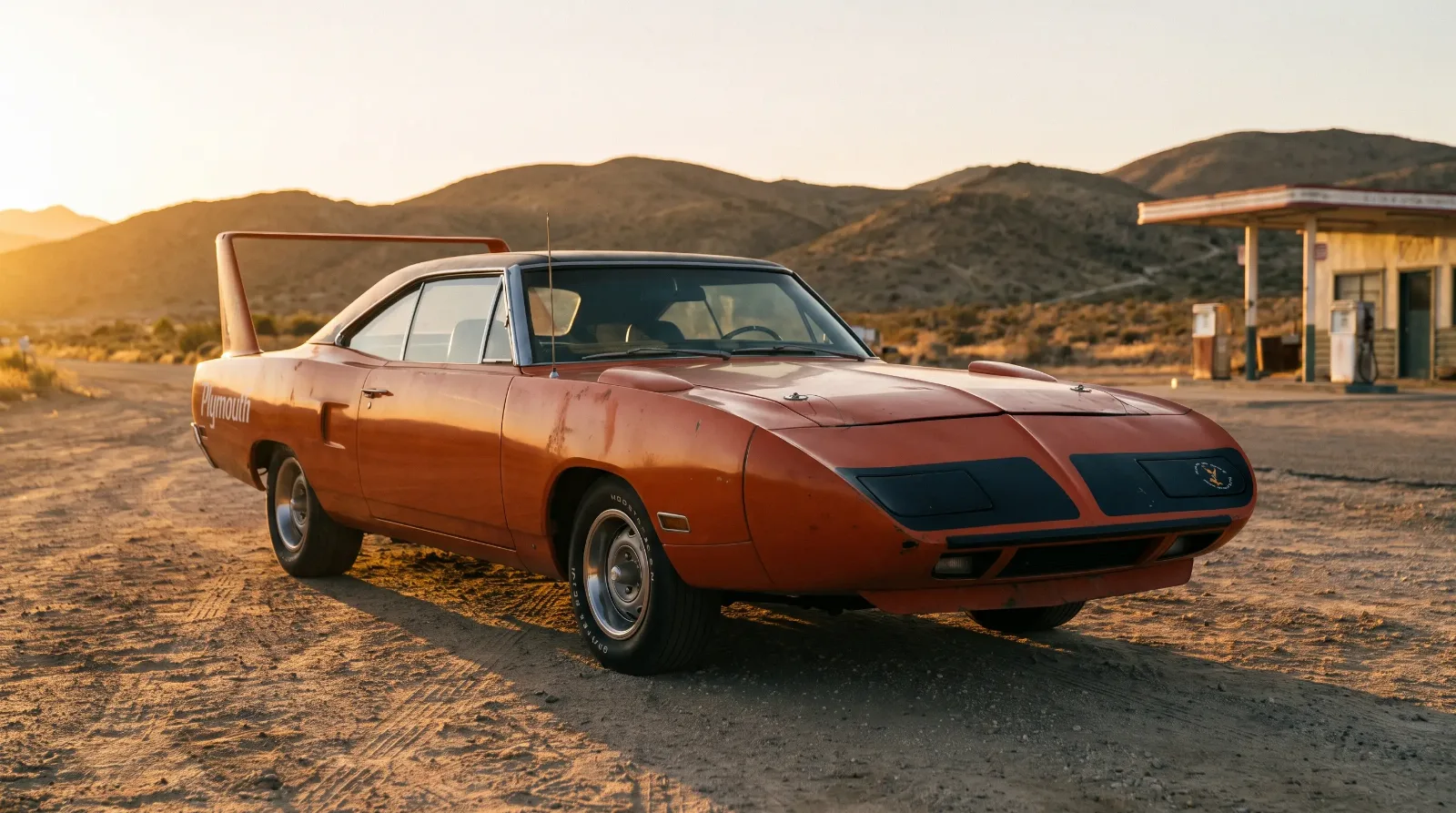
Then came the strangest and most valuable Road Runner of all. For 1970 Plymouth built the Superbird, a Road Runner reshaped for one purpose: to win NASCAR races and, just as importantly, to bring Richard Petty back to Plymouth after he had defected to Ford. Petty wanted a car that could run with the aerodynamic Fords and Dodges on the superspeedways, and Plymouth answered with a pointed fiberglass nose cone and a rear wing tall enough to clear an open trunk lid.
The wing was not styling. It was function pushed to a comic extreme, and the tall mounting existed partly so the trunk would still open. To race the shape, NASCAR rules required Plymouth to build a run of street versions for the public, and roughly 1,935 Superbirds left the factory for the US market as a result. At the time they were hard to sell. Dealers marked them down, and some were reportedly converted back toward standard Road Runner trim just to move them off the lot.
The irony writes itself. The Superbirds nobody wanted in 1970 became among the most valuable American cars of the era, and the wild aero package that made them unsellable is now the exact reason collectors chase them. A car built to satisfy a rulebook and flatter one driver turned into the crown of the whole model line.
High impact colors and a culture in paint
You cannot tell the Road Runner story in horsepower alone, because half of what people remember is the color. Chrysler's High Impact palette turned the muscle car into a rolling billboard, and Plymouth leaned into it harder than anyone. These were not colors so much as declarations. Vitamin C Orange. Lemon Twist. In-Violet. Lime Light. Tor-Red. Sassy Grass Green. A Road Runner in one of these shades did not blend into a parking lot. It announced itself from two blocks away.
That was the point. The whole car was built around the idea that going fast should be visible and a little ridiculous, and the paint finished the sentence the cartoon horn started. A buyer who wanted to be taken seriously bought something quiet and expensive. A buyer who wanted to have fun bought a purple car with a running bird on the door and a horn that mocked him every time he touched it. The Road Runner never once pretended to be dignified, and that honesty is a large part of why people still love it.
The horn deserves its own paragraph. Plymouth's engineers reportedly took a stock horn and rework the tone until it approximated the cartoon's "beep beep," painting the unit a specific purple so the factory line could tell it apart. It was a small, silly, expensive detail on a car sold on being cheap, and it is the single feature owners talk about first. That contradiction, real money spent to make a joke land, is the Road Runner in miniature.
"Every other muscle car wanted to be a poster on a teenager's wall. The Road Runner wanted to be the friend who dared you into the drag race. It is the only one that got in the car with you."
- Patrick Walsh
The slow fade
Nothing built on cheap gasoline and loud engines was going to survive the early 1970s intact. The 1971 Road Runner wore a curvier, heavier restyle, and the whole muscle car formula was already under pressure from rising insurance premiums that punished young buyers for the exact cars this one was built to sell them. Insurance companies had figured out who was buying big-block coupes, and they priced the risk accordingly.
Then came the tightening emissions rules and the switch to lower net horsepower ratings, which made every engine look weaker on paper even before real power actually fell. The 426 Hemi left the lineup after 1971. The 440 options thinned out. The 1973 oil embargo did the rest, turning a big thirsty V8 from a badge of honor into a liability at the pump. By the mid-1970s the Road Runner name had migrated onto smaller, tamer bodies, and by the end of the decade it survived only as an option package on the compact Volare, a shadow trading on a name it could no longer back up.
The classic Road Runner, the one that matters, lived from 1968 into the early 1970s. It was a creature of a specific and brief moment when horsepower was cheap, gas was cheaper, and Detroit was willing to sell a car named after a cartoon bird. That moment closed, and the Road Runner closed with it, which is exactly why the surviving cars carry the weight they do.
Why the bird still matters
Collectors did not always take the Road Runner seriously, and that late recognition is part of what makes the good ones interesting today. For years these were the affordable muscle cars, the ones you bought because a Hemi Cuda was out of reach. That has changed. A documented Hemi car or an early 440 Six Barrel now commands real money, and the Superbird sits in a valuation tier of its own, while a clean 383 coupe remains one of the more honest entry points into big-block muscle for someone who wants to actually drive the thing.
Part of what fuels that interest is the way the Road Runner refuses to fit the usual collector snobbery. It was never the most expensive Mopar, never the best appointed, never the one aimed at buyers who cared about status. It was the people's version, and the people who bought them new tended to use them hard, which means survivors carry genuine history rather than showroom preservation. A Road Runner that spent its youth at a drag strip and lived to tell about it is, to a certain kind of buyer, worth more as a story than a garage queen ever could be. The car earned its legend the same way it earned its sales, by being exactly what it claimed and nothing it did not.
What a buyer chases now is originality and story. The Road Runner was a car of codes and combinations, base 383 or optional 440 or rare Hemi, four-speed or automatic, one of the High Impact colors or a quiet factory shade, and each combination carries its own history and its own value. For anyone weighing where to start, the range of a classic Plymouth Road Runner for sale runs from an approachable driver-grade coupe all the way to a six-figure winged car, which means the entry point is real and the ceiling is high.
The lasting lesson is the one Jack Smith stumbled into in 1968. A car does not need to be expensive or serious to be great. It needs to know exactly what it is. The Road Runner knew from the first horn: it was fun, it was fast, it was cheap, and it never once apologized for any of the three. That clarity is rare, and it is why a plain Belvedere with a cartoon bird on the door outlasted a hundred cars that took themselves far more seriously.
The Road Runner shared Plymouth showrooms with its fastback sibling, chronicled in the Plymouth Barracuda story.
Sources and notes
- Plymouth Road Runner - Wikipedia
- Plymouth Superbird - Wikipedia
- The $50,000 Secret Hidden In Every Road Runner's Horn - HotCars
- 1968 Plymouth Road Runner: A Profile of a Muscle Car - HowStuffWorks
- Jack Smith, the Man Behind the Plymouth Road Runner - MotorCities
- Vintage Car Life Review: 1968 Plymouth Road Runner 383 - Curbside Classic