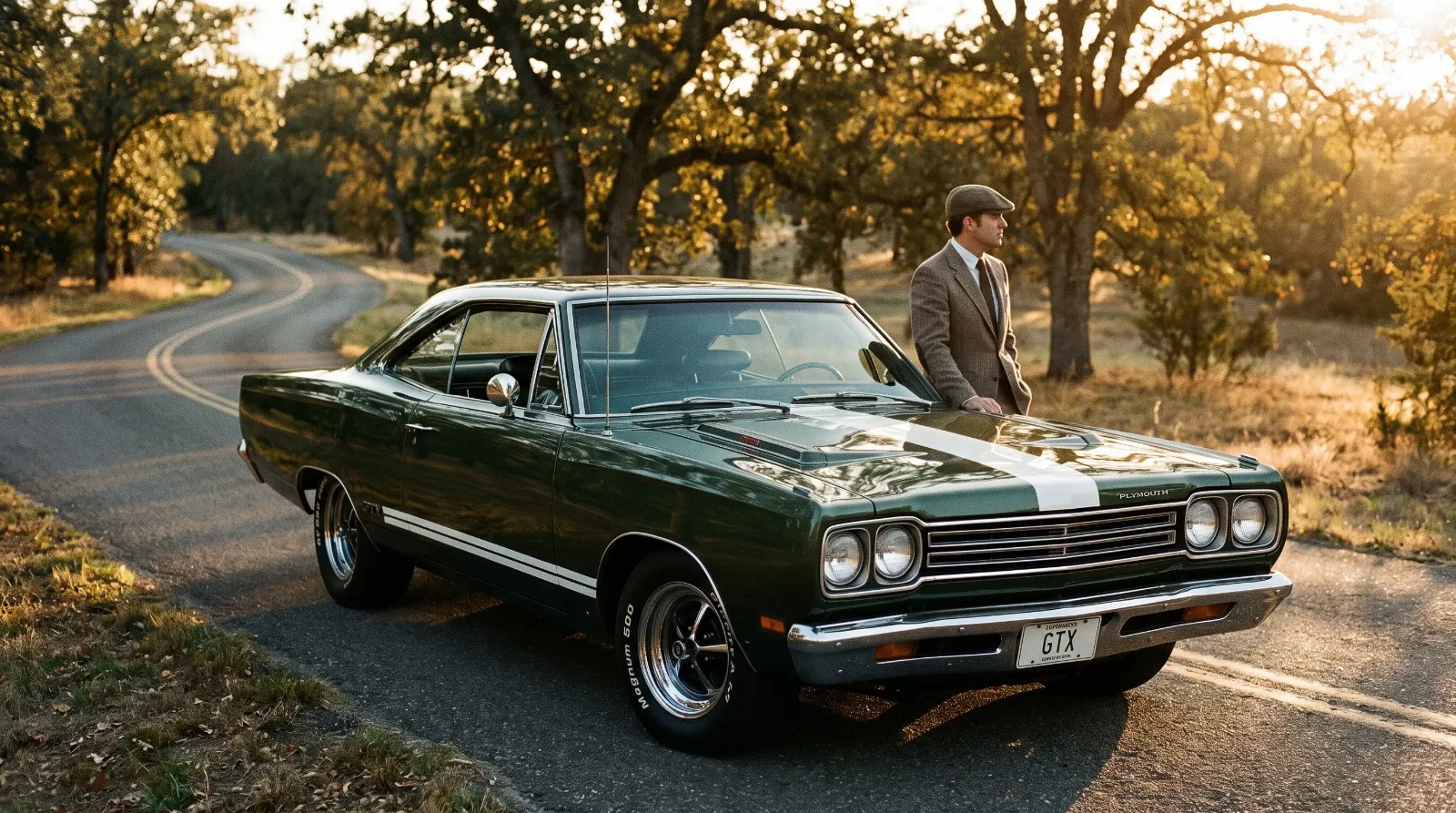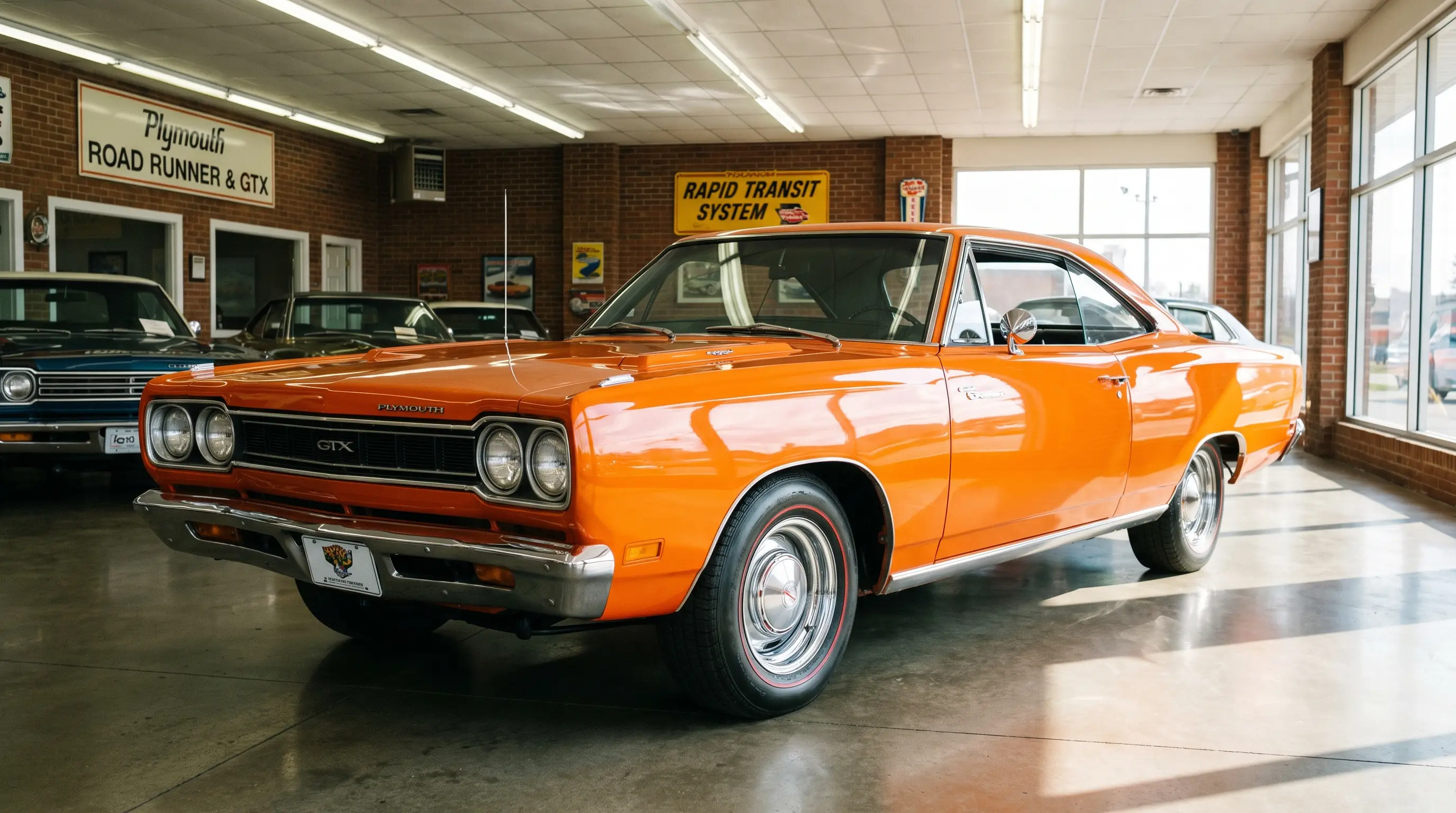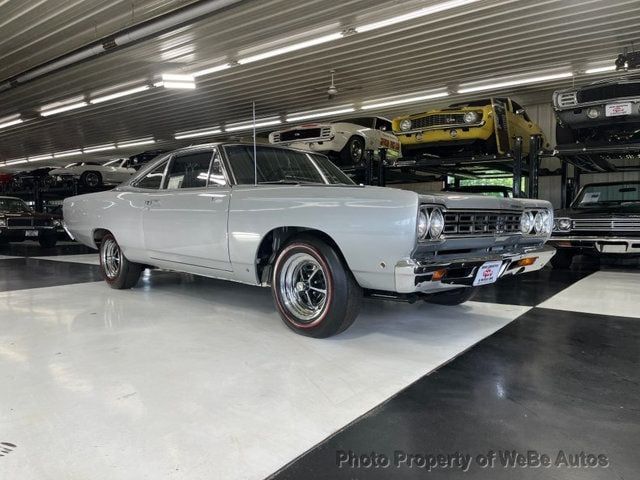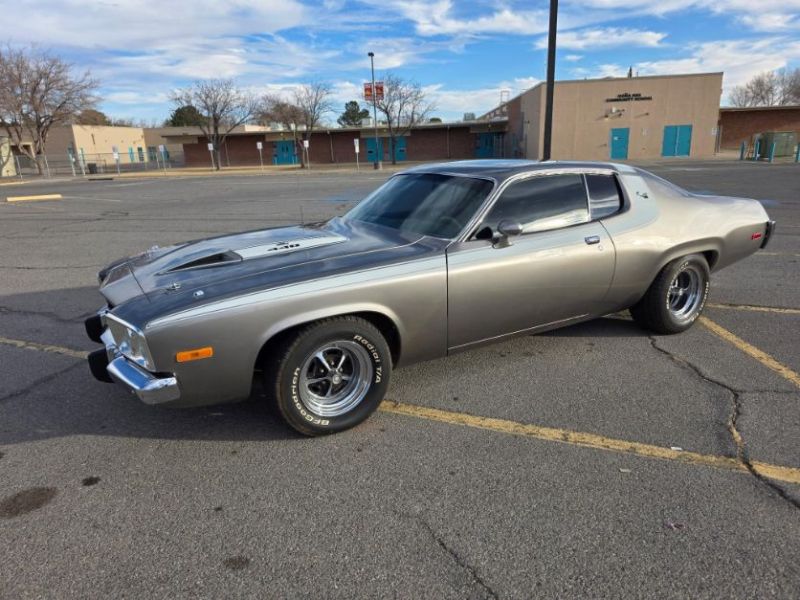

Enthusiasts and period writers have long summed up the GTX with a simple line: "the boss of the belvederes." Whether or not it was ever printed word for word in a Plymouth brochure, the phrase does more work than most car company slogans ever manage. It told buyers exactly what the GTX was without spelling it out: the top dog, the car that ran the show, built on the same Belvedere bones as everything else in Plymouth's intermediate lineup but sitting a clear notch above the rest of the family. It was a claim Plymouth actually backed up when the car launched for 1967, and the phrase stuck around in enthusiast circles for decades after the last GTX rolled off the line.
What "boss" meant in 1967
When Plymouth introduced the GTX for the 1967 model year, the Belvedere lineup already covered a wide range of trims, from basic family sedans up through the sportier Satellite. The GTX slotted in above all of them as a distinct performance model, built with a standard 440 cubic inch V8, heavy-duty suspension, dual exhausts, and bucket seat interior options that no other Belvedere-based car offered as standard equipment. Calling it the boss wasn't just marketing bravado. On paper, it genuinely outmuscled every other car wearing a Belvedere badge that year.
The name also positioned the GTX against a specific set of rivals. Pontiac had already proven with the GTO that intermediate-sized cars with big engines could be genuine sales successes, and other manufacturers were rushing similarly configured cars to market. Plymouth's answer needed a clear identity of its own, and "boss of the belvederes" gave dealers and buyers alike a phrase that summed up the car's role in one line.
Standing above the Satellite and Belvedere
The hierarchy inside Plymouth's intermediate lineup mattered to how the GTX was marketed. The base Belvedere handled everyday family duty, the Satellite added a sportier trim level without necessarily adding serious performance, and the GTX topped the range as the performance flagship. That structure gave Plymouth a clean story to tell: whatever trim level a customer wanted to start from, the GTX represented the ceiling of what the platform could do.
Underneath the trim differences, all three models shared a substantial amount of sheet metal, chassis engineering, and mechanical hardware. The GTX's advantage came from what Plymouth bolted onto that shared foundation, not from a fundamentally different platform, which is part of why the "boss" framing worked so well. It told buyers the GTX was the same family with the wick turned all the way up.
Backing up the marketing with real hardware
Unlike some muscle car marketing of the era, the boss claim held up under scrutiny. The standard 440 Super Commando V8 produced genuinely strong output for the class, and the GTX's suspension tuning and brake package were engineered specifically to handle that power rather than simply bolted onto a base car's chassis. Plymouth engineers treated the GTX as a purpose-built performance model, not a trim exercise, and road testers of the day generally agreed the car delivered on its positioning against rivals from GM and Ford.
That combination, real engineering behind a confident marketing line, is part of why the GTX built a loyal following even though it never outsold the Road Runner that arrived a year later. Buyers who wanted the top of the Belvedere family tree, not just a fast car at any price point, knew exactly which model to ask for on the lot.
"Marketing slogans age badly more often than not. This one didn't, because the car underneath it actually delivered on the claim every single time someone put their foot down."
- Patrick Walsh
The phrase outlived the model
Even after Chrysler folded the GTX into the Road Runner lineup as an option package starting in 1972, the "boss of the belvederes" phrase stuck around in enthusiast writing and club newsletters as shorthand for what the standalone GTX represented during its five-year run. The plymouth gtx story traces that full arc from launch to its final standalone year, and the full story of the Road Runner nameplate shows how the two cars' fortunes eventually diverged and then merged back together once GTX became an option rather than a model.
The phrase also captures something the sales figures alone don't: within its own corporate family, the GTX genuinely was the performance benchmark other Plymouth intermediates were measured against, regardless of how it stacked up against outside competition from other manufacturers.
What it means for collectors today
Understanding the GTX's original positioning helps explain why documentation and originality matter so much to serious buyers now. A GTX built to genuinely be the boss of its own model family deserves to be verified as such, with a fender tag decode confirming the standard 440 or optional performance engine, correct suspension and brake components, and the trim level that set it apart from a base Belvedere or Satellite wearing similar sheet metal.
Buyers interested in seeing how that original hierarchy plays out in today's market can look at classic Runners on the market and compare GTX examples directly against Satellite and Road Runner listings built from the same basic platform. The price gap between them still reflects, in a rough way, the same hierarchy Plymouth built into the lineup back in 1967.
A phrase built for the dealer floor
Salesmen of the era needed a quick way to explain why a customer should spend more money on a GTX instead of walking a few steps over to a base Satellite with a smaller engine. "Boss of the belvederes" did exactly that in five words, and it worked because it framed the decision as moving up within a family the customer already trusted rather than gambling on an unfamiliar model. Plymouth had spent years building the Belvedere name into something reliable and recognizable, and the GTX borrowed that trust while adding a clear reason to pay a premium on top of it.
That approach differed from how Plymouth would later market the Road Runner, which deliberately distanced itself from the Belvedere family association in favor of its own cartoon identity and standalone reputation. The contrast between the two marketing strategies says as much about Plymouth's read on its customer base as any spec sheet does. One nameplate leaned on family pedigree to justify a higher price, the other leaned on pure value and a memorable gimmick to win over buyers who didn't care about pedigree at all.
A slogan that told the truth
Plenty of period car marketing overpromised. The GTX's "boss of the belvederes" claim did not, and that honesty is part of why the phrase still gets quoted by people writing about the car more than half a century later. It was a simple line built on real engineering, and it summed up the GTX's role in Plymouth's lineup better than a spec sheet ever could.