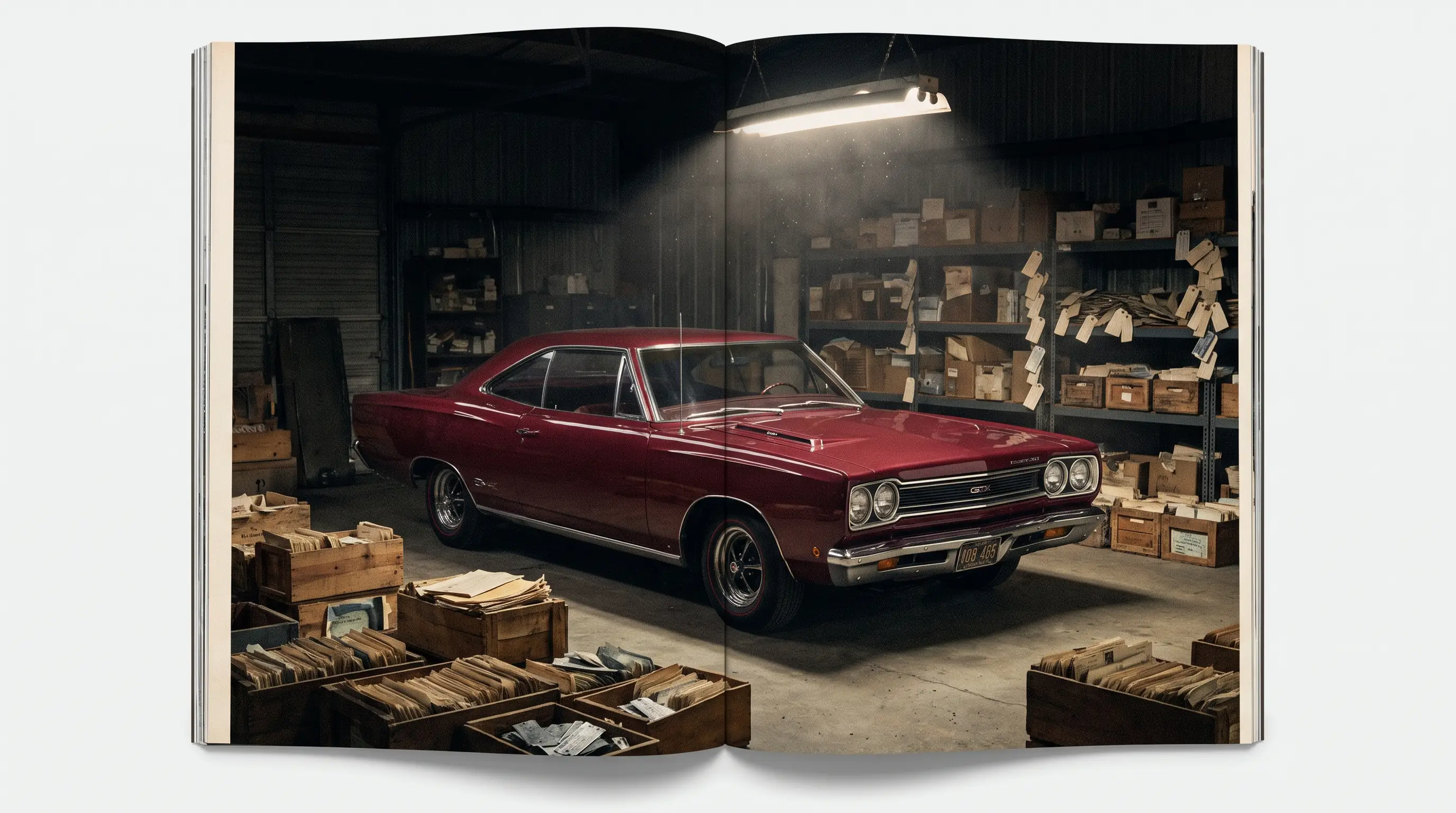
Plymouth GTX production numbers get repeated so often in club newsletters and auction catalogs that the figures have taken on a life of their own, and not all of what circulates holds up against the factory record. Chrysler's own broadcast sheets, fender tag codes, and Plymouth's annual sales reports tell a more precise story than the rounded-off totals that get passed around secondhand, and the real numbers matter enormously to anyone trying to verify a car's rarity before paying a rarity premium for it.
1967: the launch year baseline
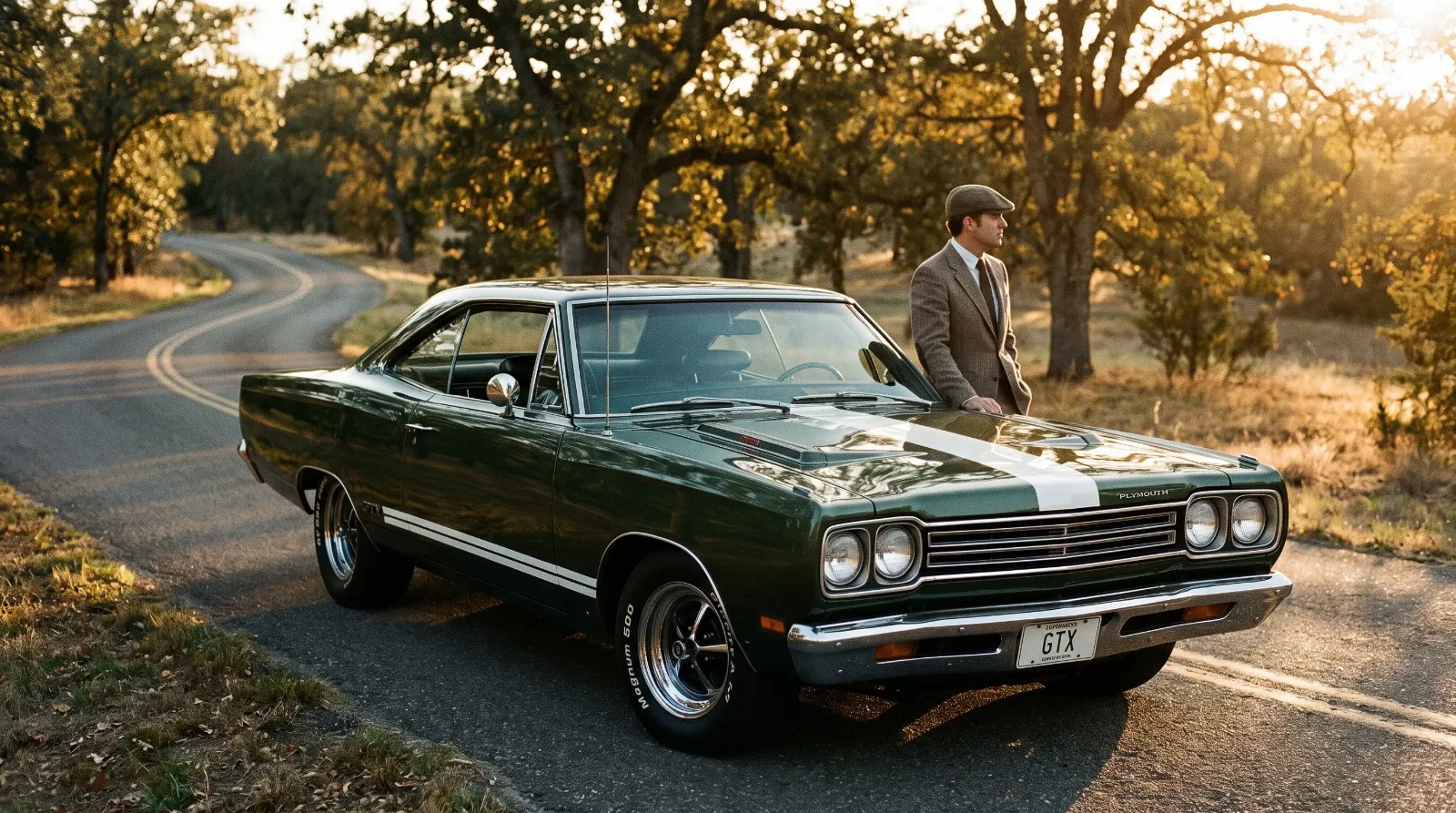
The GTX debuted for the 1967 model year as a distinct model built on the Belvedere platform, offered in hardtop and convertible body styles. Total production for that first year landed in the neighborhood of twelve thousand units combined across both body styles, a respectable start for a car competing against an already-established field of intermediate muscle cars from Pontiac, Oldsmobile, and Chevrolet. The convertible was always the rarer of the two body styles, as it would remain for the entire life of the standalone GTX.
Getting an accurate count for that first year requires cross-referencing Chrysler's production records with the Galen Govier registry and other documented sources, since early Plymouth sales literature sometimes rounded figures for marketing purposes rather than reporting exact factory totals.
1968 to 1969: the peak years
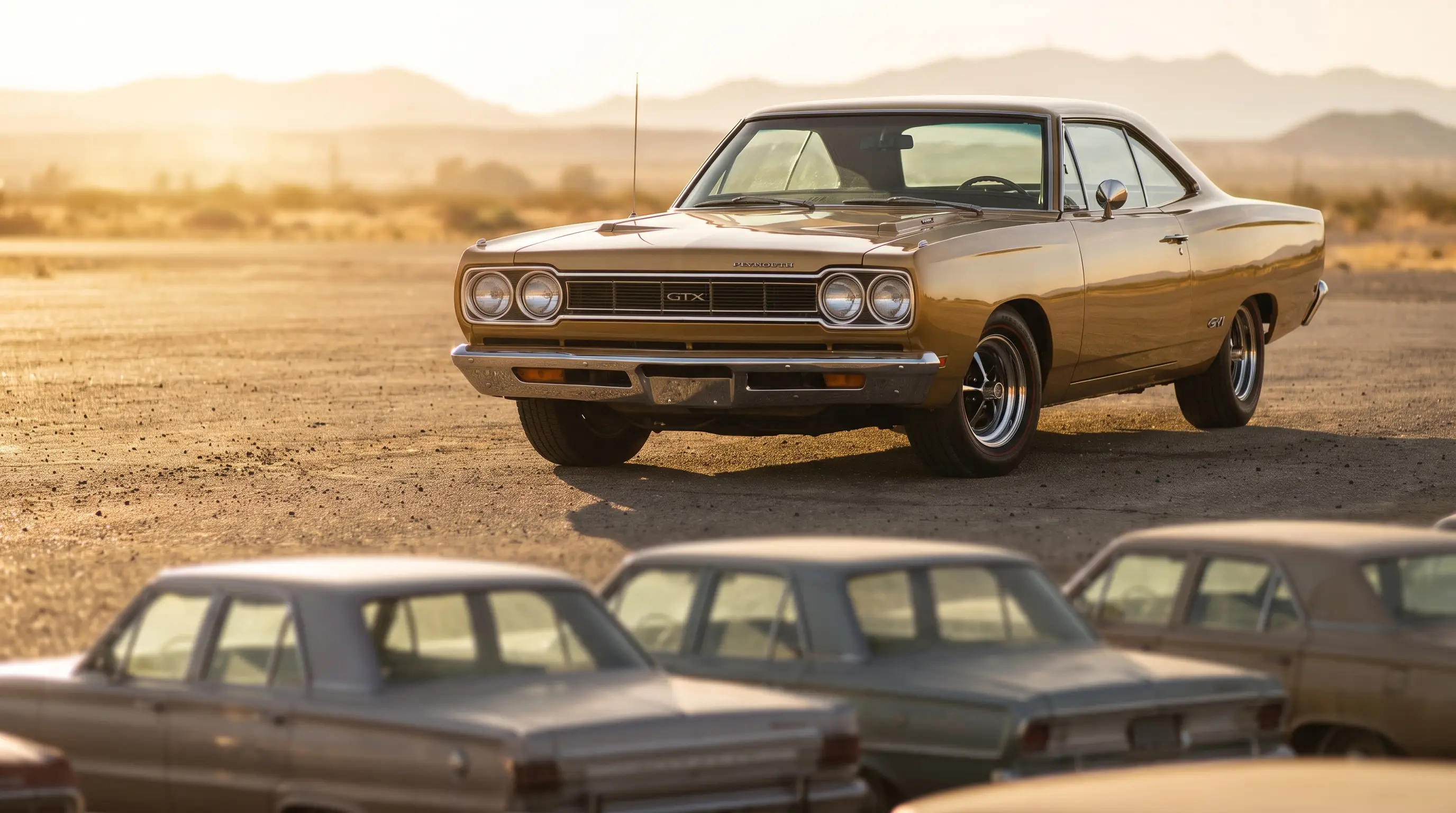
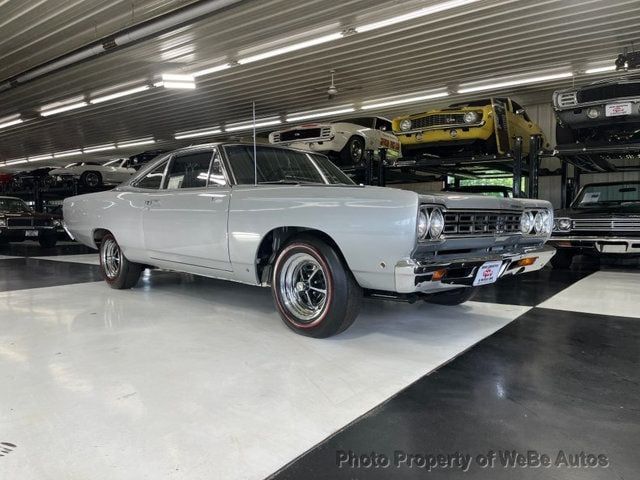
Production climbed for 1968 as the GTX moved to the redesigned B-body platform shared with the new Road Runner, with combined hardtop and convertible totals rising to roughly 18,000 units for the model year. That growth reflected genuine demand rather than an anomaly, since the GTX still held a fairly clear position in the market at that point, distinct from the cheaper Road Runner that had just been introduced alongside it.
1969 numbers came in lower than 1968's peak, a trend that tracks with the Road Runner's rapid rise in popularity that same year. Fender tag codes from 1969 GTX cars show a heavy skew toward the standard 440 engine option, with 440 Six Barrel and 426 Hemi cars representing a small fraction of total production. Collectors sometimes overstate how many Six Barrel GTX cars Plymouth actually built that year, and a careful fender tag decode is the only reliable way to separate a genuine example from a later clone.
1970: the redesign year drop
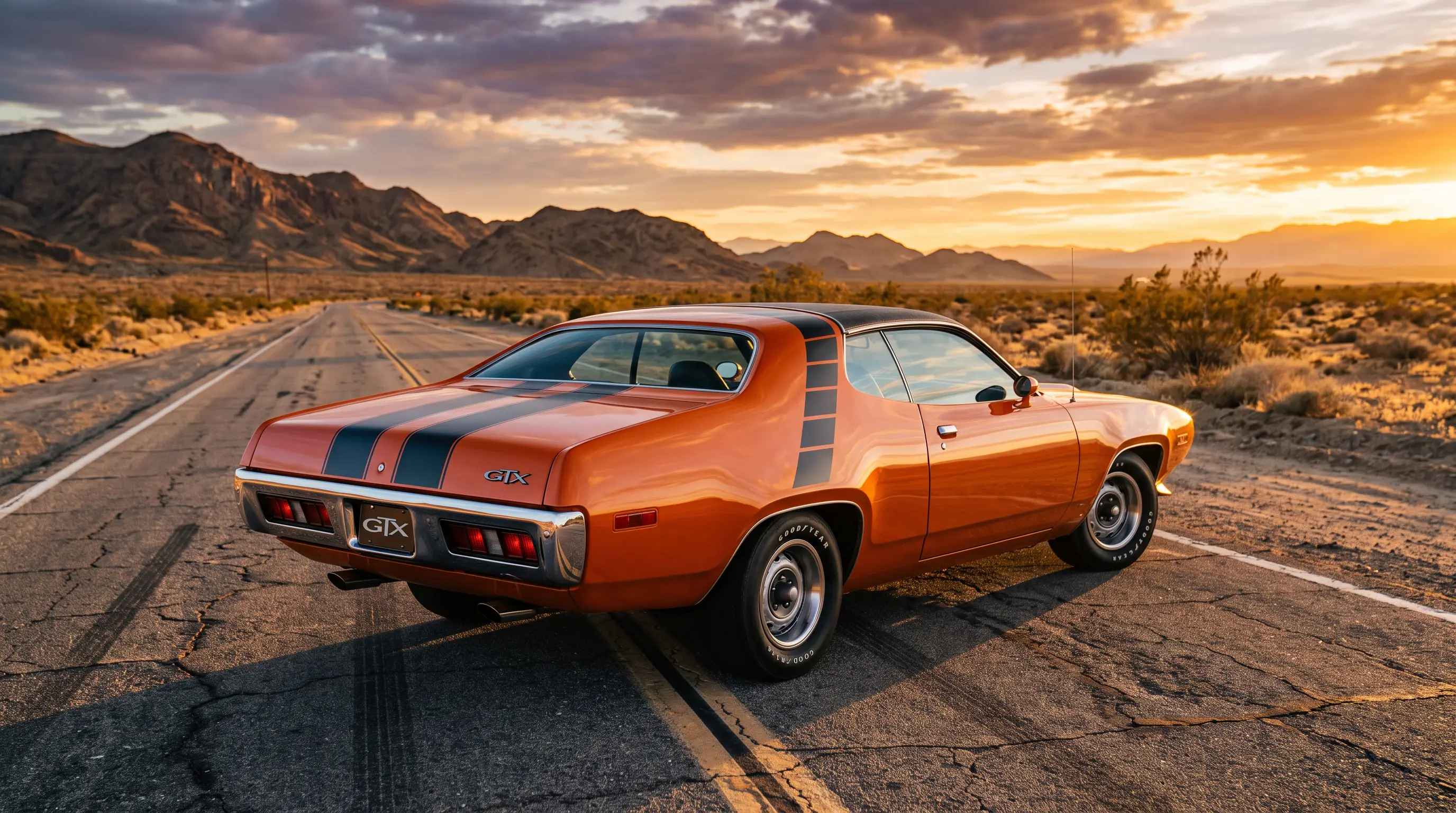
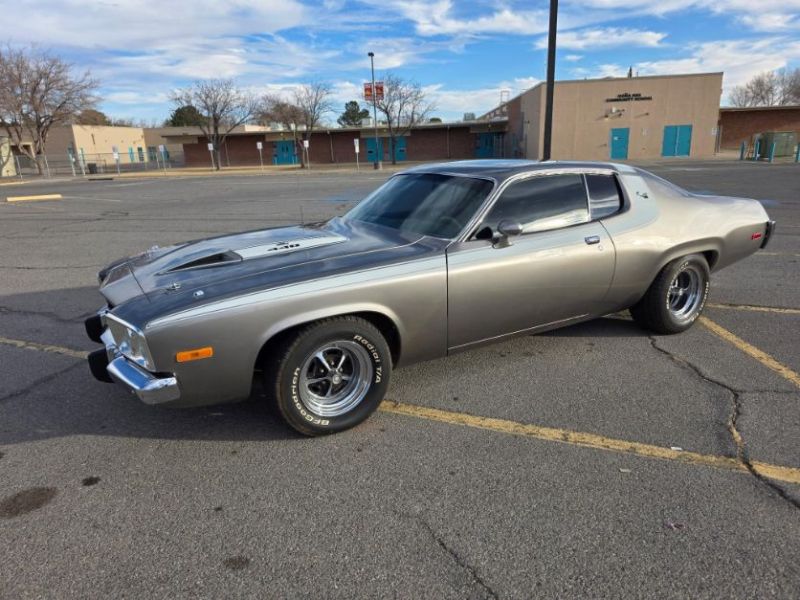
1970 brought a styling refresh with a new loop-style front bumper, and production numbers for that year continued their decline from the 1968 peak. Total GTX production for 1970 fell to roughly 7,700 units, reflecting both the ongoing shift of buyers toward the Road Runner and the broader cooling of the muscle car market as insurance costs climbed industry-wide. The convertible body style, already the rarer of the two, became especially scarce in 1970, and surviving examples with documented originality are treated as significant finds today.
1971: the final standalone total
The 1971 model year, the last in which GTX was sold as its own model rather than a Road Runner option, produced the lowest total of any standalone GTX year. Fender tag and production records place the 1971 total at 2,942 units, a steep drop from the 1968 peak that mirrors the broader industry contraction happening across the entire muscle car segment at the same time. The whole arc, from a strong 1967 launch through the 1971 wind-down, is covered in more depth in the whole picture, which traces how each model year's changes connected to the sales trends behind them.
"People love to quote a single GTX production number as if it applies to the whole model run. It never does. Every model year tells a different story, and the fender tag is the only document that settles an argument."
- Tom Ramirez
Why the numbers get misquoted
A lot of the confusion around GTX production totals comes from conflating GTX-specific figures with broader Belvedere or Satellite production numbers, since all three shared assembly lines and much of their sheet metal. Some published sources also combine hardtop and convertible totals without labeling them clearly, which makes body-style-specific rarity hard to establish without going back to primary documentation. Anyone researching a specific car's rarity should treat rounded, unsourced totals with real skepticism and prioritize fender tag verification over any number quoted from memory.
Engine-specific production breakdowns are even more prone to misquotation. Hemi GTX totals across all five standalone years are genuinely tiny, low enough that individual examples are frequently cross-referenced against known survivor lists rather than just trusted on the seller's word. A Six Barrel or Hemi GTX without a matching fender tag and supporting documentation should be treated as a base 440 car until proven otherwise, regardless of what the seller claims.
Where documented rarity meets the market
Understanding real GTX production numbers changes how a buyer should approach the market. A well-documented, correctly optioned example from a genuinely low-production year deserves a premium that an undocumented car with the same badges does not. Shoppers who want to compare current asking prices against documented rarity can shop classic Runner listings and weigh each car's claimed specification against what the factory record actually supports.
The GTX production story, read carefully, is less about a single headline number and more about five distinct years, each shaped by its own market pressures and each leaving behind a fender tag record that still settles arguments more than half a century later.
Body style breakdown across the run
Across all five standalone GTX model years, the hardtop consistently outsold the convertible by a wide margin, a pattern common to nearly every intermediate muscle car of the era. Convertible buyers tended to skew toward buyers who wanted a boulevard cruiser as much as a performance car, and as insurance costs rose and buyer priorities shifted toward straight-line performance over open-air comfort, convertible orders declined even faster than hardtop orders did in the later years. That makes a documented GTX convertible from any model year, but especially from 1970 or 1971, a genuinely uncommon find relative to the already-modest standalone GTX totals overall.
Transmission and rear axle codes recorded on the fender tag add another layer of verification worth understanding. Four-speed manual GTX cars represent a smaller share of total production than automatic cars in every model year, and a manual-equipped car paired with a documented performance axle ratio tends to draw stronger interest from buyers focused on driving experience rather than pure investment value. None of these breakdowns replace the primary source record, but they help explain why two GTX cars with identical engines can carry noticeably different value once every build detail is accounted for.