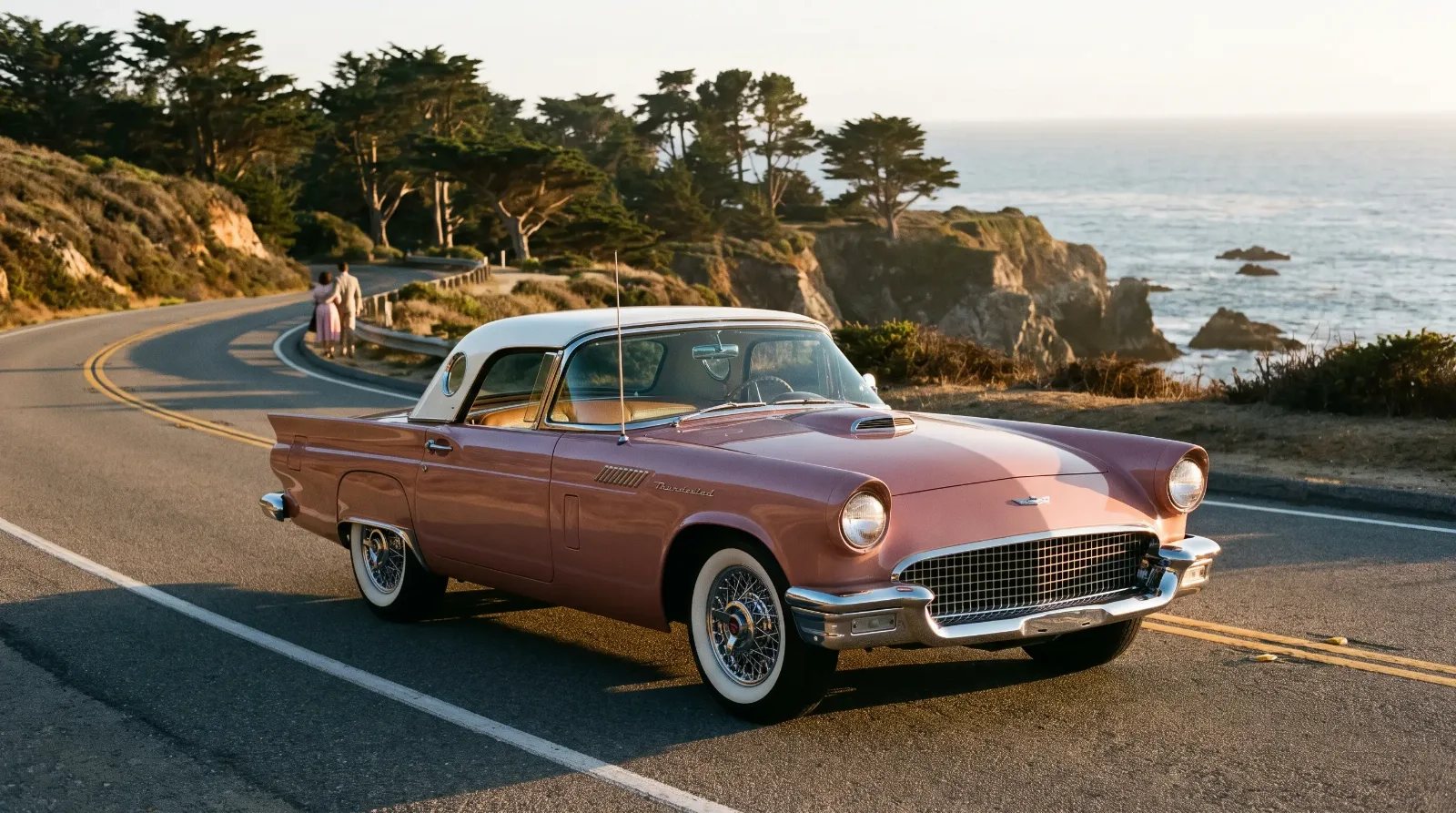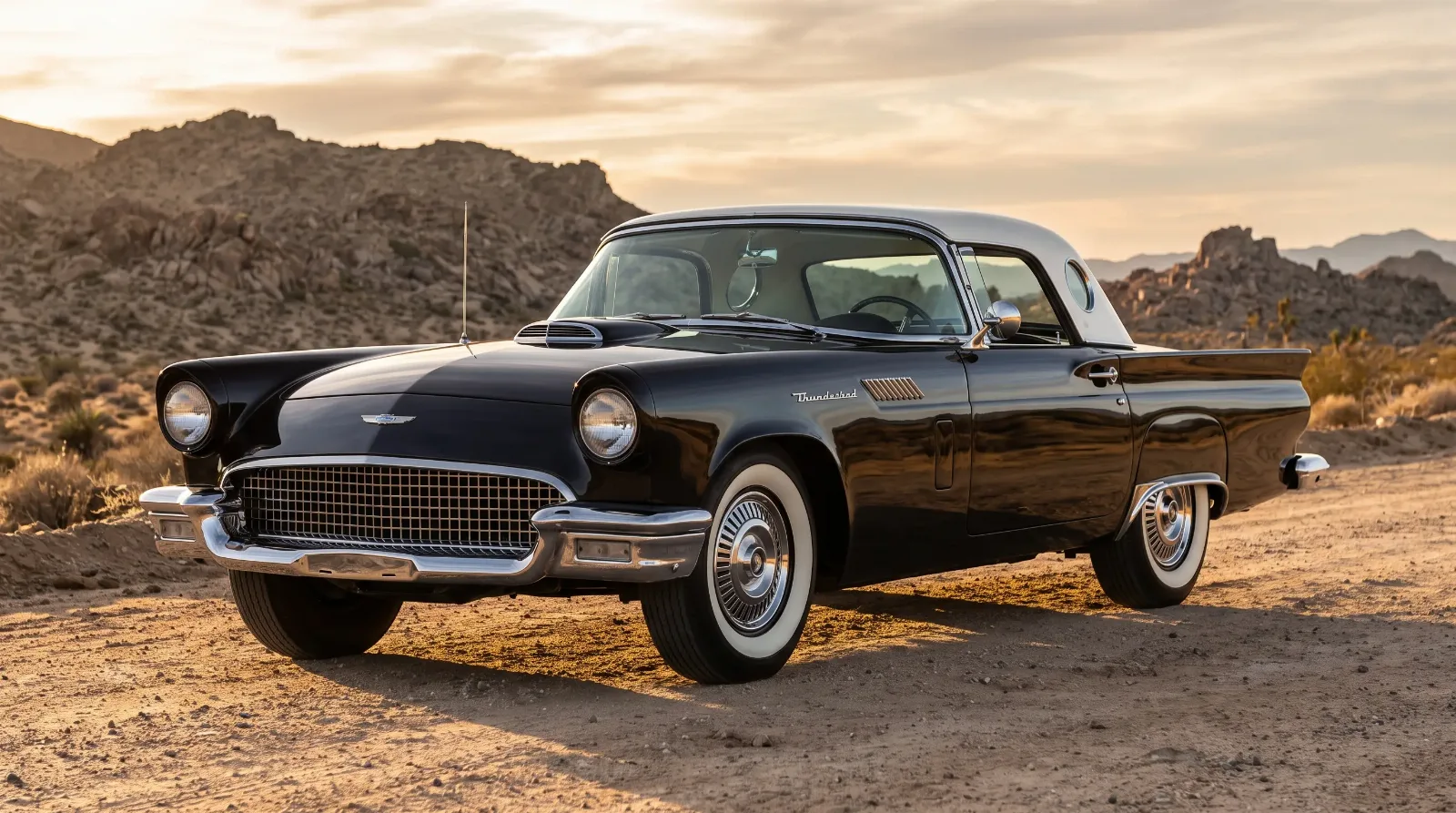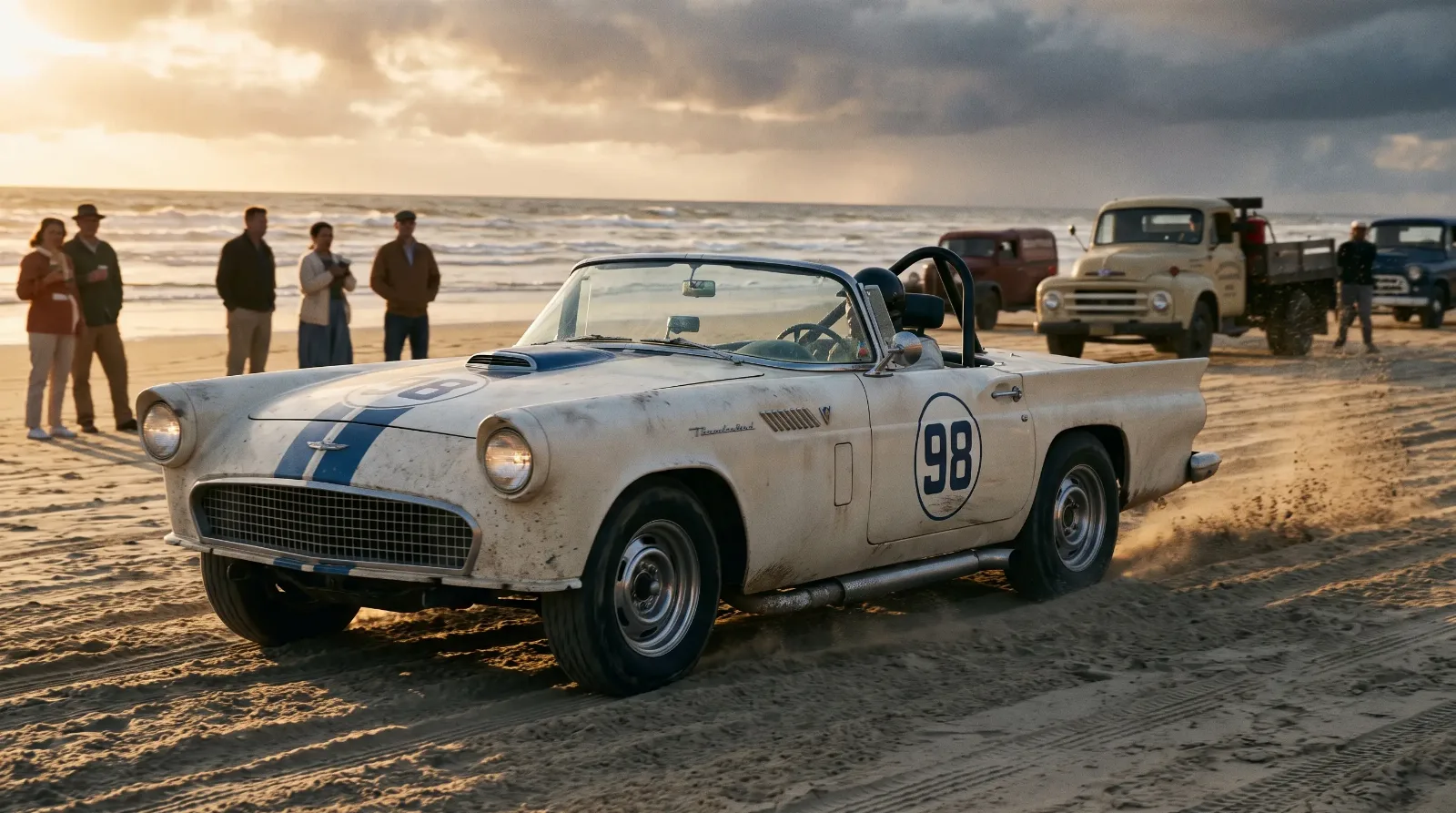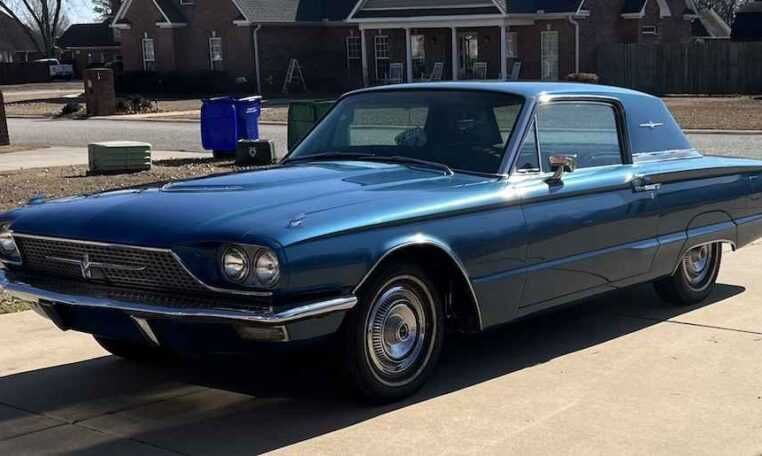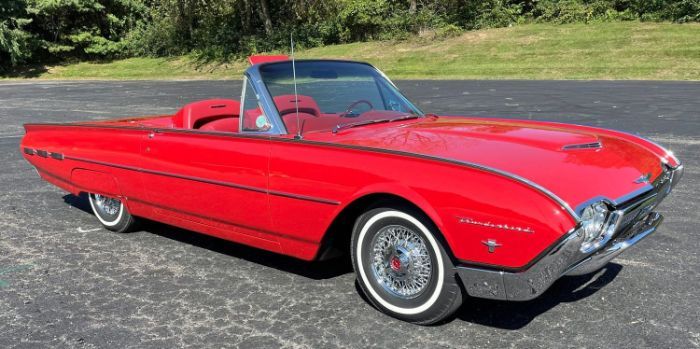
A young Ford salesman in 1957 had exactly one way to win a stoplight argument with a Corvette owner, and it did not involve a supercharger. It involved two four barrel carburetors sitting side by side on top of a 312 cubic inch V8, a factory option Ford called the E-code, and a Thunderbird that sounded different from every other car on the lot the moment you cracked the throttle. The dual quad Thunderbird never got the mythology of the blown F-Bird, but it was the option a lot more buyers could actually drive home.
Two carburetors instead of a blower
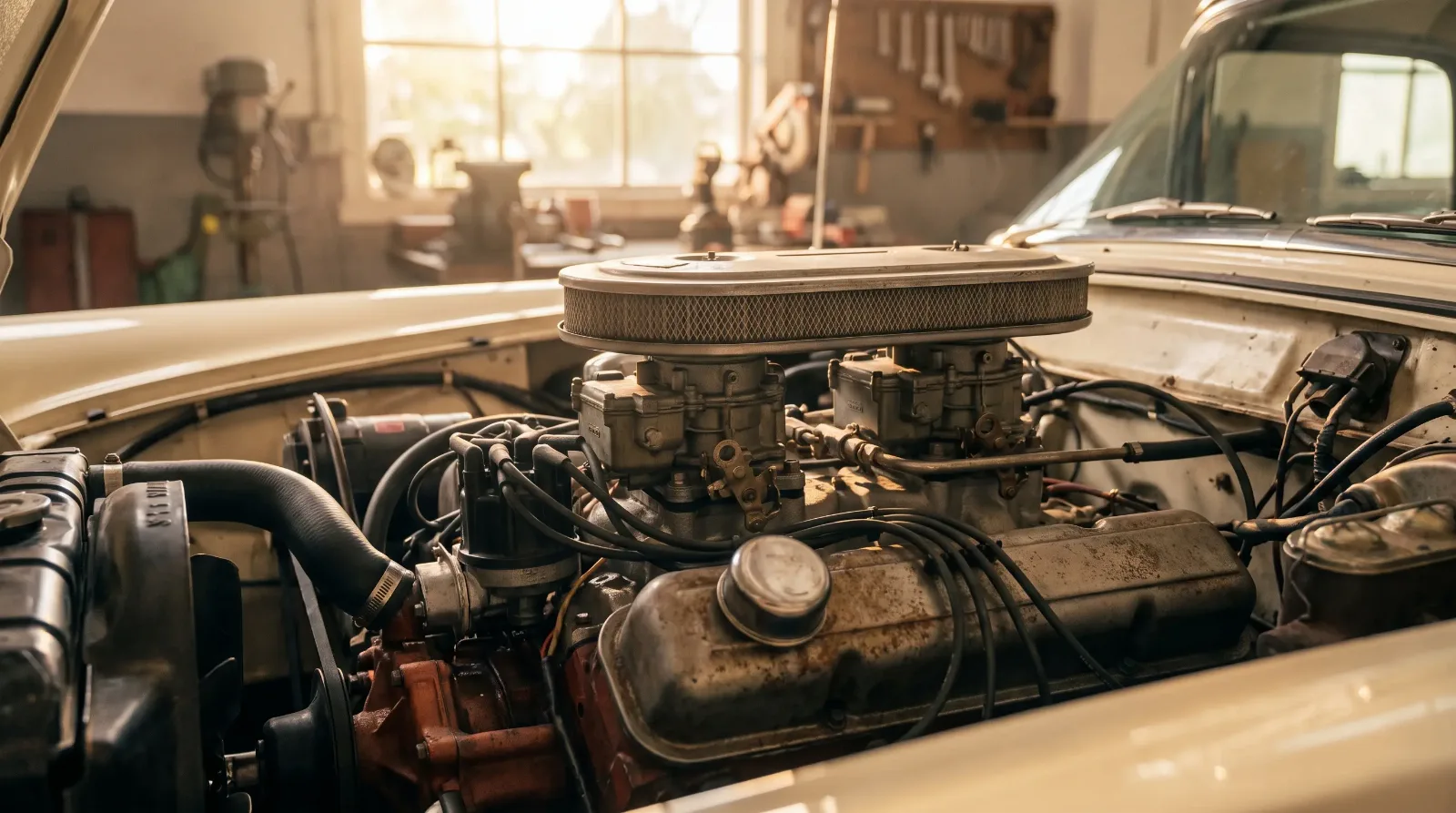
Where the F-code Thunderbird used a McCulloch supercharger to force feed the 312, the E-code took a simpler, cheaper, and in some ways more elegant route. Ford stacked two Holley four barrel carburetors on a special intake manifold, raised the compression ratio, and let the extra air and fuel do the work without any forced induction hardware. The factory rated the E-code at 270 hp, a meaningful jump over the standard single four barrel 312, and enough to make the dual quad Thunderbird a legitimate performer without the heat, complexity, and driveline stress that came with the supercharged car.
That distinction mattered to real buyers. A supercharger belt could slip, a fluid coupling could cook itself, and a nervous dealer mechanic in a small town might not know how to set one up correctly. Two carburetors, by comparison, were something almost any Ford service department in the country had seen before, even if not in this exact configuration.
Why the dual quad option existed at all
Ford's engineers were not chasing a single headline number with the E-code the way they were with the supercharged F-code. They were building a car for the buyer who wanted real performance but also wanted to be able to get it serviced in Tulsa or Spokane without a special order parts request. The dual quad Thunderbird split the difference between the base 245 horsepower 312 and the exotic supercharged version, and it did it with hardware that was, relatively speaking, bolt-on simple.
This was also a numbers game inside Ford. Every performance option added to the 1957 Thunderbird gave the sales floor another line item to sell against Chevrolet, and the E-code gave Ford a mid tier answer that did not require explaining a supercharger's maintenance quirks to a customer who just wanted a fast convertible for the weekend.
Driving impressions and what owners actually noticed
Owners and period road testers who got behind the wheel of a dual quad Thunderbird generally agreed on one thing: the car pulled harder through the midrange than the base 312, and it did so with a throttle response that felt more immediate than the supercharged car's boost-dependent surge. There was no lag to wait through. Stab the pedal and the second carburetor's secondary circuit opened up, and the Thunderbird just went.
The tradeoff was fuel mileage, which was never a Thunderbird strong point to begin with, and a slightly trickier tune. Two carburetors need to be synchronized correctly or the car runs rough, hesitates off idle, or burns more gas than it should. A well sorted E-code, though, is one of the more satisfying versions of the two-seat Thunderbird to actually drive, and that is a big part of why the model still has a following among people who care more about the seat of the pants experience than about bragging rights.
The parts behind the badge
The E-code's dual four barrel setup was built around a cast aluminum intake manifold specific to the option, feeding two Holley carburetors of matched but not identical calibration. The front carburetor typically ran a leaner primary circuit for cruising, while the rear unit's secondaries opened under harder throttle to add fuel for full power. Getting that balance right required careful jetting and linkage adjustment, work that a good Ford mechanic in 1957 understood but that a lazy one could easily botch. A poorly synchronized dual quad setup could actually run worse than the standard single carburetor 312, which is part of why some period buyers were nervous about the option in the first place.
Compression on the E-code was raised over the base engine, which meant it wanted better gasoline than a lot of stations reliably sold in every corner of the country in the late 1950s. Owners who lived near a city with good fuel had an easier time than owners in rural areas, where lower octane pump gas could cause pinging under load. None of this made the E-code a fussy car by the standards of the day, but it was a step up in attentiveness from the base Thunderbird, and Ford's own literature at the time nudged buyers toward using the recommended fuel grade if they wanted the engine to live up to its rating.
Where the E-code sits in the Thunderbird hierarchy today
Collectors rank the 1957 Thunderbird lineup roughly by rarity and performance, with the supercharged F-code at the top, the E-code dual quad car in the middle, and the standard single carburetor 312 at the base. That middle position is not a knock. The dual quad car is rare enough to matter, driveable enough to actually use, and mechanically simpler than the blown version, which makes it a favorite among owners who want a genuinely quick 1957 Thunderbird without inheriting a supercharger's maintenance headaches.
Anyone researching the two-seat Thunderbird generation should start with the 1957 ford thunderbird story before diving into the engine option chart, because the E-code only makes sense in the context of the three model years that led up to it. For the fuller arc of how the nameplate got here and where it went afterward, the full story covers the generations beyond 1957 as well.
"I have driven a supercharged 'Bird and I have driven a dual quad. The E-code is the one I would actually want to own. It just works, every time you turn the key."
- Patrick Walsh
Buying one today
Because the E-code option did not carry the same mystique as the supercharged car for decades, some dual quad Thunderbirds got converted back to single carburetor setups or simply lost their correct intake manifold along the way. A genuine, numbers matching E-code car with its correct dual four barrel setup intact is not as common as its original production figures might suggest, and buyers should expect to do the same kind of documentation homework that any rare performance variant demands.
For readers who want to see what is actually available right now, a look at classic Thunderbirds on the market is a good way to compare asking prices between base cars, dual quad E-codes, and the supercharged F-code before deciding which version fits both the budget and the driving style you actually want.