
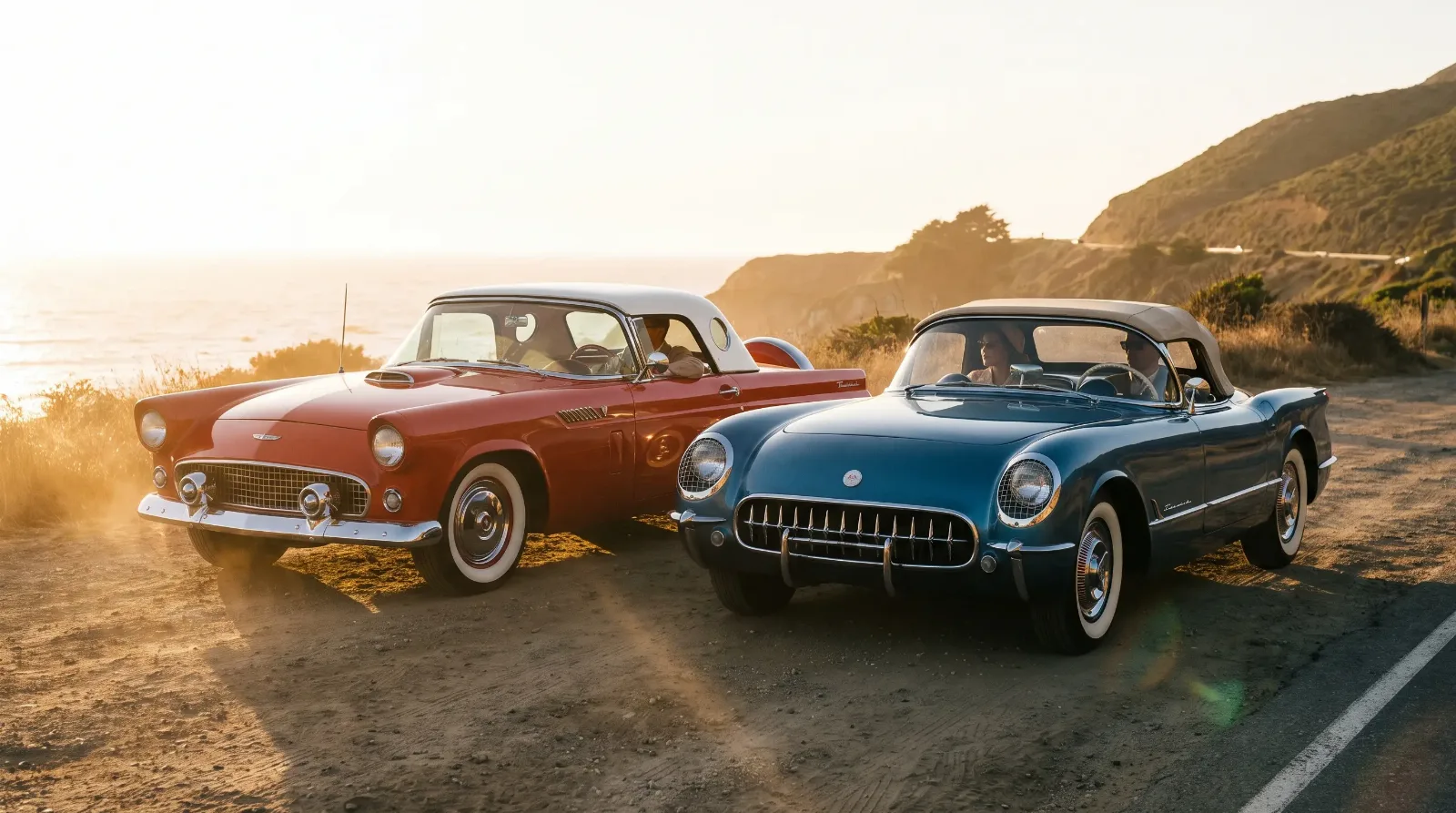
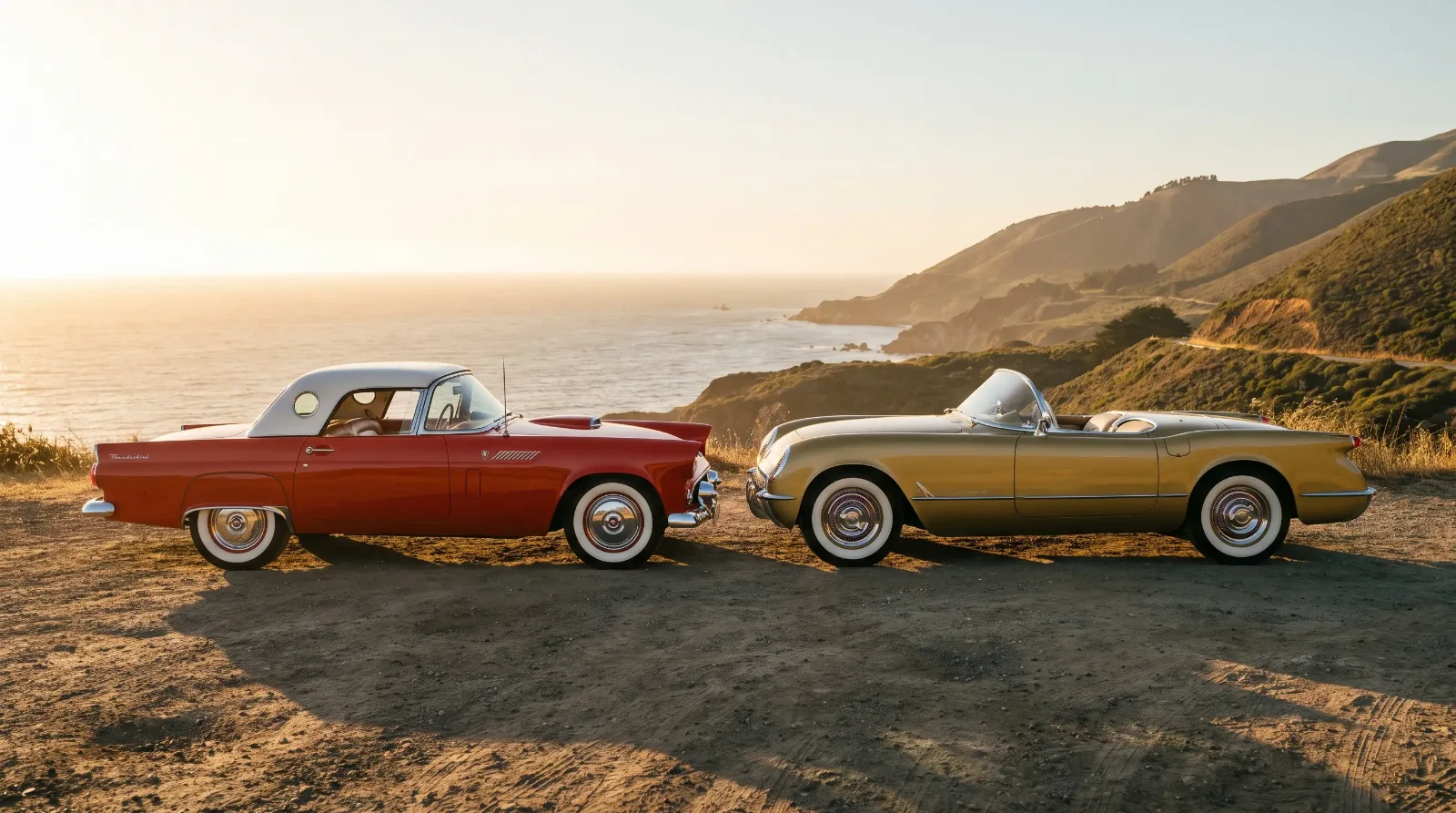
In the fall of 1953, a Ford product man named Frank Hershey walked past a General Motors display and saw the thing that would ruin his sleep for the next eighteen months. It was a small white roadster called the Corvette, and it made everything Ford sold look like furniture. Hershey went back to Dearborn and started sketching a two-seater on his own time, sometimes at home, sometimes at his desk when the meetings ran long. What came out of that quiet panic was the car that would carry a name borrowed from a Southwestern thunder spirit, and by the time the 1957 ford thunderbird rolled off the line, Ford had done something Chevrolet never managed in those years. It had sold a two-seat American sports car that actually made money.
Car Features
11 min read
The Two-Seat Thunderbird (1955-1957): Ford's Answer to the Corvette
Ford built a two-seat sports car that outsold the Corvette, then killed it while it was winning. The story of the 1955-1957 Thunderbird and why it still stings.
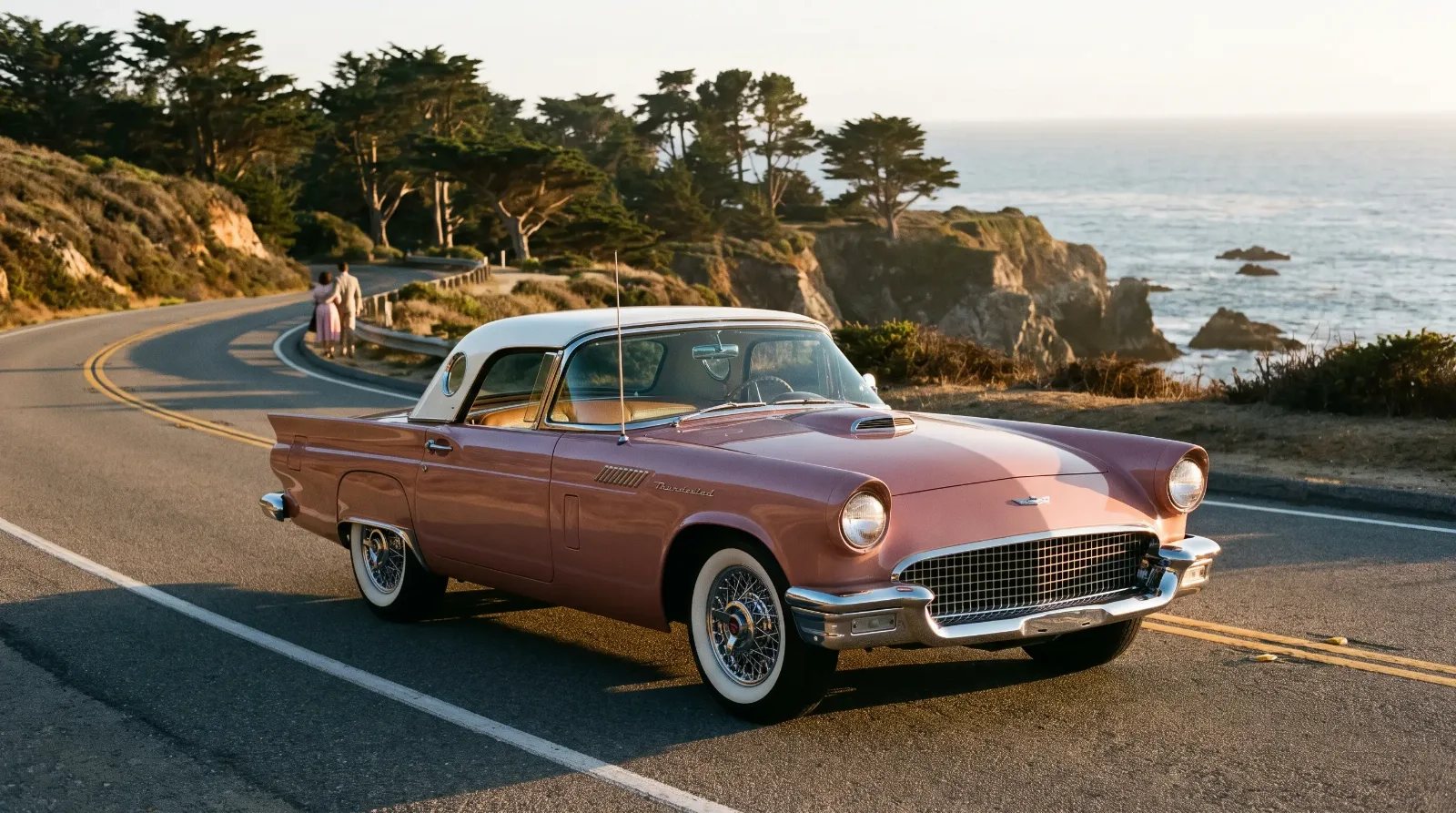
That is the part people forget. The two-seat Thunderbird lasted only three model years, from 1955 through 1957, and Ford killed it while it was winning. This is the story of why.
A different idea of what a sports car should be
Ford never used the phrase "sports car" for the Thunderbird if it could help it. The men who built it called it a "personal car," and that distinction was the whole strategy. A sports car in 1955 meant a British roadster with a canvas top that leaked, side curtains instead of windows, and a ride that rearranged your spine on a bad road. Ford looked at that and decided American buyers wanted the shape of a sports car with none of the suffering.
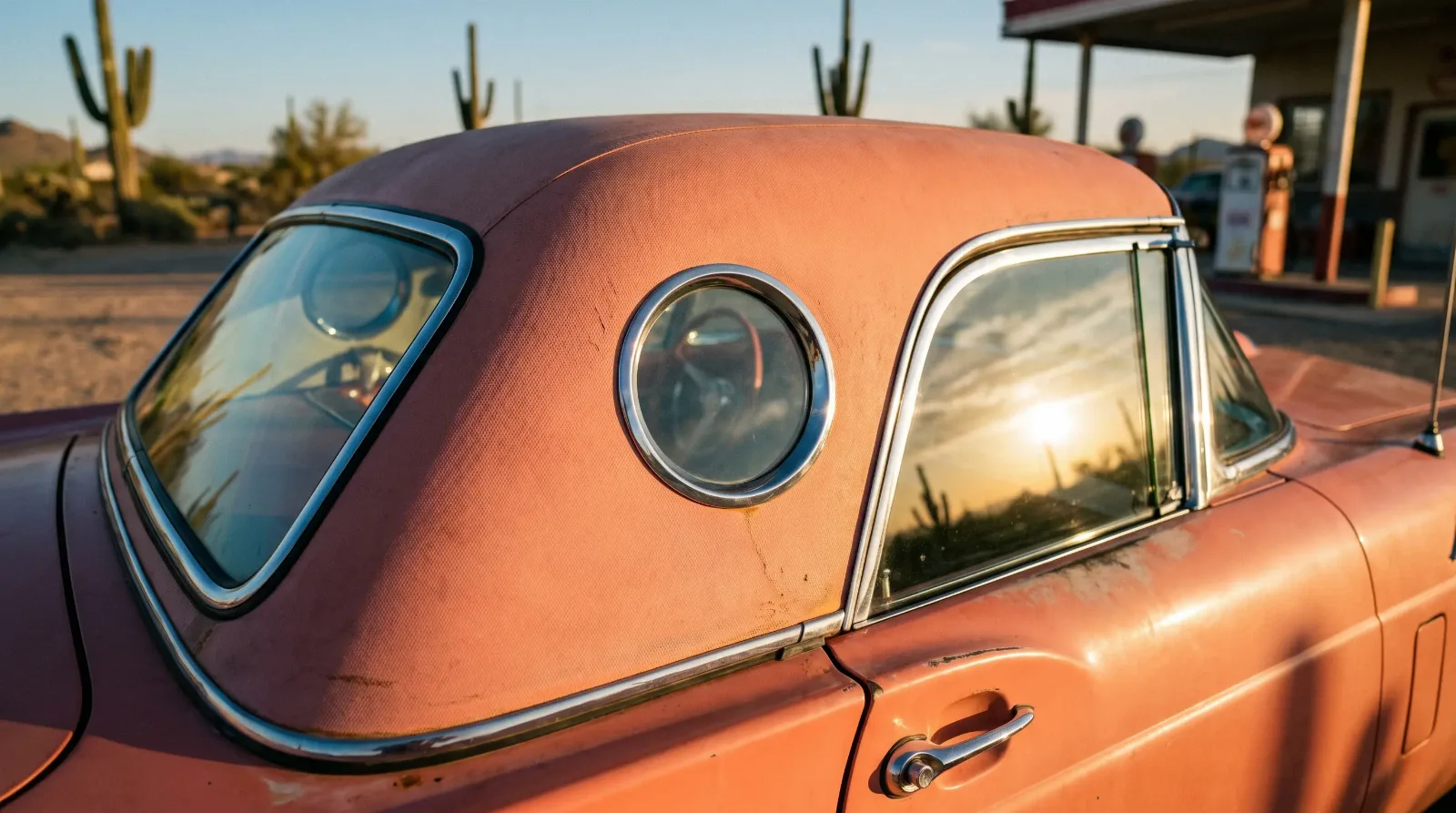
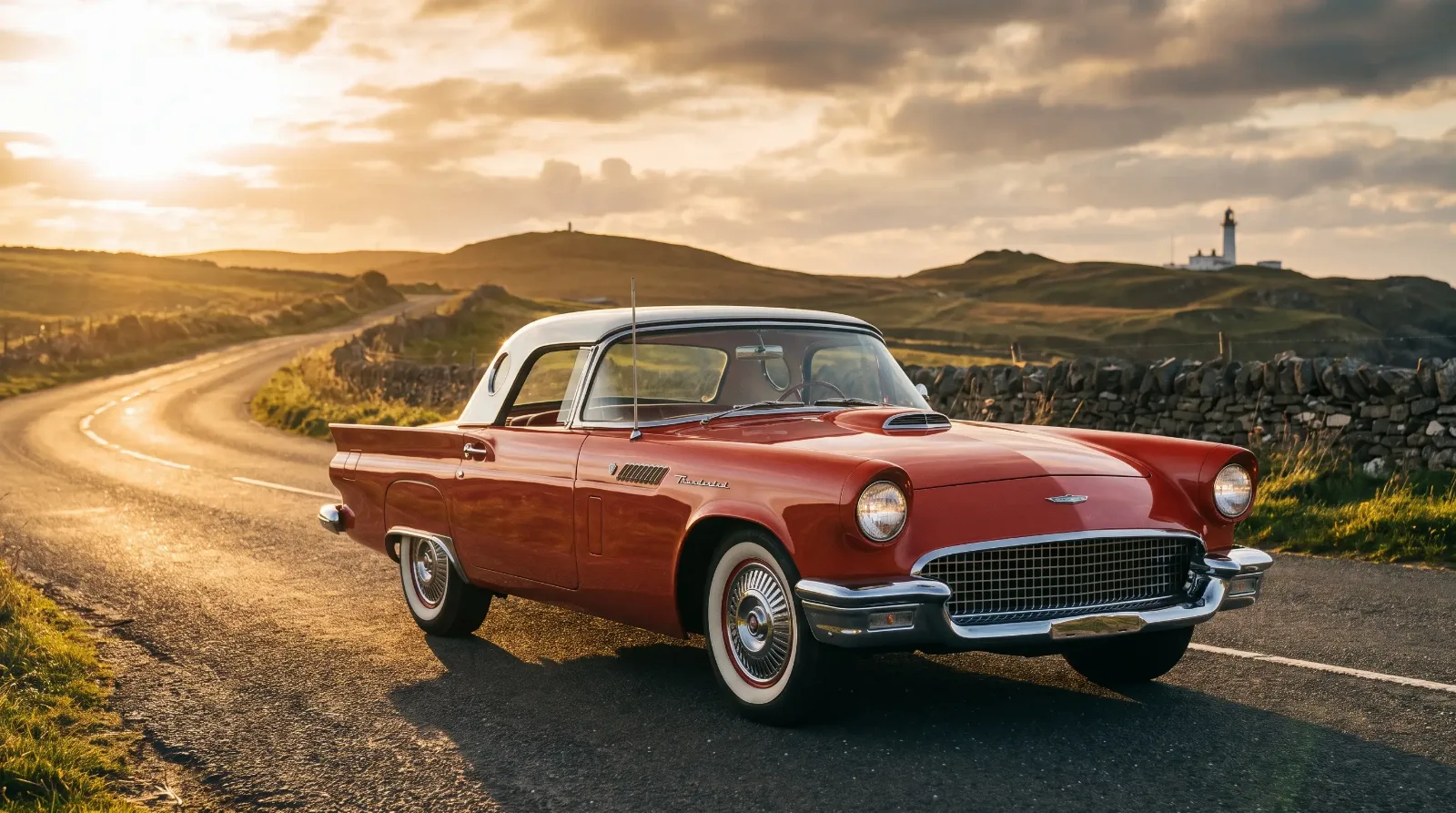
So the Thunderbird got roll-up windows from the start. It got a proper heater. It got an available hardtop with those porthole windows on the 1956 and 1957 cars, an option that has since become the single most recognizable detail on the car. It rode on a shortened version of a regular Ford sedan chassis, which meant it drove like something you could commute in. And under the hood sat a V8, not the anemic six-cylinder that hobbled the early Corvette.
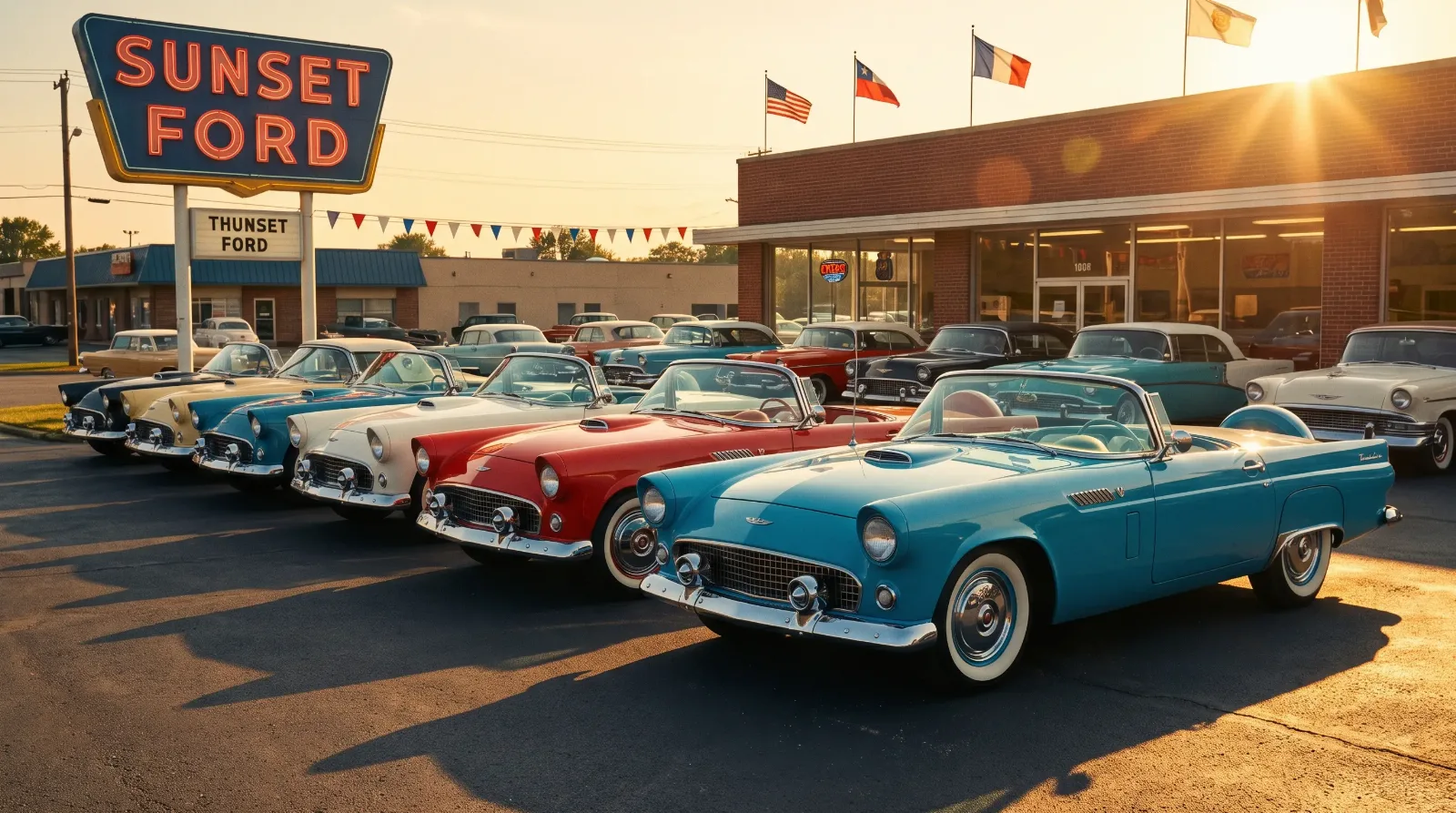
The result outsold the Corvette by a margin that embarrassed Chevrolet. Ford moved more than 16,000 Thunderbirds in the 1955 model year alone. Chevrolet built fewer than 700 Corvettes in the same stretch. If you want the full arc of how the nameplate grew from this two-seat gamble into a household name, you can read the wider ford thunderbird history there.
Three years, three faces
People lump the 1955, 1956, and 1957 cars together as "the little Thunderbird," and from across a parking lot they look nearly the same. Up close they are three distinct animals, and collectors argue about them the way baseball fans argue about lineups.
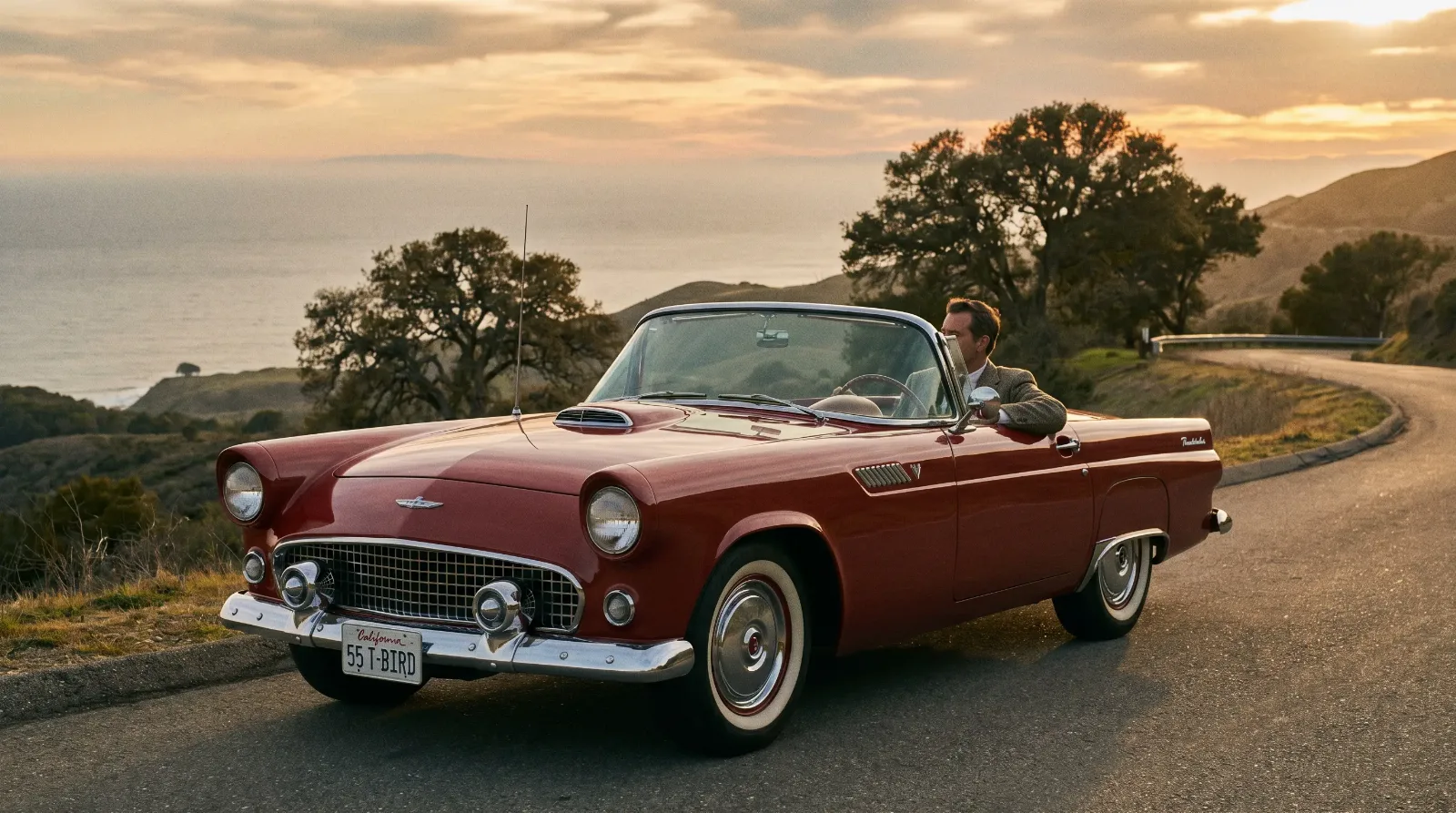
The 1955 car is the pure one. Clean flanks, exhaust exiting below the bumper, a 292 cubic inch V8, and a face with no clutter. Purists love it for exactly that reason. It is the design as Hershey and his team first drew it, before the accountants and the option sheets got to work.
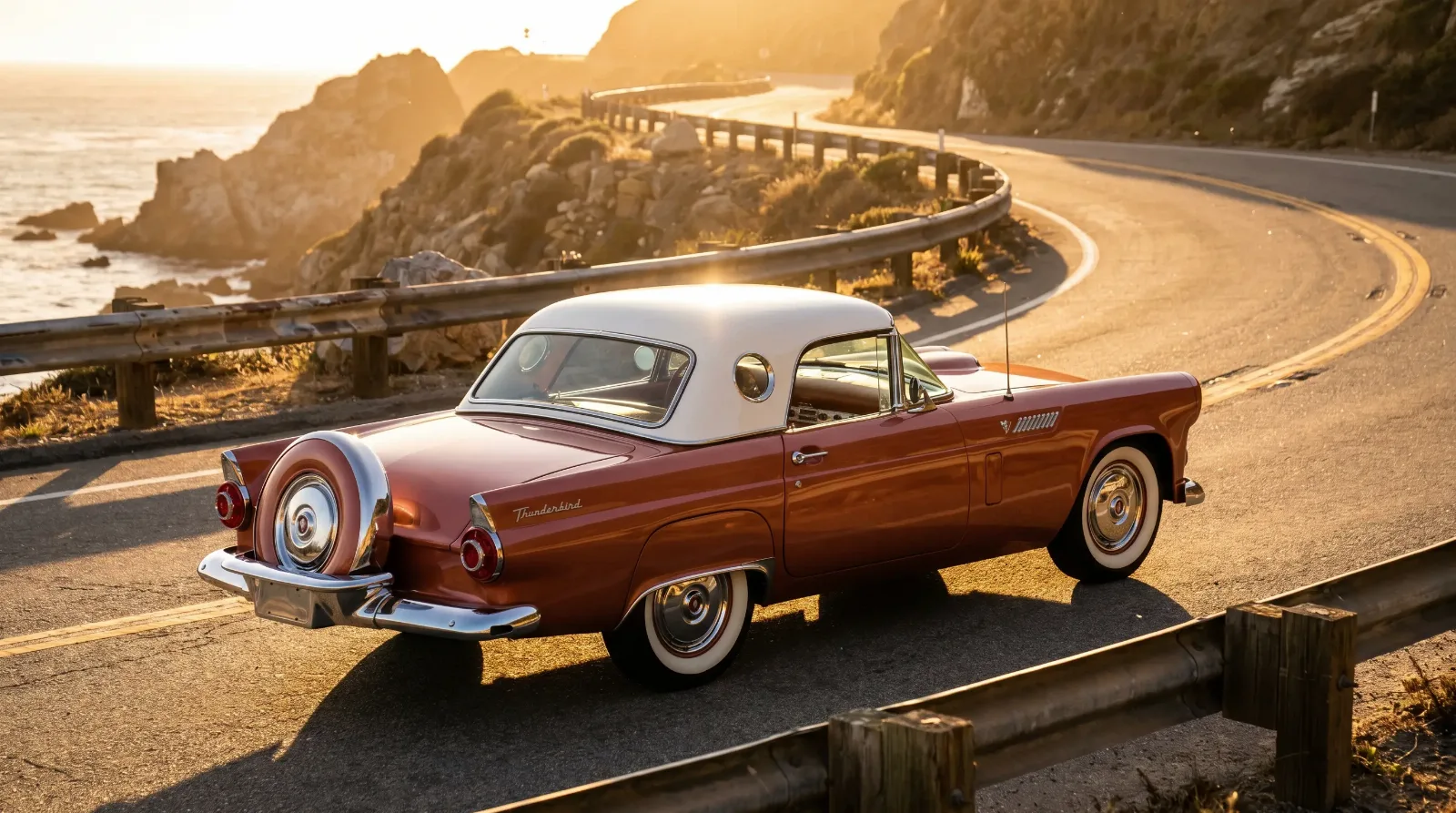
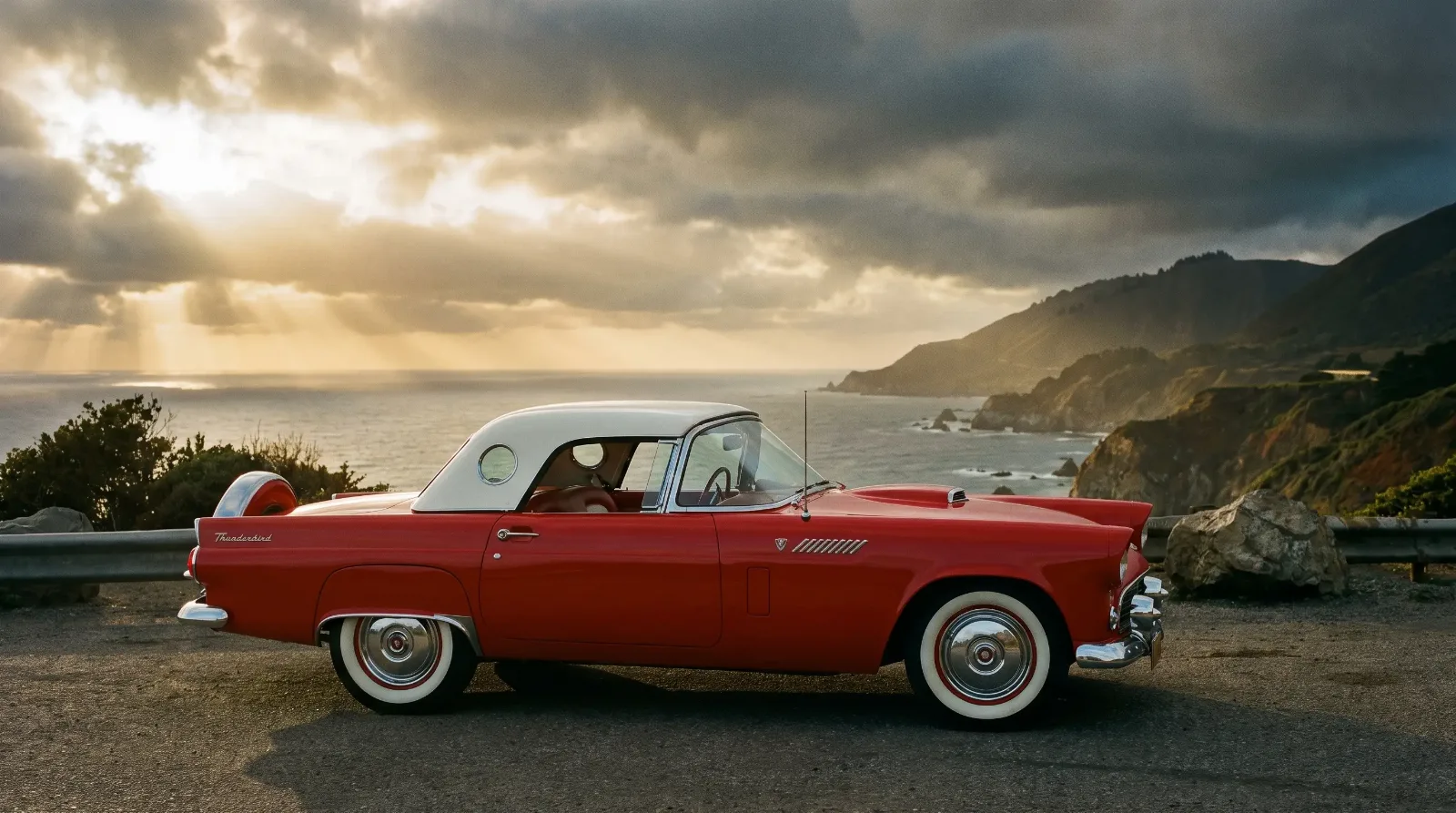
The 1956 car fixed complaints and created new arguments. Ford moved the spare tire outside, hung on the back in a Continental kit, because owners griped that the trunk had no room. That continental spare looked handsome to some eyes and awkward to others, and it pushed weight behind the rear axle in a way that did the handling no favors. The 1956 also introduced the porthole hardtop and cowl vents on the front fenders to cure a cabin that cooked its occupants in summer.
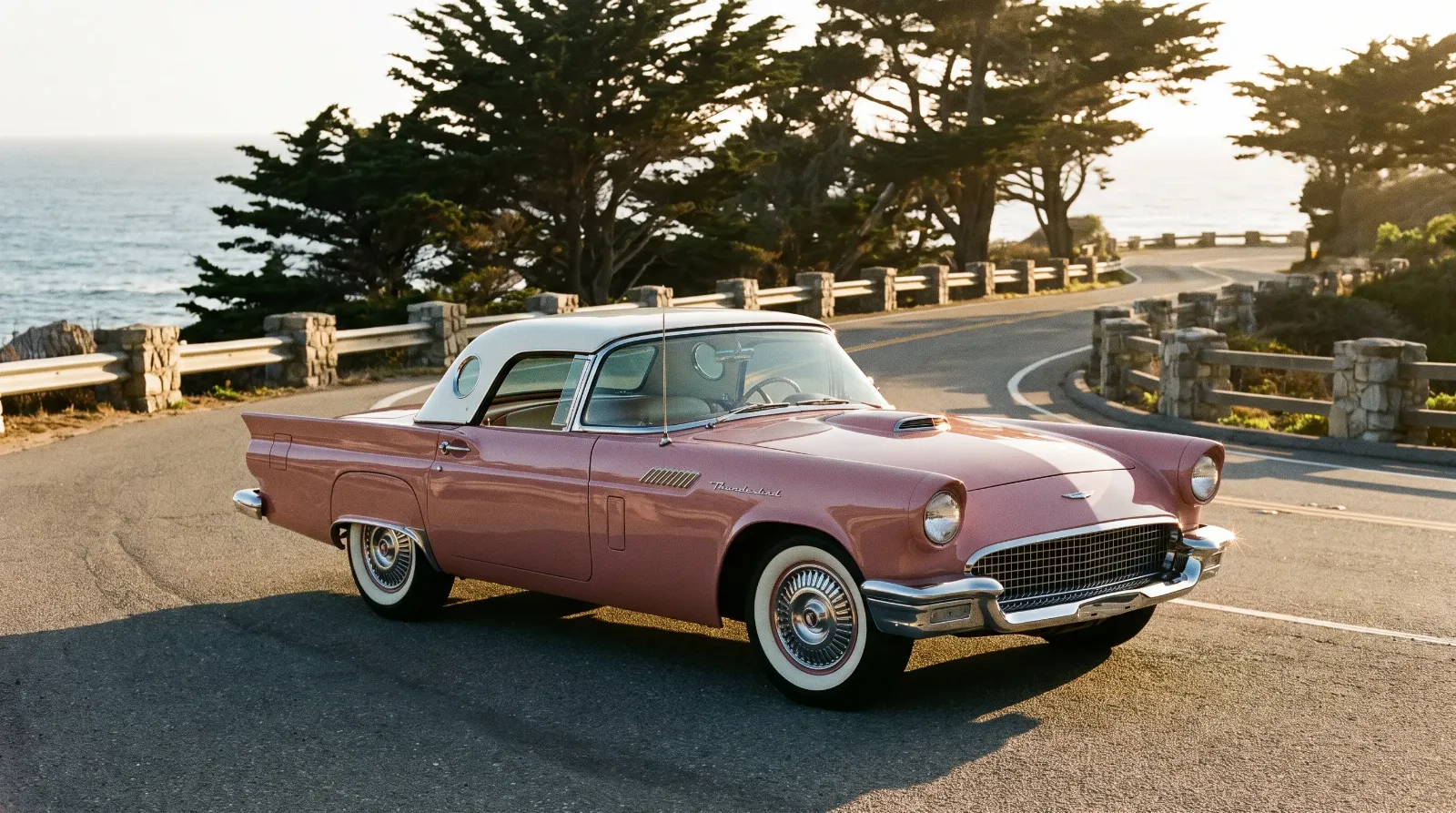
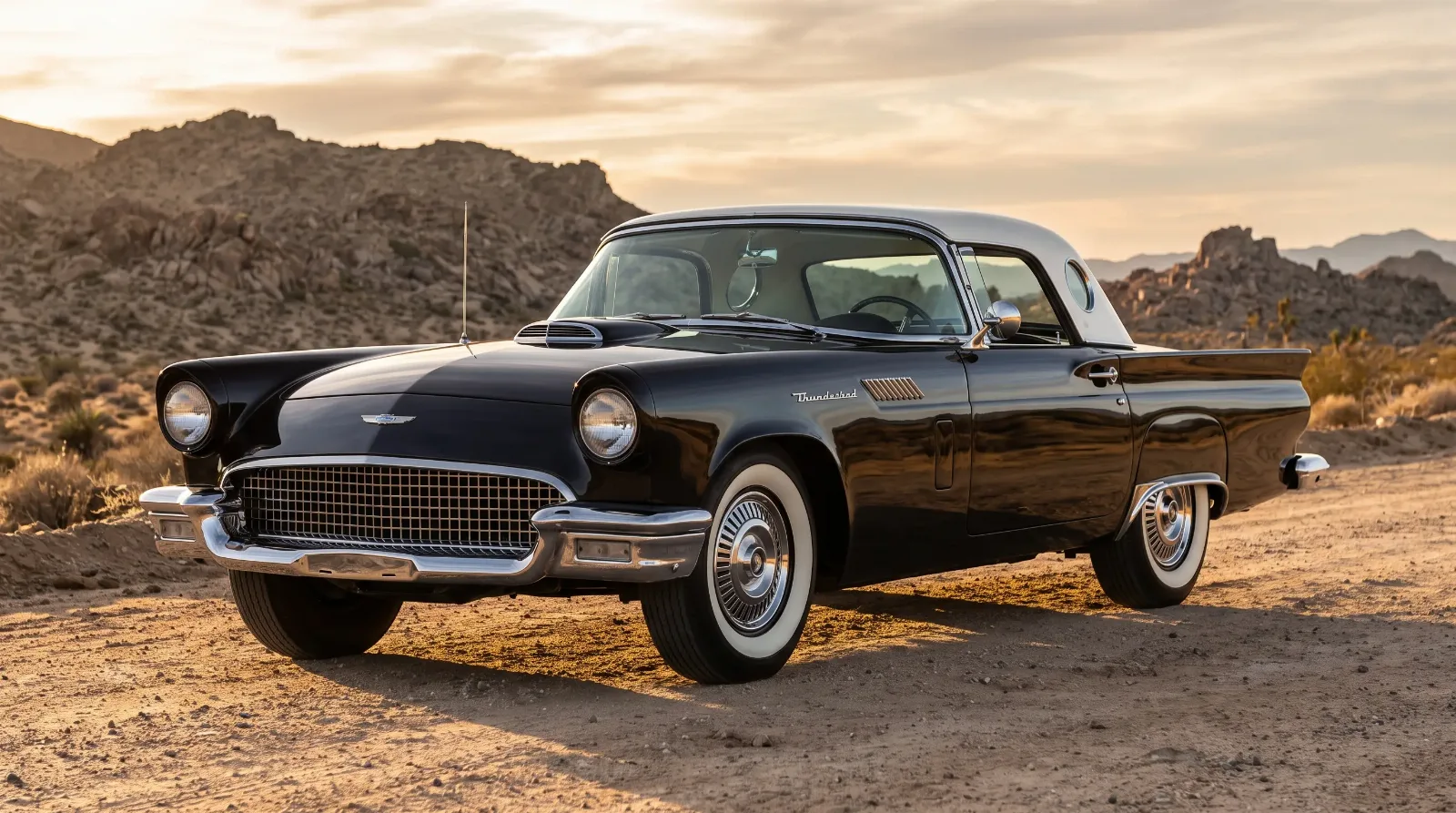
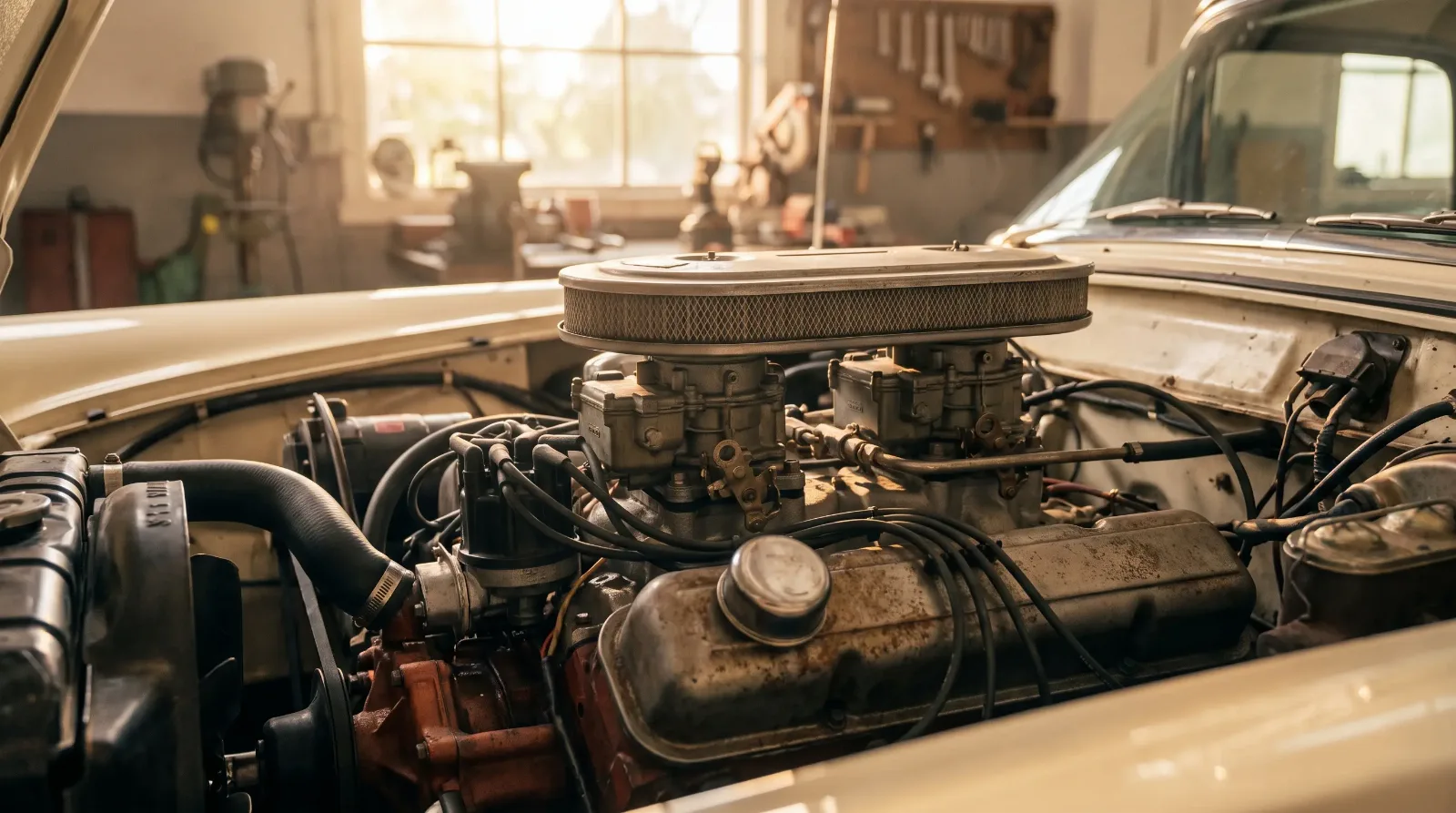
Then came the 1957 car, and for many enthusiasts this is the one. Ford reworked the front and rear, gave it a longer deck lid that swallowed the spare tire back inside, added small tailfins that read as jet-age rather than gaudy, and offered a bigger 312 V8. At the very top of the range sat a supercharged F-code engine built for racing homologation, a genuinely fast car that almost nobody bought new and everybody wants now.
| Detail | Two-Seat Thunderbird (1955-1957) |
|---|---|
| Production years | 1955, 1956, 1957 |
| Body style | Two-seat convertible, optional porthole hardtop |
| Base engine (1955) | 292 cubic inch Y-block V8 |
| Top engine (1957) | 312 cubic inch V8, supercharged F-code rated at 300 hp |
| Total three-year production | 53,166 cars across all three years |
| Signature option | Removable hardtop with porthole windows (1956-1957) |
The porthole that became a personality
Every so often a small styling fix outlives the problem it solved. The porthole window is one of those. It arrived because early hardtop owners complained about a blind spot over the rear quarter, and Ford's answer was to punch a round window into the C-pillar. It worked, and it also happened to give the car a face that people remember decades later.
Ford offered the hardtop with or without the portholes in 1956 and 1957, so a buyer could choose the solid roof if they preferred it. Most did not. The porthole version is the one that fills the postcards and the diecast shelves. It is a reminder that the two-seat Thunderbird was never really about performance numbers. It was about how the car made you feel when you parked it and how it looked when you walked away.
Hollywood, the drive-in, and a car that photographed well
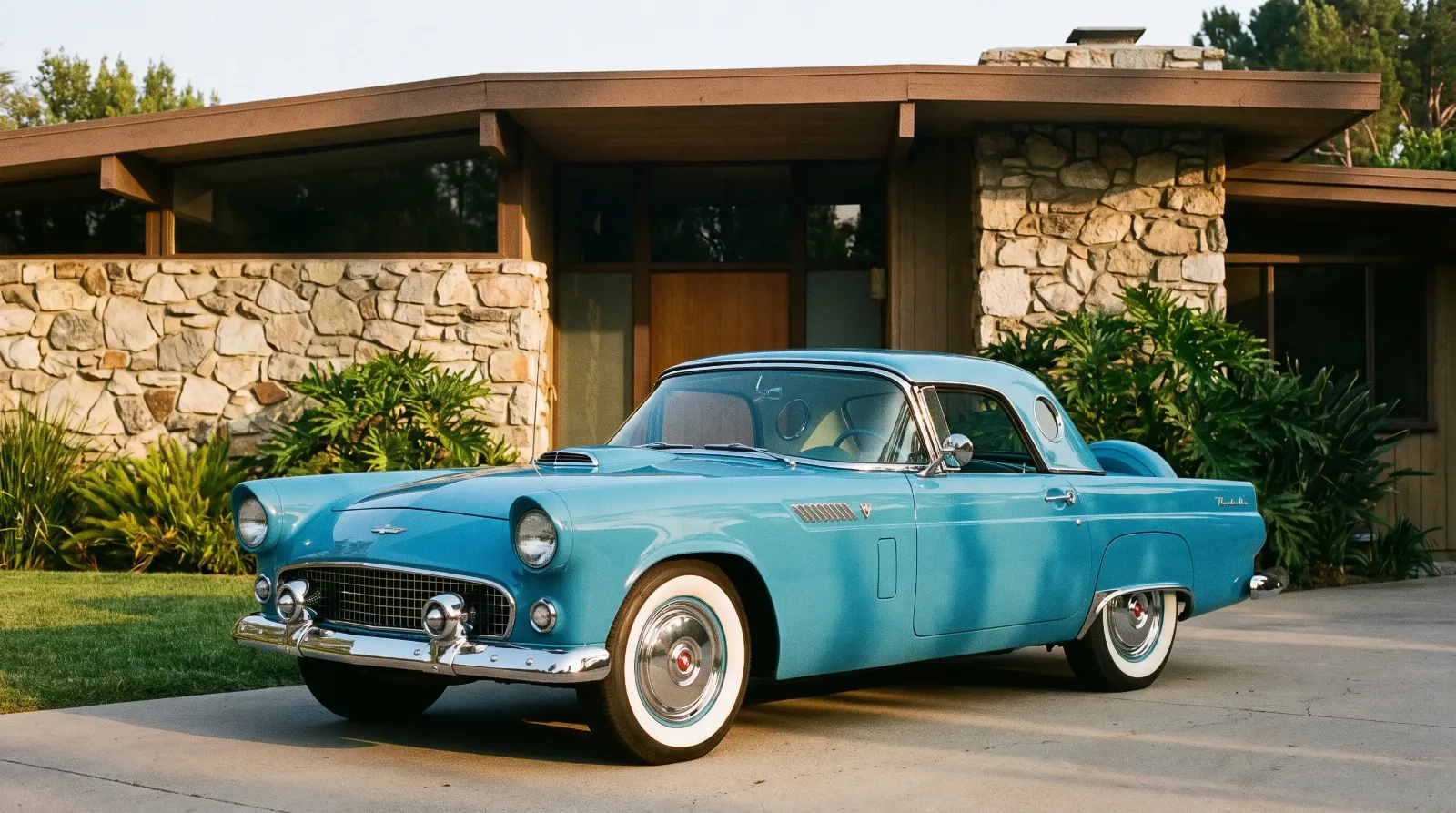
Part of why the two-seat Thunderbird lodged itself so firmly in the American imagination has nothing to do with horsepower or production totals. It had to do with where the car showed up. The little Thunderbird arrived at exactly the moment when a new suburban prosperity was reshaping how Americans spent their leisure, and it looked right parked outside a drive-in, right idling at a stoplight on a warm evening, right in the driveway of a house that its owner was proud of. The car sold a feeling, and the feeling was arrival.
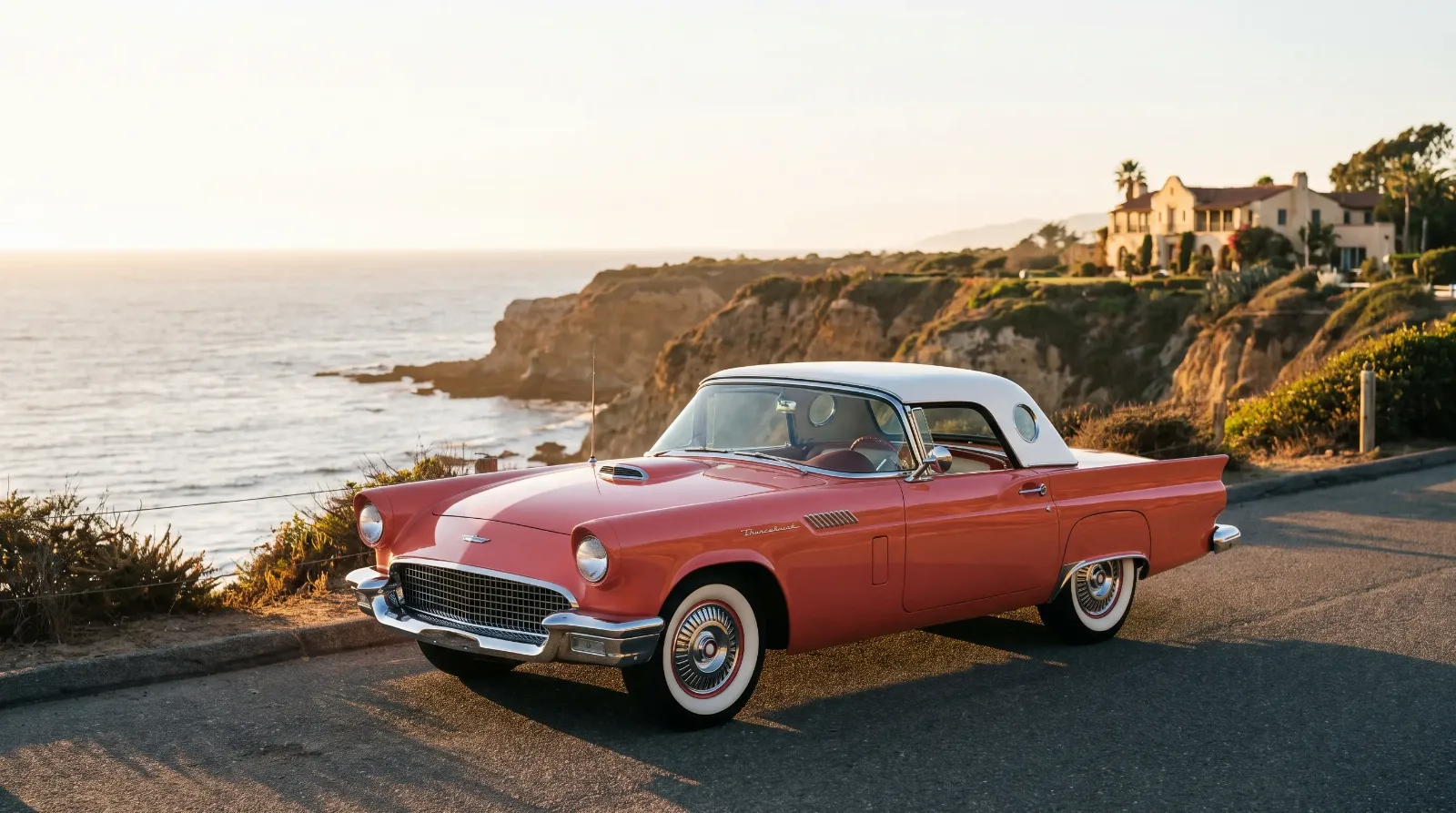
The camera loved it too. The proportions that make the two-seater so satisfying, the long hood, the short deck, the low cowl, translate beautifully to film and photograph, and the car turned up again and again in period advertising, in magazine spreads, and eventually on screen. A white 1957 with a red interior became a kind of visual shorthand for a certain flavor of postwar optimism, and that association has only strengthened with time. When a filmmaker wants to place a scene firmly in the late 1950s, one of these cars in the frame does the work instantly.
There is a lesson in that for anyone trying to understand why some cars appreciate and others fade. The two-seat Thunderbird was never the fastest or the most technically advanced car of its moment. What it had was a shape and a moment that fused together so completely that, seventy years later, the sight of one still summons an entire decade. That kind of cultural staying power is rarer than any engine option, and it is a large part of what collectors are really paying for.
What made the driving experience different
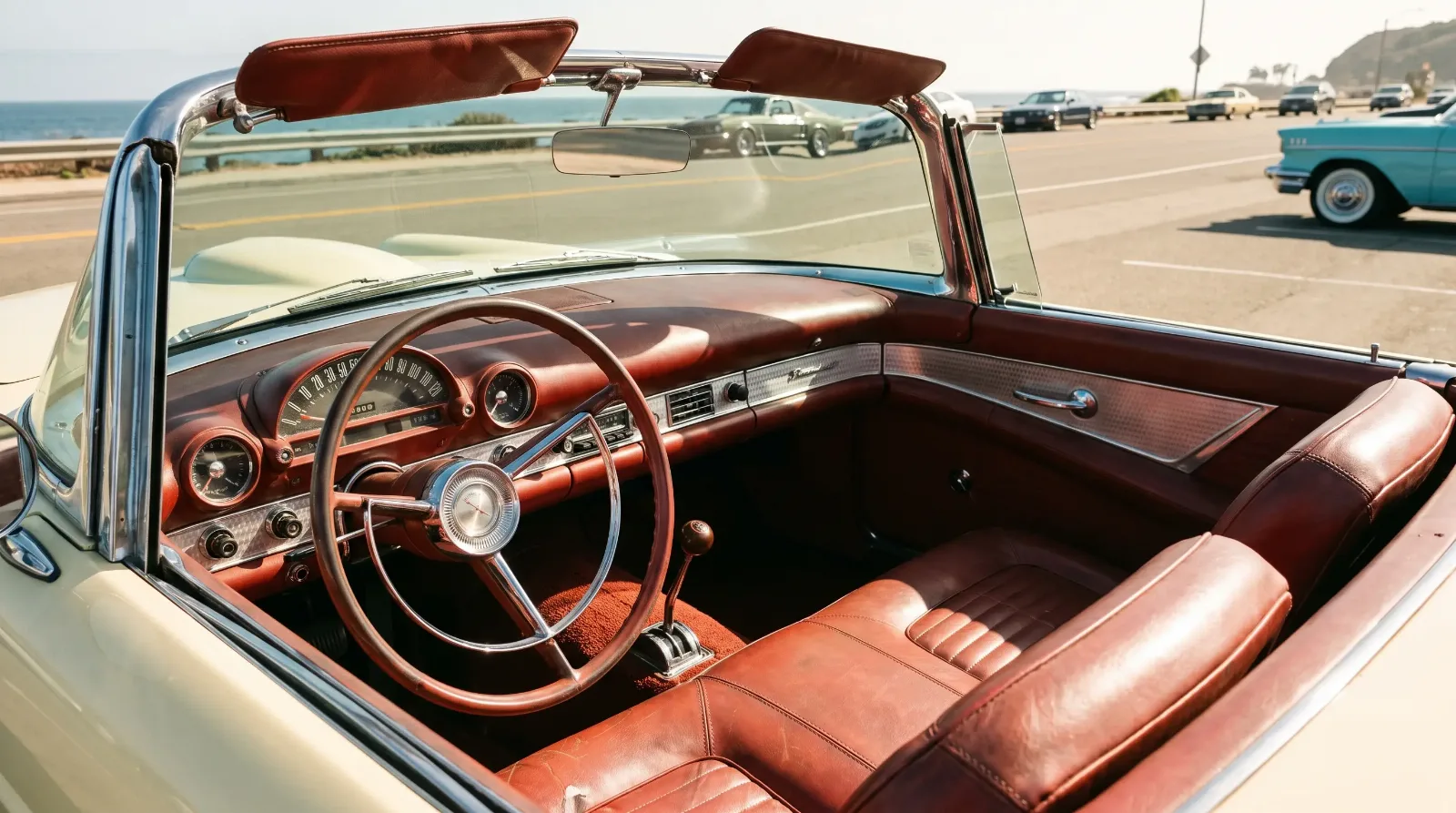
Slide behind the wheel of one of these cars today and the thing that surprises modern drivers most is how usable it feels. This was the whole point in 1955, and it survives intact. The V8 pulls with easy, unhurried torque rather than frantic revs, the steering is light, and the car happily settles into a relaxed cruise on an open road. It was never meant to be flung at a corner the way a lightweight European roadster invited. It was meant to cover ground in comfort with the top down and one arm on the door.
That character is exactly why the two-seat Thunderbird has aged into such a pleasant thing to actually own. Many sports cars of the 1950s are rewarding to look at and punishing to drive any real distance. The Thunderbird is the opposite. It asks little of its driver, forgives a great deal, and delivers its pleasures at legal speeds, which is precisely what makes it a car people drive rather than trailer. Ford built comfort into the concept from the first sketch, and that decision is the reason these cars still get used and enjoyed instead of merely admired.
Why Ford killed a winner
Here is the twist that still puzzles people. The two-seat Thunderbird sold well, built a loyal following, and gave Ford a halo it could hang over the whole showroom. So why did the company scrap it after 1957 and replace it with a bigger four-seat car for 1958?
The answer is arithmetic. Robert McNamara, the Ford executive who would later run the Pentagon, looked at the numbers and saw that a two-seater could only ever sell to people who did not need a back seat. That was a ceiling. A four-seat personal car could sell to families, to couples who occasionally carried passengers, to buyers who wanted the style without the compromise. McNamara believed, correctly as it turned out, that four seats would sell in far greater numbers.
He was right about the money. The 1958 four-seat Thunderbird outsold the two-seater many times over and won Motor Trend's Car of the Year. But something was lost in the trade, and enthusiasts have never quite forgiven the decision, even while admitting it made business sense. If the shift from two seats to four fascinates you, keep exploring how the redesigned car changed the whole segment.
What the two-seater is worth now, and why
Values for the 1955 to 1957 cars have followed the arc of nostalgia. For decades these were affordable weekend cars, plentiful enough that a hobbyist could find a driver-quality example without a second mortgage. That is changing, slowly, as the generation that lusted after them new either ages out or finally buys the car they wanted at sixteen.
The ordinary cars, the 292 and 312 automatics in nice colors with the hardtop, remain reachable and represent some of the best value in 1950s American iron. The rare configurations are a different market entirely. A documented supercharged F-code 1957, one of roughly 205 to 212 built, sits in a world of its own. The gap between an average car and a great one has widened, and provenance now matters more than it did a decade ago.
"The two-seat Thunderbird is the rare case where the smart business decision and the enthusiast's heart point in opposite directions. Ford was right to build the four-seater. We were right to miss the little one. Both things can be true, and standing next to a clean 1957 with the top down, you feel exactly why the argument never ends."
- Patrick Walsh
Buying with your eyes open
These cars are simple by modern standards, which is a mercy, but simple does not mean trouble-free after seventy years. The bodies rust in the usual American places, and a car wearing fresh paint over old sins is the oldest trick in the hobby. Documentation separates the interesting cars from the ordinary ones, and on the rare engines it separates a real car from an expensive story.
The car that proved the point
The two-seat Thunderbird answered a question nobody at Ford had dared ask out loud in 1953. Could an American company sell a sporting car to people who did not want to suffer for the privilege? The answer was yes, emphatically, and the proof was in the sales ledger and on the streets of every prosperous suburb in the country.
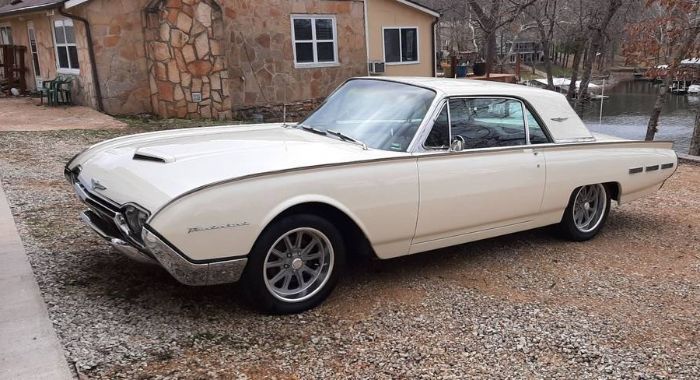
It only lived three years in its first form, but those three years set a template that Ford would return to again and again. When you look at a clean example today, a white one with the porthole hardtop and red interior, you are looking at the moment Detroit figured out that style and comfort could be the whole point. The car did not need to be the fastest thing on the road. It just needed to make you want to go for a drive, and on that count it has never stopped delivering. Buyers chasing that feeling still hunt for a good classic Thunderbird for sale, and the best of these early cars reward the search.
Sources and notes
- Ford Thunderbird (first generation) - Wikipedia
- History of the 1955 Ford Thunderbird - TopSpeed
- 1957 Ford Thunderbird 312 Supercharged V-8 specs - Automobile Catalog
- 1957 Ford Thunderbird D/F-Code Phase I - Supercars.net
- 1955 C1 Corvette Guide - CorvSport
- Production Statistics - Vintage Thunderbird Club
Related Reading
Article
The Ford Thunderbird Story: How Ford Invented the Personal Luxury Car
Article
The Square Bird (1958-1960): The Four-Seat Gamble That Created a Segment
Article
Thunderbird in American Culture: Movies, Music and Color
Article
Why Ford Built the Thunderbird: The Corvette That Started It
Article
The 1955 Thunderbird: The First Year of the Personal Car
Article
The 1956 Thunderbird: Continental Kit and the Porthole Roof
Article
The 1957 Thunderbird: The Last and Best Two-Seater
Article
Personal Car, Not Sports Car: How Ford Positioned the Thunderbird
Article
Thunderbird vs Corvette 1955: The Rivalry That Defined Both
Article
How Ford Outsold the Corvette 23 to 1 in 1955
Article
The Porthole Hardtop: The Thunderbird's Signature Window
Article
The F-Bird: The Supercharged 1957 Thunderbird
Article
The E-Code Dual-Quad Thunderbird
Article
The Battlebird: Ford's Secret Daytona Racers
Article
Thunderbird at Daytona Speed Weeks 1957
Article
The Detachable Hardtop and Convertible Top
Article
Colors of the Two-Seat Thunderbird
Article
Inside the Early Thunderbird: Dash and Interior
Article
How Ford Named the Thunderbird
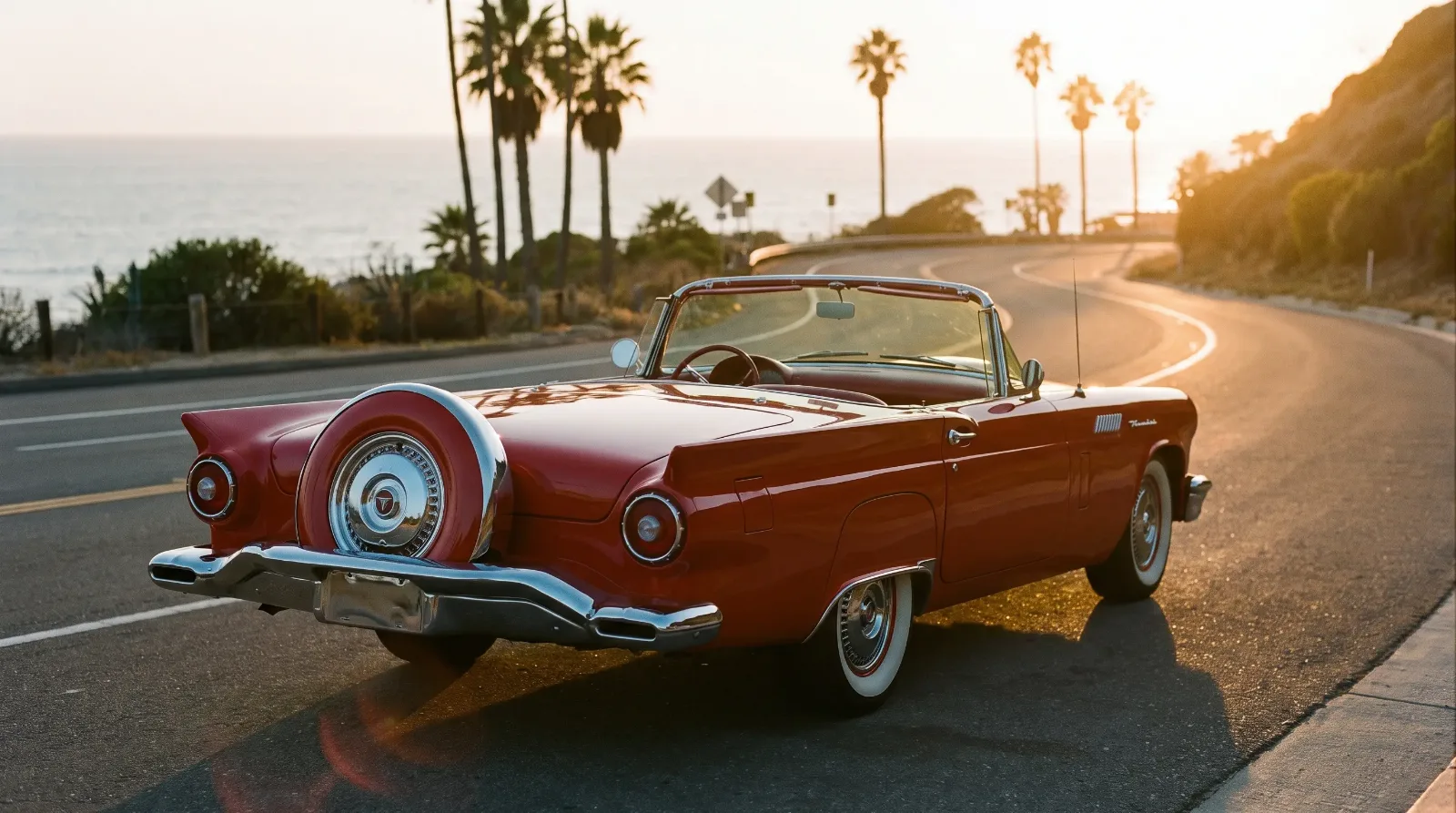
Article
Why Ford Killed the Two-Seater After 1957
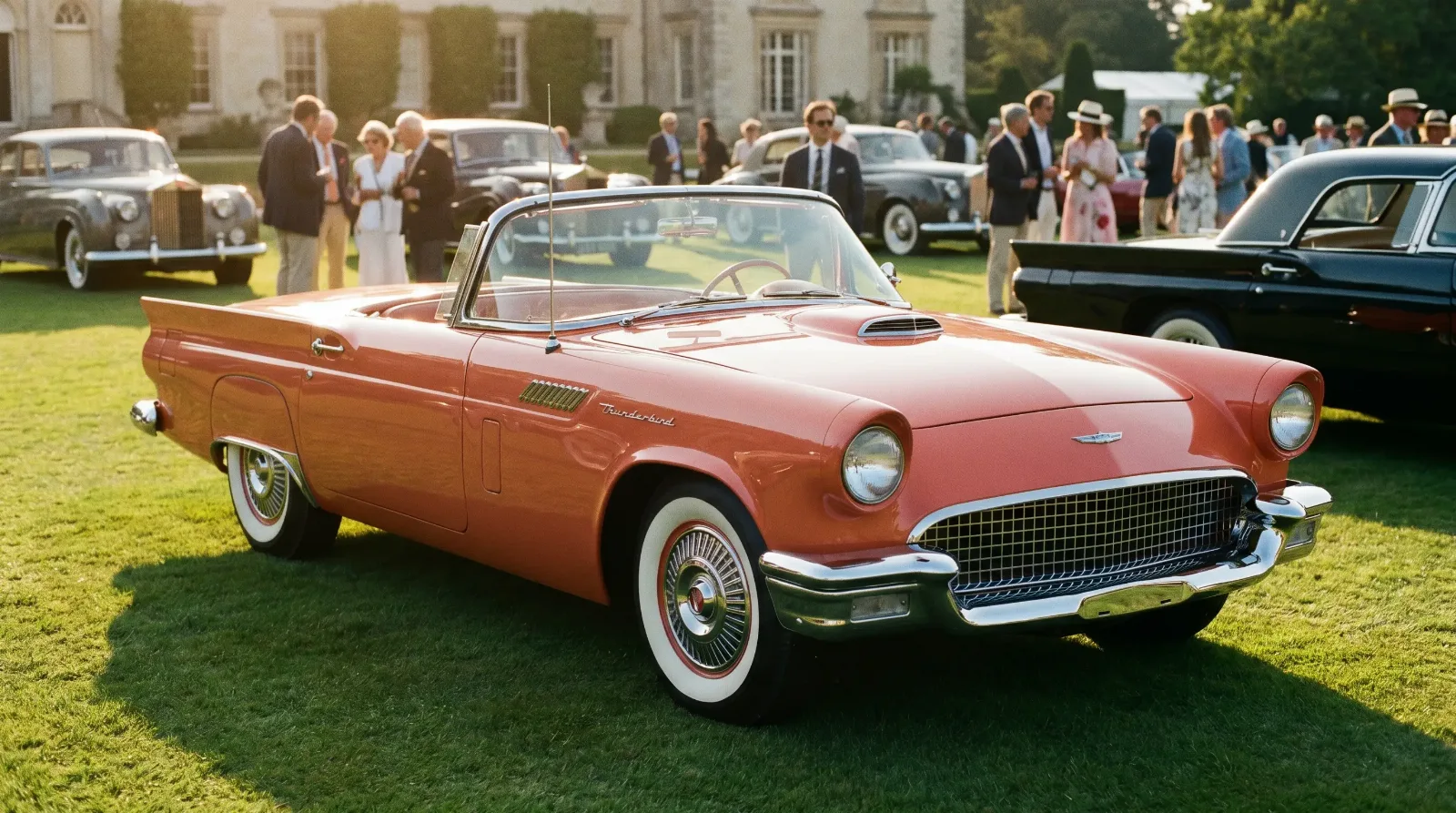
Article
Collecting the Two-Seat Thunderbird Today
Have a
Ford Thunderbird
for Sale?
Reach thousands of serious classic car collectors across the US.
Sell It Here →
Are You a Classic Car Dealer?
List your full inventory and connect with targeted classic car buyers.
Join as a Dealer →
#classic ford
#ford thunderbird
#two-seat thunderbird
#1957 thunderbird
#1950s sports cars
#corvette rival

About the author
Patrick Walsh
Automotive journalist covering classic car shows, events, and the enthusiast community across North America.
Related Listings - Ford Thunderbird




Comments
Be the first to comment on this article.