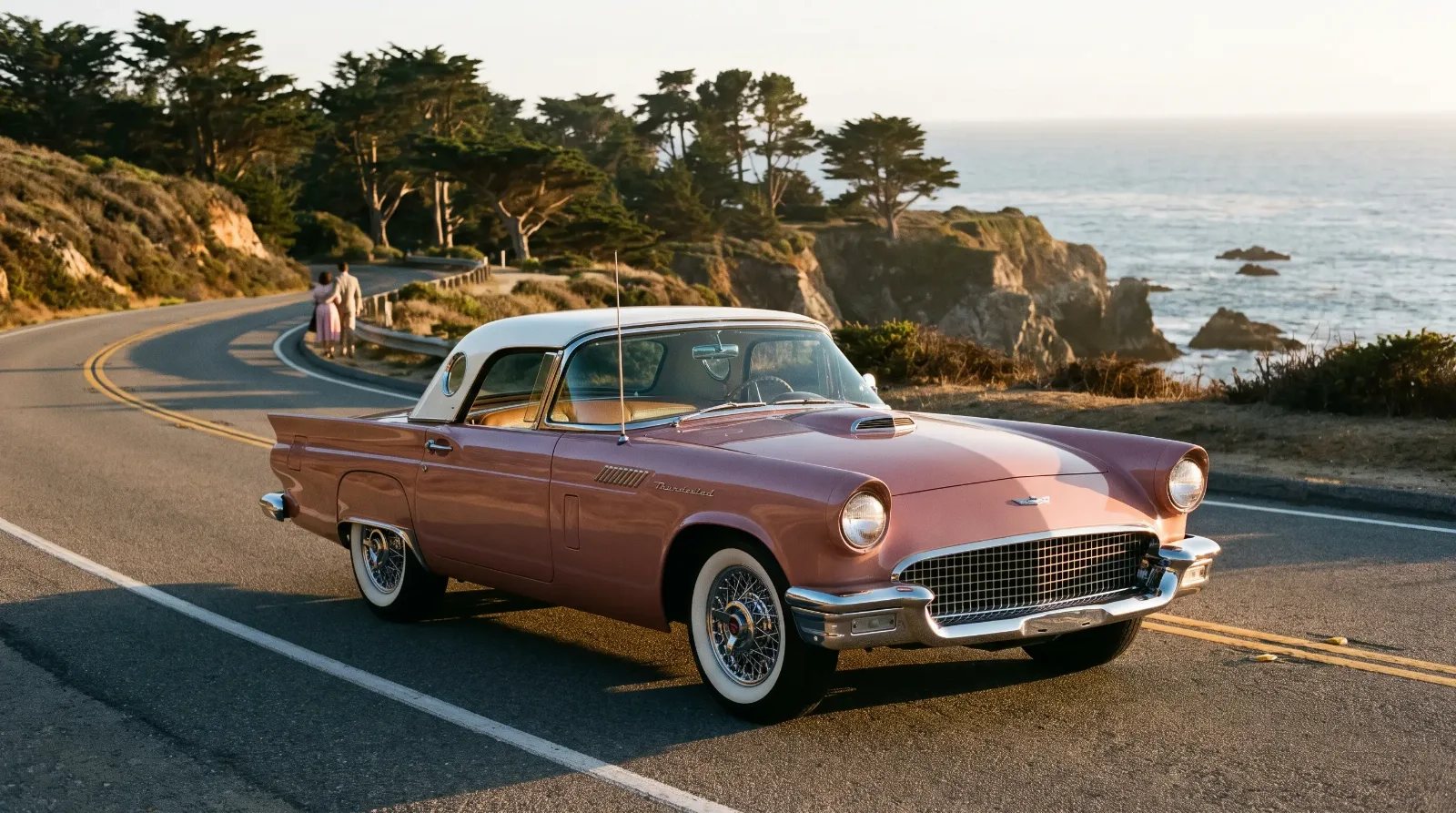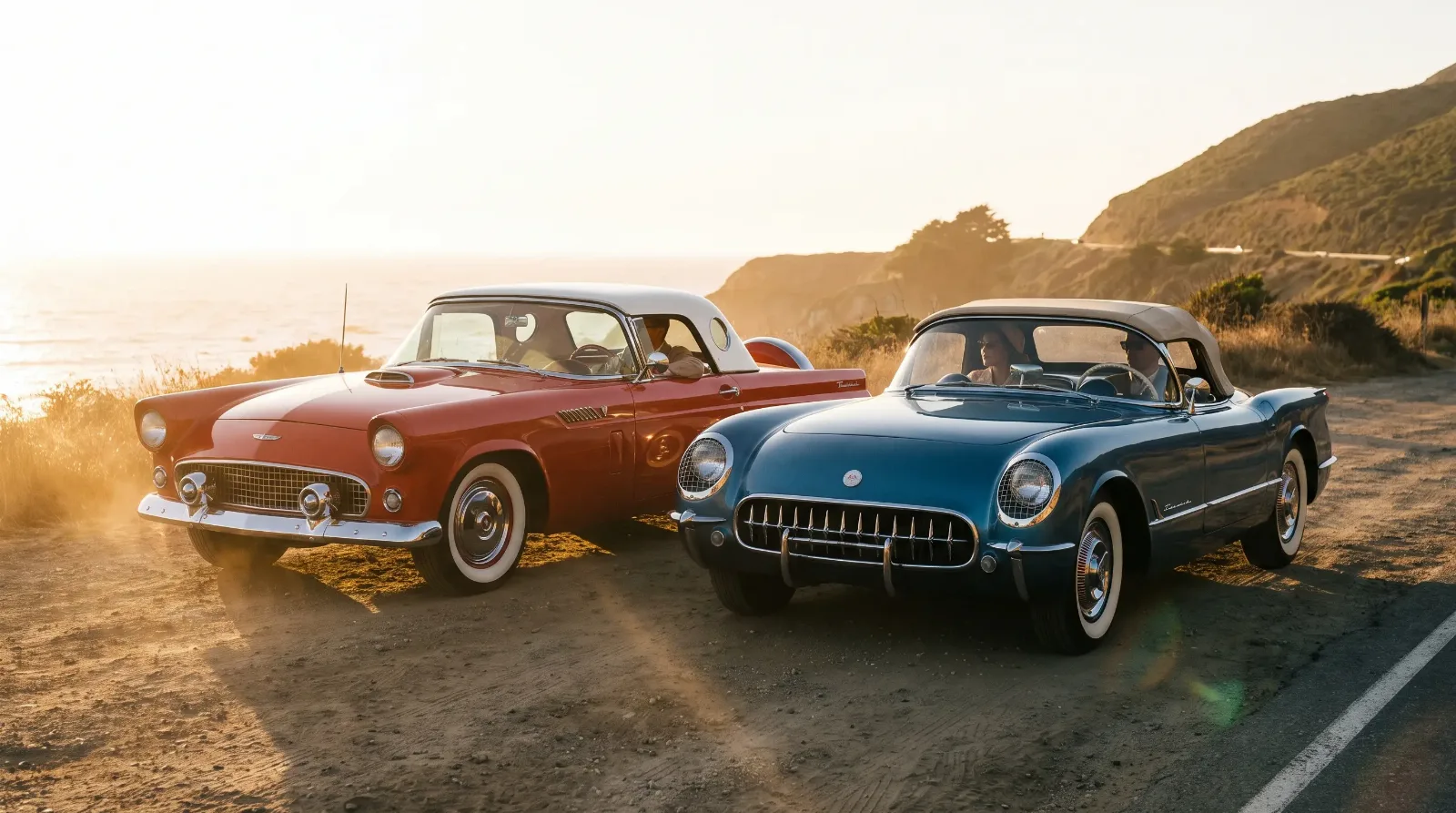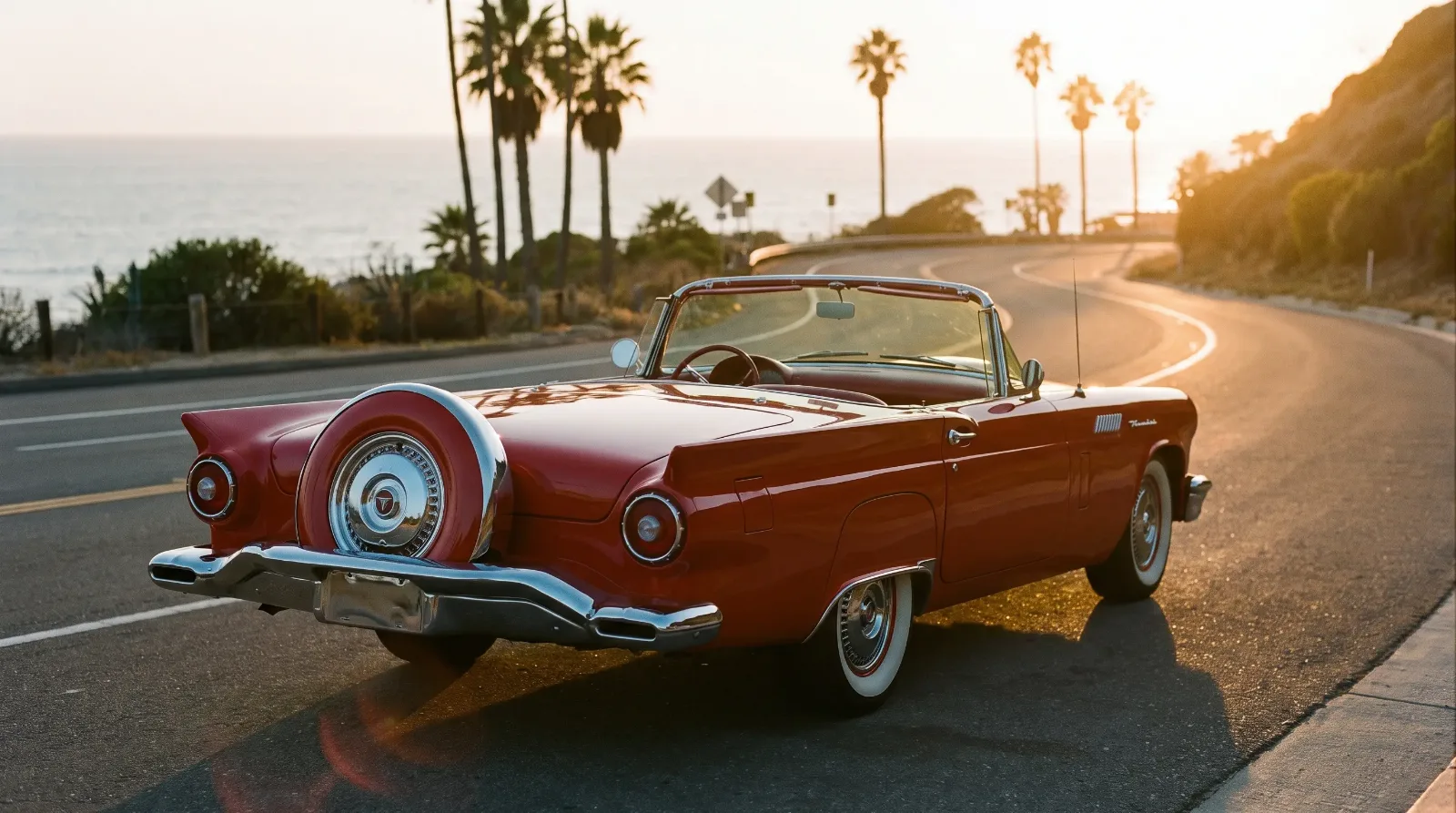
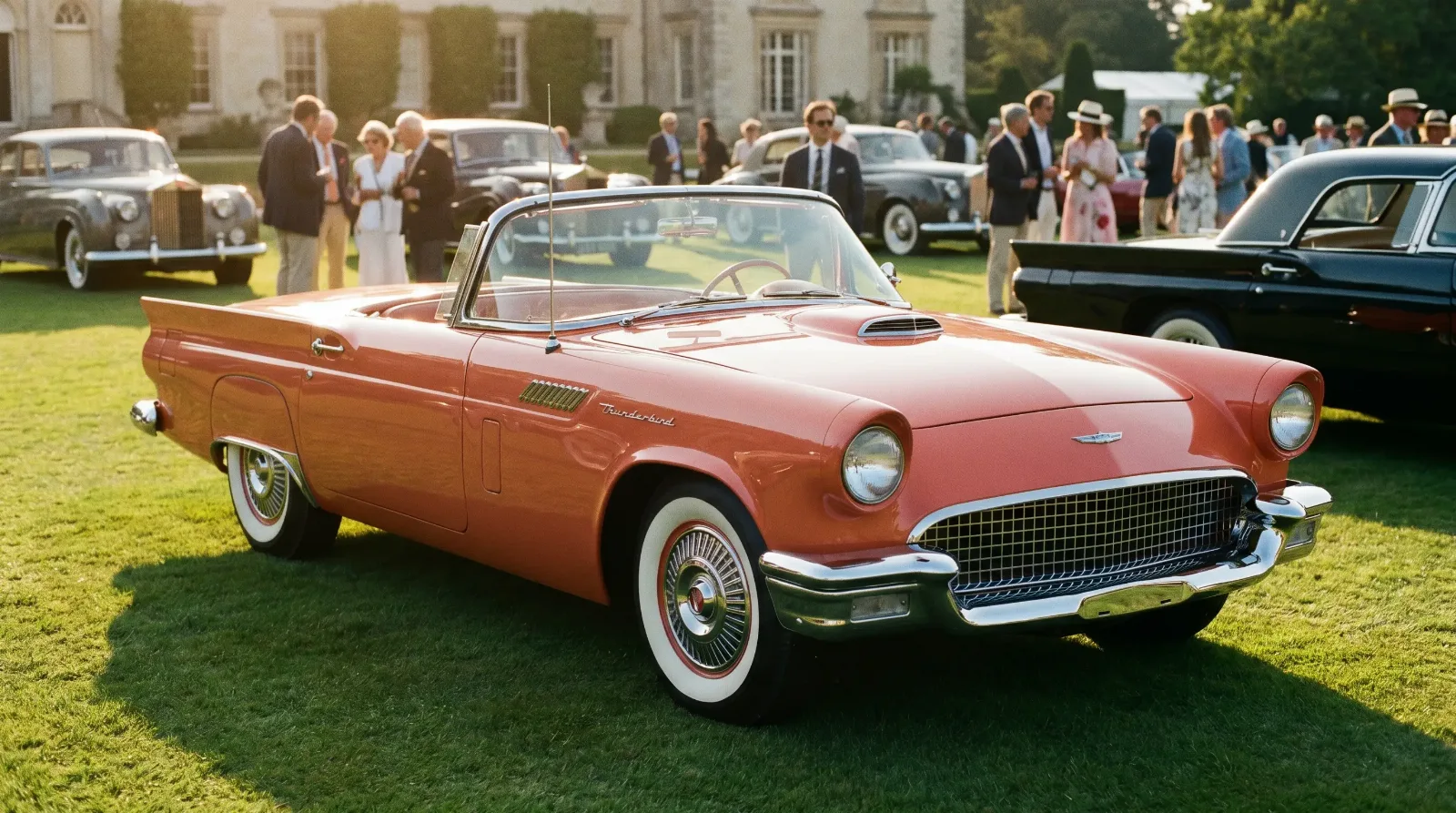
The two-seat Thunderbird is one of the few American cars from the 1950s where the market has been consistently rational for decades. No sudden speculative spikes, no crypto-money crash, just a steady climb built on a shrinking supply and a buyer base that keeps growing. If you are trying to understand 1957 Thunderbird value today, the first thing to accept is that this is not a hype car. It is a blue chip, and blue chips move in predictable ways.
The baseline: what a 1957 Thunderbird actually costs
A rough, project-grade 1957 Thunderbird with a tired interior and a non-running engine still trades in the $18,000 to $25,000 range in most regions, because even a rough two-seat Thunderbird is a complete, numbers-correct starting point for a car people want to finish. Move up to a solid driver, a car with decent paint, a running drivetrain, and no major rust, and you are looking at $35,000 to $50,000 depending on options and color combination. The real money sits at the top: a documented, ground-up restoration, especially a supercharged F-code car or one with the desirable removable hardtop and factory options, routinely brings $60,000 to $90,000 at auction, with exceptional matching-numbers F-code examples pushing well past $100,000, and documented cars have sold as high as the $150,000 to $186,000 range at major auction houses.
| Condition | Typical Range (2026) | What You Get |
|---|---|---|
| Project car | $18,000 - $25,000 | Complete but non-running, rust likely |
| Solid driver | $35,000 - $50,000 | Runs and drives, cosmetic wear |
| Show quality | $60,000 - $90,000 | Full restoration, correct trim |
| F-code supercharged | $90,000+ | Rare engine option, documented |
Why the two-seater holds value better than the cars that followed it
The four-seat Thunderbirds that came after 1957 outsold the two-seaters by a wide margin, and that is exactly why they trade for less today. There were only about 53,000 two-seat Thunderbirds built across the three model years combined, 1955 through 1957, while a single strong year of the four-seat cars could beat that total on its own. Scarcity is doing real work here, but so is design. The two-seater is a clean, single-idea car with no back seat to compromise the proportions. Collectors treat it as its own category, separate from every Thunderbird that came after, and price it accordingly.
If you want the fuller picture of how the car got here, and why Ford only built it for three years before pivoting the whole model line, read the background on the two-seat Thunderbird's short life and what replaced it.
What actually moves the number on a specific car
Color combination matters more on a Thunderbird than on most 1950s American cars, because Ford offered a genuinely wide palette and buyers today have strong preferences. Colonial White with a red interior and Torch Red cars in general tend to command a premium over the more common Raven Black or Thunderbird Blue. The removable hardtop, especially in the rarer color-matched or two-tone "Fiesta Red over white" configuration, adds real dollars, and a car with both the hardtop and the factory soft top present, undamaged, and correctly fitted is worth chasing over one missing either piece.
Engine choice is the other lever. The base 292 cubic inch V8 is common and unremarkable to the market. The 312 cubic inch engine with the optional dual four-barrel carburetor setup is more desirable, and the supercharged F-code 312, built in very limited numbers for 1957 only, sits in a different price tier entirely because it is rare, genuinely quick for the era, and tied to the Thunderbird's brief NASCAR-adjacent performance image.
Documentation changes the math
Buyers of a car this old have learned to distrust an undocumented restoration, and pricing reflects that distrust. Two nearly identical 1957 Thunderbirds, one with a build sheet, original title chain, and restoration receipts, and one with none of that, can differ by 15 to 25 percent at auction. Marque club judging sheets, old registration records, and even period photographs of the specific car all add real value because they remove risk from the buyer's side of the transaction. A car with no paper trail is a car where the buyer has to trust the seller's word on matching numbers, and that trust costs money.
Regional market differences are worth factoring in too. Southern and Southwestern cars, particularly those that spent their working lives in dry climates, tend to command a premium over comparable Northern or Rust Belt examples simply because the odds of hidden corrosion are lower. A 1957 Thunderbird with a clean Arizona or Texas title history and documented storage conditions can sell for meaningfully more than an identical car with an unclear Midwest ownership chain, even before either car has been inspected in person. Buyers who skip this step and focus only on the advertised condition grade are leaving real information on the table.
Where the market is headed
The generation that grew up wanting a 1957 Thunderbird is aging out of the hobby, which normally would put downward pressure on a niche like this one. But the two-seat Thunderbird has kept attracting younger buyers who are drawn to it as a design object rather than a nostalgia purchase, the same dynamic that has kept early Corvette and Bel Air prices firm. That crossover appeal is the main reason I expect values to hold flat to slightly up over the next several years rather than soften the way some other 1950s American cars have.
If you are shopping rather than just watching the market, it is worth going in with a target condition and a realistic budget already set, because auction fever on a well-presented two-seat Thunderbird can push a final number well past the pre-sale estimate. For anyone ready to move past research, you can browse classic Thunderbird listings and compare what is actually available against the ranges above before making an offer.
"The two-seat Thunderbird does not need a hot market to hold its number. It has held its number through markets that were cold, hot, and everything in between. That is the definition of a blue chip."
- David Mercer
Understanding 1957 Thunderbird value is less about chasing a trend and more about recognizing a car that already proved itself decades ago. The supply is fixed, the demand keeps renewing itself with each new generation of buyers, and the fundamentals have not changed since the last one rolled off the line in Dearborn.
One more factor worth weighing before buying: transmission and drivetrain originality. Most 1957 Thunderbirds left the factory with the Fordomatic automatic, and manual-transmission cars, while less common, do not command the premium some sellers assume. The market has historically favored a numbers-correct drivetrain over a rarer but non-original swap, since collectors buying at this level are usually chasing authenticity first and personal preference second. A seller pitching a manual-swapped car as automatically more valuable is misreading what actually drives price at the top end of this segment.
Insurance and storage costs also factor into total ownership math that raw purchase price alone does not capture. Agreed-value collector policies on a well-documented 1957 Thunderbird typically run a modest annual premium relative to the car's value, and climate-controlled storage, while not mandatory, meaningfully protects the investment for owners who are not driving the car daily. Anyone budgeting for a six-figure show car should build these ongoing costs into the purchase decision rather than treating the auction hammer price as the full picture.
Sources and notes
- Hagerty Valuation Tools - 1957 Ford Thunderbird
- Hagerty - Buying a 1955-57 Ford Thunderbird Buyer's Guide
- Supercars.net - 1957 Ford Thunderbird D/F-Code Phase I
- Conceptcarz - Auction Results and Sales Data for 1957 Ford Thunderbird
- Barrett-Jackson - 1957 Ford Thunderbird F-Code Convertible
- Squarebirds.org - 1957 Ford Thunderbird Production Numbers/Specifications