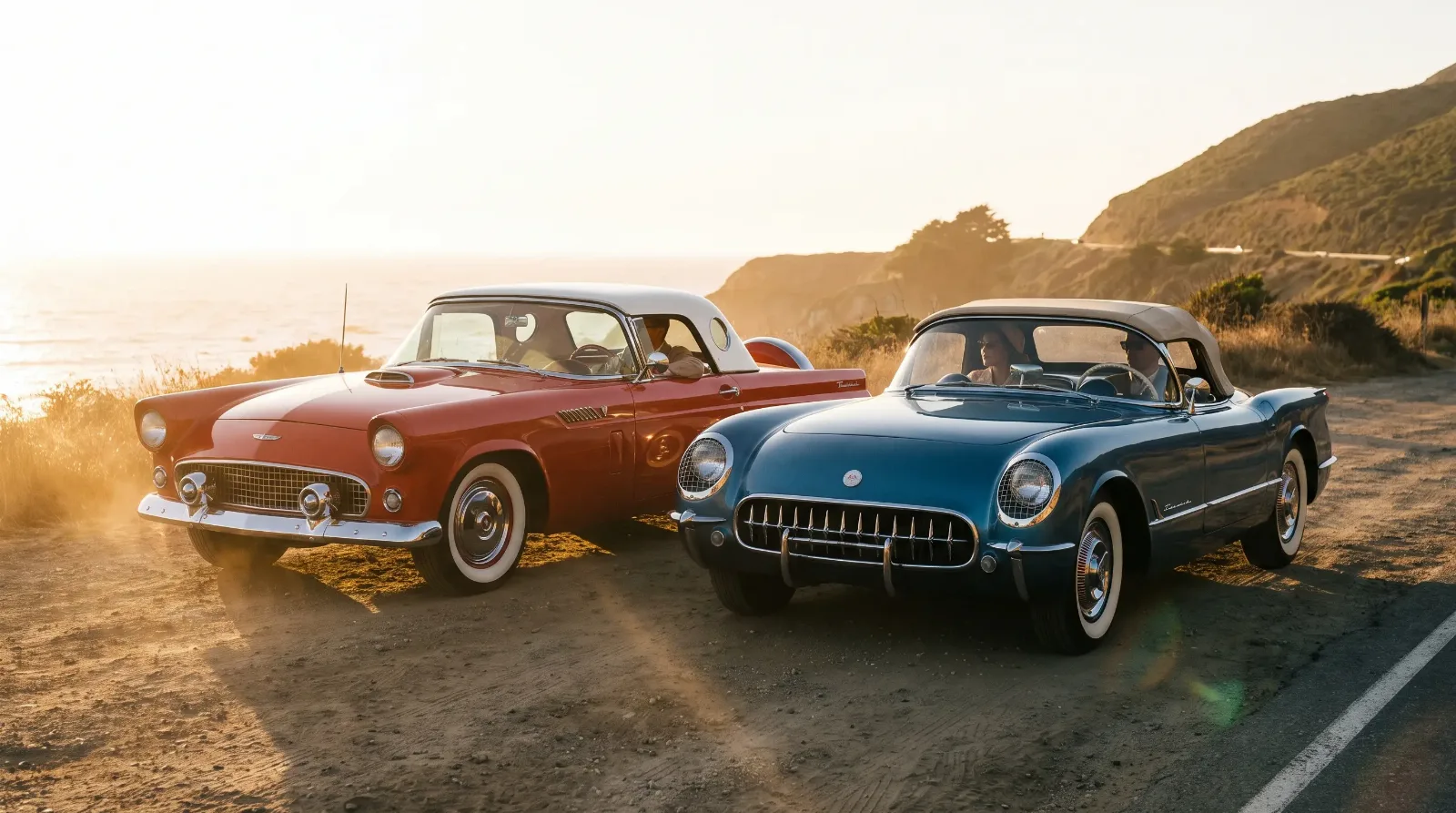
Ask why Ford built the Thunderbird and most people reach for the easy answer: the Corvette showed up in 1953, and Ford panicked. That is close enough to true to survive as folklore, but it skips the part that actually matters, which is that Ford's people had been circling the idea of a small, personal Ford for years before Chevrolet ever bent a piece of fiberglass. The Corvette gave the project urgency. It did not give it its reason to exist.
A Paris motor show and a restless engineer
The most durable version of the origin story places Ford design executive George Walker and stylist Frank Hershey at the 1951 Paris Auto Salon, standing among European two-seat roadsters and wondering out loud why Ford did not build anything like them. Whether that exact conversation happened on that exact sidewalk or got smoothed into shape over decades of retelling, the sentiment was real. Ford's design staff had spent the postwar years watching Jaguar, MG, and Alfa Romeo sell a kind of automobile that did not exist on an American showroom floor: small, low, quick, and built around the driver rather than the family.
Back in Dearborn, that sentiment turned into sketches, and the sketches turned into a program. By the time Chevrolet unveiled the Corvette concept at the January 1953 Motorama in New York, Ford already had its own two-seater moving through development. The Corvette's debut did not invent the Thunderbird. It forced Ford to stop treating the project as a side study and start treating it as a market entry with a deadline.
Why ford built thunderbird the way it did
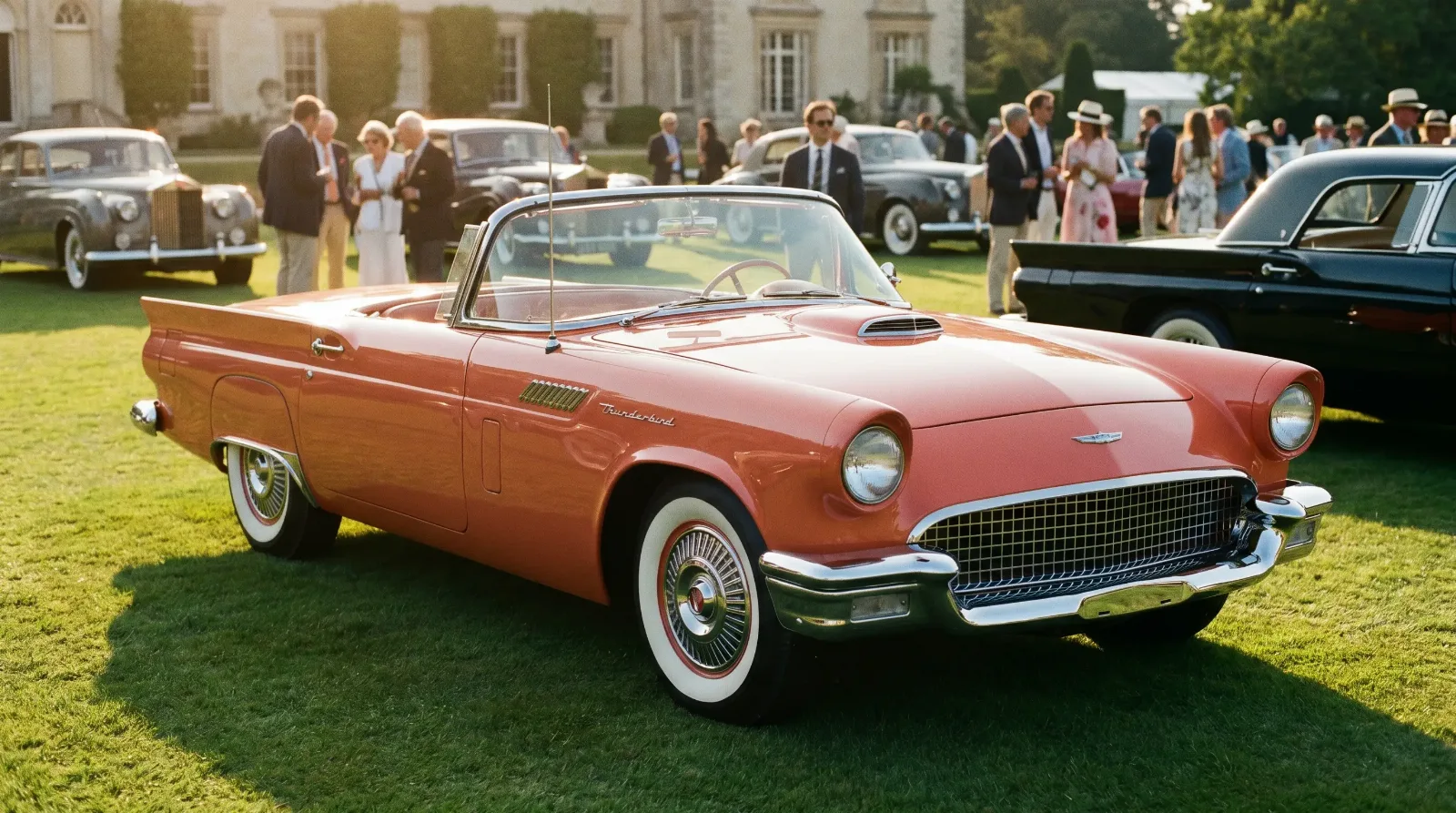
This is the part that gets flattened in the shorthand version of the story. Ford did not simply copy the Corvette's formula of a fiberglass body over minimal creature comforts. Ford's market research, run under Lewis Crusoe and division general manager Robert McNamara, pointed toward a different customer: someone who wanted a car that looked and felt sporting without giving up the comfort a Ford buyer expected. That meant roll-up windows instead of side curtains, a standard V8 instead of an inline six, and a full complement of power options that the early Corvette simply did not offer.
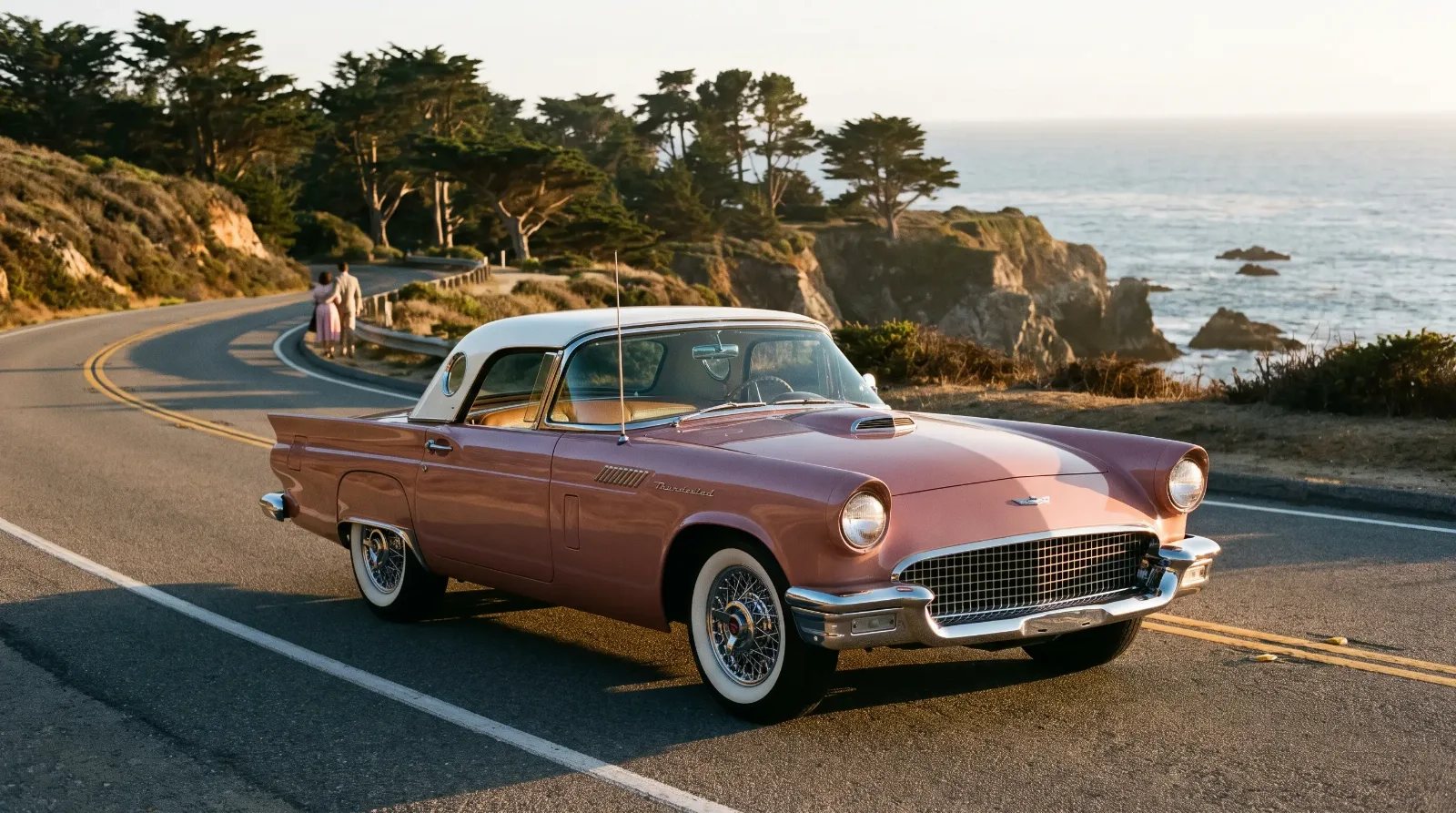
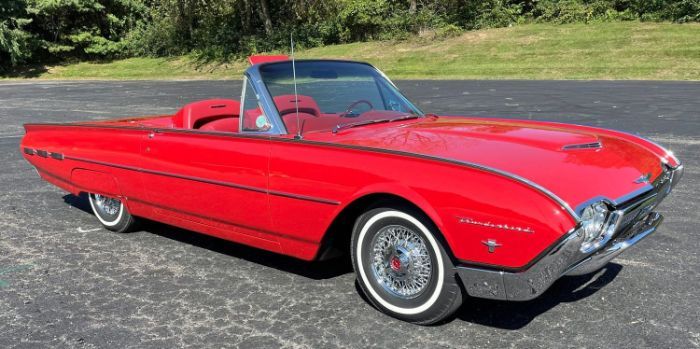
The result was a car Ford refused to call a sports car in its own advertising. Company literature described the Thunderbird as a "personal car," a phrase that sounds like marketing hedge until you look at what it actually meant on the order sheet. Buyers could option a Thunderbird with power steering, power brakes, power windows, and a factory radio, none of which fit comfortably into the stripped-down sports car category Chevrolet was chasing. You can read 1957 ford thunderbird history for the full arc of how that two-seat formula played out across its three model years.
From concept to Dearborn assembly line
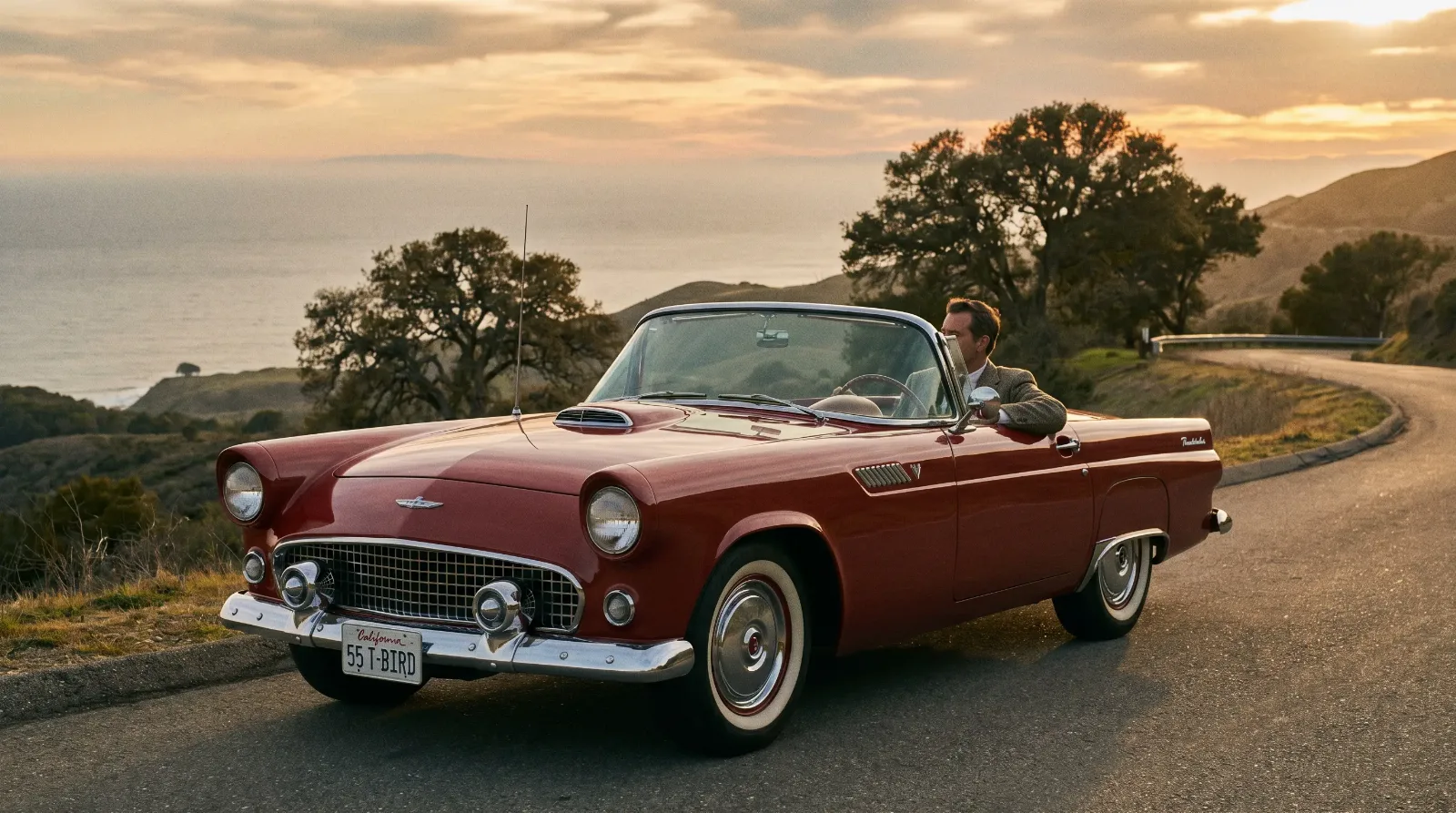
Ford moved fast once the decision was made. The Thunderbird went from a Motorama-adjacent concept to a production car in roughly a year, an almost reckless pace by the standards of a company that normally spent three to four years on a new model. Design finalized in late 1953, tooling followed through 1954, and the first production Thunderbird rolled off the line at Ford's Dearborn assembly plant on September 9, 1954, as a 1955 model. Ford's own account of that same debut year has more on the moment the car actually reached showrooms, which you can find in a related story covering the 1955 launch specifically.
The speed shows in small ways once you know to look. Early Thunderbirds shared their frame architecture and a great deal of mechanical hardware with the full-size Ford lineup, which let engineers skip years of clean-sheet development. That was a practical shortcut, not a compromise buyers seemed to mind. The car looked nothing like a standard Ford sedan wearing a shorter body, and few contemporary reviewers treated it as one.
"Chevrolet built a sports car and hoped America would learn to want one. Ford built the car America already wanted and called it sporty. That difference in reading the customer is the whole story of why the Thunderbird won that particular argument."
- Patrick Walsh
The mission Ford actually set for itself
Strip away the Corvette rivalry angle and Ford's real goal comes into focus: capture buyers who already owned a Ford or Mercury and wanted something more distinctive for a second car, without asking them to accept the compromises of a genuine sports car. That target explains almost every engineering decision on the original Thunderbird, from the standard automatic transmission option to the trunk sized for real luggage rather than a token parcel shelf.
It also explains why Ford's own engineers and executives bristled at being compared to Chevrolet at all. Internal correspondence and later interviews with McNamara-era Ford staff consistently frame the Thunderbird as answering a question nobody else in Detroit had asked seriously: what does a comfortable, image-conscious personal car look like, built by a company that also sold family sedans and knew how to make money doing it.
A rivalry that outlived its own premise
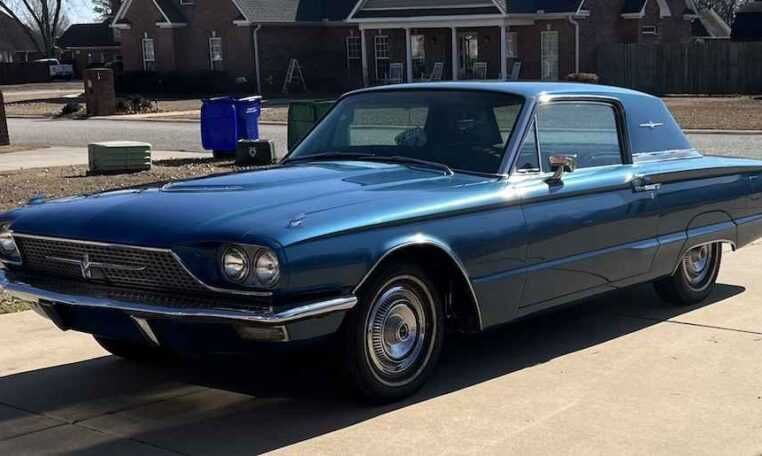
Within a few years the comparison stopped making sense anyway. Ford turned the Thunderbird into a four-seat personal luxury car for 1958, chasing volume the two-seater never approached, while Chevrolet kept pushing the Corvette toward being a true sports car. The two nameplates that supposedly started as rivals ended up selling to almost entirely different customers by the early 1960s. That divergence is easy to miss if you only know the founding myth, but it is the clearest evidence that Ford's original goal was never to out-sports-car anyone. It was to build something more comfortable that still turned heads in a parking lot.
If that early formula appeals to you today, the classic two-seat cars built on that original personal-car idea still turn up on the market with some regularity. You can browse Thunderbirds for sale now to see what a genuine first-generation car looks like in current condition and pricing, which tells its own version of how well Ford read its customer back in 1955.