Most 1910s cars topped out somewhere between 35 and 45 mph on a decent road, and that is the number to keep in your head before you read another period advertisement. The catalogs loved to print bigger figures. The roads, the tires, and the engines of the era rarely let a buyer see them.
That gap between the printed number and the real one is the whole story of speed in this decade. Manufacturers were selling romance as much as performance, and it worked, because almost nobody driving a Model T or a mid-range touring car had the chassis, the tires, or the open road needed to find out what the factory claim actually meant in practice.
What "top speed" meant before pavement existed
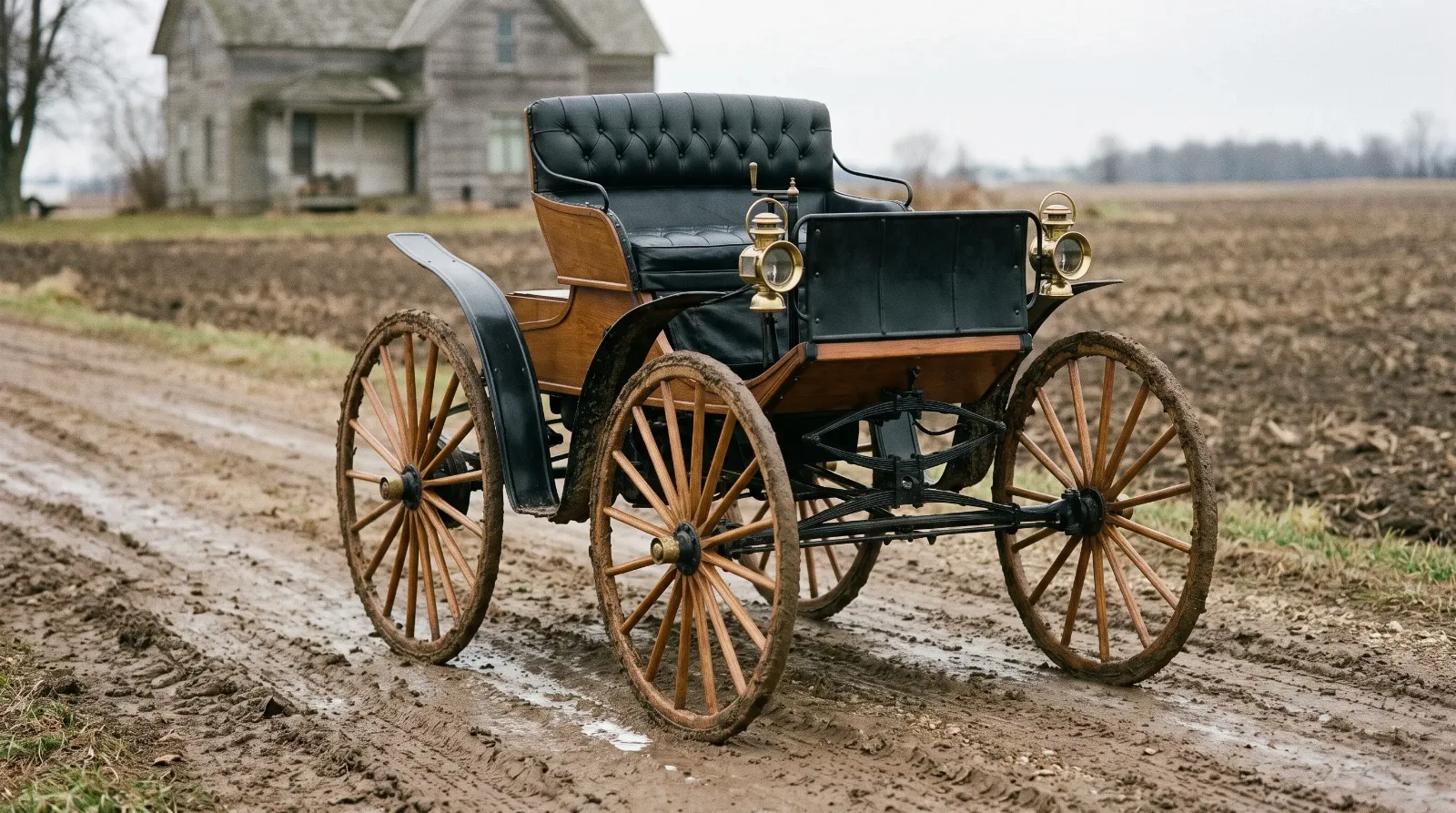
Speed ratings in the 1910s came from a test track, a favorable straightaway, or sometimes an engineer's optimistic arithmetic. They rarely came from a public road, because public roads barely existed as we understand them. Outside major cities, most American roads were dirt, gravel, or rutted farm track, and a car doing 40 mph on washboard surface was shaking itself apart while the driver held on.
Tires were the real limiter. Clincher rims and narrow, hard-rubber-adjacent pneumatic tires blew out constantly at sustained speed, and a blowout at 40 mph with mechanical brakes and no windshield glass standard on many cars was a serious event. Brakes themselves were often rear-wheel-only drum units, sometimes just a band around a drum, with stopping power nowhere close to what a modern driver would expect. The engine could often outrun the chassis around it.
So when a brochure claimed 60 mph, what it usually meant was: on a smooth track, in ideal conditions, with a skilled driver and possibly a stripped-down car, this is the number we hit once. It was true and it was also nearly irrelevant to how the car would be driven.
The gap between touring cars and the racers
Production touring cars and the era's purpose-built racers were not playing the same game, and comparing their numbers side by side is misleading unless you separate them first.
A Ford Model T, the car most Americans actually drove, had a top speed around 40 to 45 mph from its 20-horsepower four-cylinder engine, and that was plenty for the roads it faced. A mid-market touring car from Buick or Oldsmobile might reach into the high 40s or low 50s with a larger engine and a lighter body, still a car built for reliability over velocity.
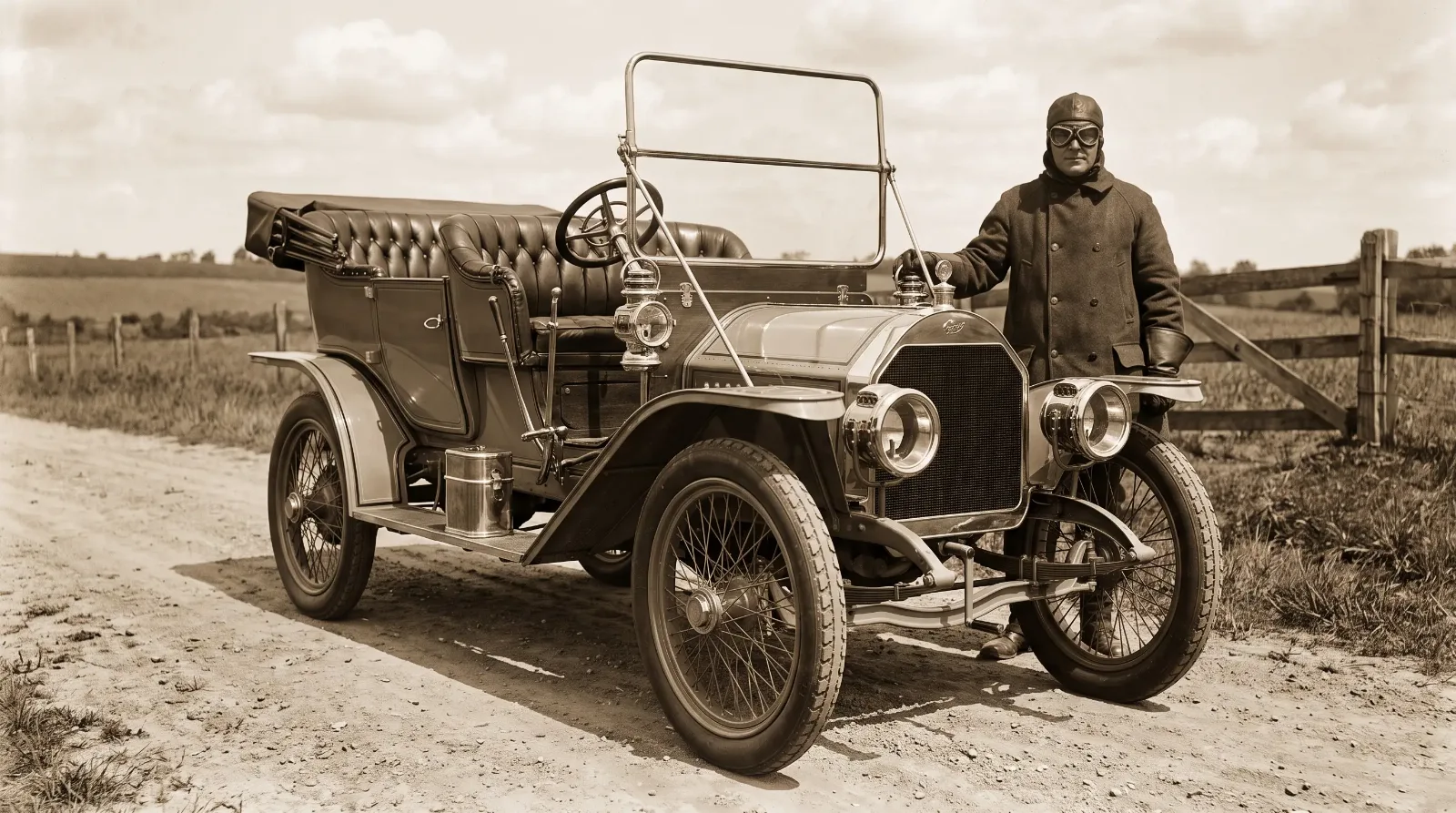
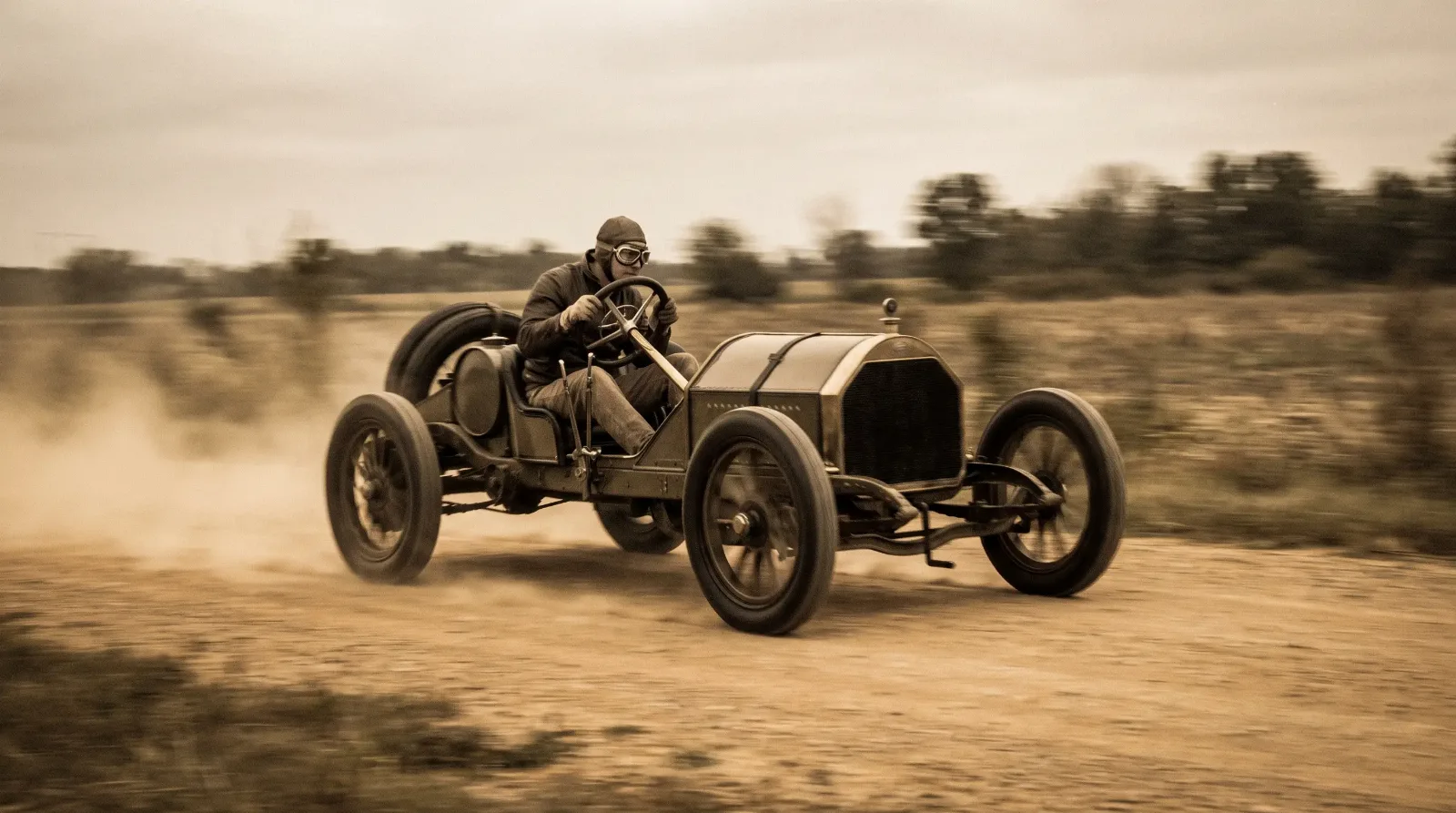
The Mercer Raceabout and the Stutz Bearcat are different animals entirely, and they get cited constantly in top-speed conversations because they earned it. The Raceabout's T-head four, tuned for competition, could push a stripped, minimal-bodied roadster past 70 mph on a good track, a genuinely startling number for 1911. The Stutz Bearcat followed a similar formula: light body, big four-cylinder engine, almost no creature comforts, built to win endurance and speed events rather than carry a family to church. These were not what a typical buyer parked in the barn. They were the halo cars, and their numbers get quoted as if they represented the decade, when really they represented its extreme edge.
This distinction matters when you read the top speed of 1910s cars story in full context. The brass era produced both the family tourer doing 40 mph on a dirt road and the works racer doing 70-plus on a banked track, and treating them as the same category of car misses what actually made each one significant.
Case studies in real-world numbers
Look at three cars and the picture gets clearer. The Model T's 20 horsepower and roughly 1,200-pound weight gave it a top speed in the low 40s, a number that held steady across most of its production run because Ford prioritized reliability and cost over performance changes. The Cadillac Model Thirty, a more upscale offering, ran a larger four and could reach the high 50s on a good surface, still governed more by the roads available than by the engine's actual ceiling.
Then there is the Bearcat. Stutz built its reputation on the 1913 Indianapolis 500, where a Stutz-built car finished 3rd against dedicated racers, and that result did more for the brand's speed image than any brochure copy could. The lesson from all three cars is the same: engine output on paper and usable speed on the road were two different numbers, and the size of the gap depended entirely on what the car was built to do.
| Car | Approx. horsepower | Realistic top speed | Built for |
|---|---|---|---|
| Ford Model T | 20 hp | ~40-45 mph | General use, reliability |
| Cadillac Model Thirty | 40 hp | ~50-55 mph | Upscale touring |
| Mercer Raceabout | ~58 hp | ~70+ mph | Competition, speed |
| Stutz Bearcat | 60 hp | ~70+ mph | Competition, speed |
Why the brochures kept lying anyway
None of this stopped manufacturers from printing the best number they could defend. Speed sold cars even to buyers who would never approach it, the same way a modern sedan's advertised top speed rarely gets used on a commute. A brochure claim was a promise about the engine's potential, not a description of daily driving, and period buyers seem to have understood that distinction better than modern readers sometimes give them credit for.
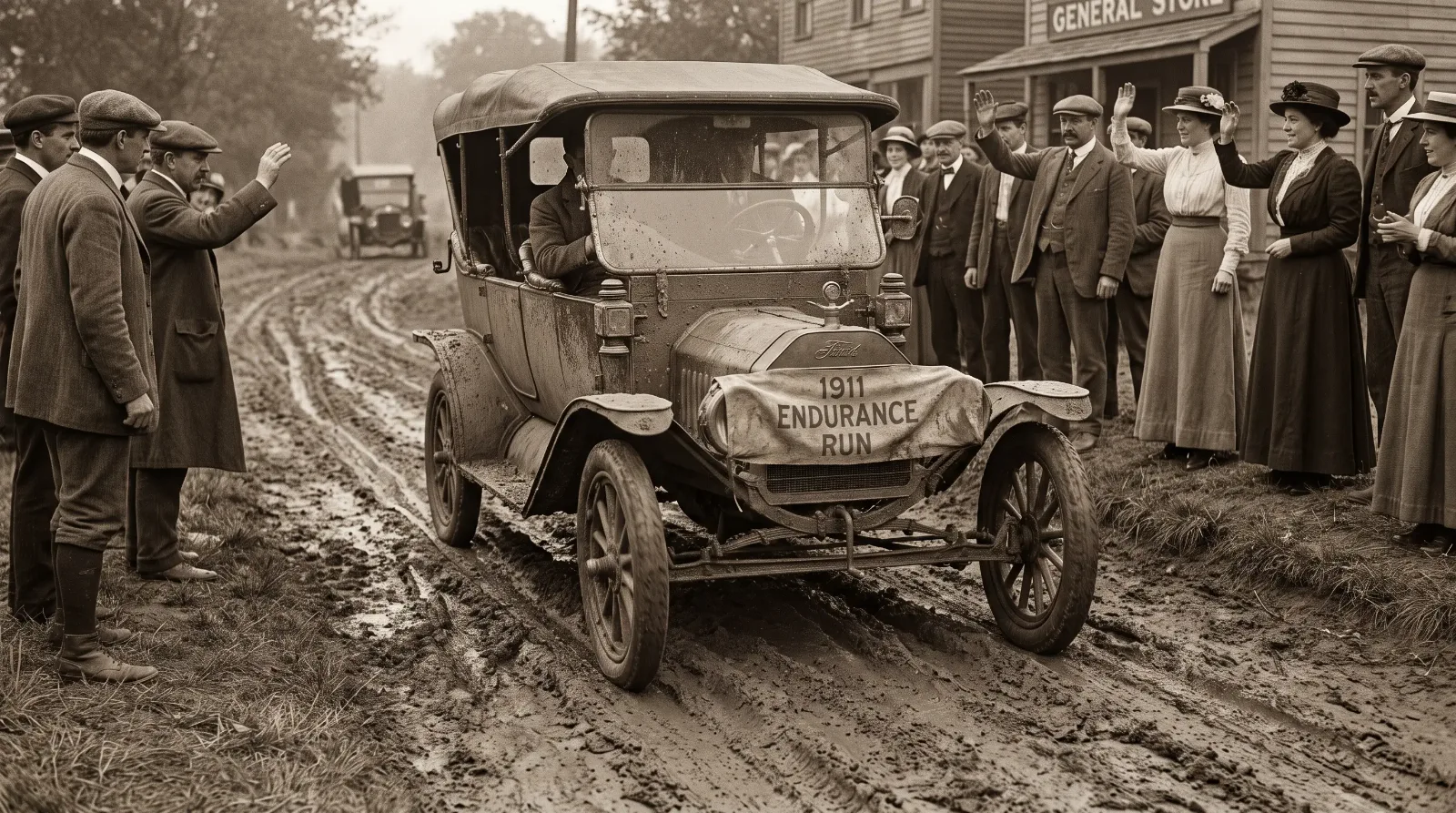
The events that actually tested those claims were the endurance runs and reliability trials that dominated the decade's motorsport calendar. Those contests cared less about a single fast lap and more about whether a car could survive hundreds of miles of terrible roads without breaking, which tells you something about what buyers actually valued. If you want the fuller picture of how these cars were tested against each other under real conditions, keep reading into the races that decided reputations far more than any catalog number did.
"Everybody wants to talk about the 70 mph Mercer. Almost nobody wants to talk about the fact that most 1910s roads couldn't safely handle half that speed. The number on the page and the number you could actually use were two different conversations, and collectors today still mix them up."
— Dan Reeves
What this means for a collector today
If you are chasing a period speed figure for a car you own or are considering, treat factory claims as a ceiling reached under ideal conditions, not a promise. Original gearing, tire specification, and even the state of the roads the car was tested on all shaped that number, and reproducing it today on a restored car with modern tires and a smooth road is a different exercise than the factory test ever was.
The honest way to evaluate a brass-era car's performance is to separate the mechanical ceiling from the practical reality of 1910s driving. A car that could theoretically hit 55 mph but was almost never driven past 35 tells you more about the era than the peak number alone. Speed in this decade was aspirational as often as it was actual, and the cars that delivered on both, the Raceabouts and Bearcats of the world, earned their reputations precisely because they were the exception.