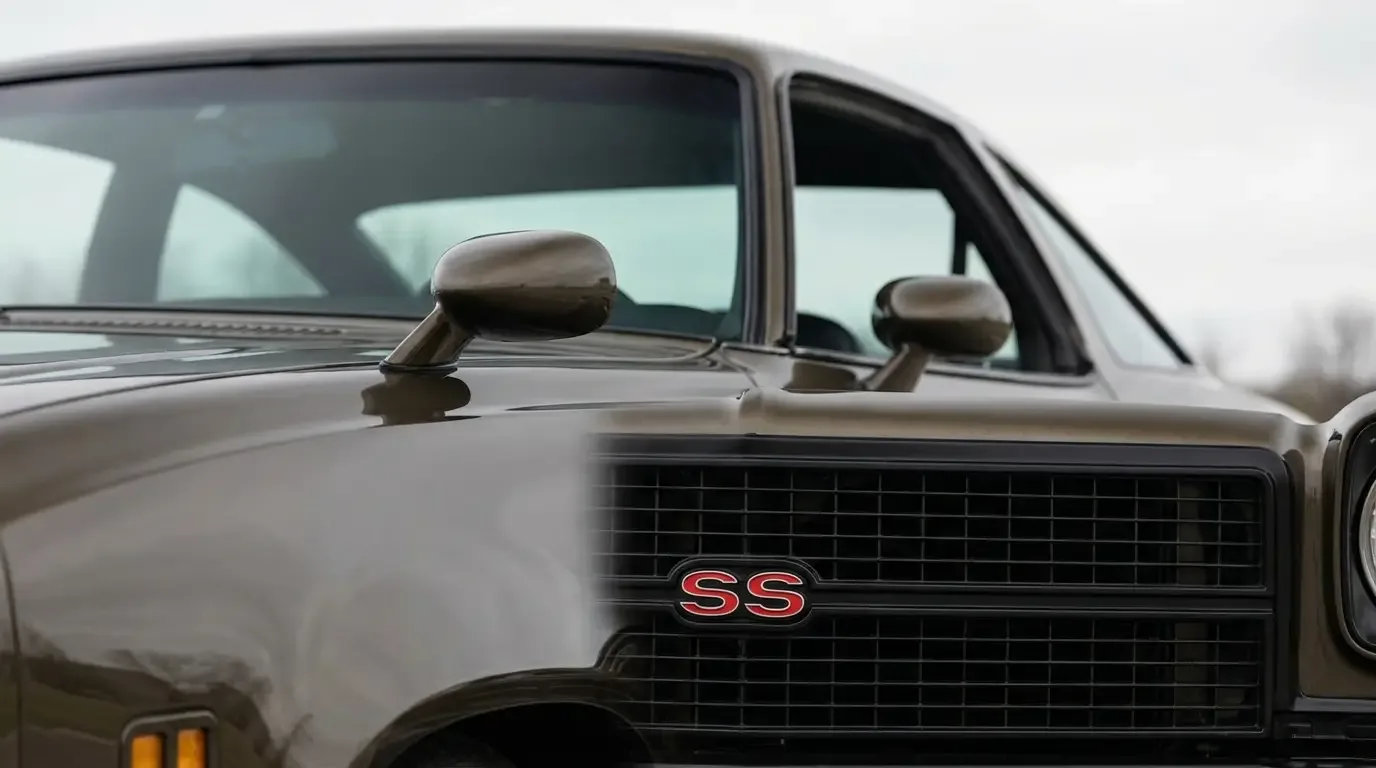
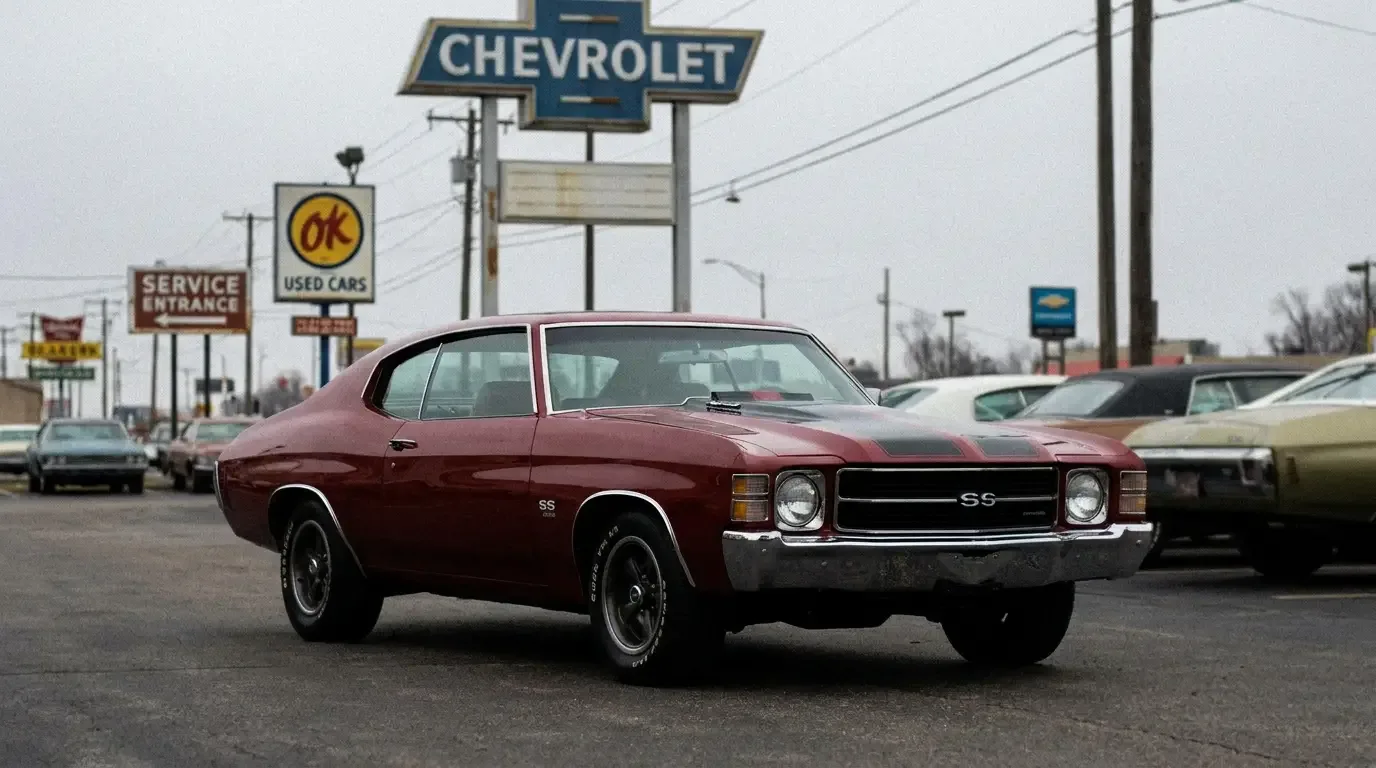
The 1971 Chevelle SS doesn't get much airtime, and if you go looking through the build sheets and the factory documentation instead of the folklore, you can see exactly why. This is the year the numbers started moving in a direction nobody wanted to talk about at the time. Not a collapse, not yet, but a quiet, deliberate step down from what 1970 had put on the table. Understanding what actually happened in 1971 means setting aside the reputation the car picked up later and reading what the factory records actually say.
I want to be precise about this rather than repeat the shorthand version that gets passed around, because the shorthand version usually overstates how much changed and understates why it changed. This is one chapter in the full SS story, and it's the chapter where the story stops climbing and starts leveling off.
The compression drop nobody could avoid
GM made a company-wide decision heading into the 1971 model year to lower compression ratios across its engine lineup, a response to the coming shift toward unleaded, lower-octane fuel and tightening emissions requirements. This wasn't a Chevelle-specific decision or even a Chevrolet-specific one. Every division dropped compression that year, and the Chevelle's big-blocks took the hit right along with everything else in the GM catalog.
The result on paper looked worse than it necessarily felt behind the wheel, because some of that horsepower drop reflects a genuinely softer engine and some of it reflects rating methodology that hadn't yet caught up to how GM would report numbers a year later. Sorting out how much of the 1971 drop was real and how much was measurement is exactly the kind of question that gets murkier the more sources you check, and I'd rather flag that uncertainty than pretend the record is cleaner than it is.
What was actually on the order sheet
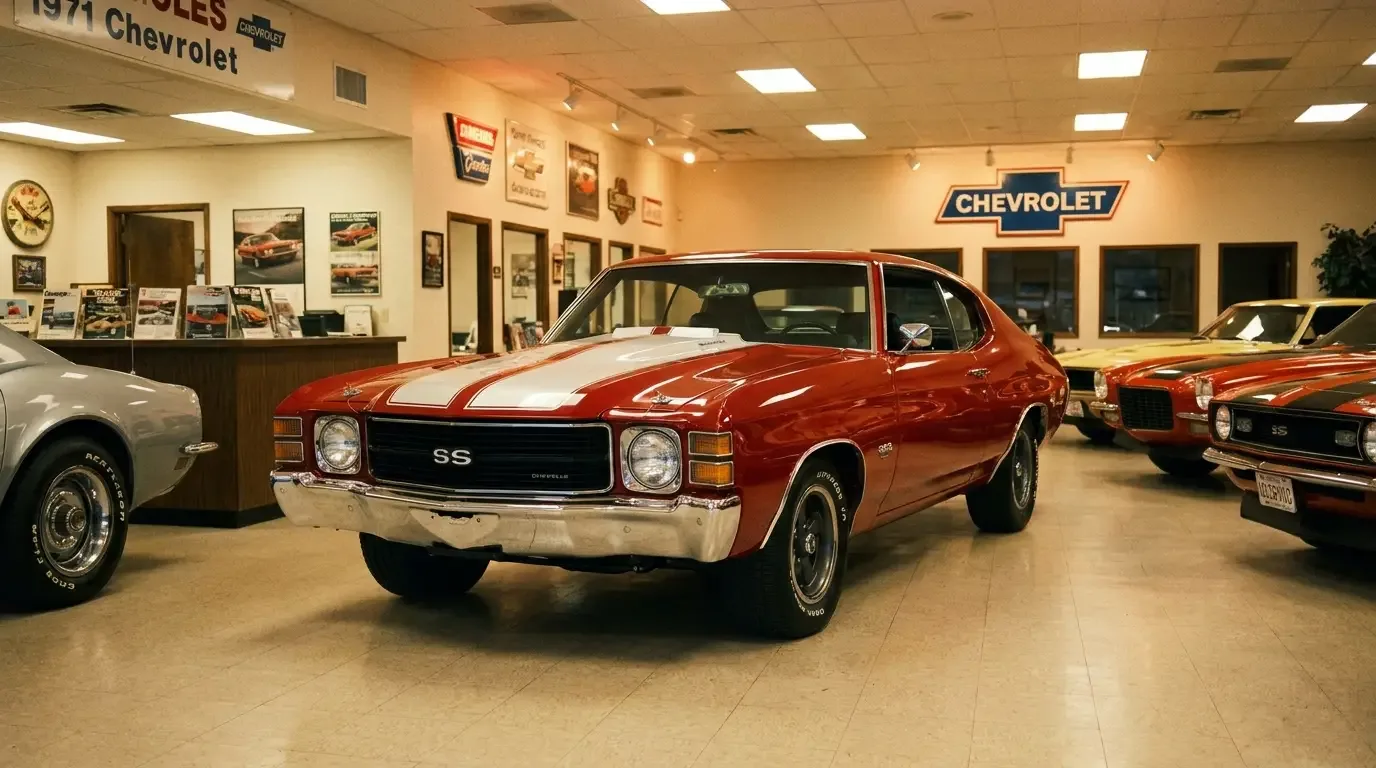
The SS package that year carried the RPO Z15 designation, available on the Malibu, and by 1971 it had drifted closer to a dress-up option than a true performance package, since three of the four available V8s could be ordered with or without it. Buyers could pair Z15 with a 350 small-block in either two-barrel or four-barrel form, the big-block still marketed as "396" despite actual displacement of 402 cubic inches (LS3, a labeling holdover Chevrolet kept for brand recognition even after the bore had grown), or the 454. Only the 454 LS5 actually required the SS option to order. The LS6, the engine most people associate with Chevelle big-block glory, is where the 1971 story gets genuinely murky: GM's early-year literature listed an LS6 454 rated at 425 horsepower, but by every production record that survives, it never reached regular consumer sale that year. What exists are a handful of pre-production and press cars built for magazine testing. A genuine, factory-built-for-sale 1971 LS6 Chevelle is, as far as documented history shows, not a thing that exists in meaningful numbers, no matter what a seller's listing claims.
| Engine | Displacement | Horsepower (SAE gross) | Notes |
|---|---|---|---|
| Small-block 350 (L65/L48) | 350 ci | 245 hp (2-bbl) or 270 hp (4-bbl) | Entry-level SS engines |
| Big-block "396" (402 actual, LS3) | 402 ci | 300 hp gross / 260 hp net | Kept the 396 name for market recognition |
| LS5 454 | 454 ci | 365 hp gross / 285 hp net | Only engine that mandated the Z15 option |
| LS6 454 | 454 ci | 425 hp gross (listed only, not regular production) | Announced early in the model year, then dropped before public sale |
Why this year gets lost between two louder ones
Sitting between 1970, the year everyone points to for the LS6's peak numbers, and 1972, the year most people mark as the practical end of the SS as a serious performance car, 1971 doesn't have a natural constituency. It's not the high point and it's not the closing chapter. It's the year in the middle where the factory was already managing a controlled descent, and the cars reflect that management rather than any dramatic single event.
That's not the same as saying 1971 cars aren't worth understanding on their own terms. The build quality and trim details didn't change dramatically from 1970, and a well-optioned LS5 car from this year is a genuinely quick, well-equipped Chevelle that doesn't carry the premium the LS6 cars from the year before command. For someone building a factory-documentation view of the whole SS lineage rather than chasing the single highest number, 1971 fills in a piece of the record that the LS6 mythology tends to skip past.
Reading the build sheet, not the reputation
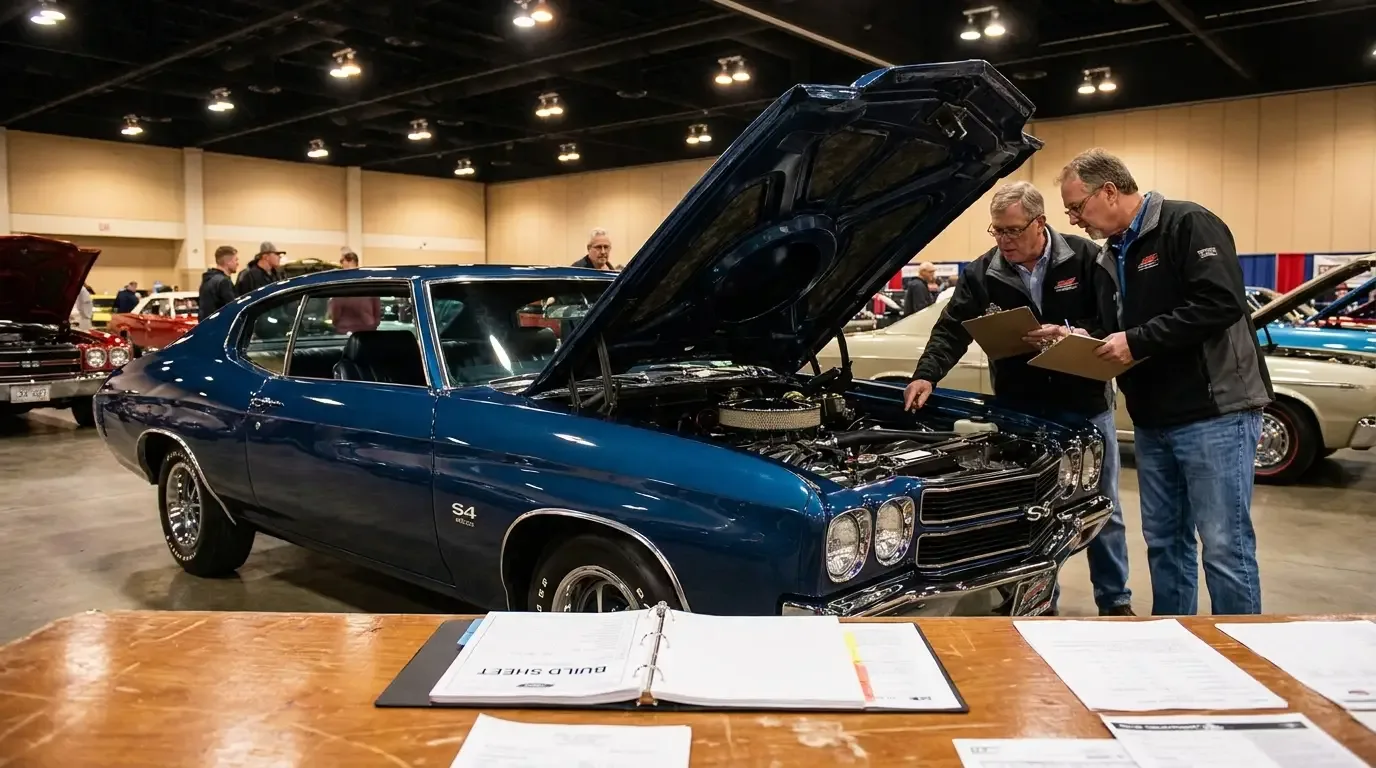
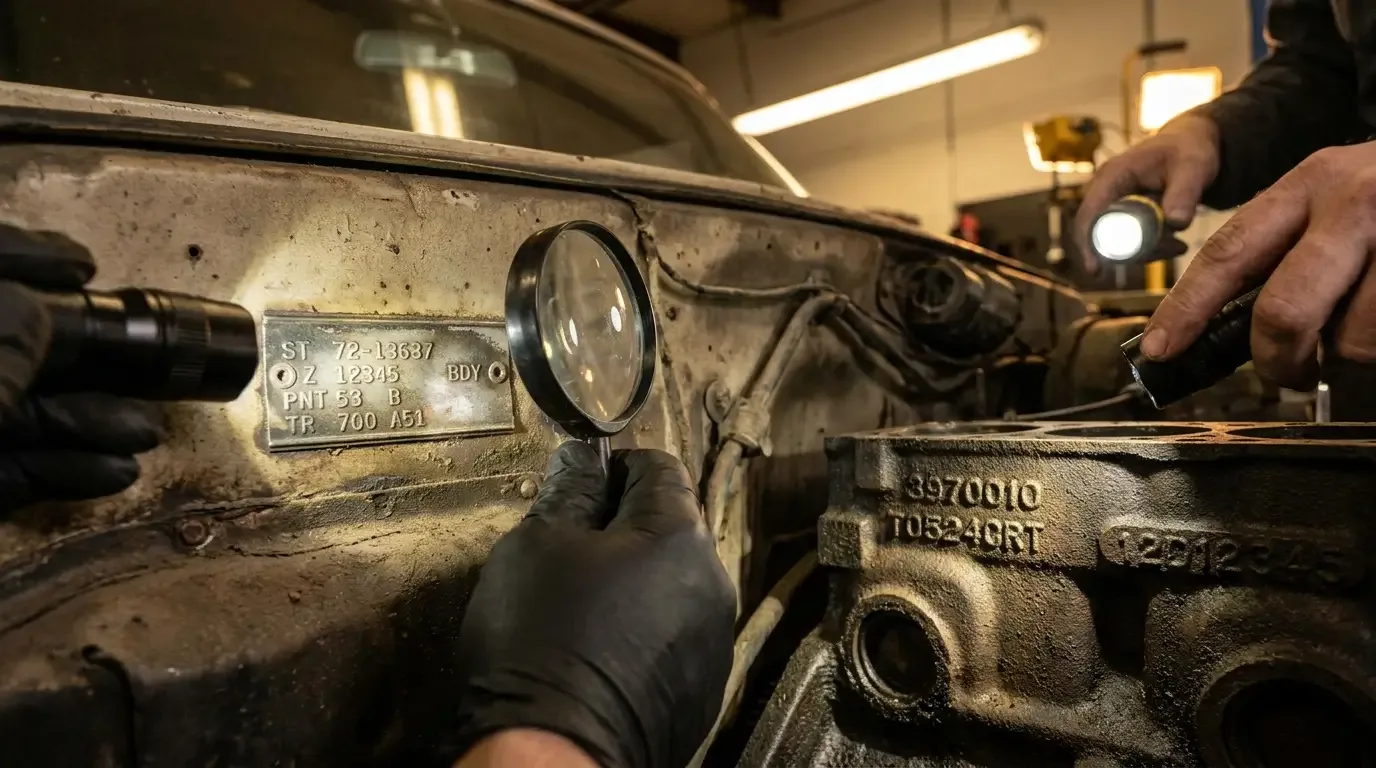
If you're trying to identify a genuine 1971 SS today, the cowl tag and any surviving broadcast sheet or protect-o-plate documentation matter more than they do for some other model years, precisely because this is a year where casual reputation and factory fact diverge more than usual. I've seen enough cars represented as LS6 examples that turn out, once you actually pull the documentation, to be LS5 cars with aftermarket badging added later. That's not an accusation against any particular seller. It's just a reminder that this is a year where you check the paperwork before you check the story.
"People show up wanting to sell me a '71 LS6, and the honest answer is that car mostly doesn't exist. GM printed the spec sheet, then pulled it before it ever reached a dealer in any real numbers. What the tank stickers and build sheets do tell you, when you can find them, is worth more than any figure floating around a forum."
— Tom Ramirez
What a documented 1971 actually brings
Because the model year sits in the shadow of both 1970 and 1972 in most buyers' minds, documented 1971 SS cars often trade for less than their build quality and rarity would suggest. A verified LS5 car with matching numbers and a complete paper trail typically brings less than a comparable 1970 LS6, which makes it one of the more approachable ways into a genuine big-block SS with real factory documentation behind it. Small-block 350 cars sit well below that, and the "396"/402 big-block cars land in between. None of these figures should be quoted back to a seller as gospel, since the market for any specific configuration moves with how much documentation survives and how many comparable cars have sold recently.
The compression era that 1971 opened didn't reverse itself. It set the direction for what came after, which is exactly where the story picks back up: next: 1972, the year most people mark as the end of the line for the Chevelle SS as a genuine muscle car rather than a badge carried over out of habit.
Sources and notes
- 1971 Chevelle's "SS" option (Malibu series), ChevelleStuff.net
- 1971 Chevrolet mid-size cars fact sheet, Over-Drive Magazine
- 1970-1972 Chevrolet Chevelle SS 454: Specs, History, Performance
- LS5/LS6 Production Numbers, ChevyWorld.net
- 1971 Chevrolet Chevelle SS 454: A Profile of a Muscle Car, HowStuffWorks