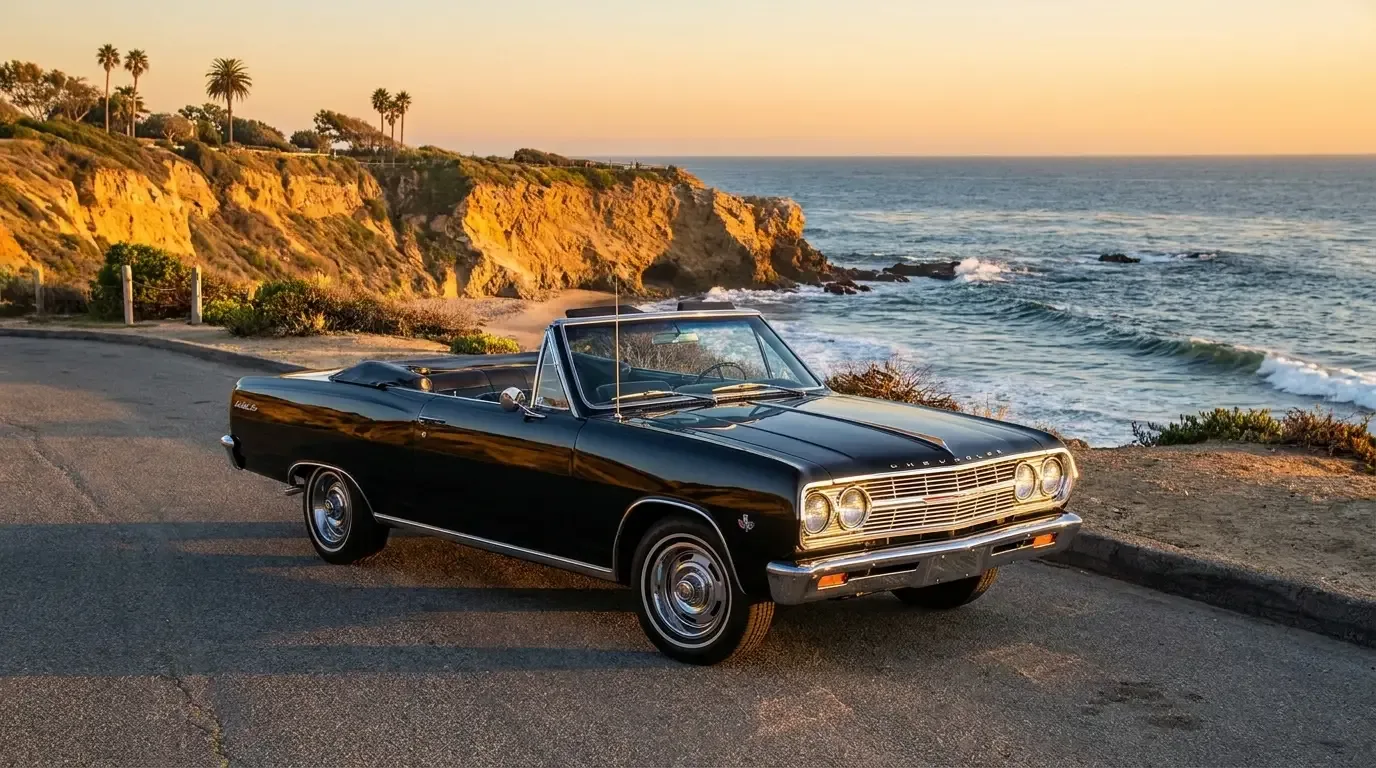
Picture a Chevrolet product planner in Detroit, in the dead of a Michigan winter, paging through a folder of proposed trim names for the new intermediate. Outside, the parking lot is a sheet of gray ice. On the page in front of him is a word that conjures sun, surf, and a stretch of California coastline most of his customers would never actually visit. He circles it anyway. That contrast, cold Midwestern boardroom, warm Pacific place name, is baked into the Malibu badge from the very start.
Malibu wasn't Chevrolet's first trim name to borrow a glamorous location, and it wouldn't be the last. But of all the badges the Chevelle wore over its lineup, Malibu became the one that stuck in the public imagination long after the base 300 and 300 Deluxe trims faded into obscurity.
Why Malibu, specifically
By the early 1960s, Malibu, California had already built a national reputation far beyond its actual size as a coastal community. Movies, television, and magazine features had turned the name into shorthand for a particular kind of relaxed, sun-soaked, faintly aspirational Southern California lifestyle. Surfers, beach houses, movie stars driving the coast highway. None of that had anything to do with the mechanics of a Chevrolet intermediate, and that was rather the point.
Chevrolet's naming strategy in this period leaned on exactly that kind of borrowed glamour. A trim name didn't need to describe anything about the car's engineering. It needed to attach a feeling to it, and Malibu came pre-loaded with a feeling that Chevrolet's marketing department didn't have to build from scratch.
What buyers actually got for the name
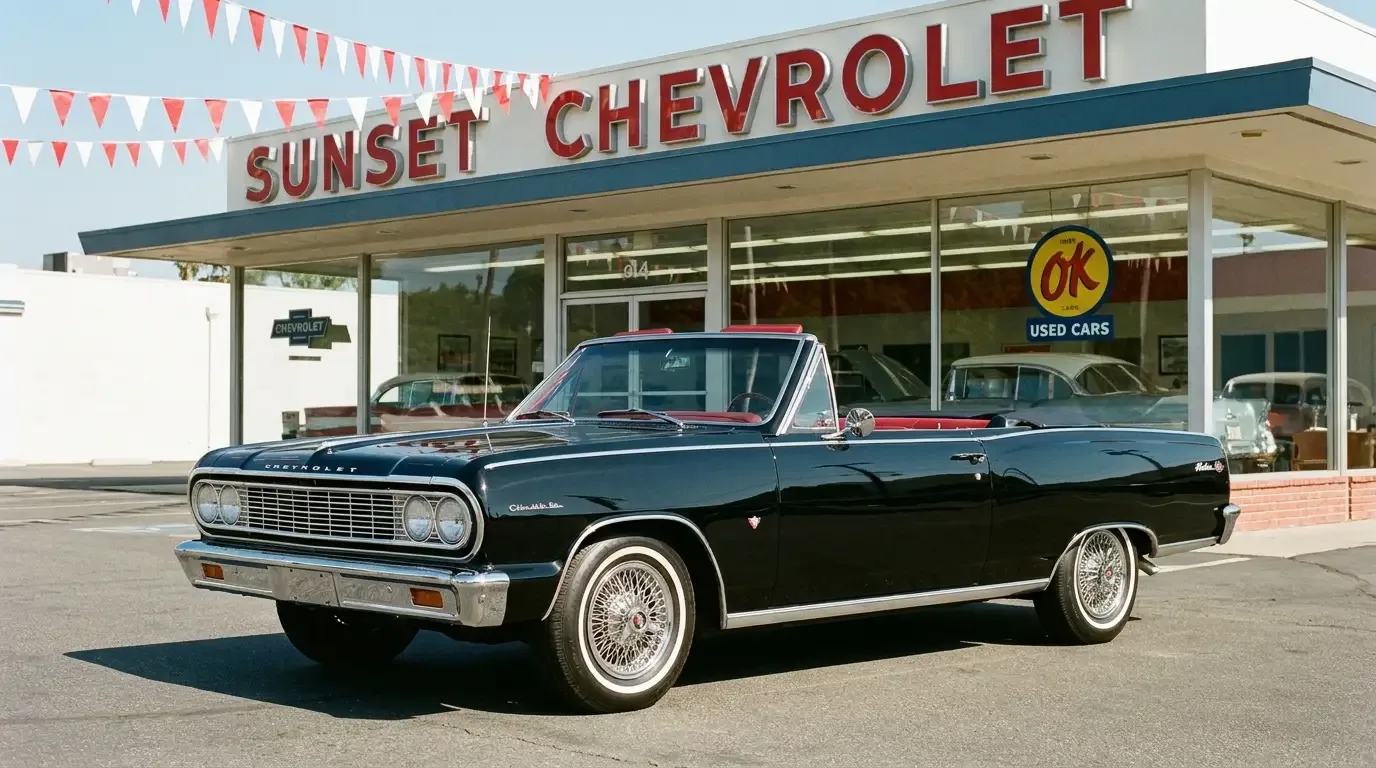
The Malibu trim wasn't just a badge stuck on an otherwise identical car. It carried nicer upholstery, additional brightwork and trim details, and in convertible or Super Sport form, some of the sharpest looking Chevelles Chevrolet built during the first generation. The name and the substance behind it worked together. A buyer who wanted to feel like they'd bought something a step above a basic Chevelle could point to the Malibu badge and to the actual car underneath it.
| 1964 Chevelle trim | Position in lineup |
|---|---|
| 300 | Base trim |
| 300 Deluxe | Mid trim |
| Malibu | Top trim |
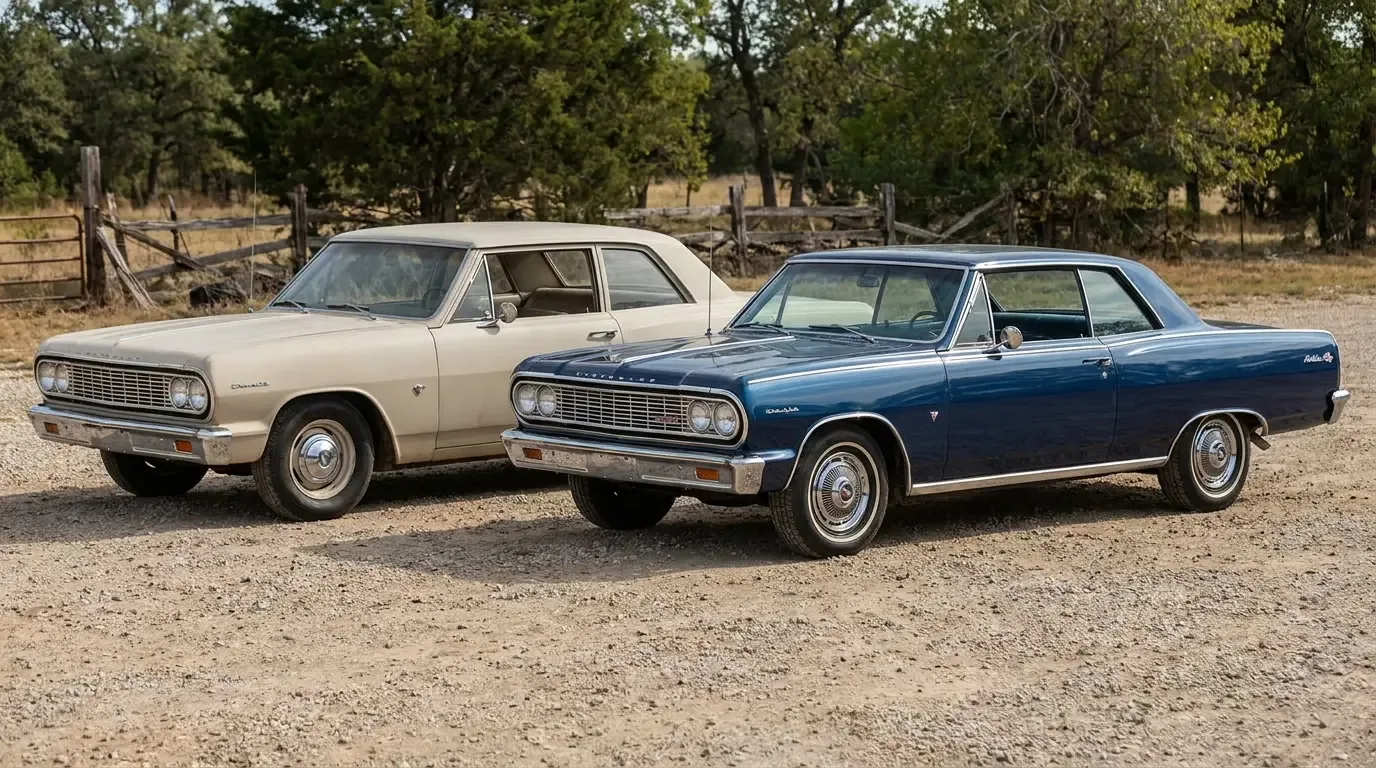
That distinction matters for anyone reading this story chronologically from first-gen Chevelle history, because the Malibu name didn't start as the car's identity. It started as one option among three, competing for attention against the plainer 300 and 300 Deluxe badges sitting on the same showroom floor.
Malibu next to its Chevelle siblings
It helps to compare Malibu against the other names Chevrolet floated for this class of car. 300 and 300 Deluxe were straightforward, almost bureaucratic designations, numbers doing the work a name should have done. They told a buyer where the trim sat in the hierarchy and nothing else. Malibu did something entirely different. It didn't say "better," it said "somewhere you'd rather be," and that distinction in approach explains why one name faded into obscurity while the other eventually swallowed the whole model line.
Chevrolet wasn't alone in leaning on this kind of place-name marketing. Ford had its own borrowed geography scattered across its lineup, and Oldsmobile and Buick played the same game with their own intermediate trims. What set Malibu apart was how completely it outran its origin, to the point that decades later most car buyers have no idea it started as a single trim level sitting above two other names nobody remembers today.
A name that grew past its origin
What happened over the following years is the part of the story that makes the Malibu name worth writing about on its own. As Chevrolet buyers gravitated toward the nicer trim, Malibu stopped being one option among several and became, in the public's mind, almost synonymous with the desirable version of the car. Advertising leaned harder into the name as the decade went on, and dealers reported that customers increasingly asked for "a Malibu" rather than "a Chevelle in the top trim," a distinction that mattered more to Chevrolet's marketing people than it might seem.
By the time the Chevelle nameplate was retired in the late 1970s, Malibu had already outgrown its origin as a mere trim designation and taken over as Chevrolet's primary name for this size of car, a role it held on Chevrolet showroom floors for decades afterward. Chevrolet finally ended Malibu production in late 2024, closing out nine generations of the nameplate as the brand shifted its Kansas assembly plant toward EV production, long after most buyers had forgotten the name started life as an upscale trim option rather than a model name in its own right.
"Nobody who bought a Malibu in 1964 thought they were buying a name that would outlive the Chevelle badge itself. They just wanted the nicer seats and the extra chrome. The rest happened slowly, one loyal buyer at a time."
— Nora Beckett
Why the borrowed glamour worked
There's something almost poetic about a Detroit assembly line building a car named for a California beach town most of its buyers would only ever picture from a postcard or a television screen. But that gap between the manufacturing reality and the marketing fantasy is exactly how mid-century American car names tended to work. The Malibu name sold an idea of a place, not the place itself, and it turned out that idea had more staying power than anyone in that Detroit boardroom probably expected.
Most of the Chevelle buyers who chose a Malibu never set foot on the actual coastline the name referenced. That distance is part of why the name worked so well. A place close enough to be familiar from movies and magazines, but far enough away to still feel aspirational, gave Chevrolet exactly the emotional pull it wanted without any of the specificity that might have narrowed the car's appeal to one particular kind of buyer.
The trim ladder that Malibu sat atop tells its own story about how Chevrolet organized the Chevelle lineup in these early years. Continue to next: 300, 300 Deluxe and Malibu for the full breakdown of how those three trims stacked up against each other.
Sources and notes
- Wikipedia, "Chevrolet Malibu"
- Wikipedia, "Chevrolet Chevelle"
- CNN Business, "The Chevy Malibu, the brand's last sedan, will end production"
- Edmunds, "GM Finally Ends Chevy Malibu Production"
- Hagerty, "Your handy 1964-67 Chevrolet Chevelle buyer's guide"
- GM Authority, "GM To End Chevy Malibu Production This Year"