
Walk a big swap meet field long enough and you'll hear old-timers argue about which 1964 Chevelle is the "real" one. The answer is all of them, because Chevrolet built the first-generation Chevelle as a ladder, not a single car. At the bottom sat the 300, plain as a work shirt. In the middle came the 300 Deluxe, which added just enough trim to look like it belonged at church. At the top sat the Malibu, the one with the bucket seats and the badge everybody remembers. Understanding that ladder is the key to understanding the first-generation story, because nearly every option package and every SS that followed built on top of it.
History & Heritage
6 min read
300, 300 Deluxe and Malibu: The Trim Ladder Story
How Chevrolet split the 1964 Chevelle into 300, 300 Deluxe and Malibu trims, and why that ladder still shapes value and desirability today.
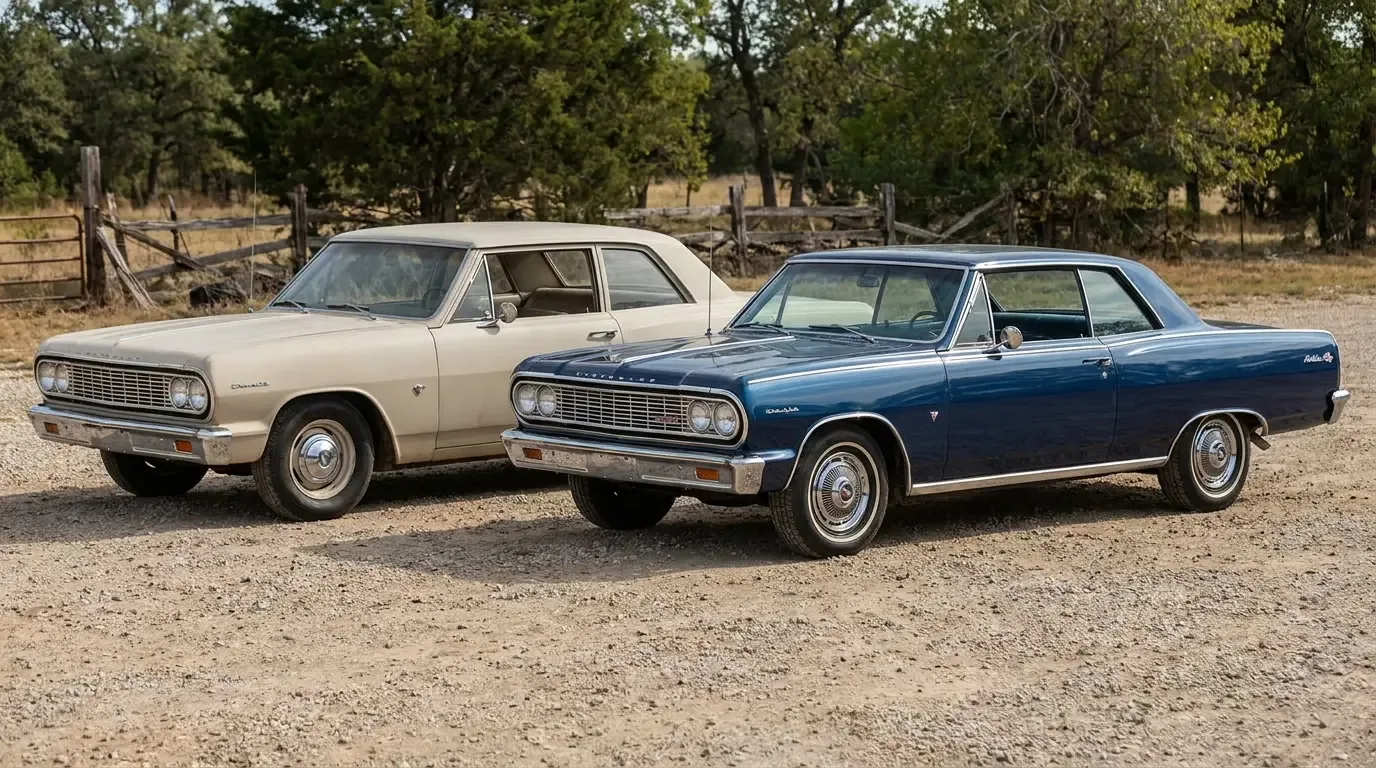
The three trims weren't marketing labels slapped on an identical car. They were genuinely different experiences behind the wheel, and Chevrolet wanted you to feel the difference the moment you opened the door.
The 300: a Chevelle built to be counted, not admired
The base 300 series is the Chevelle most people forget existed. No chrome side spears, no wheel opening moldings, dog-dish hubcaps instead of full wheel covers, and a bench seat covered in vinyl that was tough rather than handsome. Standard power was the 194 cubic inch six, a smooth-running but unremarkable engine that got taxi fleets and traveling salesmen where they needed to go without drama.
Chevrolet built the 300 for buyers who needed a mid-size car and didn't care what the neighbors thought. Fleet sales, company cars, and budget-minded families made up most of its customer base. It's also the trim that has all but vanished from the collector world. Nobody saved a 300 sedan the way they saved a Malibu SS coupe, and the survivors that do turn up are usually rough, rusted, or already parted out for glass and trim that fits the nicer cars.
The 300 Deluxe: the middle rung nobody talks about
Add the word "Deluxe" and the picture changes. The 300 Deluxe kept the 300's basic structure and modest engine lineup but dressed it in brightwork: extra chrome around the windows, upgraded upholstery patterns, and trim pieces that made it look closer to a Malibu at a glance from across a parking lot. It's the trim level that gets overlooked in every discussion of the early Chevelle, mostly because it wasn't flashy enough to become a legend and wasn't cheap enough to become a curiosity.
For a buyer in 1964, the 300 Deluxe made a lot of sense. You got a car that looked presentable, cost less than a Malibu, and could still be ordered with the same V8 options if you wanted more than the standard six. It was the practical choice, and practical choices rarely get remembered fondly. That's a shame, because a clean 300 Deluxe coupe with the right options is a genuinely handsome car that almost nobody is fighting over at auction, which makes it one of the more approachable entry points into first-gen ownership today.
The Malibu: where the Chevelle earned its reputation
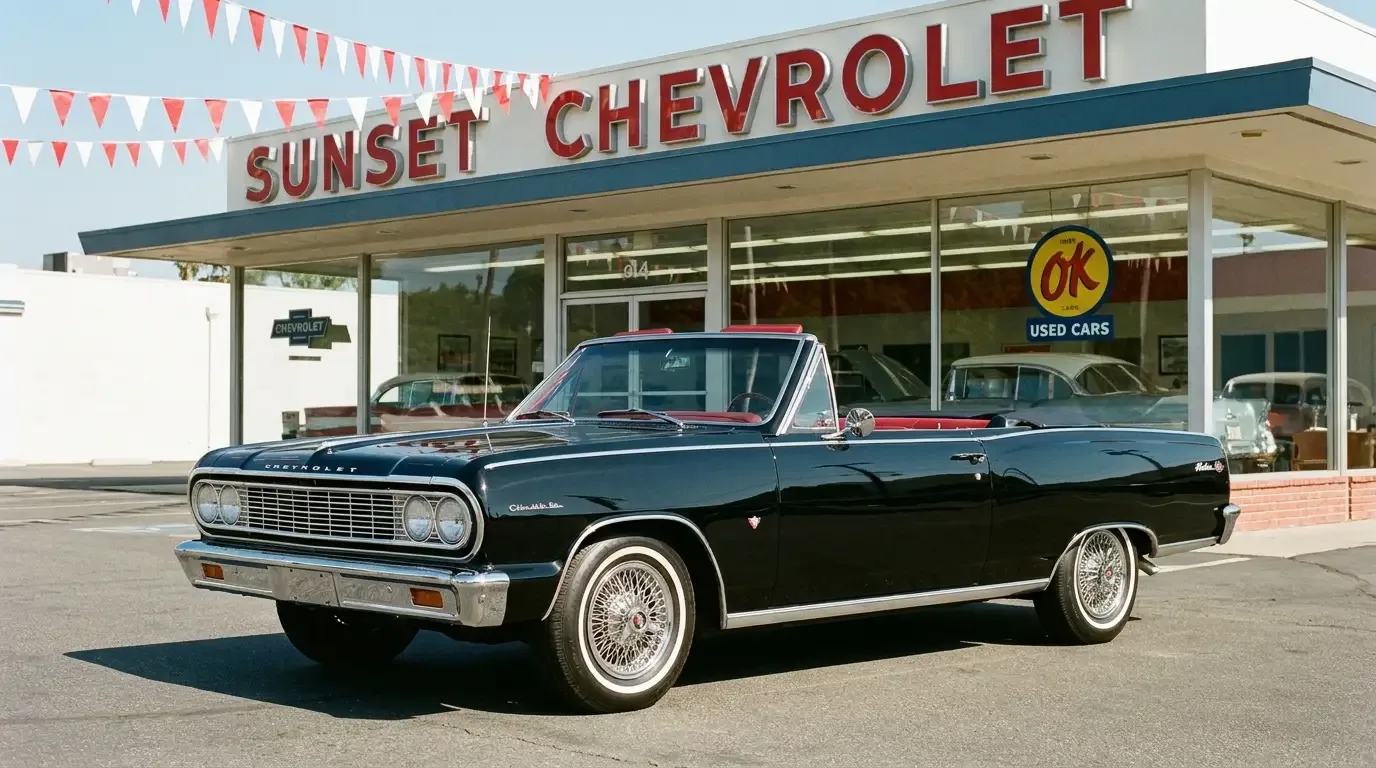
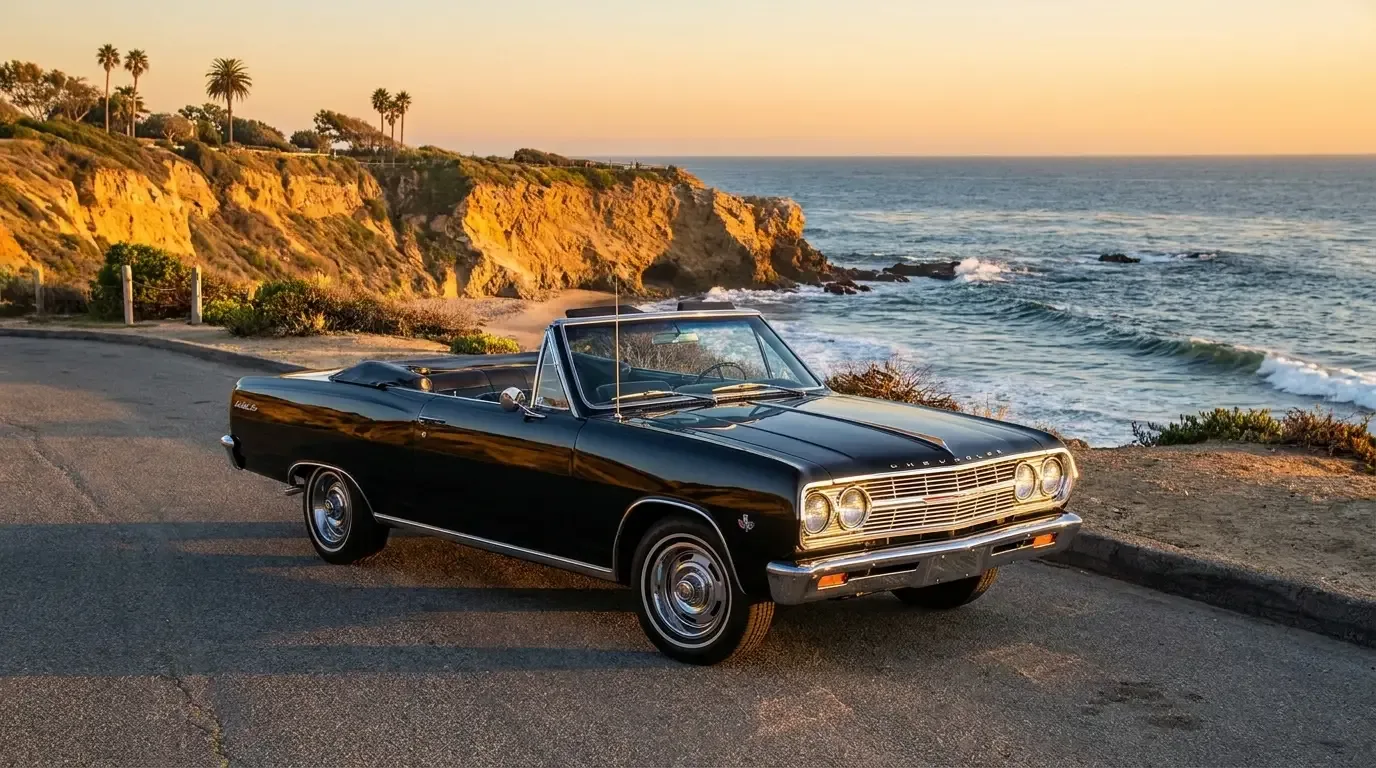
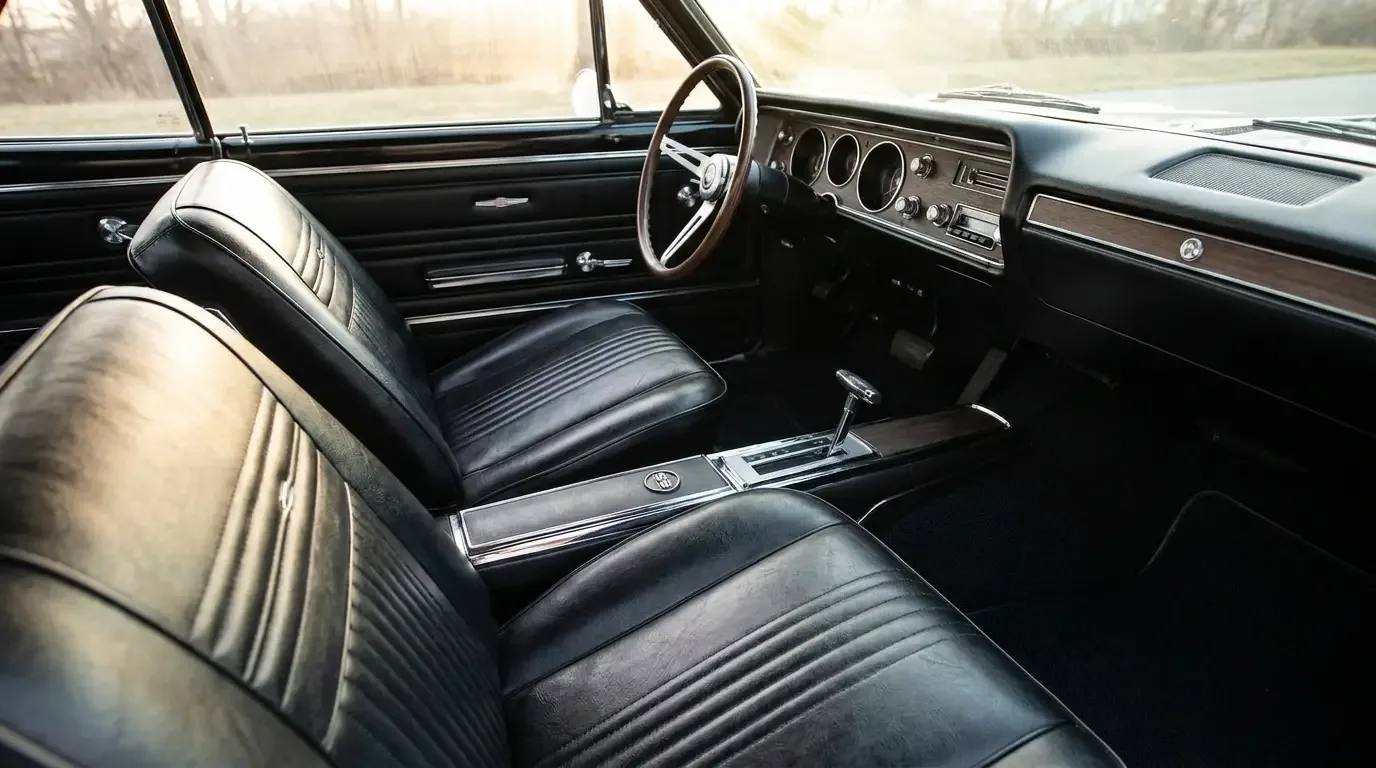
The Malibu sat at the top, and it looked the part. Full wheel covers, more brightwork on the body sides, better carpeting, available bucket seats with a center console, and a broader range of engine choices that eventually included the V8s that made the nameplate famous. The Malibu name itself borrowed the glamour of the California coastline, and Chevrolet leaned into that image with advertising built around sunshine, convertibles, and a young buyer who wanted something sportier than a Bel Air but not as raw as a full-size muscle car.
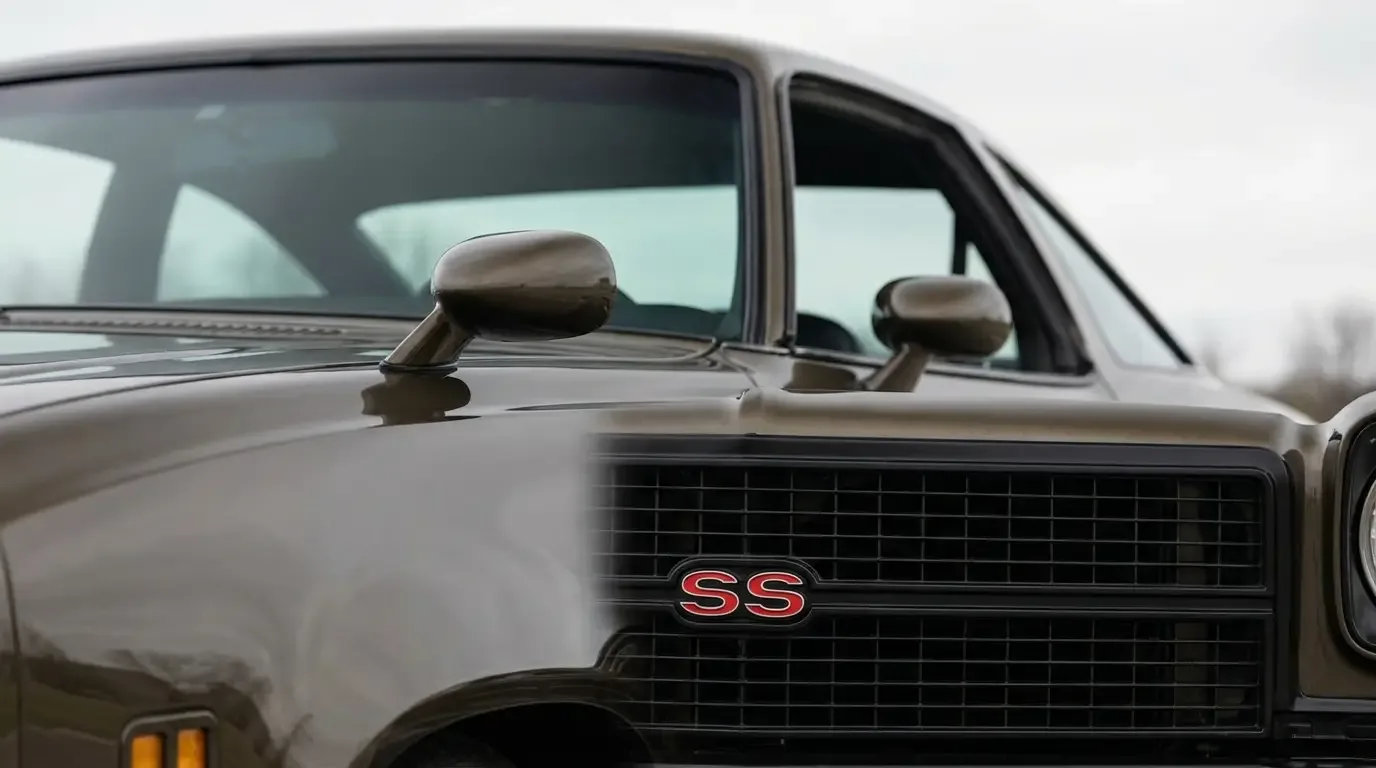
Malibu buyers could option their car up considerably, and it was the Malibu, not the 300 or 300 Deluxe, that carried the SS package Chevrolet built into the Chevelle line from its September 1963 launch. That decision mattered. It meant the SS badge went on the trim level that already had the nicest interior and the most credible sporting pretensions, which set the tone for how the Chevelle SS would be positioned for the rest of the decade. If you want the full arc of how that package evolved, next: The Early SS picks up right where this leaves off.
| Trim | Standard engine | Key features | Typical buyer |
|---|---|---|---|
| 300 | 194 cid six | Dog-dish hubcaps, vinyl bench, minimal brightwork | Fleet, budget, taxi |
| 300 Deluxe | 194 cid six (V8 optional) | Added chrome trim, nicer upholstery | Value-conscious family buyer |
| Malibu | 194 cid six (V8 optional) | Full wheel covers, bucket seat/console option, most brightwork | Younger buyer, sporty image |
Why the trim ladder still matters for buyers today
A lot of first-gen shoppers walk into a sale not realizing how much the trim level affects value and desirability decades later. A 300 six-cylinder sedan and a Malibu SS coupe rolled off the same basic platform, but they occupy entirely different corners of today's market. The 300 and 300 Deluxe cars are honest, affordable ways into Chevelle ownership, and their scarcity now works in their favor if originality matters to you. The Malibu, especially with factory options, commands the attention and the money.
None of that changes the fact that Chevrolet designed all three to share the same basic bones. Doors, glass, and structural pieces interchange more than people expect, which is part of why the trim ladder is worth understanding even if you only ever own one of the three.
"I talked to a guy at a regional show who'd restored a 300 Deluxe sedan just because nobody else would. Every judge who walked by asked him what it was. That's the whole story of that trim level right there, a good car that time forgot."
Patrick Walsh
If you're hunting for an early Chevelle in any of these three trims, it helps to browse early Chevelle trims currently listed to see how the ladder plays out in real asking prices today.
Sources and notes
Related Reading
Have a
Chevrolet Chevelle
for Sale?
Reach thousands of serious classic car collectors across the US.
Sell It Here →
Are You a Classic Car Dealer?
List your full inventory and connect with targeted classic car buyers.
Join as a Dealer →
#classic chevrolet
#American muscle history
#1964 chevelle
#Chevrolet Chevelle
#Chevelle Malibu
#Chevelle trim levels

About the author
Patrick Walsh
Automotive journalist covering classic car shows, events, and the enthusiast community across North America.
Related Listings - Chevrolet Chevelle
More in History & Heritage
Comments
Be the first to comment on this article.