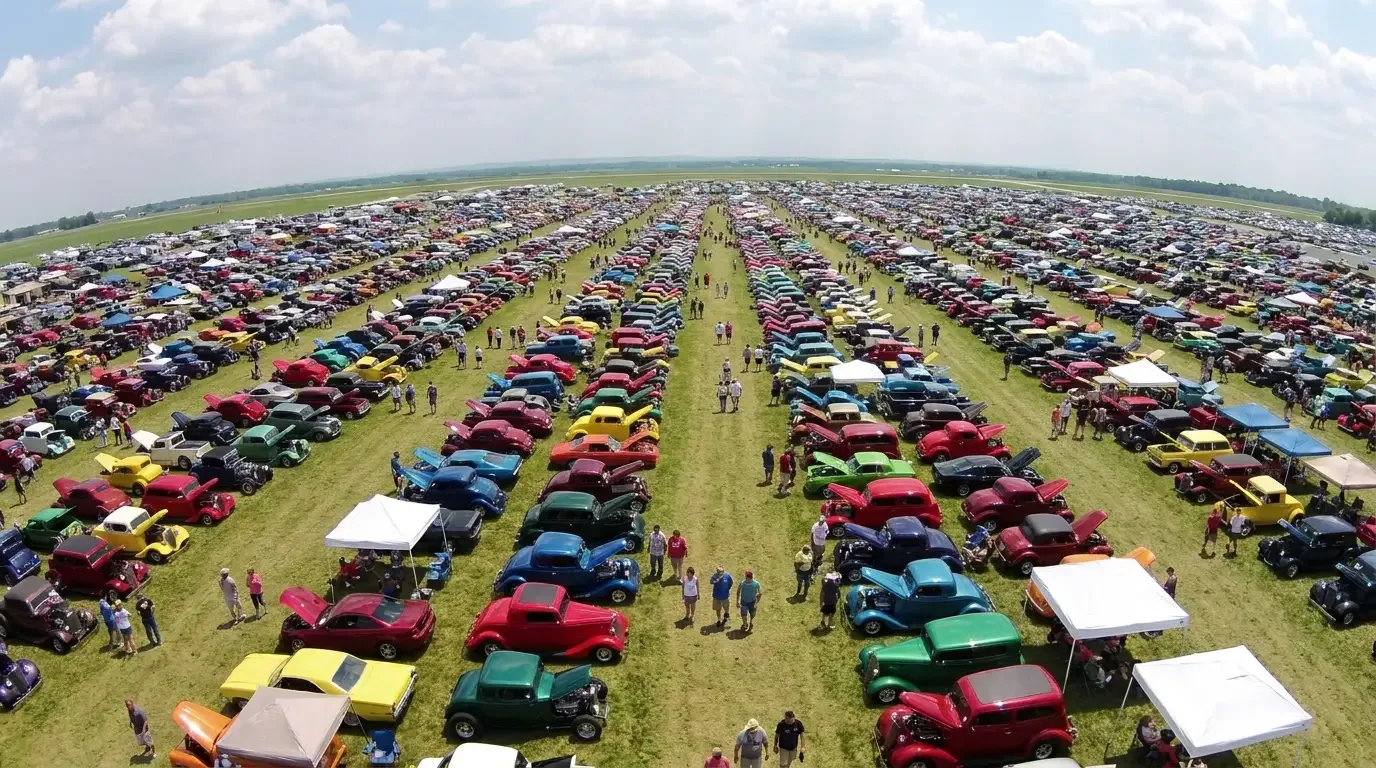
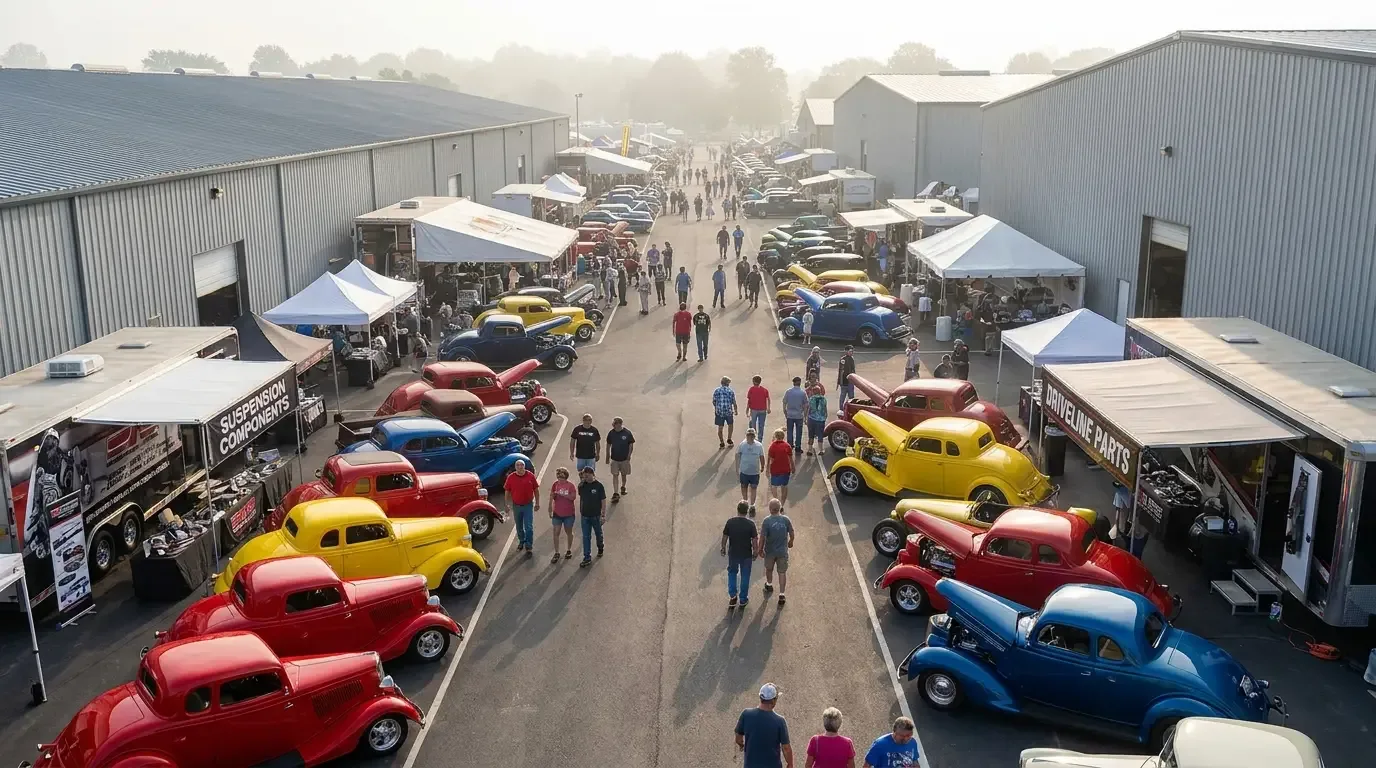
By six in the morning the fairgrounds gates in Louisville are already backed up, and the sound reaches you before the cars do. It is a low, uneven idle from a few thousand small-blocks, and it rolls across the asphalt in waves as the line inches forward. A man in a folding chair waves each car through, nodding at a chopped '34 coupe, a fenderless roadster, a fat-fendered sedan riding on air. This is the National Street Rod Association's big August gathering, the event most people just call the Nationals, and for one week the Kentucky Exposition Center turns into the largest street rod city in America.
I have walked this show more than once, and the thing that never shrinks is the scale. You do not see the whole event in a day. You do not see it in two. The pre-1949 rule that defines the hobby, the same line that shapes the story of the street rod, means every car here started life as an old American body, then got a crate engine, disc brakes, and air conditioning bolted underneath. Ten thousand of them in one place is a strange and wonderful thing to stand inside.
The scale nobody quite believes until they are standing in it
Numbers get thrown around at events like this, and most of them are soft. What holds up is that the Louisville Nationals has drawn well over ten thousand registered pre-1949 vehicles in its strongest years, spread across indoor halls and acres of outdoor grass. Attendance counts including spectators have been reported at roughly 55,000 to 70,000 across the week in peak years, though the association does not publish a hard audited figure and the number moves with weather and the economy.
What that translates to on the ground is simple. You cannot park near your own car. You walk miles. You eat from a trailer because the nearest real restaurant is a drive away and you are not giving up your spot. The indoor buildings hold the trailer queens and the vendor midway. The outdoor fields hold the drivers, the cars that got here under their own power from Texas and Ohio and Ontario, oil-stained and bug-spattered and, to my eye, the more honest half of the show.
What the week is actually like
The Nationals is not a concours. Nobody rings a bell and asks you to step back from the ropes. It runs like a small traveling town that happens to be built entirely out of old Fords and Chevrolets. Mornings are for driving in and walking the fields while the light is still soft. Afternoons get hot, and people retreat under pop-up canopies with coolers and lawn chairs, and that is where the real event happens.
Because the point was never the trophies. The point is the guy two rows over who ran the same rear axle you are fighting with and can tell you exactly which bracket cracked. It is the couple who have driven this car to Louisville every August for thirty years and can name the people in the surrounding spots without looking. The vendor midway matters too, acres of it, where you can buy a complete independent front suspension in the morning and have it discussed over a beer by dinner.
"You come for the cars the first year. After that you come for the people, and the cars are just how you find each other in a field of ten thousand."
— Nora Beckett
The safety inspection line and the culture around it
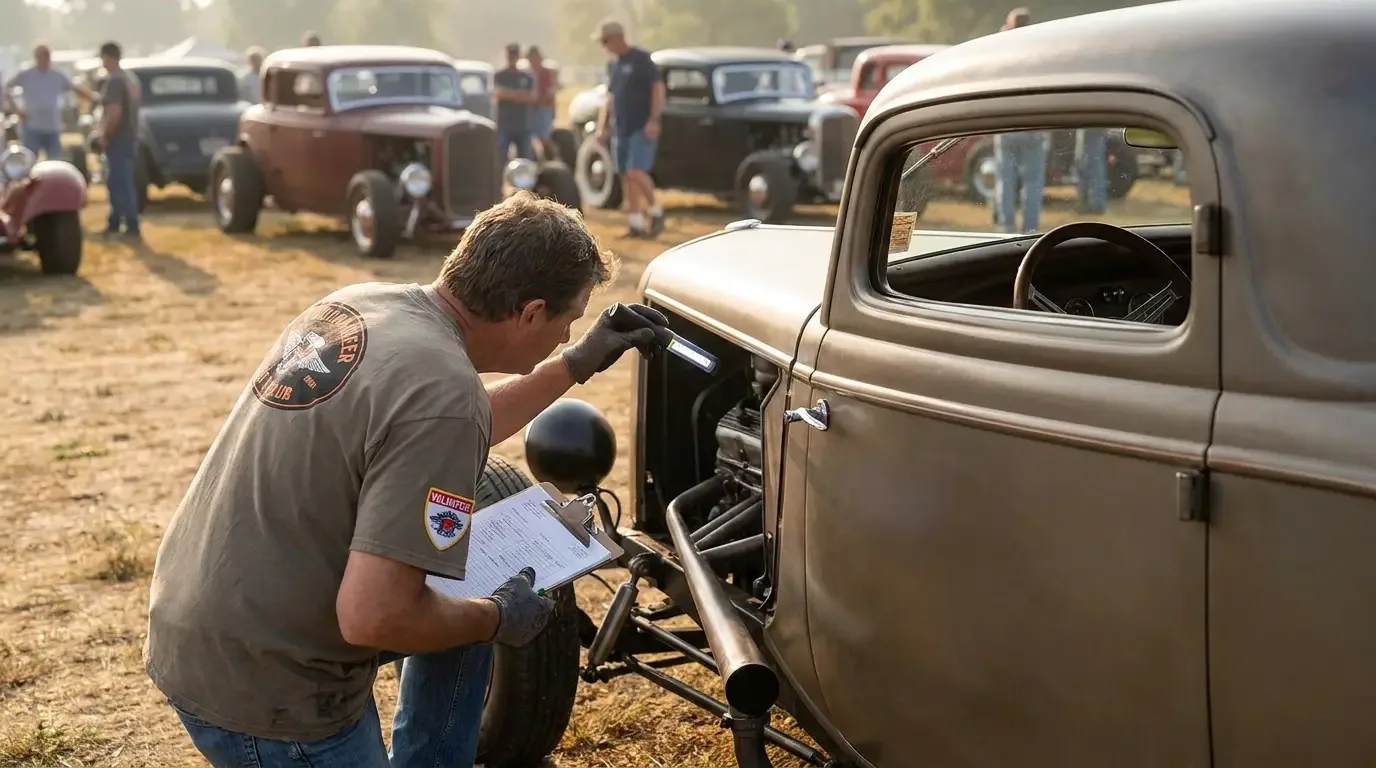
One thing sets the Nationals apart from a generic car show, and it starts at the gate. Registered vehicles go through a voluntary safety inspection, a hands-on look at brakes, steering, fuel lines, wiring, and mounts, run by volunteers who have crawled under more of these cars than anyone alive. It is not a pass-fail humiliation. It is closer to a second set of eyes before you point a fifty-year-old body down the interstate again. I have written at length about The Street Rod Safety Inspection Culture because it tells you what this community actually values, which is cars that get driven and driven safely.
That ethic runs through everything at Louisville. These are not garage ornaments. The whole modernized formula, the reliable drivetrain and the real brakes, exists so the car can cover a thousand miles in August heat without drama. The inspection line is where that promise gets checked in public, and passing it is a quiet point of pride.
How the Nationals holds the hobby together
You can trace almost every thread of the modern hobby back through this one August week. The pre-1949 boundary, the emphasis on driveable modernization, the club structure, all of it gets reinforced here every year. When people argue about what counts as authentic, they are usually arguing about lines the Nationals helped draw. The gulf between a period-correct build and a modern one, the same debate behind street rod nationals coverage and the broader NSRA story, gets settled the way it always is at Louisville: by walking the fields and looking at what people actually built and drove.
The event has aged with its founders. The crowd skews grayer than it did in the 1970s, and the association has leaned into younger-builder programs and giveaway cars to pull the next generation in. Whether that works is the open question hanging over every long-running club show in America. But stand in that field at seven in the morning, coffee going cold, listening to ten thousand engines warm up, and it is hard to believe the thing is anywhere close to done.
| The Nationals at a glance | Detail |
|---|---|
| Organizer | National Street Rod Association (NSRA), founded 1970 |
| Location | Kentucky Exposition Center, Louisville |
| Typical timing | Early August, multi-day (roughly Thursday through Sunday) |
| Vehicle eligibility | Pre-1949 (1948-and-earlier) American bodies |
| Peak registered vehicles | Reported above 10,000 in strong years |
| Signature feature | Voluntary volunteer-run safety inspection |
Sources and notes
- National Street Rod Association event materials and registration information
- Period and contemporary enthusiast press covering the Street Rod Nationals
- Club and registry records on NSRA history and eligibility rules
- Firsthand attendance notes and owner conversations at the Louisville event