
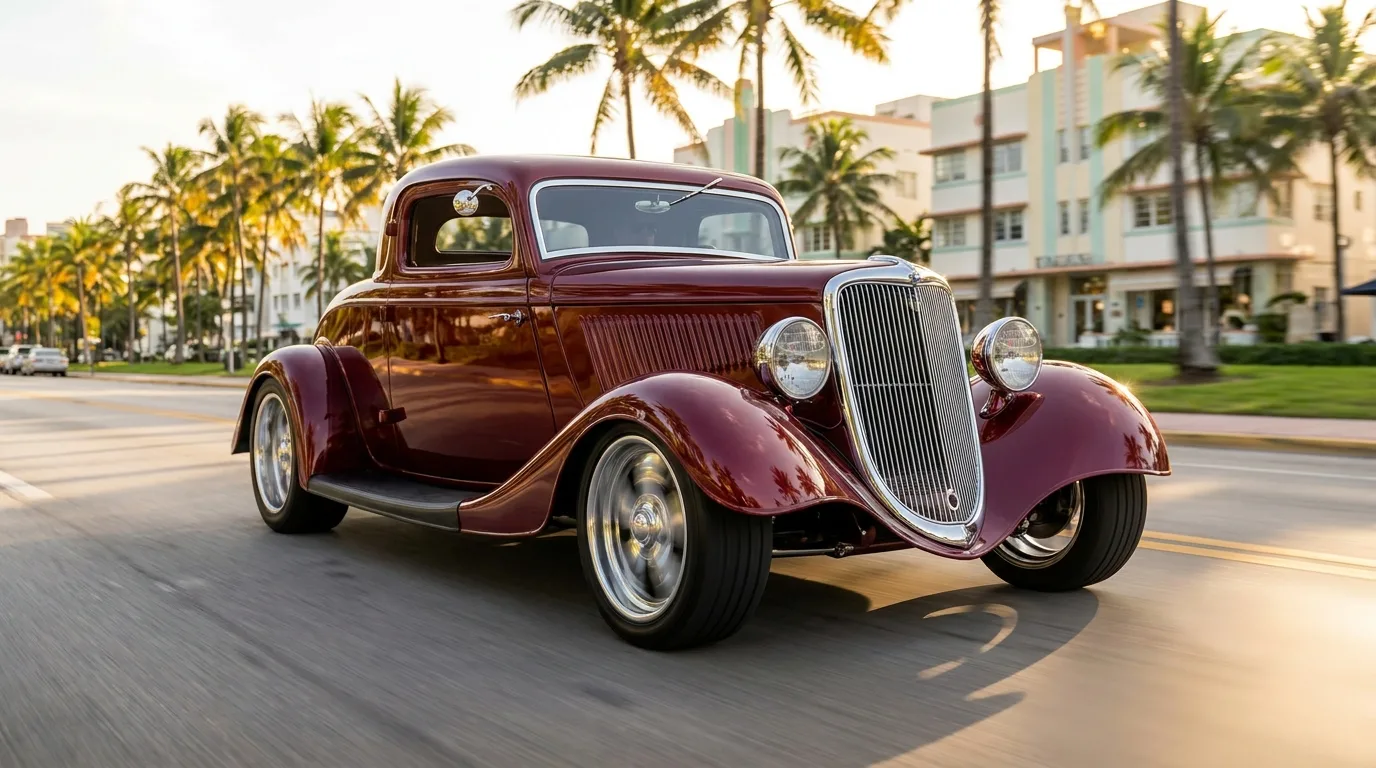
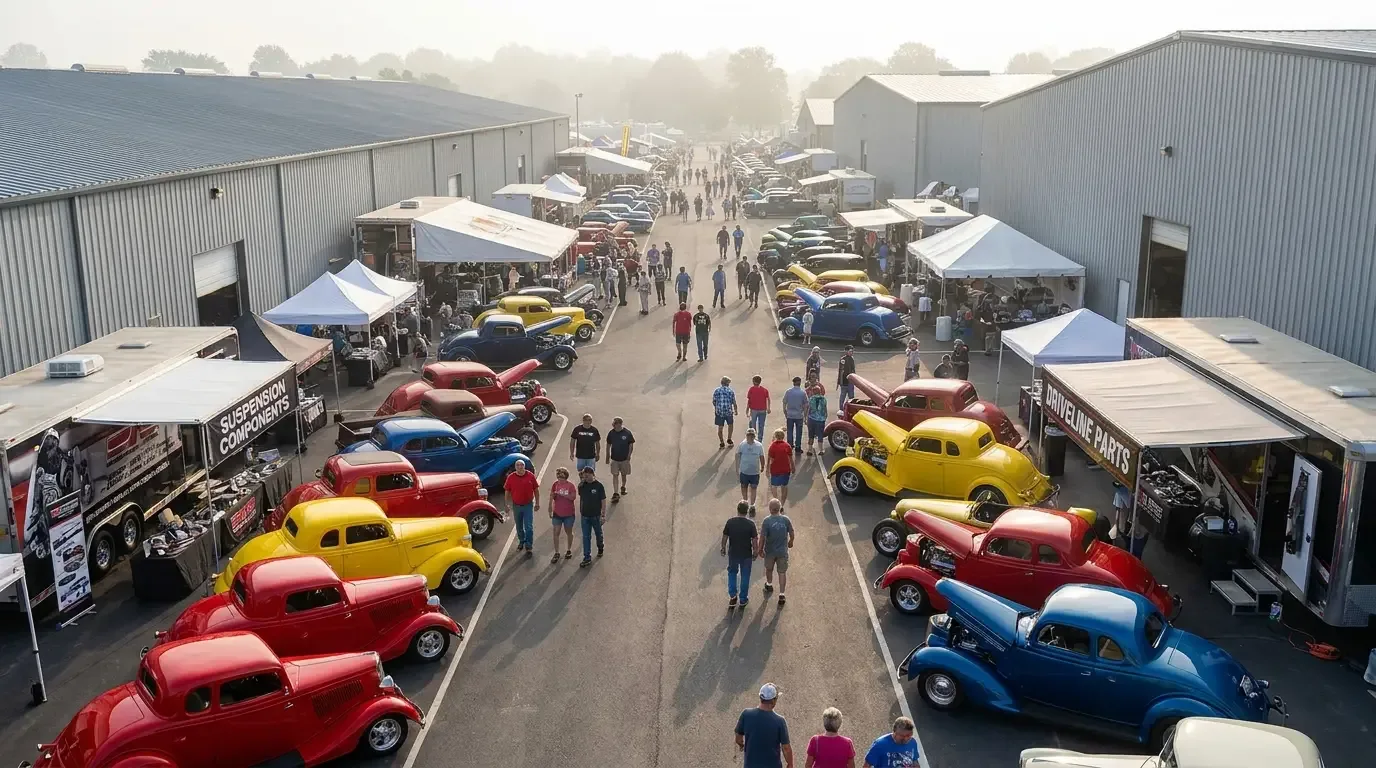
The parking lot at the Kentucky Exposition Center fills before sunrise. By the time the gates open in Louisville, a man in a folding chair is already wiping dew off the hood of a channeled 1934 Ford three-window, and his wife is pouring coffee from a thermos she has carried to this same show for thirty years. Nobody is revving anything. Nobody is racing. This is the Street Rod Nationals, and the point of it is the folding chair, the thermos, and the eight hundred miles of two-lane road it took to get here.
Ownership & Lifestyle
10 min read
Street Rod Culture and the NSRA
The NSRA, the Street Rod Nationals, its safety inspection program, and the family touring culture behind pre-1949 street rods.
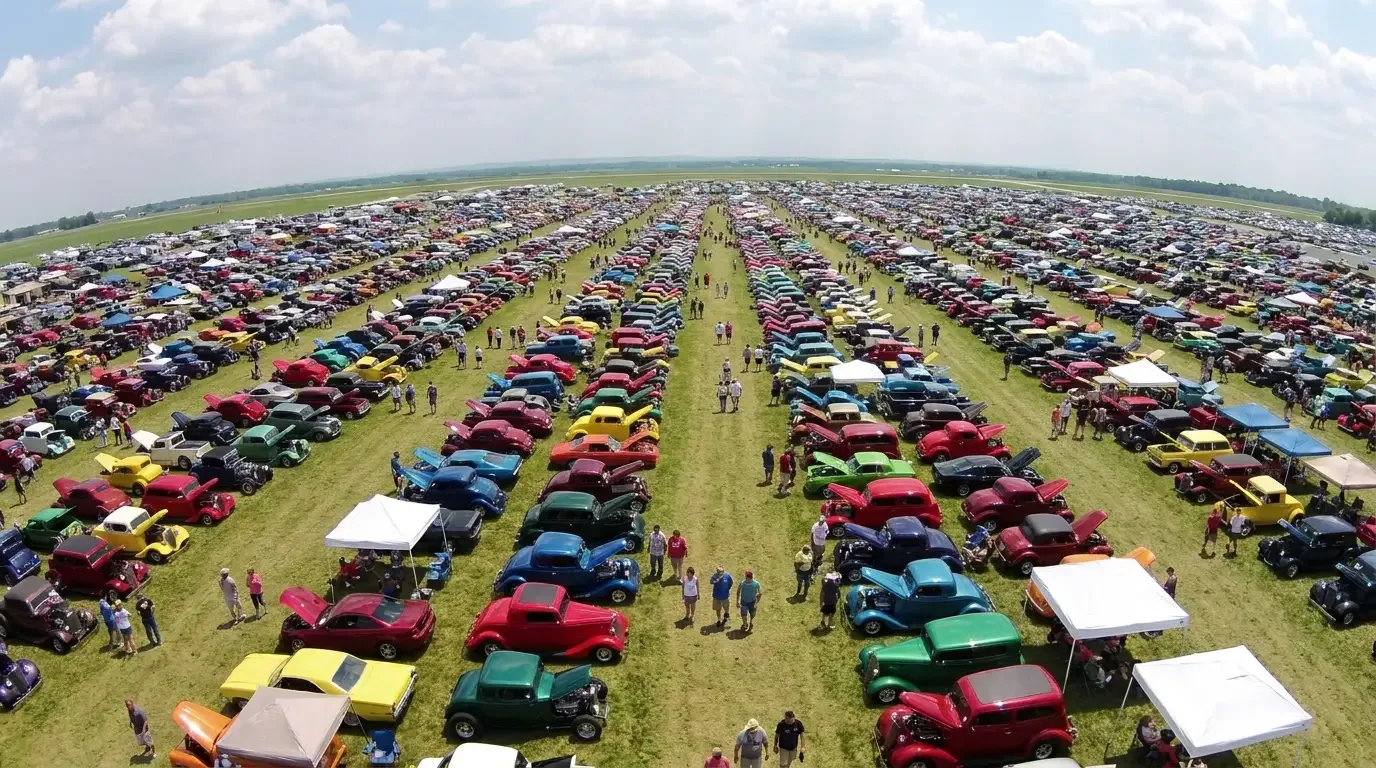
That scene is the part of the hobby that outsiders miss. The cars get the magazine covers, but the culture around them, the touring, the families, the volunteer inspectors with flashlights, is what has kept pre-1949 street rods on the road for half a century. Most of that culture traces back to one organization. If you want to understand how street rods began as a national movement rather than a scattering of local clubs, you start with the National Street Rod Association.
How the NSRA turned a hobby into a movement
The National Street Rod Association was founded in 1970. A group of enthusiasts around the Midwest wanted a single event that would pull street rodders together from across the country instead of leaving them isolated in regional gatherings. The first Street Rod Nationals ran in 1970, and by the standards of the day it was enormous. The idea was simple: a pre-set body cutoff, a family atmosphere, and a show built around driving your car rather than trailering it.
That last part mattered. From the beginning the NSRA leaned hard on the notion that a street rod was meant to be driven. The organization drew its body line at 1948 and earlier, which separated the street rod world cleanly from the later restomod and pro-touring cars. If you have ever wondered where the boundary sits between a period hot rod and a modernized cruiser, the difference between a street rod vs hot rod comes down to intent and equipment, and the NSRA codified that intent early.
The association grew into a membership organization with tens of thousands of members and a national events calendar that spread across the United States. Regional Nationals events, the Northeast, the Southeast, the Mid-America, and others, meant a member could drive to a major show within a day or two of home no matter where they lived. That geographic spread is a big reason the hobby did not collapse into a single coastal scene.
The Street Rod Nationals: the big one
The flagship event is the Street Rod Nationals, held for many years in Louisville, Kentucky, over a stretch of days in early August. Calling it a car show undersells it. At its peak the event has drawn well over ten thousand registered vehicles, which makes it one of the largest gatherings of pre-1949 cars anywhere in the world. Exact peak registration figures vary by year and reporting source.
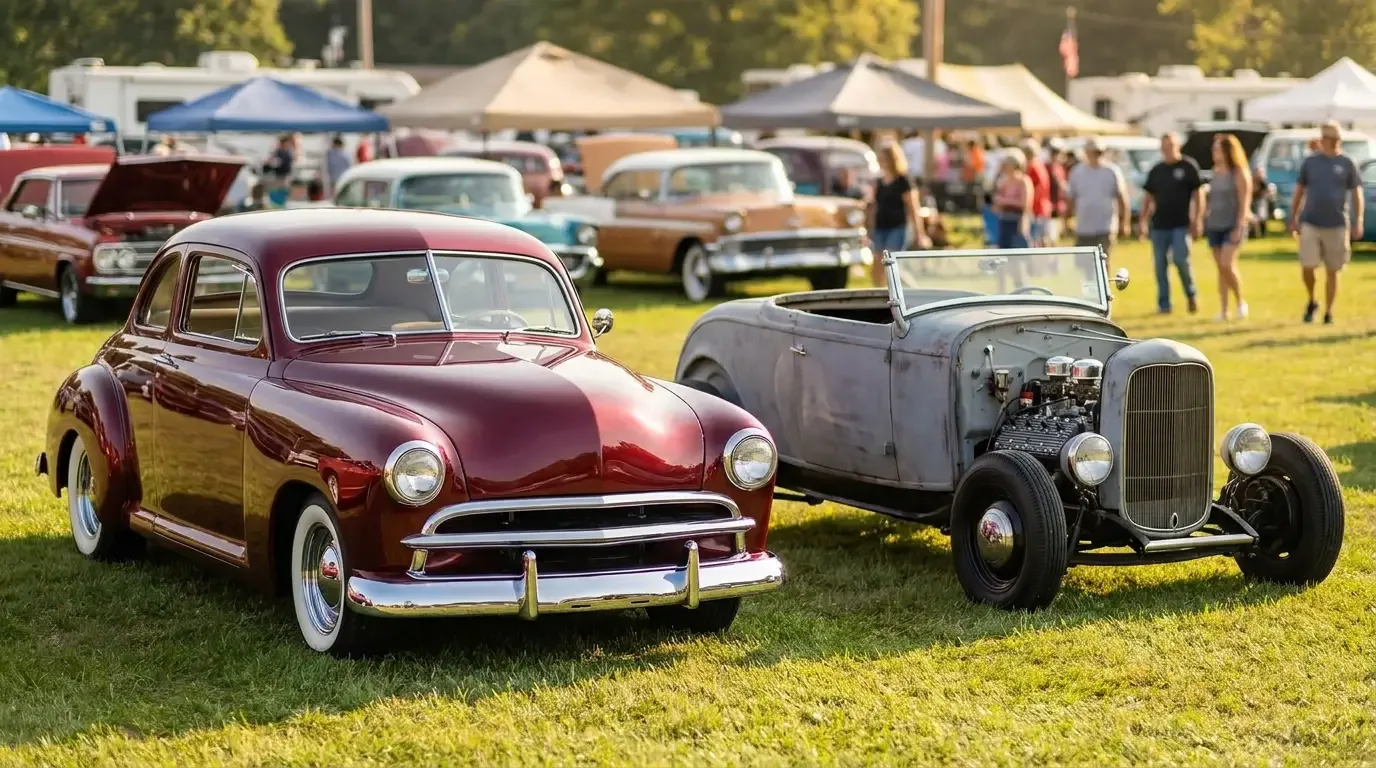
What you notice first is the range. A trailered, show-polished highboy roadster parks next to a sun-faded sedan that clearly drove in from three states away with bugs still on the windshield. Both belong. The Nationals never became a concours where only the perfect cars are welcome, and that inclusiveness is deliberate. The event rewards participation over perfection.
| Feature | Detail |
|---|---|
| Founded | National Street Rod Association, 1970 |
| First Nationals | 1970 |
| Body eligibility | Pre-1949 (1948 and earlier) |
| Flagship event | Street Rod Nationals, Louisville, Kentucky |
| Typical season | Early August |
| Regional events | Northeast, Southeast, Mid-America and others |
| Signature program | Vehicle Safety Inspection |
Registration is the currency of the Nationals. You bring your car, you sign in, and for the length of the event you are part of a rolling town of aluminum awnings and open hoods. Vendors line the midway. Swap meets run all day. And somewhere in the middle of it, a line of cars waits for the one program that sets the NSRA apart from almost every other car club in the country.
The safety inspection program nobody else built
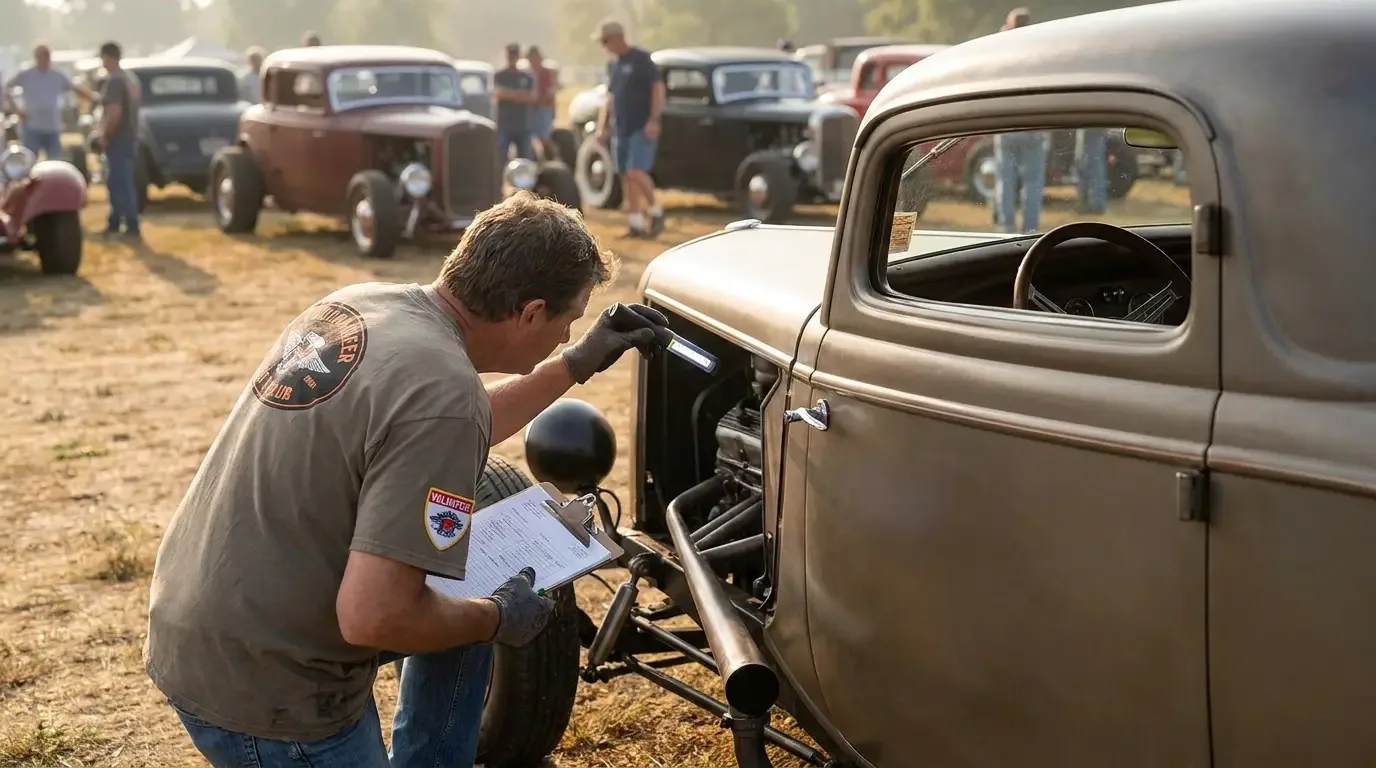
The NSRA Vehicle Safety Inspection is the quiet heart of the organization. At the Nationals and at regional events, teams of trained volunteers work through a checklist on any car whose owner brings it to the inspection area. They are not judging paint. They are checking whether the car is safe to drive home.
The inspectors look at the components that get people hurt. Steering play, brake lines and hydraulic condition, throttle return, wheel and tire mounting, seat belt anchoring, wiring near fuel and heat, fuel line routing, and the mounting of the fuel tank itself. A car that passes gets a windshield sticker. It is not a trophy. It is closer to a handshake that says a set of experienced eyes looked underneath and did not find anything about to kill you.
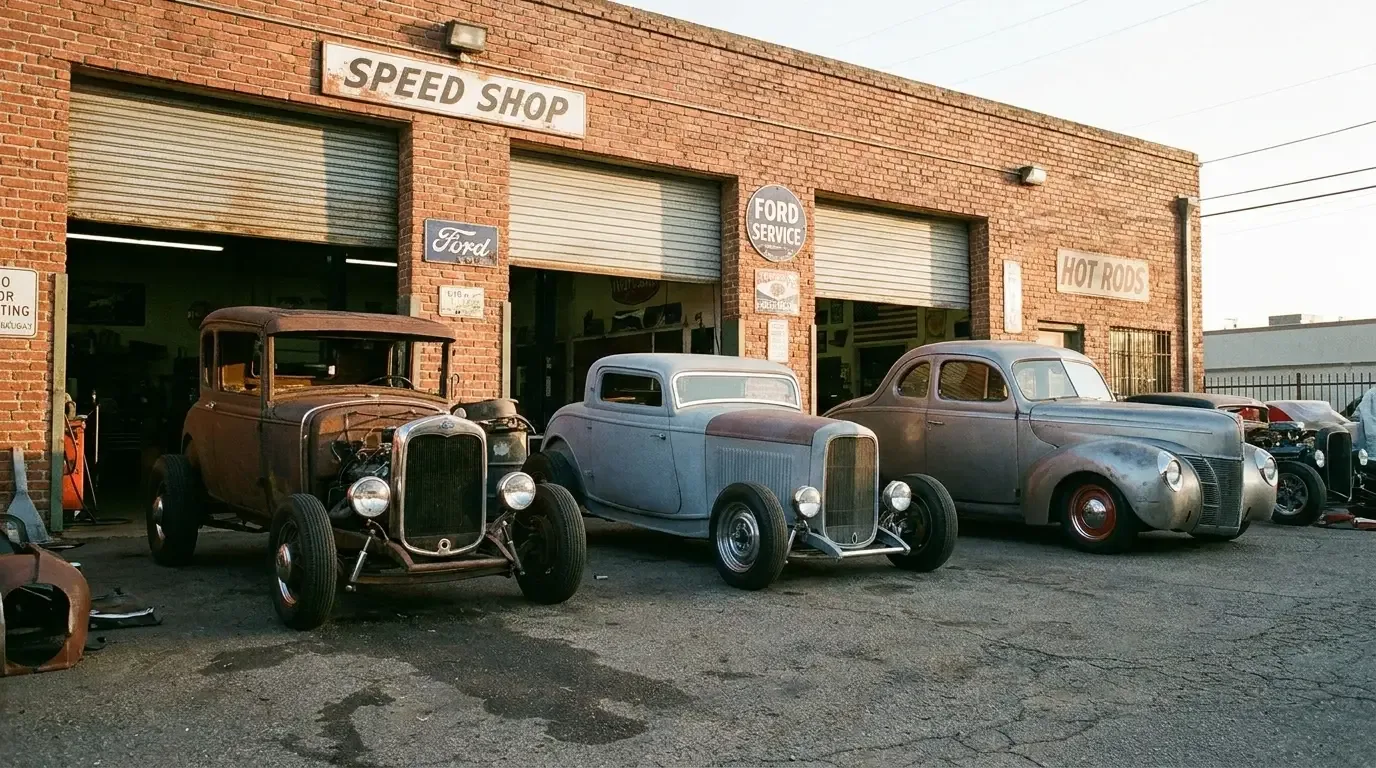
That program exists because street rods are, by definition, home-modified cars. Someone cut the floor, dropped in a crate engine, plumbed the brakes, and wired the harness in a garage. The inspection catches the honest mistakes before they become roadside emergencies. No trophy circuit in the country runs anything quite like it at that scale.
🔧 Inspection Priorities
- Brake hydraulics and lines. Soft pedal, leaking wheel cylinders, or corroded hard lines are the first thing an inspector traces. A failed brake on a two-lane tour is the nightmare scenario, and repair can run from a few dollars of line to a full master cylinder and dual-circuit conversion.
- Steering play and linkage. Excess play at the wheel points to worn box, loose tie rod ends, or a hasty column swap. Inexpensive parts, but a missed one puts the car in the ditch.
- Fuel system routing. Fuel lines run too close to headers or wiring, and unsecured tanks, are a fire risk. Rerouting and proper clamping is cheap insurance.
- Seat belt mounting. Belts bolted to sheet metal instead of frame or a proper backing plate will tear loose in a crash. Correct anchoring costs little and matters most.
- Wiring near heat and fuel. An overloaded, unfused, or chafing harness is the most common home-build sin. A fuse block and clean routing prevent the underhood fire nobody sees coming.
The touring scene: cars that actually drive
Ask a longtime NSRA member how many miles their car has and watch their face. The answer is a point of pride. This is a driving hobby first. Members log thousands of miles a year, run in caravans to the Nationals, and treat the drive itself as the event. The trailered show queen is welcome at the Nationals, but the ethos of the club is a car you climb into and point at the horizon.
That is why the modernized street rod recipe exists at all. Independent front suspension, disc brakes, an overdrive transmission, air conditioning, and a reliable crate engine are not there to win a purity contest. They are there so a couple in their sixties can drive a seventy-year-old Ford from Ohio to Kentucky in August comfort and do it again next year. Comfort and reliability are the whole justification for the street rod as a category.
- Overdrive gearing that lets a flathead-era body cruise at modern highway speeds without screaming.
- Air conditioning that makes an August tour through the South survivable.
- Disc brakes and dual-circuit hydraulics for stopping in modern traffic.
- A crate engine or rebuilt small-block chosen for parts availability on the road, not for peak dyno numbers.
The touring culture also feeds the market. Cars get built, driven, enjoyed, and eventually passed on, which keeps a healthy supply of finished and unfinished projects moving between owners. Anyone shopping the current crop of used street rods for sale is buying into that cycle, a car someone already sorted, inspected, and drove.
Family, generations, and the folding-chair economy
The most durable thing the NSRA built is not the event or the inspection. It is the family structure of the hobby. Nationals week is a reunion. Kids who sat in the back seat on the tour to Louisville grew up, inherited the car, and now bring their own kids. Whole extended families register cars and camp together. The women who poured coffee at 6 a.m. thirty years ago are still there, and many of them own and drive their own cars now.
This is the part of street rod culture that does not photograph well and never makes the magazine cover. It is folding chairs in a circle, a card table of parts for trade, a plate of food shared with the stranger parked next to you. It is the reason a hobby built around home-modified pre-war Fords has outlasted trends that were supposed to kill it.
"I have covered supercar launches and million-dollar auctions, and none of it moved me like watching a grandfather hand his grandson the keys to a car they both drove eight hundred miles to show. That is the Nationals. The car is just the excuse to be there together."
Patrick Walsh
The NSRA has weathered the same pressures every enthusiast organization faces. An aging core membership, competition from other events, and a younger generation with different tastes all press on it. But the structure it built, driveable cars, a real safety program, and a family-first event calendar, has proven remarkably hard to replace. No other corner of the American car hobby has quite the same combination.
Why it still matters in 2026
More than fifty years after the first Nationals, the NSRA model still answers a question the rest of the collector world struggles with: how do you keep old cars actually being driven? The answer it landed on was never about value or investment. It was about making the cars comfortable enough to tour, safe enough to trust, and social enough that showing up is the reward.
The pre-1949 street rod endures because a national organization decided, early, that the driving mattered more than the trophy. Everything else, the inspection stickers, the regional calendar, the folding chairs in the Louisville dawn, follows from that one choice. It is a quiet legacy, and it is the reason a 1934 Ford will still roll into the Kentucky Exposition Center under its own power next August.
Sources and notes
- National Street Rod Association event records and membership materials.
- Period and contemporary street rod and hot rod press coverage of the Street Rod Nationals.
- Club registry and safety inspection program documentation.
- Builder and long-term owner interviews on touring practice and modernization choices.
- Key dates and figures confirmed against current NSRA reporting and event records.
Related Reading
Have a
Classic Car
for Sale?
Reach thousands of serious classic car collectors across the US.
Sell It Here →
Are You a Classic Car Dealer?
List your full inventory and connect with targeted classic car buyers.
Join as a Dealer →

About the author
Patrick Walsh
Automotive journalist covering classic car shows, events, and the enthusiast community across North America.
More in Ownership & Lifestyle
Comments
Be the first to comment on this article.