
Ask ten people at a Friday-night cruise what a street rod is and you will get ten slightly different answers, most of them wrong. Some point at a chopped, flathead-powered coupe on skinny tires. Some point at a fenderless roadster with the engine hanging out in the wind. A few point at a shiny 1969 Camaro with modern wheels and call that one a street rod too. None of those are right, or at least not all the way right. A street rod is a specific thing with a hard line drawn around it, and once you understand where that line sits, the whole hobby snaps into focus.
Car Features
13 min read
The Street Rod Story
Ask ten people at a Friday-night cruise what a street rod is and you will get ten slightly different answers, most of them wrong. Some point at a chopped, flath...
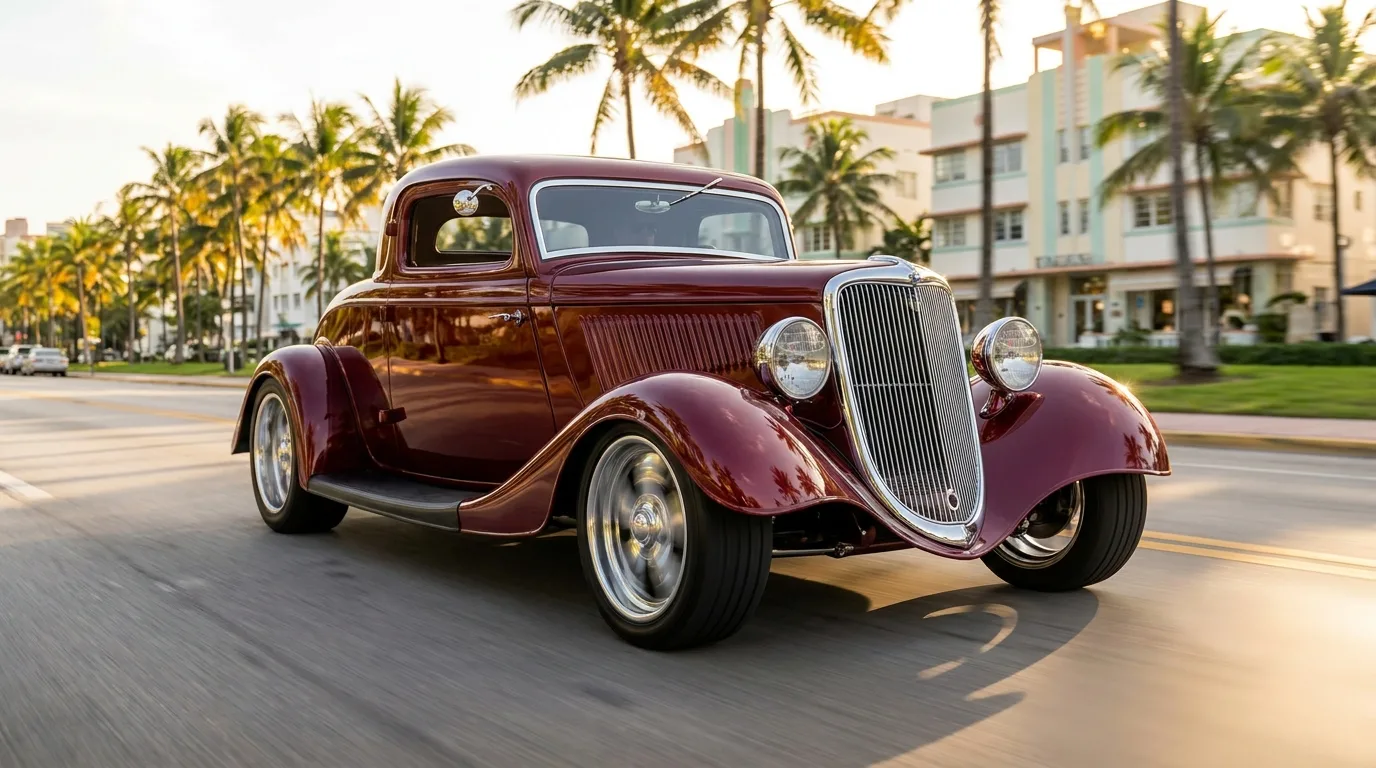
I have been building these cars in Southern California long enough to watch the term get stretched, borrowed, and abused. So let me put it plainly. A street rod is a pre-1949 American car rebuilt to be driven, comfortably and reliably, on modern roads. That is the concept. Everything else, the engine choice, the suspension, the paint, the club membership, hangs off that one idea. The rest of this piece walks through where the definition came from, what separates a real street rod from the things people confuse it with, how these cars get built, which bodies make good starting points, and the culture that grew up around all of it.
What a street rod actually is
Start with the body. The National Street Rod Association, the club that more or less codified the term in the 1970s, drew the line at 1948. If the car left the factory as a 1948 model or earlier, it can be a street rod. A 1949 or newer car cannot, no matter what you do to it. That sounds arbitrary until you understand why the year matters, and I will get to that. For now, hold onto the number: 1948 and earlier.
Then look at what has been done to the car. A street rod is modernized. The whole point is to take a pre-war body, which is beautiful but slow, unsafe, and miserable to drive any real distance, and rebuild it so a normal person can hop in and drive it four hundred miles to a show without praying the whole way. That means a modern drivetrain, usually a crate V8 with an automatic or overdrive manual. It means independent front suspension in place of the old solid axle. It means disc brakes that actually stop the car. It means air conditioning, a real heater, an alternator, a modern fuel system, and a seat you can sit in for three hours.
So a street rod is two things at once: an old body and new everything-else. Take away either half and you have a different animal. Leave the drivetrain and suspension period-correct and you have a traditional hot rod. Modernize a post-1948 car and you have a restomod. Keep it raw and unfinished and you have a rat rod. The pre-1949 body plus the modern, comfortable, reliable build is what makes it a street rod and nothing else.
Where the 1948 line came from
People assume the pre-1949 cutoff is about styling, that 1948 was the last year of "cool" pre-war shapes. There is a little truth to that, but the real reason is structural, and it is worth understanding because it explains the whole hobby.
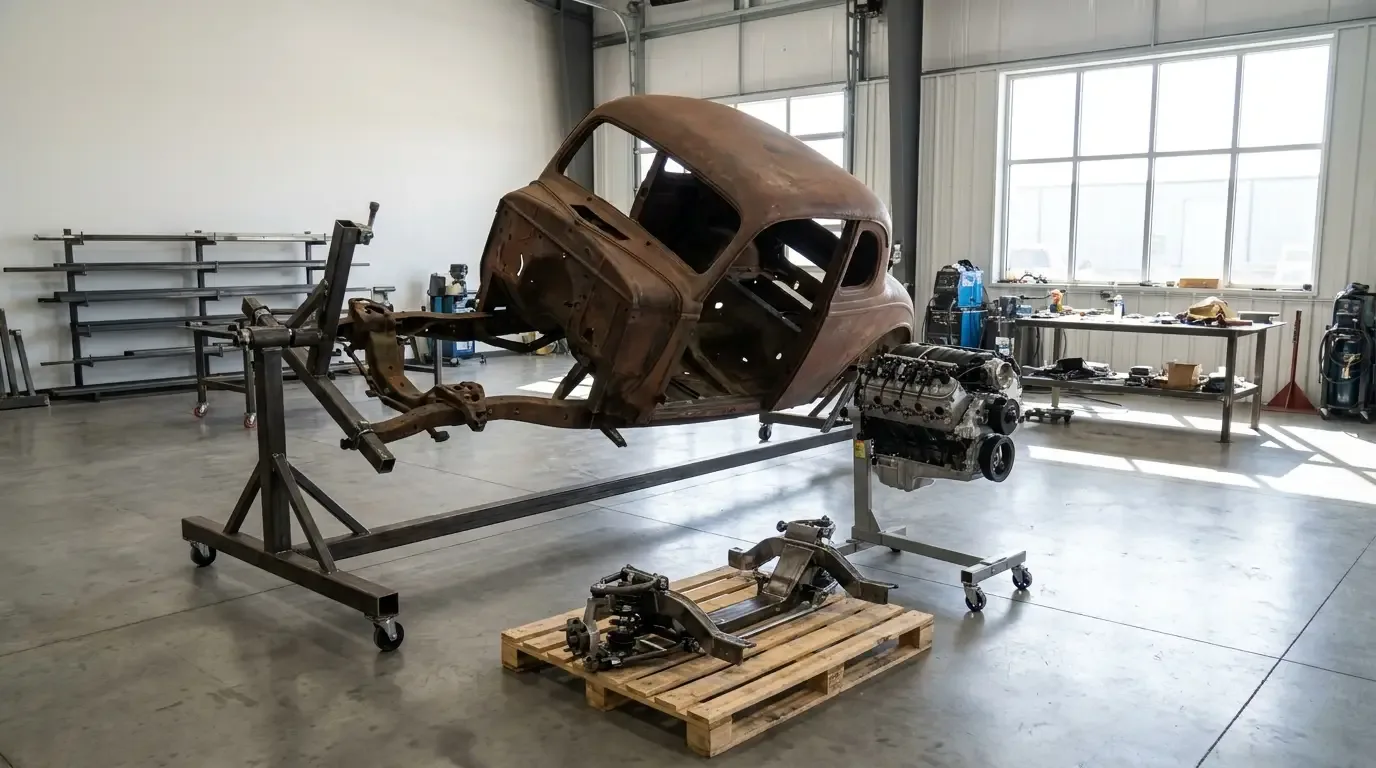
Cars built through 1948 were, with few exceptions, body-on-frame with separate fenders and a relatively simple ladder chassis. That construction is a gift to a builder. You can lift the body off, build or modify the frame underneath, drop in whatever drivetrain and suspension you want, and set the body back down. The 1949 model year is roughly when Detroit began moving toward wider, heavier, more integrated bodies and, eventually, unibody construction that fought you every step of the way. So the line at 1948 is really a line between cars that are easy to hot rod and cars that are hard to.
The NSRA formalized that instinct into a rule so its events had a clean boundary. A judge at a national meet needs a yes-or-no test, not a debate about whether a given car "feels" like a rod. The model year gives them that test. If you want the deeper version of this argument, it is one of the most-asked questions in the whole hobby, and the answer touches on everything from body construction to insurance classification.
Street rod, hot rod, rat rod: keeping them straight
This is where most of the confusion lives, so let me be blunt about the differences. All three start from old American iron. What separates them is intent and execution.
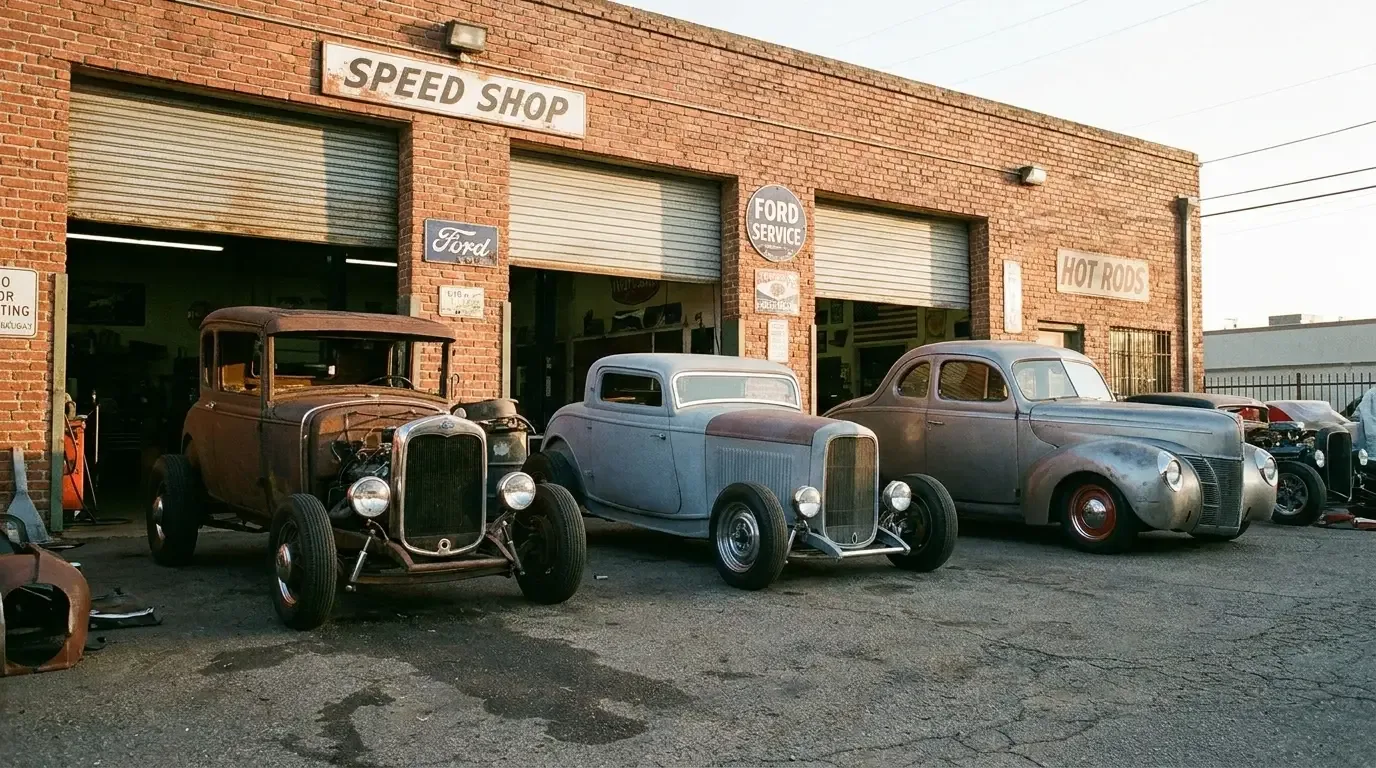
A traditional hot rod is period-correct and stripped for performance the way the originals were. Think a 1932 Ford roadster with a hopped-up flathead or an early small-block, no fenders, no frills, built the way a kid in 1955 would have built it with the parts and knowledge of the era. It is about speed and attitude, not comfort. A rat rod is the raw, unfinished, deliberately rough take, primer or bare steel, patina left alone, mechanicals cobbled from whatever is cheap and available. It is a look and an economics as much as a build style.
A street rod, by contrast, is the comfortable, finished, reliable one. Smooth paint, modern drivetrain, working AC, a car you would take your spouse across the state in. If you want the full three-way breakdown, I have written it up as hot rod, street rod and rat rod compared, but the shorthand is this: hot rod is period speed, rat rod is raw survival, street rod is modern comfort in a pre-war shell.
The one that trips people up most is the hot-rod-versus-street-rod line, because the cars can look almost identical parked next to each other. The difference is under the skin and in the intent. I go deep on exactly that in a dedicated piece on street rod vs hot rod, but the fast rule is that a hot rod tries to be authentic to a period and a street rod tries to be usable today.
| Style | Body era | Drivetrain | Priority | Finish |
|---|---|---|---|---|
| Street rod | 1948 and earlier | Modern crate V8, overdrive, IFS, disc brakes | Comfort and reliability | Smooth, finished, AC |
| Traditional hot rod | Typically 1948 and earlier | Period-correct (flathead, early OHV) | Period speed and style | Often minimal, no fenders |
| Rat rod | Usually pre-war | Whatever is cheap and running | Raw look, low cost | Primer, patina, unfinished |
| Restomod | Usually 1949 and later | Modern crate and electronics | Modern performance | Show-quality |
Building for comfort and reliability
Here is the part that separates talkers from builders. Anyone can want a street rod. Actually making a 1930s car pleasant to drive at 75 mph in July traffic is a stack of engineering decisions, and each one matters. A proper street rod build is a system, not a parts list, and the choices have to work together.
The heart of it is the drivetrain. Almost nobody keeps the original engine. A modern crate V8, a small-block Chevy, a Ford Windsor, or an LS in more recent builds, gives you reliable power, parts availability, and something a shop anywhere can service. Pair it with an overdrive automatic or a five-speed and the car cruises at highway speed without screaming. That is the single biggest jump in drivability you can make.
Next comes the front suspension. The old solid-axle front ends ride like a buckboard and wander at speed. The near-universal fix is independent front suspension, and for decades the go-to has been a Mustang II-style crossmember and control arms. It bolts into a huge range of frames, it rides well, and it accepts power steering and disc brakes without drama. Behind that you want four-wheel discs, or at least front discs, because the old drum brakes were marginal when the cars were new and are dangerous now.
Then the comfort layer: air conditioning, a real HVAC box, sound deadening, a proper wiring harness with fuses and relays, an alternator instead of a generator, electric fans, and a fuel-injection-friendly tank and pump if you are running EFI. None of this is glamorous. All of it is the difference between a car that lives in a garage and a car that gets driven.
"People think the money goes into the paint. It doesn't. The money and the real work go into the stuff nobody sees, the crossmember, the brake plumbing, the AC lines, the wiring. Get those right and the car will run for twenty years. Skip them and you built a lawn ornament."
Jim Vasquez
Choosing a platform
Not every pre-1949 body makes an equal starting point. Some are cheap and endlessly supported by the aftermarket. Some are rare, expensive, and a fight to build. Picking the right body is the first real decision, and it shapes the whole project. The most popular street rod cars earned that popularity for practical reasons: parts, community, and reproduction bodies you can buy new in steel or fiberglass.
Three families dominate. The Ford Model A, built from 1928 to 1931, is affordable, simple, and probably the most-built street rod body ever. The 1932 Ford, the "Deuce," is the icon, the coupe and roadster that defined the look, and it carries a premium to match its status. And the "fat-fender" cars of the late 1930s and the 1940s, the fuller-bodied Fords and Chevrolets with integrated, flowing fenders, give you more interior room and a smoother ride, which suits the comfort mission perfectly.
- Ford Model A (1928 to 1931): cheapest entry, massive aftermarket, light body, the classic first build.
- 1932 Ford (the Deuce): the icon, highest values, reproduction steel and fiberglass bodies available new.
- Fat-fender Fords and Chevys (late 1930s to 1948): roomier, heavier, smoother riding, great for long-distance comfort builds.
- Chevrolet of the same eras: strong following, good parts support, often a bit cheaper than the equivalent Ford.
Whatever body you land on, the platform decision cascades into everything else, frame availability, suspension kits, reproduction panels, and resale. It is worth studying before you buy, and it is also the fastest way to understand why certain cars show up over and over at every meet. If you are shopping, there is a healthy market in classic street rods for sale, both finished cars and projects, and browsing it teaches you what platforms actually cost.
The culture and the NSRA
A street rod is not just a build style. It is a community, and that community has a shape, largely because one organization gave it one. The National Street Rod Association, founded in 1970, did three things that defined the hobby. It set the pre-1949 boundary. It created a national circuit of events. And it built a safety culture that, honestly, is one of the reasons these cars have such a good reputation on the road.
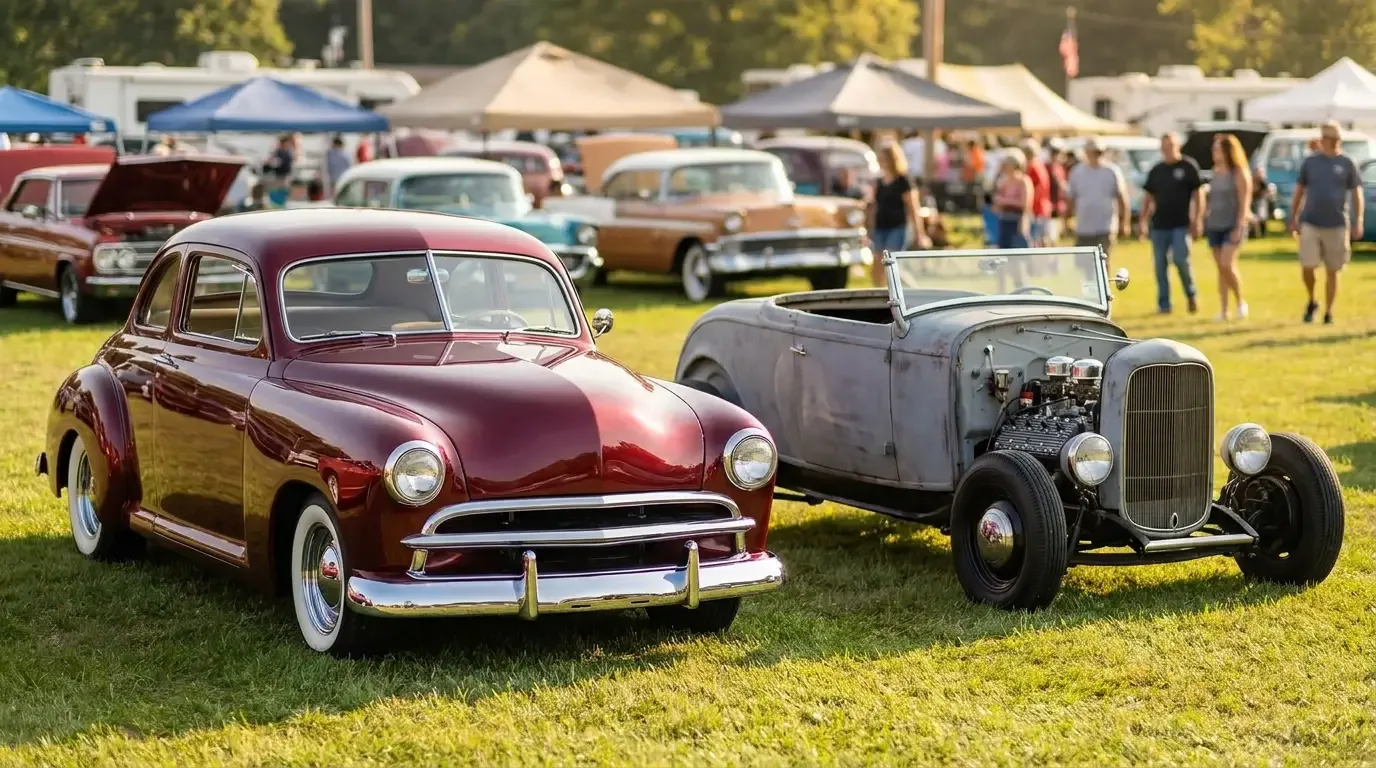
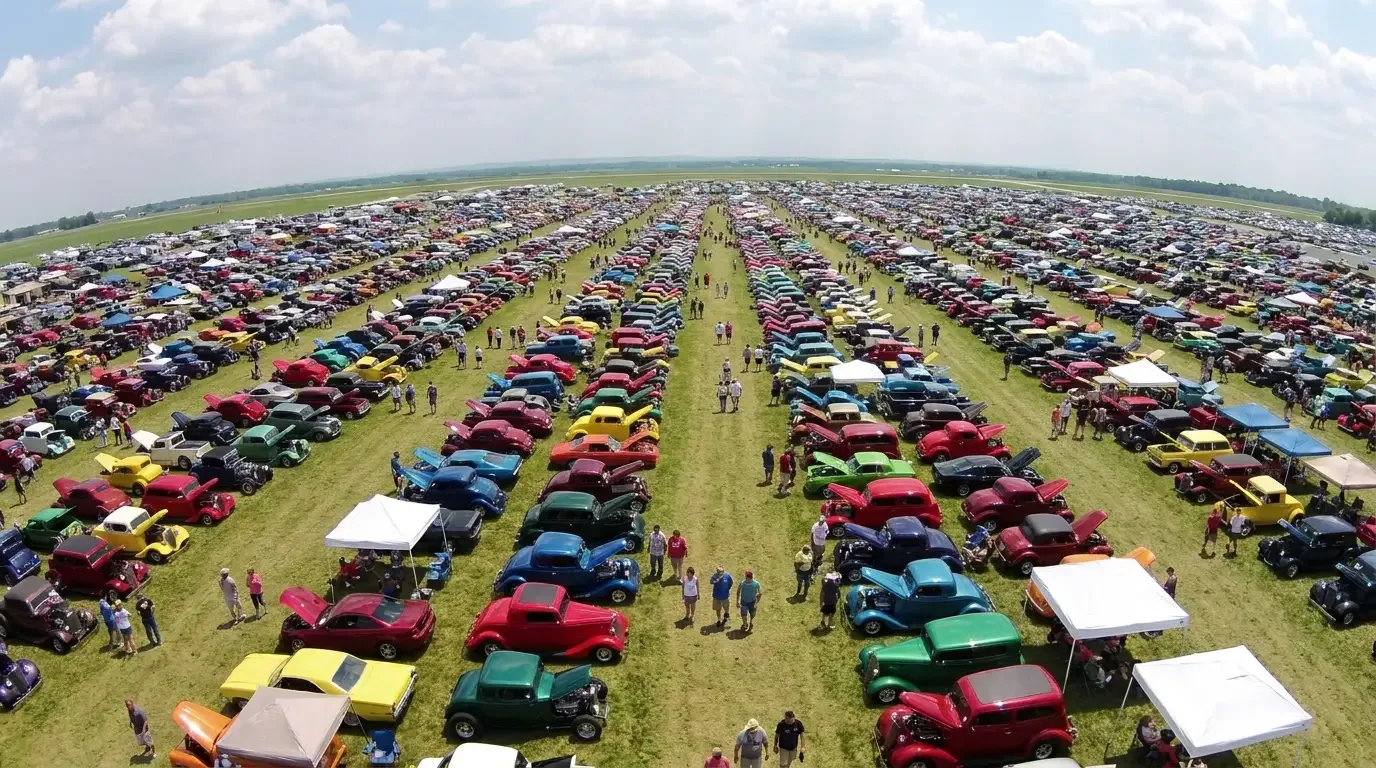
The NSRA's calendar of regional and national meets, the Street Rod Nationals chief among them, gave builders somewhere to drive their finished cars and show them off. These are not trailer-queen concours events. The whole ethos is that you drive the thing. People road-trip across several states to attend, which is the entire point of building a reliable, comfortable car in the first place. The events, the vendor midways, the club chapters, and the volunteer inspectors form a genuine subculture that has run continuously for over half a century.
"The first time I drove a finished car eight hundred miles to a national and it never missed a beat, I got it. That's the whole hobby right there. Not the trophy. The drive. A street rod that can't make the drive isn't finished, no matter how nice the paint is."
Jim Vasquez
Tips for getting into street rods
If the concept has hooked you, here is the practical advice I give everyone who asks where to start. The mistakes are predictable and the shortcuts are real.
Why the street rod endures
Fashions in the car hobby come and go. The street rod has held on for more than fifty years because it solves a real problem: how do you own and actually use a beautiful pre-war car without accepting pre-war misery? The answer, modern underneath and classic on top, turned out to be durable. It gave hobbyists cars they could drive every weekend, take across the country, and hand down. The pre-1949 line kept the identity clear. The NSRA kept the community organized and safe. And the endless aftermarket kept the barrier to entry within reach of ordinary people.
That is the story. An old body, a modern heart, a hard line at 1948, and a culture built around actually driving the things. Everything else in this silo, the build details, the platform choices, the culture, branches off that one idea. If you understand the concept, you understand all of it.
Sources and notes
- National Street Rod Association event rules, membership materials, and safety inspection program descriptions.
- Period enthusiast press covering the emergence of the street rod movement (late 1960s through 1970s).
- General reference on pre-war American body-on-frame construction and the 1949 transition to wider and unibody designs.
- Crate engine and aftermarket suspension manufacturer references for typical street rod drivetrain and IFS packages.
- Builder interviews and shop experience regarding comfort, reliability, and platform selection.
Related Reading
Have a
Classic Car
for Sale?
Reach thousands of serious classic car collectors across the US.
Sell It Here →
Are You a Classic Car Dealer?
List your full inventory and connect with targeted classic car buyers.
Join as a Dealer →

About the author
Jim Vasquez
Southern California hot rod and custom car builder with roots in the traditional kustom kulture scene.
Comments
Be the first to comment on this article.