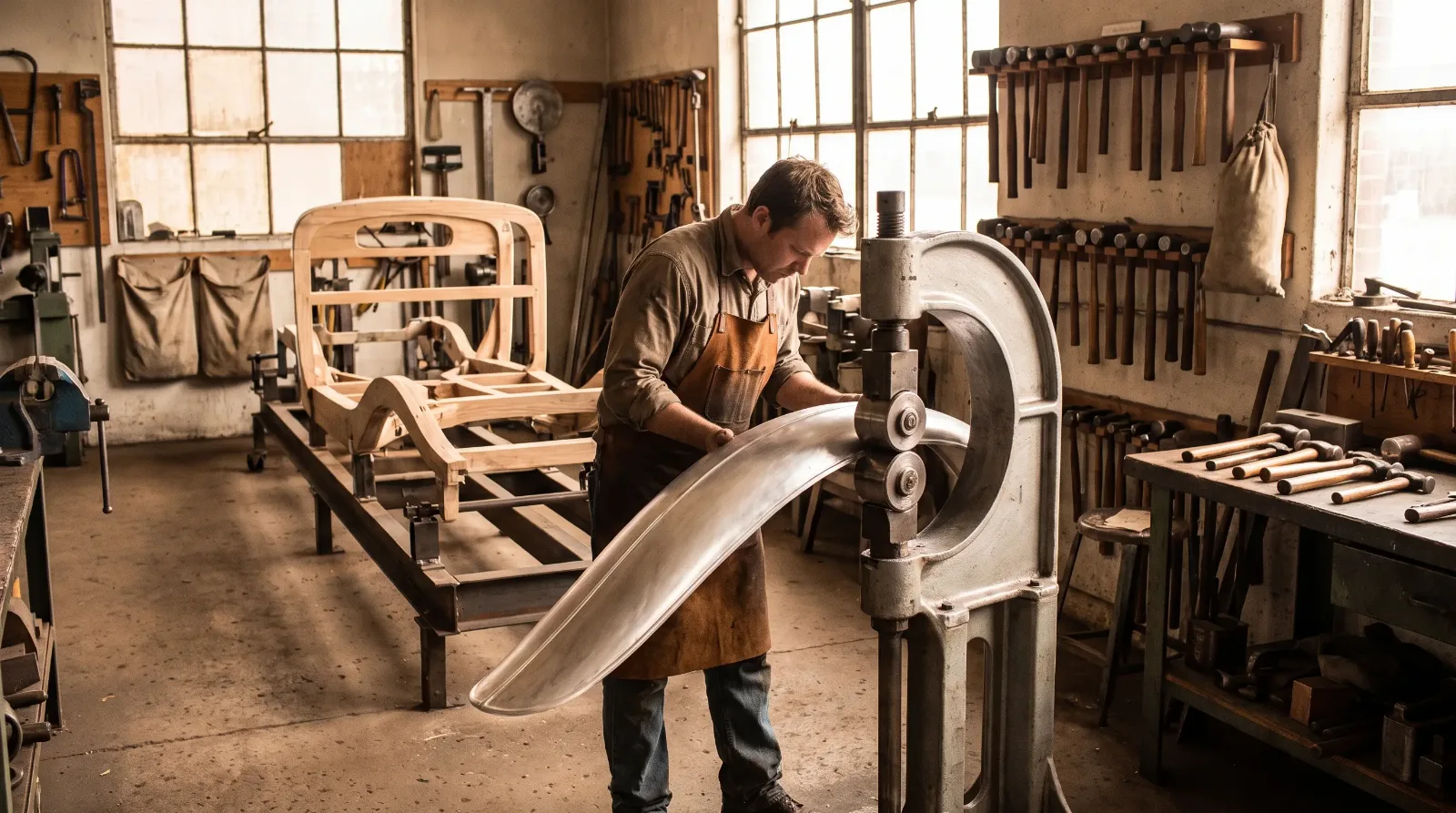
A coachbuilt body is not a stamping. It is a piece of hand-formed metal shaped over a wooden frame by craftsmen who worked to no fixed die, and restoring one asks for the same skills that made it. This is the part of luxury restoration that separates a body shop from a coachbuilding shop. Coachbuilt body restoration involves two disciplines that most modern panel beaters never touch: lead work at the seams and the fabrication of panels from flat sheet. Understanding what those two jobs actually are will tell you why a coachbuilt car costs what it does to make right, and why so few shops can do it well.
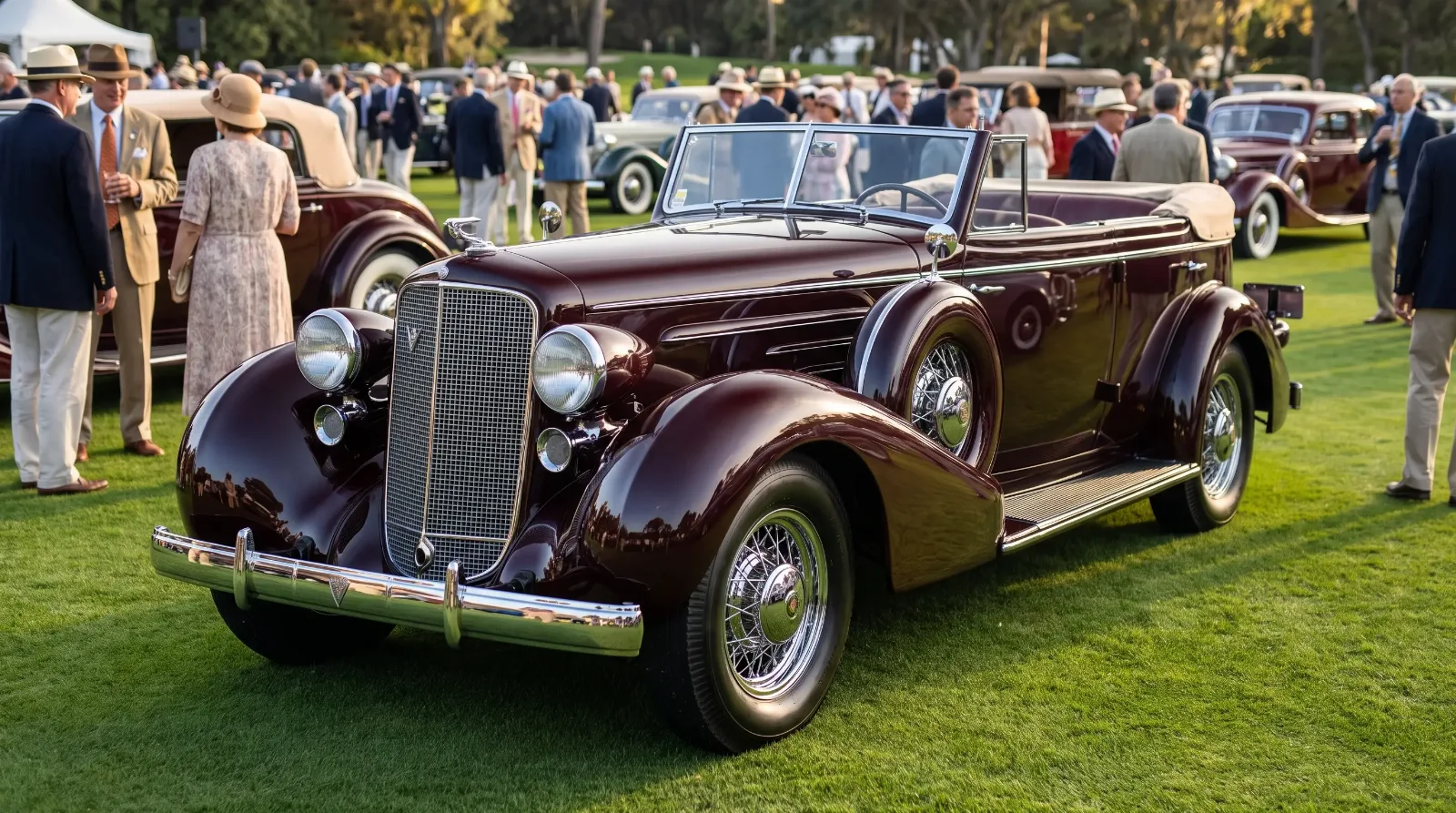
The cars that need this are the ones bodied by the great houses. In America, Murphy, Rollston, LeBaron, and Brewster clothed Duesenberg, Packard, and Cadillac chassis. In Europe, Mulliner, Park Ward, and their peers dressed Rolls-Royce and Bentley. Each body was built by hand, and each one, when it comes to you eighty or ninety years later, needs hands again rather than machines.
What lead work actually is
Lead work, properly called body soldering or leading, is the original method for filling and smoothing the seams and low spots on a hand-built body. The metalworker cleans and tins the steel, then applies a soft tin-lead alloy that is heated until plastic and wiped into shape with a wooden paddle and tallow. Done correctly it bonds to the metal and files to a hard, durable surface that has lasted the better part of a century on original cars. It is the reason these bodies were called lead-loaded, and it is why plastic body filler, which sits on the surface rather than bonding into a tinned seam, is considered incorrect on a concours restoration.
The skill is in the heat. Too little and the lead will not flow; too much and it slumps off the panel or burns the tinning. A leadworker reads the metal by feel and colour, working small areas so the panel does not distort. It is slow, it is toxic if handled carelessly, and it is one of the trades that has thinned out badly as the men who learned it retired. For an original coachbuilt car, though, it is the correct method, and judges know the difference between a leaded seam and a filled one.
Panel fabrication from flat sheet
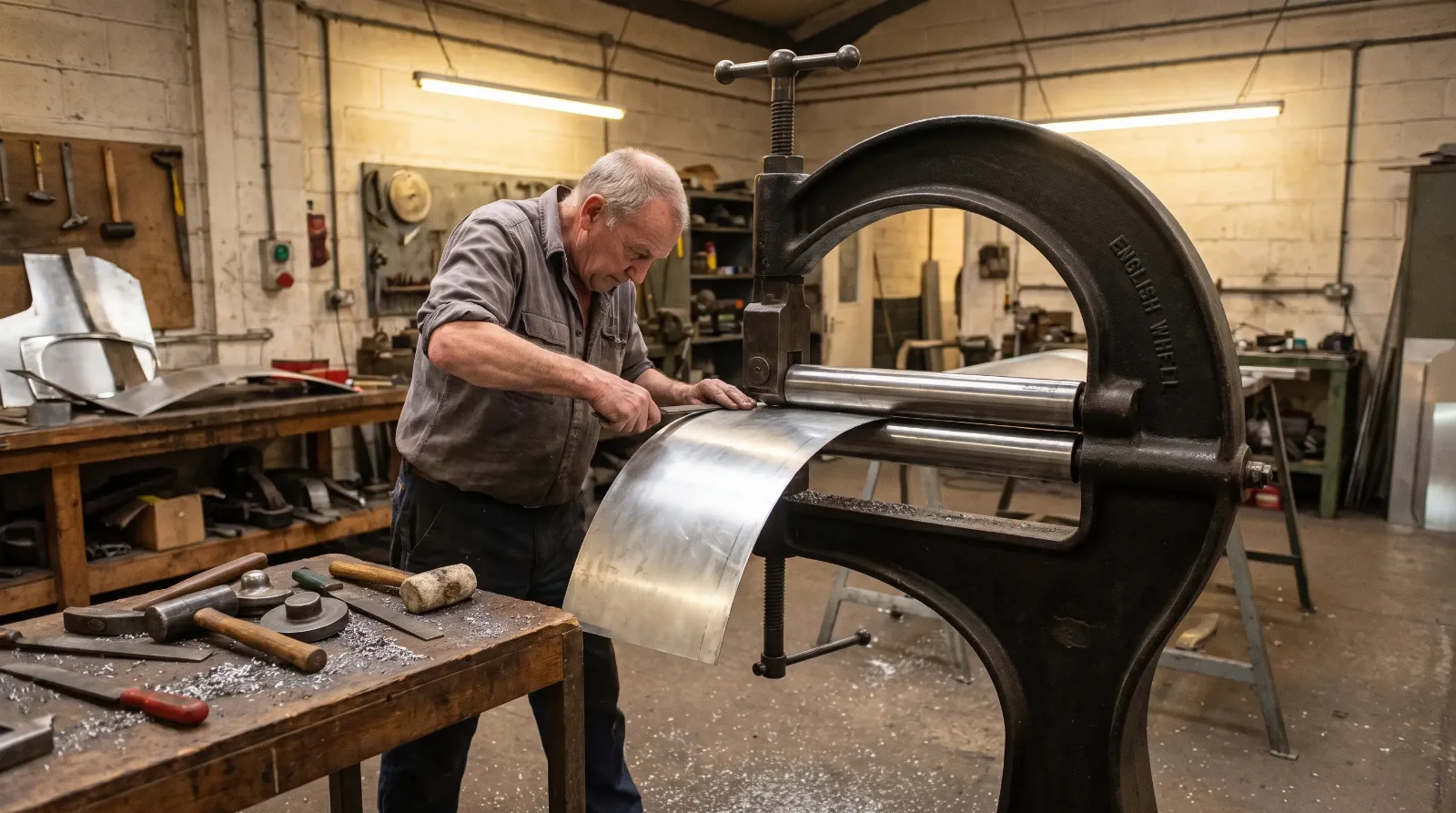
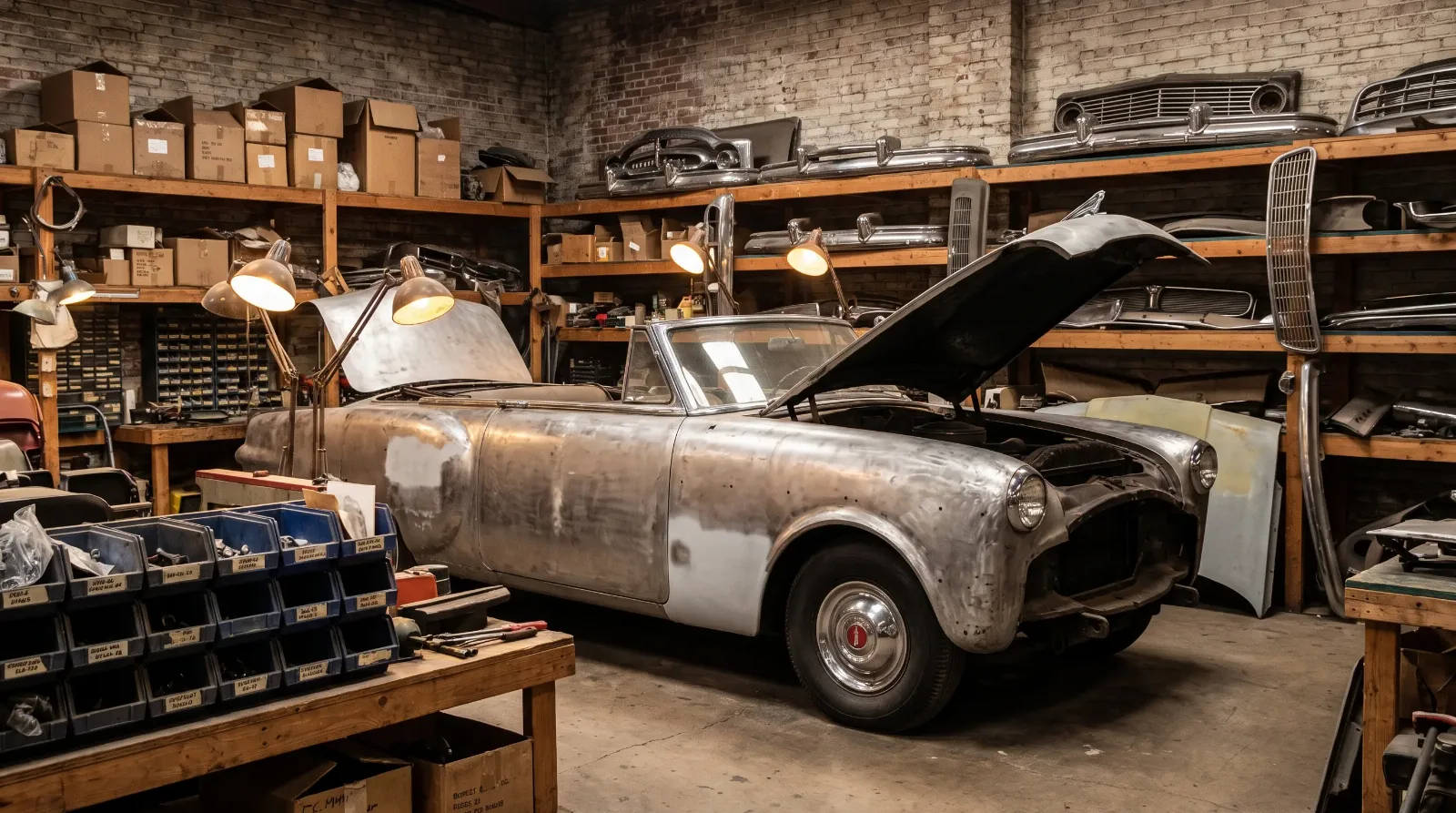
The second discipline is making metal that no longer exists. When a coachbuilt fender is beyond repair, or a section has rotted or been badly patched, there is no reproduction panel to order. The shop forms a new one from flat sheet steel or aluminium using the same tools the coachbuilders used: the English wheel to stretch and smooth compound curves, hammers and shot bags to raise shape, and a planishing hammer to finish the surface. A skilled panel man can reproduce a swept fender or a door skin that matches the original line, but it is patient, iterative work measured in days per panel, not hours.
Aluminium bodies add their own demands, because aluminium work-hardens and cracks if worked cold too far, and it must be annealed as the shape develops. Many coachbuilt cars also carry an ash wood frame beneath the metal, and that timber rots, splits, and loses its shape over decades. Reframing a body in seasoned ash, then re-hanging the panels to it, is often the hidden half of a coachbuilt restoration and one of the reasons the estimates run so high. This is the substance behind the restoration story for any hand-bodied car.
| Job | Approx. cost | Why it costs that |
|---|---|---|
| Lead loading a body (correct method) | $8,000–$20,000+ | Slow hand work; few skilled leadworkers left |
| Fabricating one compound panel | $2,500–$8,000 each | Formed from flat sheet, days per panel |
| Ash frame reframing | $10,000–$40,000 | New seasoned timber, panels re-hung to it |
| Full coachbuilt body restoration | $50,000–$200,000+ | Combination of all the above, concours finish |
🔧 Inspection Priorities
- Ash frame condition. On wood-framed bodies, rot behind the metal is the costliest hidden problem. Check door gaps and sill lines; a body that has dropped or racked usually has a failing frame.
- Filler over lead. Tap and read the panels. Thick plastic filler hiding rust or bad repairs signals a body that was cheaply patched, not restored.
- Panel originality. Confirm whether fenders and skins are original coachwork or later reproductions, because that shapes both value and correctness.
- Previous fabrication quality. Poorly formed replacement panels distort the body's original line. Sight down the sides; a coachbuilt car's line should flow without a break at the seams.
"The line of a coachbuilt fender is a signature. When it is right, it flows from the cowl to the running board without a seam break, exactly as the coachbuilder drew it. A shop that leads a seam correctly and forms a panel by hand preserves that signature. A shop that reaches for filler erases it."
— Sarah Whitfield
Why so few shops can do this work
The reason a coachbuilt body restoration costs what it does is not greed. It is scarcity of skill. Lead work and hand panel forming were everyday trades when these cars were new, taught through apprenticeships that no longer exist at scale. The men who learned them properly are retiring faster than they are being replaced, and the tools, an English wheel, a planishing hammer, a leading bench, are useless without the years of feel behind them. A shop that genuinely does this work has invested a career in it, and there are not many of them on either side of the Atlantic.
That scarcity has a practical consequence for the buyer. The good coachbuilding shops have waiting lists, and a correct body restoration cannot be hurried to fit your schedule. It also means you should be sceptical of a general body shop that claims it can do the work at a fraction of the specialist price. The metal will tell the truth in the end, in the line of the fenders and the honesty of the seams, and a car done cheaply by the wrong hands shows it the moment you sight down its flanks.
Choosing a shop and setting expectations
The practical advice for a coachbuilt car is narrow: use a shop that can prove it does metal shaping and lead work in-house, and see examples of finished cars. Ordinary collision shops cannot do this work, and a car sent to the wrong shop comes back with filler where lead should be and reproduction panels that miss the original line. Ask to see the English wheel and the leading bench, and ask who does the wood framing, because a shop that farms out the frame is only doing half the job.
Set expectations on time as much as money. A correct coachbuilt body restoration is measured in years, not months, because the skills involved cannot be rushed without showing in the result. That patience is part of what these cars are, a thread that runs through the complete classic luxury car story. If you would rather buy a car with the hard body work already done correctly, study the market first and look at finished, judged examples among current classic luxury cars for sale, where a documented body restoration is worth paying for. With the metal and frame sorted, the next chapter of a luxury restoration is the cabin, covered next: next: Restoring Real Leather and Wood-Trimmed Luxury Interiors.