The interior is where a luxury car earns its badge, and it is also where a lot of buyers get the bill wrong. People walk up to a tired cabin, see cracked hides and dull wood, and assume the whole thing has to come out and get replaced. Sometimes it does. A lot of the time it does not, and that difference is thousands of dollars. Luxury car interior restoration is one of the few areas of these cars where knowing what to save versus what to replace can cut the cost in half. I have gone through enough of these cabins to tell you the original material is usually worth more effort than people give it.
Two materials carry a luxury interior: the leather and the wood. They fail in different ways, they cost different money to fix, and the biggest mistake is treating both as throwaway. Original hides and original veneers, even rough-looking ones, are frequently the thing that makes the car correct. Rip them out too fast and you have spent money making the car worth less.
Reading the leather before you spend
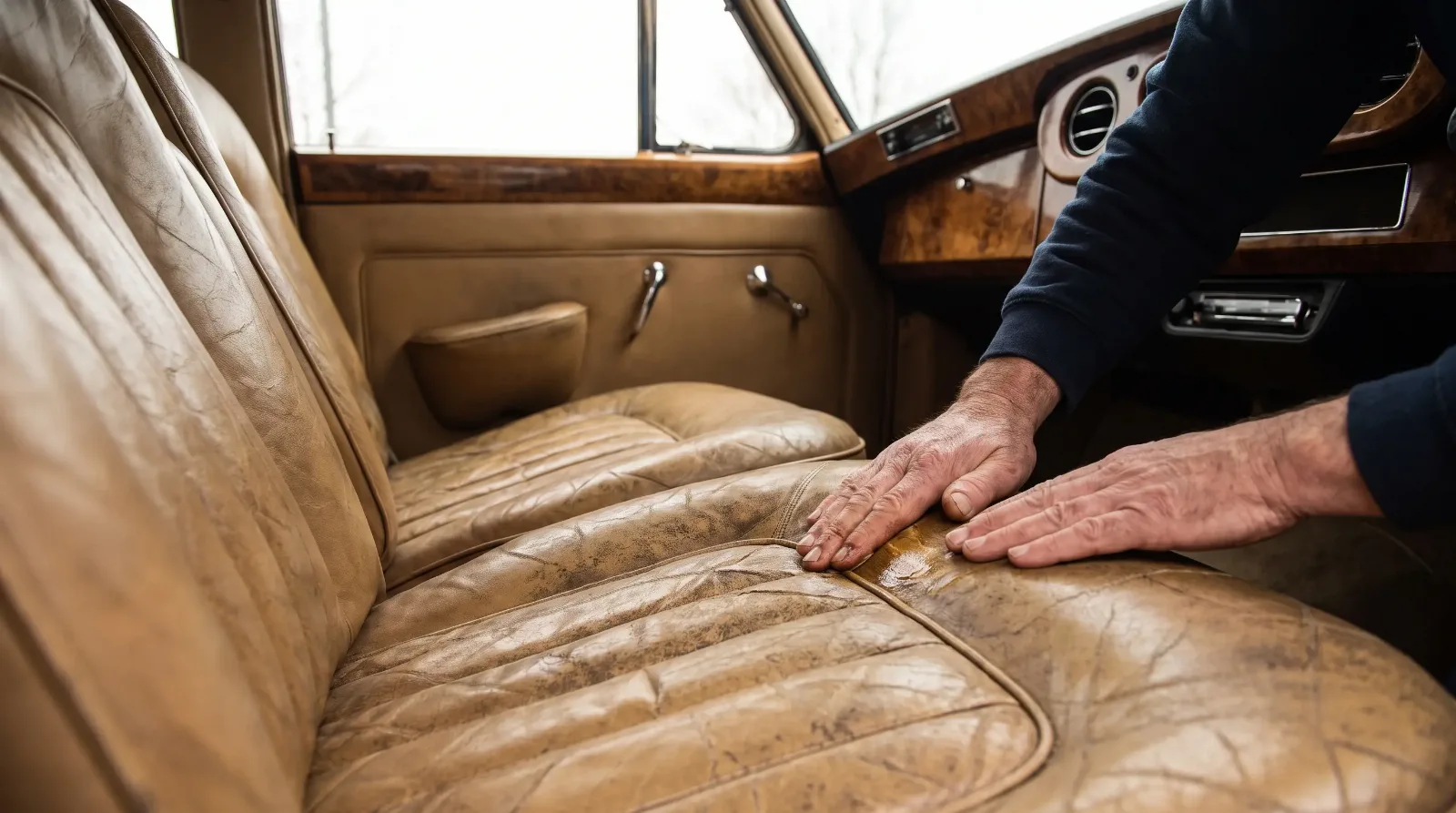
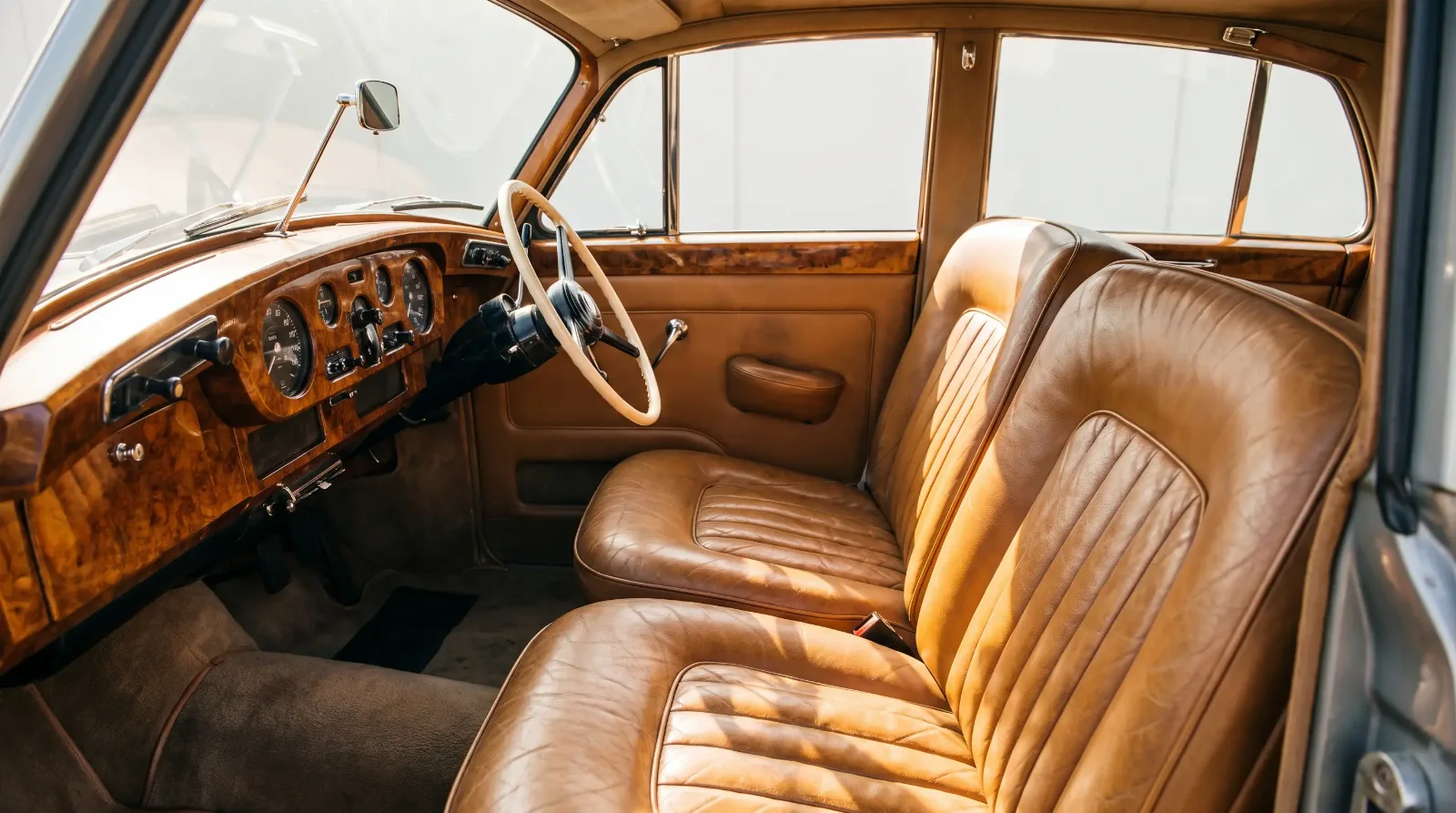
Here is the first thing to figure out: is the leather dried out, or is it destroyed? Those are two different problems. Leather that is dirty, faded, and stiff but still intact can usually be cleaned, fed, and re-coloured, and that is a fraction of the cost of a retrim. The good luxury cars used top-grade hides, and that material takes feeding and re-dyeing well if the grain has not split all the way through. You clean it, you work a leather food into it over a few sessions, and you re-pigment the surface. A driver's seat that looked finished can come back looking honest and correct.
Leather that is cracked through the grain, torn, or rotted at the seams is a different story. No amount of feeding fixes a split hide, and that is where a retrim in matching leather becomes the only real answer. A full leather retrim on a luxury car runs roughly $6,000 to $18,000 depending on the seat count and the quality of the hide, and correct-grade leather is not cheap. The trick is not to jump to that number until you have proven the original is beyond saving. Test an inconspicuous area with a proper feed before you write off a whole interior.
The wood is trim, not scenery
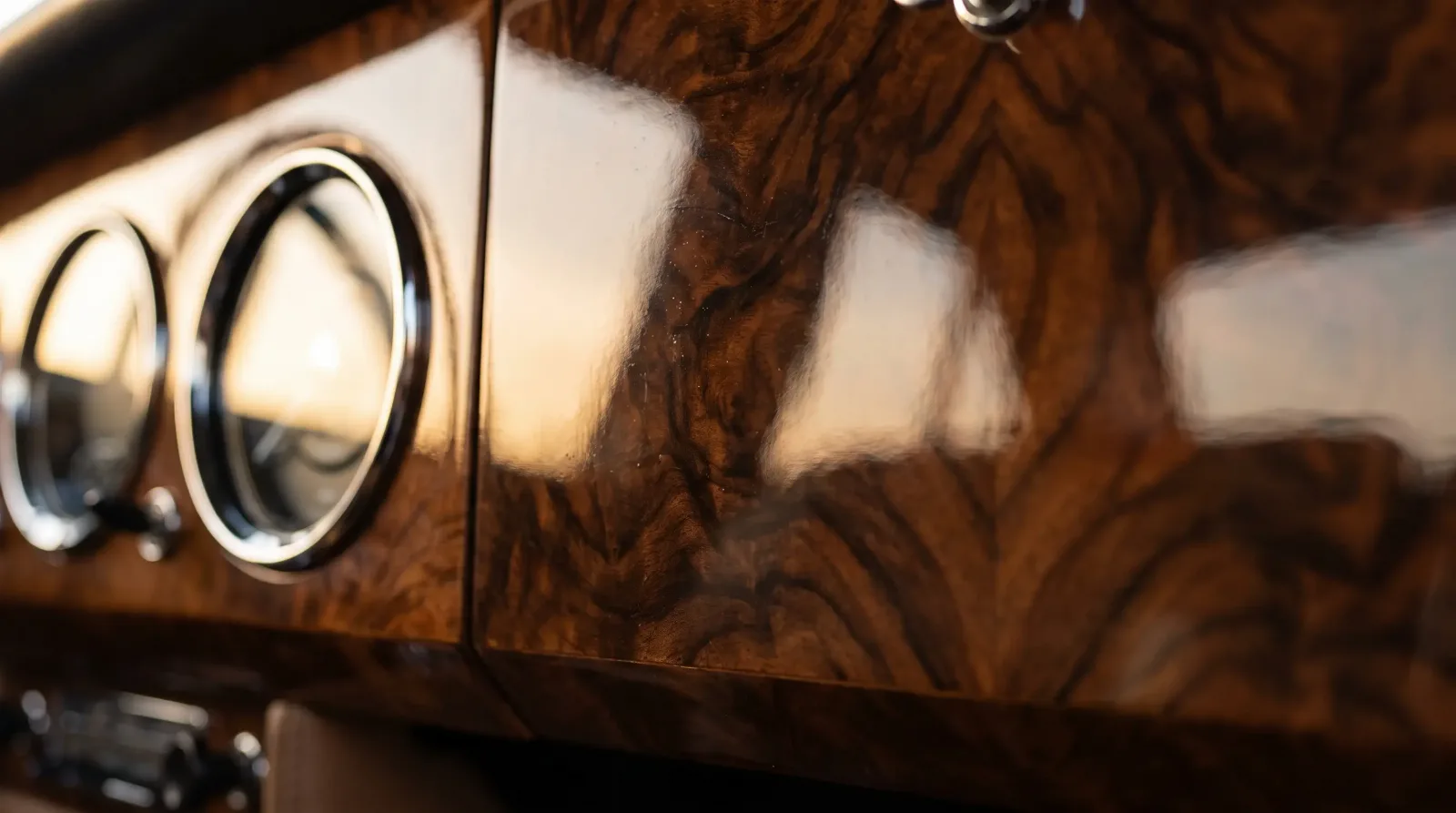
The wood in a luxury cabin is veneer over a substrate, a thin sheet of figured timber under many coats of lacquer, and it fails in ways you can read from the driver's seat. Sun cooks the lacquer until it crazes and goes cloudy. Water gets under it and lifts the veneer or leaves it delaminated at the edges. Where the lacquer has only clouded and the veneer is sound, the fix is stripping and re-lacquering, which brings the depth and shine back without replacing anything. Where the veneer itself is cracked, bubbled, or missing, you are into re-veneering, which is specialist work and the deeper part of the bill.
The reason to care about the difference is money and originality both. Re-lacquering sound original veneer keeps the correct wood in the car and costs far less than replacement. Cutting and laying new veneer to match the original figure is a craft job, priced accordingly. Sorting one from the other on each piece is the same judgement you make with the leather: save what is sound, replace only what is genuinely gone. That discipline is the heart of the collector's guide approach to these cars.
| Job | Approx. cost | When it is the right call |
|---|---|---|
| Clean, feed & re-dye leather | $500–$3,000 | Hide intact, dried and faded but not split |
| Full leather retrim | $6,000–$18,000 | Grain cracked through, torn, or seam-rotted |
| Strip & re-lacquer veneer | $1,500–$5,000 | Lacquer crazed, veneer underneath sound |
| Re-veneer wood trim | $3,000–$8,000+ | Veneer cracked, bubbled, or missing |
"The worst money in an interior is the money you spend ripping out material you could have saved. Feed the leather before you condemn it. Strip the lacquer before you re-veneer. Half the tired cabins I see needed a weekend of honest work, not a retrim."
— Mike Sullivan
Carpet, headliner, and the small stuff
The leather and the wood get the attention, but a luxury interior has a supporting cast that decides whether the finished cabin reads as correct or close-enough. Wool carpet, not the cheap nylon that shops reach for, is what these cars used, and correct-weight wool with bound edges costs more but looks and feels right underfoot. The headliner, the sun visors, the door cards, and the seals all age at their own pace, and a fresh set of hides against a sagging, stained headliner just draws the eye to what was skipped.
None of these are large numbers on their own. A wool carpet set runs a few hundred to around a thousand dollars, a headliner a few hundred fitted, and the trim clips and seals are small money. But they add up, and more to the point they are the details that separate a cabin that was restored from one that was merely reupholstered. Budget for the supporting cast when you plan the interior, because leaving it out is the most common way a good retrim ends up looking unfinished.
Getting the sequence right
Do the interior as one job with a plan, not piece by piece as things annoy you. Pull the seats and the wood together, assess every piece cold, and split the list into save and replace before anyone starts spending. That way you refinish the veneer while the seats are out, retrim only what actually needs it, and you are not pulling the same trim twice. A full driver-quality interior on a luxury car, done this way, tends to land in the $8,000 to $20,000 range rather than the top of it, because you saved the pieces that were saveable.
The interior is also the part of the car people touch and sit in, so it is where a smart restoration shows the most for the money spent. Get the leather and the general trim sorted first, then give the wood the attention it needs on its own terms, because dashboards and cappings have their own methods and their own traps, covered next: next: Wood Trim Restoration.