Of all the Camaro pace car appearances at Indianapolis, 1969 stands apart. The combination of the first-generation Camaro's peak development, the specific colour and graphics package chosen for that year, and the scale and execution of the dealer replica programme created a vehicle whose significance only grew as the decades passed. Today the 1969 Camaro pace car replica is one of the benchmarks by which first-generation Camaro values are measured.
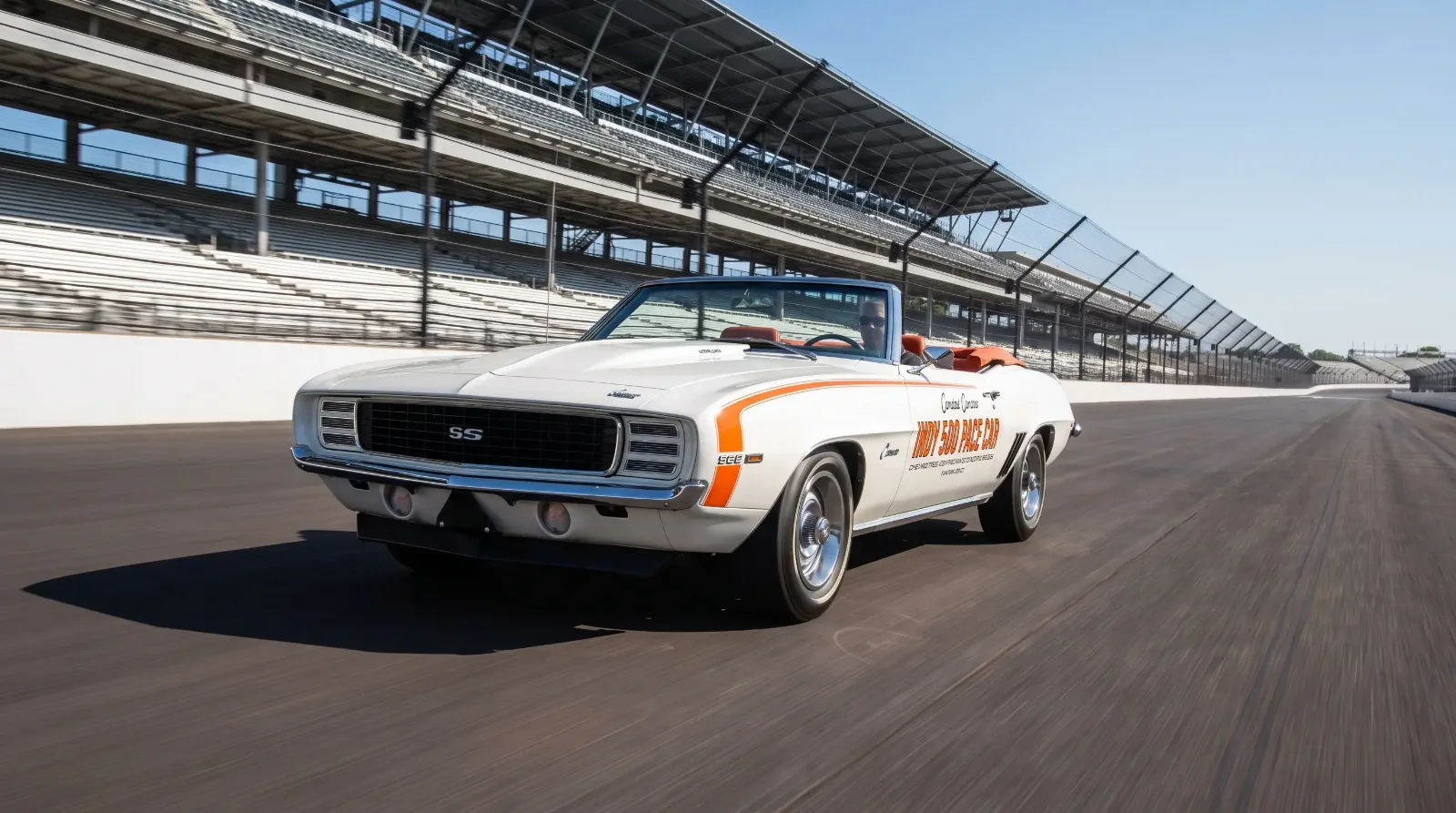
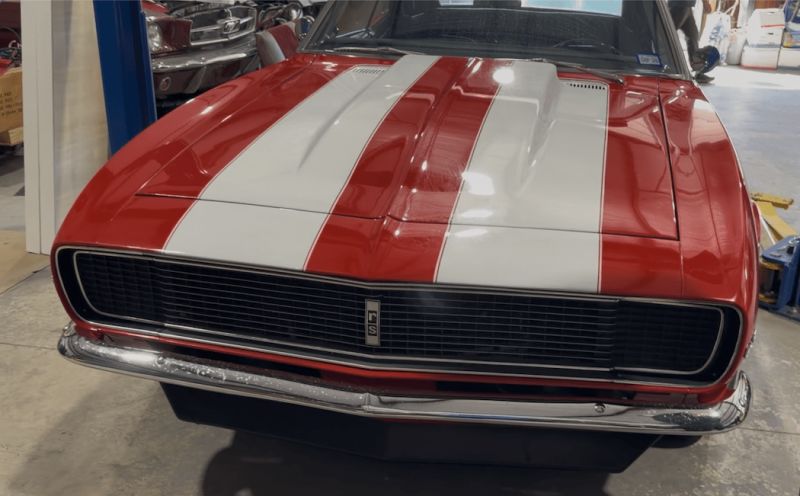
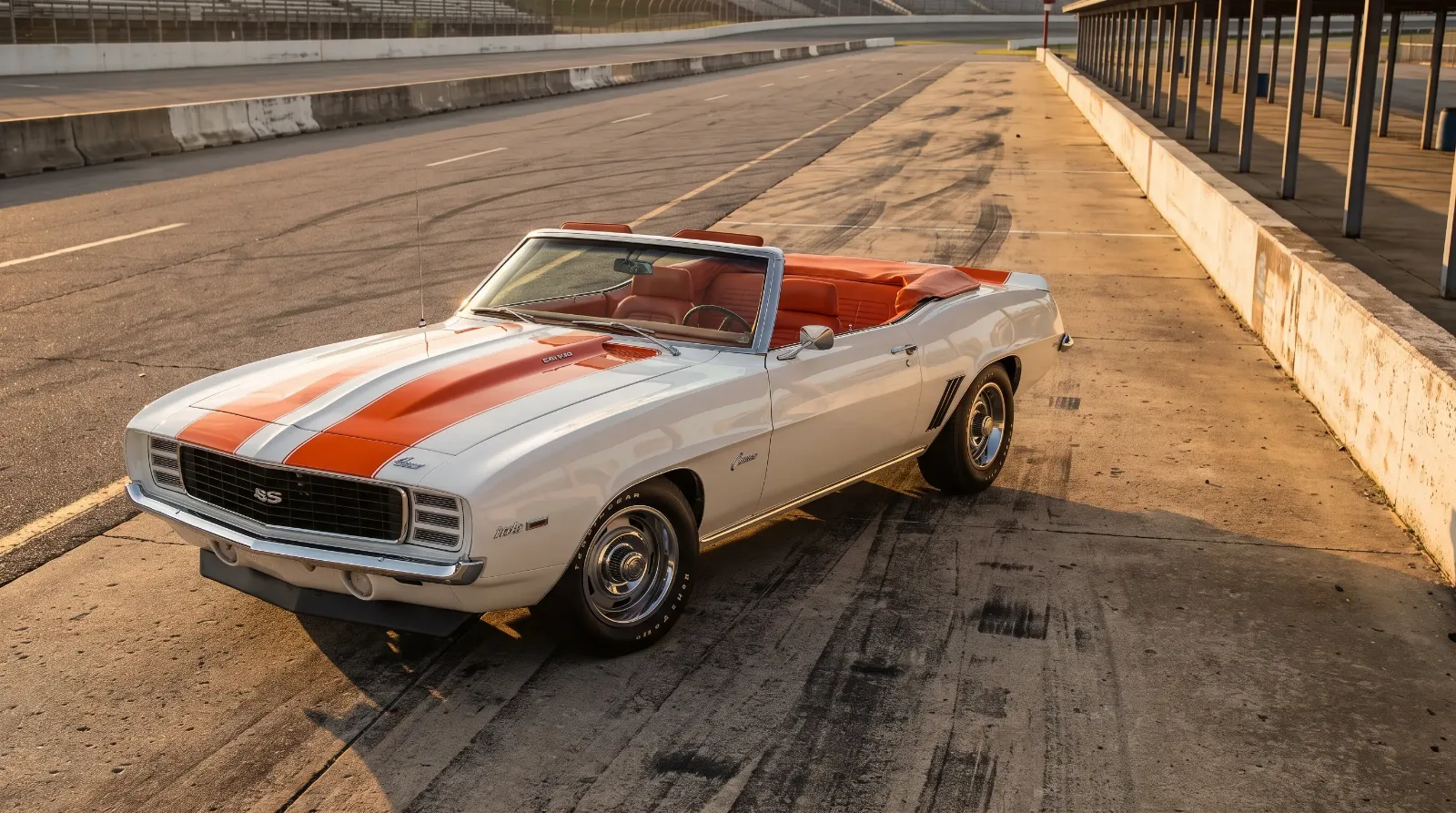
The official 1969 Indianapolis 500 pace car wore a Dover White exterior with Hugger Orange accents and carried pace car identification graphics along the lower body, the scheme applied to an RS/SS convertible specification. The choice of drivetrain for the actual pace car reflected Chevrolet's desire to present a vehicle with genuine performance credentials. The pace car needed to reach and sustain speeds capable of leading an Indy field through warm-up, and the engineering behind it had to be reliable enough to perform without incident at the world's most watched motor race.
The dealer replica programme
Chevrolet's dealer replica programme for 1969 authorised dealerships across the country to offer customers a production Camaro finished to pace car specification. These cars carried the distinctive Dover White and Hugger Orange scheme, the pace car graphics package, and a choice of high-performance drivetrain options. The replicas were built on the RS/SS convertible (the Z11 package) and RS/SS coupe (the Z10 package), with the 350 V8 as the base engine and a range of 396 big-block options available, giving buyers several performance levels within the pace car visual package.
The replica programme created a production run that was substantial enough to supply significant dealership demand but not so large as to diminish the cars' collectibility. Total 1969 pace car production is documented at 3,675 cars (a figure that includes the convertibles supplied as courtesy and track vehicles at the race), and examples with their original pace car equipment and matching documentation are among the most thoroughly researched first-generation Camaros in existence.
Identifying a genuine 1969 pace car
The documentation and verification of 1969 Camaro pace car replicas has become a specialised field within the collector community. Broadcast codes, build sheets, and trim tags all contribute to establishing a car's original specification. The Camaro Vehicle Identification Number structure for 1969 encodes the model, engine, and production sequence, but confirming pace car specification requires cross-referencing additional documentation including the trim tag, which records the paint colour and interior combination, and ideally an original build sheet specifying the option content, including the Z11 or Z10 pace car package code.
Several dedicated research resources and registries exist for 1969 Camaro pace car documentation. The collector community has invested substantial effort in separating genuine replicas from cars that have been converted to pace car appearance after the fact, a distinction that can represent a significant difference in value. Buyers considering a 1969 pace car replica are strongly advised to seek specialist verification before purchase.
"The documentation tells the complete story. A build sheet, a trim tag, and a matching VIN will confirm what the car was the day it left the factory. Without that paper trail, you are buying an appearance package, not a pace car replica."
— Tom Ramirez
The race itself: Indy 1969
The 53rd Indianapolis 500, run on May 30, 1969, was won by Mario Andretti driving a Ford-powered Brawner Hawk, his only victory in the race. The race drew its customary enormous crowd to the Speedway, and the Camaro's role as pace car was visible to the television audience that watched the broadcast. The combination of Andretti's victory, the race's drama, and the pace car's visual presence created the specific historical moment that the replica programme was designed to capture and distribute to buyers across the country.
Pace car duties were handled by the specially prepared Camaro through the pre-race parade and the rolling start procedure that characterises Indianapolis. The car's performance on track that day, reliable and rapid across the required duties, validated Chevrolet's engineering preparation and provided the authentic foundation on which the replica programme's marketing rested.
Value and legacy today
Among first-generation Camaros, the 1969 pace car replica occupies a consistent position near the top of the value hierarchy. Well-documented examples with original drivetrain, documented pace car specification, and known history have achieved significant auction results at the major collector car events. The cars' combination of historical narrative, visual distinctiveness, and performance hardware creates a package that appeals to collectors across several different motivation categories, those seeking racing history, those seeking visual drama, and those seeking documented special production vehicles.
The Camaro's full pace car legacy extends beyond 1969, as covered in the Camaro motorsport history section. The 1969 appearance remains the reference point against which all other Camaro Indy connections are measured, a reflection of how perfectly the timing, the specification, and the execution aligned in that particular year. The Camaro's competition story continued well beyond Indianapolis, including into drag racing, which is covered in the next article about Pro Stock and the drag-strip Camaro.
| Detail | 1969 Pace Car |
|---|---|
| Exterior colour | Dover White |
| Accent colour | Hugger Orange |
| Available drivetrains | SS 350 (base), SS 396 big-block options |
| Replica production total | 3,675 (incl. courtesy/track cars) |
| Race year | 53rd Indianapolis 500, 1969 |
| Race winner | Mario Andretti (Brawner Hawk-Ford) |
Sources and notes
Production figures, engine specifications, codes, and dates in this article are cross-referenced from established Camaro references, period documentation, and owner registries. Where sources differ, the most commonly cited value is used. Cost figures are indicative and vary by supplier, region, and condition.