
Classic Chevrolet 210 Buyer's Guide (1953–1957)
The Chevrolet 210 is the affordable entry point into Tri-Five collecting — the same legendary bodies and engines as the Bel Air, at a consistent discount. For buyers who want to drive rather than show, this is where the value lives.

Everyone knows the Bel Air. Not everyone knows that for most of the Tri-Five era, you could get the exact same body, the same Small Block V8, and the same chassis for several hundred dollars less — in the 210. It was Chevrolet's volume seller: less chrome on the outside, similar substance underneath. Today that same dynamic plays out in the collector market, where a solid 210 still costs 20–35% less than a comparable Bel Air. I've been building and driving Tri-Fives for thirty years, and I'll tell you straight: the 210 is where the smart money goes if you actually want to use your car.
History & Generations
When Chevrolet introduced the all-new 1953 body, they organized the lineup into three tiers: the base 150, the mid-range 210, and the top-of-the-line Bel Air. The 210 occupied the sweet spot — enough chrome and interior quality to feel like a proper car, priced well below the Bel Air, and sharing everything mechanical with both siblings.
1953–1954: The Pre-V8 Cars
The earliest 210s used Chevrolet's 235 cubic-inch "Blue Flame" inline-six, now producing 108 horsepower — more than adequate in a car of this size. The 1953 introduced the new body; the 1954 added minor trim refinements. These are legitimate collector cars, but the market for six-cylinder Tri-Fives is more limited than for V8 cars. Powerglide was the only automatic option; three-speed manual was standard.
1955: The Small Block Changes Everything
The 1955 Chevrolet is one of the most consequential model-year introductions in American automotive history. The new 265 cubic-inch Small Block V8 — lightweight, efficient, and producing 162–180 horsepower depending on specification — transformed the 210 from a competent family car into a genuine performance machine. Paired with the new body styling (widely considered one of Harley Earl's finest), the 1955 became an instant classic. The 210 got the full benefit of everything that made the '55 iconic.
1956: The Underrated Year
Often overshadowed by the more famous '55 and '57, the 1956 Chevrolet received a subtle but effective restyle with a more prominent hood and revised front end. The 265 V8 gained a higher-compression option. In terms of driving dynamics and mechanical specification, the '56 is arguably the best of the three Tri-Five years — and it's consistently the least expensive among equivalent-condition cars.
1957: The Iconic One
The 1957 brought quad headlights (on some versions), the iconic fins, and a new 283 cubic-inch V8 capable of producing one horsepower per cubic inch in fuel-injected form. No car defined 1950s American automotive culture more completely. The '57 commands the highest prices of the Tri-Five generation across all trim levels — including the 210.
Years to Target
- 1956: Best value in the Tri-Five generation — mechanically superior to the '55 in some ways, chronically underpriced relative to '55 and '57. The smart buy for drivers.
- 1955: The cultural icon and first V8 year — values are highest among the three years but demand is also broadest, so good cars are regularly available.
- 1957: The most desirable year; expect to pay a meaningful premium over '55 and '56 for equivalent condition. Verify body style carefully — fuel-injected cars carry a massive premium but fuel injection was rare.
- 1953–1954 six-cylinder: Legitimate entry points at lower prices — but the market is narrower and resale is harder. Best suited to buyers who will keep the car long-term.
What to Look For in Person
The Tri-Five Chevrolet body has specific, well-documented rust locations that every serious buyer knows. Start at the rear: the lower rear quarters where they wrap under the trunk opening are where corrosion begins on most cars. The repair panels are available and the work is straightforward, but assess extent carefully — surface rust that wipes off is different from perforation that requires patch panels, which is different from cancer that has spread into the structural lower body. Each step up in severity roughly doubles the repair cost.
The floor pans are next. Pull up the carpet or mats at the front footwells on both sides and look at the bare metal. Patches are common; assess whether they were done properly (clean welds, no gaps) or sloppily (pop rivets, fiberglass, metal screwed over holes). The frame on these cars is a full perimeter unit and rarely has serious rust issues — but check the rear frame section forward of the rear axle just in case.
For V8 cars: start the engine from cold. The Small Block should catch immediately and settle into a smooth 700–800 rpm idle. Listen for a lifter tick that goes away after warmup — normal on an engine that's sat. A tick that persists at operating temperature is a worn lifter and means a valve cover-off inspection. Pull the dipstick and look at the oil: milky or frothy means coolant intrusion from a head gasket. A small amount of crud at the dipstick is normal on a high-mileage engine; heavy sludge means the car wasn't maintained properly.
| Engine Option | Displacement | Power | Years |
|---|---|---|---|
| Blue Flame Six | 235 ci inline-six | 108 hp | 1953–1954 |
| Turbo-Fire V8 (base) | 265 ci Small Block | 162 hp | 1955–1956 |
| Turbo-Fire V8 (4-bbl) | 265 ci Small Block | 180 hp | 1955–1956 |
| Turbo-Fire V8 (base) | 283 ci Small Block | 185 hp | 1957 |
| Ramjet Fuel Injection | 283 ci Small Block | 283 hp | 1957 (rare) |
"I've inspected probably two hundred Tri-Fives in my career, and I'll tell you what separates the deals from the disasters: the rear quarters and the floor corners. Every seller knows to clean up the engine bay. Nobody cleans the inside of the lower rear quarters before a showing. Bring a flashlight, get on your knees, and look up into that area before you look at anything else. If the metal is solid there, you probably have a real car. If it isn't, everything else is negotiating leverage — or a reason to walk."
— Mike Sullivan
Market Outlook
The Tri-Five market is one of the most liquid segments in American classic car collecting — cars trade constantly at every price point. The 210's consistent discount relative to the Bel Air makes it attractive to buyers who want to drive. A 1955 or 1956 210 in driver condition with a correct V8 and solid body trades at $22,000–$32,000. Show-quality restorations reach $45,000–$65,000 for documented cars. The 1957 210 commands a premium: drivers at $28,000–$40,000, show quality at $55,000–$80,000.
The 1956 remains the value buy of the generation: equivalent cars consistently trade $5,000–$10,000 below '55 and '57 prices purely due to lower cultural cachet — not lower quality. For a buyer planning to drive and enjoy the car rather than show it, that discount is essentially free money.
Browse Chevrolet 210 listings
 Dealer
 United States
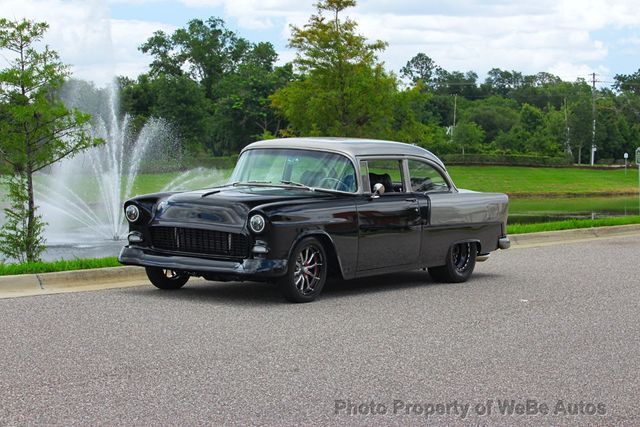
1955 Chevrolet 210
 Dealer
United States
Dealer
United States
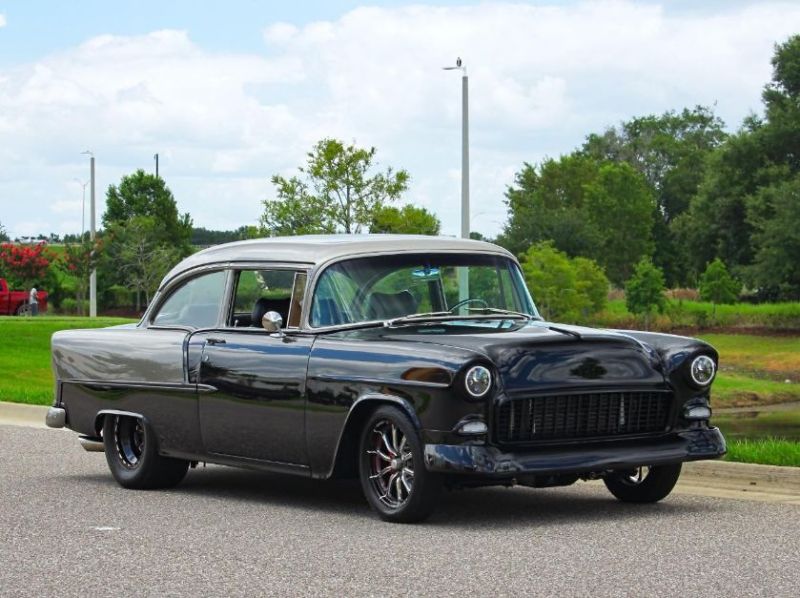
1955 Chevrolet 210
What to Look For
Lower rear quarters are the first priority — look up into the area where the quarter wraps under the trunk opening with a strong flashlight. Rust here is common and repair panels are available, but assess depth carefully. Floor pans at front footwells, both sides — pull carpet and assess metal condition and quality of any prior repairs. Cowl channel under the windshield base: open hood and look down into this area with a flashlight; water accumulates here and causes rust that is difficult and expensive to repair correctly. Rear frame section forward of rear axle: probe for corrosion (less common than on some cars, but check). For V8 cars: request compression test — all cylinders should read above 130 psi and within 10% of each other. Check VIN data plate (on driver's door sill or firewall) to verify actual trim level and engine — 210 vs. Bel Air, V8 vs. six-cylinder. Verify whether power steering, power brakes, or air conditioning are original equipment or retrofits. Transmission: Powerglide should engage Drive smoothly from both cold and hot; manual should shift cleanly through all gears.Pre-Purchase Checklist
-
Rear quarter inspection
Use flashlight to inspect lower rear quarters where they wrap under trunk opening -
Floor pan condition
Pull carpet at front footwells on both sides — assess metal and repair quality -
Cowl channel
Look into cowl channel under windshield base for rust and water damage -
VIN data plate verification
Check door sill or firewall tag to confirm trim level and engine code -
Compression test (V8)
All cylinders above 130 psi, within 10% of each other -
Engine oil condition
Check dipstick for milky oil (head gasket) or heavy sludge (neglect) -
Lifter tick assessment
Lifter tick that clears after warmup is acceptable; persistent tick warrants inspection -
Transmission function
Powerglide: smooth Drive engagement. Manual: clean shifts through all gears -
Trim authenticity
Verify 210 trim is not a faked Bel Air — check badging, interior, and data plate -
Frame rear section
Check rear frame forward of axle for rust — less common but worth verifying -
Power accessories
Test power steering, power brakes, A/C if present — confirm original or retrofit -
Body gaps
Check door, hood, and trunk gaps for consistency — major unevenness suggests accident repair
Common Issues
Lower rear quarter rust is the defining structural issue for Tri-Five Chevrolets and the primary cost driver in restoration projects. The rust initiates inside the quarter panel where it wraps under the trunk opening and spreads progressively — a car that looks clean from outside can have significant hidden corrosion. Floor pan rust at the front corners is extremely common and manageable with reproduction panels. Cowl rust requires access to the inner cowl structure and is labor-intensive to address correctly. The Small Block V8 is fundamentally robust, but decades of deferred maintenance and amateur rebuilds mean that a high percentage of these engines have been through at least one rebuild of variable quality. Inspect carefully rather than trusting "freshly rebuilt" claims without documentation. The original Powerglide transmission is durable but can develop delayed Drive engagement with age. Electrical issues — shorts, failed grounds, non-working gauges — are common on cars that have had multiple owners and various repair attempts over sixty-plus years. Trim "upgrades" from 210 to Bel Air specification are common and affect authenticity value.More 210 for sale
 Dealer
United States
Dealer
United States
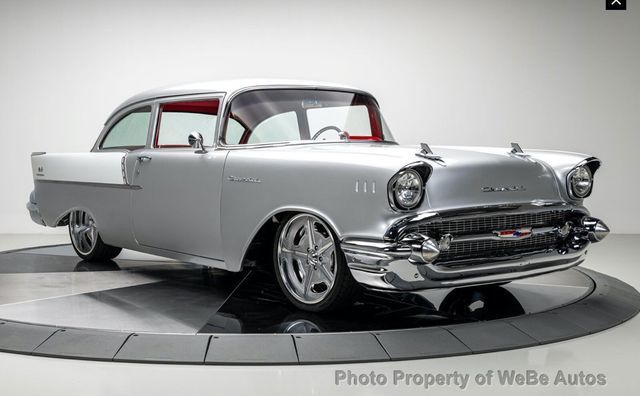
1957 Chevrolet 210
 Dealer
United States
Dealer
United States
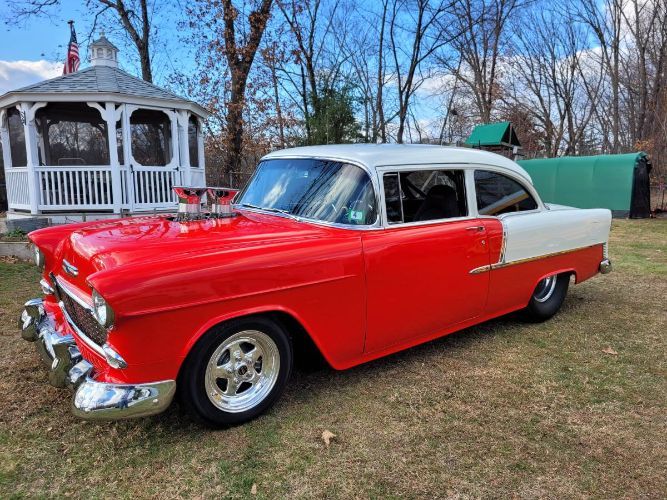
1955 Chevrolet 210
Pricing Guide
1955 Chevrolet 210 in driver condition trades at $22,000–$30,000; show quality at $45,000–$60,000. The 1956 is consistently underpriced relative to equal-condition '55 and '57: drivers at $18,000–$26,000, show at $38,000–$55,000. The 1957 210 commands the highest prices: drivers at $28,000–$40,000, show quality at $55,000–$80,000, with fuel-injected cars reaching $90,000–$130,000+ when genuine and documented. Convertibles add 30–50% across all years and trim levels. Six-cylinder cars (1953–1954) trade at a significant discount: drivers at $10,000–$16,000, show quality at $22,000–$32,000. The Bel Air premium over the 210 runs 20–35% for equivalent cars — a real differential that represents genuine opportunity for value-focused buyers.Fun Facts
The 1955 Chevrolet 265 Small Block V8 weighed only 531 pounds — lighter than the inline-six it replaced — and produced more power per cubic inch than any comparable American engine of its era. The design was so successful that an evolved version of the same basic architecture is still produced today in the form of the GM LS and LT family. The 1957 Chevrolet's "Ramjet" fuel injection system — which allowed the 283 V8 to produce one horsepower per cubic inch — was the first American production car to achieve that milestone, beating Corvette to the marketing claim. The 210 name came from Chevrolet's internal designator for the series, not from any specific feature — it simply placed it between the 150 and the Bel Air in the lineup.Frequently Asked Questions
Ready to find your 210?
Browse 6+ active Chevrolet 210 listings on Classic Cars Arena.
View Listings →