
1972 Chevrolet Corvette
$44,997
Vehicle Details
Chevrolet
Corvette
1972
89,025 miles
1237K28506918
Coupe
Automatic
350ci 200hp V8
Description
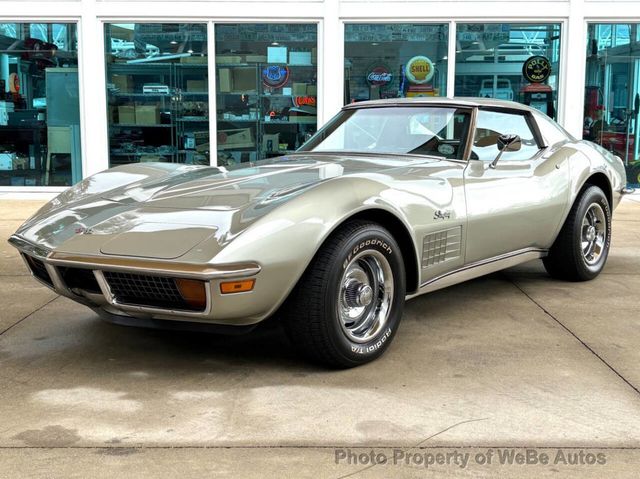
1972 Chevrolet Corvette Stingray — Matching Numbers 350 V8, Pewter Silver, T-Tops Why This Car Is Special The 1972 Chevrolet Corvette Stingray occupies a specific and well-understood place in C3 history. It was the last model year before federally mandated bumper standards began to reshape the car's appearance, and the last year Chevrolet used the traditional gross horsepower rating system before switching to the lower net figures in 1973. That context matters to collectors, because the 1972 Corvette is widely regarded as one of the cleaner, less-compromised examples of the C3 generation.
Chevrolet built 20,496 Corvettes for the 1972 model year, split between coupes and convertibles. This is a coupe, and it carries the original 350 cubic inch small block V8 rated at 200 horsepower — a number that reflects the new SAE net rating standard Chevrolet began using that year, not a reduction in actual output. The engine is numbers-matching, meaning the suffix code on the block corresponds to the correct 1972 Corvette application.
For buyers who care about authenticity and long-term value, that is a significant detail. The exterior is Pewter Silver — a color that reads differently in different light, moving from a warm gray to something closer to a metallic taupe depending on the angle. It pairs well with the blue interior and gives this particular car a subtle, understated presence compared to the brighter colors the Corvette was also available in that year.
The VIN on this car decodes to confirm it was built at the St. Louis assembly plant, which was the only facility producing Corvettes at the time. The 'K' in the engine position of the VIN confirms the 350/200hp LT-1-adjacent base small block application with automatic transmission, consistent with the TH400 documented on this car.
Features List - Matching numbers 350ci 200hp V8 - Turbo-Hydramatic TH400 3-speed automatic transmission - Removable T-tops - Four-wheel disc brakes - Power steering - Power brakes - Air conditioning - Dual exhaust - Factory gauges (fuel, water temp, oil pressure, battery, clock) - 4-barrel carburetor - AM/FM radio - Bucket seats - Center console - Rally wheels - BFGoodrich Radial T/A tires - Clean undercarriage Mechanical The 350 cubic inch V8 under this hood is the car's original engine, and it is wearing its correct Corvette-spec red valve covers and chrome air cleaner lid. The 4-barrel carburetor feeds through a single round chrome air cleaner — a period-correct presentation that judges and detail-oriented buyers will recognize immediately. The engine bay retains factory-correct components including the original emissions sticker and the Delcotron alternator typical of 1972 production.
The TH400 Turbo-Hydramatic 3-speed automatic was a well-regarded transmission in its day and remains a durable, proven unit. It was a popular choice among buyers who wanted the Corvette experience without the effort of a manual — and it was not a decontented option. The TH400 was used across GM's performance lineup and is known for handling power reliably.
The console shifter operates through a gate, and the indicator panel is visible and intact in the photos. Four-wheel disc brakes were standard on every 1972 Corvette, one of the features that set the car apart from virtually every other American production vehicle of the era. Power-assisted braking and power steering were both optioned on this car, making it a comfortable driver rather than a track-day weapon.
The undercarriage photographs show a clean, well-preserved floor pan with no visible rust, solid exhaust routing, and suspension components that appear unmolested. The independent rear suspension — a Corvette hallmark since 1963 — is clearly visible and shows no signs of damage or major repair. BFGoodrich Radial T/A tires, a classic and appropriate choice for a car of this vintage, are fitted at all four corners.
Interior The blue vinyl interior on this 1972 Corvette Stingray is a correct color co
Classic Chevrolet Corvette Buyer's Guide
Chevrolet Corvette Market Overview
Based on 593 Chevrolet Corvette listings currently on ClassicCarsArena.com
Classic Chevrolet Corvette Buyer's Guide
The Chevrolet Corvette has been America's sports car for over seventy years, but the classic Corvette market splits into three distinct generations, each with its own buyer profile and its own pitfalls. The C1 (1953-1962), C2 mid-year (1963-1967), and C3 shark (1968-1982) cover three decades of evolution from solid-axle straight-six convertibles to small-block legends to LT-1-powered chrome-bumper cars. Knowing which Corvette is yours — and what it actually is versus what the seller claims — is the difference between a sound investment and an expensive lesson.
What to Check Before Buying
Common Issues
What to Look For
Price Guide
Did You Know?
Also Consider
Similar classic cars shoppers also browse:
How Does It Compare?
Head-to-head matchups for the Chevrolet Corvette:
1972 Chevrolet Corvette
Contact Seller
Listed by dealer
Nationwide consignment dealer
WeBe Autos lists vehicles from sellers across multiple states. The vehicle may not be at the dealer's address shown. Contact the dealer to confirm the vehicle's actual location before traveling.
Buying safely?
Read our scam-avoidance tips before paying →
Listing Actions
Browse by Era
1970s Classics for SaleAll 1972 Classics
Browse all 1972 Cars for SaleOriginal Factory Colors
Official paint codes for the Chevrolet Corvette (1972).
🎨 View Factory ColorsGet classic car alerts
Latest arrivals, newest deals, and discount coupons — straight to your inbox.
Selling your classic car?
Reach millions of classic car enthusiasts on the largest US classics marketplace.
Sell Your Car →Similar Listings
 Dealer
 United States
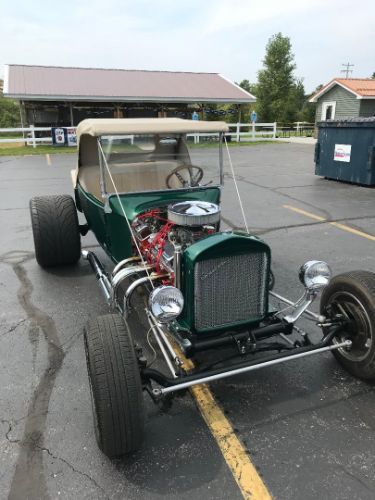
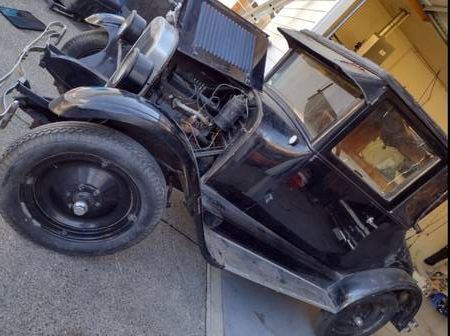
1918 Chevrolet 100
 Dealer
United States
Dealer
United States
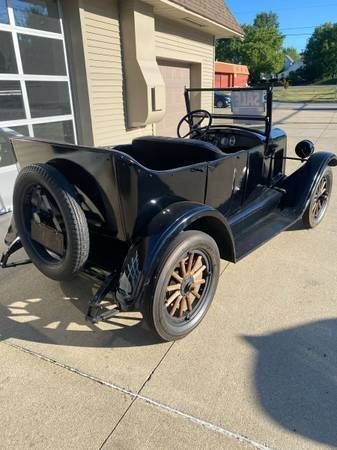
1923 Chevrolet Master
 Dealer
United States
Dealer
United States
1925 Chevrolet Superior K
 Dealer
United States
Dealer
United States
1926 Chevrolet 100
Contact Seller
Call this seller?
You're about to call WeBe Autos about the 1972 Chevrolet Corvette.
+1 (631) 339-0399
Report this Ad
Help us keep the marketplace clean. Our moderation team reviews every report within 24 hours.