
Ford Falcon Buyer's Guide
The Ford Falcon is the original pony car ancestor — a compact that outsold every competitor in 1960 and directly inspired the Mustang, making it one of the most historically significant American cars of the postwar era.

Mike Sullivan here. The Ford Falcon occupies a unique position in American automotive history: it's both the car that saved Ford's compact-car ambitions and the direct genetic ancestor of the Mustang. Without the Falcon's success, there would be no Mustang — the Falcon's platform, engine, and mechanicals were the foundation on which Lee Iacocca's team built the car that defined a generation. That historical significance alone would make the Falcon worth understanding. But the Falcon is also, on its own merits, a genuinely good small car.
The Falcon ran from 1960 through 1970, covering several design generations and a performance evolution that produced some legitimately quick cars. The Sprint variant with a V8 is a driver that surprises people, and the early 1960 Falcon in base form is a piece of American industrial history that you can buy for a song.
The 1960 Falcon: A Market Phenomenon
Ford introduced the Falcon for 1960 to compete with the Rambler American and the Volkswagen Beetle — the growing market for economical, practical transportation that the Big Three had largely ignored. The Falcon was exactly what the market wanted: simple, light (2,300 lbs), economical, and priced well below the standard Ford. It outsold every competitor in its first year and established Ford as a serious player in the compact segment.
The 1960–1963 Falcons are clean, simple cars with an honest character that later models sacrificed for the sake of sporty pretensions. The 144ci and 170ci inline-six engines are economical and reliable, the drum brakes and recirculating-ball steering are basic but functional, and the overall package is about as close to a pure transportation appliance as American industry has produced.
The Futura and the Beginning of Sporty
Ford introduced the Futura trim level in 1961, adding bucket seats and a center console to the compact platform. This was a preview of the Mustang's approach — take a practical compact and add sporty visual cues to broaden the appeal. The Futura was successful enough to convince Ford's product planners that the sporty compact was a viable market segment. The Mustang followed in 1964.
The 1963½ Sprint option brought a genuine V8 to the Falcon for the first time — a 260ci small-block V8 that transformed the car's performance character. A Sprint V8 convertible from 1963–1965 is a legitimate collectible: it has the Mustang's DNA without the Mustang's prices, and it predates the pony car by a year.
The Performance Years (1963–1966)
The second-generation Falcon (1964–1965) shared styling with the early Mustang, which creates an interesting dynamic for collectors: these cars look like Mustangs to the casual eye but were built on the compact Falcon platform rather than the intermediate Mustang chassis. The available 289ci V8 option — the same engine that powered early Mustang GTs — made the 1964–1965 Falcon Sprint a genuine performance compact.
The 1966 Falcon received a reskin that made it larger and more conservative, losing some of the clean compact character of the earlier cars. This generation is less sought after by collectors but represents good value for buyers who want a practical driver without paying Mustang prices.
The Ranchero Connection
The Falcon-based Ranchero car-pickup hybrid (1960–1966) deserves mention: it's the compact Ranchero that collectors love, and it uses the same platform and mechanics as the Falcon sedan. A Falcon buyer who understands the platform can extend their research to the Ranchero without any additional mechanical knowledge, and the Ranchero's car-truck hybrid nature gives it a unique appeal.
Browse Ford Falcon listings
 Dealer
 United States
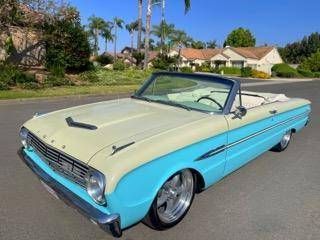
1963 Ford Falcon
 Dealer
United States
Dealer
United States
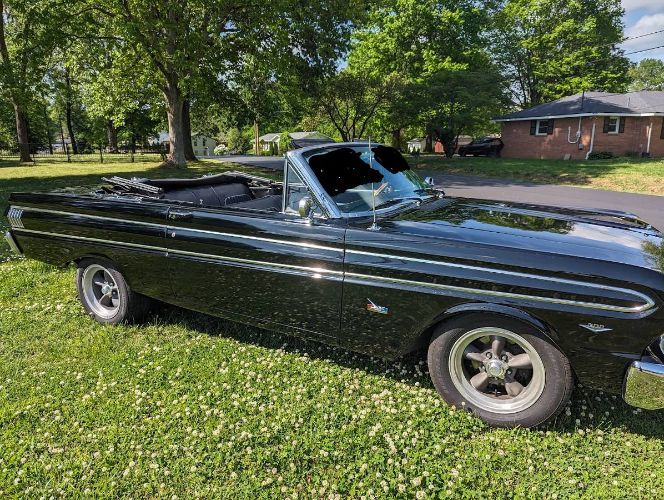
1964 Ford Falcon
What to Look For
The Falcon has predictable rust in the rear wheel arches, lower quarter panels, and floor pans — these cars are structurally not as rust-resistant as the larger Ford products of the era. Check the cowl area for water intrusion damage. Verify V8-equipped cars have the correct engine code if claiming Sprint specification — the 289ci V8 was a factory option, not a field-installed unit. On convertibles, inspect the top mechanism and the floor in the area around the top well for water damage. Test the inline-six for smooth starting and idle — the 170ci is more robust than the 144ci in these applications.Pre-Purchase Checklist
-
Rear Wheel Arch Rust
Probe rear wheel arch areas — very common rust location on Falcons from any region. -
Lower Quarter Panels
Check lower quarters front and rear for rust perforation. -
Floor Pan Condition
Inspect floor pans from underneath — perforation is common on older examples. -
Cowl Area
Check under the windshield base for water intrusion rust. -
Sprint V8 Verification
On claimed Sprint models, verify V8 engine code and original drivetrain via the door sticker. -
Convertible Floor (if applicable)
On convertibles, check the floor in the top-well area for water damage and rust. -
Front Suspension
Check idler arm and tie rod ends for wear — grab each front wheel and check for play. -
Six-Cylinder Idle
Test cold start and warm idle — rough idle often indicates distributor wear or carburetor issues.
Common Issues
Rear wheel arch rust — very common on unrestored examples from any climate. Lower quarter panel rust and floor pan perforation. Cowl area water intrusion causing rust under the windshield. Convertible top mechanism deterioration. 144ci inline-six timing issues from worn distributor. Front suspension wear (idler arm and tie rod ends) on high-mileage examples.More Falcon for sale
 Dealer
United States
Dealer
United States
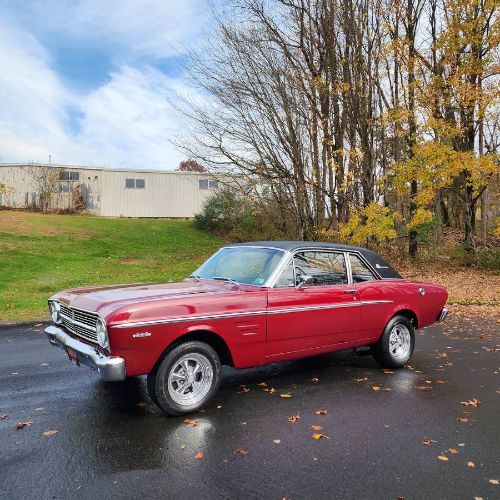
1967 Ford Falcon
 Dealer
United States
Dealer
United States
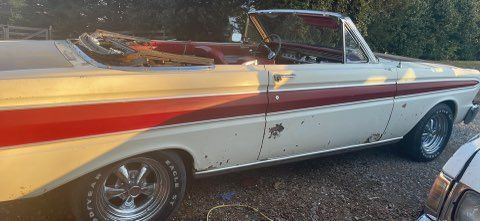
1964 Ford Falcon
Pricing Guide
1960–1963 Falcon sedan (six-cylinder): $5,000–$12,000. 1963–1965 Falcon Sprint V8 hardtop: $12,000–$25,000. 1963–1965 Sprint V8 convertible: $20,000–$40,000. 1964–1965 Falcon with 289ci: $14,000–$28,000. 1966–1970 Falcon: $6,000–$15,000. Ranchero variants typically command a 20–35% premium over equivalent sedan examples.Fun Facts
The Ford Falcon outsold every compact car in America in 1960, selling over 400,000 units in its first year — a record for a new model introduction at that time. The first-generation Falcon platform was so successful that Lee Iacocca used it as the basis for the Mustang concept. The Falcon was sold in Australia where it became a completely separate and more powerful car line — Australian Falcons are unrelated to American Falcons beyond the name.Frequently Asked Questions
Ready to find your Falcon?
Browse 6+ active Ford Falcon listings on Classic Cars Arena.
View Listings →