
GMC C/K Series Buyer's Guide
The GMC C/K Series covers every payload class of the professional-grade truck lineup — from the half-ton C15 through the one-ton C35 — giving buyers a complete picture of the most capable and best-supported classic truck platform in American history.

Robert Halloran here. When most people think about the classic GMC C/K, they think about the half-ton C10/C15 — the truck that's become the darling of the restomod scene. That's a fine truck. But the C/K Series extends well beyond the half-ton, and some of the most interesting — and undervalued — examples wear the C25 and C35 designations. Three-quarter-ton and one-ton GMC trucks were the backbone of small business America for thirty years, and they deserve a proper buyer's guide of their own.
The C/K platform ran from 1960 through the end of the classic era in 1991 (the OBS generation continued to 1998, but the pre-1991 trucks are the collector targets). In that span, GMC built a complete range of work trucks that shared the same basic architecture across every payload class while offering genuinely different capabilities. Understanding the full family makes you a smarter buyer at any price point.
The C/K Naming System Explained
The C/K designation is more logical than it first appears. "C" means conventional two-wheel drive; "K" means four-wheel drive. The number suffix indicates payload class: 10/15 = half-ton, 20/25 = three-quarter-ton, 30/35 = one-ton. The transition from the X0 to X5 suffix happened in 1988 when GMC updated its naming conventions. So a C10 (1960–1987) became a C1500 (1988+); a K25 became a K2500. Same truck, different badge era.
This matters because buyers searching for three-quarter-ton or one-ton examples often encounter inconsistent naming across ads. A 1972 C25 Camper Special and a 1985 K2500 High Sierra are both three-quarter-ton GMC C/K trucks; the naming difference reflects the era, not a different vehicle type.
Why Buy a Heavy-Duty C/K?
The case for the C25/C35 over the C15 is simple: capability and value. Heavy-duty C/K trucks were built with larger frame rails, heavier axles (Dana 60 or GM corporate 14-bolt in the rear), and standard rear springs that can handle real loads. They were ordered by contractors, farmers, and fleet operators who needed trucks that worked every day without drama, and they were maintained accordingly. Many high-mileage C25 and C35 trucks represent better mechanical condition than low-mileage C15 trucks that sat in a garage and never exercised their fluids.
Pricing is the other advantage. The collector premium for heavy-duty GMC trucks is a fraction of the equivalent half-ton premium. A clean 1970 GMC C25 with a big-block can be found for $15,000–$25,000 — the same money that buys a mediocre C15. The heavy-duty trucks deliver more capability per dollar at every price point.
Generation by Generation
The 1960–1966 first generation established the C/K template with clean styling and available inline-six or V8 power. The cab design was genuinely modern for the period, and the 292ci inline-six offered in the heavier-duty versions is a remarkable engine — smooth, fuel-efficient, and nearly indestructible. This is an overlooked engine that the large-displacement V8 crowd dismisses but shouldn't.
The 1967–1972 second generation is the most collectible in the heavy-duty category. The improved cab, better visibility, and available big-block engines (396 Turbo-Jet in 3/4-ton and 1-ton applications) make these genuinely capable and genuinely beautiful trucks. The C25 and C35 of this era with the 396 or 402ci engine are outstanding machines that remain underpriced relative to their appeal.
The 1973–1987 Squarebody generation is where the heavy-duty variants earn their reputation. The 3/4-ton and 1-ton Squarebody trucks are workhorses that dealers serviced more carefully because the buyers who specified them were commercial customers with exacting standards. Clean Squarebody C25 and C35 trucks in the 1975–1987 range represent some of the best per-dollar value in the classic truck market today.
Engine Options Worth Knowing
The 292ci inline-six deserves special mention — it was standard equipment in three-quarter-ton applications through the early 1970s and is one of the most underrated American truck engines. Smooth, torquey at low rpm, and capable of 300,000+ miles with proper maintenance. The 396/402ci big-block V8 was the heavy-duty performance option and delivers effortless torque that towing applications reward. The optional 6.2L diesel (1982–1991) is a niche item with a devoted following — finding a well-maintained diesel C25 or C35 is increasingly difficult and increasingly valuable.
Browse GMC C/K Series listings
 Dealer
 United States
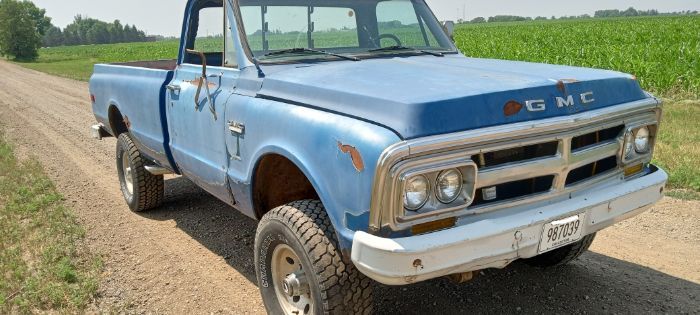
1968 GMC C/K Series
 Dealer
United States
Dealer
United States
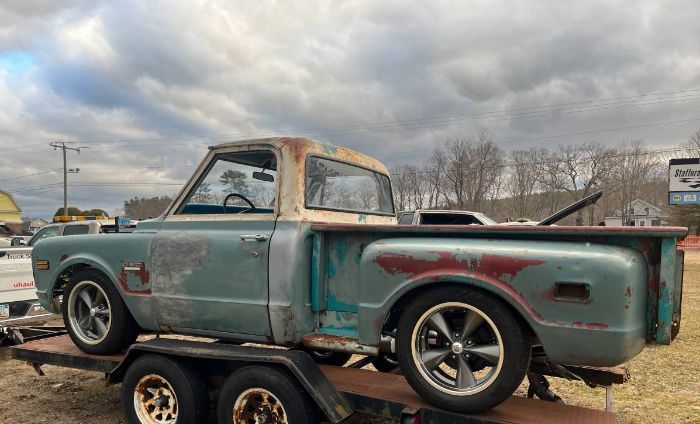
1968 GMC C/K Series
What to Look For
Inspect the frame rails on heavy-duty trucks carefully — one-ton trucks were used for actual work and accumulated real stress. Check the rear axle for seal leaks and verify the axle rating (a 14-bolt GM full-float is correct for one-ton; Dana 44 rear means a lighter-duty application). On 4WD trucks, test front axle engagement and inspect the front Dana 60 for worn U-joints. Verify the heavy-duty spring rating (overloaded springs sag and cause uneven tire wear). Check the cab for the same rust patterns as all C/K trucks: cab corners, floor pans, rear cab mounts on Squarebody trucks.Pre-Purchase Checklist
-
Frame Rail Inspection
Inspect full length of both frame rails for cracks — one-ton trucks bear real stress and crack at predictable weld points. -
Rear Axle Type
Identify rear axle (14-bolt GM full-float = 1-ton; Dana 60 = heavy 3/4-ton) — verify it matches claimed payload rating. -
Rear Spring Sag
Check rear spring pack for sag — overloaded springs deform permanently and are expensive to replace. -
Front Dana 60 (4WD)
Inspect front axle U-joints and check for seal leaks — heavy 4WD use wears front axle components faster. -
Cab Corner Rust
Probe cab corners — universal on northern-state trucks regardless of payload class. -
Floor Pan & Rear Cab Mounts
Check floors and rear cab mounts on Squarebody trucks (1973+). -
6.2L Diesel (if equipped)
Test glow plugs and check for injection pump leaks — cold starting should work within 30 seconds at 50°F. -
Powertrain Codes
Decode firewall tag for engine and payload class — verify it matches claimed specification.
Common Issues
Frame stress cracks on one-ton trucks used for heavy towing — inspect the full length of both rails. Overloaded rear spring packs that sag permanently. Rear axle seal leaks on the 14-bolt GM full-float rear axle. Front axle wear on 4WD trucks from heavy use. Cab corner and floor pan rust identical to half-ton trucks. 6.2L diesel injection pump failures and hard starting from glow plug system issues.More C/K Series for sale
 Dealer
United States
Dealer
United States
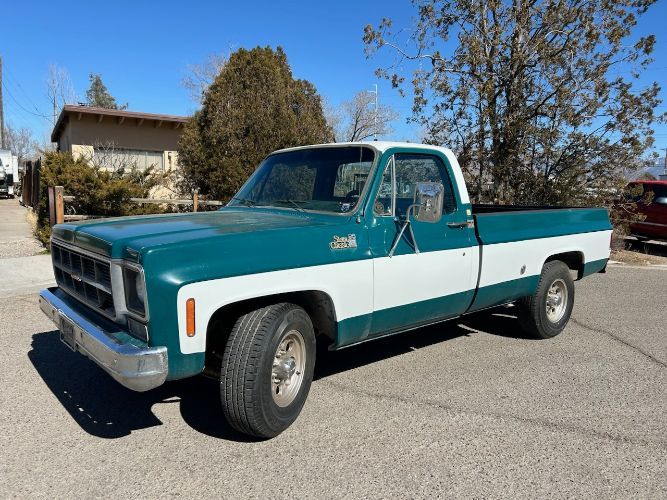
1978 GMC C/K Series
 Dealer
United States
Dealer
United States
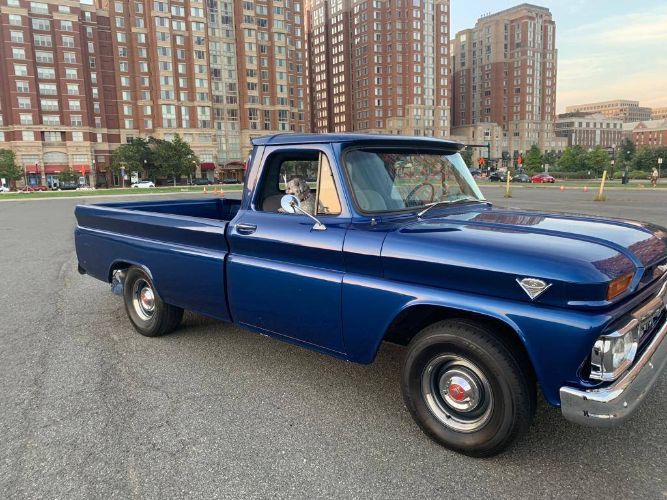
1965 GMC C/K Series
Pricing Guide
1960–1966 C/K Series three-quarter-ton: $10,000–$22,000. 1967–1972 C25/K25 with big-block: $18,000–$38,000. 1973–1987 Squarebody C25/C35: $8,000–$20,000. One-ton dually (DRW) variants: add 15–25% premium. 4WD adds $3,000–$7,000. 6.2L diesel models: add $2,000–$5,000 novelty premium. Heavy-duty trucks typically sell at 20–35% discount to equivalent half-ton C/K trucks.Fun Facts
The GM 14-bolt full-float rear axle in one-ton C/K trucks is rated at 10,500 lbs gross axle weight — the same axle that military 2.5-ton trucks used in modified form. The 292ci inline-six was used continuously in GM trucks from 1963 through 1990 — a 27-year production run for an essentially unchanged design. Some fleet-operated one-ton Squarebody trucks have documented mileage exceeding 500,000 miles on original engines.Frequently Asked Questions
Ready to find your C/K Series?
Browse 6+ active GMC C/K Series listings on Classic Cars Arena.
View Listings →