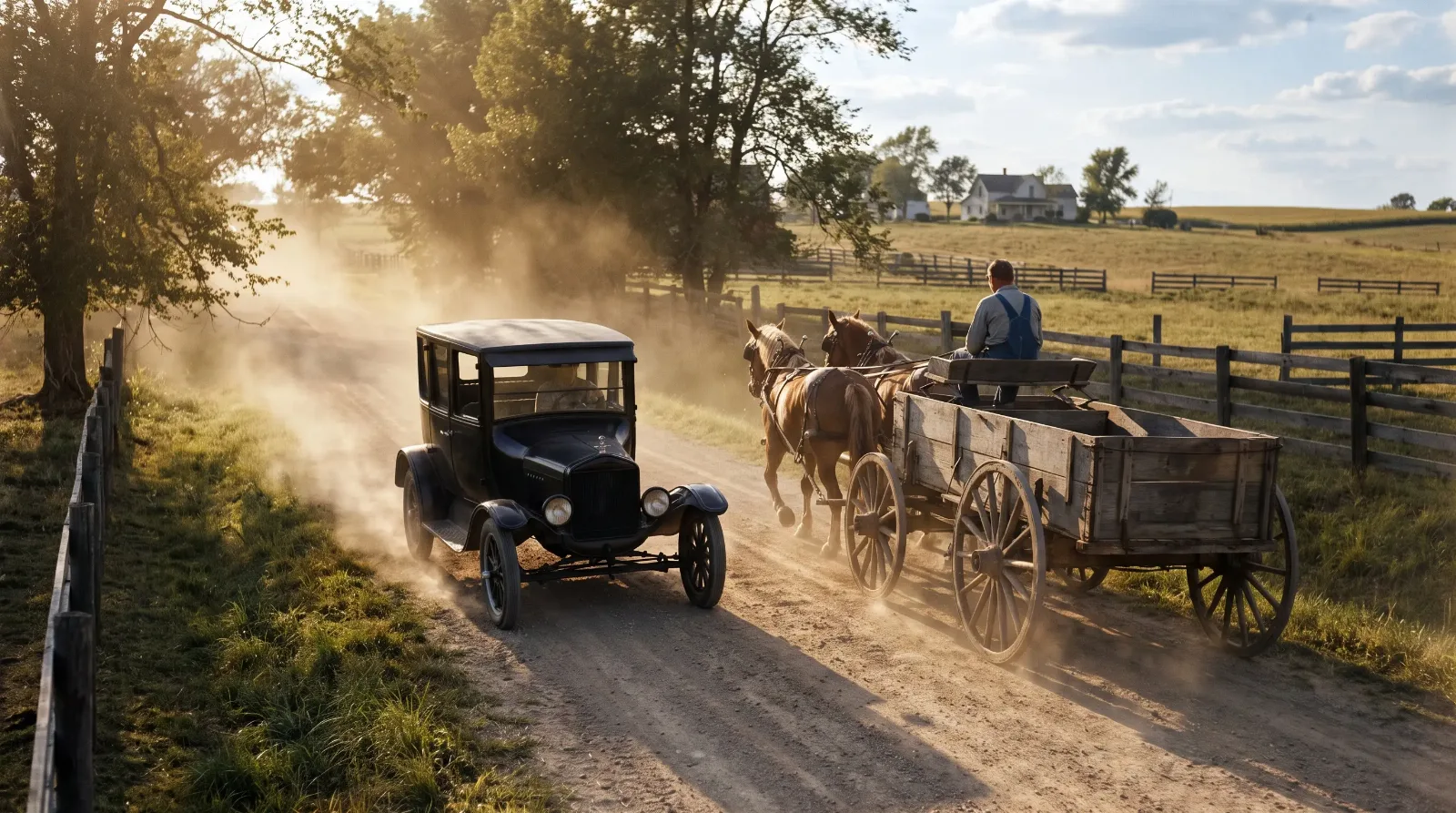
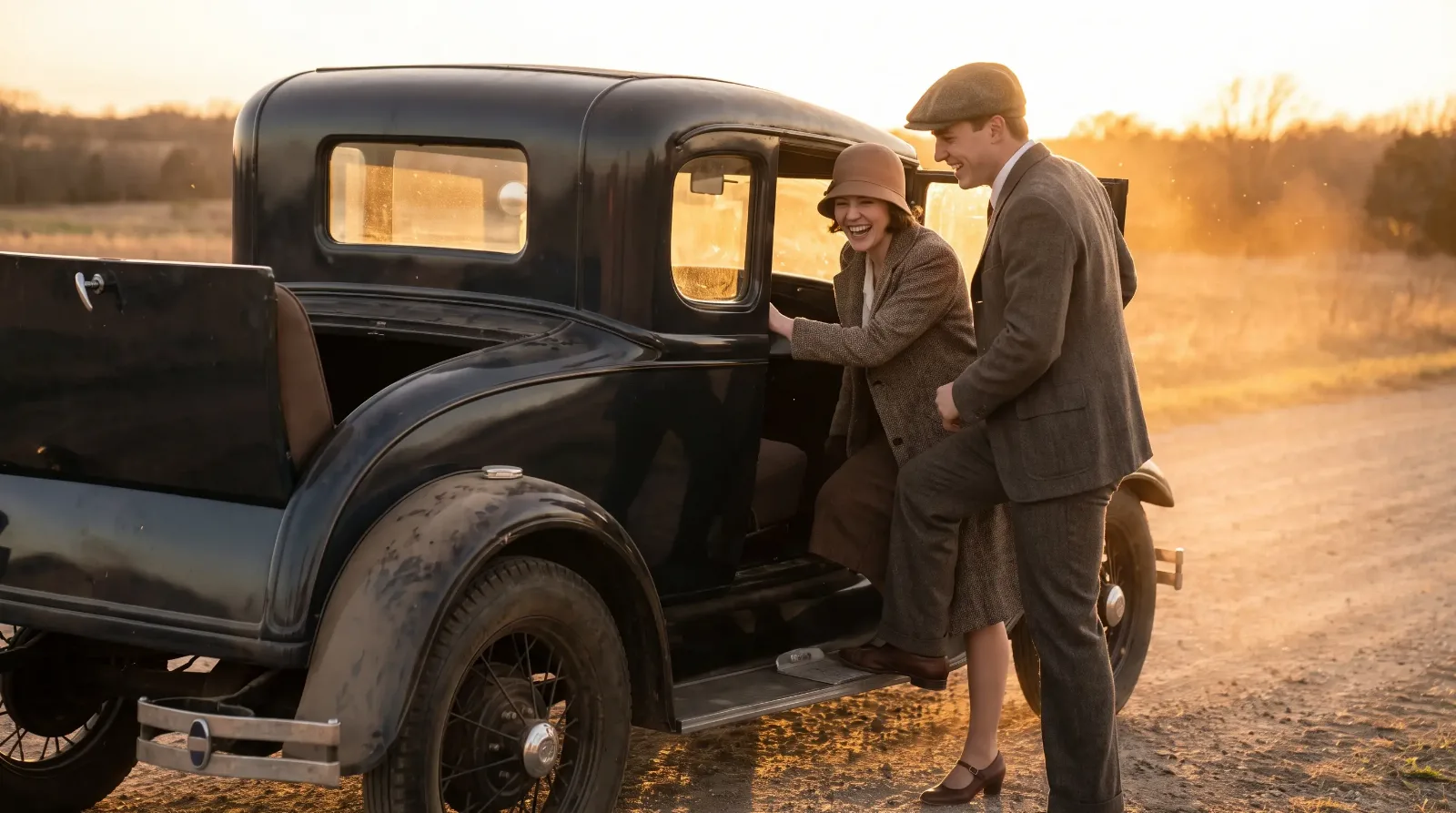
There's a photograph that turns up in a lot of family albums from the late 1920s: two young people perched in the open seat at the back of a coupe, laughing at whoever's holding the camera, wind already pulling at a hat brim. That seat, tucked where the trunk would later go, was called a rumble seat, and for a few years it was one of the most recognizable features on an American car, less a practical accommodation than a small, deliberate invitation to adventure.
A seat where the trunk used to be
The rumble seat occupied the space behind the main cabin on coupes and roadsters, a hinged lid that lifted to reveal a bench seat with no roof, no doors, and no protection from weather beyond whatever the car's speed didn't blow away. It folded flush when not in use, disguising itself as an ordinary deck lid, then opened to add seating for two more passengers who rode fully exposed to the open air. The name itself is thought to come from the sensation, a seat that rumbled and shook more directly than the insulated cabin up front, close enough to the road and the engine to feel every bit of both.
It wasn't a comfortable place to sit, not by any measure that mattered to an engineer. There was no heat, minimal cushioning by later standards, and nothing to hold onto but the edges of the seat itself. And somehow that discomfort became most of the point.
The generation that made it fashionable
Young people in the 1920s took to the rumble seat the way later generations would take to a convertible top down on the highway. It offered something a closed cabin couldn't, a seat that put you fully in the weather, in the noise, in the moment, with your date's shoulder against yours and nothing between you and the passing world but speed. Popular songs and magazine cartoons of the era referenced rumble seats as shorthand for courtship, for a certain kind of carefree evening that belonged specifically to young couples with access to a car and somewhere to be. It's hard to think of another piece of automotive hardware that became so thoroughly a symbol of a generation's romantic imagination rather than its engineering needs.
That cultural weight is worth sitting with for a moment, because it says something about how quickly the automobile had moved from novelty to social fixture in just twenty years. A rumble seat wasn't about getting somewhere. It was about the ride itself being the point.
"You can read every spec sheet from the period and still miss what a rumble seat meant to the people who rode in one. It wasn't transportation. It was the closest thing to flying that most young couples in 1927 were ever going to experience together."
— Nora Beckett
Where it appeared, and where it didn't
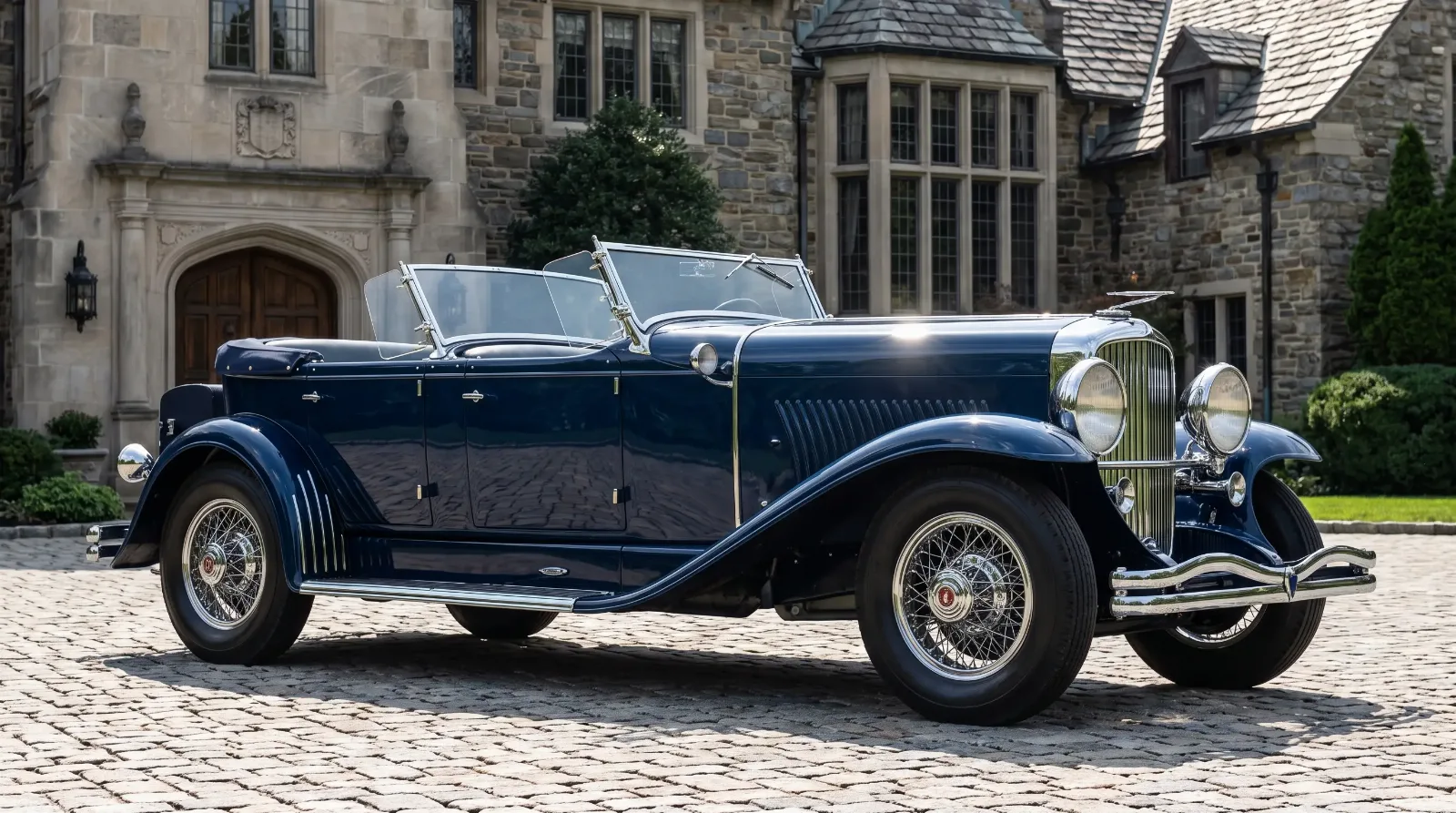
Rumble seats showed up most often on two-passenger coupes and roadsters, cars that would otherwise have limited seating capacity, making the fold-out bench a practical way to occasionally carry more people without committing to a full four-door body. Some larger touring cars and dual-cowl phaetons carried a version of the idea too, tucked behind a rear cowl on shorter-wheelbase examples, extending the same open-air philosophy into a different body style entirely. Manufacturers across the price spectrum offered them, from mainstream coupes up through the most expensive custom-bodied cars of the decade, which is part of why the feature crossed so thoroughly into general cultural memory rather than staying a luxury quirk.
By the 1930s, the rumble seat's popularity began to fade as closed bodies became the industry standard and buyer expectations shifted toward comfort and weather protection over open-air romance. A handful of manufacturers kept offering them into the following decade out of habit and nostalgia more than demand, but the moment had largely passed.
What survives, and why it still charms people
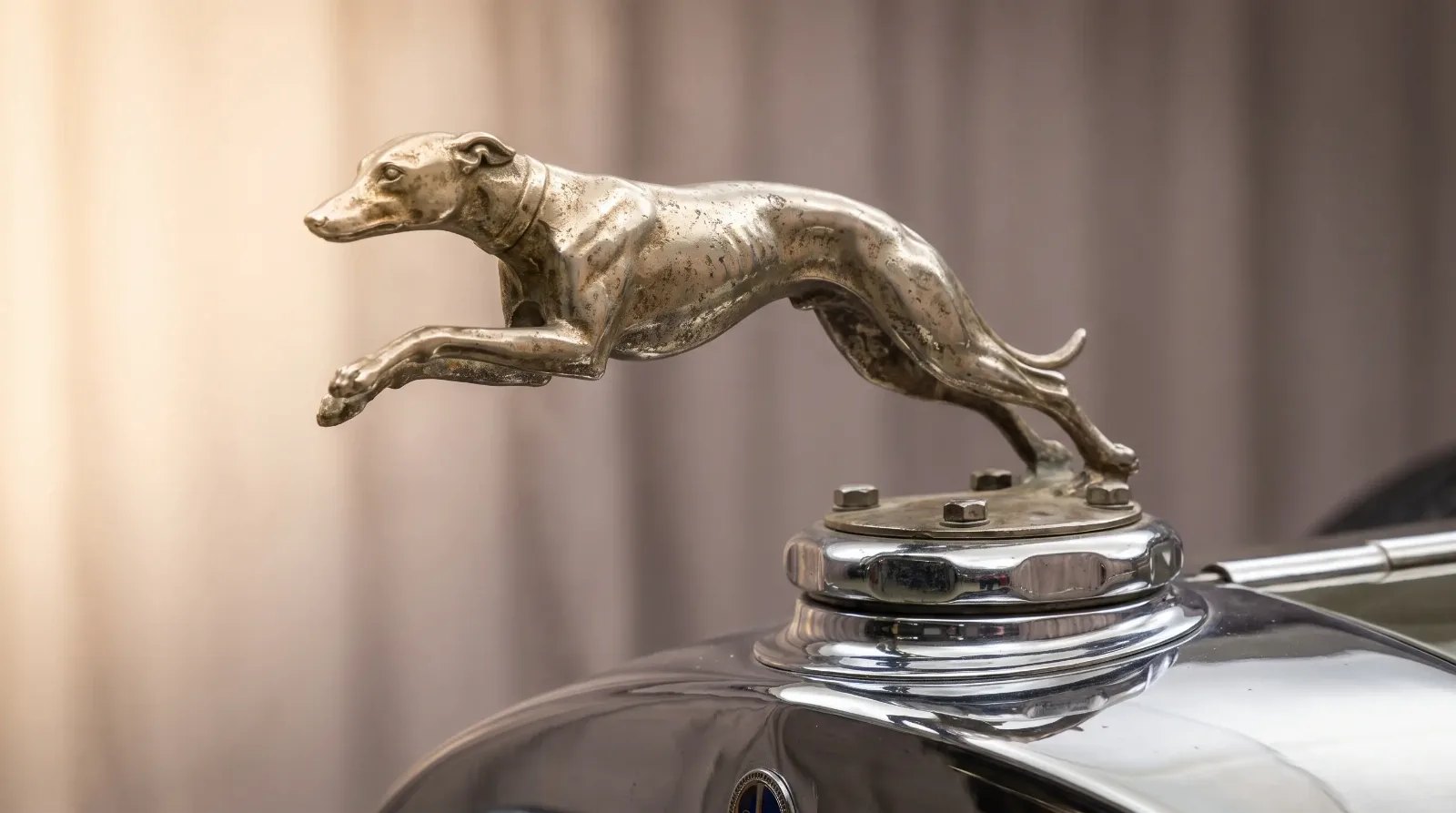
A period coupe with an intact, functioning rumble seat is a small mechanical time capsule, the hinges, latch mechanism, and folding upholstery all telling their own story about how the car was used and maintained across the decades. Collectors who find one worth preserving are usually preserving more than hardware. They're keeping hold of a specific, dated idea about what a car ride could feel like, before comfort and enclosure became the default expectation. The visual language surrounding these cars, the mascots and ornaments that finished off a hood the way a rumble seat finished off a rear deck, gets its own closer look in the next installment, since both details belong to the same era's instinct for turning a practical machine into something with personality.
The wider story of the decade that produced this whole sensibility, cars fast enough and stylish enough to carry that kind of romance, is covered in the 1920s rumble seats story, which places the rumble seat alongside the mechanical and cultural changes happening around it at the same time.
The practical objections nobody could quite argue away
Not everyone loved the rumble seat, and period complaints about it are honestly pretty funny to read now. Dust from unpaved roads collected directly on passengers with nothing to block it. Rain meant an immediate, undignified scramble back into the main cabin, assuming there was room. Winter use was essentially unthinkable outside the warmest parts of the country, and even summer evenings could turn uncomfortably cold at highway speed once the sun went down. Etiquette columns of the era occasionally weighed in on who should be expected to ride back there, a question that apparently caused real friction at family gatherings when there weren't enough seats up front to go around.
None of these objections slowed the trend down much. If anything, the mild inconvenience became part of the charm, a small price willingly paid by anyone young enough, or young at heart enough, to want the experience the seat offered. That's a very particular kind of design success, where the flaws become part of the appeal rather than a reason to abandon the idea.
How to spot a genuine period rumble seat today
Originality matters here just as much as it does with any other coachwork detail from this era. The hinge mechanism, latch hardware, and upholstery pattern on a genuine period rumble seat have a specific look and feel that reproduction parts, however well made, don't always replicate precisely. Collectors evaluating a coupe or roadster with a claimed original rumble seat should look closely at how the deck lid meets the body when closed, since decades of use and adjustment can leave telltale gaps or misalignment that a careful eye will catch. A rumble seat that opens and closes smoothly, with hardware that matches the rest of the car's original fittings, is a genuinely special survival worth real appreciation.