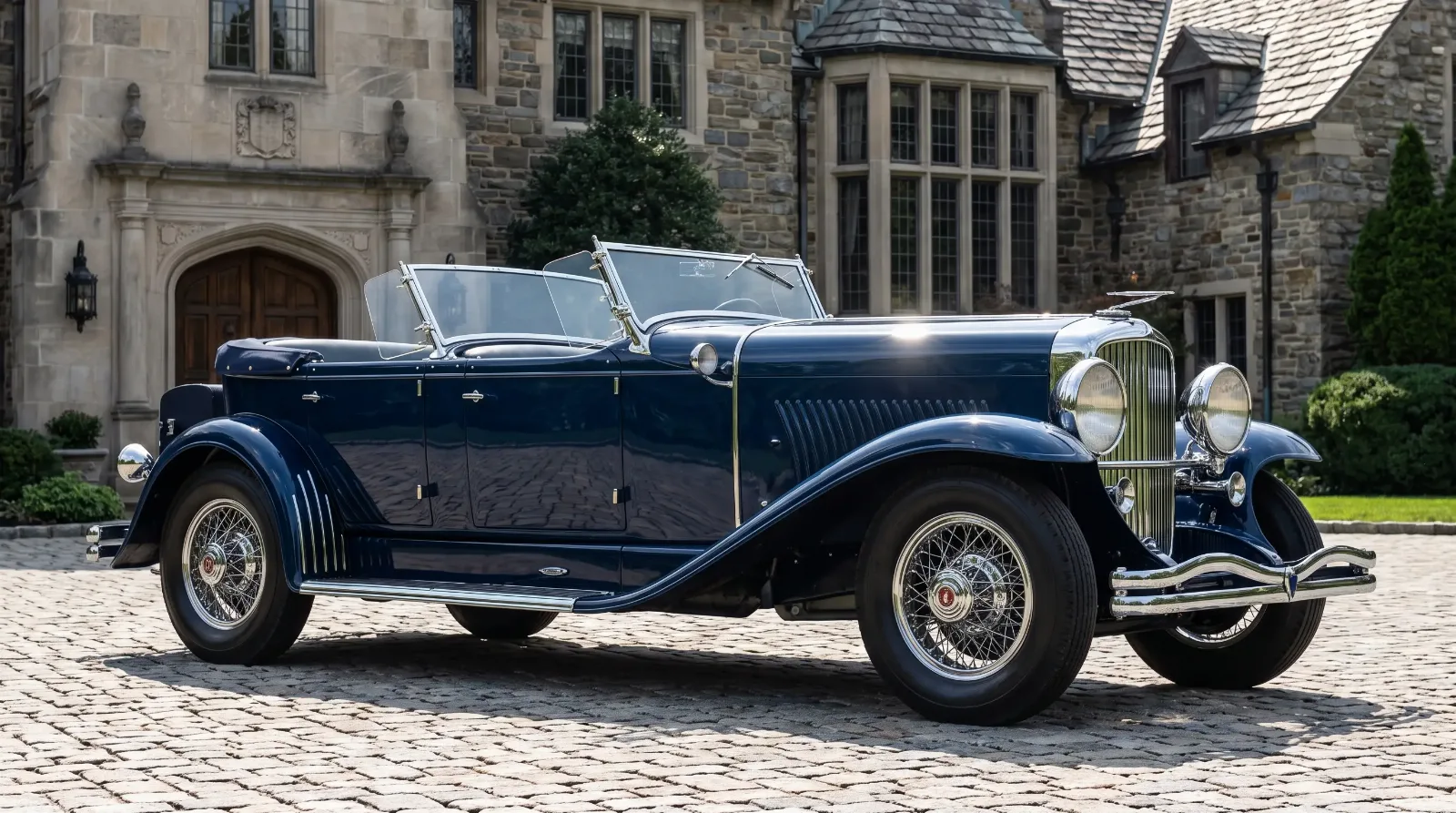
Of all the open body styles the 1920s produced, none announced status quite as directly as the dual-cowl phaeton. The basic phaeton, an open touring car with two or more rows of seats and no fixed roof, was already a common body style by the early part of the decade. What made the dual-cowl version different was a second windshield, a full cowl and glass panel rising up ahead of the rear seat, giving back-seat passengers their own wind protection independent of the front. It was a small mechanical addition with an outsized effect on how the car read to everyone who saw it pass.
What the second cowl actually did
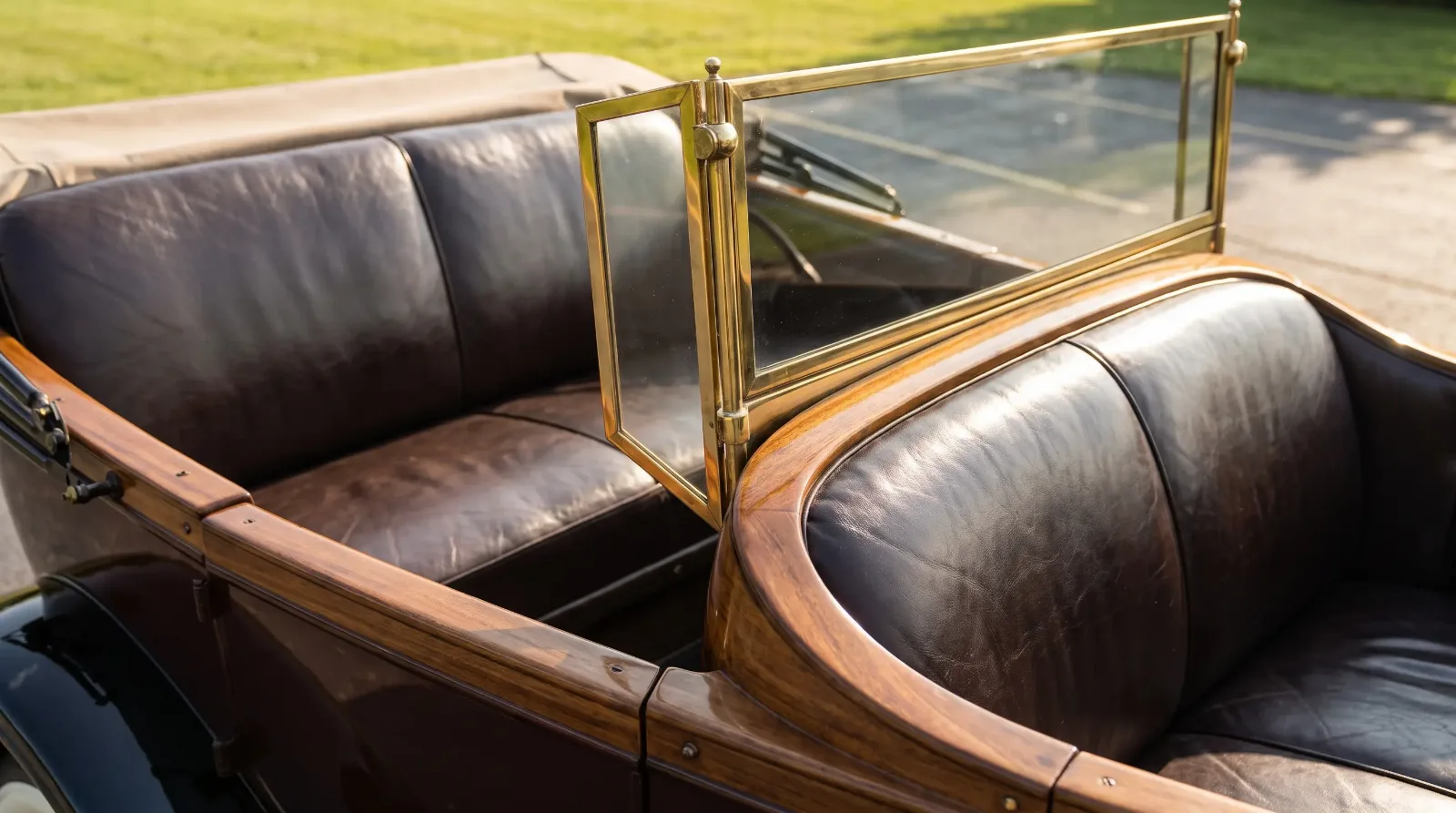
The functional case for a dual-cowl phaeton was straightforward. In a standard phaeton, rear passengers sat exposed to whatever wind and road grit came off the windshield-less front section, especially at the speeds these bigger straight-eight and V12 chassis were now capable of reaching. A second cowl, mounted just ahead of the rear seat, solved that with its own folding windshield, letting the people in back ride in relative comfort at speed without needing a fully enclosed body. Some versions took the idea further, with the rear cowl and windshield retractable so the whole car could run fully open when the weather cooperated.
The engineering trade-off was weight and complexity in the body structure itself, since a second cowl meant a second reinforced bulkhead running across the car, along with the linkage to fold or adjust the rear glass. That's part of why the style stayed concentrated on the more expensive chassis of the era rather than trickling down to mainstream production.
A body style built for being seen
Practicality only explains part of the appeal. A dual-cowl phaeton was, by its nature, a car built to be looked at from the side, its long hood, twin windshields, and open seating all reading as a single dramatic silhouette in a way an enclosed sedan never could. Owners who bought them, and coachbuilders who designed them, understood this. The style showed up disproportionately on the most expensive chassis of the era, Packard, Duesenberg, Lincoln, Cadillac, and the European makes selling into the American market, because it functioned as much as a statement of arrival as a mode of transportation.
That theatrical quality connects directly to the broader Art Deco design sensibility sweeping through coachwork in these same years, where a car's form was increasingly treated as composition rather than pure function. Anyone tracing that thread should look at the next story for how custom coachbuilders across this decade turned chassis into rolling architecture.
"A dual-cowl phaeton tells you exactly what its original owner wanted the world to see. Nobody bought one to be practical. They bought one because a closed sedan, however well made, could never make the same entrance."
— Sarah Whitfield
Originality and the coachbuilt question
Because so many surviving dual-cowl phaetons were custom-bodied, evaluating one for originality is a different exercise than evaluating a standard factory sedan. The chassis, engine, and running gear may carry factory documentation, but the body itself often has its own separate history, sometimes well recorded by the coachbuilder's own archives, sometimes reconstructed decades later from photographs when an original body was lost or damaged beyond repair. Buyers serious about this segment learn to ask pointed questions about which parts of the car are original to which era of its life, since a beautifully finished dual-cowl body built in the 1990s on a genuine 1920s chassis is a very different proposition from a car with its coachbuilt body intact since new.
Rumble seats appear on a meaningful number of these cars too, tucked behind the rear cowl on shorter-wheelbase examples, adding another layer of period charm and another detail worth verifying against the car's documented history. There's a closer look at that particular feature in keep reading, since the rumble seat and dual-cowl phaeton stories overlap more than most people realize.
Why they still command attention
At concours events today, a well-documented dual-cowl phaeton draws crowds in a way few other pre-war body styles manage, and that's not an accident of nostalgia. The style was designed from the outset to draw the eye, and eighty-plus years of survival have only reinforced the effect. For the fuller context of how this body style fits into the decade that produced it, our deep dive on 1920s dual cowl phaeton covers the wider mechanical and cultural developments that made cars like this possible in the first place.
What it took to keep one running
Owning a dual-cowl phaeton in period meant accepting real compromises most buyers of enclosed sedans didn't have to think about. There was no protection from rain beyond raising both sets of folding tops, an operation that took real effort and left the car looking considerably less elegant than its top-down silhouette. Interior materials had to hold up to direct sun and weather exposure in a way closed-car upholstery didn't, and owners who used their phaetons regularly rather than treating them as fair-weather show pieces often found themselves refinishing leather and replacing weather-worn trim more often than owners of comparable enclosed cars.
None of that discouraged the buyers who wanted one. If anything, the impracticality reinforced the exclusivity, since a dual-cowl phaeton was never meant to be anyone's only car or daily transportation. It was a second or third car in a wealthy household's stable, brought out for occasions where being seen mattered as much as getting anywhere.
The chassis underneath mattered as much as the body
A dual-cowl body's dramatic proportions only worked on a chassis long and powerful enough to carry them off, which is why the style concentrated so heavily on straight-eight and larger-displacement platforms. A short-wheelbase, four-cylinder chassis simply didn't have the visual or mechanical presence to support the style's ambitions. That relationship between mechanical foundation and coachbuilt ambition is a theme that runs through most of the decade's most memorable cars, where the engineering underneath had to earn the right to wear the body on top of it.