Before there was any regulation requiring a cap over the radiator neck, drivers just left it exposed, a plain filler cap doing its plain job. Somewhere in the years after the first World War, that cap started turning into something else entirely, a small sculpture standing guard at the very front of the car, visible to the driver over every mile of every trip. By the 1920s, the hood ornament, or radiator mascot as it was often called in period, had become one of the most personal details a car owner could choose.
From function to figure
Radiator caps needed a way to be gripped and turned without scalding a hand on a hot engine, and that practical requirement is what opened the door for decoration in the first place. Early caps were often just winged or finned shapes that doubled as a grip. It didn't take long before manufacturers and aftermarket suppliers realized that same small piece of hardware could carry a brand's whole identity, or a buyer's own personality, in miniature.
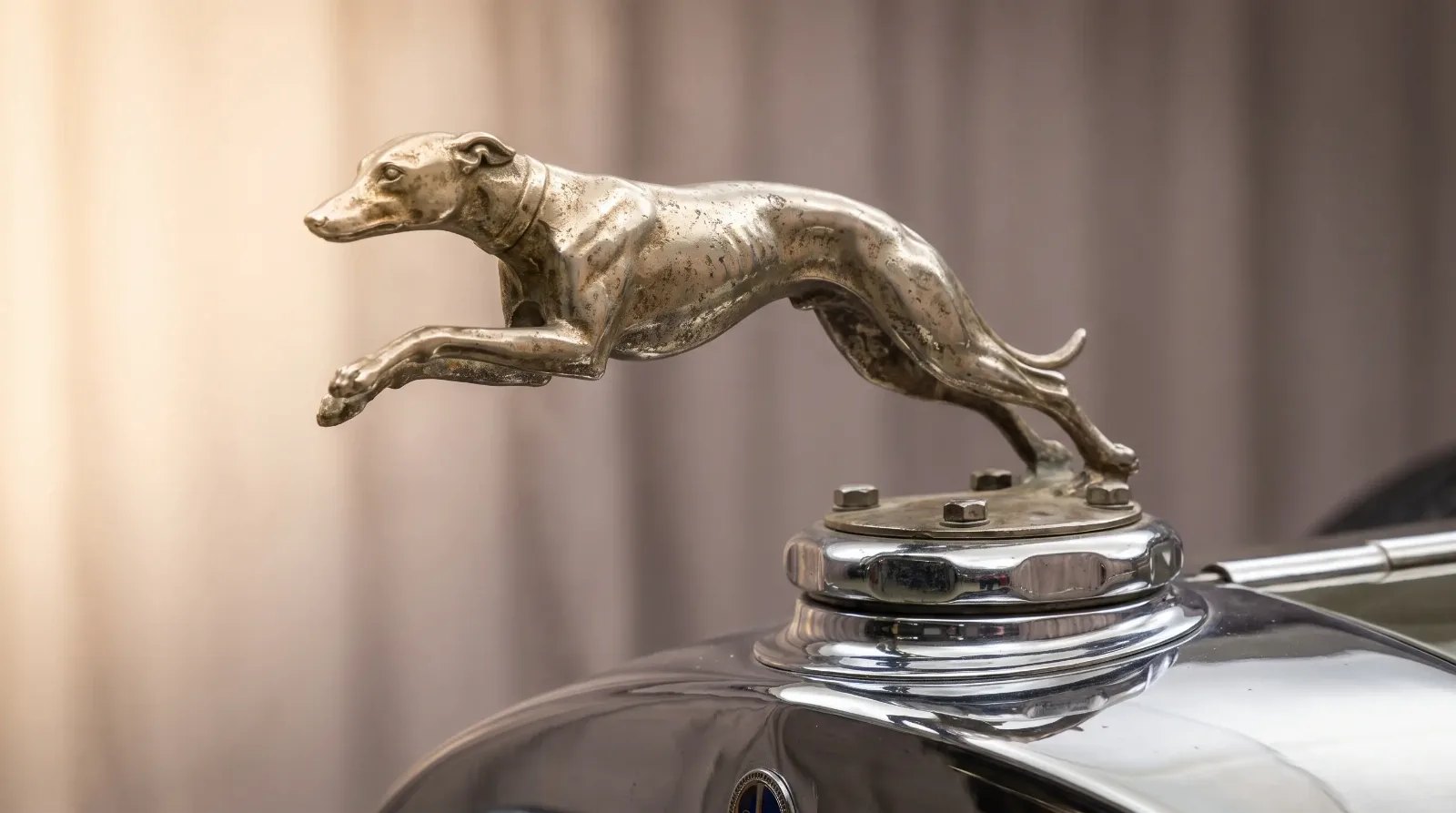
Rolls-Royce's Spirit of Ecstasy, sculpted by Charles Sykes and appearing on cars from 1911 onward, set an early standard for what a mascot could be, a fully realized figure rather than a simple decorative shape. American manufacturers followed with their own signature mascots through the 1920s, leaping greyhounds, winged goddesses, and other striding animal figures across different makes, each one meant to be recognized at a glance from a block away. Packard's own long-running pelican, later marketed as a cormorant, arrived a bit later, debuting on the senior cars of 1932.
A small object that carried real meaning
What strikes me most looking at surviving period photographs is how deliberately chosen these little figures seem to have been. A hood ornament sat at eye level for pedestrians, at hand's reach for the driver leaning over the radiator, close enough to touch every single time someone got in or out of the car. It wasn't hidden away like an engine detail only a mechanic would ever see. It was the one piece of the car's personality on constant, public display, and owners in period clearly understood that and treated the choice with real intention.
A young couple's roadster might carry something playful and modern. A family's touring sedan might carry something more traditional, a winged figure or a stylized animal that read as dignified rather than daring. The mascot became a small, quiet statement about who the car belonged to and what kind of life it was meant for, sitting right alongside every other detail that made the decade's cars feel personal rather than purely mechanical. There's more on the wider decade this all belongs to in the 1920s hood ornaments guide, which covers the mechanical and cultural developments happening alongside these small design choices.
"A hood ornament is such a small thing to survive a hundred years intact, and yet when you find one still bright and unbroken on an old car, it tells you someone loved that machine enough to protect the one part of it most likely to get knocked off in a careless moment."
— Nora Beckett
The Art Deco influence on mascot design
As the decade moved forward, the sculptural style of these small figures shifted along with the broader Art Deco sensibility reshaping car design generally, moving from softer, more naturalistic animal and figural forms toward sleeker, more stylized, streamlined shapes that echoed the geometric confidence showing up in radiator shells and fender lines elsewhere on the car. A greyhound mascot from early in the decade and one from the very end could look like they belonged to two different design eras entirely, even though barely ten years separated them.
That stylistic evolution makes mascots a surprisingly useful dating tool for anyone trying to place an undocumented car within a few years of its actual build date, provided the mascot is original to the car and hasn't been swapped from a later or earlier model over the decades of ownership that followed.
Preserving what's easy to lose
Original mascots are fragile in ways that surprise people who haven't handled one, thin cast metal, delicate wings or limbs, mounted at exactly the height most likely to get clipped in a minor parking mishap. A huge number of period cars lost their original mascots to exactly that kind of small accident over the decades, replaced later with a reproduction, a different period piece, or nothing at all. For collectors, a correctly matched original mascot, still showing its factory finish, is a detail worth genuine attention during any evaluation, since it's one of the easiest and most common originality losses on a car that's otherwise well preserved.
The broader story of how these small decorative choices sat alongside the decade's bigger stylistic shifts, closed sedans slowly overtaking open touring bodies as the default American car, gets its own look in the next story, which picks up right where the hood ornament's own story of changing tastes leaves off.
The materials that made them possible
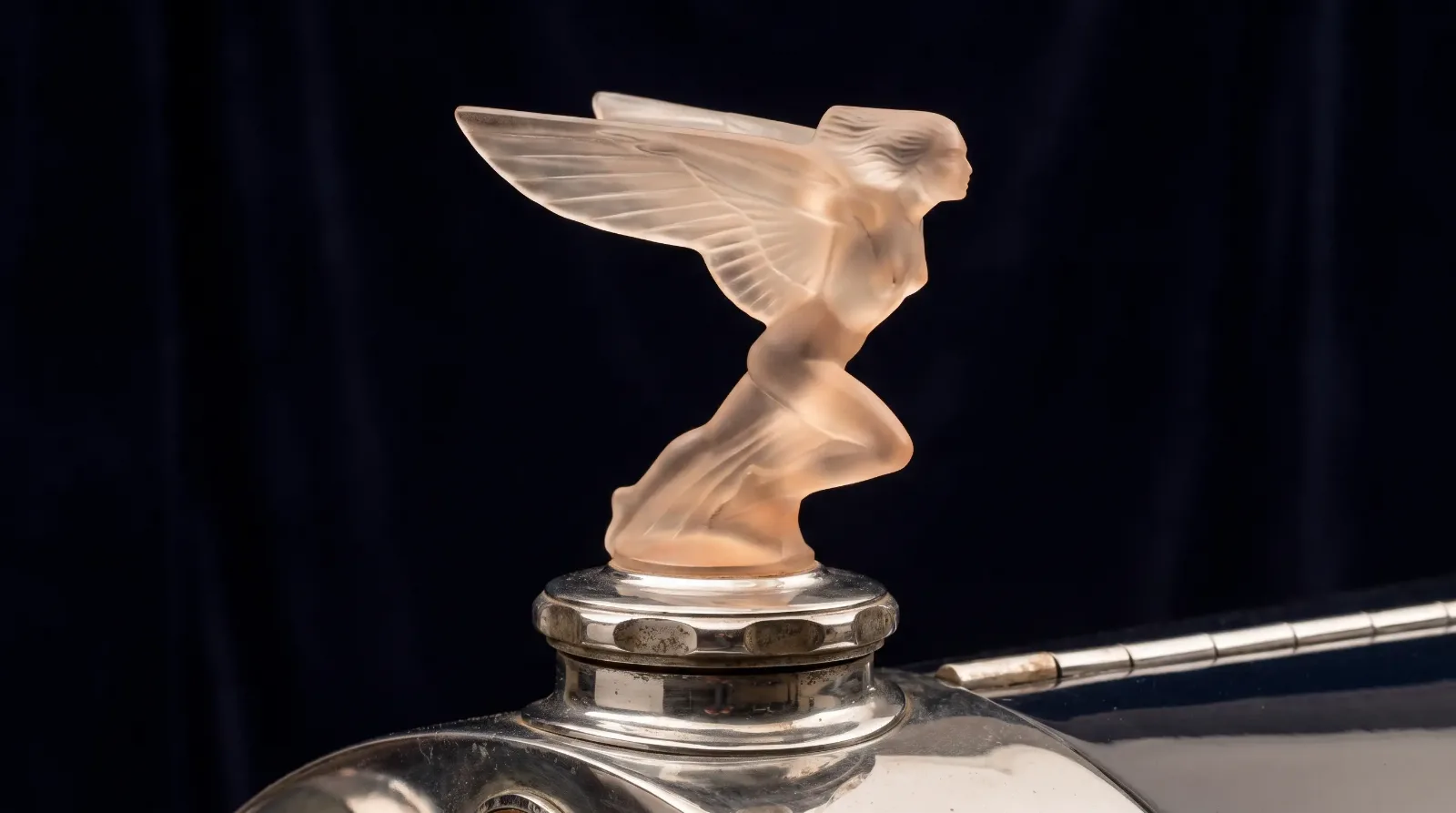
Most 1920s mascots were cast in nickel-plated bronze or a similar white-metal alloy, chosen for its ability to hold fine sculptural detail while standing up, at least reasonably well, to constant weather exposure. Higher-end custom mascots sometimes used more elaborate finishes, and some manufacturers offered illuminated versions later in the decade, with a small bulb inside a glass or Lalique-style crystal mascot glowing faintly at night, a genuine novelty at the time and a detail that still draws attention at concours events today. René Lalique himself produced a well-known line of pressed-glass automobile mascots starting in 1925, treating the radiator cap as a legitimate canvas for fine decorative art rather than mere automotive trim.
The casting process itself required real skill, since a mascot mounted low over a moving engine and exposed to wind at speed needed enough structural integrity to survive daily use while still capturing the fine detail, feathers, fur, fabric folds, that made these small sculptures worth admiring up close. That combination of durability and delicacy is part of why so many originals were eventually lost to minor damage, and part of why the ones that survived intact are genuinely worth protecting.
A detail that outlived its own era
Even after the exuberant variety of 1920s aftermarket mascots faded, replaced by more standardized, brand-specific ornaments as manufacturers tightened control over their visual identity, the basic idea proved durable. Every major manufacturer still puts some kind of identifying mark at the front of its cars today, whether it's a badge, a logo, or in a few surviving cases, an actual three-dimensional mascot. The instinct the 1920s established, that a car's face deserved its own small piece of personality, never really went away. It just moved from individual customization back toward brand identity, a trade worth noticing next time a modern car rolls by with nothing more than a flat badge where a sculpted figure used to stand.