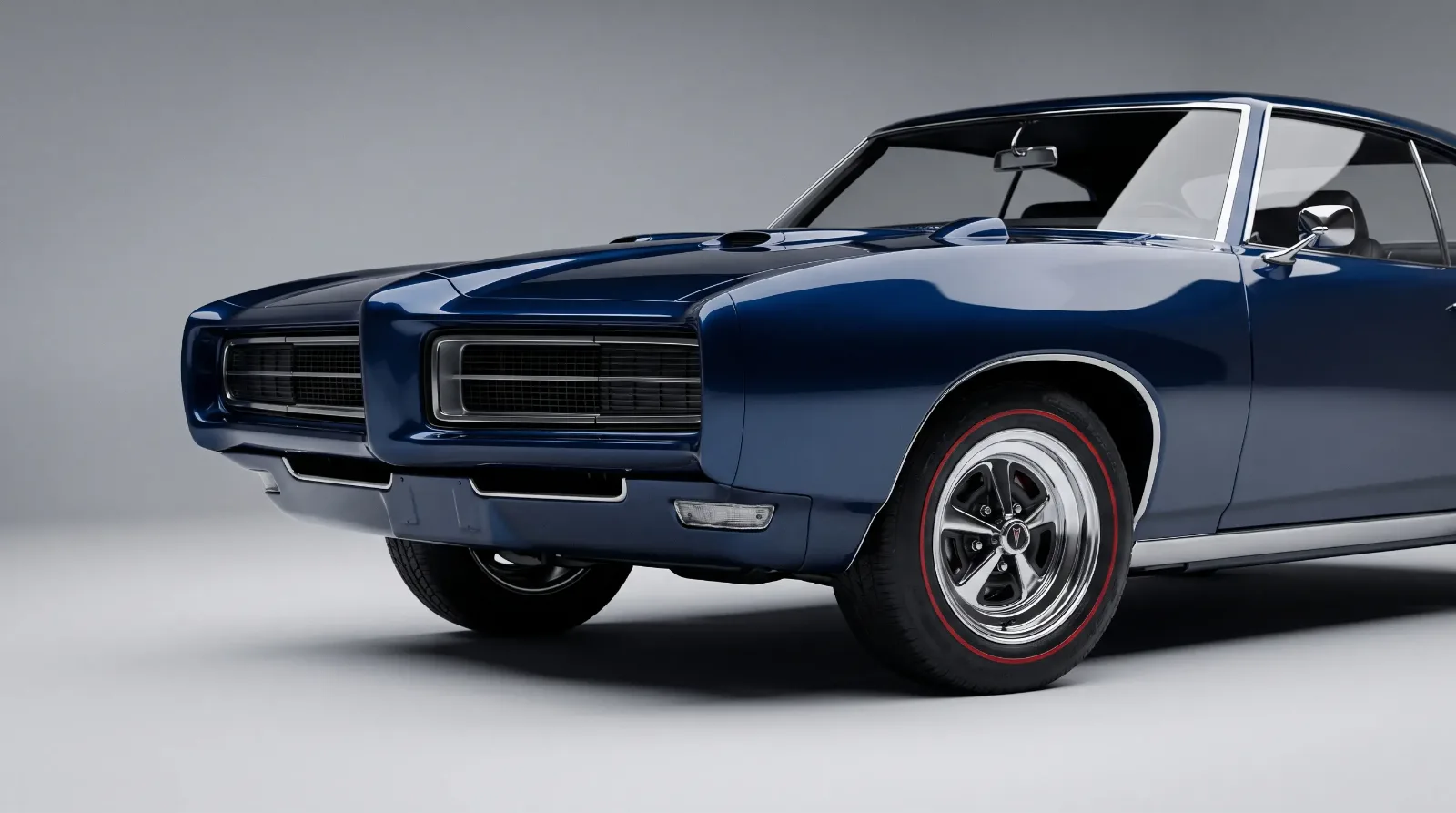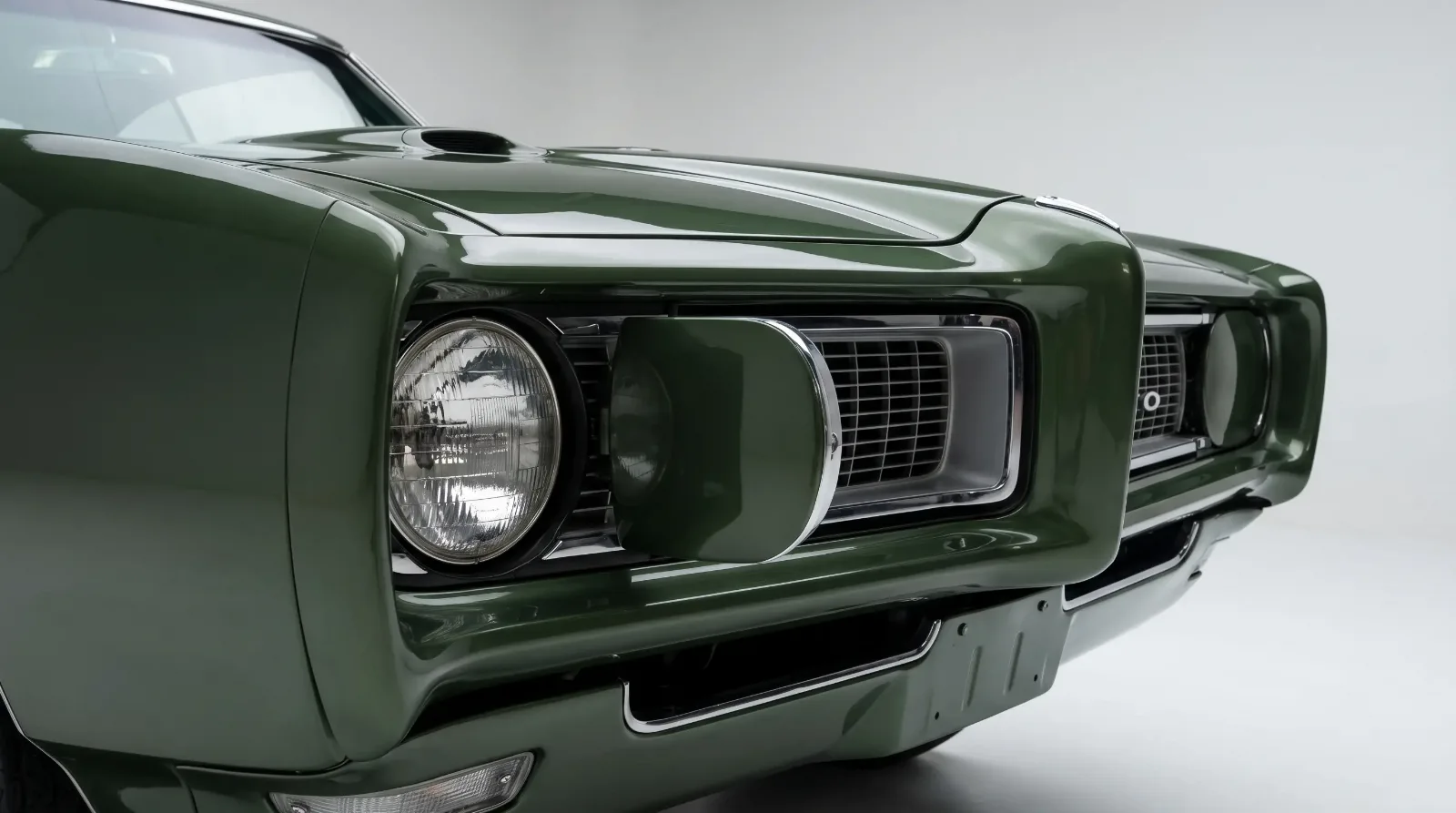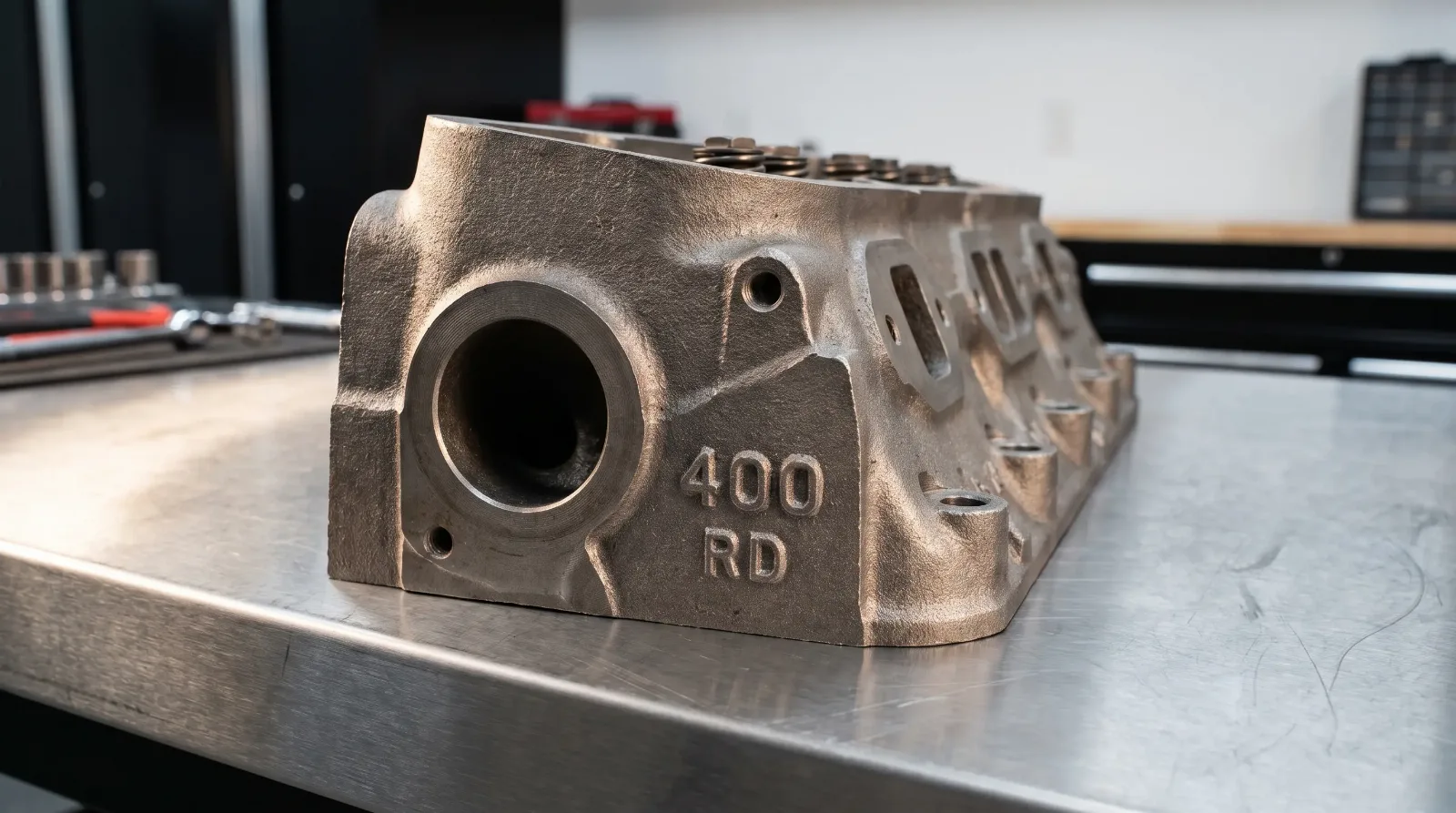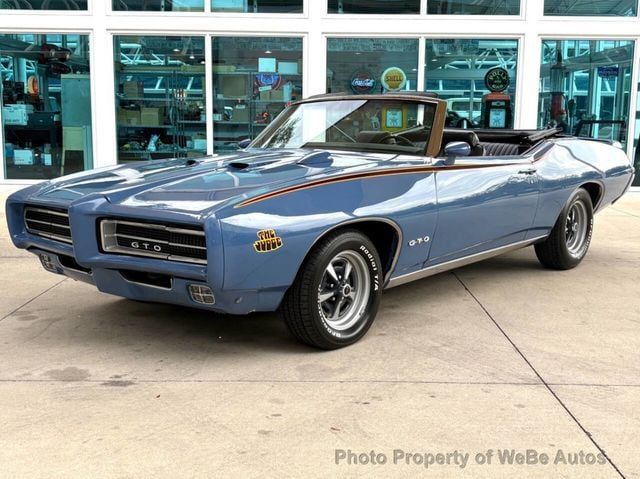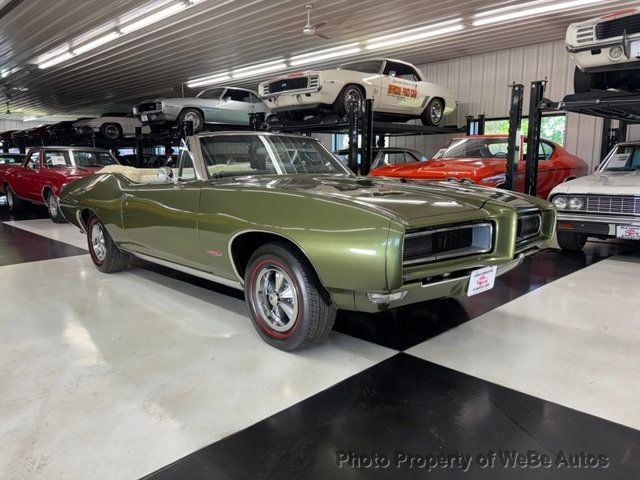
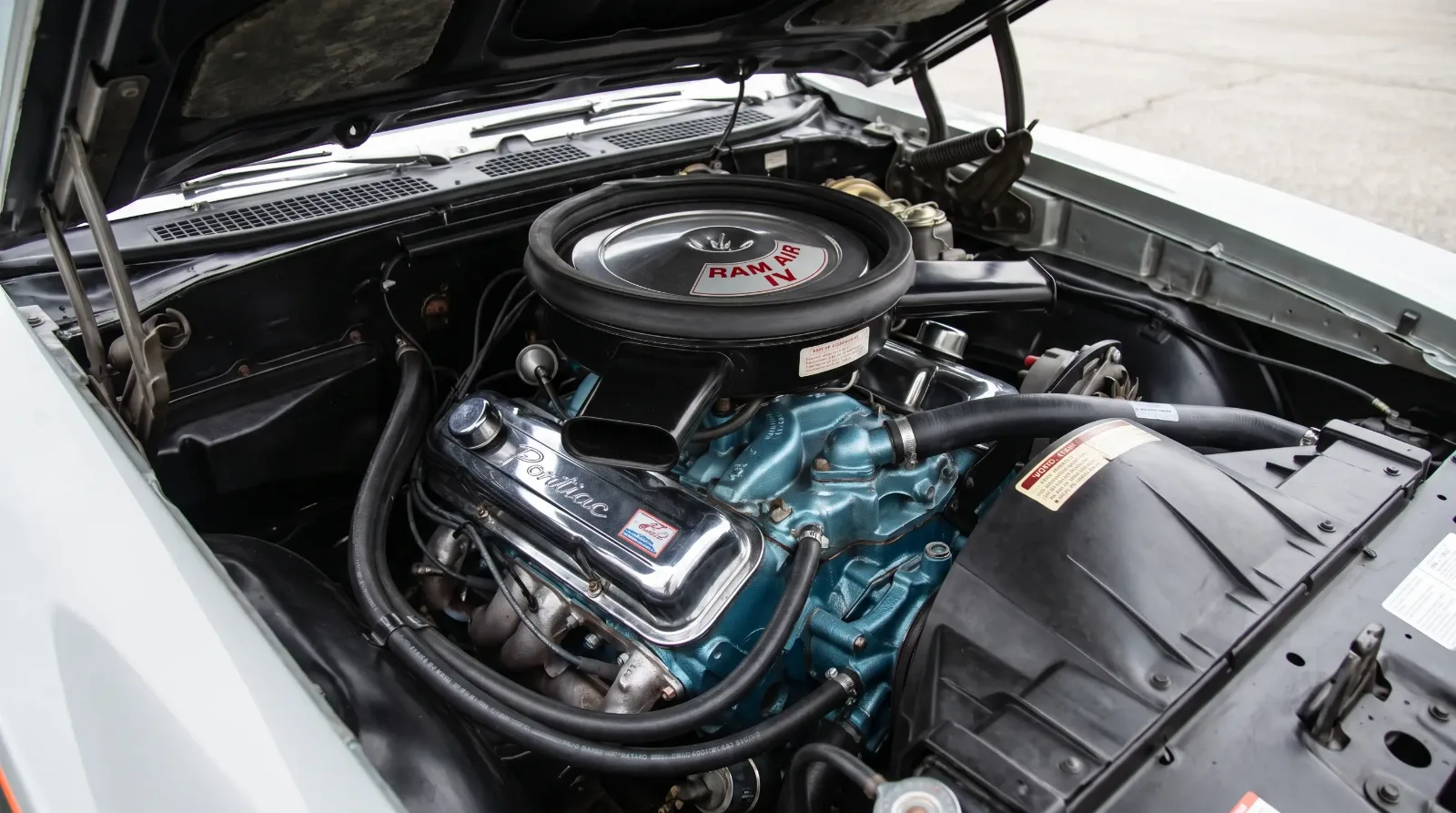
The 1969 GTO's engine lineup is where the numbers actually matter, so let's start with the numbers. The base engine was a 400 cubic inch V8, and from there Pontiac stacked a set of Ram Air options on top of it that ranged from mostly cosmetic to genuinely serious hardware. The mistake buyers make fifty years later is assuming "Ram Air" means one specific engine. It doesn't. It's a family, and the difference between the entry-level version and the top of that family is the difference between a fast car and a car that could embarrass things twice its displacement at the strip.
| Engine option | Ram Air designation | Notes |
|---|---|---|
| Standard 400 | None | Base GTO engine for 1969, 350 hp |
| Ram Air III | RA III | More commonly ordered performance Ram Air option, 366 hp |
| Ram Air IV | RA IV | Round-port heads, higher-rate valve springs, low-production, 370 hp (widely believed underrated) |
The factory numbers are 350 hp for the standard 400, 366 hp for the Ram Air III (Pontiac's own paperwork just called it the 400 Ram Air; "RA III" is the collector term that stuck), and 370 hp for the Ram Air IV. But I'm not going to hand you those figures and pretend they're gospel. Factory advertised numbers from that era were routinely conservative, sandbagged for insurance and marketing reasons, and the real output varied by compression, carburetion, and how tight the engine was built. The RA IV in particular is widely believed to have been underrated well beyond its paper 370 hp. Treat any specific horsepower claim for these engines as a starting point, not a guarantee, until you've got documentation behind the specific car.
What actually separates RA III from RA IV
The RA III was the volume performance option, the one most buyers who checked the Ram Air box actually got. It's a strong engine, no argument there. The RA IV is the one that gets talked about at swap meets in a different tone, and the reason is hardware, not hype. Round-port cylinder heads with a different intake runner shape than the RA III's oval ports, a stronger valvetrain built to live at higher RPM, and a factory-documented low production run. That's the kind of spec sheet difference that separates a genuinely track-oriented engine from a strong street engine wearing the same displacement badge.
The oval-port versus round-port distinction matters more than most casual buyers realize. It's not a cosmetic difference in the casting. Round ports flow differently, and Pontiac engineers built the RA IV around that flow characteristic on purpose, chasing high-RPM breathing the RA III wasn't optimized for. That's a whole story on its own, and if you want the full technical breakdown, read on.
Compression, carburetion, and why the spec sheet only tells half the story
Compression ratio gets tossed around as a shorthand for how aggressive an engine is, and on these two Ram Air variants it does move in the direction you'd expect, higher on the RA IV than the RA III. But compression ratio alone doesn't tell you what a specific car will actually do at the strip. Carburetor sizing, ignition curve, exhaust flow, and the condition of the valvetrain all matter as much or more than the number stamped in a spec chart. Two RA IV-equipped cars built the same week could perform noticeably differently depending on how carefully they were assembled and how they've been maintained since.
This is where a lot of buyers get tripped up chasing paper specs instead of asking about the actual condition of the specific engine in front of them. A compression ratio on a build sheet describes the design intent. It doesn't describe a fifty-five-year-old engine's current state of tune, and those are two very different questions a serious buyer needs answered separately.
Why the drivetrain around the engine matters as much as the engine
A strong engine bolted to the wrong rear gear or a worn-out transmission is a car that dynos well and disappoints at the strip. Buyers chasing a specific Ram Air GTO need to confirm the axle ratio and transmission match what's documented for that engine option, because swaps happened, both in period and in the decades since. A car with the right engine and the wrong gear set isn't going to deliver the acceleration figures people expect from the name on the option sheet.
The transmission choice matters just as much as the axle ratio. A close-ratio manual behind an RA IV was built with a specific gear spread in mind, aimed at keeping the engine in its higher-RPM powerband between shifts. Swap that transmission for a different ratio set, or pair either Ram Air engine with an automatic that wasn't spec'd to handle the power reliably, and the whole combination stops behaving the way the factory intended. A documented, matched drivetrain is worth real money over a car with an engine that's right and everything behind it that's a question mark.
"I've put more than a few of these on the dyno, and the number that always gets people is how much the tune matters versus the parts on paper. A well-tuned RA III with the right gear can outrun a lazy, out-of-tune RA IV. The spec sheet tells you the potential. It doesn't tell you what the car's actually making right now."
— Dan Reeves
How these engines actually feel from the driver's seat
Spec sheets are useful for shopping, but they don't tell you what either engine actually feels like under your right foot. A well-sorted RA III pulls hard from a stoplight and keeps building through the midrange in a way that feels natural on the street, easy to modulate, forgiving of a driver who isn't perfectly smooth on the throttle. The RA IV is a different animal entirely once it's above the RPM where the round-port heads start doing their real work. Below that point it can feel almost unremarkable, even a little soft compared to what the reputation promises. Above it, the whole character of the car changes, and that's exactly the point of the design. It's an engine built for a driver willing to use the tachometer, not one built to impress at part throttle in traffic.
That difference in character matters for buyers thinking about how they'll actually use the car. A driver who wants strong, predictable acceleration in ordinary street driving may genuinely be happier with a well-sorted RA III than a numbers-matching RA IV they never drive hard enough to unlock. The rarer engine isn't automatically the better ownership experience for every buyer, even though it's almost always the more valuable one on paper.
What to verify before you buy
Documentation is everything on these cars now. PHS (Pontiac Historic Services) documentation, matching-numbers verification on the block and heads, and any factory paperwork that survived with the car are what separate a documented Ram Air GTO from a car wearing the badges and hoping nobody checks. Given how much value swings on RA III versus RA IV, and given how often engines got swapped between GTOs over five decades of ownership, don't take a seller's word on which Ram Air variant is actually under the hood. Get the numbers checked.
These engines sat under the same Endura nose that defined the Endura-era GTO, and understanding where that whole platform came from helps put the Ram Air lineup in context. For that origin story, see how the GTO began, and if you're ready to go looking at real cars, you can browse GTO listings from the 1969 model year.