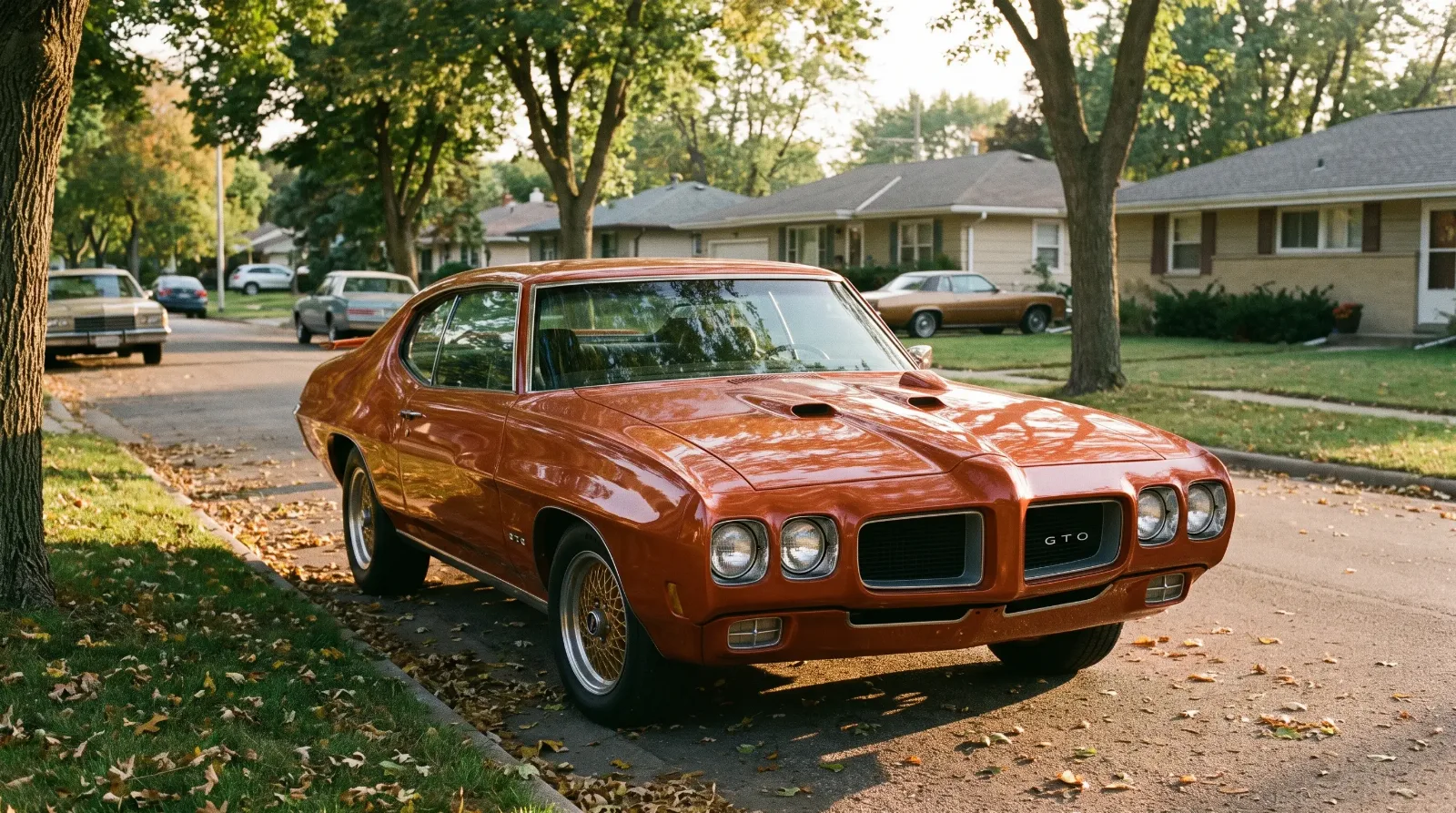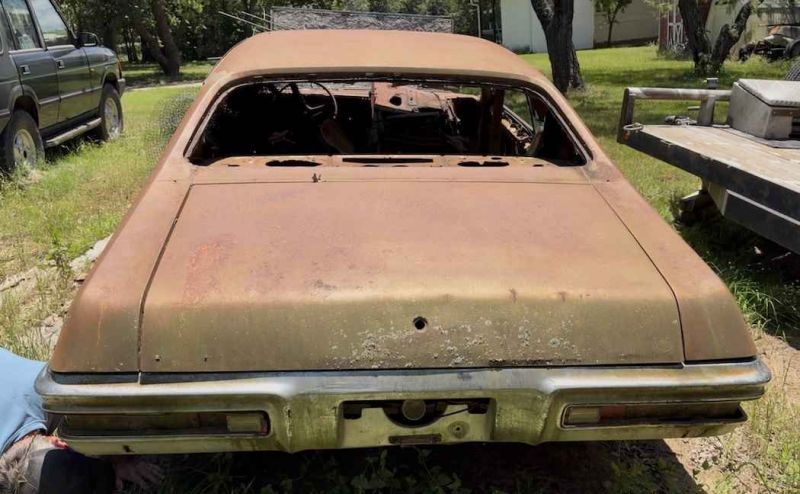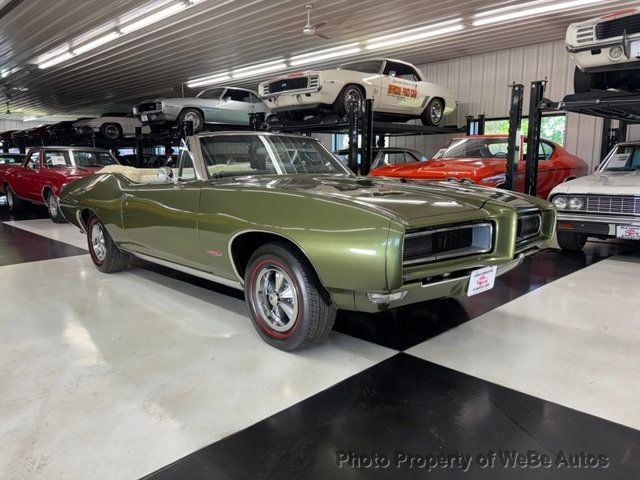
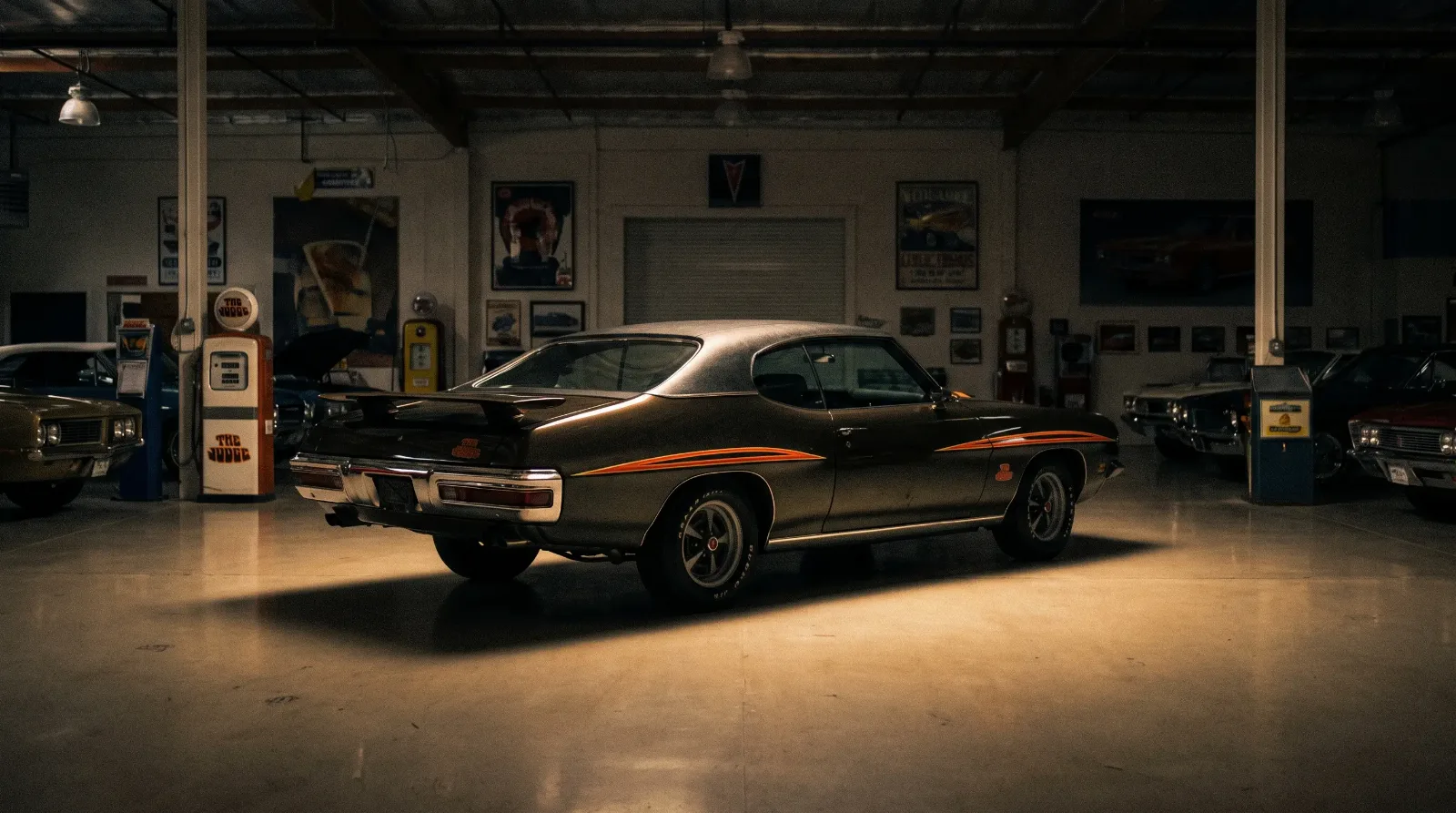
A option package doesn't survive on nostalgia. It survives on order volume, and by 1971 the Judge's order volume had fallen to the point where continuing to build it no longer made sense on Pontiac's ledger. The Judge quietly exited the GTO lineup partway through the 1971 model year, and I want to walk through why that happened, because the explanation isn't a single dramatic cause, it's several declining numbers compounding at once.
The demand problem
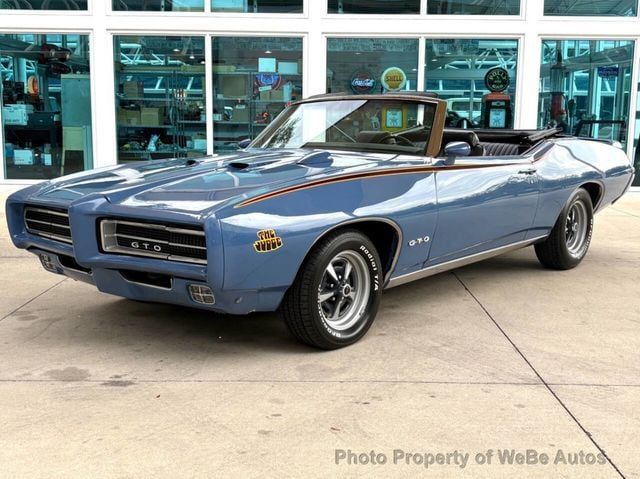
The Judge debuted for 1969 as a loud, stripe-and-spoiler-heavy performance package built to compete directly against Plymouth's Road Runner in both price and visual attitude. It worked, for a while. But visual bravado packages like this one have a shorter shelf life than the base performance car underneath them, because the customer buying into that specific look is a narrower slice of the market than the customer buying a GTO generally. By 1971, that narrower slice had shrunk further, squeezed by the same forces pressing on the whole muscle car segment: rising insurance premiums specifically targeting flashy, high-performance-badged cars, tightening emissions standards forcing the very compression drops that were reducing advertised output that same model year, and a broader cultural shift where the exact demographic that had embraced the Judge's loud graphics package a couple years earlier was starting to age out of buying cars primarily for street cred.
Pontiac built just 374 Judges for 1971, a small fraction of the 6,833 sold in the option's 1969 debut year, and only 17 of those were convertibles. Pontiac announced on February 11, 1971, that it would stop taking new Judge orders after March 1 of that year, which is why the option exited mid-model-year rather than running the full 1971 production season. That trajectory, from nearly 6,900 units to under 400 in two model years, tells the story on its own: a package selling well in 1969 and softening through 1970 didn't recover in 1971 once insurance underwriters and a changing buyer demographic had both turned against it simultaneously.
| Factor | Direction, 1969 to 1971 |
|---|---|
| Judge order volume | Declining year over year |
| Insurance surcharges on performance packages | Rising |
| Compression ratios industry-wide | Falling ahead of unleaded fuel |
| Buyer appetite for loud stripe/wing packages | Softening |
What replaced the Judge in the buyer's mind
When a flashy option package loses its market, the underlying demand for performance doesn't simply vanish, it redirects. The buyer who might have specced a Judge in 1969 or 1970 didn't stop wanting a fast Pontiac in 1971, they just stopped wanting to pay the insurance premium and the social cost of driving a car covered in bold graphics announcing exactly what it was to every police officer and insurance adjuster who saw it. That buyer increasingly gravitated toward the same underlying mechanical performance, the 455 and later the 455 HO, wrapped in more restrained trim that didn't broadcast the car's capability quite as loudly. I've appraised plenty of early-70s GTOs built with serious engine options but comparatively subdued exterior presentation, and I think that pattern reflects exactly this shift. Buyers wanted the capability without the target painted on the hood.
This is a pattern that shows up across the entire muscle car segment during this period, not just at Pontiac. Manufacturers across Detroit were quietly toning down the most aggressive graphics packages on their performance option sheets through the early 70s while, in several cases, keeping the underlying mechanical performance options intact for longer. The Judge's discontinuation fits neatly into that broader industry pattern rather than standing as an isolated Pontiac decision, and understanding it that way helps explain why the timing lines up so closely with similar moves happening at Plymouth, Chevrolet, and Ford around the same two or three model years.
What this means for value today
Here's where I put my appraiser hat on, because the discontinuation story isn't just historical trivia, it directly shapes how these cars are valued now. A 1971 Judge, precisely because it represents the final and shortest production run of the package, tends to command a premium over comparable 1969 or 1970 examples in the current collector market, assuming documentation and condition support the claim. That's the upside of scarcity. But scarcity alone doesn't create value, and I've seen buyers get burned assuming rarity automatically means a strong number at sale. A rare car with thin documentation is not a rare car when the check clears. It's a common car with a good story, and the appraisal has to reflect that distinction honestly.
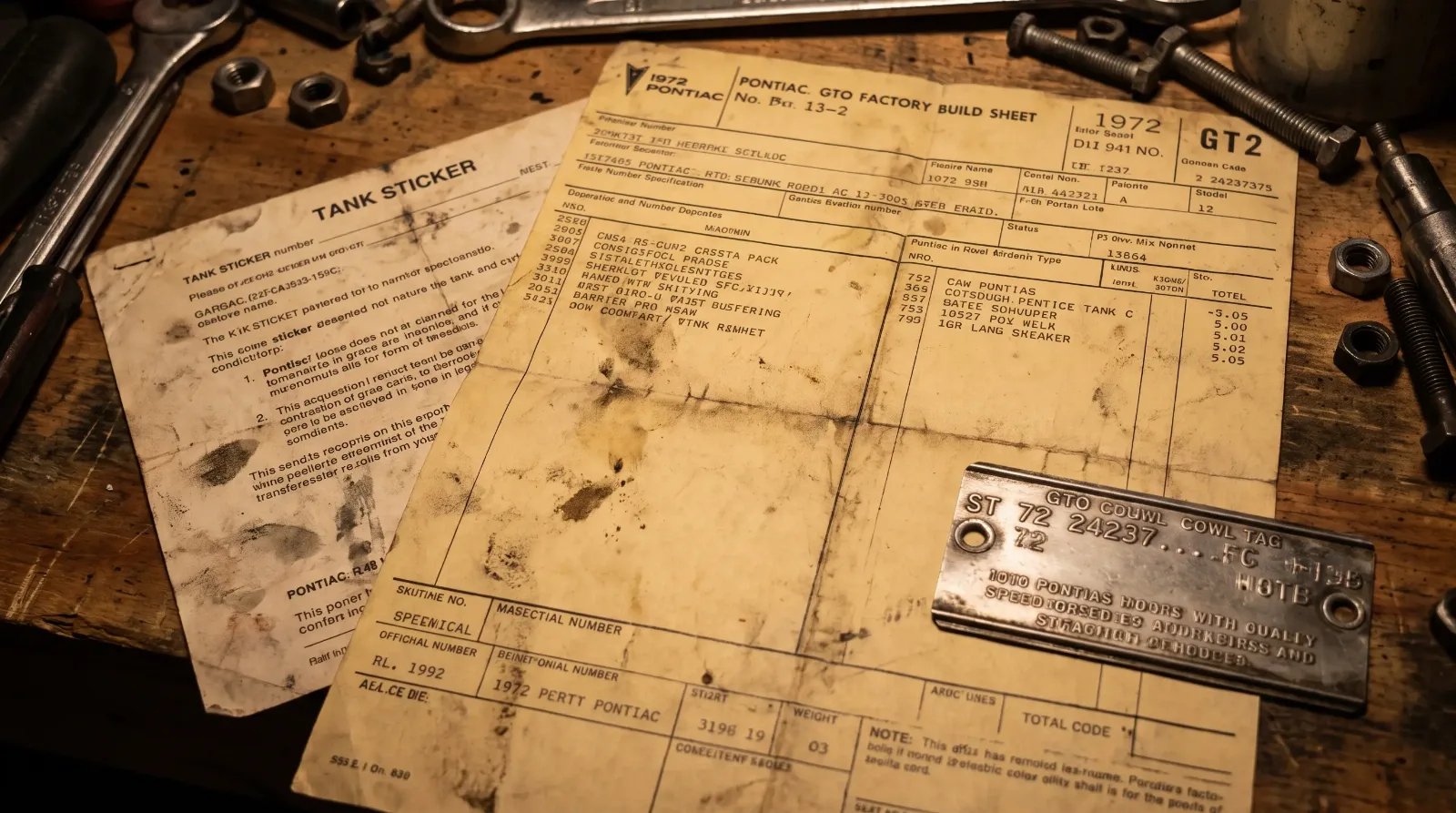
The downside risk with any 1971 Judge claim is authentication. Because production was low and partial-year, and because the Judge package itself was cosmetic and option-driven rather than a distinct chassis or VIN designation, verifying a genuine 1971 Judge requires real paperwork, not just a seller's assurance that "it's a real one." I've walked away from appraisals where a car wore correct Judge graphics and trim but the underlying build sheet told a different story. Buyers paying a scarcity premium need documentation that actually supports that premium, not just visual presentation that resembles what a real 1971 Judge looked like.
Liquidity is the other half of this equation, and it's the part buyers chasing a rare badge tend to overlook until they're the ones trying to sell. A well-documented 1971 Judge has a smaller pool of qualified buyers than a more common GTO variant simply because fewer people in the market are specifically hunting for this exact combination, even though the ones who are hunting for it will pay a real premium once they find a genuine example. That's a different risk profile than a more liquid, higher-volume model year. If you need to sell quickly, a rare, thinly-documented car can sit longer on the market than a common one, even at a fair price, because the buyer pool is narrower by definition.
A note on condition tiers. I appraise these on the same framework I use for any collector muscle car: a documented, numbers-matching #2 condition 1971 Judge with clean provenance sits well above a #3 driver-quality example wearing correct trim but missing hard documentation, and the gap between those two tiers is usually wider for a low-production, partial-year car like this than it would be for a more common model year where buyers have more comparable sales to anchor expectations against.
🔧 Inspection Priorities
- Verify build sheet or documentation confirming the Judge option code. Cosmetic stripe and spoiler packages can be replicated; the factory paperwork cannot.
- Confirm the build date falls within the documented production window for 1971 Judge availability. A late-model-year 1971 GTO claiming Judge trim deserves extra scrutiny.
- Check for consistency between engine documentation and Judge-era performance expectations. A genuine Judge paired with a mismatched or non-period-correct engine changes the value calculation materially.
"A scarcity story is worth exactly as much as the paperwork behind it. I've appraised plenty of cars wearing a rare badge that couldn't back it up with documentation, and the number I write down reflects the paper trail, not the graphics package on the fender."
— Marcus Feld
The Judge's exit is one of the clearer signals of how quickly the market was shifting underneath the early-70s GTO, moving from loud visual performance packages toward a more subdued approach as insurance and emissions pressure mounted from multiple directions at once. There's a related shift happening inside the cabin during this same period worth understanding on its own terms. Read on for that story.