
The garage door was up maybe two feet, just enough to let the evening air in, and a man was sitting in the driver's seat of a 1970 GTO with his daughter perched sideways in the passenger bucket, both of them not going anywhere. The engine wasn't running. Nobody needed it to be. She was tracing the ribbed vinyl on the seat back with one finger, and he was watching her do it instead of watching the road he wasn't on. That is what a good muscle car interior does when it's working right. It gives you a reason to sit still.
Car Features
7 min read
The 1970 GTO Interior and the Formula for Muscle-Car Comfort
Beyond the engine bay, the 1970 GTO's cabin was quietly engineered to make a fast car feel like a place worth staying.
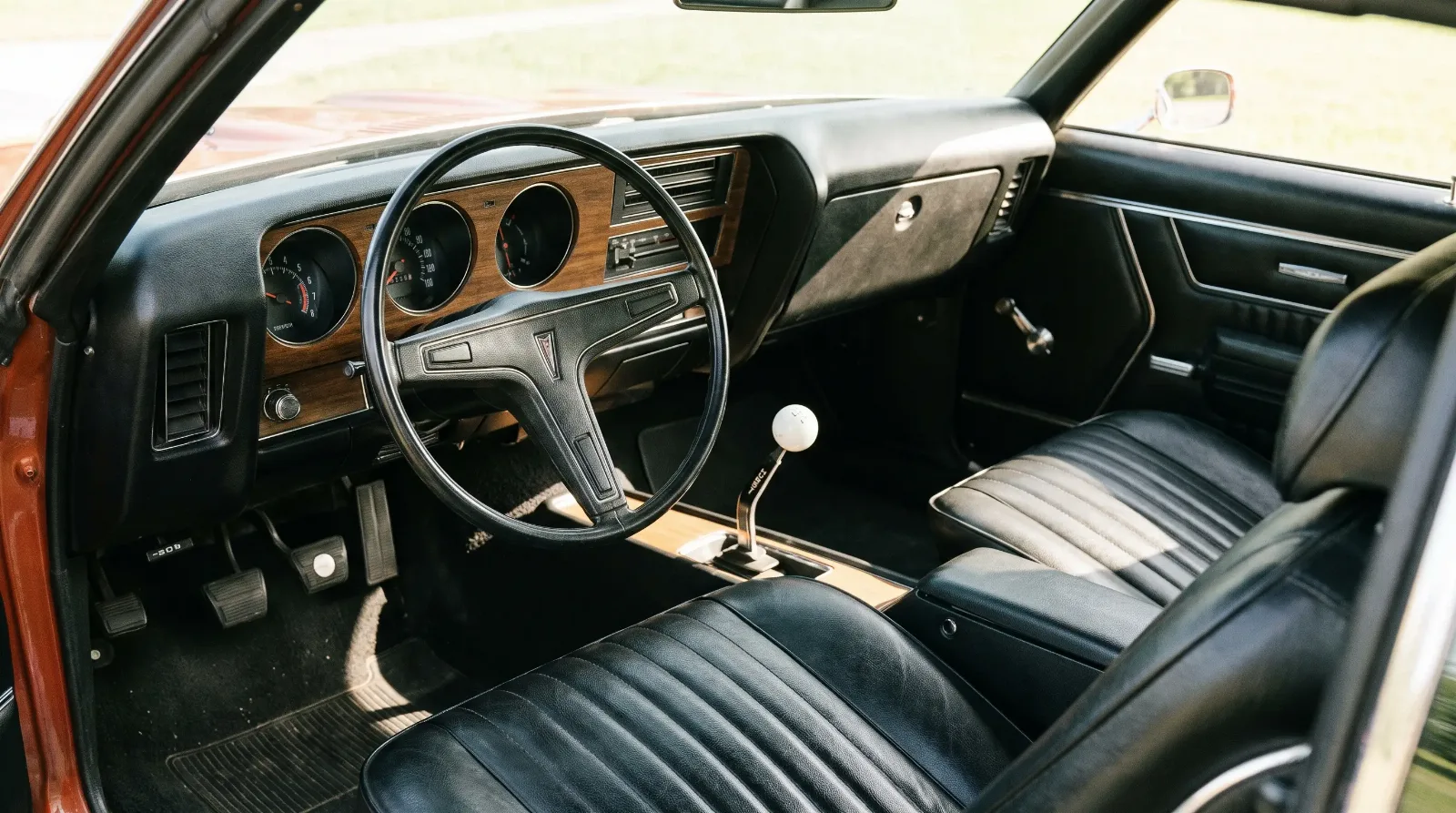
Most of what gets written about the 1970-72 GTO lingers on the engine bay, and fairly so. But the cabin Pontiac wrapped around that driveline deserves its own look, because it was doing something the engineers in the powertrain department weren't thinking about at all. It was trying to make a fast car feel like a place you'd want to stay.
A dashboard built to be read at speed
Sit in a well-kept 1970 GTO and the first thing that registers isn't the shifter or the wheel, it's how much the dash wants your eyes to stay low and forward. The optional Rally gauge cluster put a full instrument sweep, speedometer, tachometer, fuel, temperature, and oil pressure, right in the driver's sightline, not scattered across a painted metal strip the way cheaper cars of the era did it. Pontiac had been building this reputation since the early GTO years, and by 1970 the formula was mature. You didn't have to hunt for information. It was placed for a driver who intended to use the car the way it was built to be used.
The woodgrain appliqué on the dash and door panels reads as pure theater now, and in a sense it always was, but it did real work. It told you this was a Pontiac, not a stripped-down econobox with a big engine dropped in. GM's mid-size interiors in this era leaned hard on that trim language, wood tone against black vinyl, chrome-ringed gauges, a wheel that felt substantial in your hands. None of it made the car faster. All of it made the car feel considered.
Seats and the shift lever that told you what car you were in
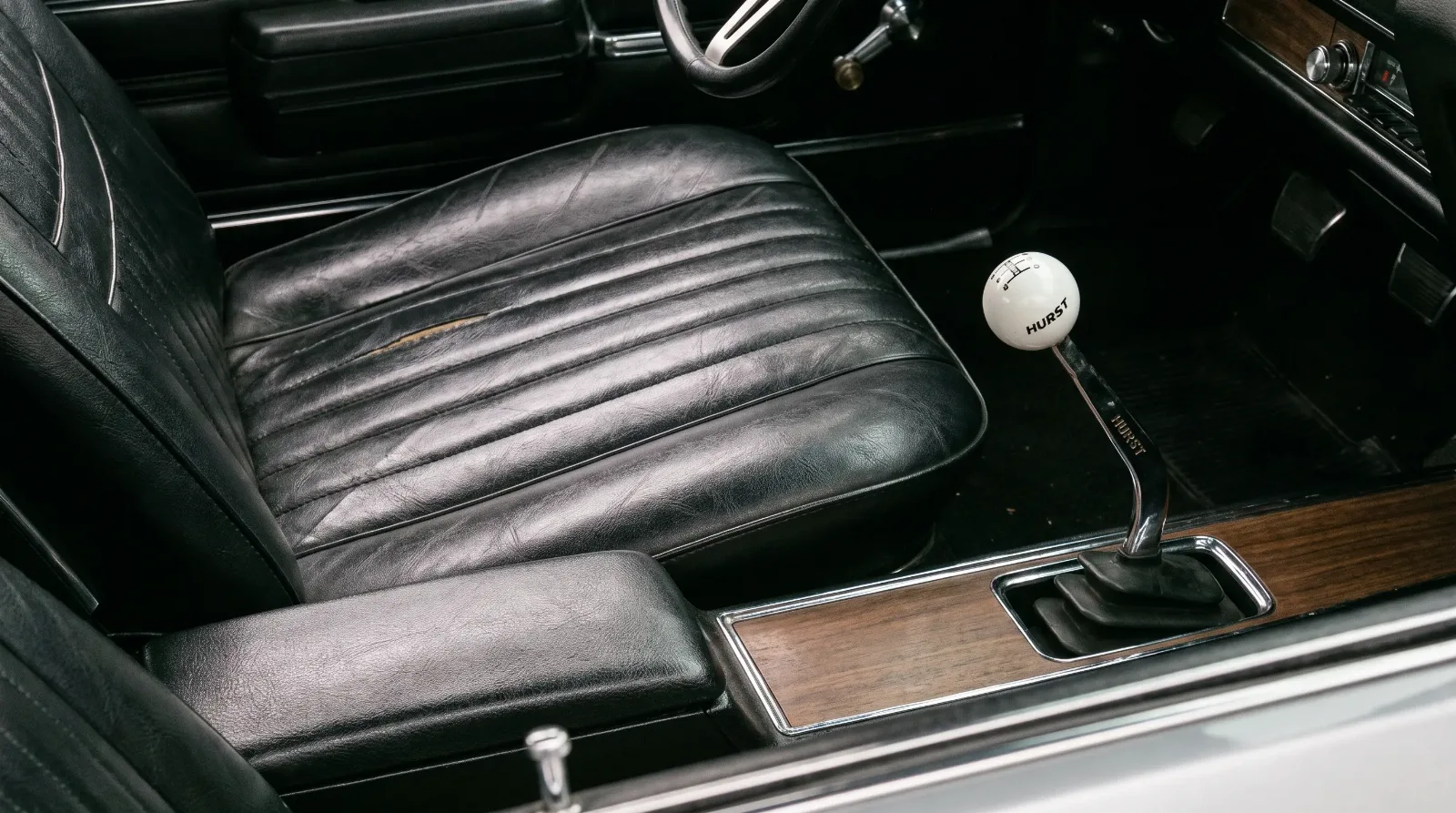
Strato bucket seats were the heart of the cabin, contoured, high-backed for the period, upholstered in a ribbed vinyl that held up better than most people expect from a fifty-year-old interior. Bench seat GTOs existed and are out there, but the buckets are what people picture when they picture this car, because they turned the front row into two separate command posts instead of one shared sofa.
Between them, if you ordered the console, sat a Hurst shifter for the manual cars, short-throw, positive, with a white shift ball that became one of the most recognizable details of the whole muscle car era. Reaching for it wasn't a chore. It was part of the appeal. Automatic cars got their own version of the same theater, a console-mounted shifter with a similar sense of occasion even without the clutch pedal underneath it.
"People remember the sound of these cars, but I remember the light off the woodgrain at five in the evening, and how a fourteen-year-old girl decided a bucket seat was the best chair in the house."
Nora Beckett
The small comforts nobody advertised
Sound insulation improved steadily through the second-generation GTO's run, and by 1970 Pontiac had done real work quieting the cabin at highway speed, a detail that never made a brochure headline but that owners noticed every single day they drove the car. Options like power windows, air conditioning, and a tilt steering wheel moved the GTO further from its budget-muscle roots and closer to something a family might actually option up and live with, not just a weekend toy kept under a cover.
That tension, race car pretending to be a daily driver, sat right there in the options sheet. You could order a GTO with nearly every comfort feature in the Pontiac catalog and still have a 400 cubic inch V8 under the hood. Few other manufacturers let a buyer split the difference so completely, and it is part of why the car still reads as approachable instead of merely fast.
Color, trim, and the choices that made every cabin different
Pontiac offered the GTO's interior in a spread of colors that ran from a deep saddle tan to black, blue, and a green that looks almost startling in period photography next to the muted interiors of today's cars. Buyers could mix a black exterior with a saddle interior, or a white car with a dark blue cabin, and the combinations gave the same base model a personality that varied enormously from one build sheet to the next. Cloth inserts were available on some seat trims as an alternative to all-vinyl, a detail that mattered to buyers who lived somewhere hot and didn't want to sit on a griddle every August afternoon.
The steering wheel itself came in more than one style depending on options ordered, from a standard wheel to the thicker-rimmed, walnut-toned Formula wheel that echoed the dash appliqué and gave the driver something substantial to hold onto through a hard corner. Door panels carried the same trim language as the dash, ribbed vinyl inserts, integrated pulls, map pockets on some trims, small details that don't show up in a spec sheet but that a person notices every time they reach for the handle.
Even the carpet told part of the story. GTOs came with color-matched carpet rather than a generic black mat, which sounds minor until you're standing in front of a restored example and realize how much that single choice ties the whole cabin together. None of these details moved the car any faster down a quarter mile. All of them are why people who own these cars talk about the interior with the same affection they reserve for the engine note.
Living with the cabin today
Original interiors that survived intact are getting harder to find, and the vinyl, foam, and door panel material from this era does not age gracefully if a car sat outside or in a humid garage for a few decades. Restoration suppliers reproduce most of the trim now, seat covers, dash pads, door panel kits, carpet sets, which means a tired cabin is fixable without hunting down unobtainable factory parts. What is harder to reproduce is the smell and the specific give of original vinyl under your hand, the kind that tells you nobody has touched this seat in a long time except the person who bought the car new.
Sit in one that has been left alone, and you understand why people restore these cars for the cabin as much as for the numbers under the hood. The dashboard still points its gauges at you like it has something to say. The shifter still falls into your palm at the right height. It was built to make a driver comfortable enough to stay a while, and on the good ones, it still does exactly that.
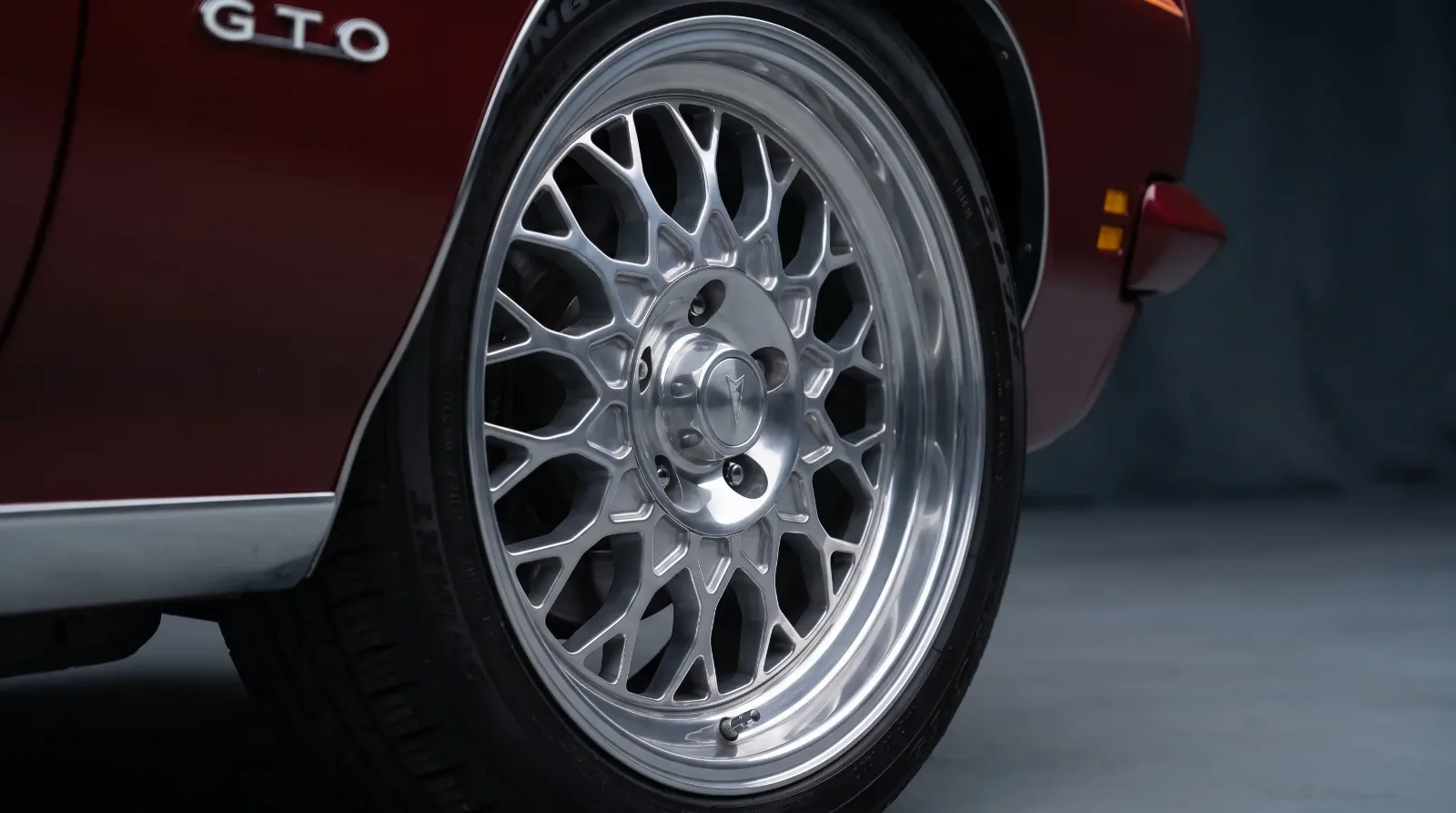
There's a wheel option from this same era that tells a stranger stories parked in a driveway before the engine ever turns over, and it's worth the detour. If you want to see how Pontiac carried that same sense of theater from the cabin out to the road, read on.
Sources and notes
Related Reading
Have a
Pontiac GTO
for Sale?
Reach thousands of serious classic car collectors across the US.
Sell It Here →
Are You a Classic Car Dealer?
List your full inventory and connect with targeted classic car buyers.
Join as a Dealer →
#rally gauges
#hurst shifter
#1970 gto interior
#pontiac gto interior
#strato bucket seats
#muscle car interiors

About the author
Nora Beckett
Automotive features writer and photographer who tells the human stories behind the cars, from show fields to cross-country road trips.
Related Listings - Pontiac GTO
Comments
Be the first to comment on this article.