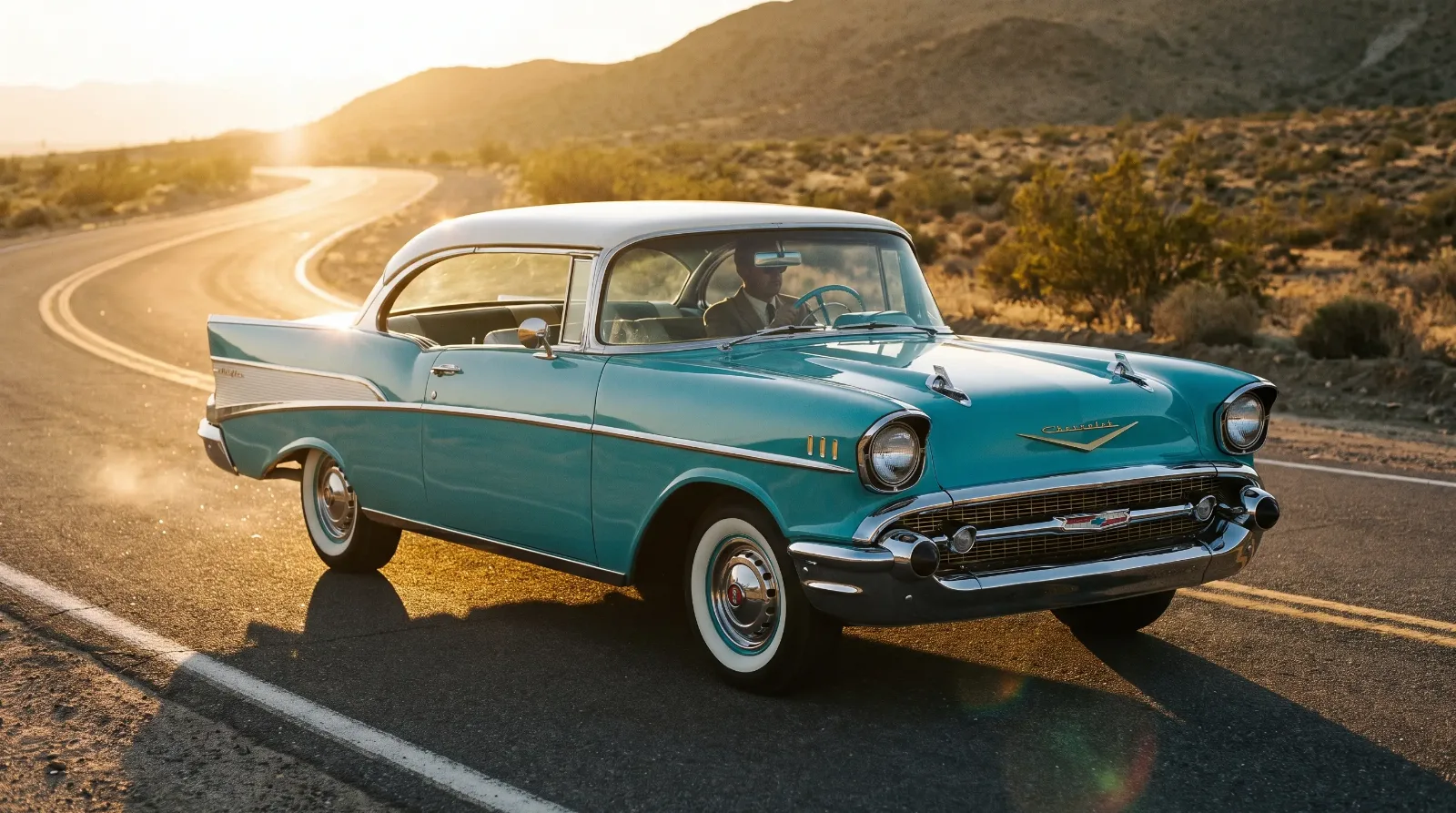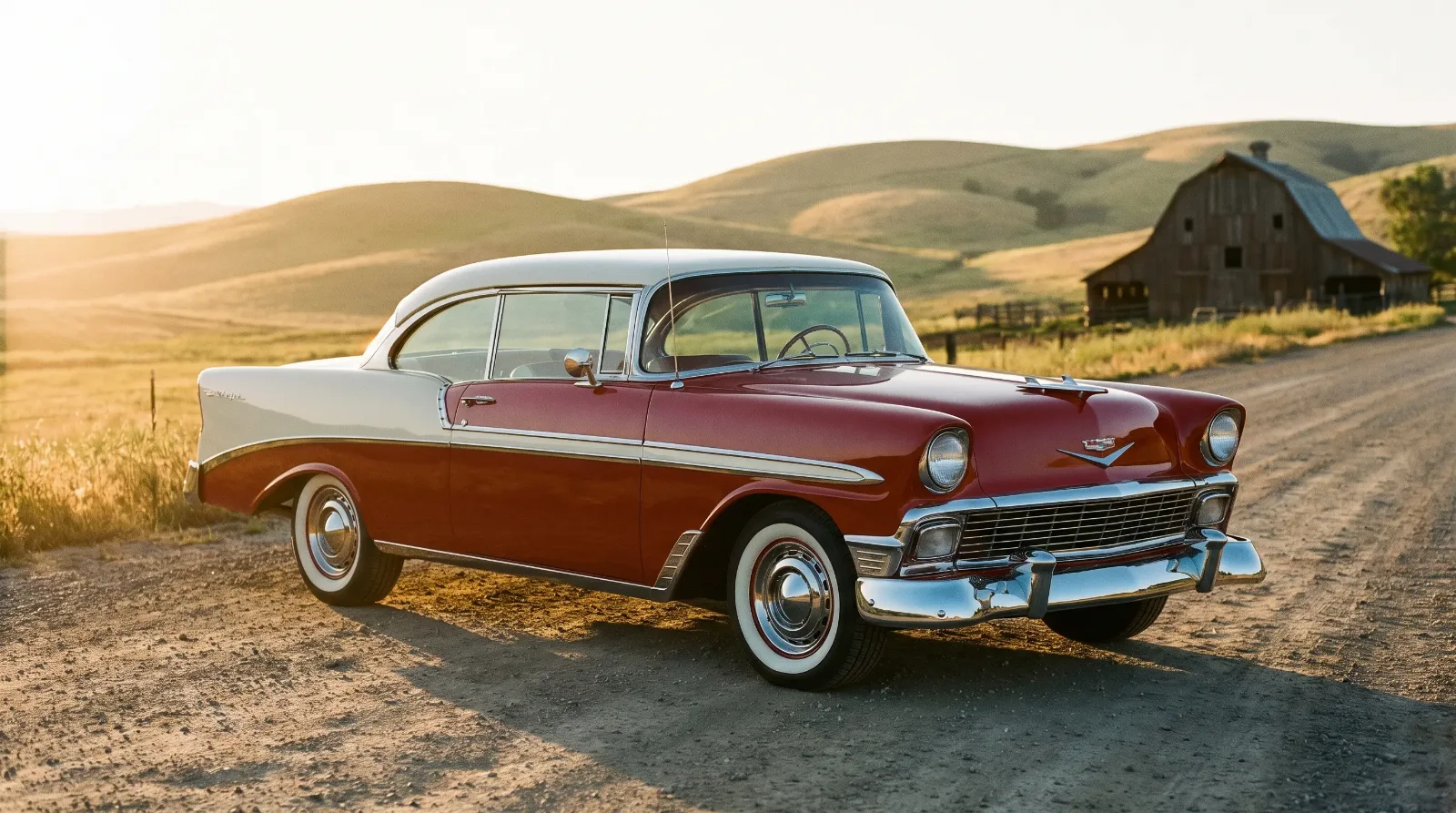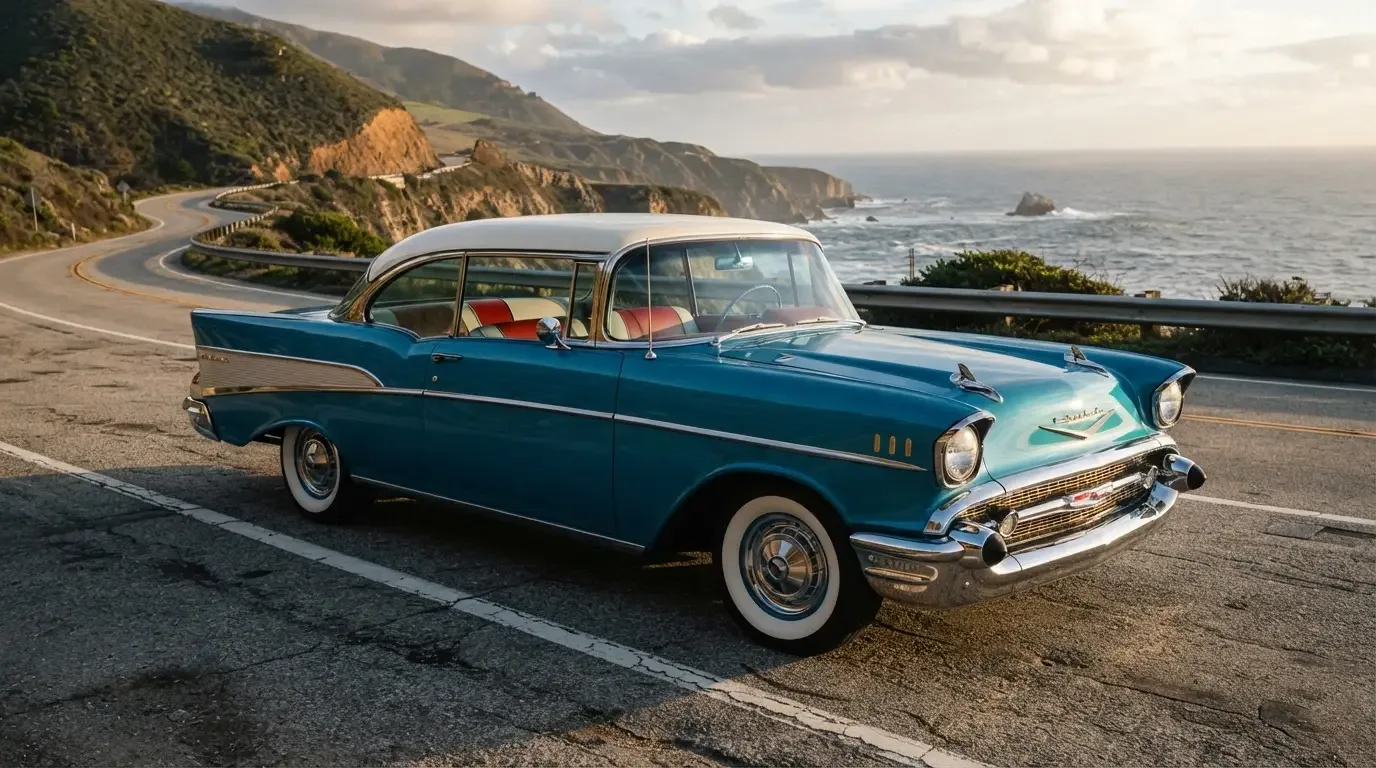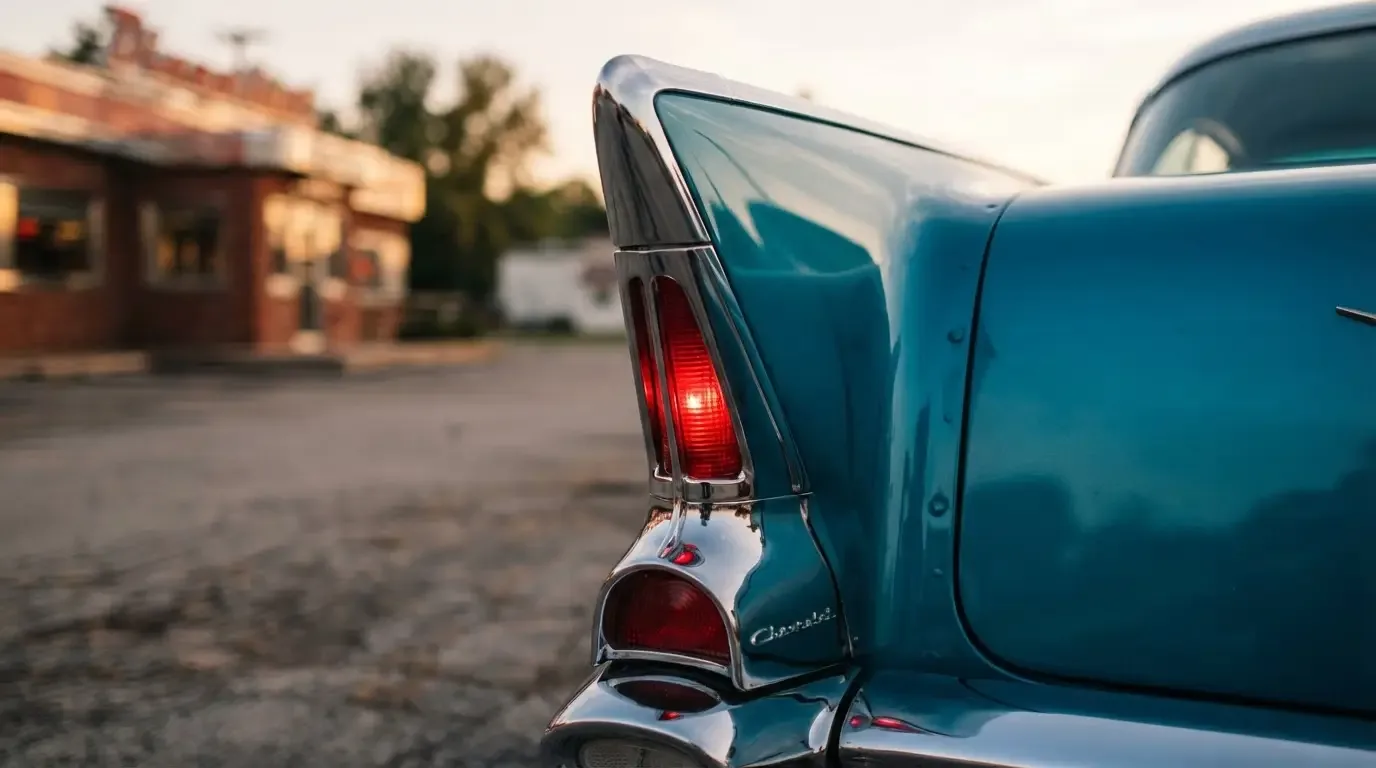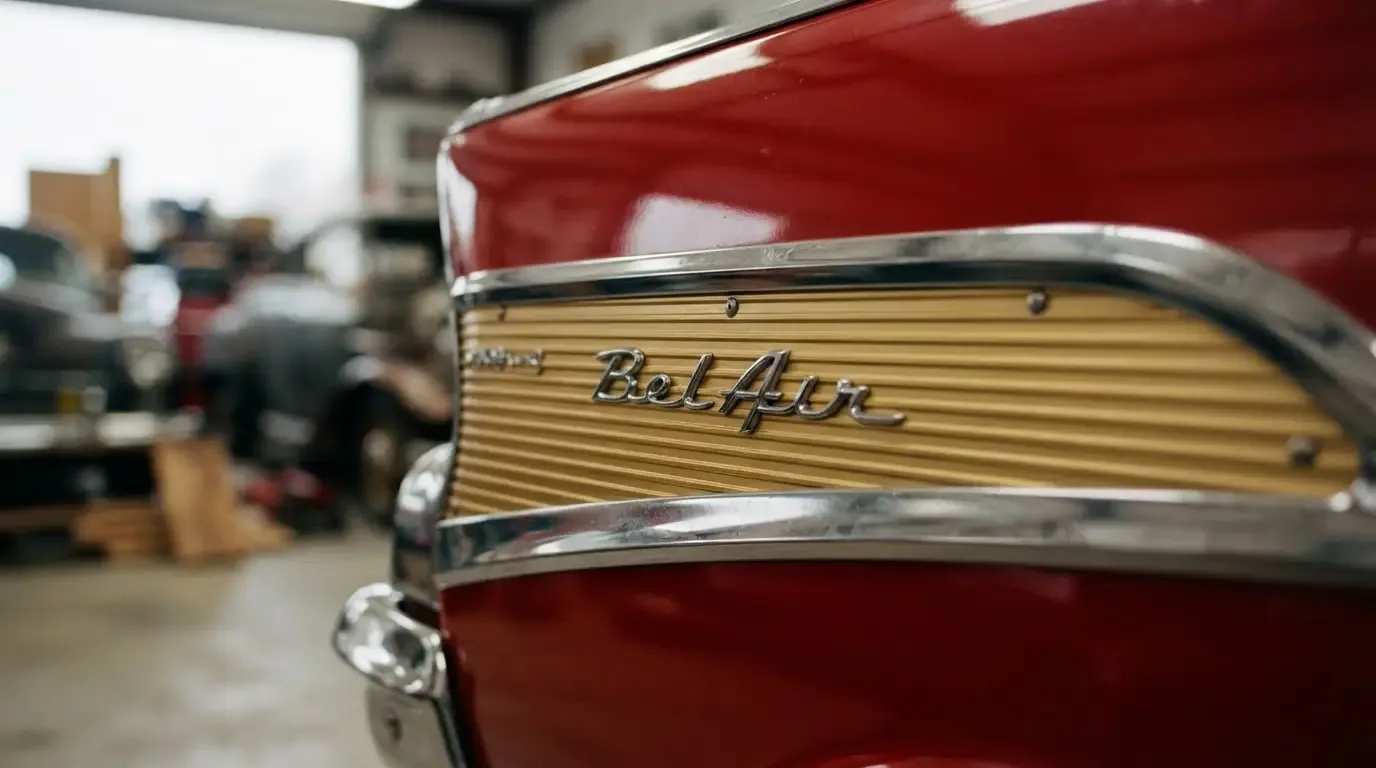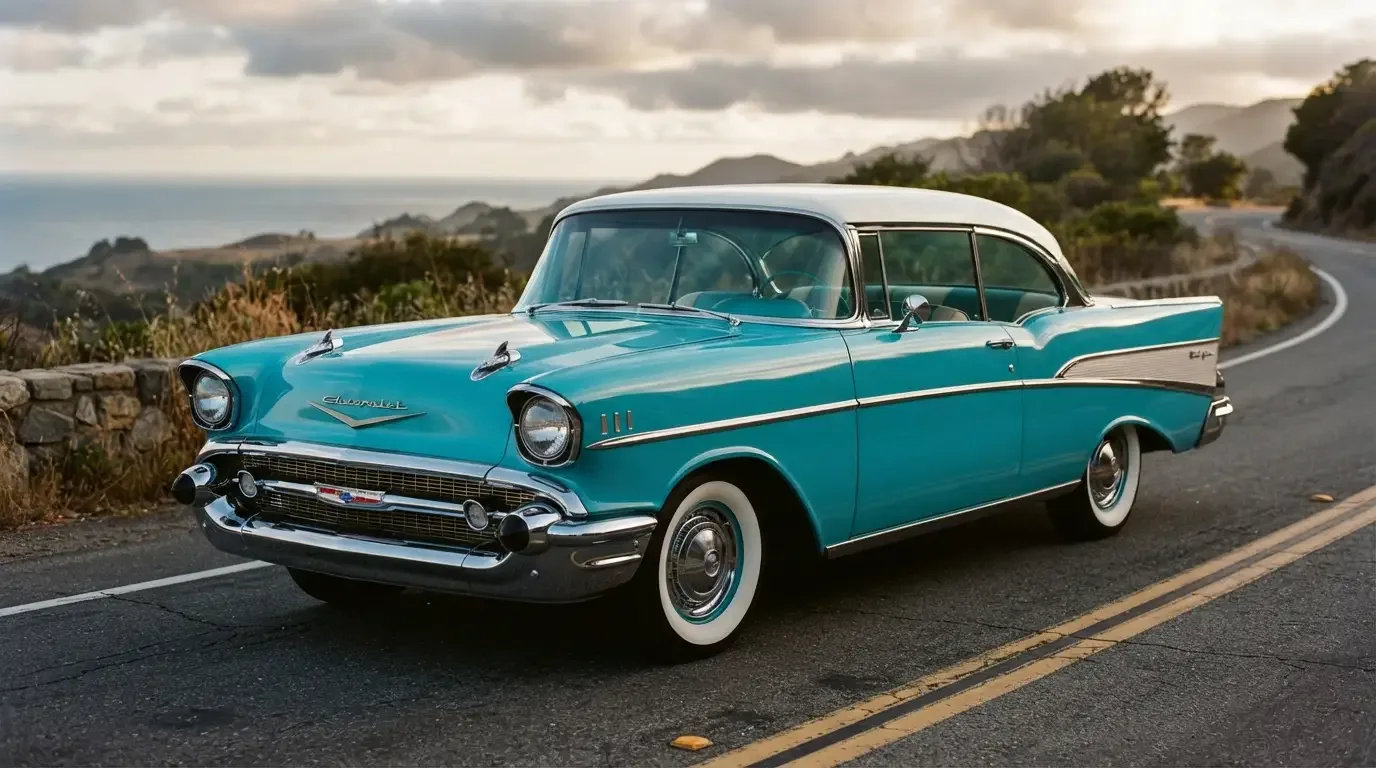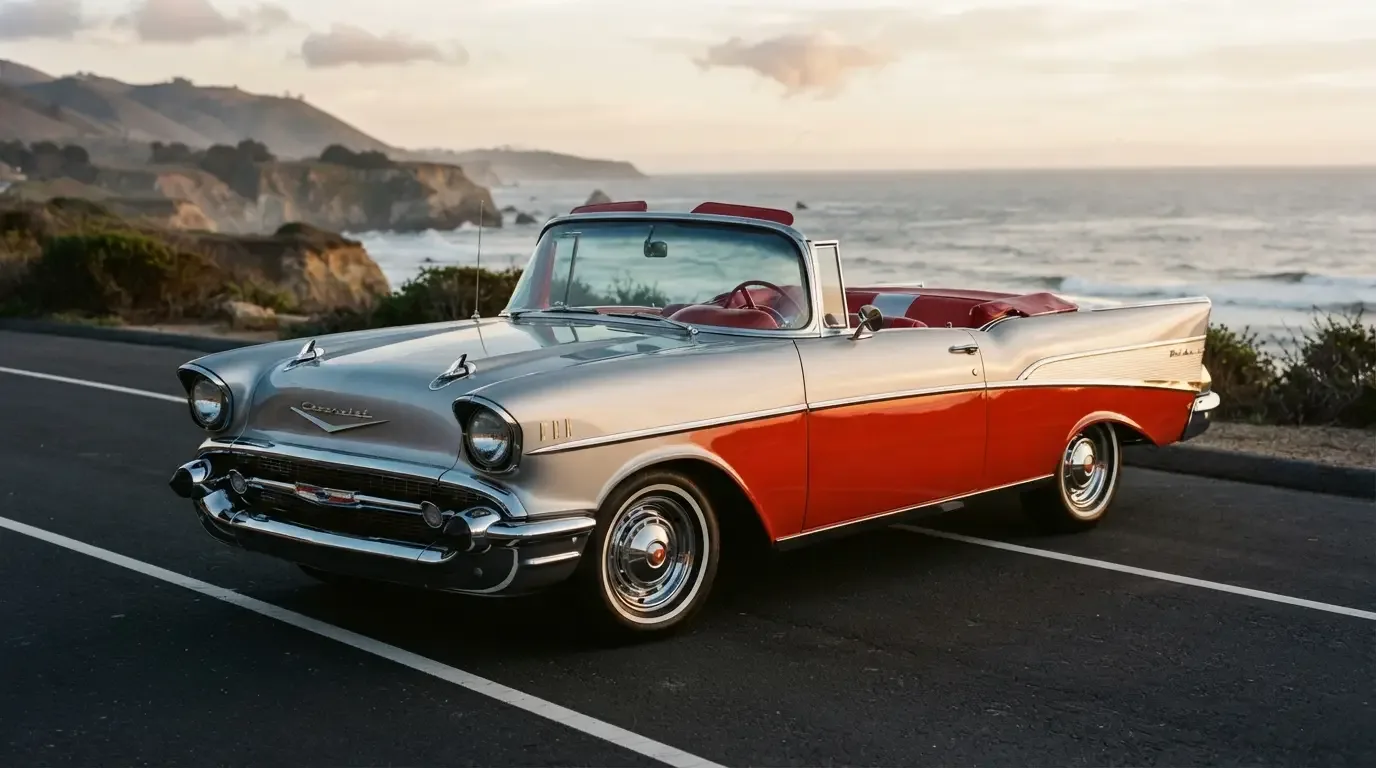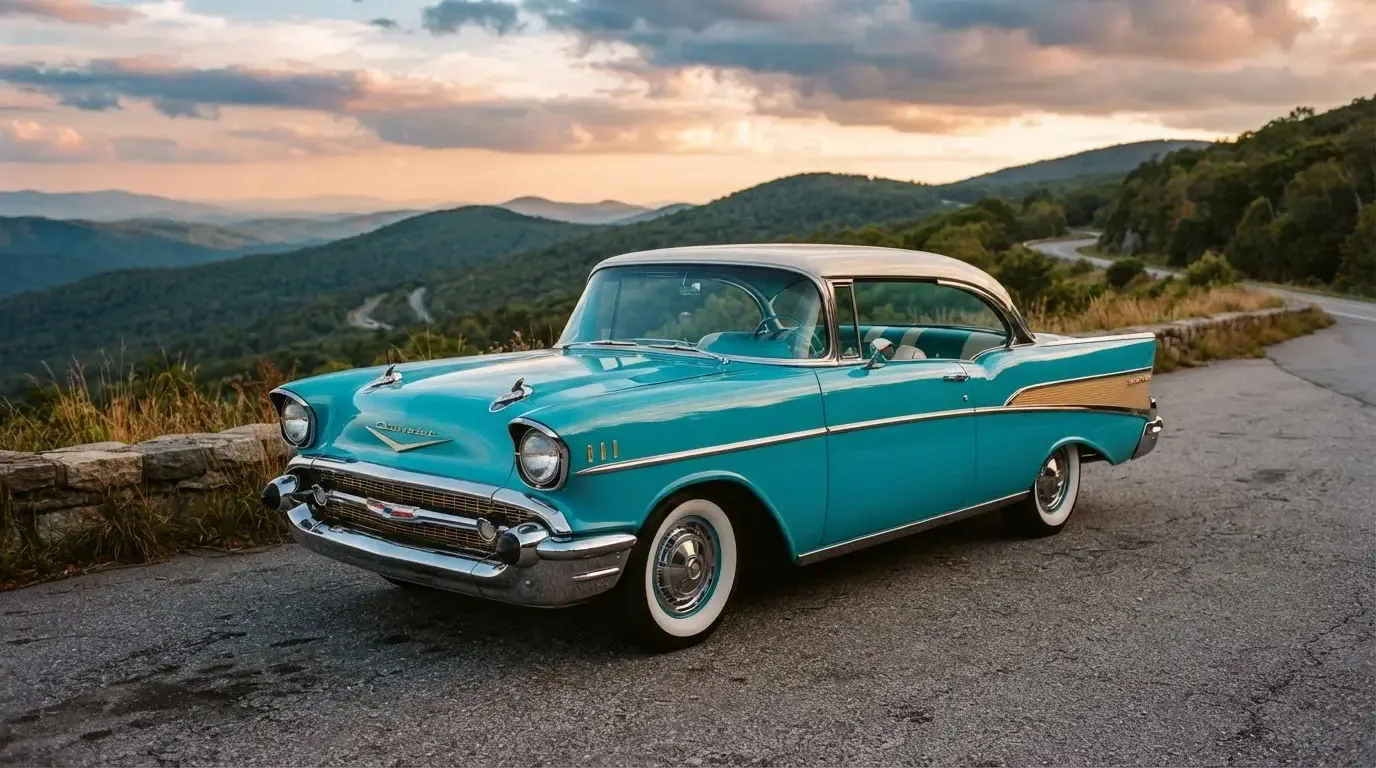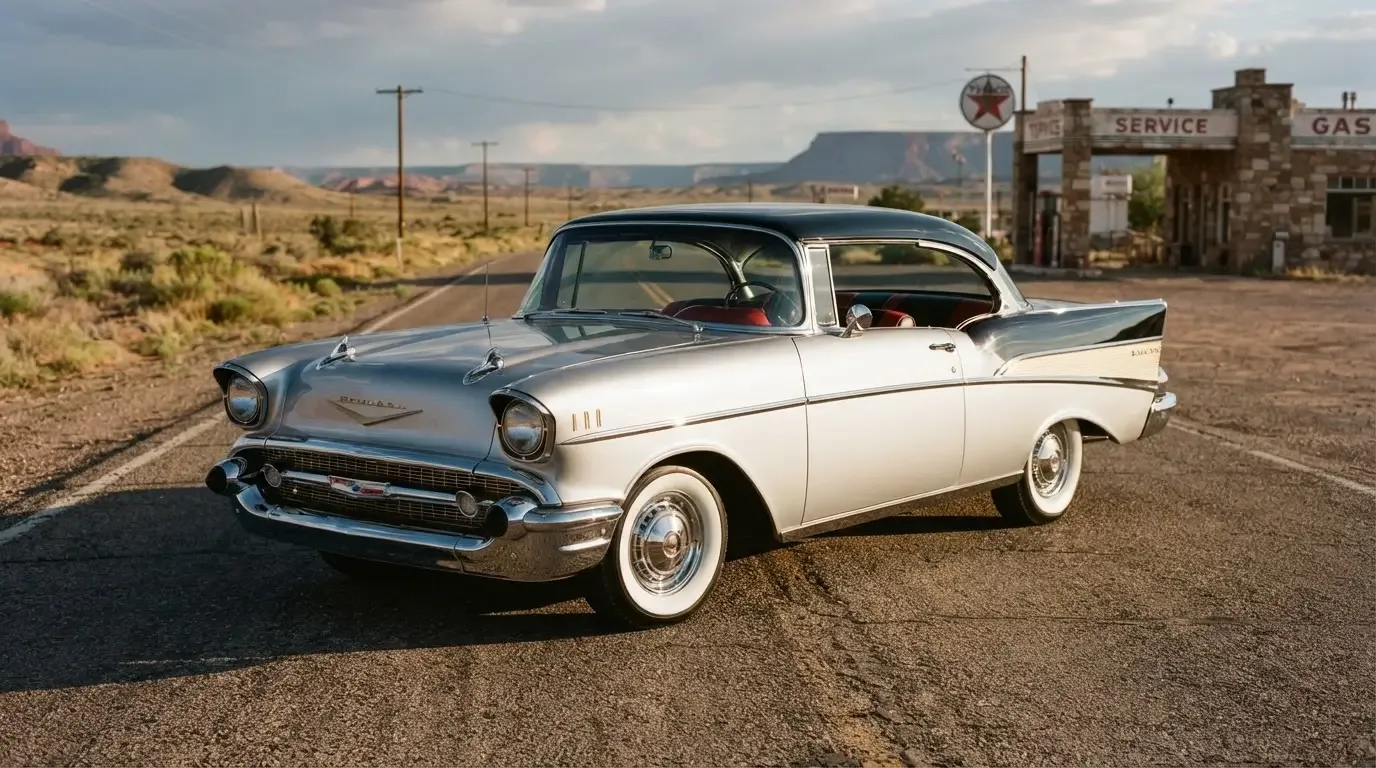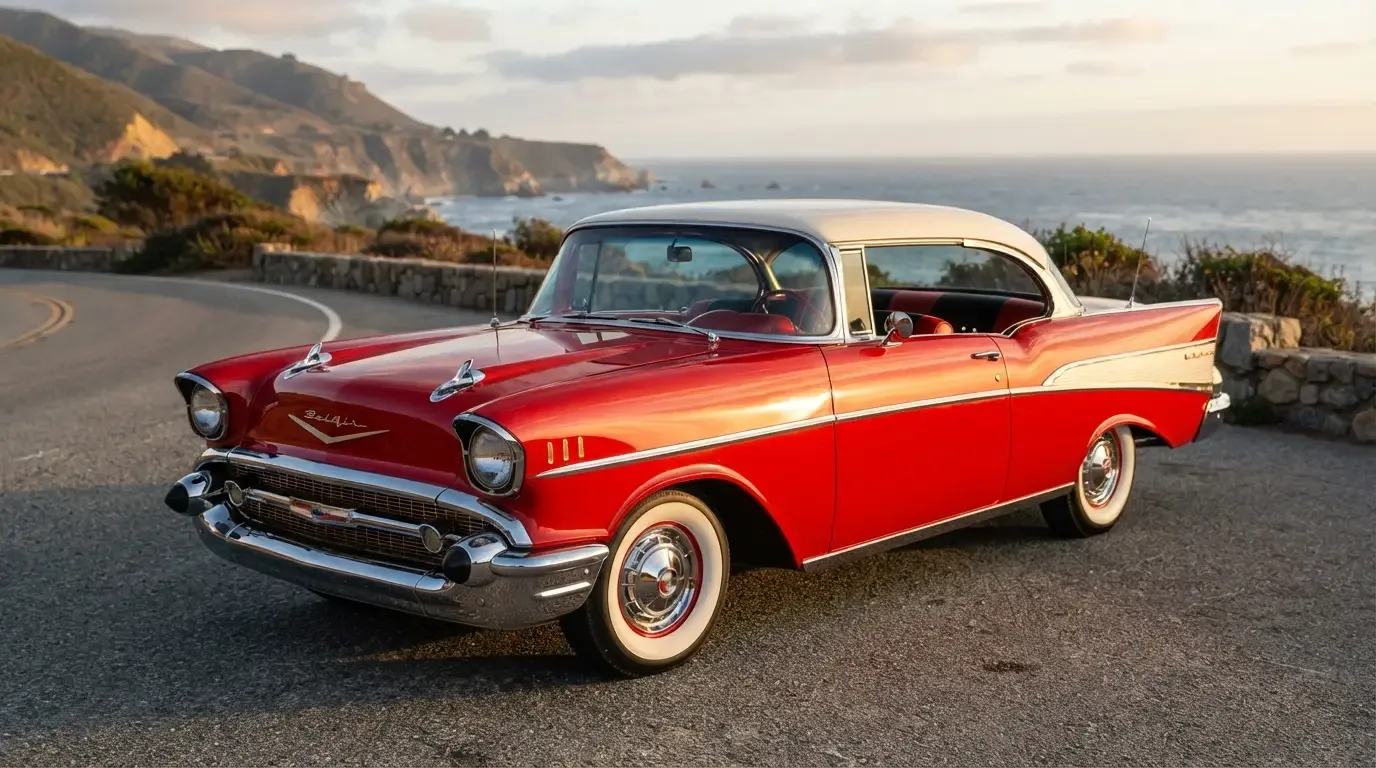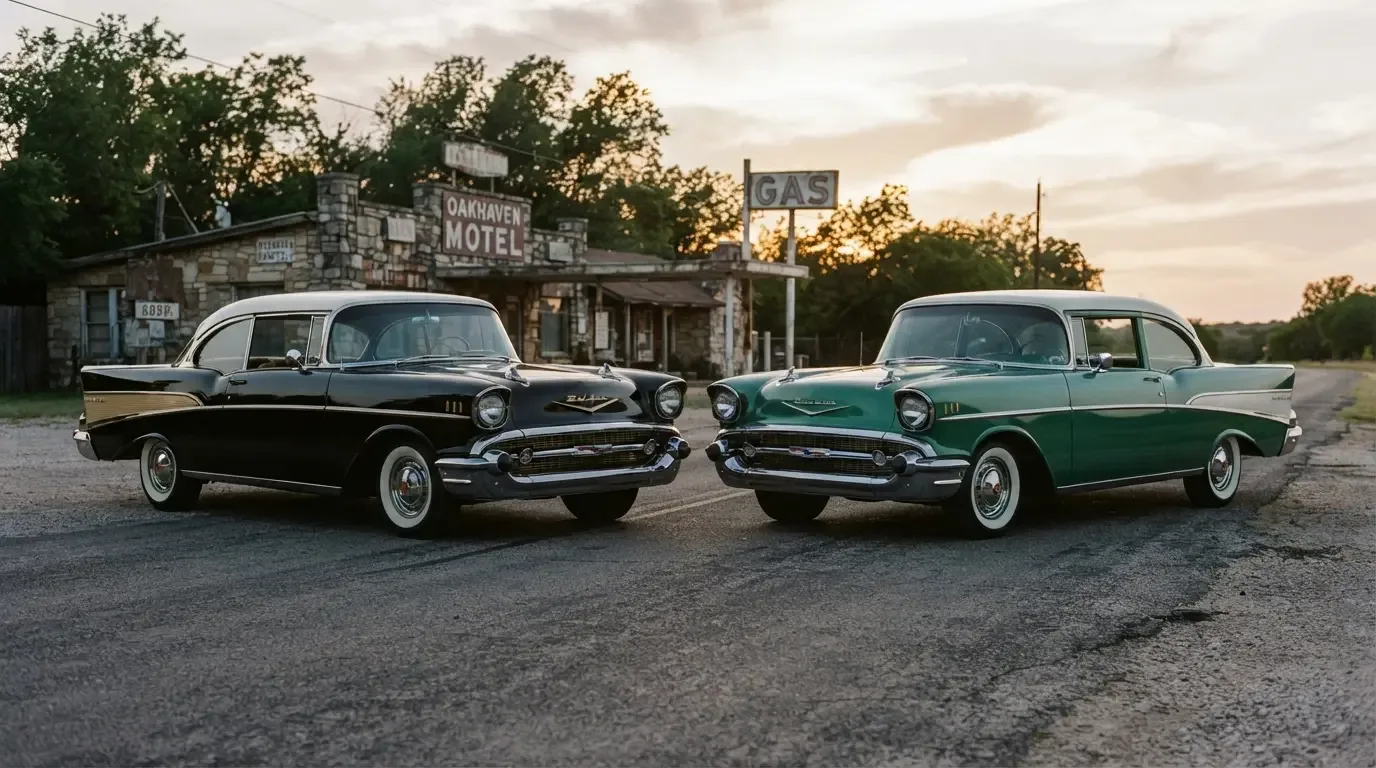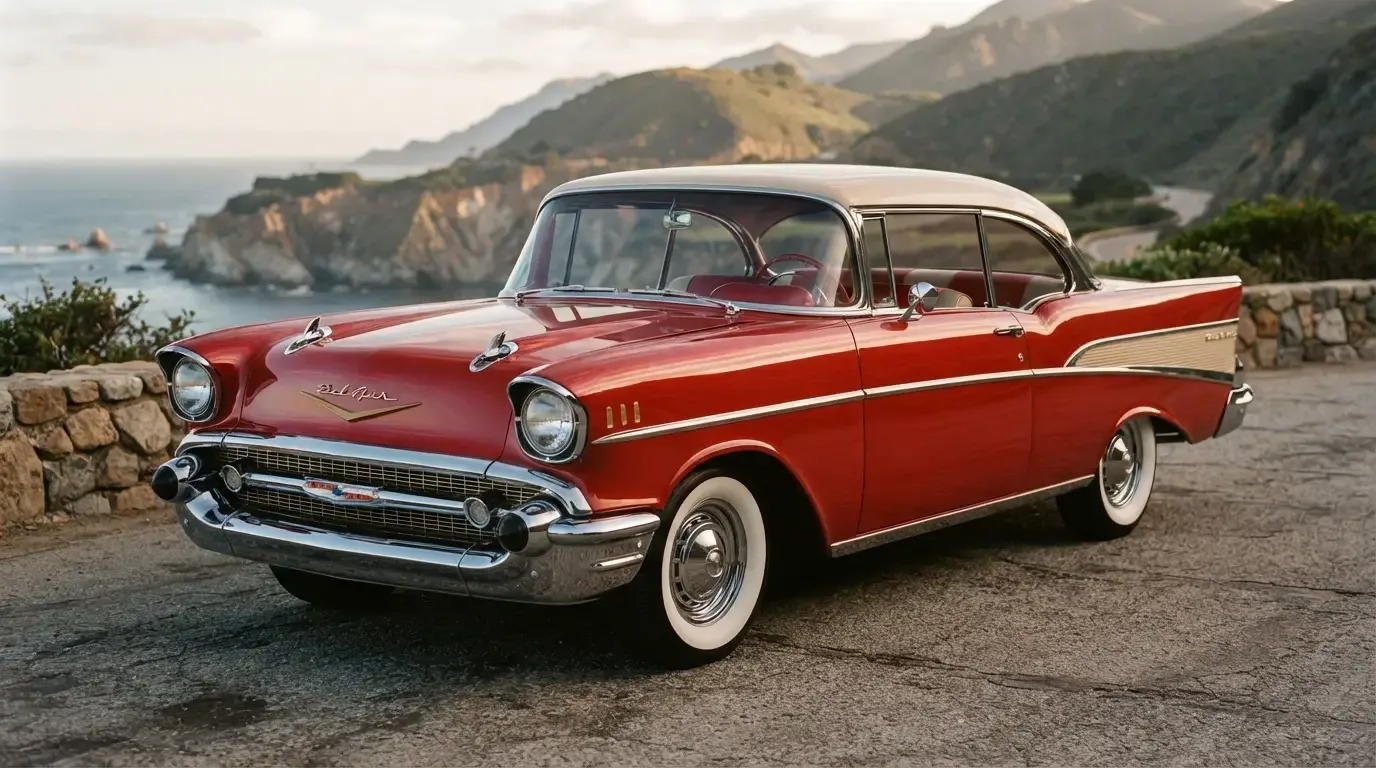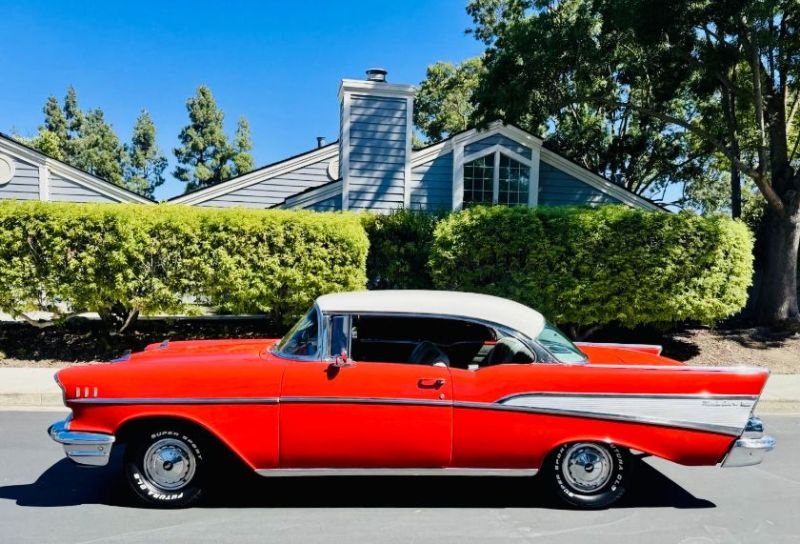
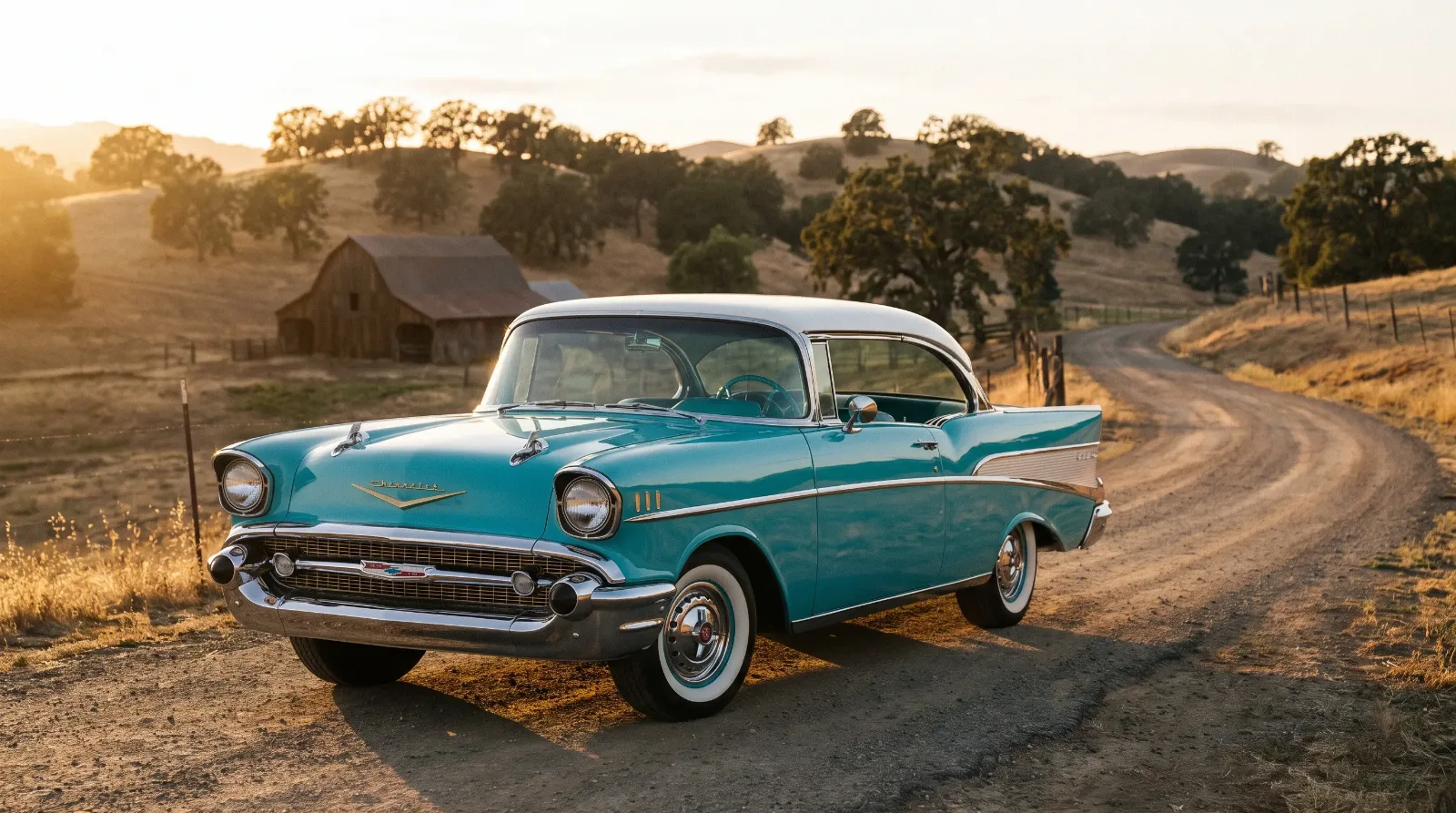
Every enthusiast has a moment when a shape locks itself into memory, and for a huge number of American car people that shape is the tailfin of a 1957 chevy bel air seen across a parking lot at a summer cruise night. There is no mistaking it. The fins, the gold anodized grille, the two-tone flanks, the whole confident swagger of the thing announce a specific year and a specific mood. Of all the cars Chevrolet built in the classic era, this is the one that stopped being transportation and became a symbol, and it did it in a single model year.
The most recognizable Chevrolet ever built
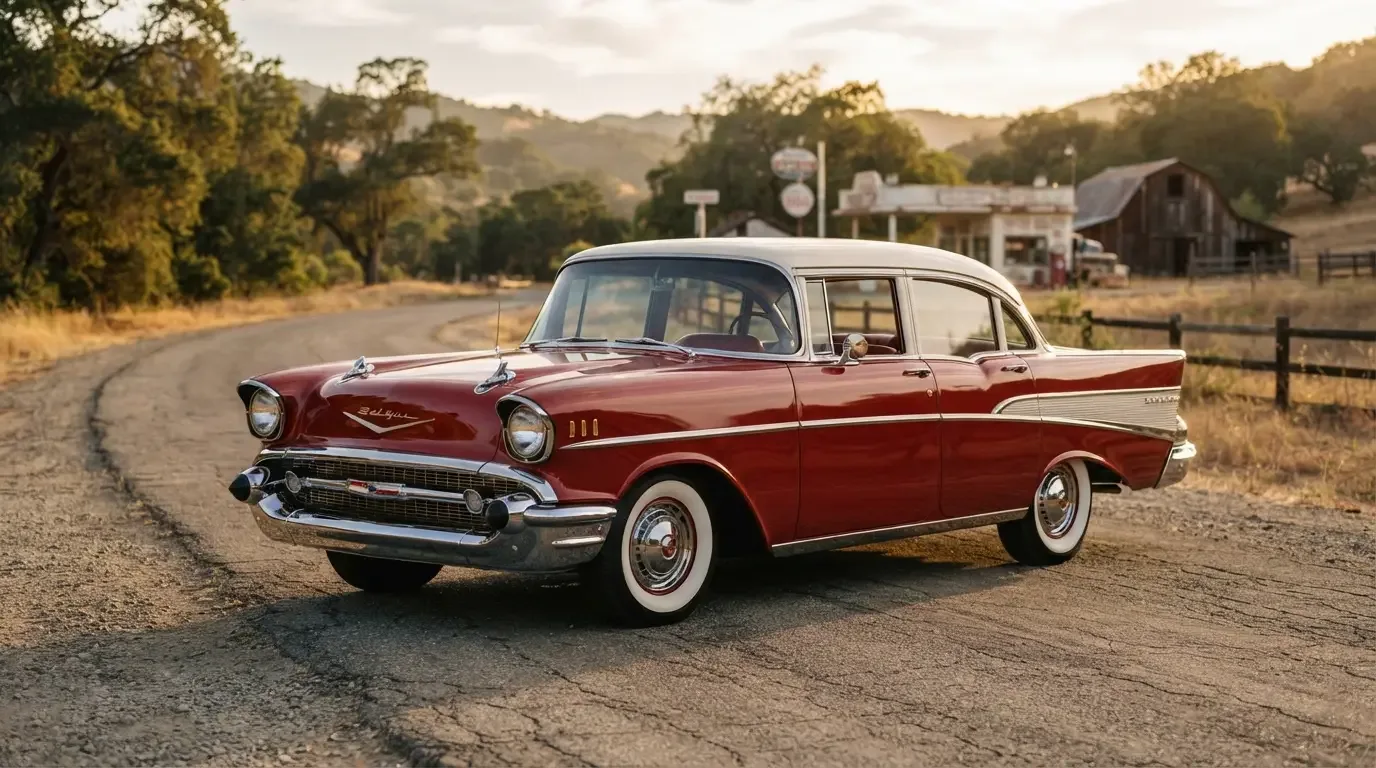
The 1957 Bel Air is arguably the most recognized American car of its decade, and that recognition is not an accident of nostalgia. Chevrolet gave the Tri-Five body its most dramatic year, and the styling team made choices that read as bold now and were bolder then. The fins were the headline, tastefully sized next to the excesses some rivals committed, but unmistakable. The front end wore a face with a wide grille and a bumper design that framed it, and top-line cars carried gold anodized trim that caught light like jewelry.
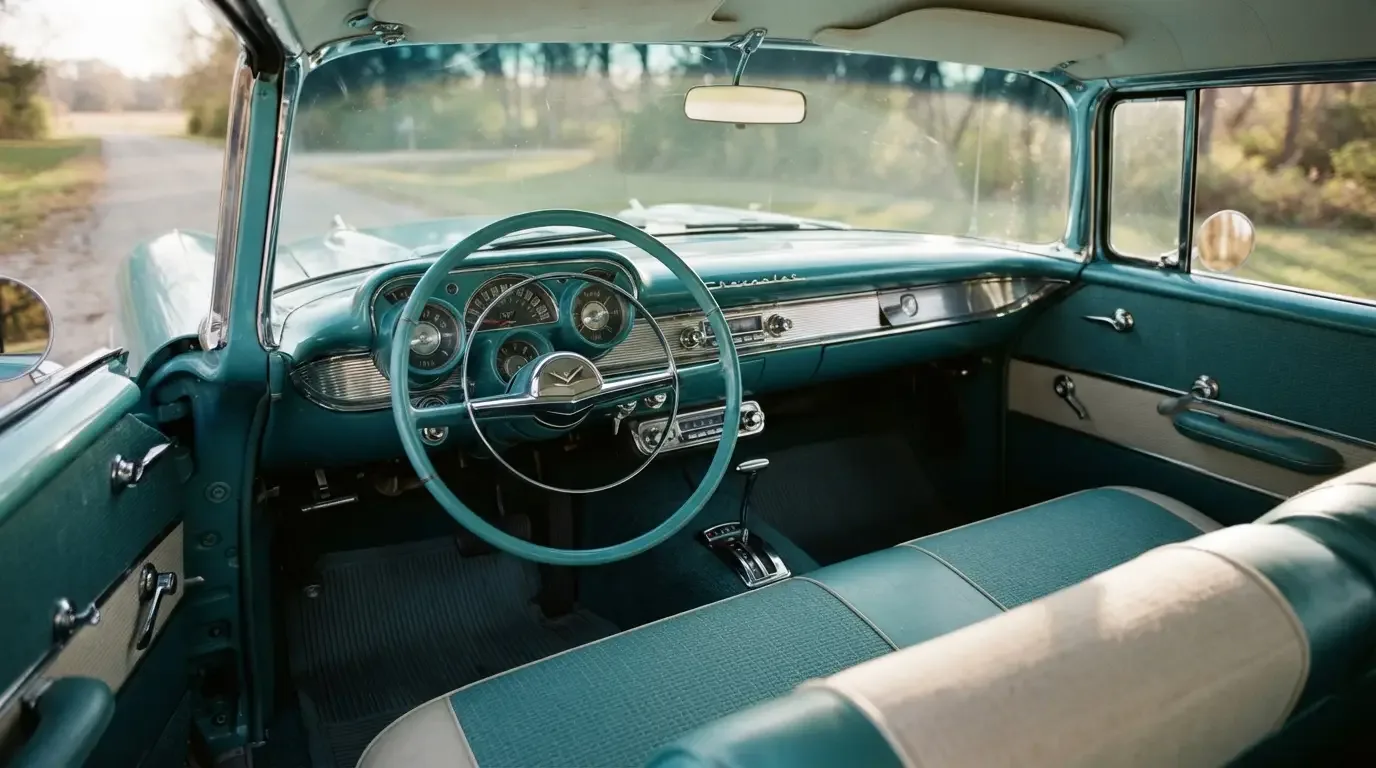
The two-tone paint that defined the era reached its peak here, with the Bel Air's side trim shaped to hold contrasting colors along a sculpted panel. Inside, the dashboard and details matched the exterior's ambition. This was a car designed to be looked at, and seventy years later people are still looking. The way it built on what came before is part of the pleasure, and the earlier chapters are worth reading in more on the chevy bel air for anyone who wants the full arc.
Fuel injection and one horsepower per cubic inch
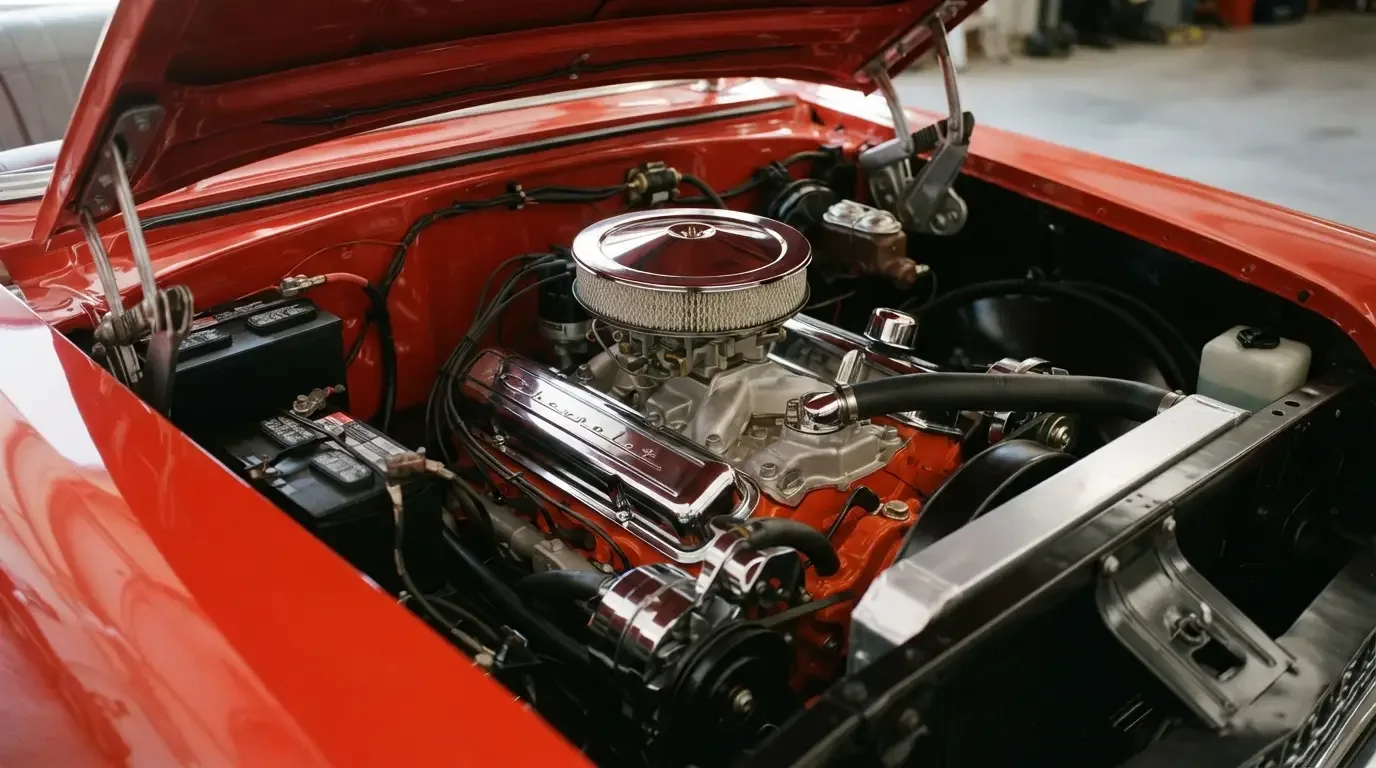
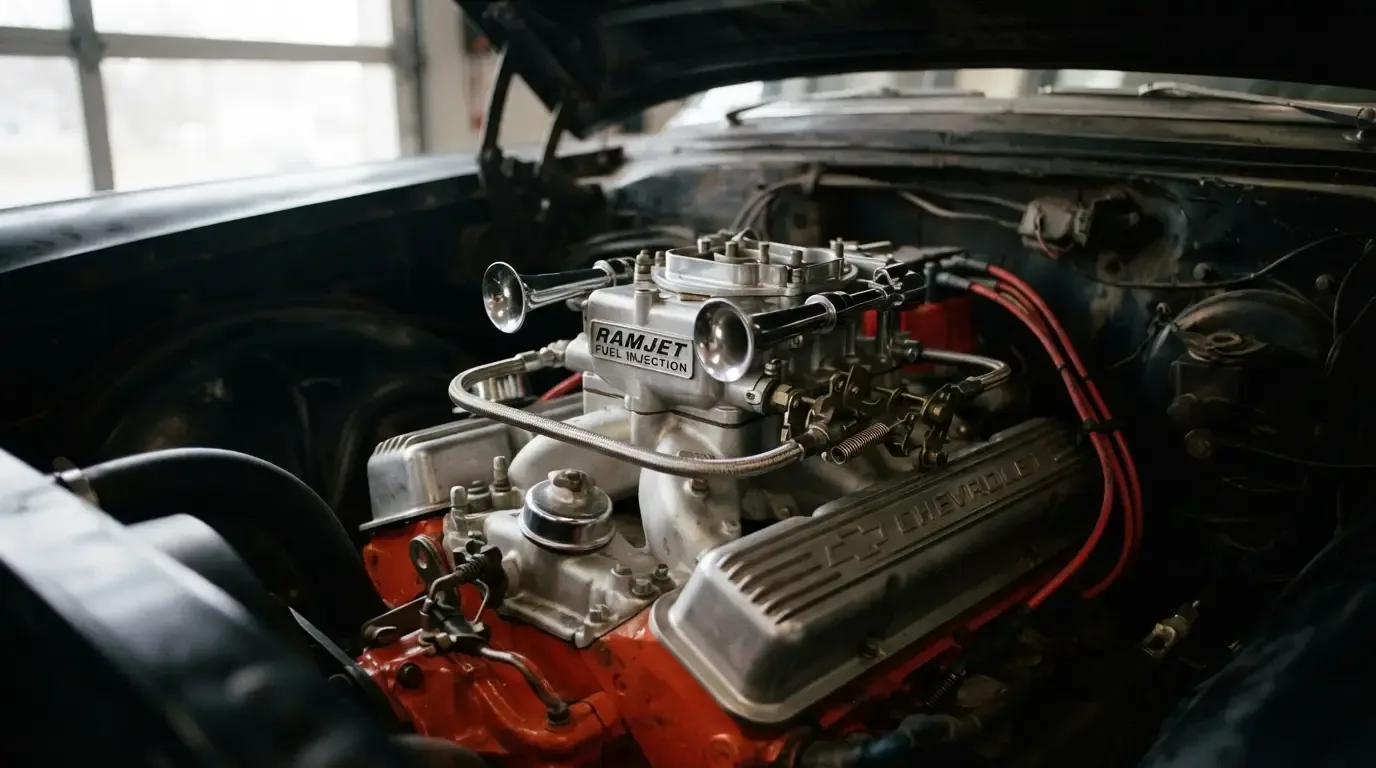
The 1957 car did not just look faster, it was faster, because Chevrolet enlarged the small-block. The V8 grew to 283 cubic inches, and the top of the option list held something genuinely advanced for a mass-market car: mechanical fuel injection. The Ramjet system, when fitted to the highest-output 283 with its solid-lifter camshaft, produced a rating of 283 horsepower, which let Chevrolet make the marketing claim that the engine delivered one horsepower for every cubic inch of displacement.
That figure was a milestone, and it mattered as much for what it signaled as for how many cars actually left with the injection setup, which was relatively few. Most 1957 Bel Airs left with carburetors, and the fuel-injected cars are among the rarest and most valuable of all. But the headline stuck. The affordable Chevrolet now had a technology story to tell, and it burnished the whole car's reputation. The 283 itself became a legend, powering a generation of Chevrolets long after 1957 ended.
Why 1957 became the icon
Ask why this year, out of all the Tri-Fives, became the definitive one, and the answer is a pileup of factors that all landed at once. The styling was the most expressive of the three years. The engine reached its most celebrated form. And crucially, the 1957 was the end of the line for this body, because Chevrolet moved to an all-new and much larger car for 1958. That made the 1957 the last and most fully developed expression of a design people already loved.
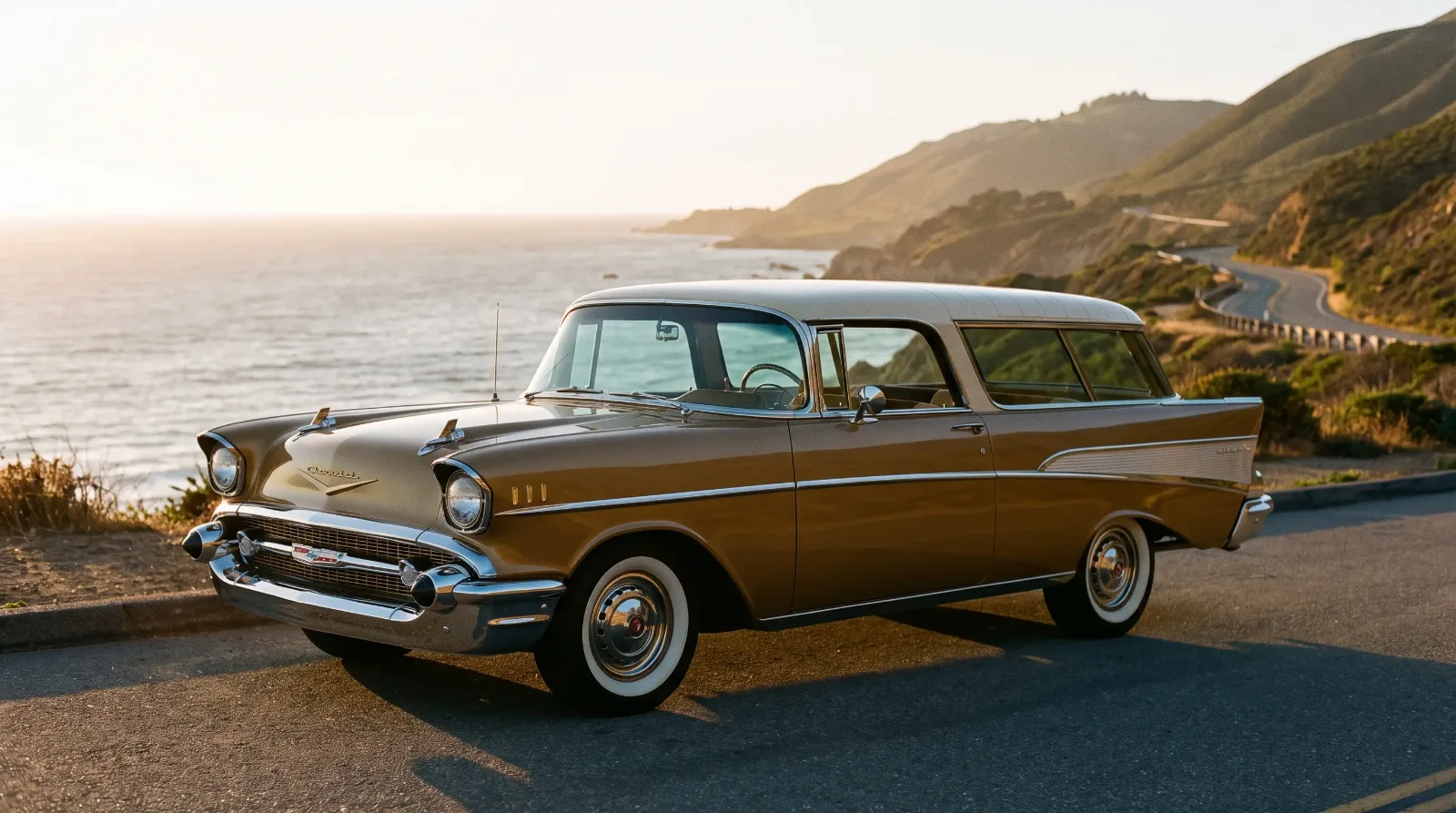
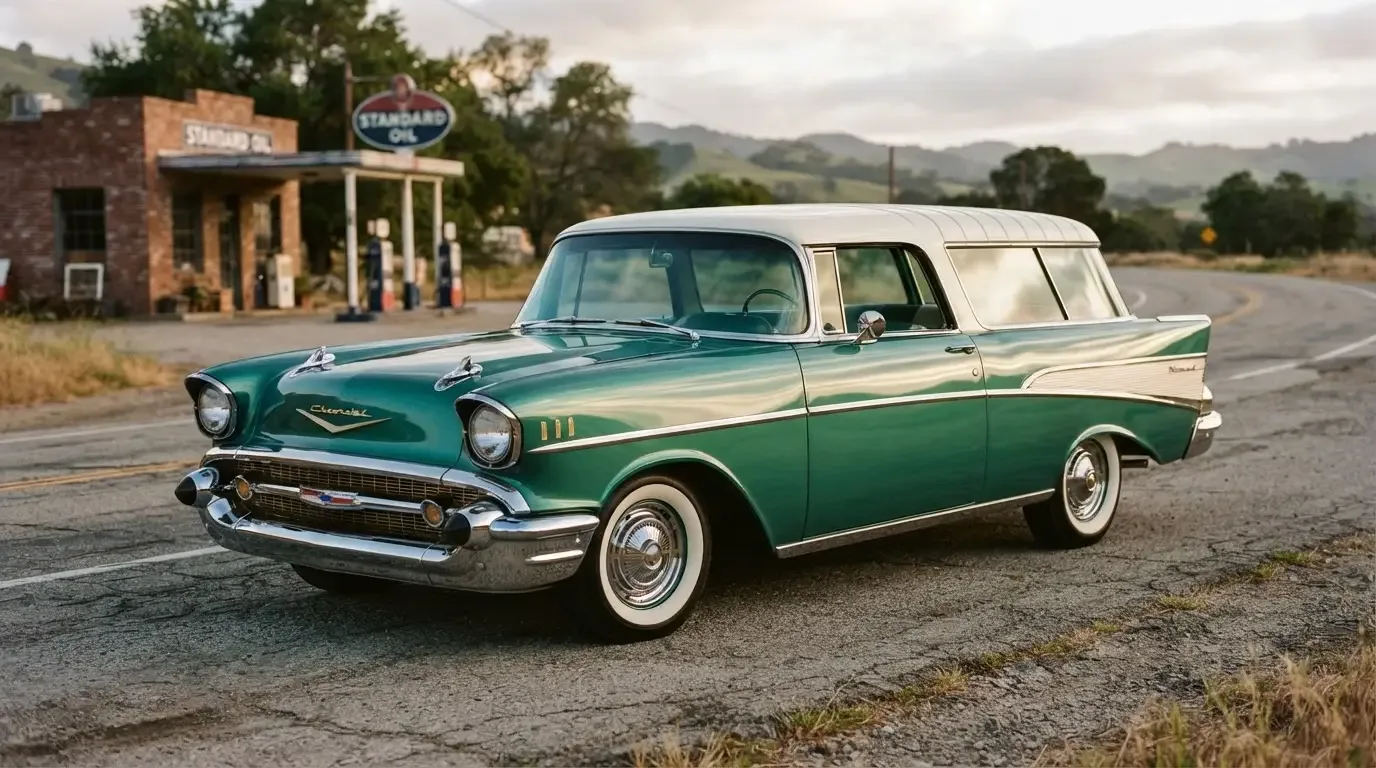
Then the culture took over. As the cars aged into the 1960s and 1970s, the 1957 became the default choice for hot rodders, restorers, and anyone who wanted a piece of the previous decade. It appeared in films and songs, on magazine covers, and in the driveways of people who had wanted one when they were young and could finally afford it. Popularity fed on itself until the 1957 Bel Air was less a car than an idea. Collectors who enjoy the wider family of this era will find more from this era in our look at the Nomad and its siblings, which we cover in more from this era.
| Attribute | 1957 Chevrolet Bel Air |
|---|---|
| Final year of | The Tri-Five body |
| New V8 | 283 cu in |
| Top output | 283 hp with solid-lifter fuel injection (250 hp hydraulic-lifter FI also offered) |
| Signature styling | Tailfins, gold anodized grille |
| Advertising claim | One horsepower per cubic inch |
| Wagon variant | Nomad two-door hardtop wagon |
The body styles and what they command
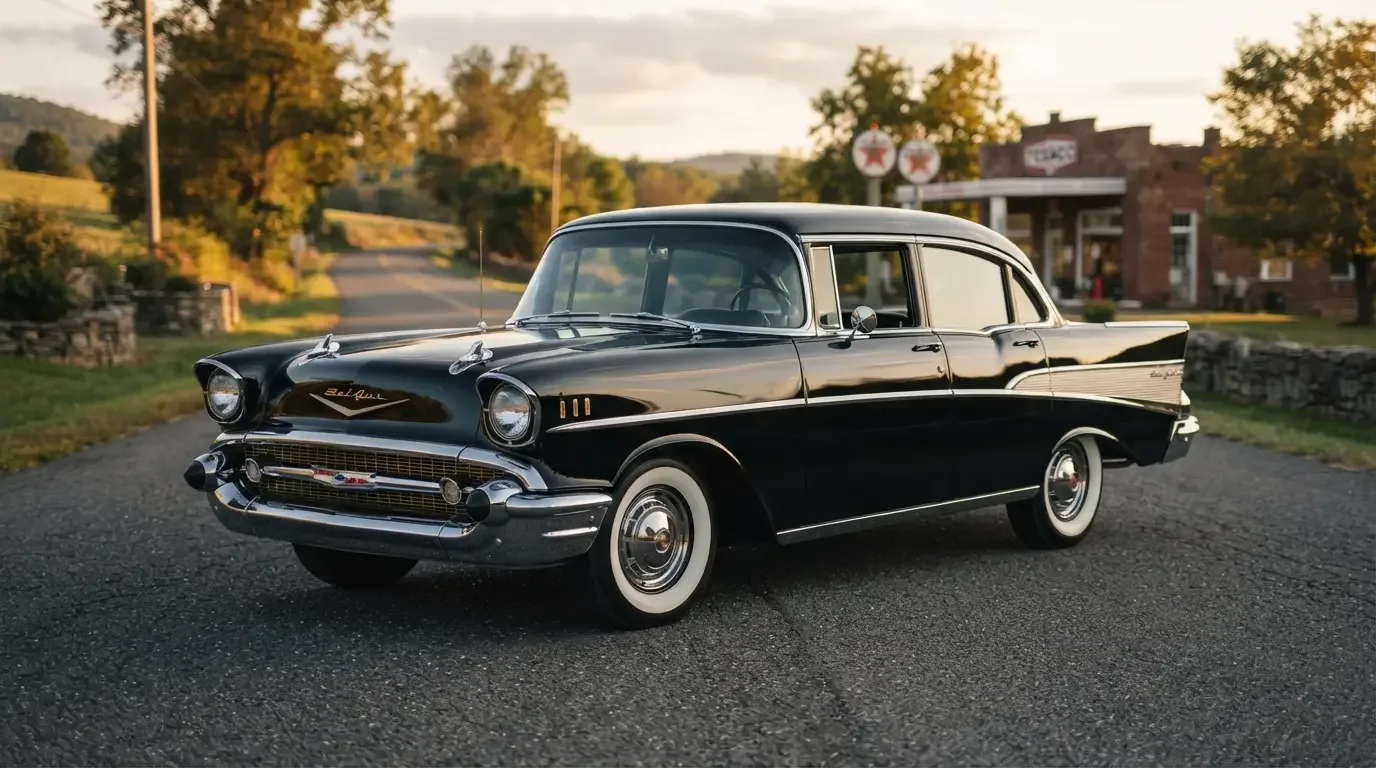
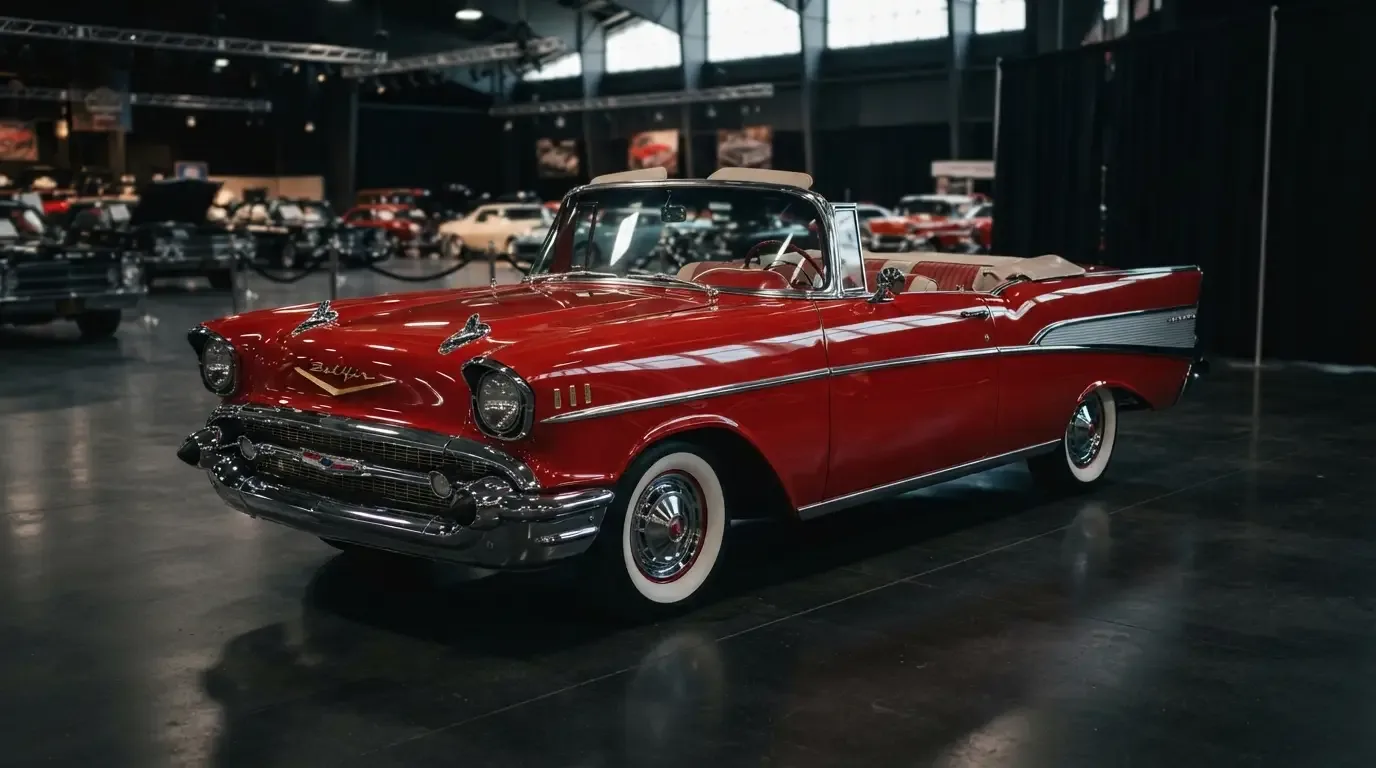
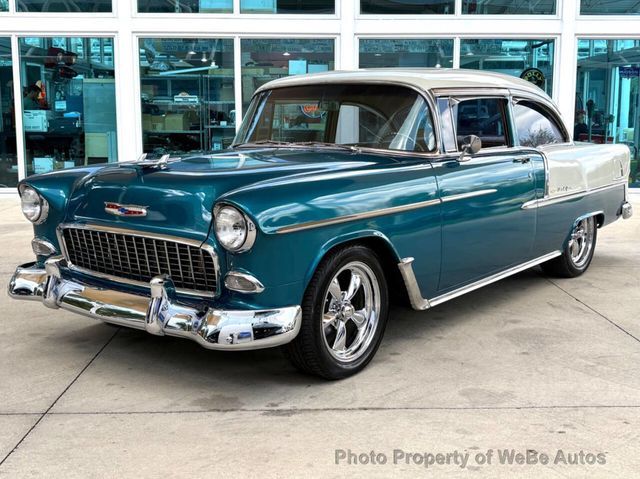
The hierarchy of desirability in a 1957 Bel Air follows the pattern of the era, only more so, because the money involved is larger. The convertible sits at the top, the two-door Sport Coupe hardtop is the shape most people want and the backbone of the market, and the four-door models offer a more affordable way into an iconic car. The Nomad wagon, in its final year, remains a special case that trades well above the ordinary range.
A fuel-injected car of any body style carries a premium, when it can be authenticated, because so few were built and so many claims outnumber genuine survivors. This is the corner of the Bel Air world where documentation earns its keep. The difference between a real fuel-injected convertible and a well-built tribute is enormous in money, and the market rewards buyers who do their homework and punishes those who do not.
"You can love the 1955 for its restraint and respect the 1956 for being underrated, but the 1957 is the one that gets remembered, and it earned that. It is the car people draw when you ask a child to draw an old Chevy, even a child who has never seen one in the metal."
- Patrick Walsh
The last of a body, the start of a legend
Part of what gives the 1957 its weight is timing. Chevrolet knew this was the final year for the Tri-Five body, because an all-new car was already coming for 1958, larger and heavier and built to a different brief. That made the 1957 the most refined version of a design the public had spent three years falling for. Everything the stylists and engineers had learned since 1955 went into it, and then the shape was retired at its peak rather than allowed to fade.
The contrast with what followed sharpened the affection. The 1958 Chevrolet was a bigger car aimed at a different mood, and to many buyers who had loved the lean Tri-Five it felt like a departure. In hindsight that break made the 1957 the clear end of a chapter, the last compact, light, tidy Chevrolet of the fifties before the cars grew. Enthusiasts tend to prize the final year of any beloved design, and the 1957 Bel Air is one of the purest examples of that pattern. It was not the car that started the story, but it was the one that finished it in the most memorable possible way, and endings photograph better than beginnings. That sense of a high point reached and then deliberately left behind is woven into why the car still commands the attention it does.
Living with the legend
For all its status, the 1957 Bel Air is a usable classic, and that is part of why it stayed popular when other fifties icons became too precious to drive. The small-block is a friendly engine, parts and knowledge are abundant after decades of enthusiast attention, and the car is comfortable at modern road speeds in a way many contemporaries are not. People actually use these cars, and that keeps them alive as objects rather than museum pieces.
That accessibility comes with a caveat familiar to anyone shopping the famous years. The 1957 has been reproduced, restored, modified, and occasionally misrepresented more than almost any American classic. A famous name and a desirable body style do not guarantee a good car, and the premium the year commands attracts the full spectrum from honest restorations to hopeful fakes. The badge is the beginning of the evaluation, not the end of it.
The 283 and the horsepower war
The decision to enlarge the small-block for 1957 was not made in isolation. It was a move in a horsepower contest that gripped the whole American industry, and Chevrolet intended the 283 to be a statement. Boring and stroking the 265 into a 283 gave the engine more room to make power, and the range of outputs offered that year ran from mild two-barrel versions suited to family use all the way to the fuel-injected top rating. That spread let a single engine family serve every kind of buyer, which was the small-block's great trick from the beginning.
The fuel injection sat at the summit of that range and carried outsized importance for its rarity and its symbolism. Mechanical injection was exotic technology for an affordable car in 1957, temperamental to keep in tune and expensive to buy, which is why so few customers ordered it. Most who wanted maximum performance took the multiple-carburetor options instead, which were cheaper and easier to live with. But the injected engine gave Chevrolet its headline, the one horsepower per cubic inch claim that outlived the year and attached itself permanently to the car's reputation. The 283 went on to power an enormous variety of Chevrolets through the following years, but its debut in the 1957 Bel Air is the moment enthusiasts remember, because that is where the number and the legend were born together. Understanding that engine is central to understanding why this specific year commands the reverence it does.
The car that defined an era
The 1957 Bel Air occupies a place in American car culture that no marketing budget could buy and no reissue could recreate. It was the final and most expressive year of a beloved design, it carried an engine that made history with a single advertising claim, and it arrived at the exact moment a rising country wanted to celebrate its own optimism in chrome and paint. Everything lined up, and the result is a car that transcended its price and its purpose.
For the collector, that fame is both the attraction and the challenge. It guarantees interest, liquidity, and a deep community, but it also demands care in buying, because the premium is real and so are the traps. No other year in the Bel Air story carries this much weight of expectation, and that changes how the market behaves around it. Prices hold firm through downturns that soften lesser cars, restorers can source almost any part they need, and a good example rarely wants for buyers. The flip side is that the same fame draws misrepresentation, so the reward goes to the patient buyer who treats the legend as a starting point and lets the documentation, not the badge, settle the question. Anyone ready to look for the genuine article can find a classic Air among the current find a classic Air listings and see for themselves why, after seven decades, this is still the car people picture first.