
Ask a ten-year-old to draw a 1950s car and you will probably get a Chevrolet Bel Air. The wide grin of chrome, the little tailfins, the two-tone paint split by a spear of trim down the flank. It is the shape that Hollywood reaches for whenever a scene needs to say "America, mid-century, top down." That is a strange fate for a car that started life as a marketing trick, a way to sell a fancier roofline to buyers who could not yet afford a convertible. The Bel Air outgrew that beginning fast. By the middle of the decade it was the car every neighbor measured their own against, and by now it has become shorthand for an entire era.
Car Features
15 min read
The Chevrolet Bel Air Story: The Car That Made the 1950s
How a marketing trick became the shape that defines the 1950s: the full Chevy Bel Air story, from the 1950 hardtop to the Tri-Five icons and the workhorse years after.
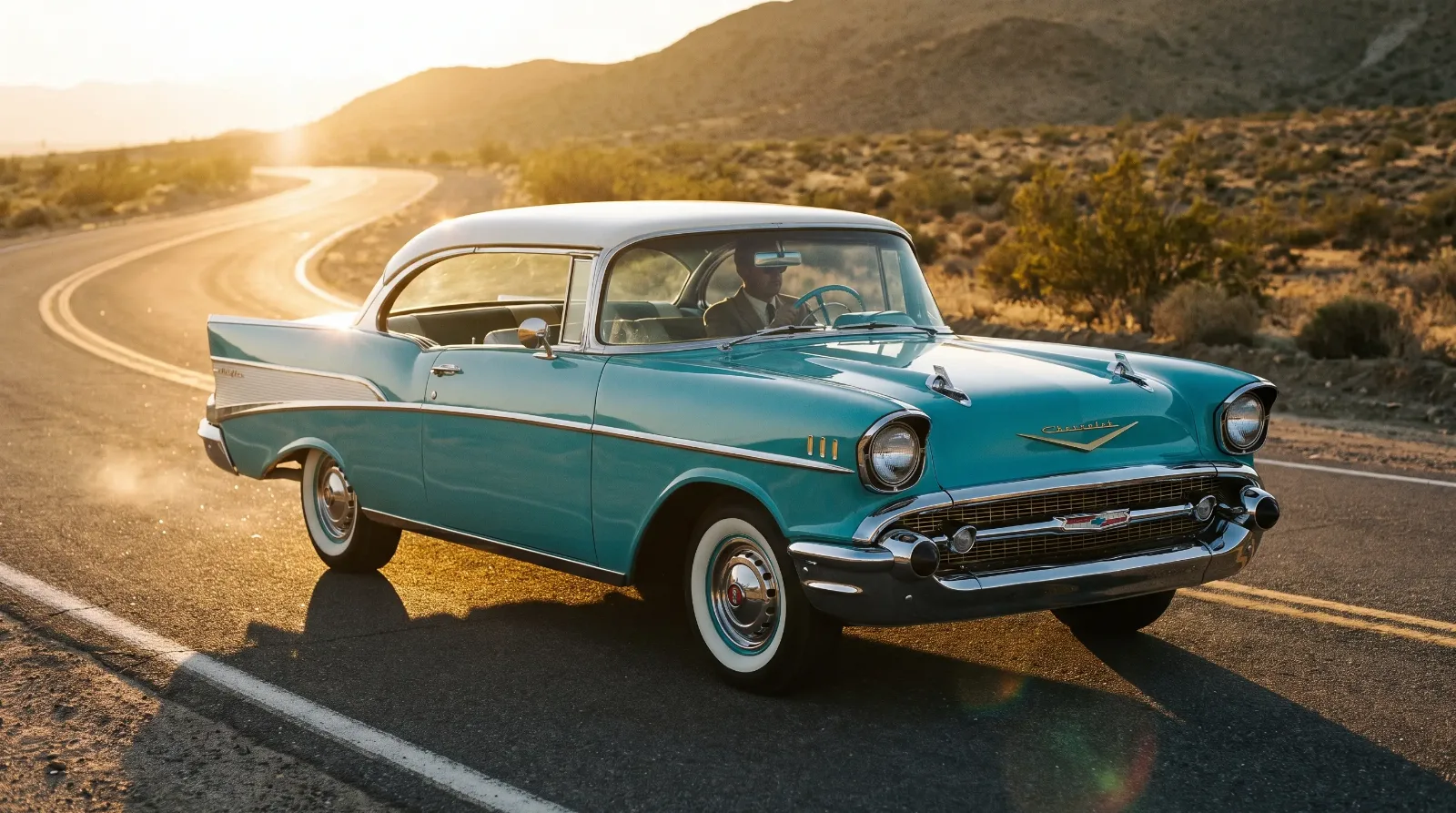
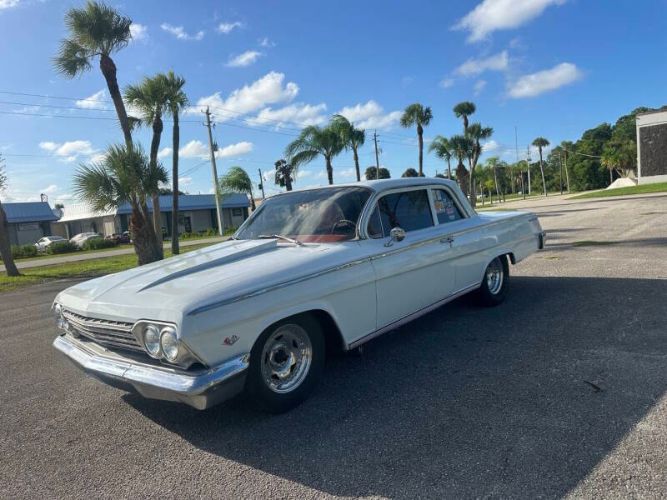
I have stood in a lot of parking lots at a lot of shows, and I can tell you that nothing pulls a crowd quite like a clean chevy bel air rolling in under its own power. People who cannot name a single other Chevrolet from the period know this one on sight. This is the story of how a trim name became a legend, told the way it actually happened, with the wins and the awkward middle years included.
From a hardtop trick to a household name
The name arrived in 1950, and it did not belong to a whole car. It belonged to a body style. Chevrolet wanted to offer buyers the look of a convertible with the roof welded shut, a pillarless two-door hardtop, and it needed a name that sounded like money. Bel Air, after the wealthy district on the west side of Los Angeles, did the job. That first Bel Air was the sportiest roofline in the Chevrolet catalog, sitting inside the Styleline Deluxe range rather than standing on its own.
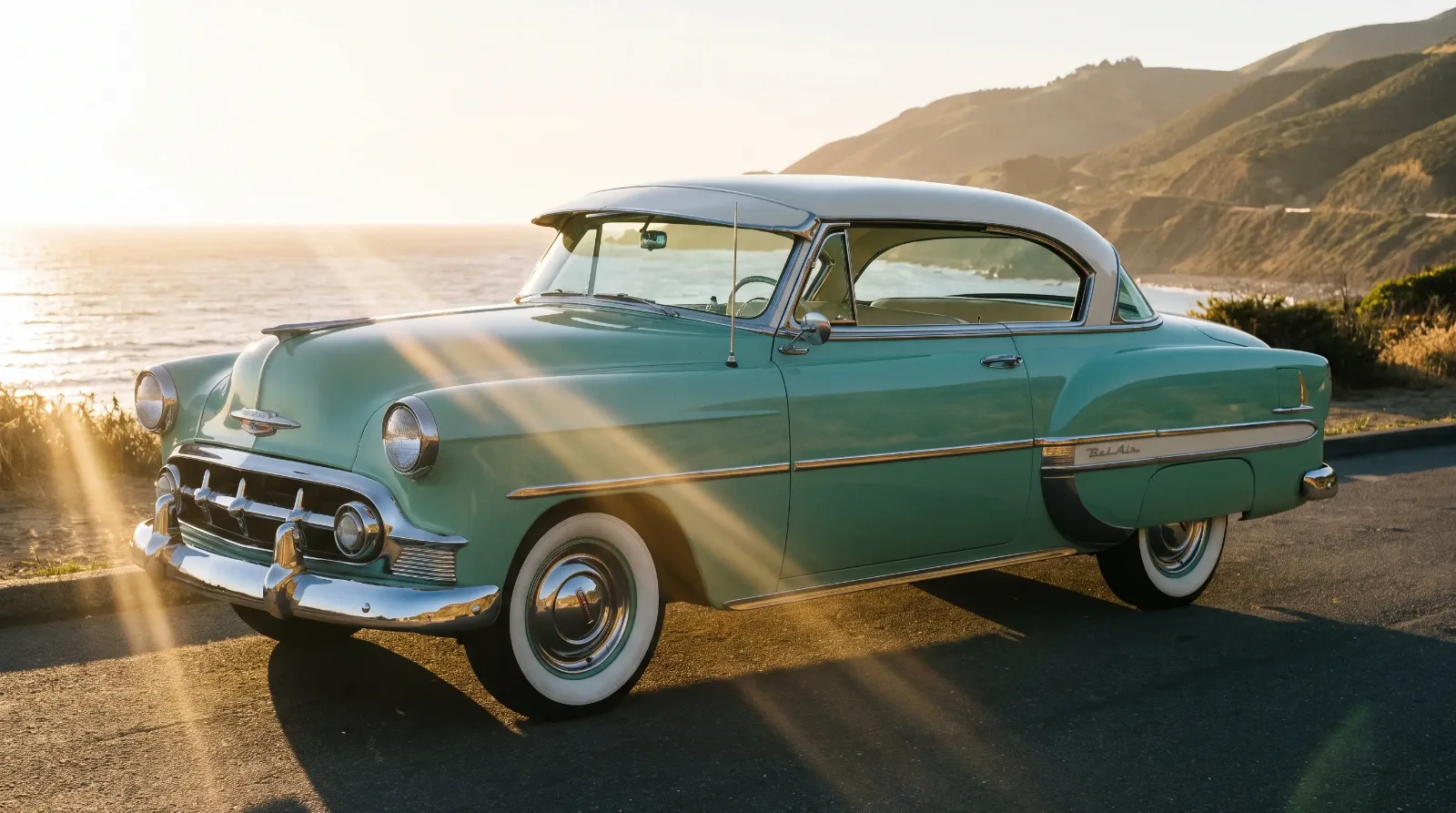
For a few years it stayed that way, a special roof on an ordinary car. Then in 1953 Chevrolet promoted the name to a full trim series, the top rung of the ladder above the One-Fifty and Two-Ten lines. Now a Bel Air could be a sedan, a coupe, a convertible, or a wagon, and it came with the good chrome, the nicer interior, and carpet where the cheaper cars had rubber. The 1953 and 1954 models are handsome in a rounded, cautious way. They look like the end of one design language rather than the start of the next. Good cars, careful cars, and almost nobody outside the hobby remembers them, because what came next erased them from the public memory.
The Tri-Five years that changed everything
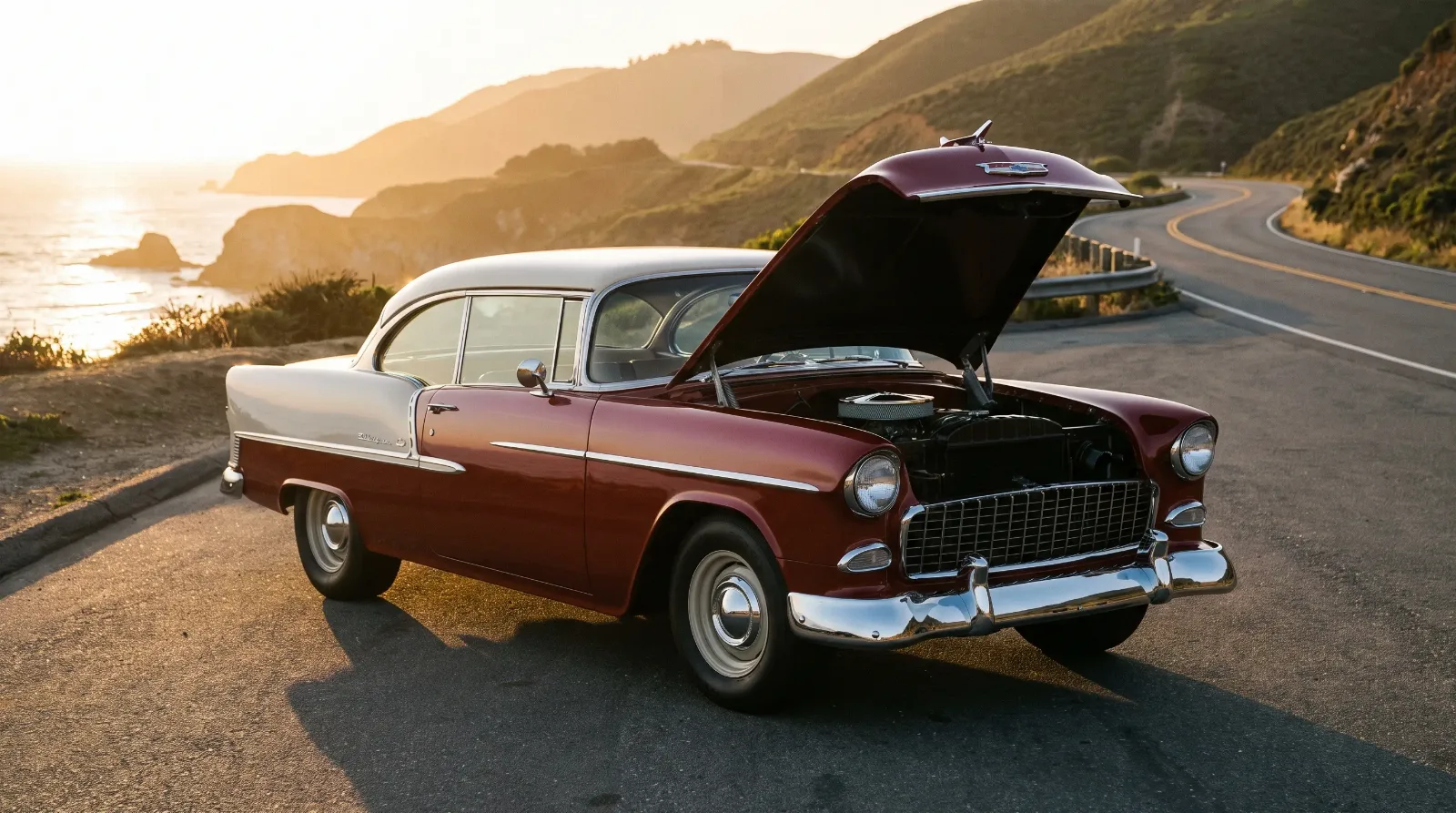
Everything the Bel Air would ever be got decided across three model years: 1955, 1956, and 1957. Collectors call them the Tri-Five Chevys, and the shorthand is worth learning, because it is the center of gravity for the whole nameplate. In 1955 Chevrolet threw out the soft prewar shapes and started fresh. The new car was lower, wider, and flatter, with a Ferrari-inspired eggcrate grille on the first year that some dealers thought looked too plain. Buyers disagreed. The 1955 Bel Air sold in enormous numbers and reset what a low-priced American car was allowed to look like.
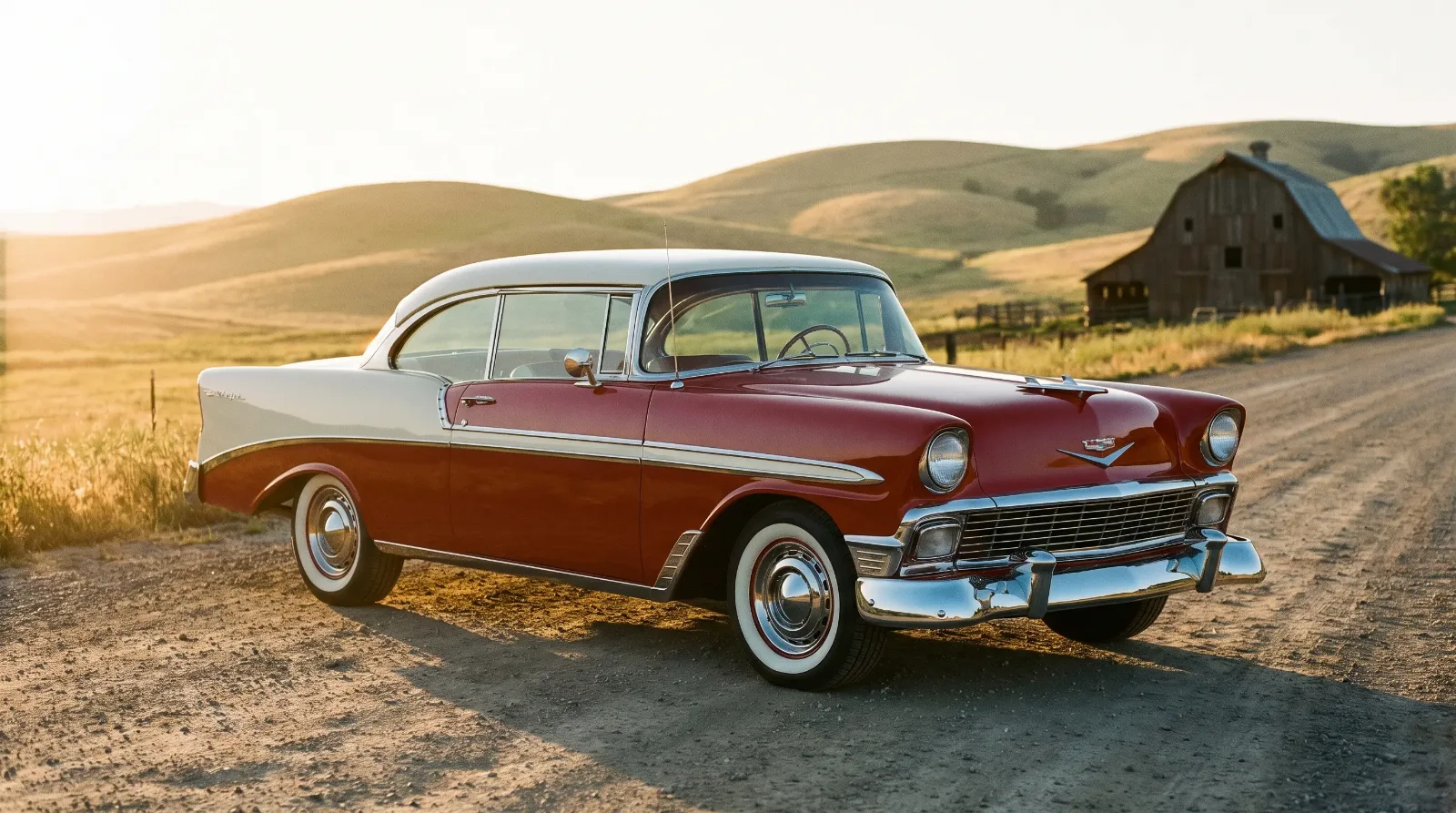
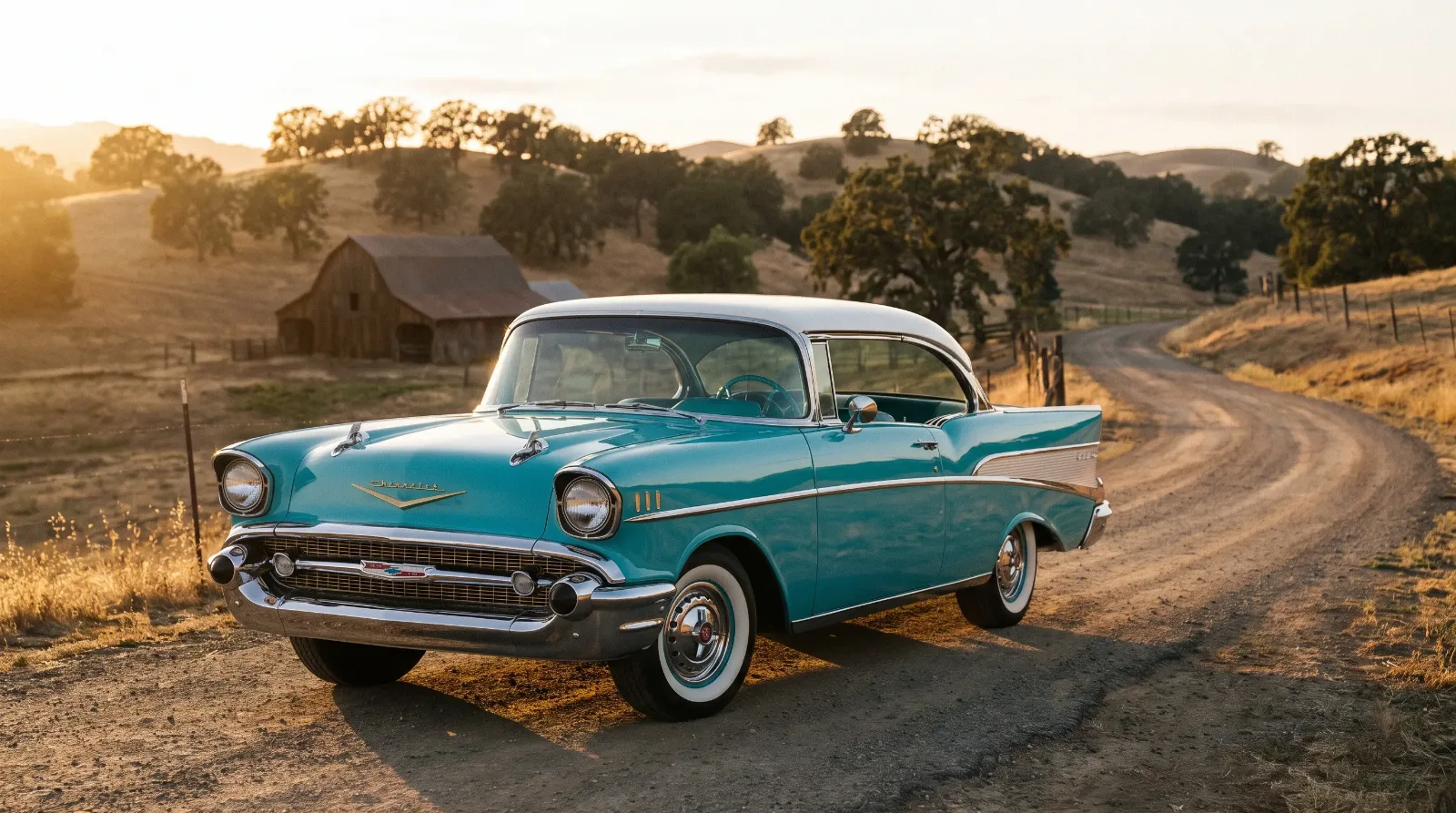
The 1956 refresh widened the grille into a full-width face and stretched the side trim into a broad two-tone sweep, which made the paint combinations pop even harder in a showroom. Then came 1957, the year that turned an already popular car into an icon. The stylists added modest tailfins, a gold-anodized grille and trim on the top cars, and those famous twin chrome bombs on the hood. Oddly enough, the 1957 was outsold in its own year by Ford, a fact that stings some loyalists to this day. History did not care. The 1957 Bel Air became the shape that stands in for the entire decade, the one on the diner wall and the die-cast shelf.
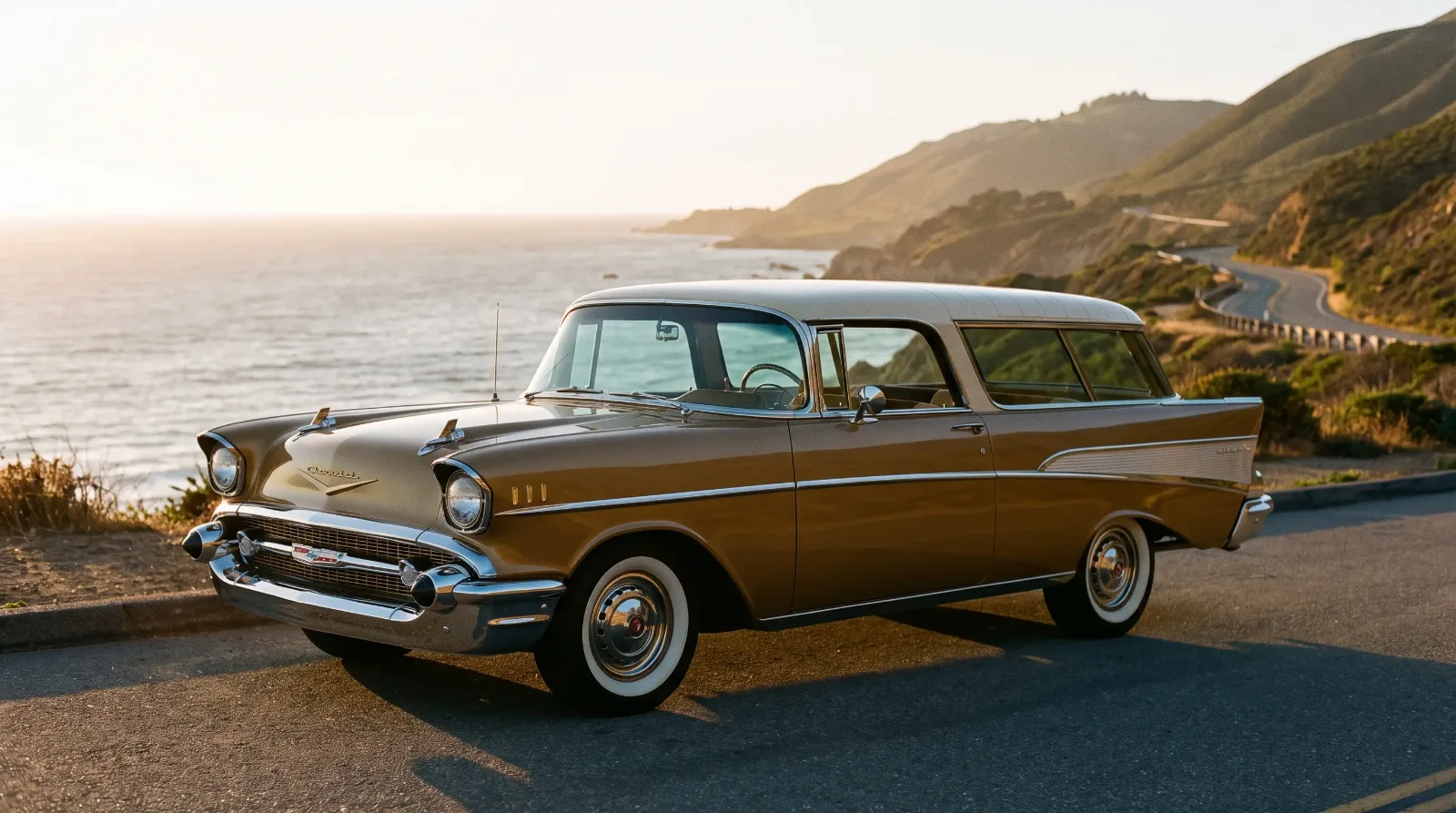
Part of the magic was breadth. You could buy a Bel Air as a plain four-door for the family, a sport coupe for the weekend, a convertible for showing off, or the Nomad, a two-door wagon with a hardtop-style roofline that is now one of the most sought-after body styles Chevrolet ever built. The Nomad was expensive when new and did not sell in big numbers, which is exactly why a genuine one commands such attention today. One car, many faces, and every one of them wearing the same proud badge.
It helps to remember how ordinary these cars were meant to be. The Bel Air was never a hand-built exotic. It was a mass-market Chevrolet, sold at prices working families could stretch to, built by the hundreds of thousands on assembly lines running flat out to keep up with demand. That is the quiet miracle of the Tri-Five story. Chevrolet managed to make something genuinely beautiful and genuinely fast while still building it cheap enough that a schoolteacher or a factory foreman could park one in the driveway. The design held together across every body style and every price point, which is why a stripped sedan and a loaded convertible from the same year still read as members of the same family. That consistency is rarer than it sounds, and it is a big reason the shape aged so well.
| Detail | Chevrolet Bel Air, Tri-Five era (1955-1957) |
|---|---|
| Body styles | 2-door hardtop, sedan, convertible, Nomad wagon, sport coupe |
| New for 1955 | 265 cubic inch "Turbo-Fire" small-block V8 |
| Signature 1957 engine | 283 cubic inch V8, optional Ramjet fuel injection |
| Fuel-injected output | 283 hp (top solid-lifter Ramjet option), marketed as one horsepower per cubic inch |
| Position in lineup | Top trim, above the One-Fifty and Two-Ten series |
| Most collectible variant | 1957 Nomad and fuel-injected convertibles |
Engines that became legend
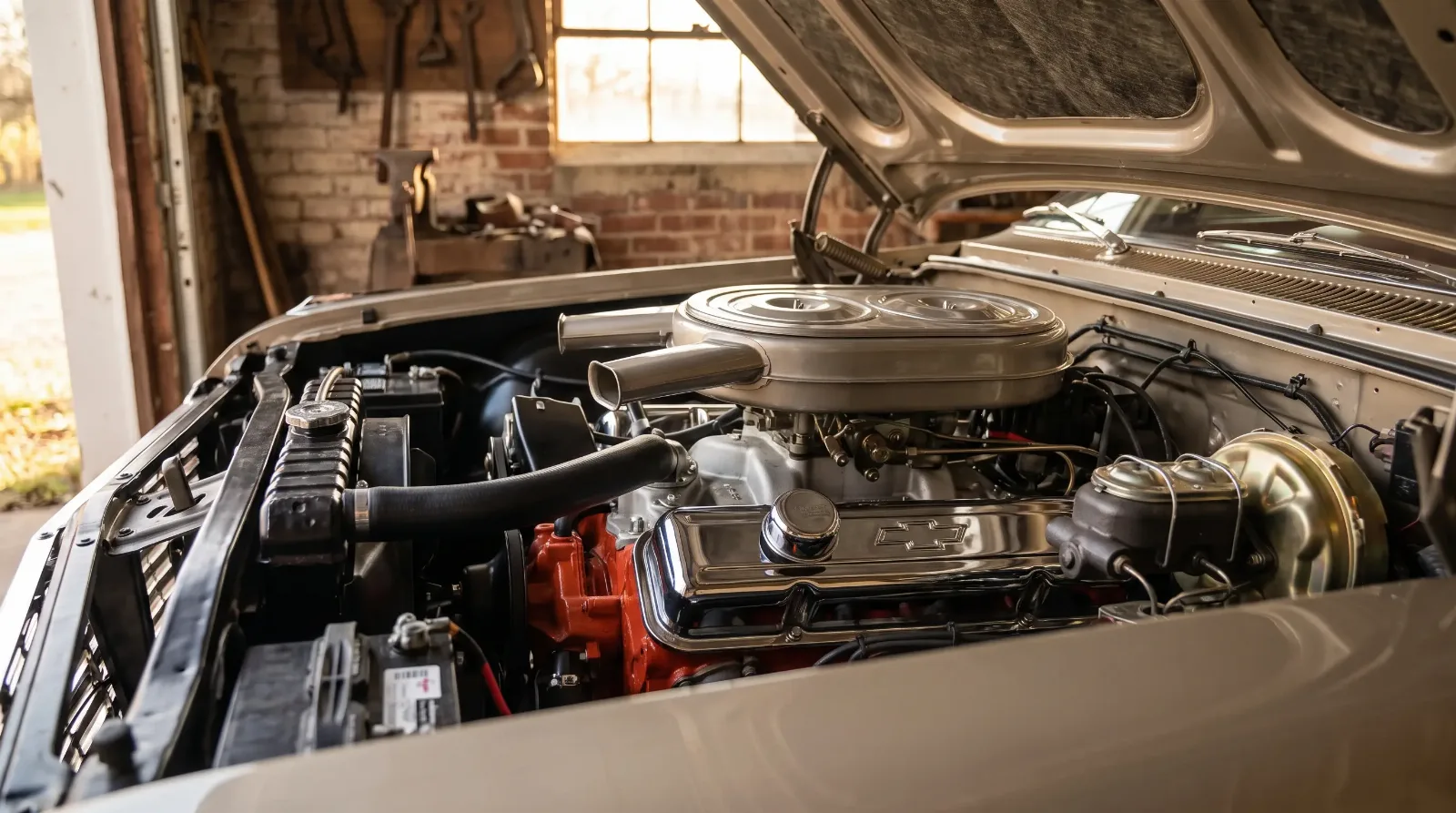
The Bel Air would be a pretty face and little more without what Chevrolet dropped under the hood in 1955. That year the company introduced the small-block V8, a 265 cubic inch engine that was light, cheap to build, and eager to rev. It changed the character of the car overnight. A Bel Air was no longer a comfortable cruiser with a straight-six doing its polite best. It was quick, and it sounded like it meant business. The straight-six, nicknamed the Blue Flame, stayed on the order sheet for the thrifty, but the V8 is what people wanted and what people remember.
In 1957 the small-block grew to 283 cubic inches, and Chevrolet offered a mechanical fuel injection system called Ramjet on the hot versions. The marketing claim was one horsepower per cubic inch, and the top solid-lifter Ramjet engine was rated at 283 hp, a headline number that put a low-priced Chevy in the same sentence as far more expensive machinery. Fuel injection was rare, expensive, and fussy, so most 283 cars left the factory with carburetors. But the option existed, and it gave the Bel Air a halo that no amount of chrome could buy. To this day a documented, factory fuel-injected 1957 is one of the crown jewels of the hobby.
"The small-block V8 is the reason the Bel Air stopped being furniture and became a car people argued about at stoplights. Everything the nameplate means today traces back to that engine bay in 1955."
- Patrick Walsh
What matters for the legend is not the exact output of any single engine. It is that Chevrolet took a mainstream family car and gave it real performance credentials at a price ordinary people could reach. That combination, everyday accessibility and genuine speed, is the recipe that made the postwar American V8 culture, and the Bel Air was standing right at the front of the line when it started.
Color, chrome, and the culture it built
Talk to anyone who was young in the 1950s and the memories come back in color. The Bel Air arrived at the exact moment American cars stopped being black, gray, and maybe dark green, and started wearing shades with names like Surf Green, Coral, Tropical Turquoise, and India Ivory. Two-tone paint was the whole point, and the Bel Air's side trim was designed to hold the line between the two colors like a painter's tape. A turquoise-and-white 1957 convertible is not just a car. It is a mood, and Chevrolet knew exactly what it was selling.
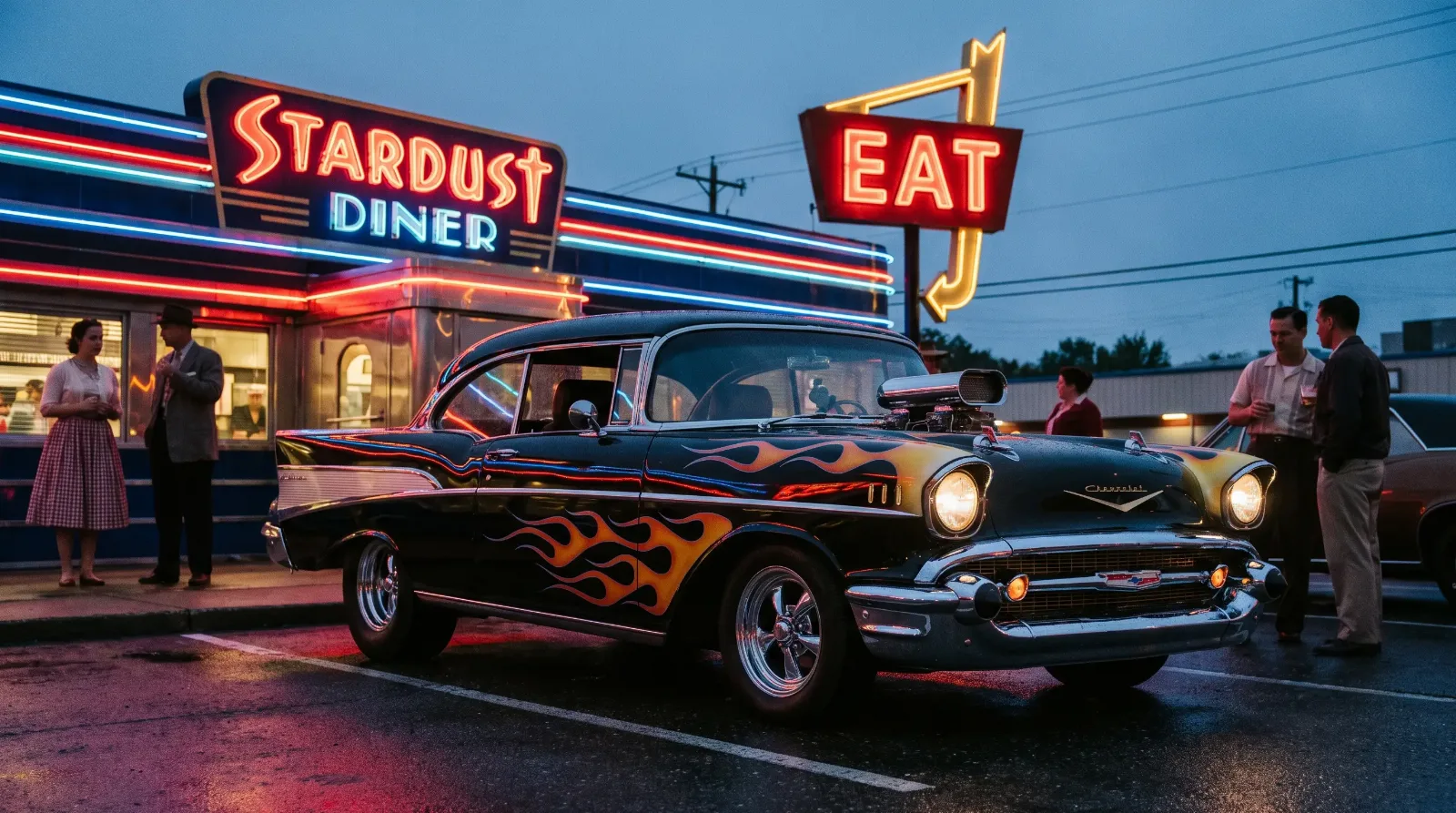
The car landed in the middle of a cultural moment it did not create but came to define. Drive-in restaurants, the interstate system going in, rock and roll on the AM dial, teenagers with a little money and a Saturday night. The Bel Air fit all of it. It was cheap enough for a young family or a first-time buyer, good-looking enough to be proud of, and quick enough to matter to the kid down the street. When a movie or a television show wants to establish that a scene takes place in 1957, it does not need a caption. It just needs a Bel Air parked at the curb.
That cultural weight is a big part of why values have held the way they have. People are not only buying sheet metal. They are buying a feeling that a lot of them never actually lived through but recognize anyway. If you have ever found yourself scrolling through listings for a classic Chevrolet Bel Air for sale at two in the morning, you already understand the pull. It is nostalgia you can drive.
When the Impala took the throne
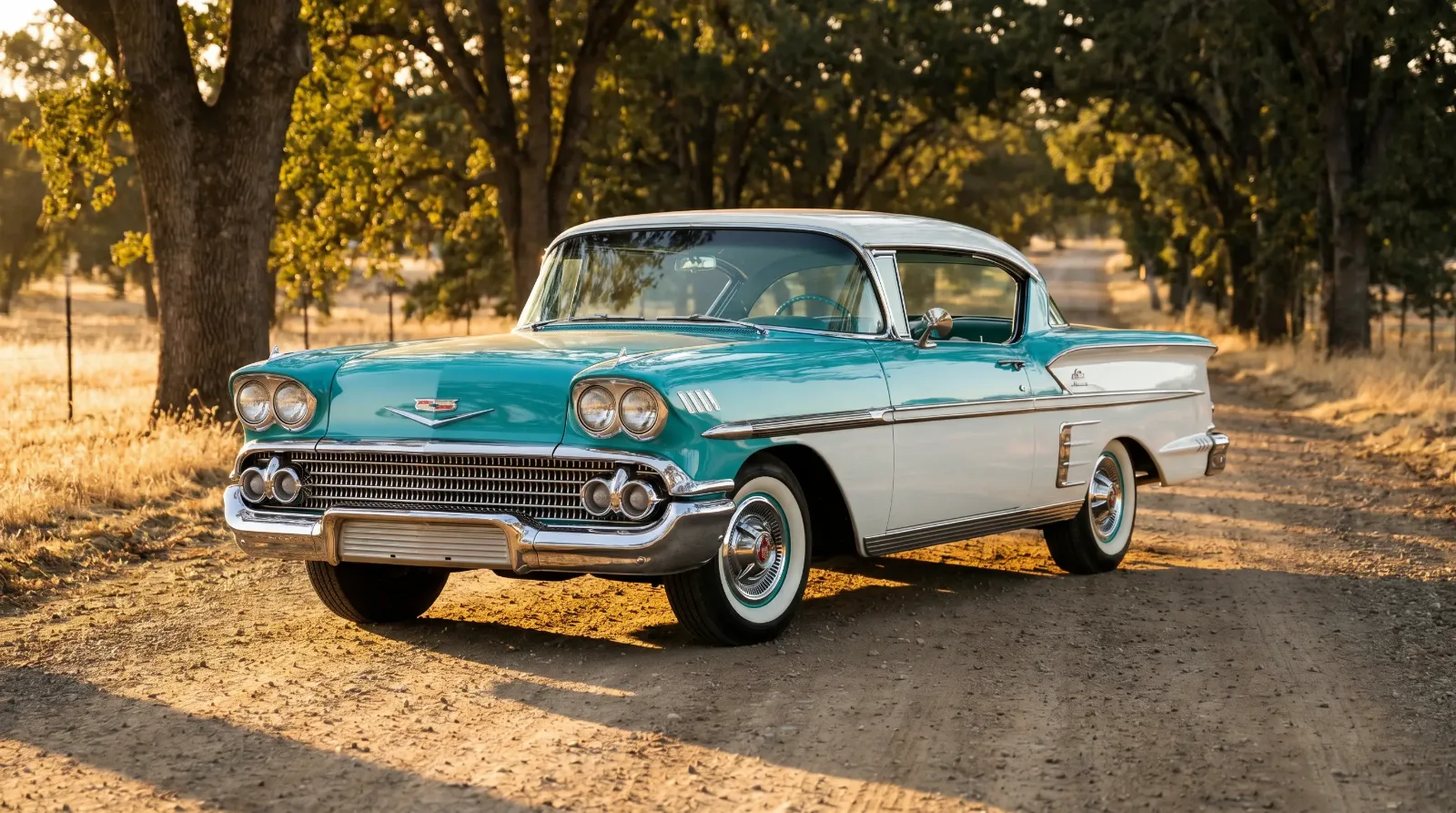
Legends rarely stay on top forever, and the Bel Air's reign at the summit was shorter than its fame suggests. In 1958 Chevrolet introduced a new top-of-the-line model, and at first it was simply the fanciest version of the Bel Air. It was called the Impala. Within a single year the Impala split off into its own series and took the crown, pushing the Bel Air down a rung to become a mid-level trim. The car that had been the aspirational choice was now the sensible one, the model you bought when you wanted a solid Chevrolet without paying for the flashiest badge.
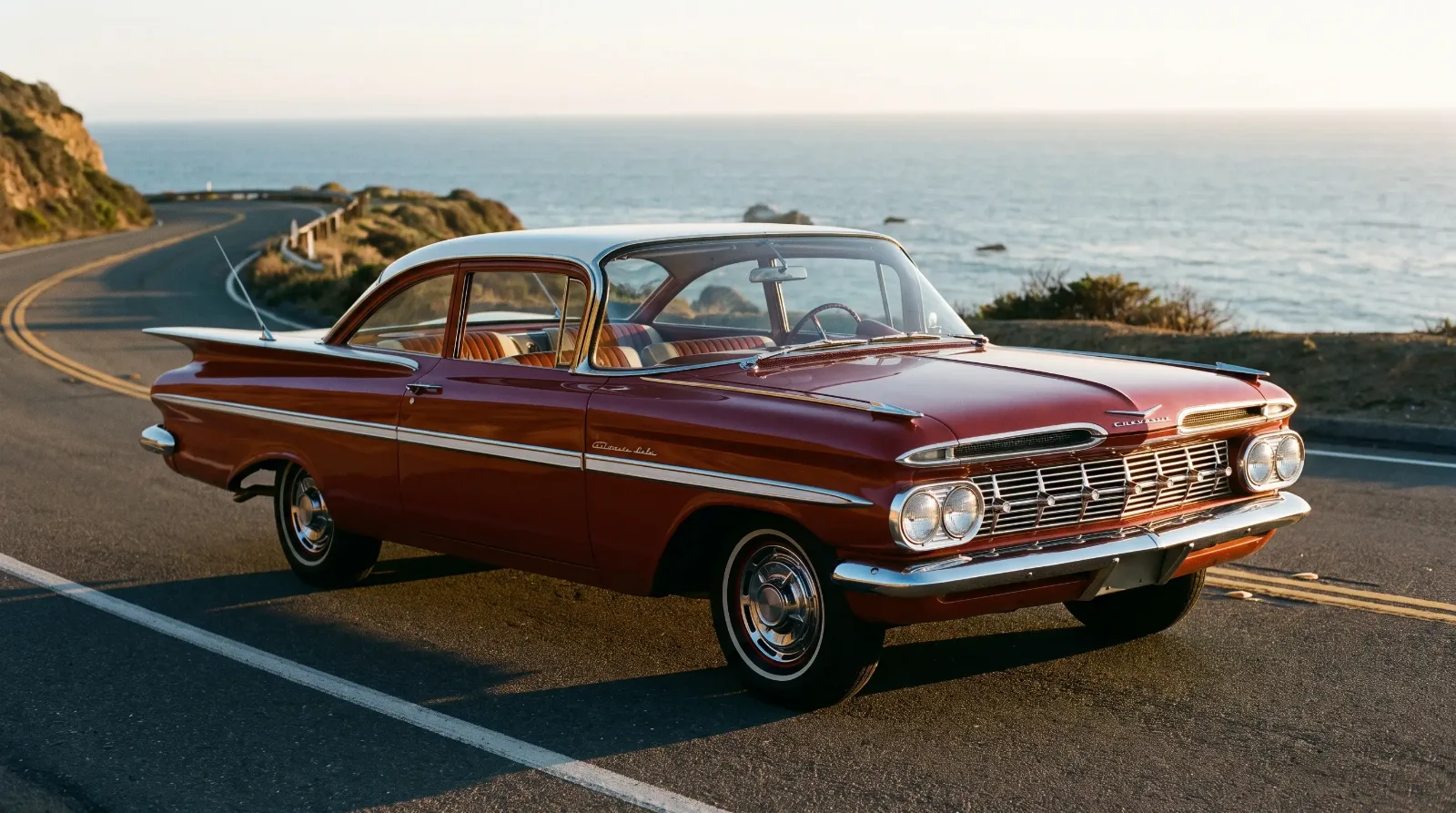
This is the part of the story that casual fans skip, but it is important. The Bel Air did not die in 1957. It kept going for years, riding on the big full-size Chevrolet platforms through the 1960s and into the 1970s. There were clean, square-shouldered Bel Airs in the early 1960s, big soft ones later in the decade, and plenty of plain four-doors that served as family transport, fleet cars, and taxis. Many of them were fitted with big-block V8 power that would embarrass the Tri-Five cars in a straight line, yet almost nobody puts a 1969 Bel Air on a poster. The nameplate had become respectable, and respectable does not sell calendars.
In the United States the Bel Air name was retired after the 1975 model year, though it carried on a while longer in Canada. So the badge that people picture as pure 1957 glamour actually spent most of its life as a workhorse. That gap between the myth and the full record is one of the more interesting things about the car, and it is worth remembering when someone tells you every Bel Air is a fortune. Most of them were built to be used up, and used up they were.
There is a lesson in that long second act. A nameplate does not have to stay glamorous to stay meaningful. Those middle-years Bel Airs carried families to church, hauled groceries, learned teenagers how to drive, and sat in a million driveways doing nothing more dramatic than starting every morning. When people say they had a Bel Air growing up, this is usually the car they mean, not a fuel-injected convertible but a solid four-door in a sensible color. The famous version gets the magazine covers, but the plain version is the one that actually lived in American life, and that everyday familiarity is part of why the name still lands so softly on so many ears.
"The public remembers the Bel Air as royalty, but it spent most of its career as the dependable middle child. That is not a knock. It is the reason so many families have one in an old photograph."
- Patrick Walsh
What the different eras are worth today
The collector market treats the Bel Air like at least three different cars, and knowing which one is in front of you is the whole game. The Tri-Five years sit in their own tier, with the 1957 convertibles, the Nomads, and any credible fuel-injected car at the top. A well-kept 1957 hardtop is a blue-chip classic that most people can still picture owning, and the four-door sedans of the same years offer a genuine bargain for anyone who wants the look without the top-tier price. The earlier 1953 and 1954 cars are quietly undervalued, handsome and honest, and often overlooked because they lack the fins.
The later full-size Bel Airs, from 1958 through 1975, are where the real value hides for a patient buyer. A 1960s Bel Air with a strong V8 can be a lot of car for the money, precisely because the badge on the fender does not carry the Impala premium. Enthusiasts have caught on to this, and some of the plainer full-size Chevrolets have started to climb, but they remain far more attainable than a Tri-Five. If you want a period Chevrolet you can actually afford to drive, this is the corner of the market to study.
Condition and documentation matter more than the model year in almost every case. A rusty, half-finished 1957 project can cost more to sort out than a clean driver, and an original car with paperwork will always beat a prettier restoration with no history. The Tri-Five cars have such deep parts and knowledge support that almost anything is fixable, which is a genuine advantage over rarer classics where a missing piece can stop a project cold.
There is also the matter of how a Bel Air will be used, which quietly shapes what you should pay. A car bought to show at concours events lives and dies on originality, correct finishes, and date-coded parts, and the buyers in that world will pay dearly for a car that is right in the details. A car bought to drive on weekends can be far more relaxed about all of that, which opens the door to sensible restomods and honest older restorations that a purist would walk past. Neither approach is wrong. The mistake is paying concours money for a driver, or expecting a bargain driver to hold up under a judge's flashlight. Decide which Bel Air you actually want before the paint and the badge decide for you, because both are very good at doing exactly that.
Why the Bel Air still matters
Plenty of cars from the 1950s were faster, plusher, or more advanced. Almost none of them are as instantly understood as the Bel Air. That is the thing about this car. It stopped being a product a long time ago and became a symbol, a piece of visual shorthand that even people with no interest in old cars can read. When you park one, you are not just showing a car. You are handing everyone who walks past a small, uncomplicated dose of a decade they think they remember.
For the person buying today, the appeal is unusually broad. You can chase a six-figure fuel-injected convertible or you can find an honest driver for the price of a new economy car, and both of them wear the same famous name. The chevy bel air rewards the poster-buyer and the tinkerer alike, and the community around it is one of the most welcoming in the hobby, full of people who have owned theirs for decades and love to talk. Few classic cars offer that much range while asking so little in the way of specialist knowledge to enjoy.
That is the real Bel Air story. Not a single perfect year frozen on a calendar, but a long run of cars that started as a clever name, peaked in a burst of chrome and color, settled into decades of quiet service, and came out the other side as one of the most beloved shapes America ever put on four wheels. The 1957 gets the glory, and it earned it. But the whole arc, the trick roofline of 1950 through the workhorse years and into the collector spotlight, is what makes the nameplate worth knowing. It is a car that grew up in public, and it never stopped being recognized.
Sources and notes
Related Reading
Article
The Early Bel Air (1950-1954): Chevrolet's Hardtop Pioneer
Article
The 1955 Bel Air: The Hot One and the Small-Block Revolution
Article
The 1956 Bel Air: The Underrated Tri-Five
Article
The 1957 Bel Air: America's Most Beloved Classic
Article
The Tri-Five Phenomenon and the Chevrolet Nomad
Article
The 1958 Bel Air: The Big Restyle and the Birth of the Impala
Article
The Full-Size Bel Air (1959-1970): From Flagship to Fleet
Article
Bel Air Engines: From the Blue Flame Six to the 409
Article
The Bel Air in American Culture: Hot Rods, Movies and Color
Have a
Chevrolet Bel Air
for Sale?
Reach thousands of serious classic car collectors across the US.
Sell It Here →
Are You a Classic Car Dealer?
List your full inventory and connect with targeted classic car buyers.
Join as a Dealer →
#classic chevrolet
#small-block v8
#1950s cars
#Chevrolet Bel Air
#Tri-Five
#1957 Chevrolet
#Chevy Nomad

About the author
Patrick Walsh
Automotive journalist covering classic car shows, events, and the enthusiast community across North America.
Related Listings - Chevrolet Bel Air
Comments
Be the first to comment on this article.