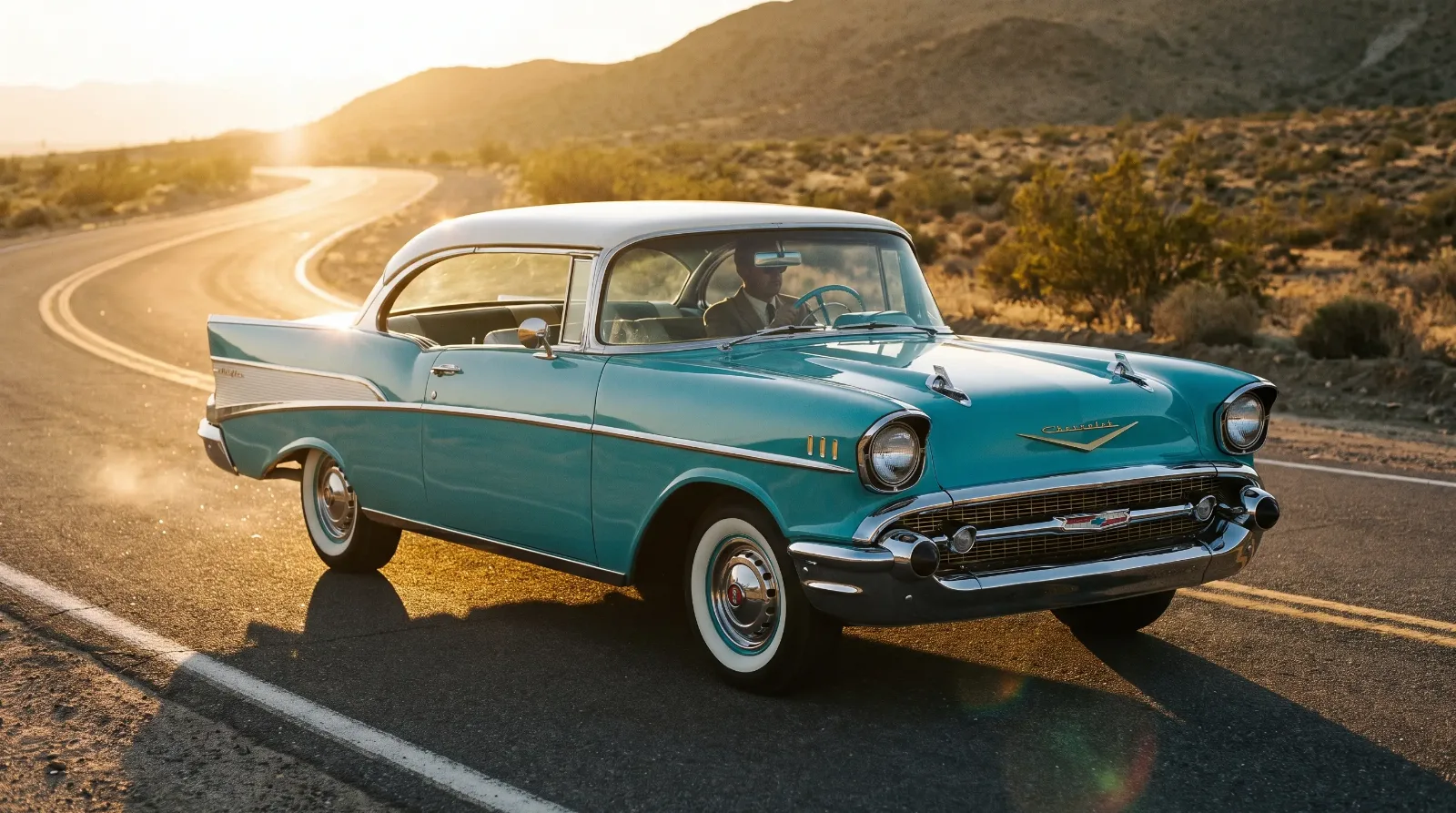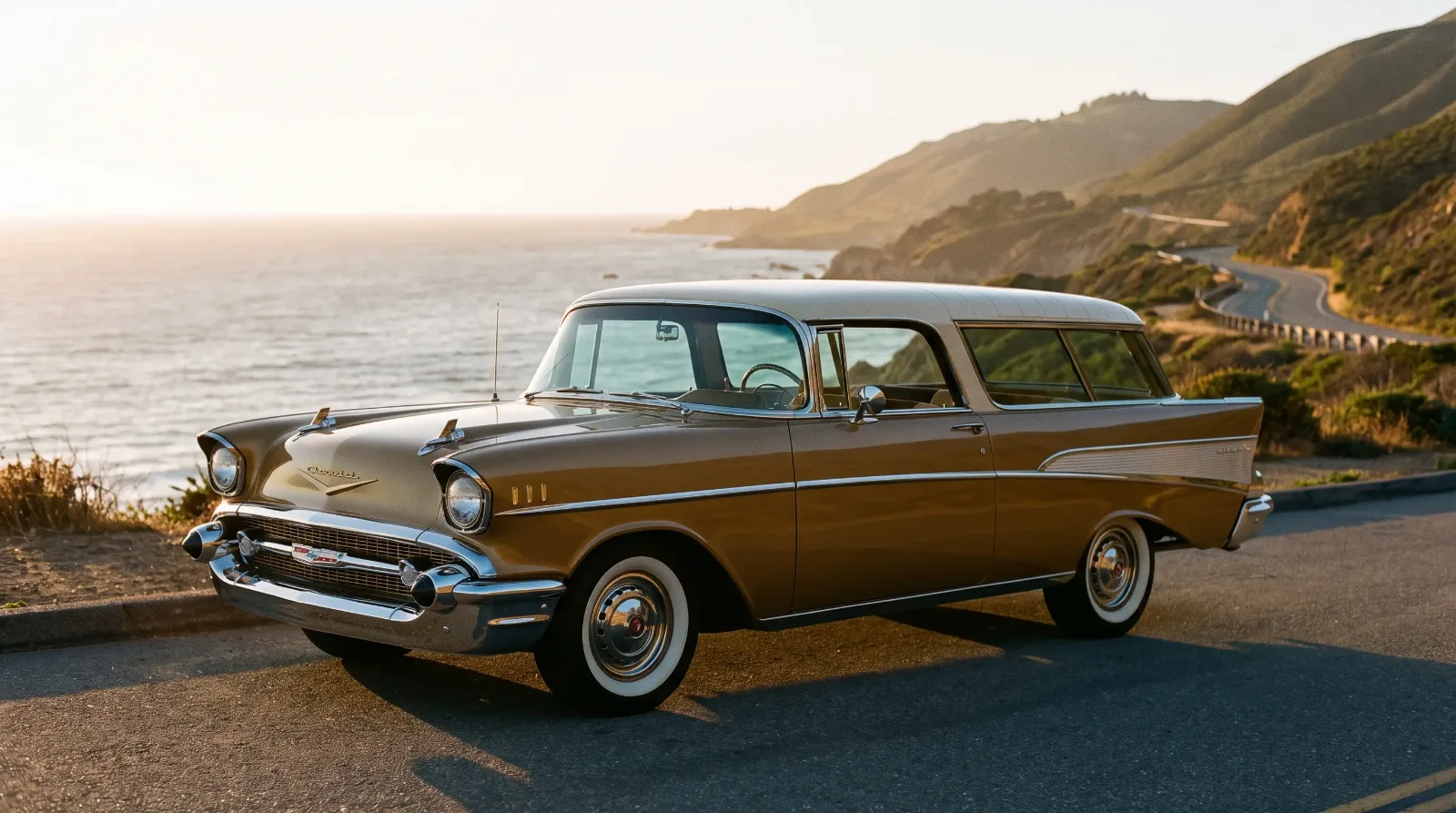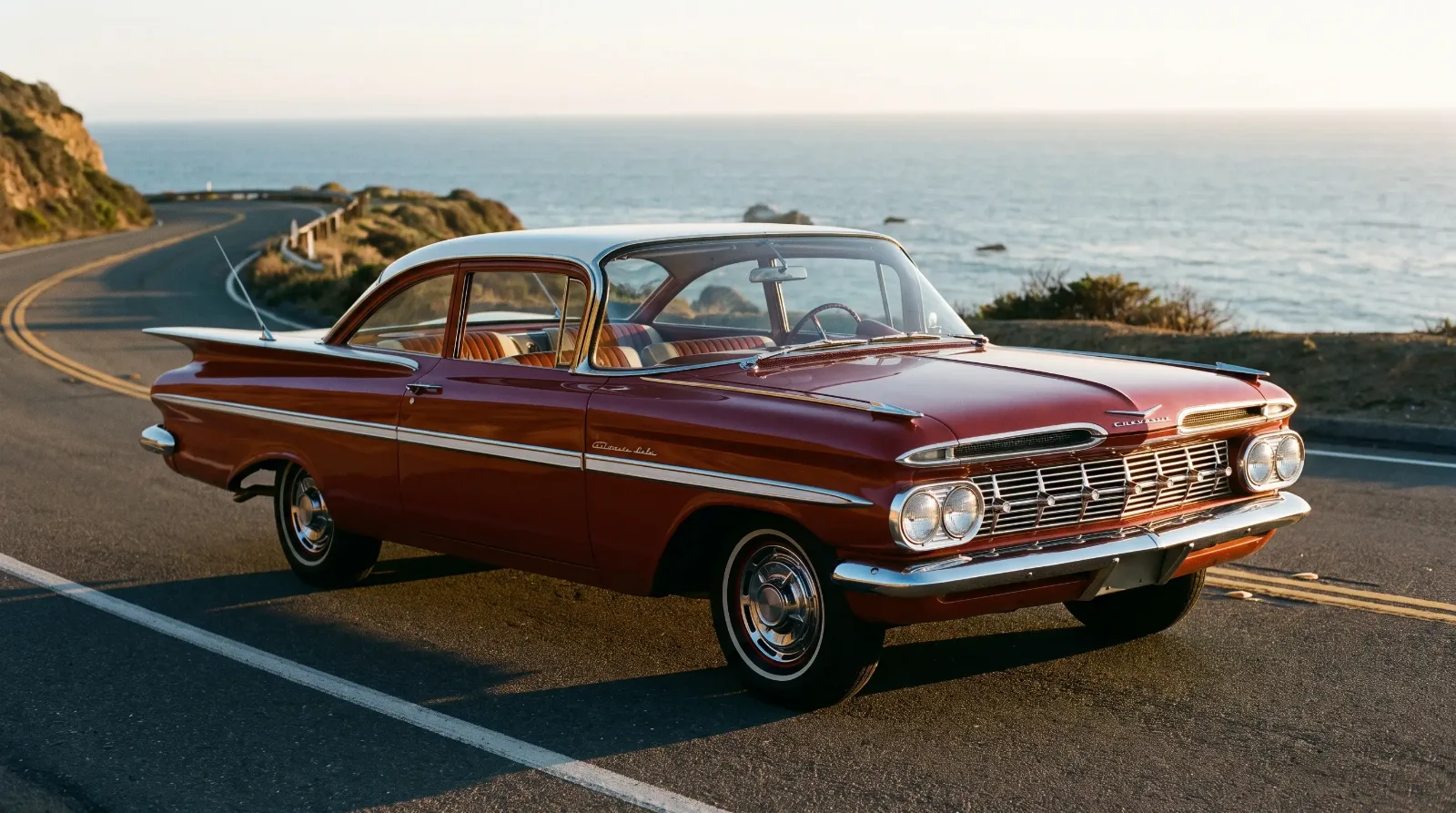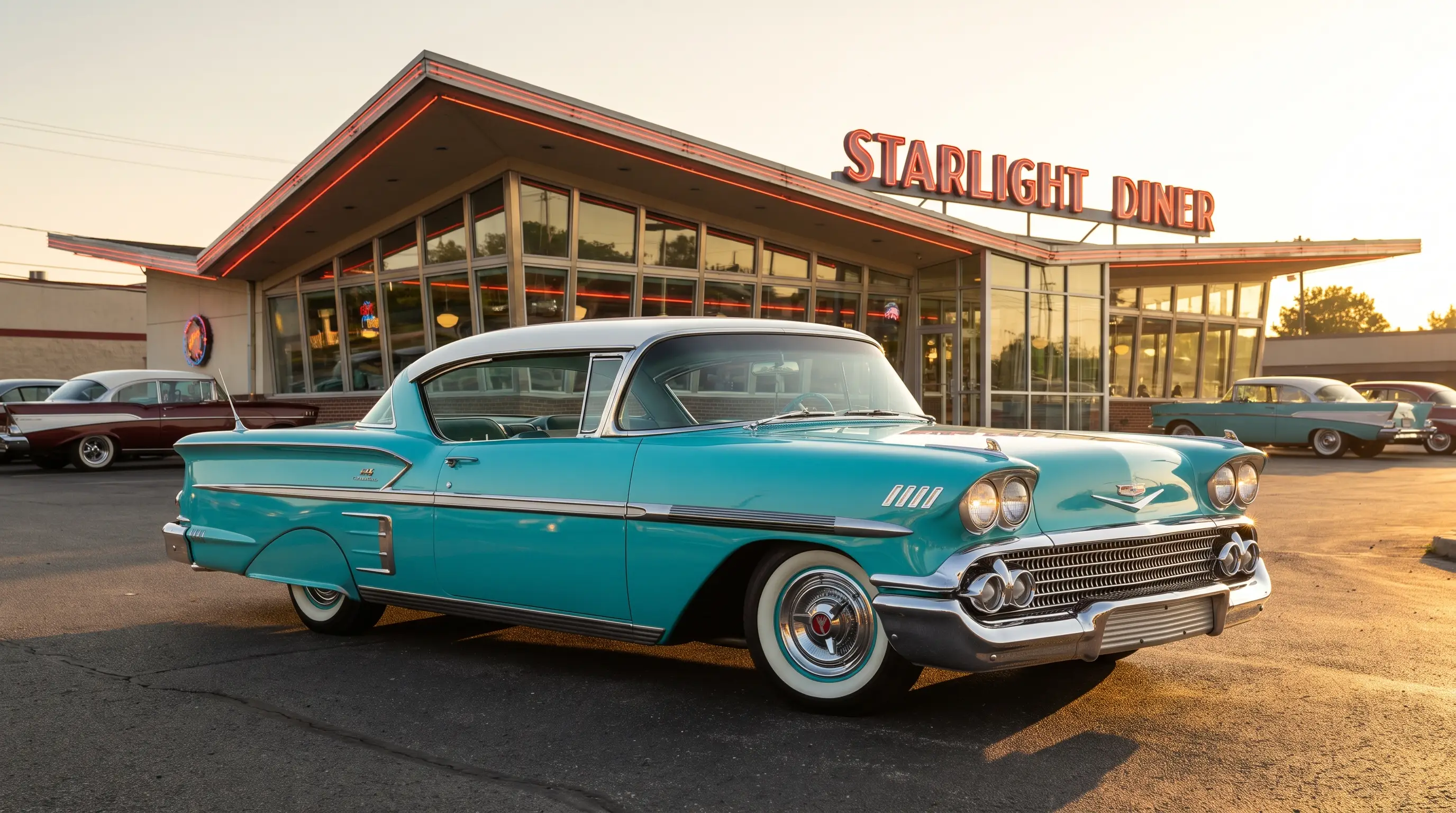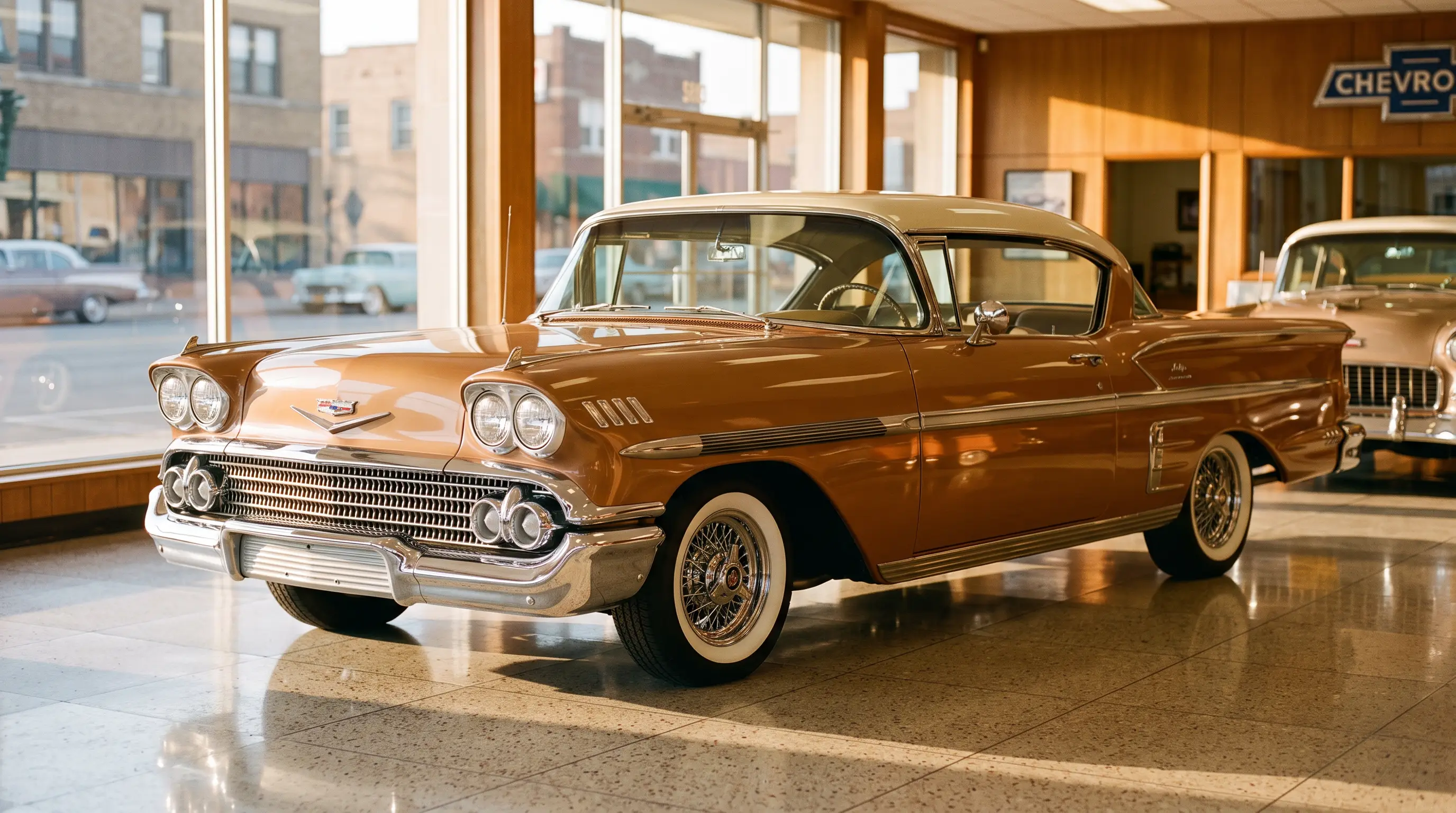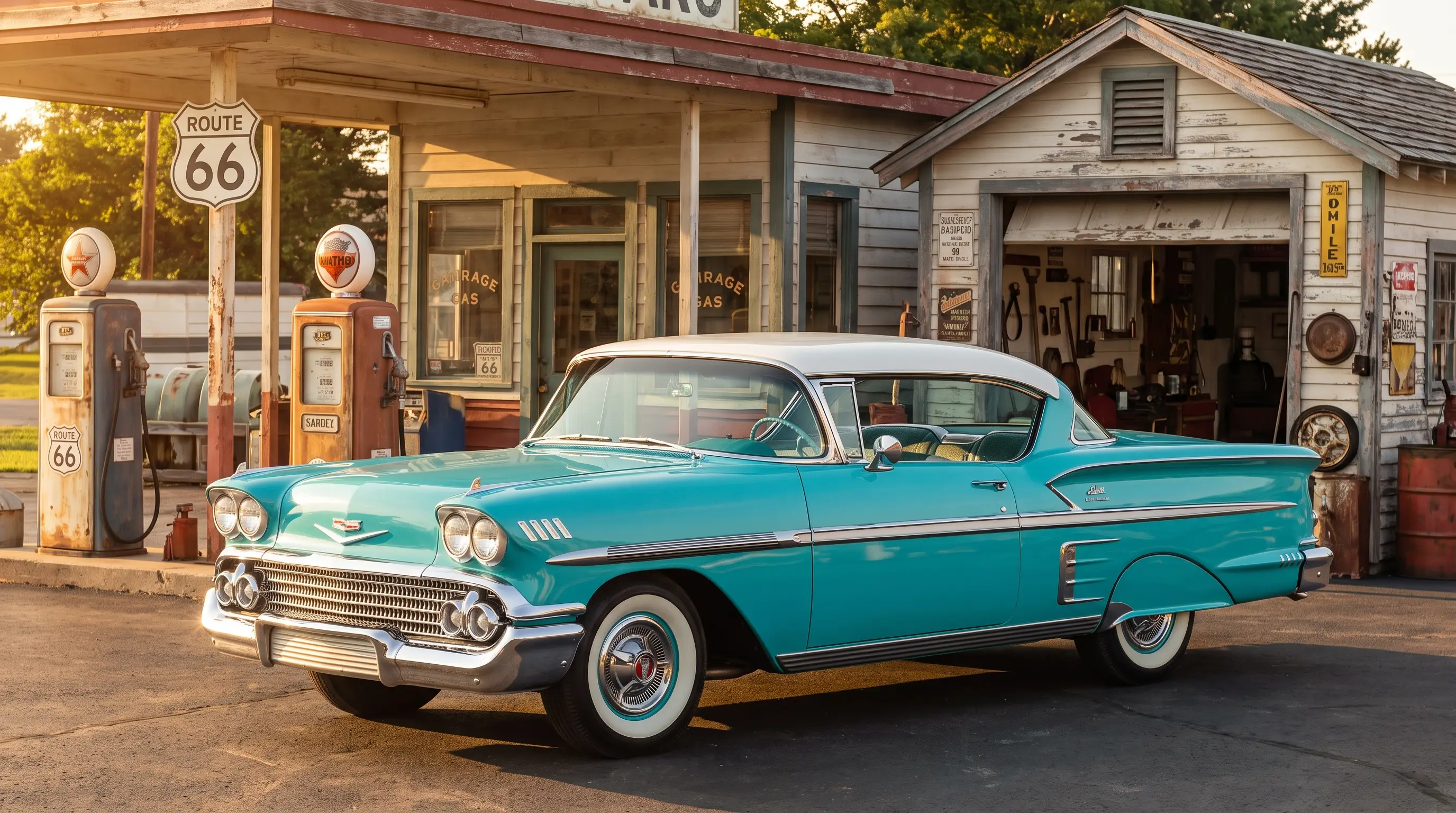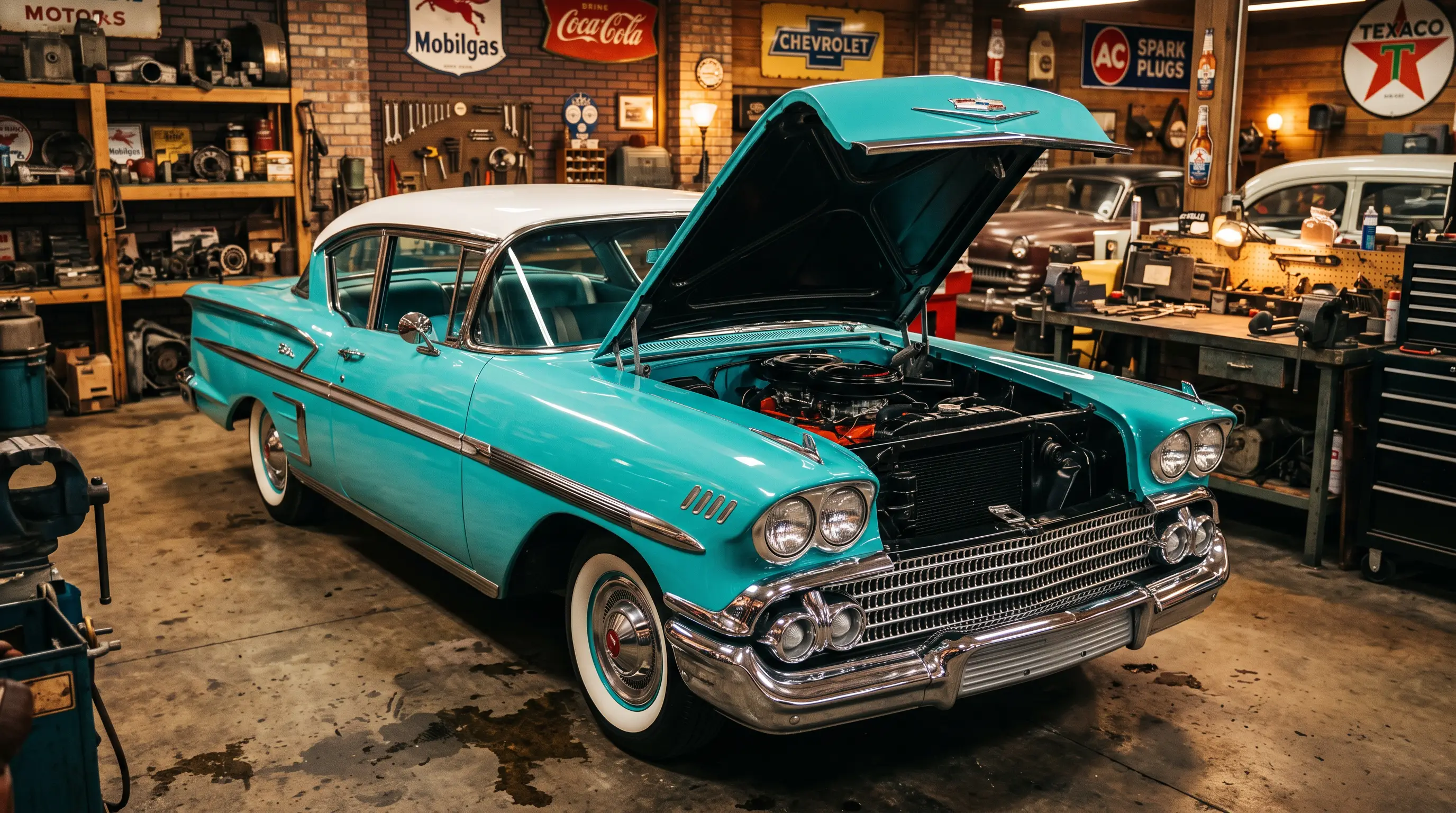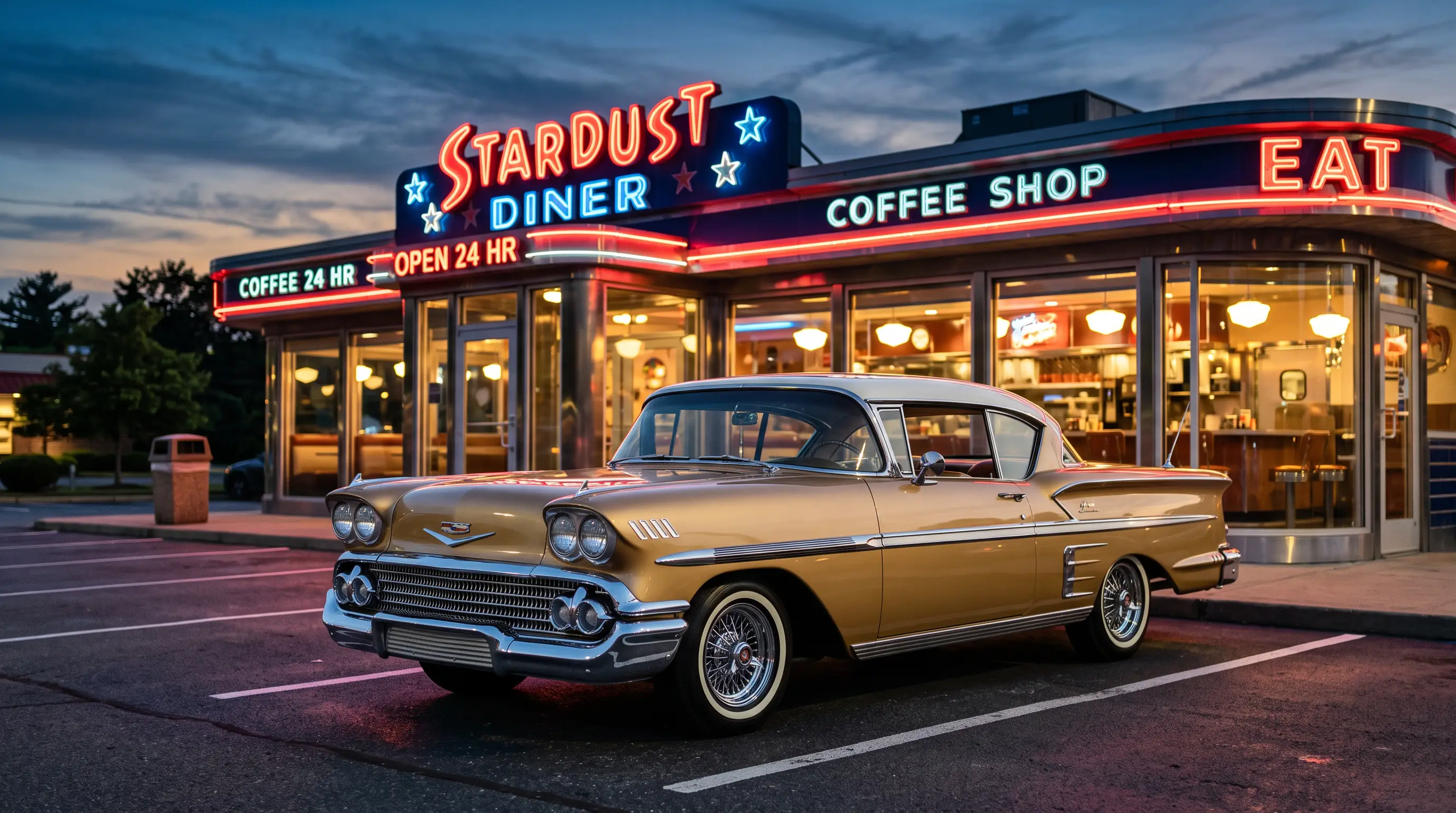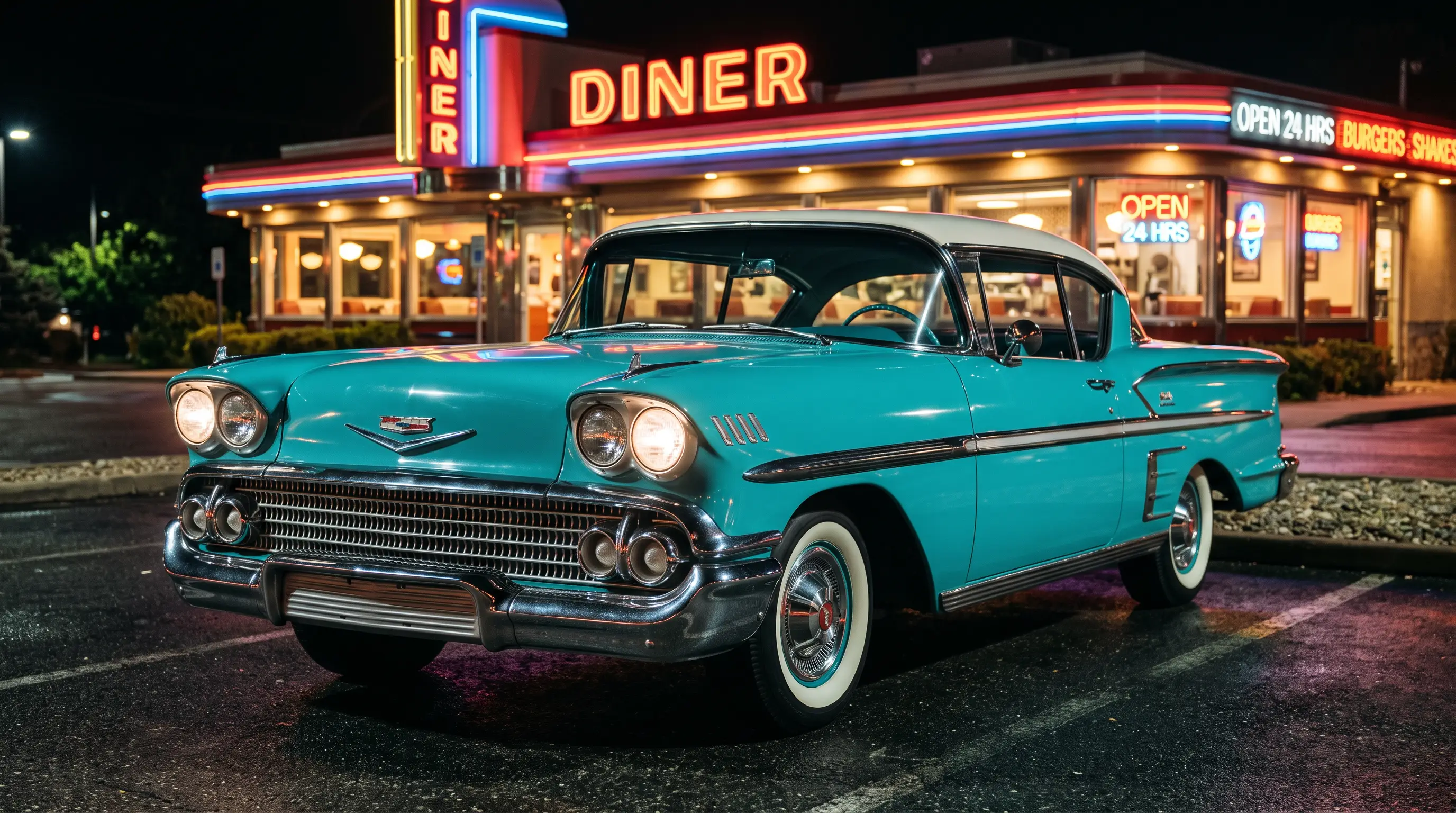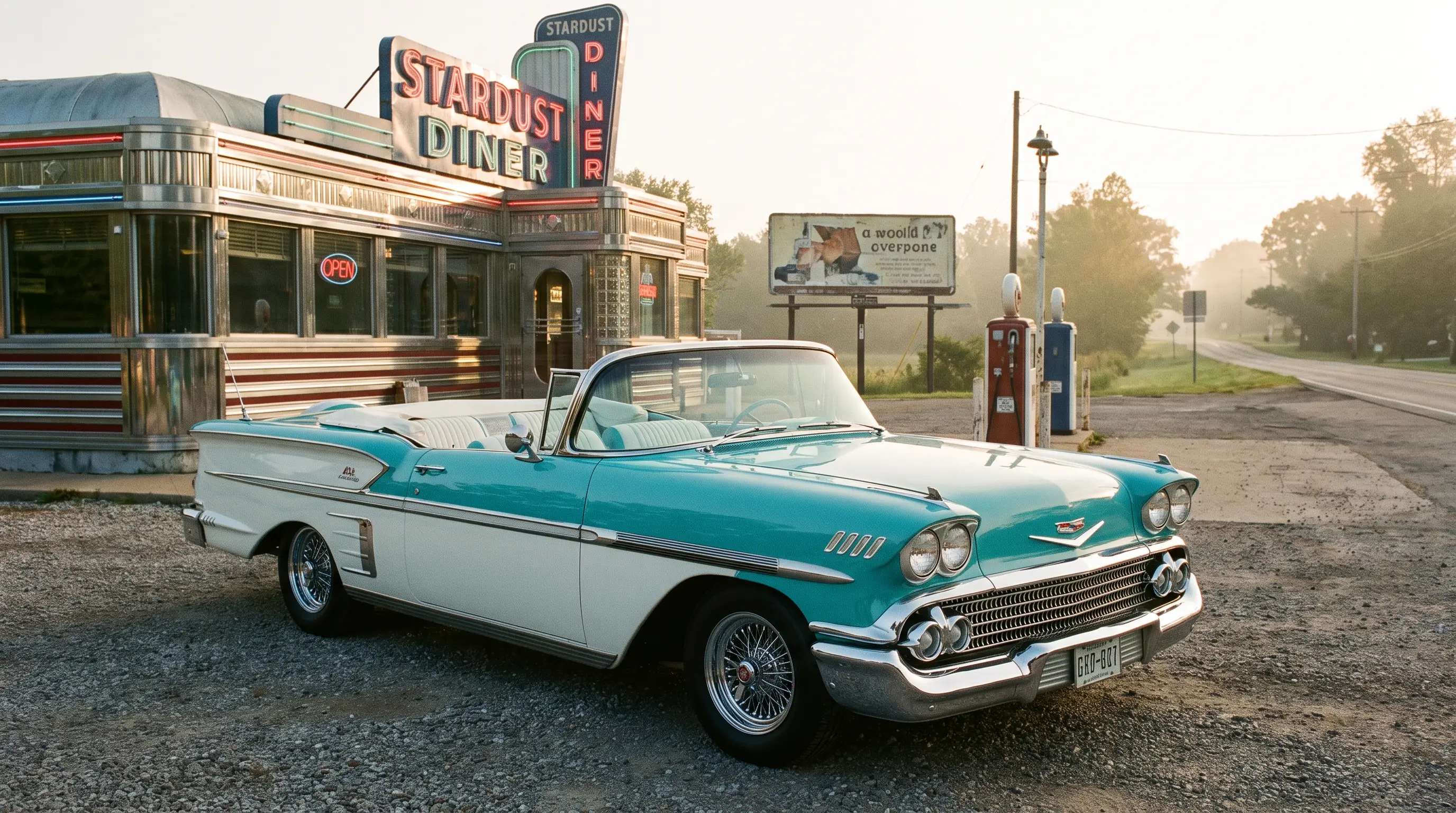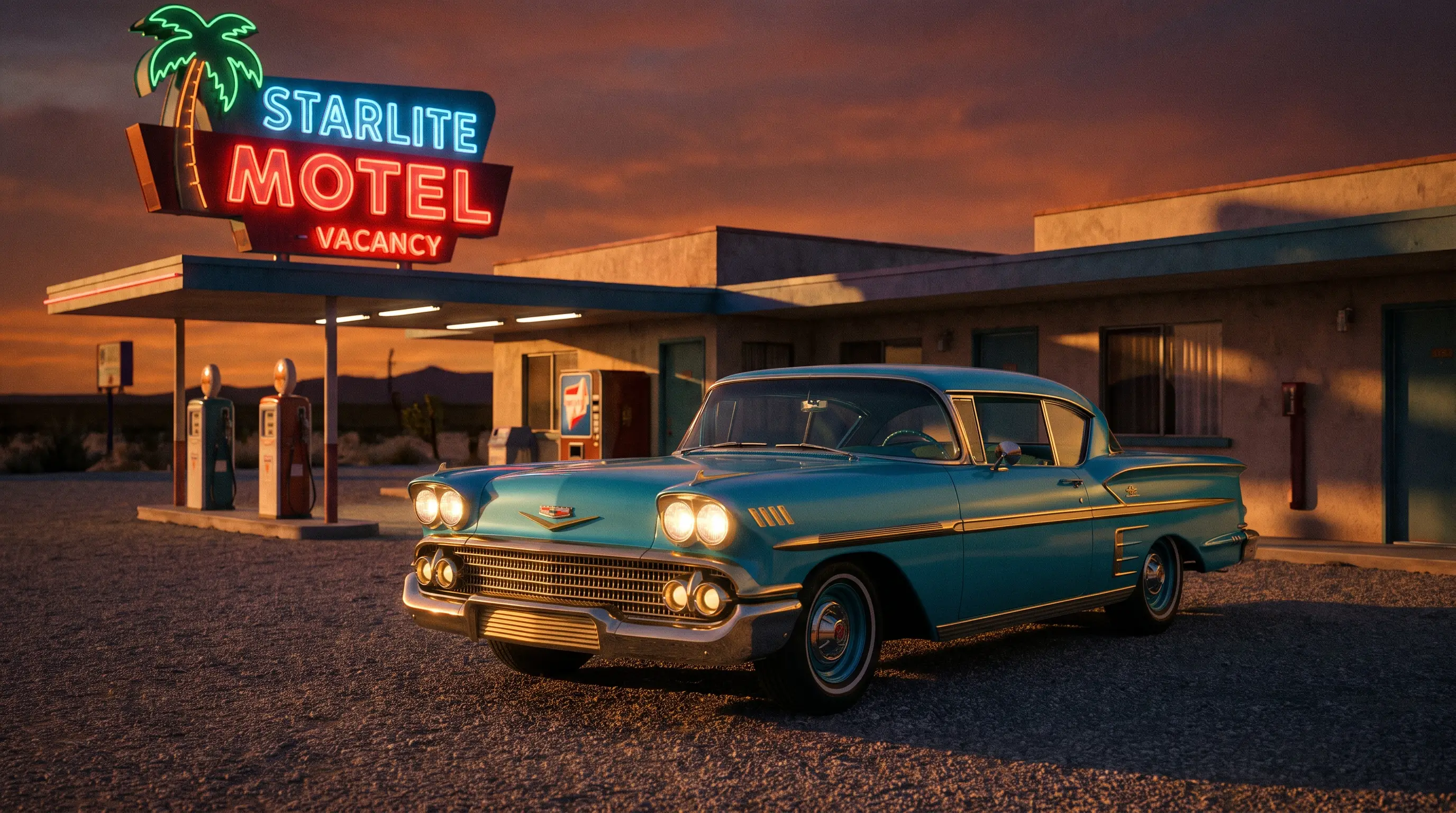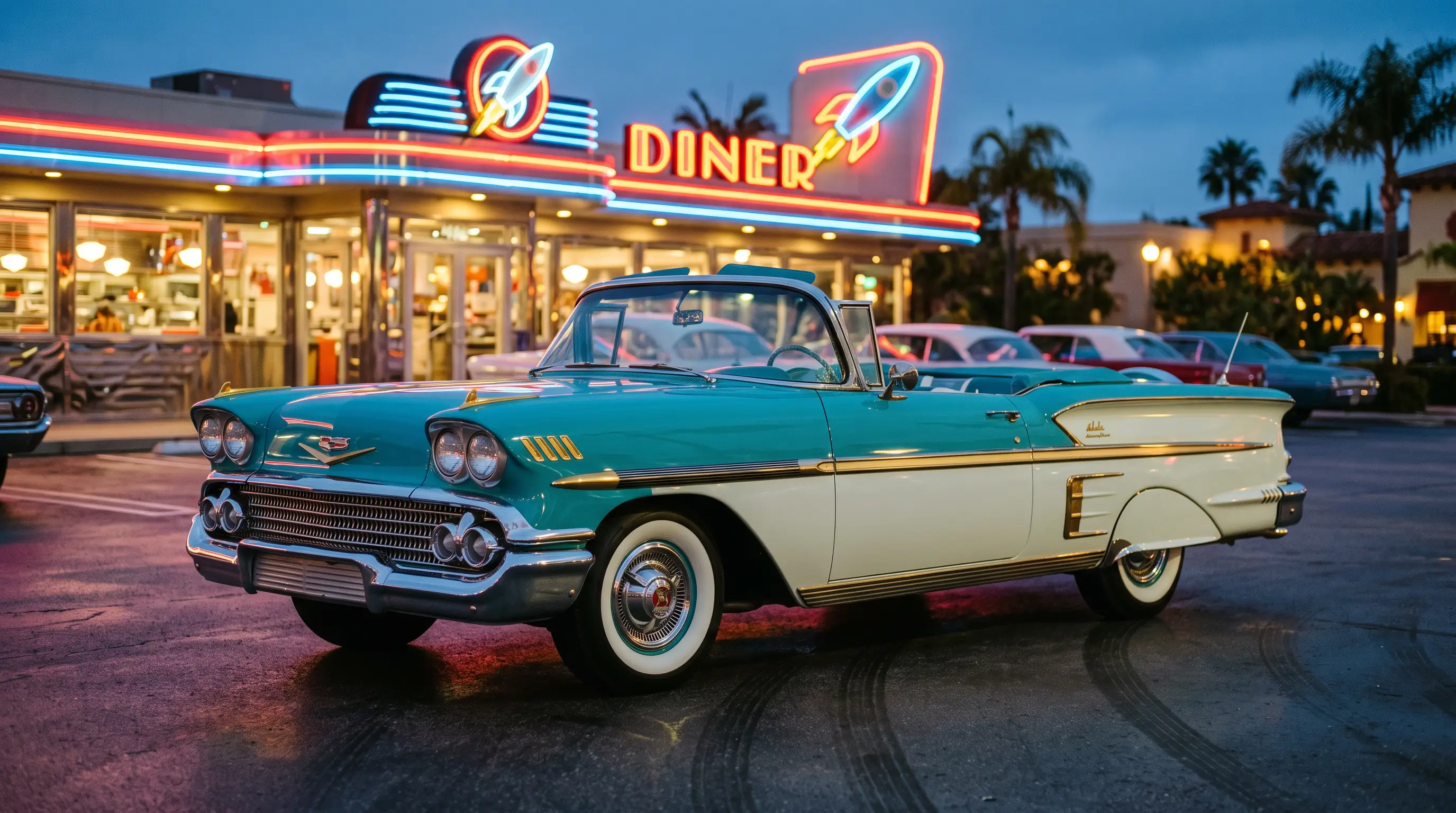
There is a common belief that the 1958 chevy bel air was just another Tri-Five with a facelift. It was not. For the 1958 model year Chevrolet threw out the entire body, moved to a longer and lower platform, and introduced a new top-line series that would soon eclipse the Bel Air itself. Understanding 1958 means understanding a company in the middle of a strategic pivot, and the paperwork from that year tells the story more honestly than the nostalgia does.
The 1958 cars rode on an all-new X-frame chassis, longer wheelbase, and wider track than the 1957 line. Chevrolet also offered air suspension as an option that year, a system called Level Air. It was troublesome in service and few buyers kept it, but its presence tells you what the company was chasing: a softer, longer, more expensive-feeling car aimed squarely at buyers who might otherwise walk into a Pontiac or an Oldsmobile showroom.
A one-year body that stood alone
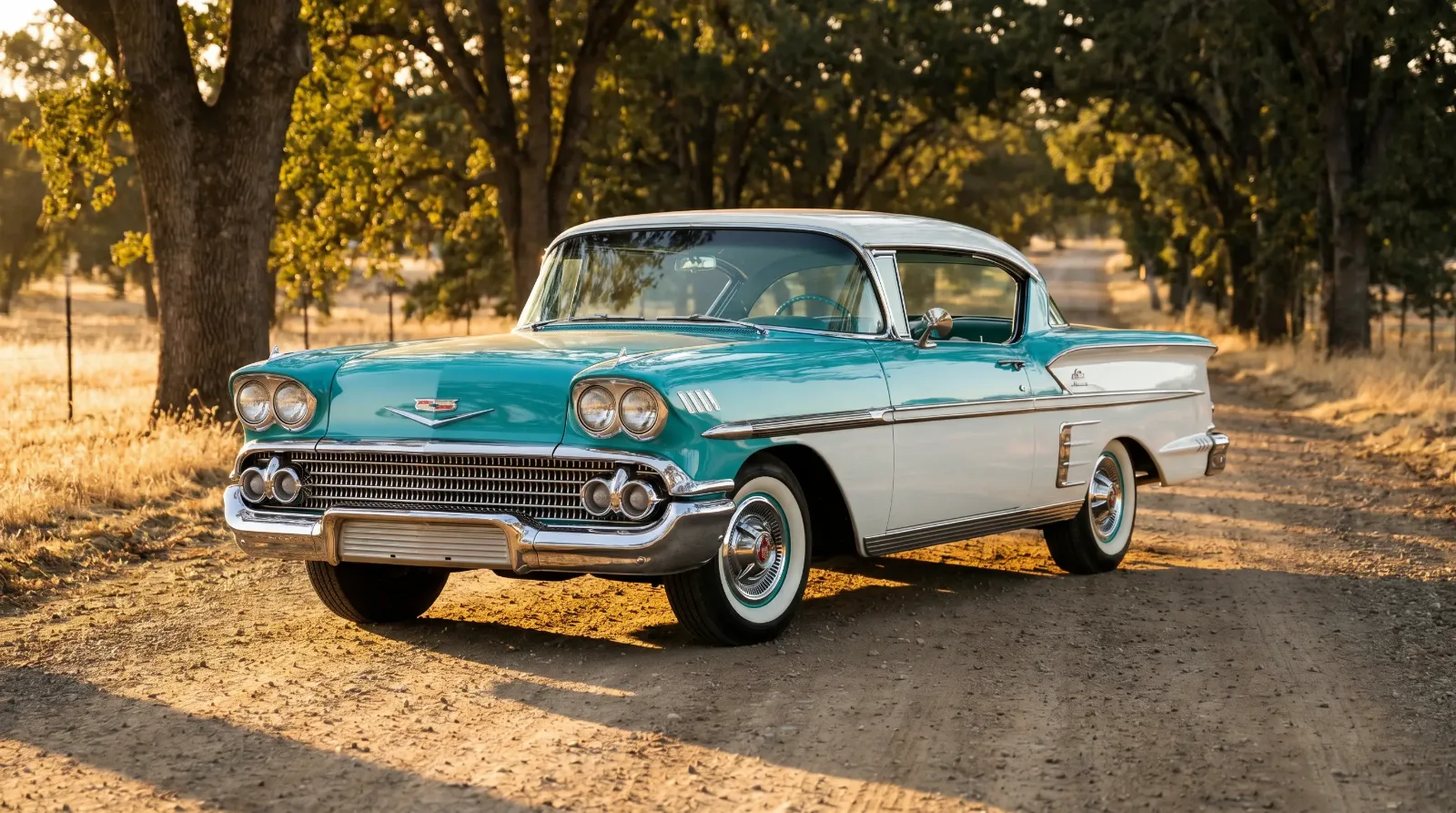
Here is the detail that surprises people. The 1958 body was used for exactly one year. The 1955 through 1957 cars shared a basic body shell across three seasons, and the 1959 cars would move to yet another new platform. The 1958 sits alone, a single model year with no siblings sharing its sheet metal. That makes it one of the more distinctive full-size Chevrolets of the decade, and it explains why a well-kept example looks unlike anything on either side of it.
The styling followed the industry mood of the moment. Quad headlamps arrived across most of the range, the body carried more chrome, and the whole car sat lower and heavier than the Tri-Five it replaced. If you want the wider arc of how the nameplate arrived at this point, the chevy bel air story traces the climb from a 1950 trim option to the 1958 near-flagship, and 1958 is the hinge in that whole narrative.
The one-year body was not entirely a matter of ambition. Chevrolet had planned longer cycles, but the industry was moving fast, and General Motors had already committed to another complete redesign for 1959. That left 1958 as an orphan by design, a single season of sheet metal that the company knew would not return. Buyers at the time had no idea. To them it was simply the newest Chevrolet, longer and plusher than last year's car. Only in hindsight does the isolation of the 1958 body become clear, and that hindsight is exactly what makes it interesting to study now.
The Impala arrives, quietly at first
The single most important fact about 1958 is that it introduced the Impala. And the misconception worth correcting gently is this: the Impala did not begin as its own model. For 1958 the Impala was the top trim of the Bel Air series, offered only as a two-door Sport Coupe and a convertible. The badge on those cars read Bel Air, and the Impala name marked the premium version within that line.
So the 1958 Impala was, technically, a Bel Air. That distinction is lost on a lot of people, and it matters, because it explains how a nameplate that had been the top of the range for years suddenly found something sitting above it. The Impala outsold expectations, and Chevrolet took the obvious lesson. For 1959 the Impala split off into its own separate series, and the Bel Air began its slow move down the price ladder. If you want to follow where that leads, the next chapter picks up the full-size Bel Air as it settles into the middle of the lineup. In one model year the balance of power inside Chevrolet's own showroom quietly changed, and the Bel Air never sat at the top again.
Engines: the big block enters the picture
The 1958 model year brought a genuinely important mechanical change. Alongside the familiar 283 cubic inch small block, Chevrolet introduced a new large-displacement engine, the 348 cubic inch W-series V8. It was designed originally as a truck engine, but it found its way into the full-size cars and gave buyers real high-performance options at the top of the range.
The 348 was offered in several states of tune, and the hottest versions used a triple two-barrel carburetor setup. Output on the triple-carburetor Super Turbo-Thrust 348 was rated at 280 hp, with a special limited-production single four-barrel high-compression version rated even higher at 305 hp that year. That engine matters because it was the direct ancestor of the 409 that would arrive a few years later and earn its own place in pop culture. The 348 story starts here, in the 1958 cars.
It is worth correcting a small point that comes up often. People assume the 348 was a stretched small block, a bigger version of the 283. It was not. The W-series was a separate engine family with its own architecture, including the distinctive combustion chamber design formed in the block rather than the head. That is why a 348 looks and sounds different from a small block, and why it cannot share the small block's parts. For a company that had just made its name on the small V8, introducing a completely separate big block in 1958 was a real statement of intent.
Most 1958 Bel Airs, of course, left the factory with the sensible 283 or even the base six. The 348 was the exciting option, but exciting options were never the volume sellers. The typical 1958 buyer wanted a comfortable, roomy family car and ticked the boxes accordingly. That is why a documented 348 car stands out today. It represents the small slice of buyers who wanted performance in a year when most people simply wanted space.
| Specification | 1958 Bel Air detail |
|---|---|
| Platform | All-new X-frame, one year only |
| Base V8 | 283 cubic inch small block |
| Top V8 | 348 cubic inch W-series |
| Top trim | Impala Sport Coupe and convertible |
| Notable option | Level Air air suspension |
Reading the production record
Chevrolet had a strong sales year in 1958 despite a national recession that hurt much of the auto industry. The company built the Bel Air in a full range of body styles, from four-door sedans to the two-door hardtops that collectors chase now. The Impala versions were the glamour cars, and they command the most attention today, but the volume came from the ordinary sedans that families actually bought.
For a researcher, the value of 1958 is in its clarity. Because the body was used for one year only, a correct 1958 is easier to authenticate than a car from a multi-year run where parts migrated between seasons. The trim, the emblems, and the specific body hardware all point to a single year. That makes documentation both important and satisfying, because the pieces should all agree with each other.
The recession of 1958 is part of the context that gets left out of most retellings. It was a genuinely difficult year for the American economy, and car sales across the industry fell. Chevrolet weathered it better than most, and the fact that it launched an expensive new platform and a new premium trim into that headwind says something about the company's confidence. The Impala gamble in particular could have failed in a down year. It did not. Buyers who were nervous about the economy still found the money for the glamour version, which told Chevrolet everything it needed to know about where the market was heading.
Body style also shapes how we read the surviving cars. The four-door sedans were the bread and butter, built in large numbers and driven hard. The two-door hardtops and the convertibles were always scarcer and always more desirable, and the Impala-trimmed versions of those sit at the very top. When you see a 1958 at a show now, odds are good it is one of the more glamorous body styles, because those are the ones people thought were worth saving. The humble sedans mostly went to the crusher, which is a quiet irony given how many of them Chevrolet actually built.
"The 1958 cars are honest witnesses. With only one model year of parts to account for, the paperwork and the sheet metal either match or they do not."
- Tom Ramirez
Where the 1958 sits in the market
Collectors have long treated 1958 as an in-between year, overshadowed by the Tri-Five on one side and the finned 1959 cars on the other. That reputation has softened. The one-year body has become part of the appeal, and clean examples, particularly the Impala Sport Coupes and convertibles, have earned real respect at auction. The ordinary Bel Air sedans remain approachable, which makes 1958 a sensible entry into late-1950s Chevrolet ownership.
If you are weighing one, the same discipline applies that applies to any car of the era. Confirm the engine against the trim level, check that the emblems suit the exact model, and be cautious with any car claiming the rare Level Air suspension, since most were converted to conventional springs decades ago. Buyers who want to compare a few in person will find it useful to study the classic Airs on the market before settling on a year and body style.
There is also a naming trap that catches newcomers. Because the 1958 Impala was a Bel Air trim, some sellers describe these cars loosely, calling a plain Bel Air an Impala or the reverse. The paperwork and the specific trim tell the real story, and the difference matters to value. A genuine Impala Sport Coupe with its correct interior and exterior trim is a more valuable car than a standard Bel Air sedan, even though they came off the same line in the same year. Read the emblems, read the trim tag, and do not take a seller's shorthand as gospel. In a one-year-only car, the details are unusually easy to verify once you know what the year is supposed to look like.
The pivot year
The 1958 chevy bel air deserves better than its reputation as a footnote between the Tri-Five and the fins. It was the year Chevrolet reinvented its full-size car, introduced the big block that would define the next decade of performance, and launched the Impala that would soon push the Bel Air aside. Everything that happened to the nameplate afterward was set in motion during this single, strange, one-year-only season. Read it as a pivot, not a pause, and the whole 1958 story makes sense.