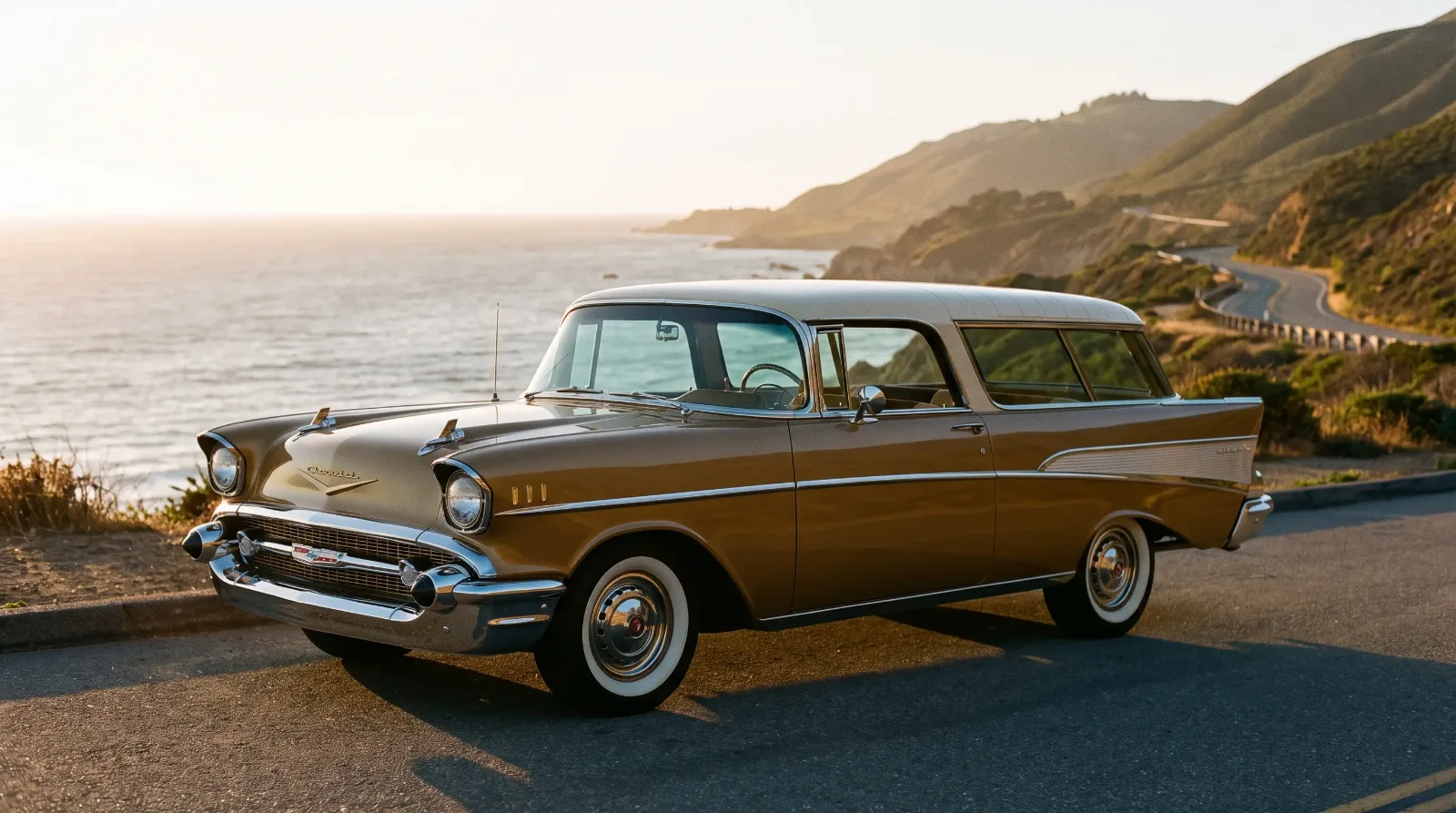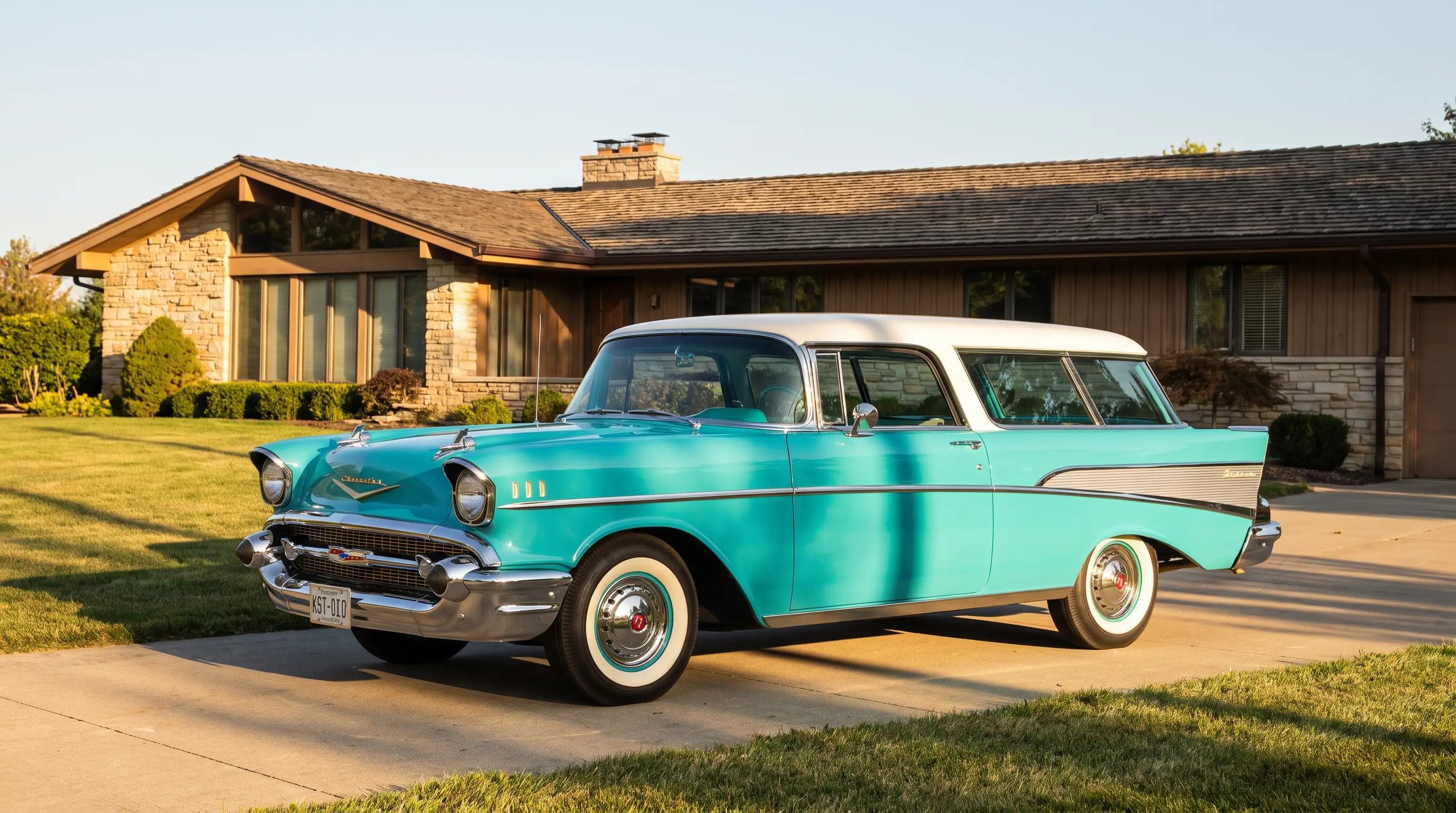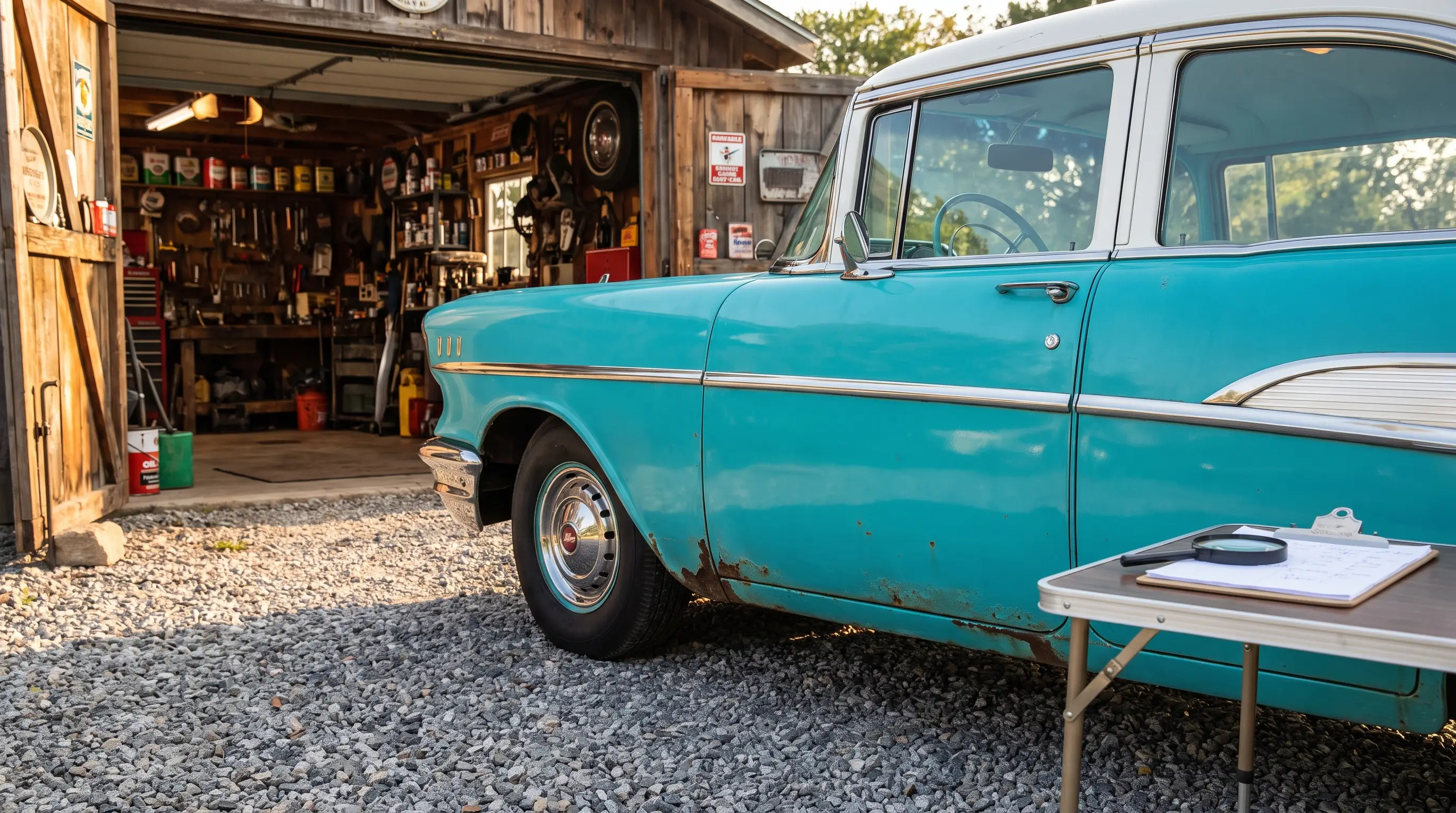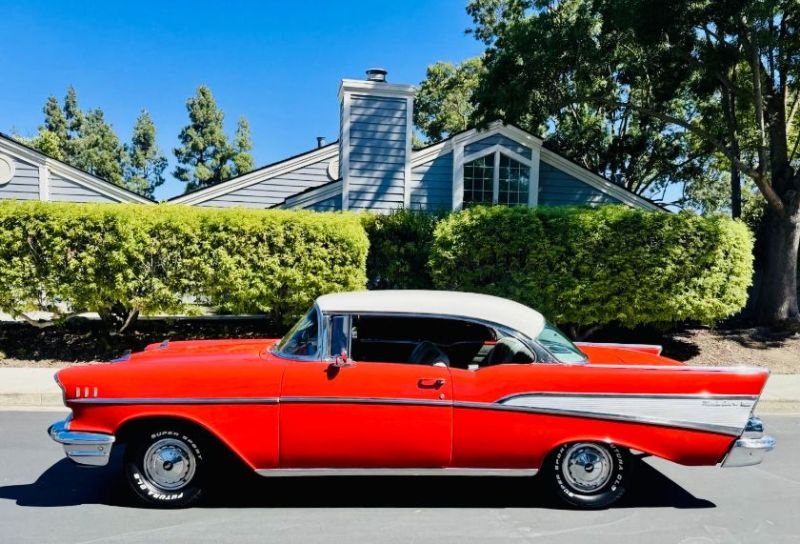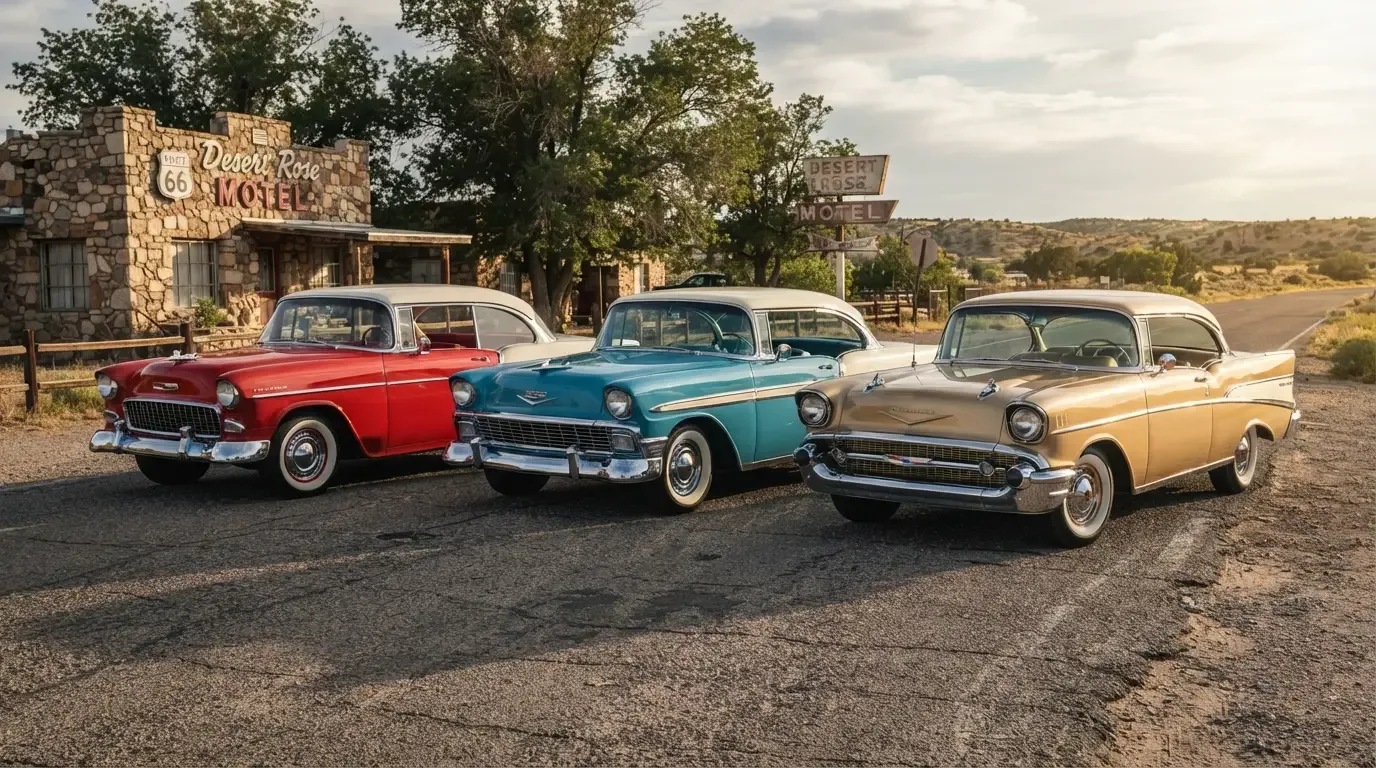
Ask a stranger what "tri five" means and you will get a shrug. Ask anyone who has stood in a swap meet parking lot at six in the morning, coffee going cold, scanning rows of two-tone paint, and they will point without even thinking about it. The term belongs to three model years of Chevrolet, 1955 through 1957, and it has become shorthand for a specific kind of American confidence. The Bel Air is the car most people picture when they hear it, but tri five was never really about one trim level. It was about a company that figured out, almost by accident, how to build a car people would still be arguing about seventy years later.
Where the phrase actually comes from
Nobody at Chevrolet coined "tri five" in 1955. The name is a collector's invention, stitched together sometime in the 1970s or 1980s as hobbyists needed a quick way to describe the trio of model years without listing all three every time. It caught on because it is efficient and because it is accurate. Chevrolet did not simply carry over a design for three seasons. Each year got its own face, its own trim changes, its own engineering tweaks, and yet all three share enough DNA that they read as a family. That balance of continuity and change is exactly why the shorthand works so well.
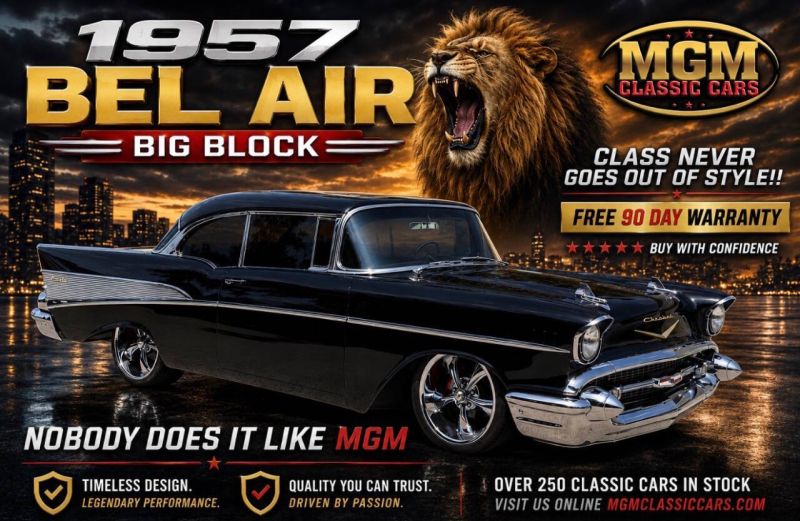
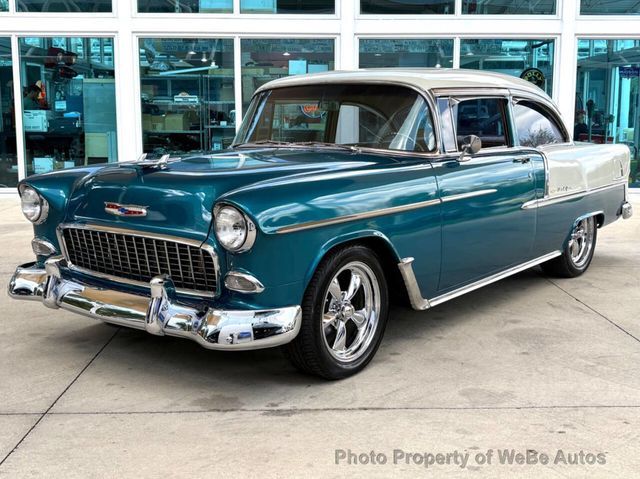
The 1955 model is usually treated as the purest expression of the idea. It introduced the small block V8, a genuinely new chassis, and styling that dropped the upright postwar look for something lower and wider. The 1956 model refined the grille and added a four door hardtop to the lineup. The 1957 model, the one most people can pick out of a police lineup, brought the tailfins, the twin headlight-adjacent trim, and the optional fuel injection that turned a family sedan into a genuine performance argument. Three years, three distinct personalities, one nickname.
What is tri five chevy actually referring to in practice
When someone asks what is tri five chevy today, they are almost always asking about the Bel Air specifically, even though the term technically covers the whole 1955 to 1957 lineup including the entry level 150 and the mid range 210. The Bel Air simply photographed better, sold in higher numbers as the top trim, and ended up as the car magazines and car shows gravitated toward. Over decades of use, the nickname and the Bel Air became almost interchangeable in casual conversation, even though purists will correct you if you use them too loosely at a swap meet.
Part of what makes the era so easy to romanticize is how quickly Chevrolet moved. The company redesigned its entire full size lineup for 1955, something that simply does not happen at that pace anymore, then kept iterating year over year rather than resting on a successful platform. That restlessness is part of the story. Buyers in the mid 1950s were not just choosing a car, they were choosing to be part of a company that was clearly trying to win, and it showed in the details, from the two tone paint combinations to the optional continental kits dealers were happy to bolt on.
The engine that changed the conversation
You cannot talk about tri five without talking about the small block V8 that arrived in 1955. Before that engine, Chevrolet was known as a reliable, unglamorous choice, the car your accountant drove. The new V8 displaced 265 cubic inches, was light for its output, and responded well to modification almost immediately. Hot rodders noticed within months. That single engineering decision did more to define the tri five reputation than any styling choice, because it gave the cars a second life decades later as the preferred platform for builders who wanted a period correct shape with real performance underneath.
The base 1955 265 cubic inch V8 was rated at 162 horsepower with its two-barrel carburetor, while the optional Power Pack version, with a four-barrel carburetor and dual exhaust, was rated at 180 horsepower. The horsepower figures crept up year over year as Chevrolet added options like the Power Pack and, eventually, fuel injection for 1957. What matters for the tri five reputation is not any single number but the trajectory. The company kept pushing, and buyers kept responding, and that momentum is what people are nostalgic for even if they cannot recite a single spec sheet figure.
Why the nickname still matters to buyers today
For someone shopping the market now, understanding tri five chevy history is not just trivia, it changes how you evaluate a car. A 1955 Bel Air and a 1957 Bel Air share a nameplate and a general shape, but they are different cars mechanically and stylistically, and pricing reflects that. The 1957, with its fins and its fuel injection option, commands a premium in most auctions. The 1955 appeals more to purists who want the car that started the run. Knowing which year you are actually looking at, rather than lumping everything under one nostalgic umbrella, is the difference between an informed purchase and an expensive surprise.
There is also a practical side to the nickname's staying power. Because the three years share so many mechanical components, parts interchangeability across 1955, 1956, and 1957 models is genuinely useful for owners. That shared parts bin is part of why the platform became a hot rod and restomod favorite, and it is worth reading a related story on how the Nomad wagon variant fits into that same family tree, since it rode on the same bones with a body style all its own.
"People think tri five is a model name. It is not. It is a compliment Chevrolet earned three years in a row, and the fact that we are still using the term says something about how rarely that happens."
- Patrick Walsh
How the phrase shapes the collector market
Walk any classic car auction today and you will hear tri five used as its own category, separate from "1950s Chevrolet" more broadly. That distinction matters financially. Cars from this three year window tend to hold value more consistently than earlier or later Chevrolet full size models because demand is concentrated and well documented. Restoration shops specialize specifically in tri five work. Parts suppliers build entire catalogs around just these three years. That kind of infrastructure does not exist for most classic platforms, and it exists here because the enthusiast community organized around the nickname decades ago and never let it go.
If you are considering buying into this world, the good news is that the shared nickname makes research easier, not harder. Once you understand the term covers three related but distinct model years, you can narrow your search quickly. Anyone hunting for classic Airs for sale now should treat the model year as the first filter, well before trim level or color, because it tells you which engine family, which dashboard, and which body trim details you are actually going to be dealing with.
The staying power of tri five as a term is really a story about a company hitting a creative and mechanical stride at exactly the right moment, then having a devoted community preserve the memory of it long after Detroit moved on to other priorities. Seventy years later, the nickname still does its job in a single breath, telling you exactly which era, which attitude, and which parts bin you are talking about.