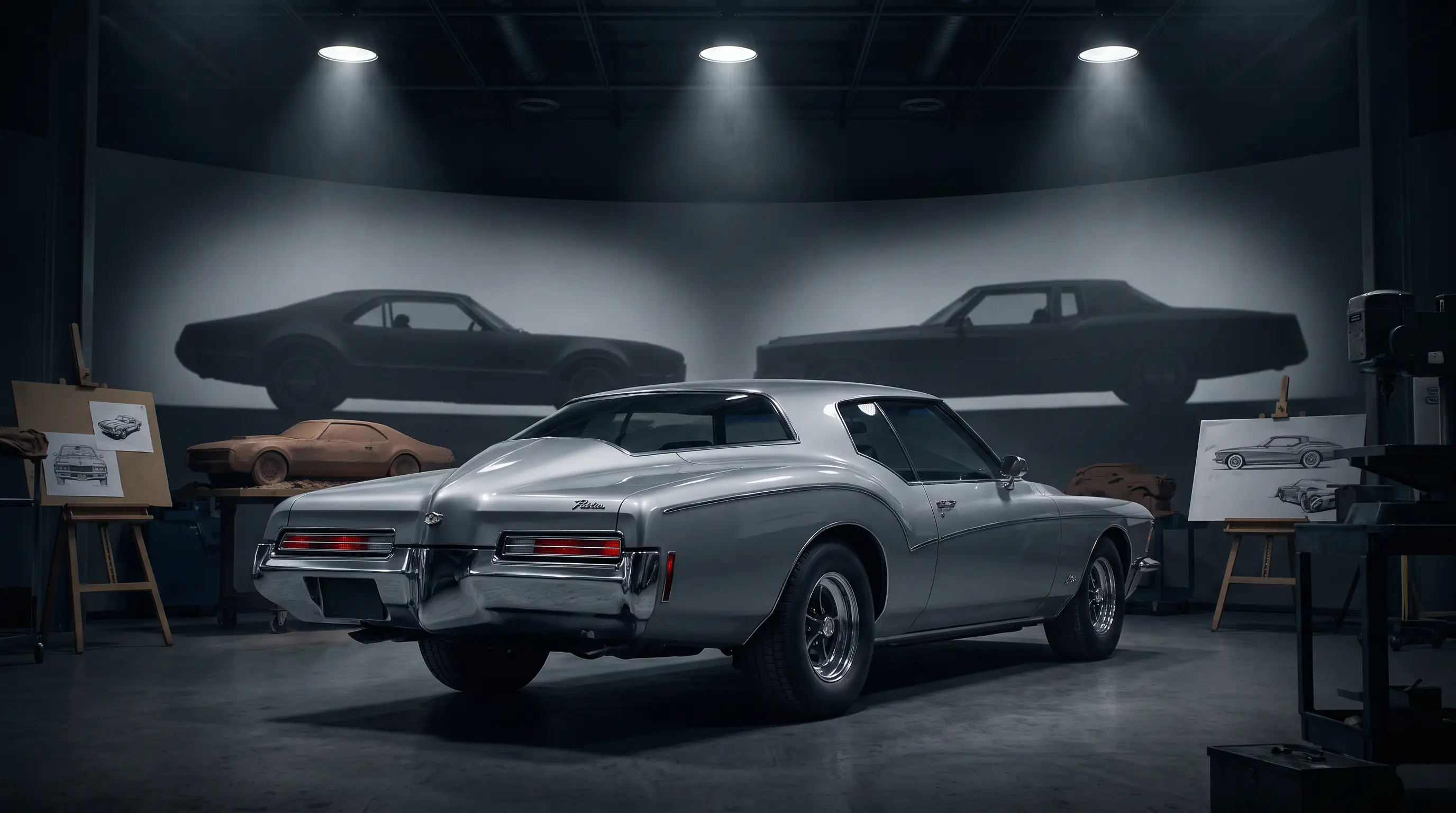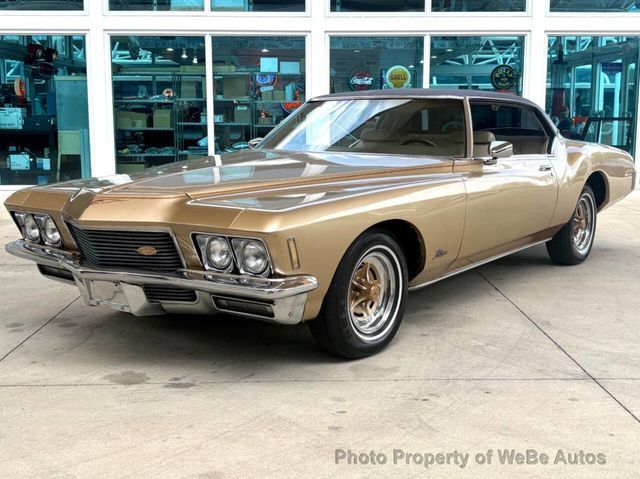
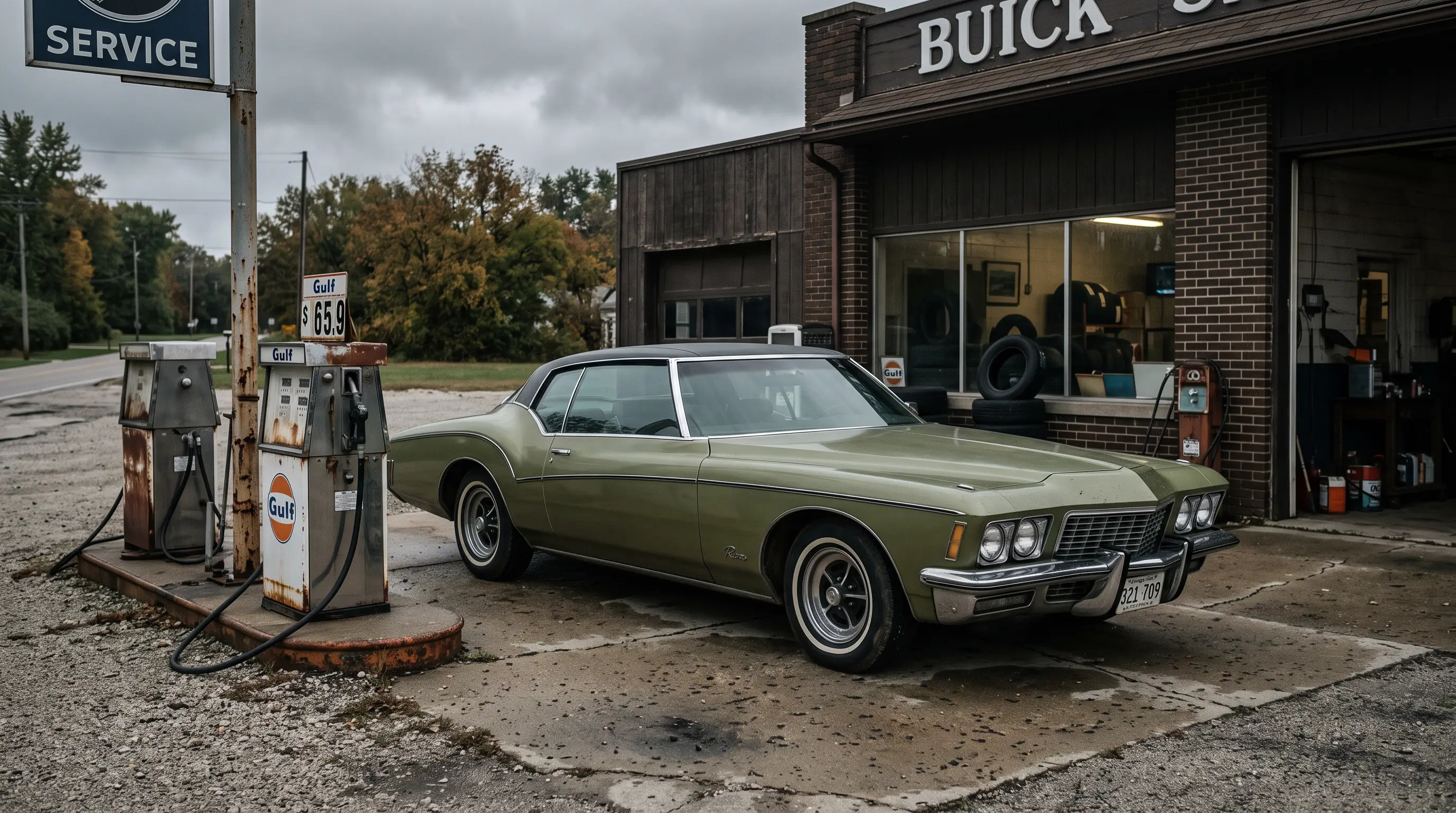
The buick riviera 1972 73 emissions era mood is a quieter, more complicated story than the flamboyant 1971 launch that came before it. Where the debut boat-tail Riviera arrived as an unapologetic styling statement, the 1972 and 1973 cars carried that same silhouette into a market that had started asking different questions. Federal emissions standards were tightening, insurance surcharges on big-engined cars were climbing, and the horsepower ratings printed on window stickers had begun to shrink for reasons that had nothing to do with what Buick's engineers had actually changed under the hood. Understanding these two model years means understanding a coupe caught between the confidence of its introduction and the caution the rest of the industry was starting to feel.
A new way of measuring power arrives
Perhaps the single biggest shift affecting how the 1972 and 1973 Riviera were perceived had nothing to do with mechanical changes at all. The industry-wide move from gross horsepower ratings to net horsepower ratings meant the same basic 455 cubic inch engine suddenly wore a lower number on the spec sheet, even where actual output had barely changed. Buyers comparing a 1971 window sticker to a 1972 one, without understanding the measurement change, often assumed Buick had detuned the car dramatically. In truth, a meaningful share of that apparent drop was a paperwork correction rather than a real loss of performance, though genuine compression reductions to meet emissions targets did account for some of the change as well. For the origin story of the shape these two years continued to wear, see read the background.
| Spec | 1972-73 Riviera |
|---|---|
| Standard engine | 455 cu in V8 |
| Horsepower rating basis | Net (SAE), down from gross ratings used through 1971 |
| Published horsepower | 250 hp net (base); 260 hp net (GS) |
| Body style | 2-door fastback hardtop coupe |
| Notable equipment | Federally mandated safety and emissions hardware standard across the industry |
A cultural mood shift buyers could feel
Beyond the numbers, there was a genuine change in mood surrounding cars like the Riviera during these two years. The freewheeling optimism of the late 1960s, when personal luxury coupes competed almost entirely on style and presence, was giving way to a more cautious market shaped by fuel concerns, insurance costs, and a public conversation about emissions that had not existed a few years earlier. A Riviera buyer in 1972 was making the same style-forward purchase a 1971 buyer had made, but doing so inside a very different national conversation about what big engines meant and cost.
Buick did not abandon the boat-tail's dramatic proportions during this period, and that consistency is part of what makes these two model years worth examining on their own terms rather than dismissing them as a diminished follow-up to 1971. The silhouette remained, the presence remained, and the car still turned heads exactly as its debut year had. What changed was the context surrounding it, not the design itself.
Reading a period build sheet correctly
For anyone researching an original 1972 or 1973 Riviera today, understanding this measurement transition matters more than most collectors initially realize. A lower printed horsepower figure on a 1972 build sheet compared to a 1971 example does not necessarily mean a less capable car left the factory floor; it often means the same underlying hardware is being described by a different, more conservative accounting method. Treating the two years as directly comparable on paper, without accounting for the net versus gross distinction, leads to false conclusions about how much genuinely changed under the hood.
"Comparing a 1971 window sticker to a 1972 one at face value is one of the most common mistakes I see in casual Riviera research. The numbers tell a story of decline that the hardware itself does not fully support."
- Sarah Whitfield
What actually changed underneath, beyond the paperwork
It would be inaccurate to say nothing real changed mechanically between 1971 and the 1972-73 cars. Compression ratios did come down industry-wide as manufacturers prepared engines to run on lower-octane unleaded fuel, a transition that was already underway ahead of the more sweeping catalytic converter mandates that would arrive later in the decade. That genuine compression reduction did cost some real output, separate from the net versus gross accounting shift. The honest picture is a blend of the two effects: some of the drop on paper was measurement methodology, and some of it reflected actual engineering compromises made in anticipation of stricter fuel and emissions rules still to come. Disentangling the two requires looking past the sticker and into contemporary factory service literature, which is exactly the kind of primary-source work that separates careful Riviera research from casual assumption.
Buyers and dealers at the time were not always equipped to make that distinction either. Sales literature from Buick in this period continued to lean on the car's styling and road manners rather than dwelling on horsepower figures, a tacit acknowledgment that the numbers alone no longer told a flattering story on their own. That marketing instinct, emphasizing presence and comfort over a shrinking number, tells you almost as much about the mood of the era as the spec sheet itself does.
How this generation still fits its predecessor's legacy
None of this diminishes what the 1972 and 1973 Riviera actually accomplished. These were the years the boat-tail design had to prove it could survive a genuinely different regulatory and cultural climate than the one it debuted into, and it largely did. The silhouette stayed intact, the 455 continued delivering real torque regardless of what the net rating implied on paper, and the car remained instantly recognizable in a way few competitors could claim. Researchers and collectors examining these two model years benefit from separating the paperwork story from the actual mechanical story, since conflating the two leads to an unfairly diminished view of cars that deserve to be judged on their own terms.
For anyone assembling a period-correct example or simply trying to understand what these two years actually represent within the larger Riviera story, the lesson is the same one that applies to most transitional model years across the industry: read the documentation carefully, understand what changed on paper versus what changed in the metal, and resist the urge to treat a lower printed number as automatic proof of decline. Those curious to see how this generation presents today can browse classic Riviera listings and compare surviving examples directly.
Judged against the mood of their moment rather than against the year that preceded them, the 1972 and 1973 Riviera hold up well. They carried a genuinely bold design through a period when much of the industry was retreating toward safer, more conservative styling, and they did so while absorbing real regulatory pressure without losing the character that made the boat-tail shape worth building in the first place. That is a harder achievement than a simple horsepower comparison can capture, and it is why these two years deserve a closer look on their own terms.