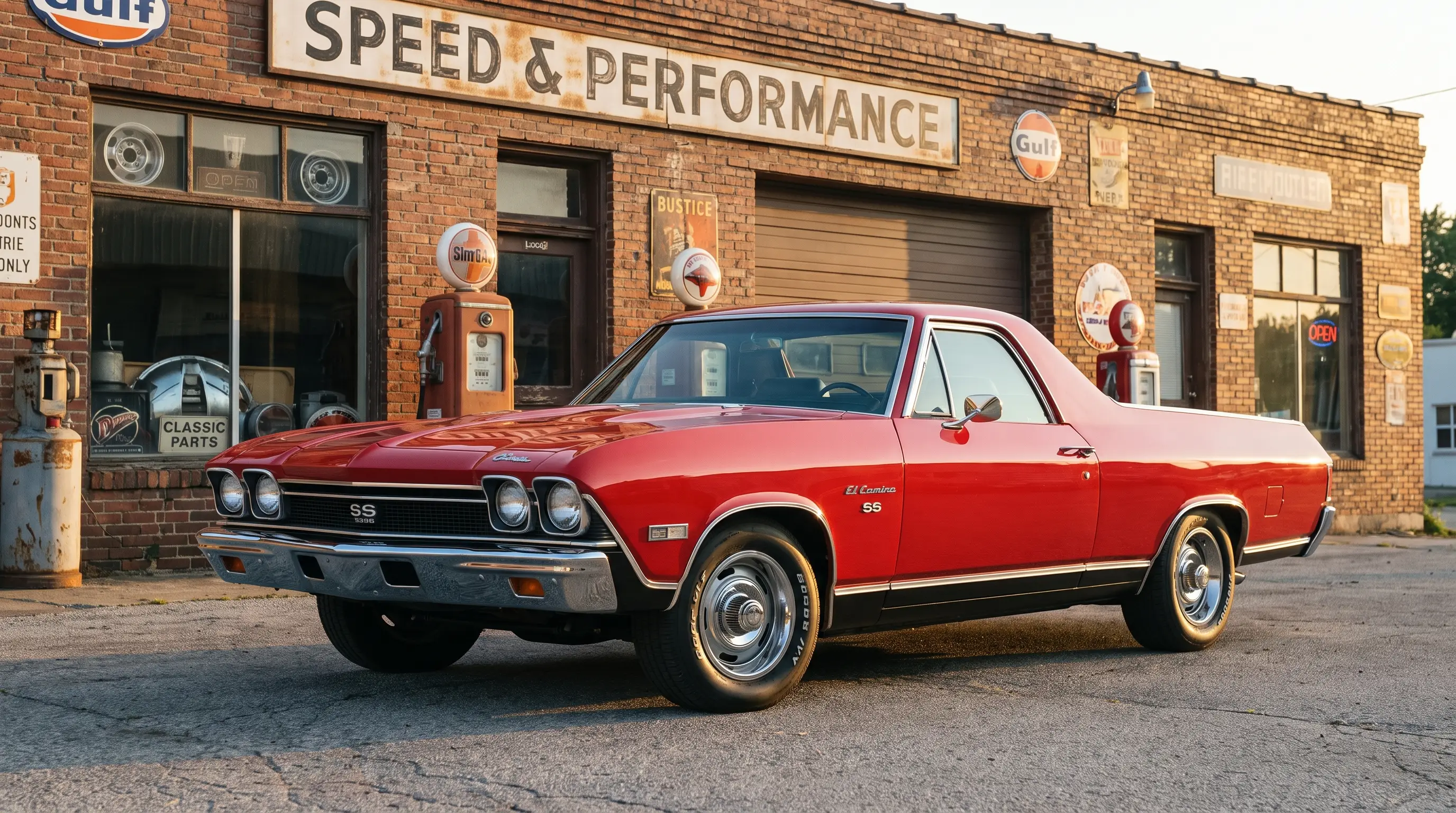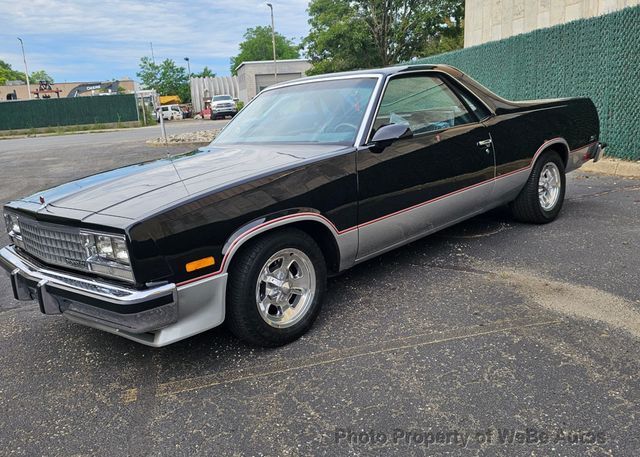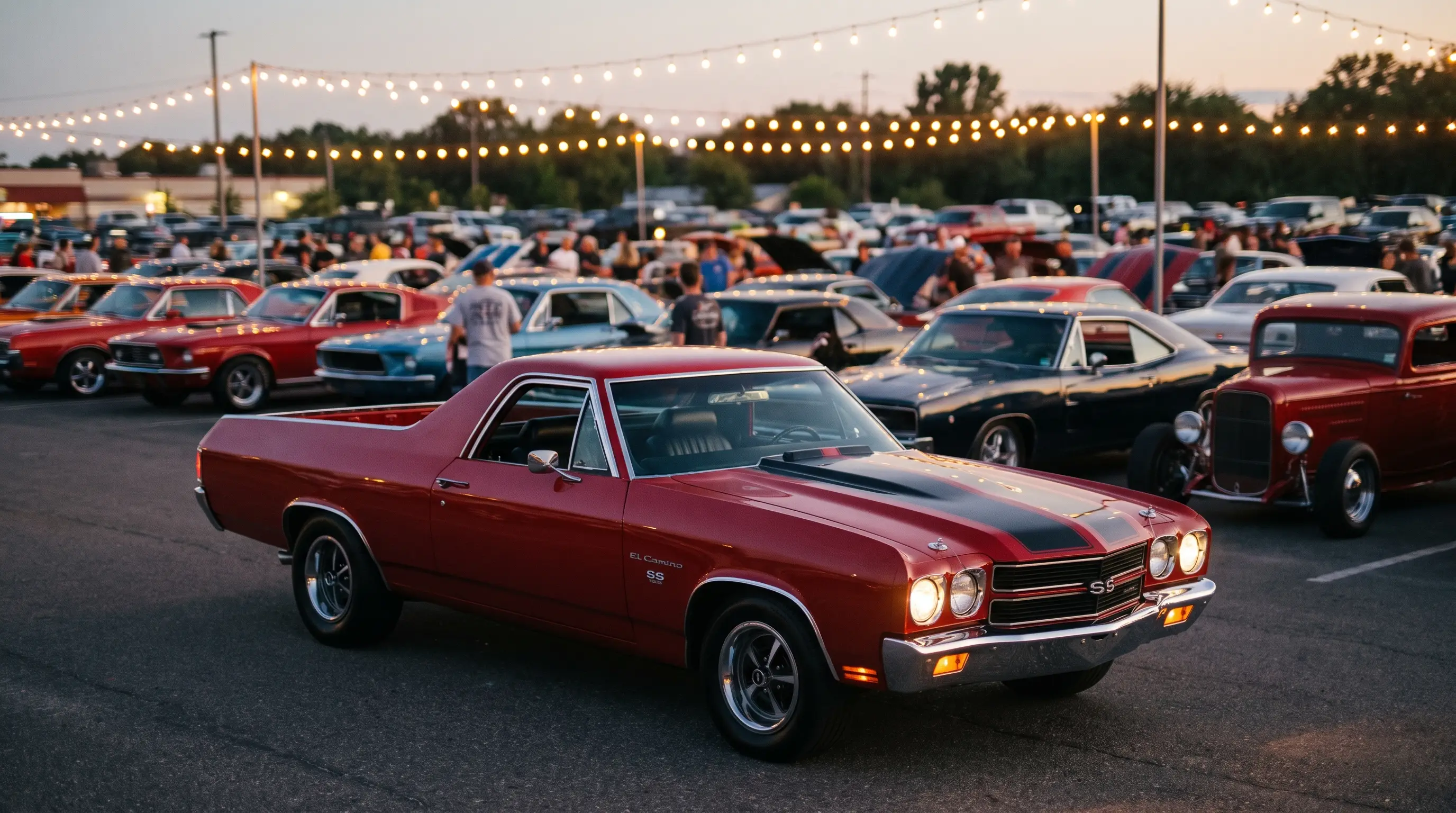
Nine fifteen on a Friday and the parking lot behind the burger stand is already filling in a pattern that never really changes: trucks near the entrance, sedans along the fence, and the El Camino SS parked dead center where everybody walking in has to pass it. Nobody assigned that spot. It just happens, week after week, because an El Camino SS cruise night icon status is not something a car earns once. It gets re-earned every Friday, in front of the same crowd, and that repetition is exactly what has kept this model relevant on the cruise scene for fifty years.
Built for exactly this kind of night
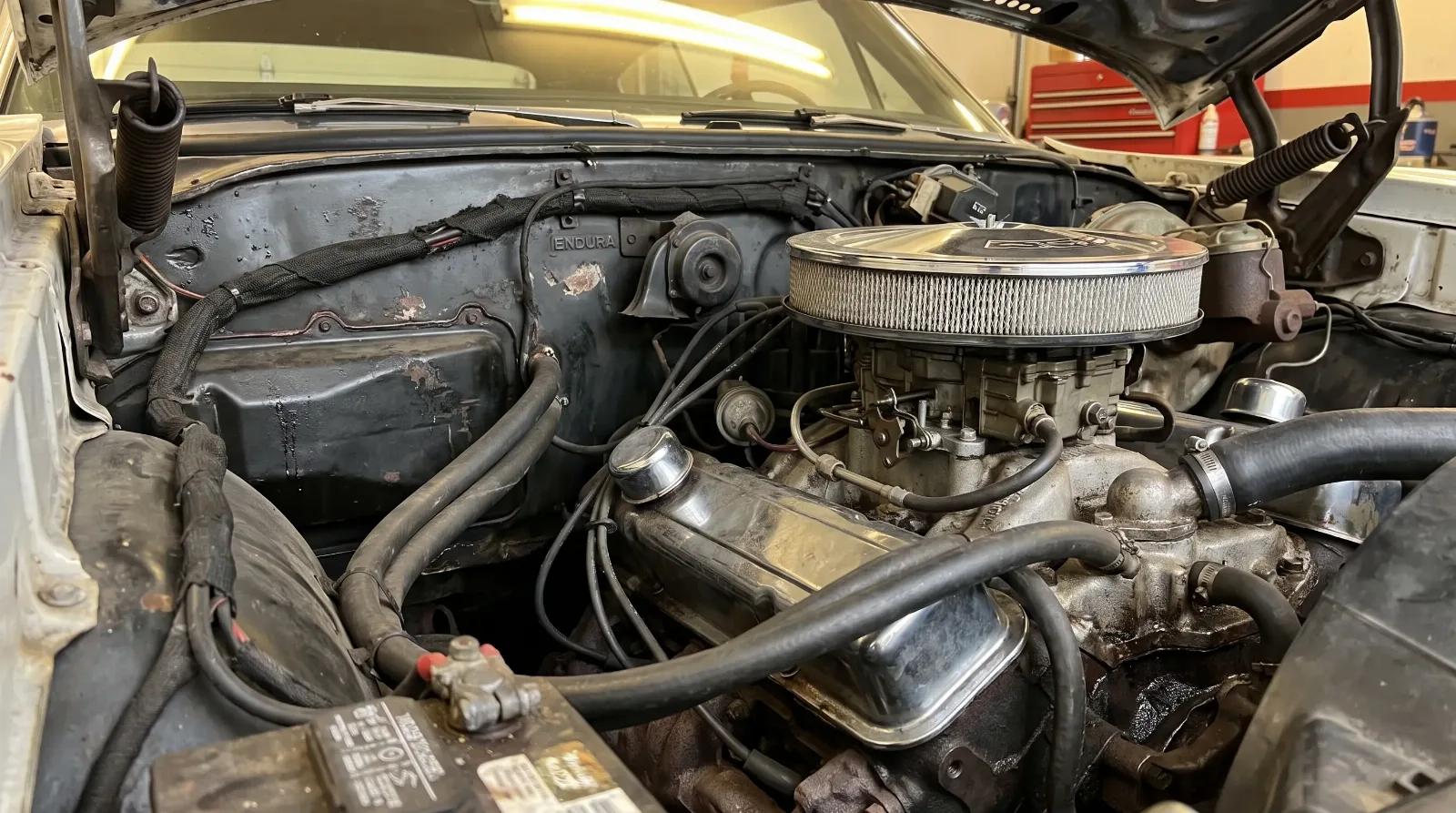
Cruise culture rewards cars that look good standing still and sound right rolling slow, and the SS package was engineered, whether Chevrolet intended it this way or not, for precisely that combination. The stance is low and long. The hood scoop and stripe package give it visual weight from thirty feet away, which matters more at a cruise night than at a racetrack, because most of the evening is spent parked or crawling at five miles an hour past a row of lawn chairs. A 396 or 454 idling with a lumpy cam is its own kind of theater, and the SS delivers that sound without anyone having to rev it for attention.
The utility angle nobody expects
Here is what surprises first time cruise night attendees: the bed. Owners use it constantly, and not for show. Spare parts, folding chairs, coolers, an extra wheel in case of a flat on the way home. A Chevelle SS owner has to plan around a trunk. An El Camino SS owner just tosses things in the back and drives, which turns out to be a genuine advantage at an event that runs four or five hours and involves a fair amount of standing around with gear. The car works the way its owners actually live, which is part of why the loyalty around it runs so deep.
A different kind of owner
Talk to enough SS owners at these events and a pattern emerges that does not show up as clearly around other muscle cars. A lot of them are second or third generation stewards of the same vehicle, not flippers chasing appreciation. The car passes from a father to a son, or gets bought back by a grandson after it left the family for a decade. That continuity shows in how the cars are kept: driven, not trailered, with a patina of real use rather than a trailer queen shine. the whole picture on how the model came together explains a lot about why that ownership style took root in the first place.
There is also a generational split worth noting. Younger owners coming into the hobby now often discover the El Camino SS through a grandparent's garage rather than an auction listing, and they tend to keep the car close to how they found it rather than chasing a full restoration. That preference for originality over polish has become its own quiet trend at cruise nights over the last several years, with unrestored and lightly refreshed cars drawing as much attention as the show quality builds parked next to them.
The sound and the ritual
Every cruise night has its rhythm, and the SS fits into it in a specific way. Early evening, cars roll in slow, engines cold, everybody finding a spot. Mid evening, the lot fills, conversations happen in clusters, and the SS becomes a meeting point simply because it is visible from every angle. Late evening, as people start leaving, that same car often gets one more slow lap around the lot before heading home, engine warm now and sounding better than it did three hours earlier. Regulars know to wait for that lap. It is unofficial, unplanned, and happens almost every week regardless of who is driving that particular SS.
"You can put a Camaro in the same lot and people will admire it. Park an El Camino SS next to it and people will actually walk over and start asking questions. That's the difference between a good car and an icon."
- Patrick Walsh
What the color and stripe package does at night
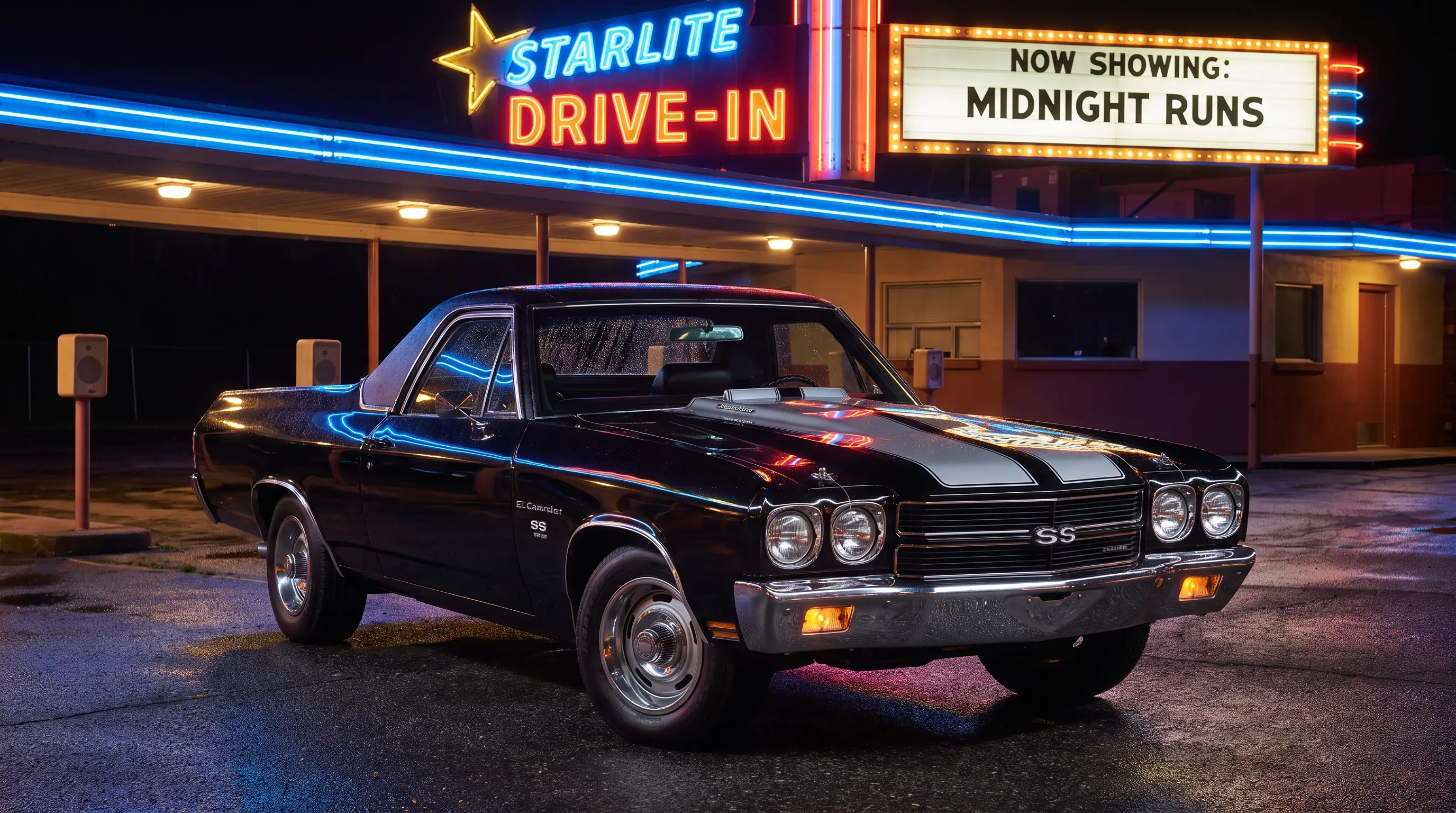
Under parking lot lights, the SS stripe package reads differently than it does in daylight photography. The contrast stripes catch overhead lighting in a way that flat single color paint does not, which is part of why so many cruise night photographs of the model end up looking sharper than snapshots of plainer cars parked nearby. Owners who have run both a base model El Camino and an SS at the same event will usually say the SS gets photographed more, and it is not close. That visual advantage compounds over decades of car show photography, magazine coverage, and now social media, reinforcing the same reputation each time a new crowd photographs the same silhouette under the same kind of lighting.
Engine sound plays its own role in that reputation. A 396 or 454 with a mild cam does not scream. It burbles at idle and settles into a low, steady rumble that carries across a parking lot better than a higher revving small block. That sound has become part of the expected cruise night soundtrack in regions where the El Camino SS shows up regularly, to the point that regulars can often identify one rolling in before they see it.
None of this requires the car to be loud in any obnoxious sense. The SS at a cruise night is rarely the vehicle drawing complaints about noise. It is the one drawing a small, quiet crowd that lingers a little longer than it does at the car parked next to it, which is a harder thing to manufacture than volume and a much better predictor of long term reputation. Show organizers who have run the same event for a decade or more will often say the crowd behavior around a given model tells them more about its staying power than any survey or sale price ever could, and the El Camino SS keeps testing well by that measure year after year.
Why it keeps happening
None of this is accidental momentum from decades ago. New owners keep buying into the scene, restoration shops keep seeing SS project cars come through the door, and cruise night organizers keep noticing the same thing: put an El Camino SS in the lot and the crowd forms around it without any prompting. That is the actual definition of an icon in this hobby, not a trophy on a wall but a car that people keep choosing to gather around, decade after decade, Friday after Friday. Anyone who has stood in that crowd and wanted to own the feeling rather than just watch it can find a classic El Camino and start there.