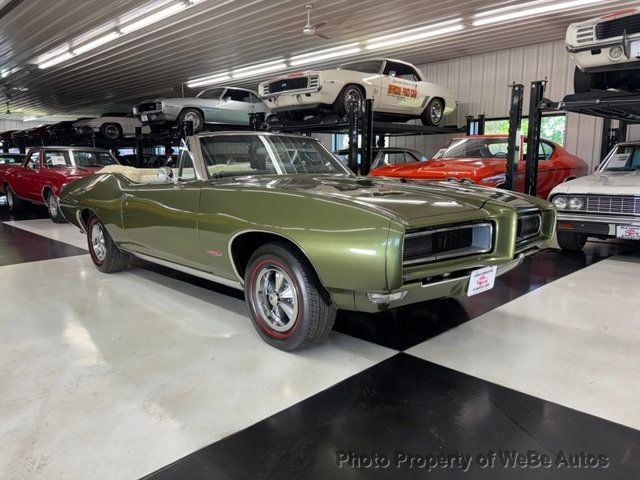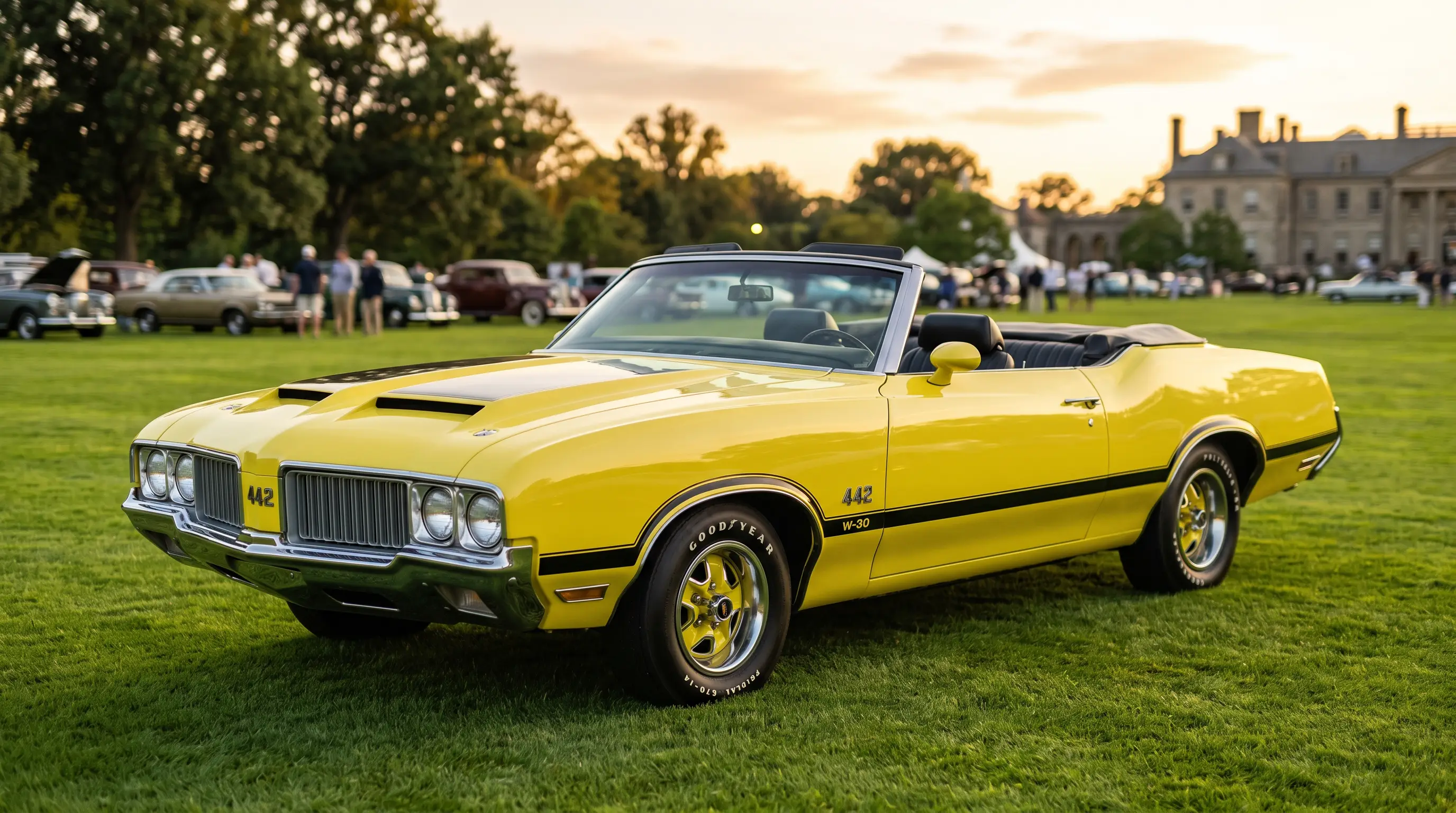
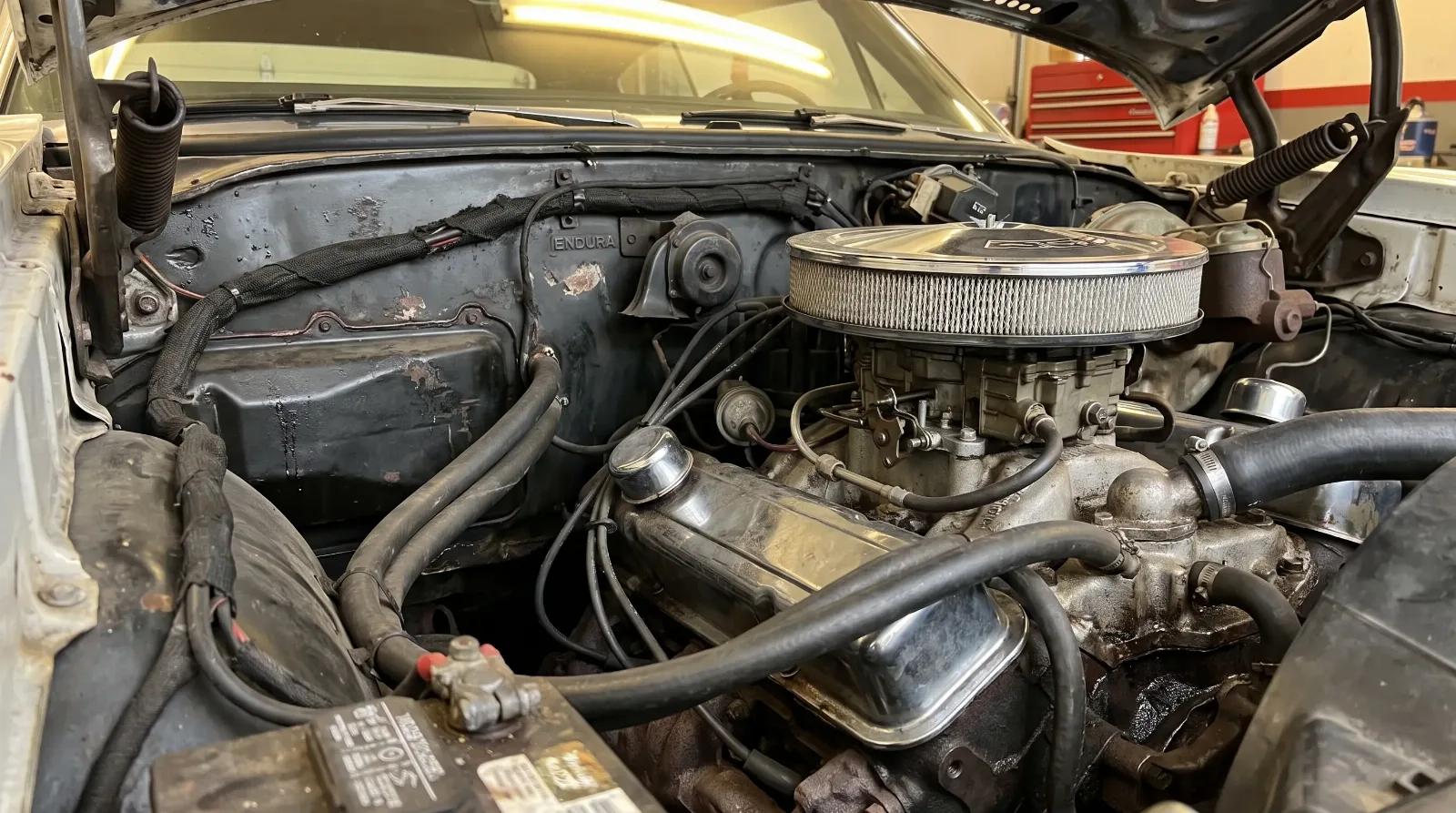
I've had more 1968-69 GTOs on my lift for electrical gremlins than for anything else short of routine brake work. Not because these cars are unreliable. Because they're old, they've been modified by three or four owners with three or four different skill levels, and the harness Pontiac ran through that Endura nose and restyled cowl has a few specific weak points that show up the same way every time. If you own one of these cars or you're about to buy one, you need to know where to look before something stops working at the worst possible moment.
The hideaway headlight doors and their wiring
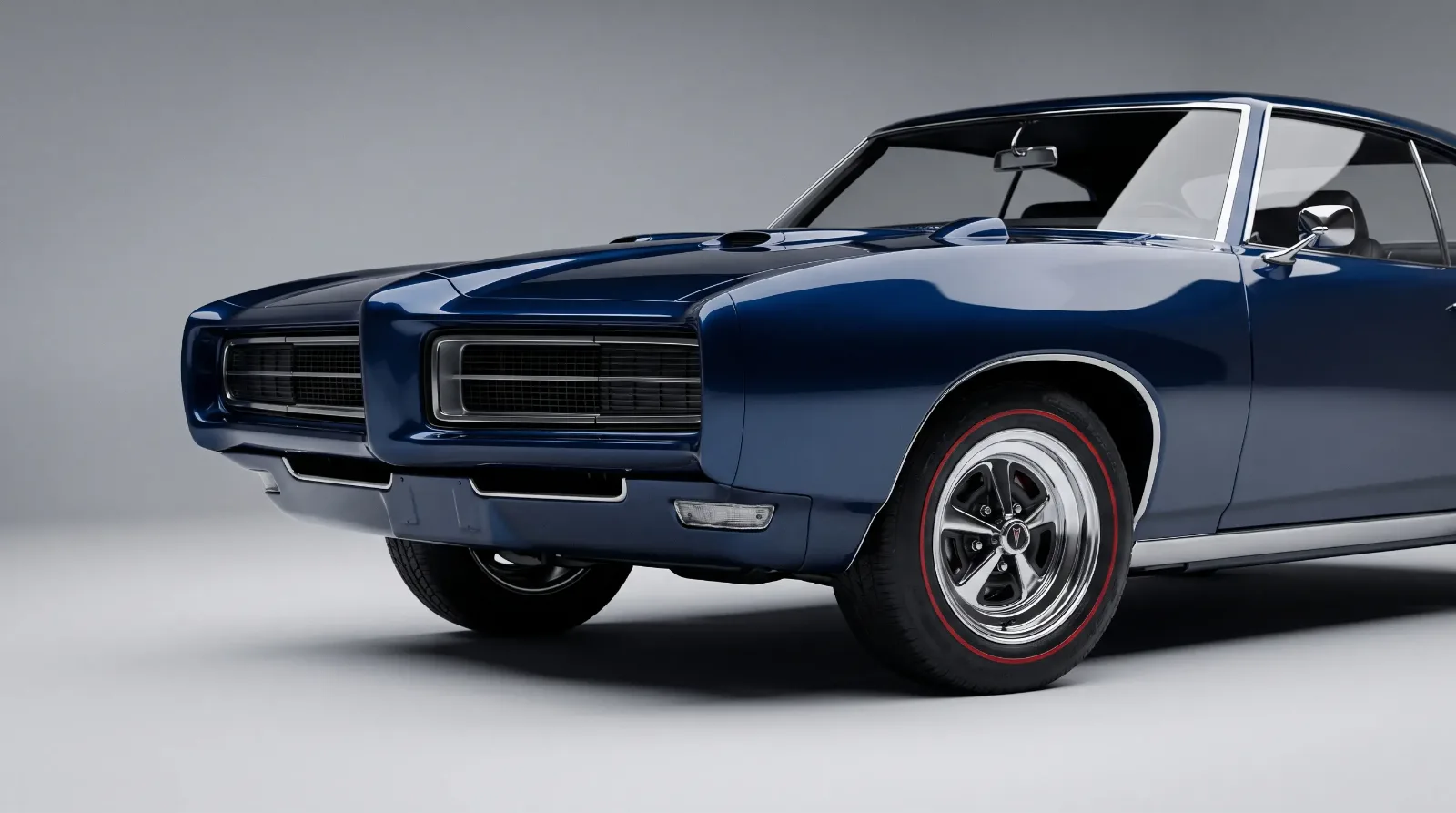
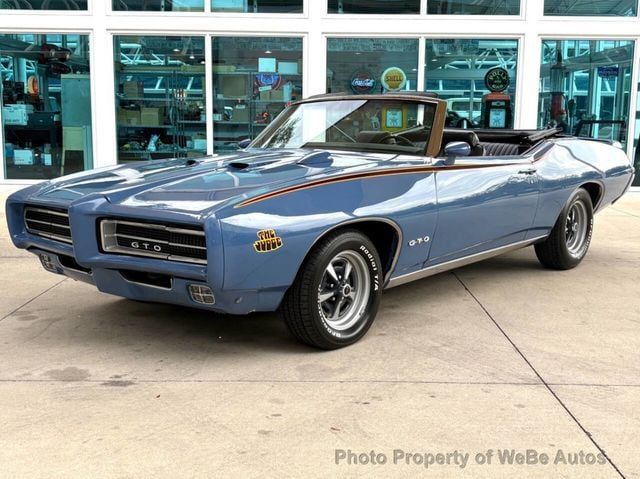
The hideaway headlight doors that a lot of people associate with the 1968-69 GTO were a popular option, not something every car left the factory with, and it's worth knowing which kind you're looking at before you start chasing an electrical fault. Cars without the option run their lamps exposed behind the Endura nose. Cars with it use vacuum-actuated doors, not electric motors, so the headlight switch routes engine vacuum through a check valve and a pair of actuators rather than driving a motor directly, and a lot of the "wiring" complaints on these cars actually turn out to be a cracked vacuum hose or a bad check valve rather than a short. Either way, the wiring around that front clip is still the first place I check on any car that's had front-end work. Pontiac ran the headlight and turn signal wiring through a harness that threads close to the Endura bumper mounting points, and any body shop that's pulled that bumper for paint or repair over the decades has had a chance to pinch, chafe, or reroute that harness wrong. I've found harnesses taped with black electrical tape over a bare chafe point that was one more vibration cycle away from a dead short.
If you're inspecting the 1968-69 GTO for purchase, get a flashlight up under that front clip and look for tape repairs, non-factory splices, or wire that's been rerouted away from its original harness path. That's not automatically a deal breaker, but it tells you someone's been in there, and you want to know why.
The bulkhead connector, the actual weak link
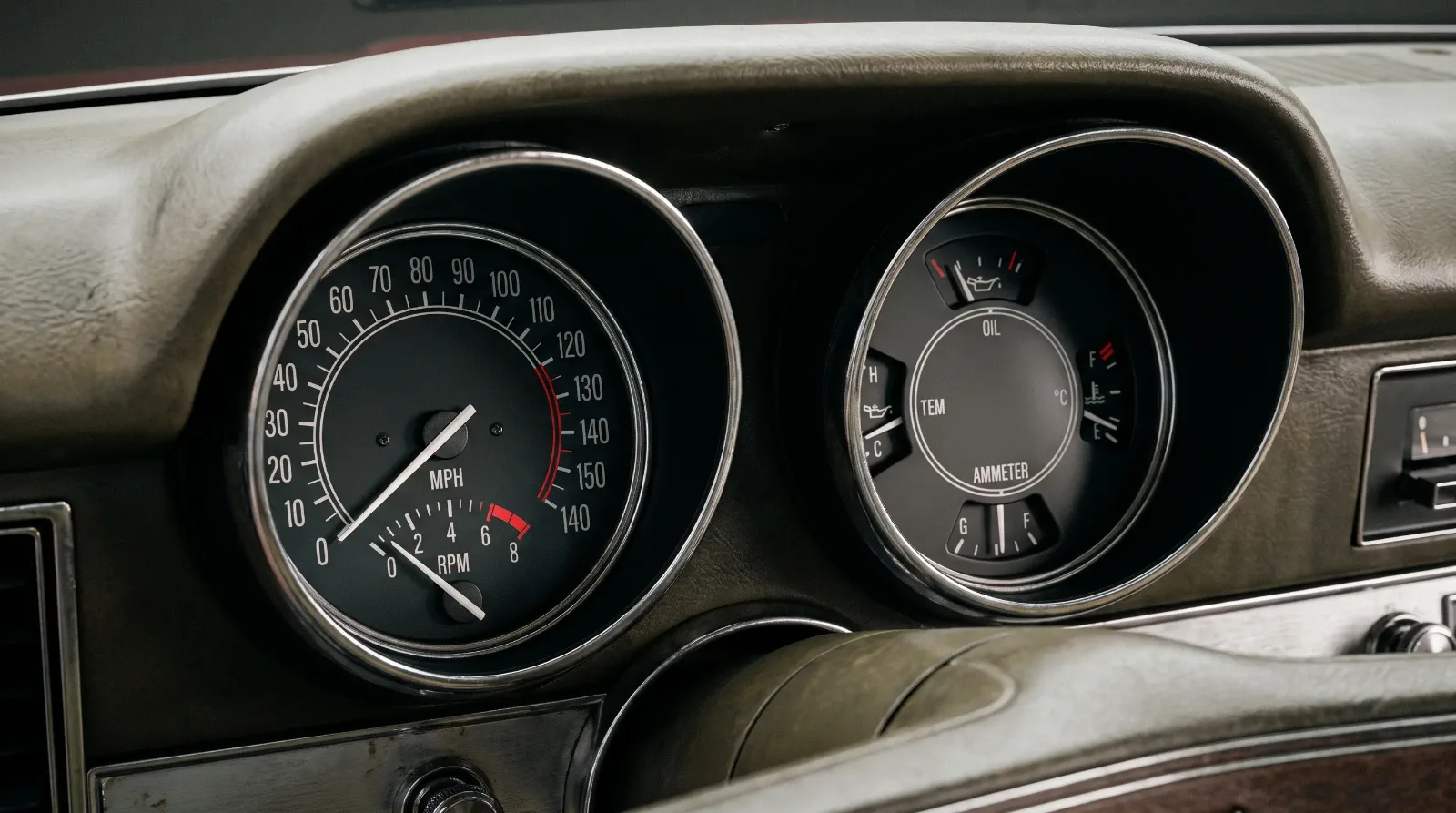
Every GTO from this era routes its engine-bay wiring into the cabin through a bulkhead connector on the firewall, and this is where I've traced more intermittent problems than any other single point on the car. The connector is a multi-pin block that carries everything from the alternator feed to the gauge sender signals, and after fifty-plus years the pins corrode, the contact tension weakens, and you get exactly the kind of maddening intermittent fault that drives owners crazy: a gauge that works fine for three weeks and then reads dead for one drive, or headlights that flicker over railroad tracks but never when you're parked testing them.
My approach is always the same. Before I chase anything downstream, I pull the bulkhead connector apart, clean every pin with a fiberglass scratch brush, and check for green corrosion on the terminals. Nine times out of ten that fixes an intermittent problem that an owner has spent months and real money trying to diagnose by replacing parts one at a time. Don't start by replacing the alternator. Start at the bulkhead.
| Symptom | Likely wiring cause | Typical fix difficulty |
|---|---|---|
| Gauges read intermittently across all four | Corroded bulkhead connector pins | Moderate, DIY with patience |
| Headlights flicker over bumps, not at idle | Chafed harness near Endura bumper mount | Moderate to advanced, depends on chafe location |
| Turn signals work one side only | Corroded ground at rear body-to-frame strap | Easy, often overlooked |
| Dash lights dim under load (headlights, wipers on) | Undersized or degraded main feed to headlight switch | Moderate, may need a relay upgrade |
| Intermittent no-start, no click | Corroded firewall-to-frame ground strap | Easy once located |
Ground straps get blamed less than they should
People chase phantom electrical gremlins for weeks and the actual fault is a corroded ground strap between the engine, the body, and the frame. These A-bodies rely on more than one ground path, and if the strap connecting the body to the frame near the firewall has corroded loose, you get weird symptoms that don't point anywhere obvious: dim lights, a starter that clicks but doesn't crank, gauges that misbehave under vibration. Before you spend money on parts, run a jumper cable directly from the battery negative to the engine block and to the body, and see if your symptom disappears. If it does, you've found a ground problem, not a wiring problem, and it's a five-dollar fix instead of a harness replacement.
What actually needs a full rewire versus a spot repair
Not every wiring problem calls for a complete harness replacement, and I'd rather see an owner spend an afternoon tracing a fault than write a check for a full reproduction harness they didn't need. If a car has one bad circuit, one section of melted or brittle insulation, or a single chafe point, repair that section with the correct gauge wire and proper crimp connectors, not electrical tape and hope. Original cloth-covered wire holds up fine mechanically even after fifty years as long as it hasn't been exposed to engine heat or years of oil saturation, which is usually what actually kills it.
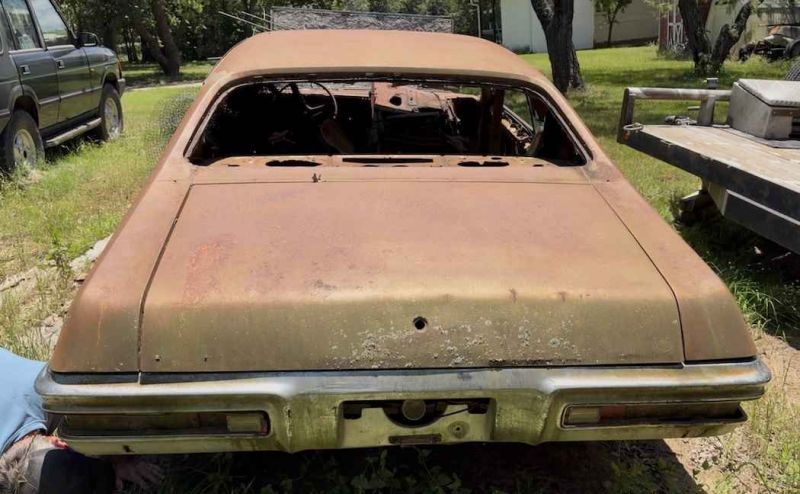
Where I do recommend a full harness swap is on a car that's been modified repeatedly by unknown hands over the decades, where you find splices on top of splices, non-factory colors mixed into factory circuits, and no way to trust any given wire without tracing its entire length. At that point you're not saving money by patching around problems. You're buying yourself another decade of chasing intermittent faults on a system nobody can fully account for. A quality reproduction harness, installed carefully with the correct routing and factory-style connectors, is worth it on a car headed toward a real restoration.
The other thing I check on any GTO with aftermarket gauges, a stereo, or accessory lighting added since the sixties is how those additions were tapped into the factory circuits. Too many amateur installs pull power from whatever wire was closest rather than from a properly fused source, and that's how you end up with a blown factory circuit taking out something unrelated, like turn signals dying because someone wired a set of driving lights into that circuit fifteen years ago and forgot about it.
🔧 Inspection Priorities
- Bulkhead connector corrosion. The single most common source of intermittent electrical faults on these cars. Budget an afternoon to pull, clean, and dielectric-grease it even on a car with no current complaints.
- Harness chafe near the Endura mount points. A pinched or bare wire here can short against the bumper mounting bracket and take out a circuit, or worse, start a fire. Check every time the front clip has been off for bodywork.
- Ground strap condition. Cheap, easy to replace, and responsible for a disproportionate share of "mystery" electrical complaints on cars this age.
- Non-original wire colors or splices. A rewired section using the wrong gauge or non-factory colors is a sign of amateur past repairs and a reason to trace that circuit fully before trusting it.
The wiring problems on these cars aren't exotic. They're the same handful of failure points showing up over and over, because the design is fifty-plus years old and it's been driven, modified, and occasionally neglected by people who didn't always know what they were doing under the dash. That's not a knock on the car. It's just what fifty years of ownership looks like electrically, and it's exactly the kind of thing that connects back to how read on the 1968 restyle reshaped the whole A-body platform, because the wiring routing changed right alongside the sheet metal that year.
"I've watched a guy spend six hundred dollars on a new alternator, a new voltage regulator, and a new battery chasing a dim-headlight complaint that turned out to be one corroded ground strap behind the engine. Check the cheap stuff first."
— Mike Sullivan
If you're buying one of these cars, don't let electrical gremlins scare you off. Just budget the time to check the bulkhead connector and the ground straps before you assume you're dealing with a bigger problem than you actually are. And if you're already living with one, that's still where I'd start.