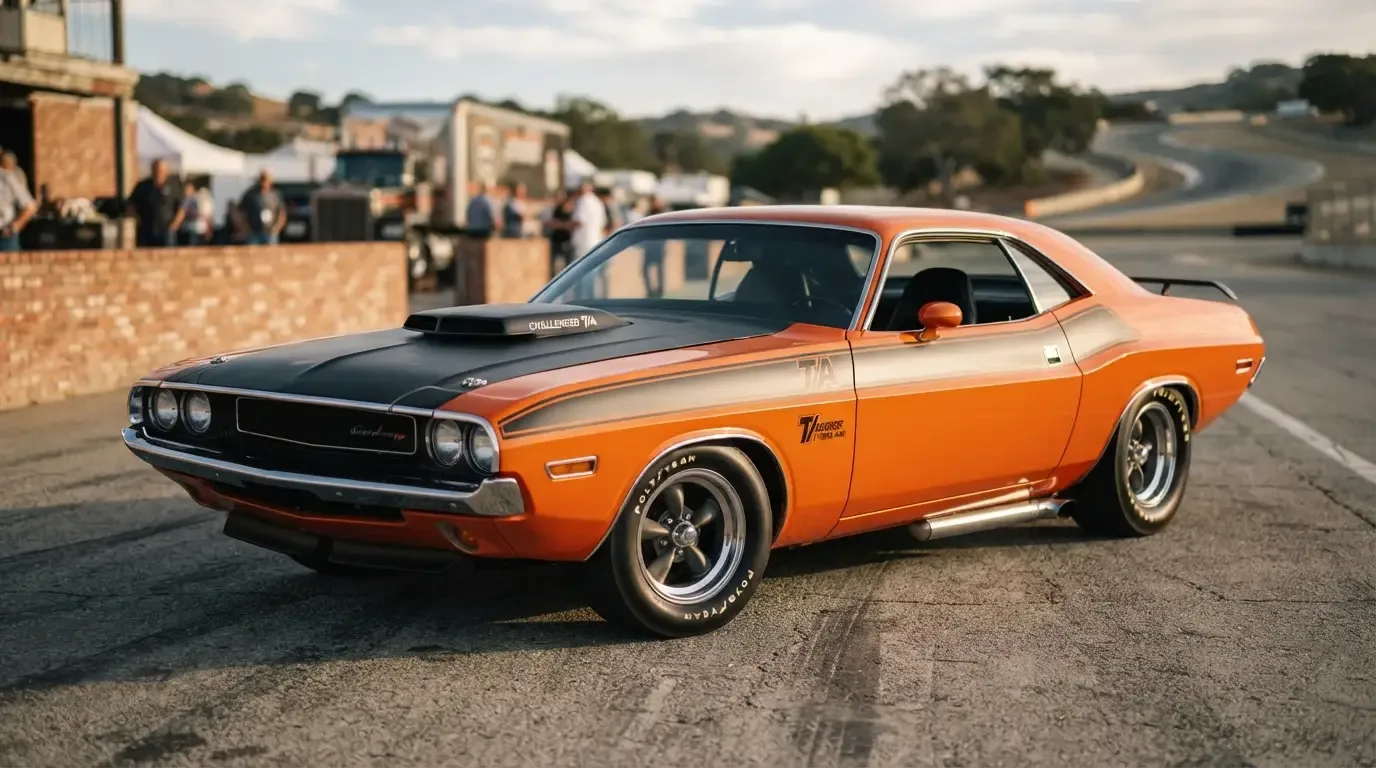
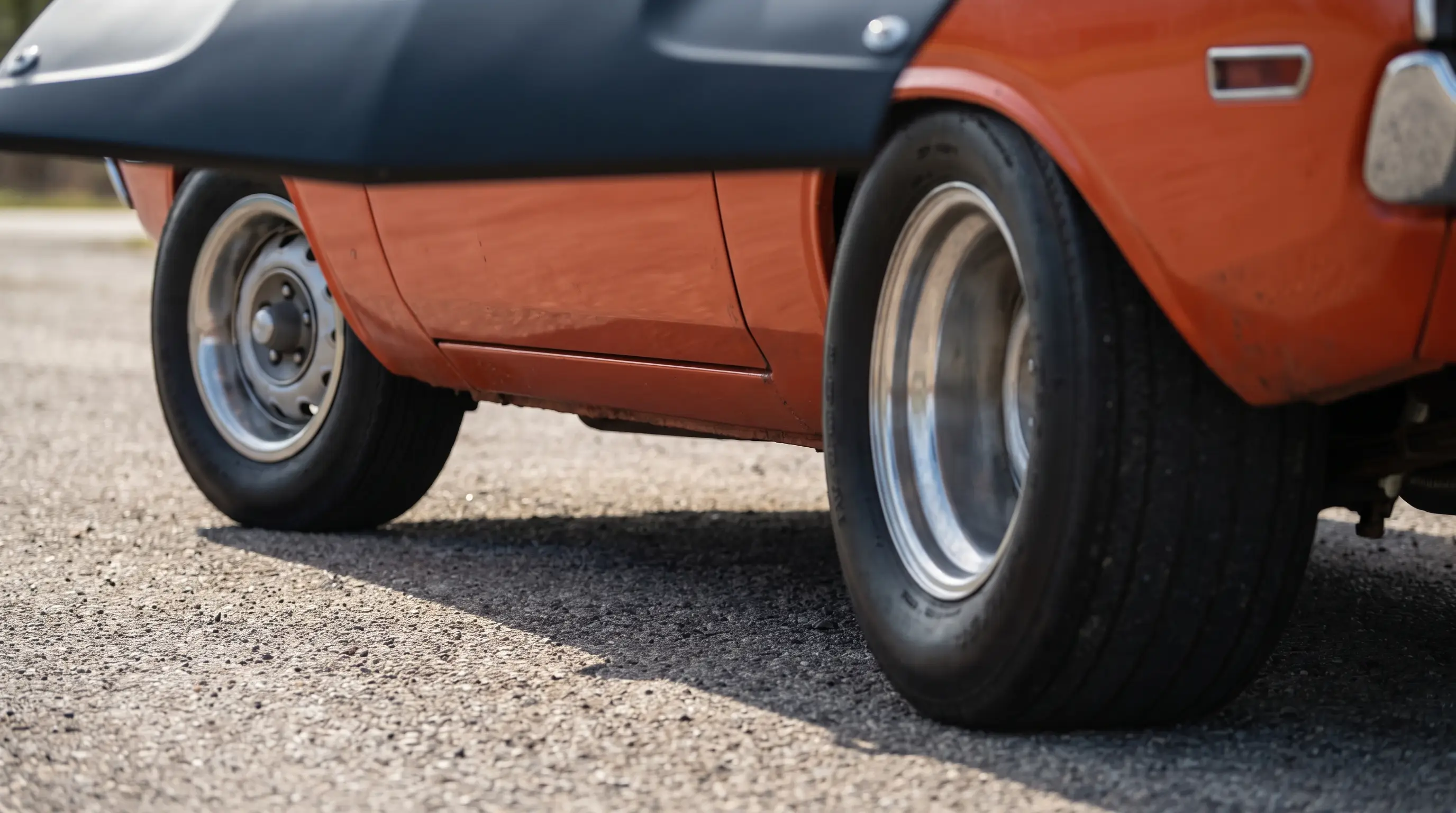
Stand behind a 1970 Challenger T/A and you will notice something odd before you notice anything else. The rear tires are visibly fatter than the fronts. That staggered setup is central to any challenger ta wheels conversation among owners, and it is one of those details that looks like a styling flourish until you understand it was a genuine handling decision borrowed straight from the Trans-Am race program.
The actual tire sizes and why they were staggered
Factory T/As left the assembly line riding on E60-15 Goodyear Polyglas GT tires up front and wider G60-15 Goodyear Polyglas GT tires out back, mounted on 15x7 Rallye wheels finished to match the T/A's overall trim package. That front-to-rear size difference was a direct carryover from race car practice, where a narrower front tire reduces steering effort and rotational mass at the corner that does the least amount of the car's total grip work under acceleration, while a wider rear tire puts more rubber down where the power actually needs to go. It is the same basic logic that shows up in modern performance cars with staggered wheel and tire packages, except Dodge was doing it on a production muscle car in 1970, which was unusual enough at the time to be a genuine talking point.
The visual effect of the staggered setup, combined with the T/A's characteristic forward rake, gives the car a stance that looks aggressive even standing still. Paired with the side exit exhaust just ahead of the rear wheel opening, the whole rear three-quarter view of a T/A reads differently than a standard Challenger R/T, and that stance is a big part of why enthusiasts can identify a T/A from a distance before they ever see the hood graphics or badging.
Rallye wheels and correct fitment
The Rallye wheel itself, a styled steel wheel with a distinctive trim ring and center cap, was not exclusive to the T/A, but the T/A's specific size and offset combination paired with its staggered tire sizing was part of the total package Dodge engineered for the car. Getting the wheel and tire combination correct on a restoration matters more than it might seem, because an incorrect tire size, even one that looks close, changes the rake and the stance enough that people who know these cars will notice immediately. A T/A sitting level front to rear, or with equal sized tires on all four corners, simply does not read correctly to anyone familiar with the original spec.
What goes wrong on restorations
The most common mistake on T/A restorations is not getting the tire sizes flat out wrong, most restorers know the basic front-narrower, rear-wider concept by now. It is getting the specific sizing, sidewall profile, or wheel offset slightly off in ways that change the stance without being obviously incorrect to someone who does not know exactly what to look for. Modern tire manufacturing does not always offer an exact period-correct replacement for a size like E60-15, which means builders sometimes substitute a close modern equivalent that changes the overall rolling diameter or sidewall height just enough to throw off the rake that made the original setup distinctive in the first place.
If you are working on a restoration or evaluating one for purchase, it is worth asking specifically what tire brand and size the shop used and whether they cross-referenced factory specifications rather than just eyeballing something that looked staggered enough. That level of specificity separates a restoration that nails the T/A's character from one that gets the general idea right but misses the details that actually define it.
"You can put the right stripes and the right hood on any Challenger and get it eighty percent of the way to looking like a T/A. The wheel and tire stance is the last twenty percent, and it's the part most people get lazy about because it seems minor. It isn't minor. It's half the reason the car looks the way it looks."
- Mike Sullivan
Comparing the T/A's stance to its competitors
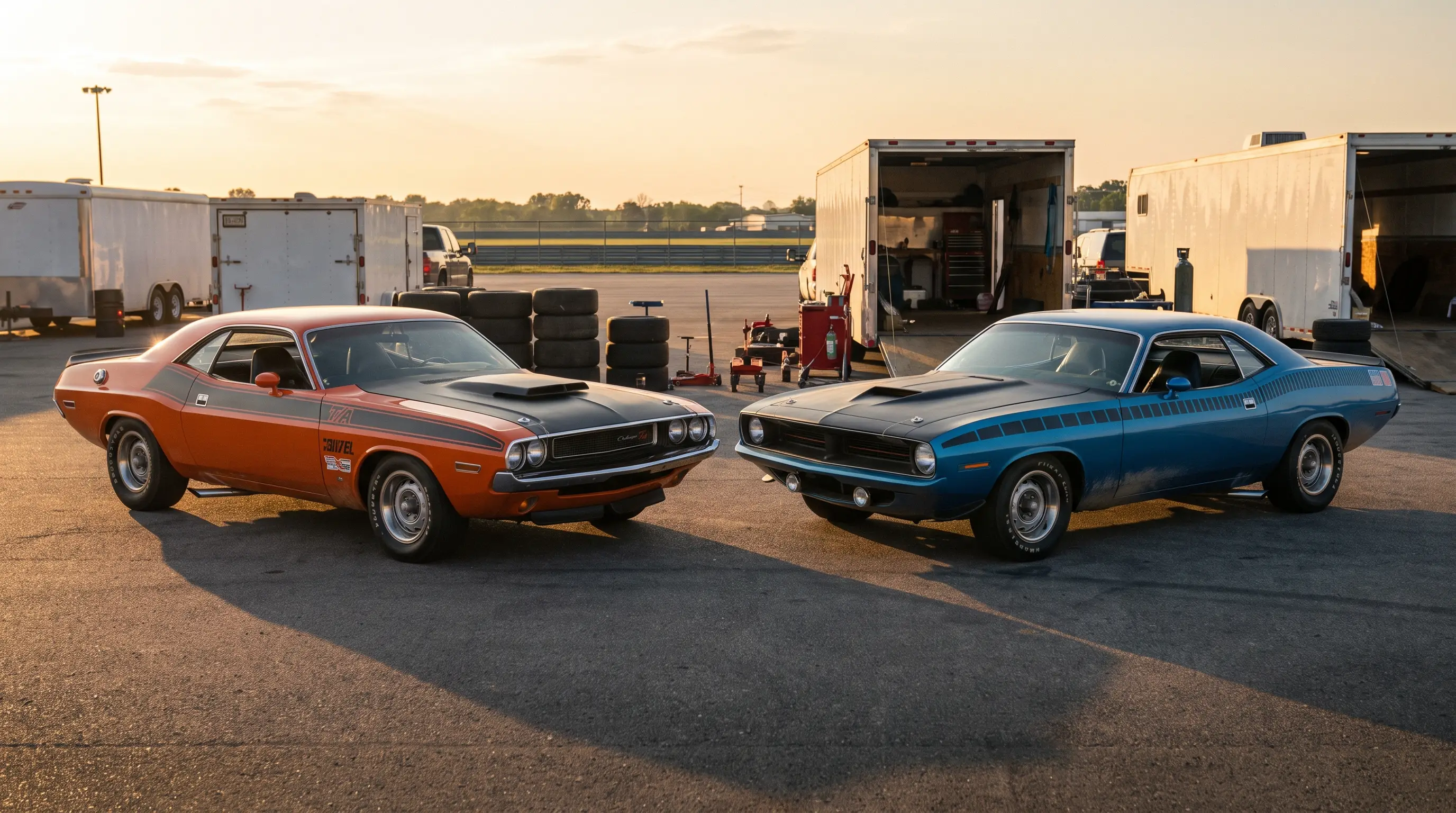
Staggered tire setups were not unique to the T/A among 1970's homologation specials, and comparing the different approaches manufacturers took tells you something about how seriously each program treated the racing connection versus how much was purely cosmetic. Some competitors' street packages offered a staggered look through wheel width alone while running identical tire sizes front and rear, which delivers the visual without the actual handling benefit. Dodge's approach on the T/A, genuinely different tire sizes front to rear rather than just different wheel widths, put it closer to what the actual race cars were running, which is part of why enthusiasts who know this era well treat the T/A's stance as more than a styling trick.
Table: T/A wheel and tire specification at a glance
| Position | Tire size | Wheel |
|---|---|---|
| Front | E60-15 | Rallye, styled steel |
| Rear | G60-15 | Rallye, styled steel |
Even a table this simple only tells part of the story, since sidewall profile, tread pattern, and exact wheel offset all affect how a given set of staggered tires actually looks and behaves under the car. That is why comparing a restoration candidate against documented factory photographs, rather than against a bare spec sheet, remains the more reliable way to judge whether a T/A's stance has been done correctly.
Why this detail rewards patience
Chasing period-correct tire sizing and wheel offset is one of the more tedious parts of a T/A restoration, precisely because so few modern tire lines still produce anything close to the original E60-15 and G60-15 sizing. Builders who care about getting this right often end up working with specialty reproduction tire suppliers who cater specifically to muscle car restorations rather than relying on mainstream tire shops, and that extra step in sourcing is part of why a correctly staggered T/A stands out from one that simply looks close. It is a detail most casual observers will never consciously register, but it is exactly the kind of thing that experienced eyes notice within seconds of walking up to the car.
Why the stance still matters to buyers
When you are evaluating a T/A for sale, take a slow walk around the car and actually look at the tire sizing front to rear before you get distracted by paint and interior condition. A correct stance tells you the previous owner or restoration shop understood what made this car specific in the first place, and it is a quick, visual gut check you can do before you ever get into fender tags and broadcast sheets. For the whole picture of what defines a genuine T/A beyond the wheels and tires, the full story covers the hood, exhaust, graphics, and drivetrain together as one complete package. Once you know what to look for, you can shop classic Challenger listings and evaluate stance along with everything else that separates a correct example from an imitation.