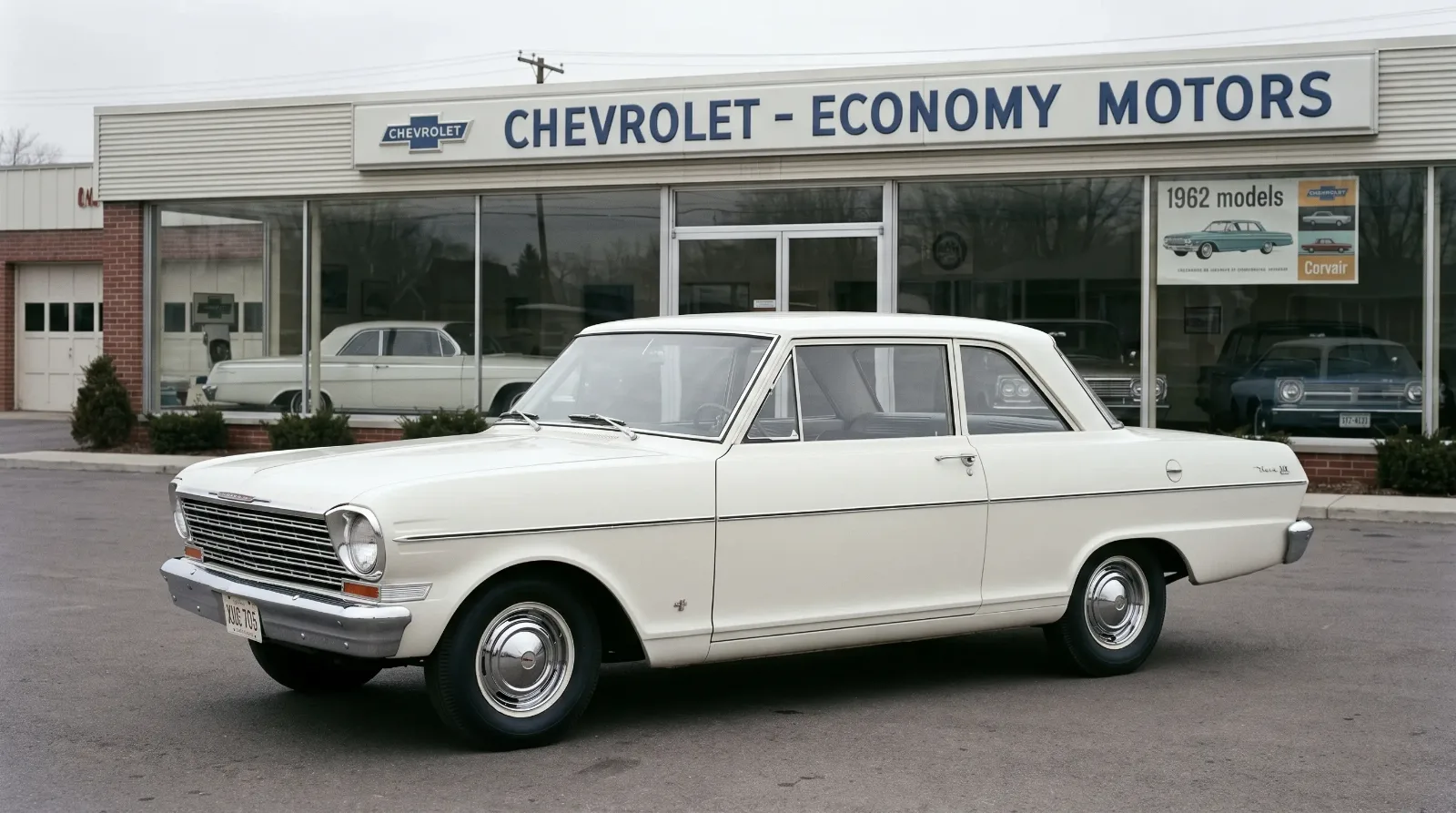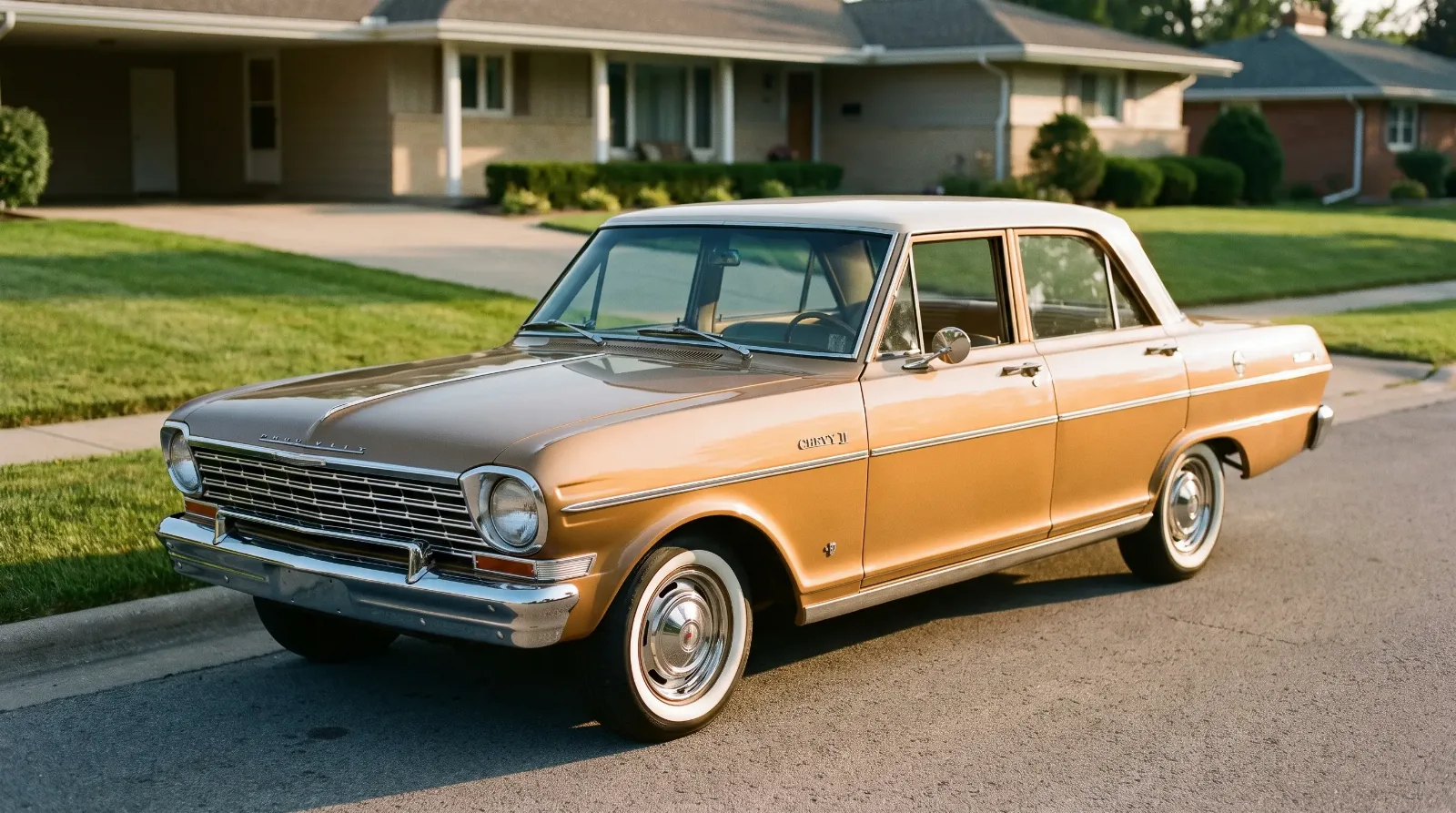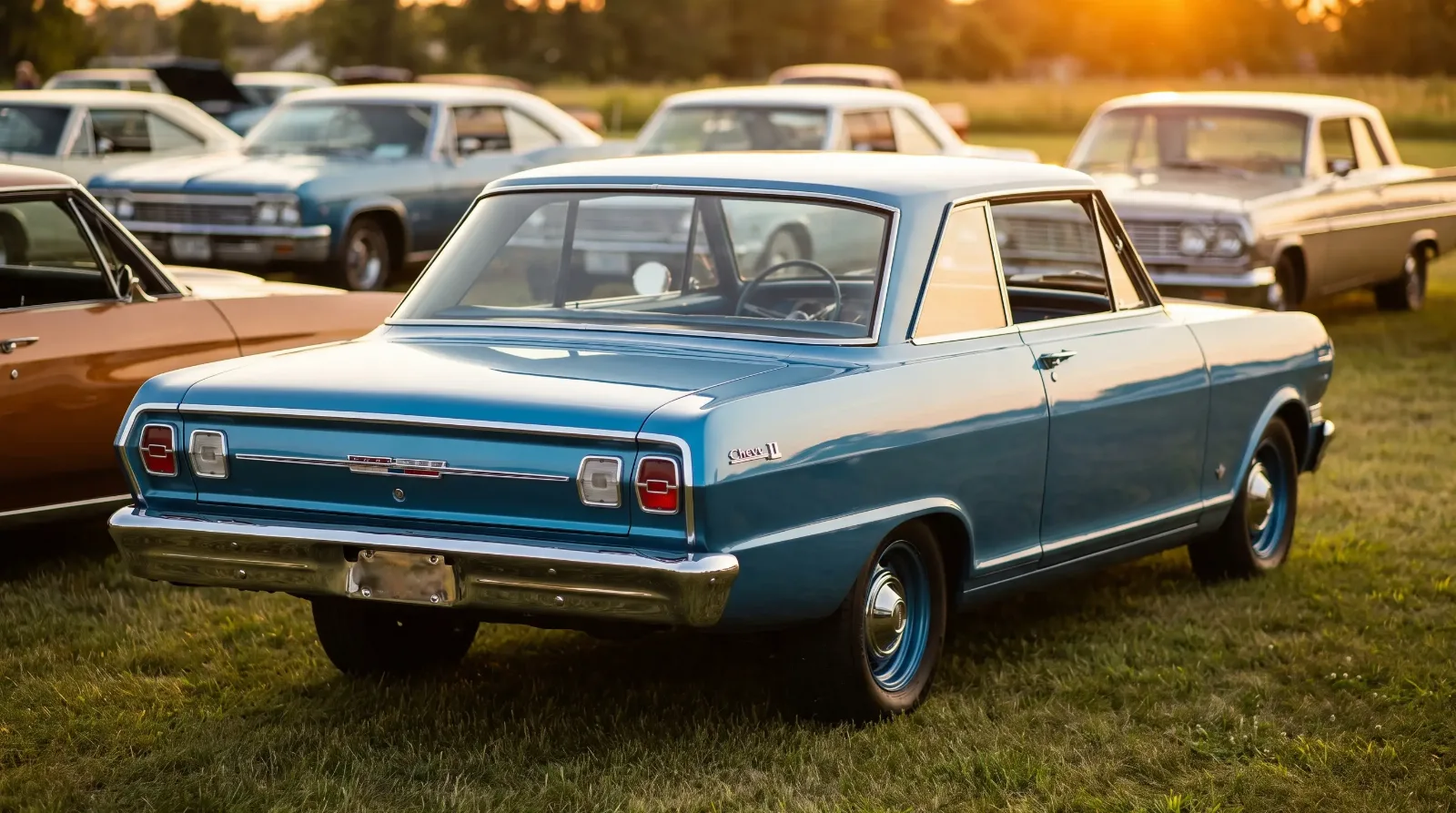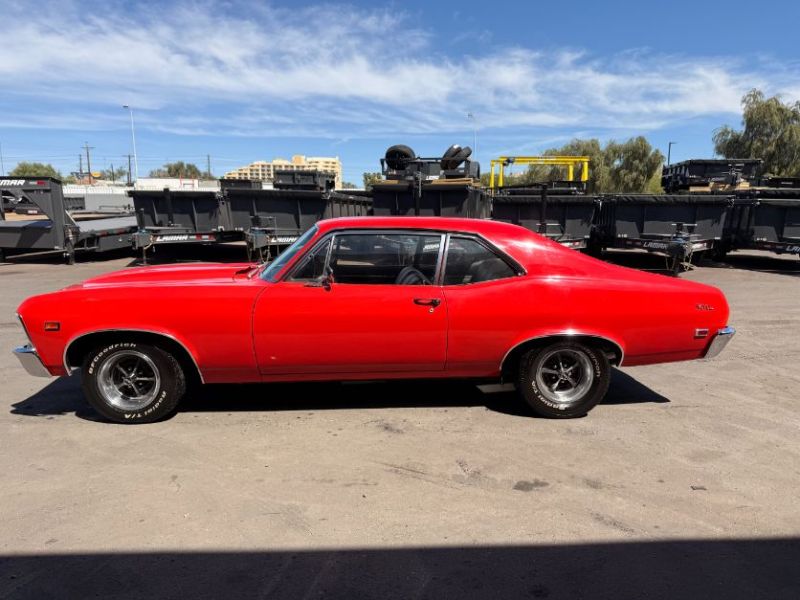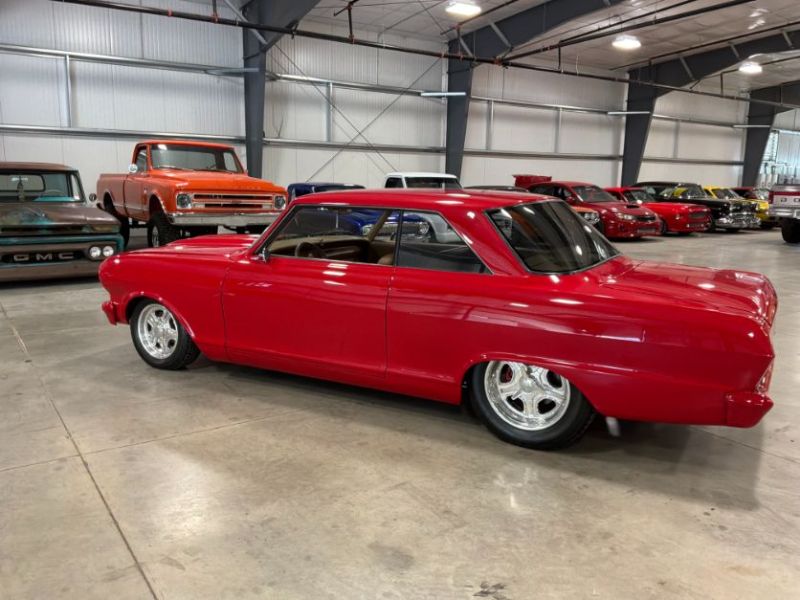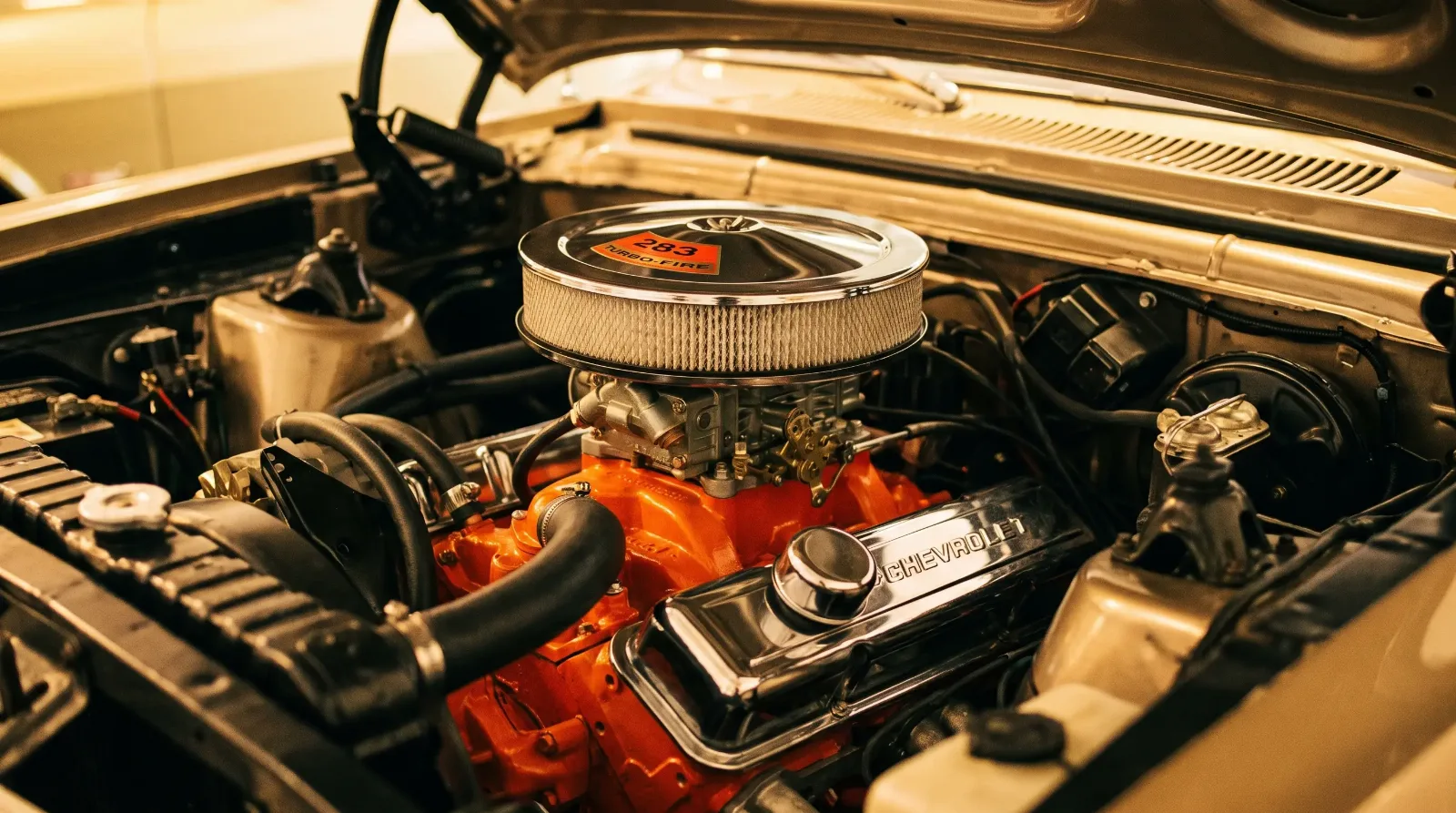
The chevy ii 1964 v8 option changed what this compact car actually was. For two full model years, 1962 and 1963, Chevrolet had sold the Chevy II strictly as a four-cylinder or six-cylinder economy car, no V8 available at any price. That changed for 1964, when the 283 cubic inch small-block V8 finally became an option across the Chevy II line, and the Nova name went from badging on an economy trim to shorthand for the car buyers actually wanted.
It is easy to forget, looking back from a world where Nova and V8 seem inseparable, that Chevrolet held that engine back deliberately for two years. Understanding why makes the 1964 introduction a more interesting story than a simple spec-sheet update.
Why Chevrolet waited two years to offer a V8
The Chevy II's original engineering brief, covered in detail in how the Nova began, was built around competing with the Ford Falcon and Plymouth Valiant on economy and simplicity, not outright performance. Chevrolet already had a V8 compact answer of sorts in the Corvair-adjacent conversation happening internally, but the Chevy II's chassis and front suspension were not originally engineered with V8 weight and torque loads in mind.
By 1963, Chevrolet's engineers had reworked the front suspension geometry and mounting points enough to trust the platform with a small-block, and Ford's own compact V8 offerings were putting real competitive pressure on Chevrolet to respond. The 1964 model year became the moment Chevrolet stopped holding the line.
There was also a corporate pecking order at play. Chevrolet had spent years positioning the Corvette and the full-size Impala SS as the performance halo cars, and a V8-powered compact risked muddying that message internally. By 1964, with Pontiac already fielding the GTO and Ford pushing V8 options into its own compacts, holding the Chevy II back on principle stopped making business sense. The decision to add the 283 was as much a response to internal competition between GM divisions as it was a reaction to Ford and Plymouth.
The 283 arrives, and the Nova SS gets teeth
The 283 cid V8 came to the 1964 Chevy II in more than one state of tune, with a two-barrel version rated at 195 horsepower and a four-barrel version rated at 220 horsepower for buyers who checked the right options box. Either way, it was a meaningful jump over the 194 cid six's 120 horsepower, and it transformed the top-trim Nova SS from a nicely dressed compact into a car that could genuinely move.
Chevrolet paired the V8 option with beefed-up brakes, recognizing that more power without corresponding stopping power would have been a mistake. Period road tests, Motor Trend among them, called out the bigger brakes specifically as part of what made the V8 Chevy II a genuinely better performer, not just a quicker one. That pairing, engine and chassis upgrade together, is the detail that separates a properly documented 1964 V8 car from one that has had an engine dropped in later without the supporting hardware.
None of this made the Chevy II a match for a full-size Impala SS in outright grip, but reviewers of the period were consistent that the V8 cars felt like a more complete package than a straight horsepower comparison would suggest.
| Spec | 1964 Chevy II V8 option |
|---|---|
| Engine | 283 cid small-block V8 |
| Two-barrel rating | 195 hp |
| Four-barrel rating | 220 hp |
| First V8 model year | 1964 |
| Companion upgrades | Beefed-up brakes offered alongside the V8 option |
Telling a real 1964 V8 car from a later swap
Because the 283 shares its basic architecture with small-blocks used across Chevrolet's lineup for decades, a huge number of Chevy IIs on the road today carry a V8 that was not there from the factory. That is not a criticism of those cars, plenty of them are excellent drivers, but it does mean documentation carries real weight for anyone chasing an original 1964 V8 example.
The engine's casting numbers, the date codes stamped near the distributor, and the VIN's derivative code all need to line up before a car can honestly be called a numbers-correct 1964 V8 Chevy II. Chevrolet's build sheets and the Protect-O-Plate system, when they survive with the car, remain the most reliable way to confirm what left the factory.
Buyers evaluating a car advertised as an original 1964 V8 Chevy II should also check the cowl tag and trim plate against the VIN derivative, since a mismatched tag is one of the more common ways a later swap gets passed off as factory-original. A seller who cannot produce a build sheet, a Protect-O-Plate, or at minimum a matching set of casting and date codes is asking a buyer to take the V8's originality on faith alone, and that faith should come with a lower price attached.
"The V8 didn't just add horsepower, it changed what the Nova name meant to buyers. Before 1964, Nova was just a trim level. After it, Nova started meaning something specific."
— Tom Ramirez
Setting up the year that followed
The 1964 V8 introduction did not stand still for long. Chevrolet used the momentum from that first V8 year to justify a broader facelift and further mechanical refinement for 1965, and another angle on that follow-up year shows how quickly the Chevy II moved from economy compact to a car with real performance credibility.
For anyone shopping a 1964 Chevy II today, the V8 cars carry a premium over the six-cylinder examples, and that premium is earned. This was the year the car stopped apologizing for itself.