
Every car club has one guy who shows up to the swap meet with a folder of dealer invoices instead of a story, and at our last Chevy II gathering that guy was standing next to a 1965 Nova SS arguing with someone about grilles. The other fellow swore his '64 and his buddy's '65 had identical front ends. The folder guy just flipped to a parts diagram and let the paper settle it. That is the 1965 Chevy II in a nutshell: a car people misremember constantly, and a car the factory record straightens out every time.
Car Features
6 min read
The 1965 Chevy II Facelift
The 1965 chevy ii looks like a simple facelift at first glance, but a new grille, revised trim, and a 327 V8 option changed the car's whole attitude.
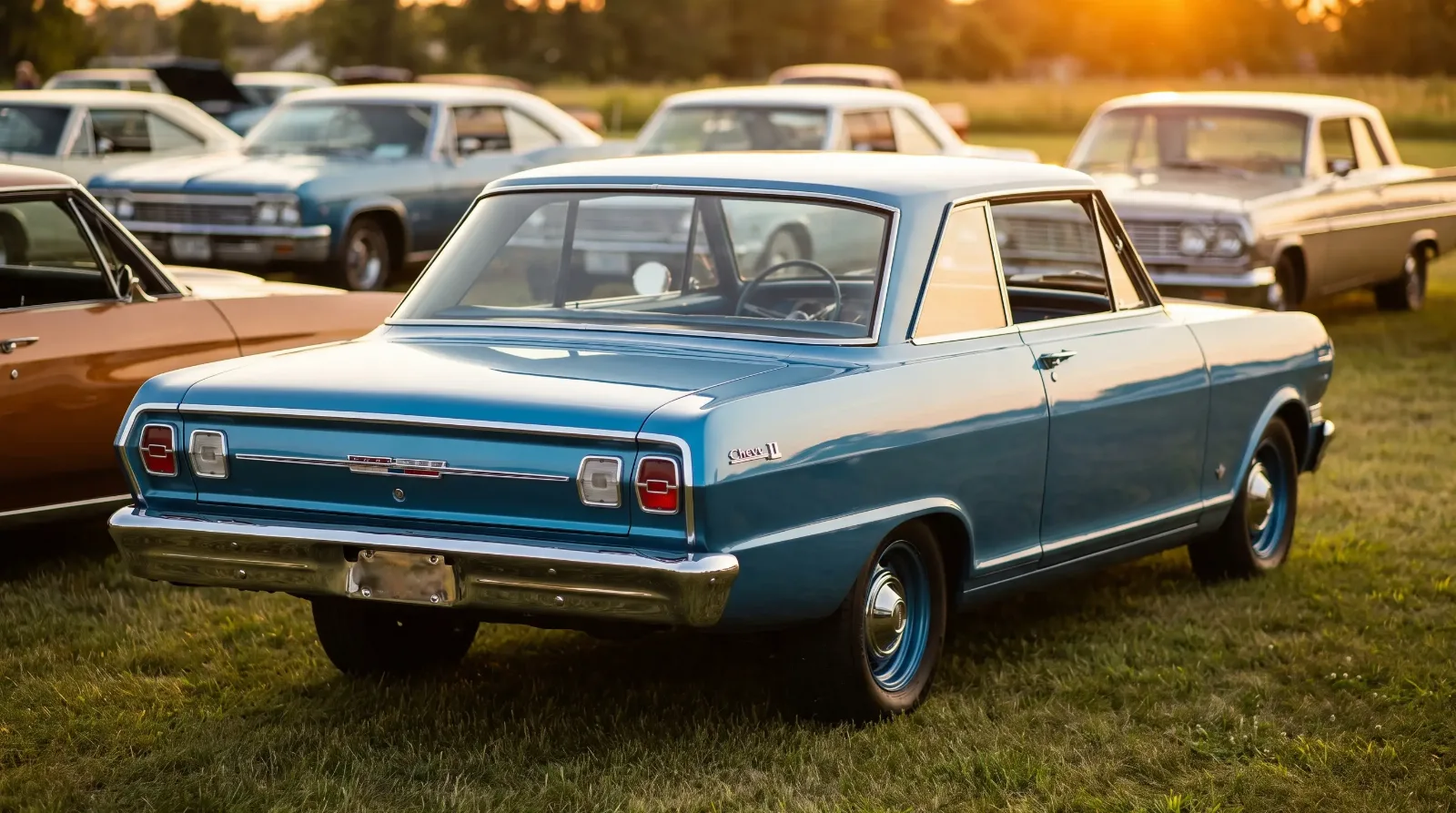
The 1965 model year gave the Chevy II its first real facelift since the car launched back in 1962, and it is a more interesting update than the "same car, new grille" reputation it gets at most cruise nights.
The face that ended the argument at the swap meet
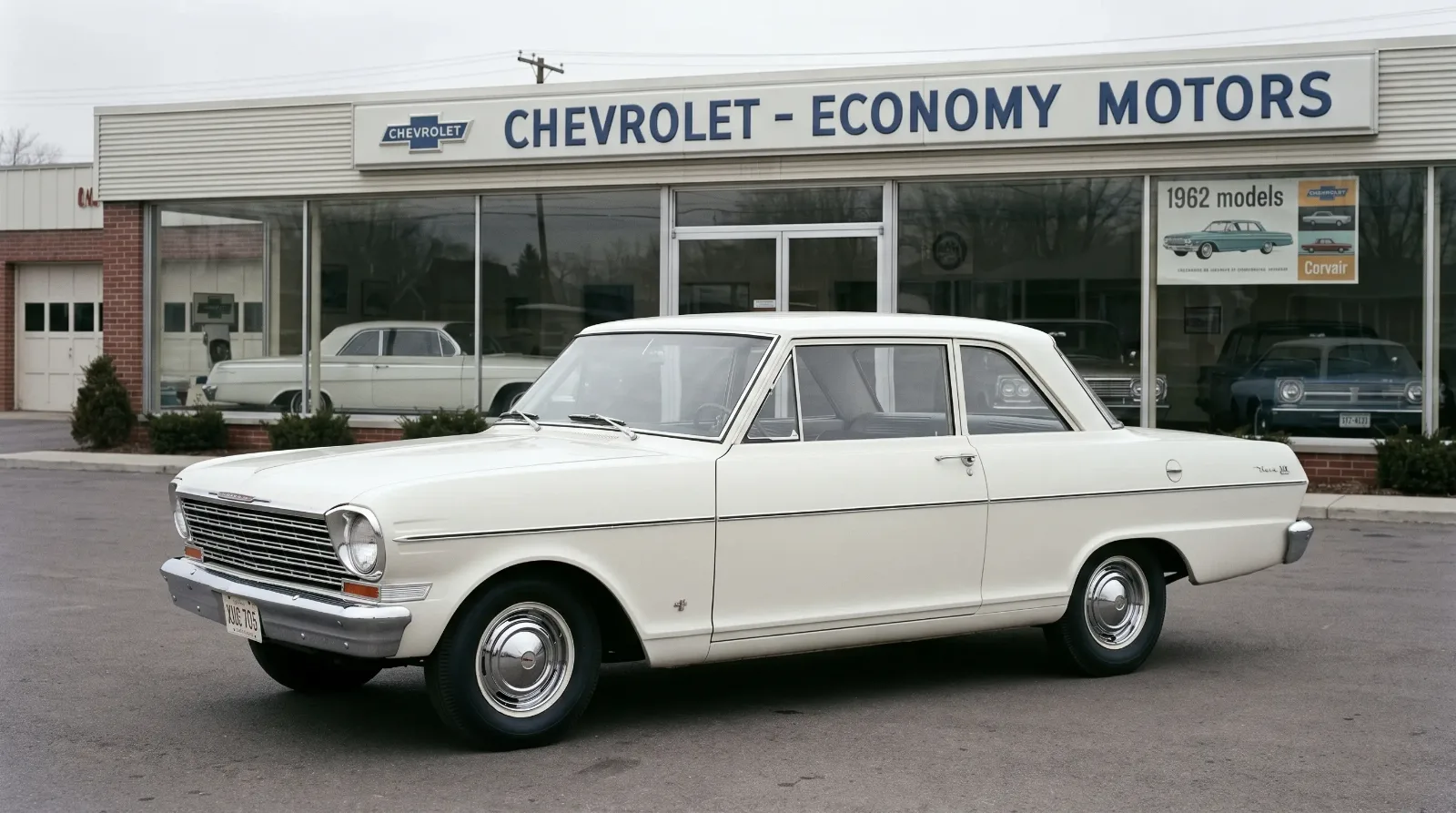
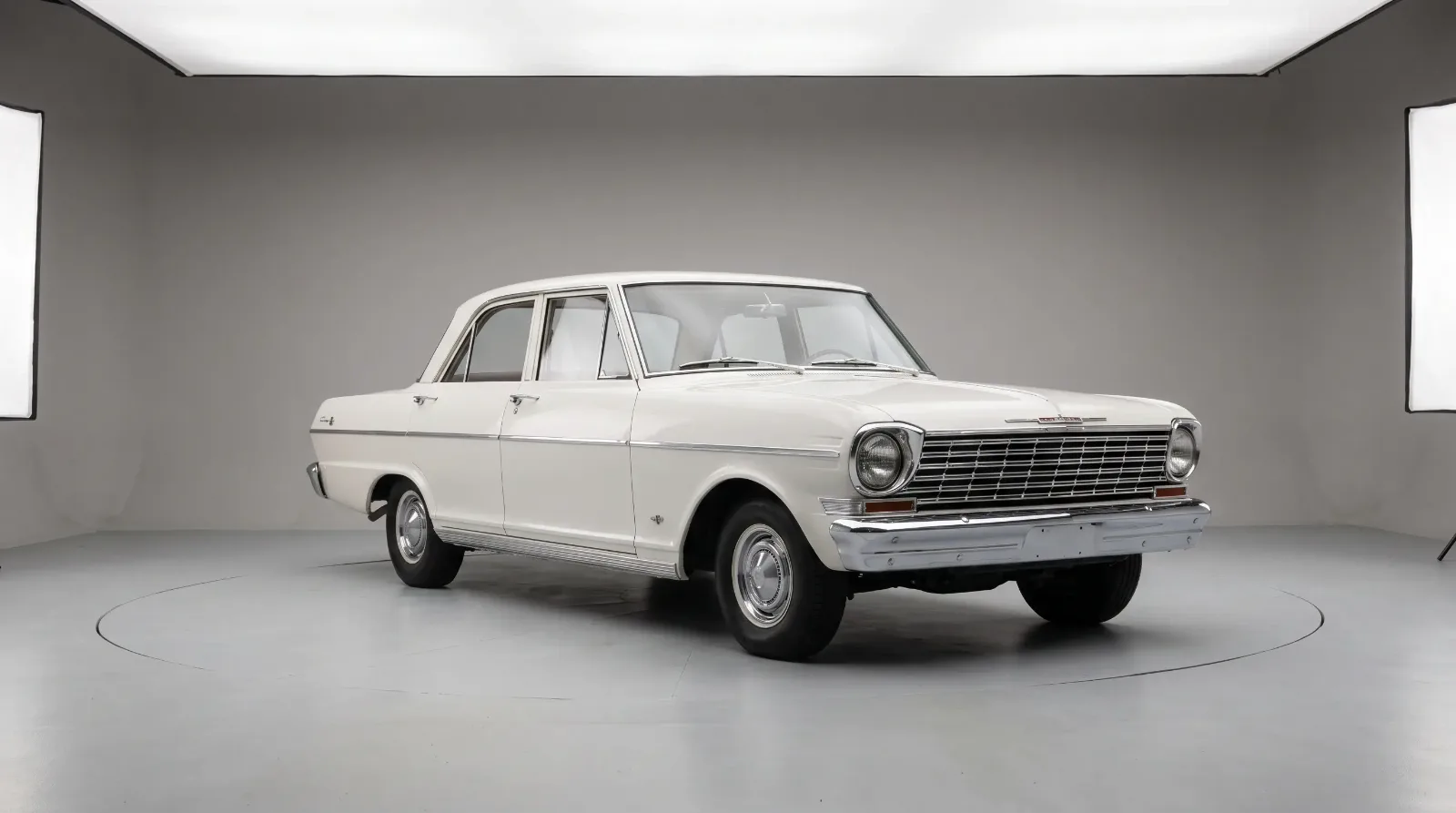
Chevrolet gave the 1965 Chevy II a new grille texture, revised taillight lenses, and a cleaned-up rear panel that made the car look wider and lower than the 1964 without changing a single body panel dimension. Park a '64 and a '65 side by side and the difference jumps out immediately once you know where to look. Park them a hundred feet apart at a cruise night and half the room will still call them the same car, which is exactly the argument that started at our swap meet table.
Inside, the dash got a reworked instrument cluster and revised trim, small changes that owners notice mostly when something breaks and the replacement part does not fit the earlier car. That is usually how these distinctions get rediscovered, one frustrated parts-counter conversation at a time.
The door panels and seat upholstery patterns changed too, subtly enough that most casual observers would never clock the difference, but obvious the moment you set a 1964 interior photo next to a 1965 one. Club members who have owned both years always mention the same thing: the '65 cabin feels a notch more finished, even though the underlying dimensions and hard points never moved.
A V8 option that finally matched the attitude
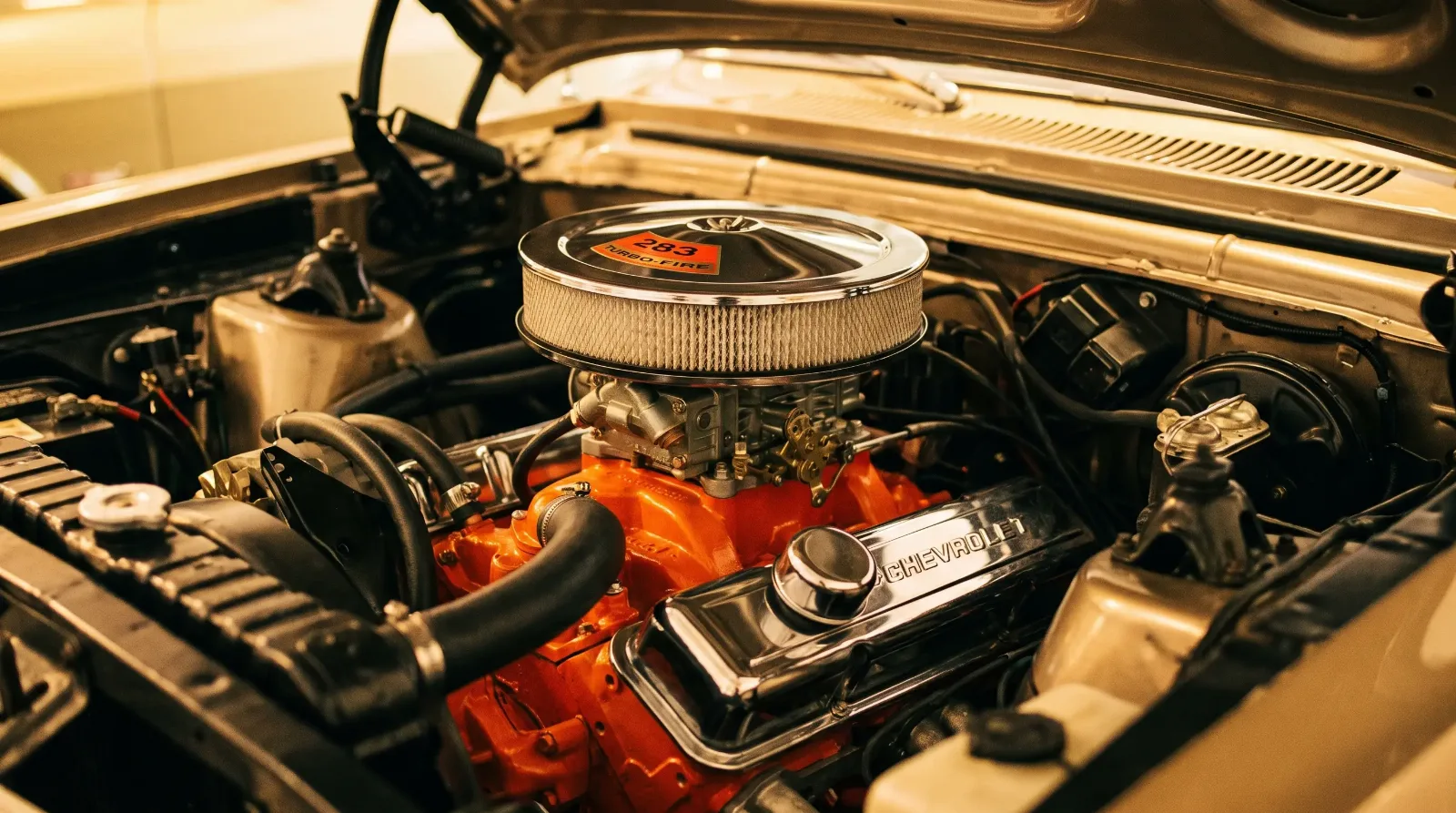
The bigger story for 1965 sits under the hood. Chevrolet made a 327 cubic inch V8 available on the Nova SS, and in its top four-barrel state of tune, RPO L74, it was rated at 300 horsepower, a genuinely serious number for a compact car in 1965. Paired with the previous year's 283, buyers now had a real range of power on the order sheet, from sensible six-cylinder economy all the way up to a small-block that could embarrass cars twice its size at a stoplight.
Our folder guy at the swap meet has the invoice for a customer-ordered 327 car sitting in a binder at home, and he will tell you, without much prompting, that half the cars claiming that engine today do not have the paperwork to back it up.
What made the 327 option land so well was timing. Buyers who had watched the 283 arrive in 1964 and wondered how far Chevrolet would take the idea got their answer within a single model year. That kind of quick follow-through built real trust with repeat Chevrolet buyers, the sort who traded in a '64 for a '65 specifically because the option sheet had grown that much more interesting in twelve months.
What the club actually remembers about this year
Ask around any Chevy II club and the 1965 cars get talked about differently than the 1964s. The 1964 story is about the V8 finally showing up at all, which you can read more about in the complete Nova saga. The 1965 story is about the car growing into that V8 option, gaining a look and a chassis feel that matched the power for the first time.
People who were around dealerships in 1965 describe a noticeably different showroom conversation that year. Buyers stopped asking whether the Chevy II could keep up and started asking how quick the 327 car actually was. That shift in tone, more than the grille, is what old-timers in the hobby actually remember about 1965.
That reputation followed the car into the club scene decades later. At every regional meet I have been to, the 1965 cars draw a specific kind of attention, less about nostalgia for the styling and more about respect for what was under the hood. It is the rare model year where the enthusiast reputation and the factory paperwork actually agree with each other completely.
"Somebody always shows up swearing two different years are the same car. Bring the parts book, not your opinion, and the argument's over in about thirty seconds."
Wayne Coburn
Where the 1965 story fits in the bigger picture
If you want the full arc, start with the early Nova story and work forward, because the 1965 facelift only makes sense once you understand what the car was trying to become in its first few years on sale. For the deeper design details behind that '65 look, keep reading the series.
And if that swap meet argument left you wanting one of these in your own garage instead of just an opinion about grilles, there is usually a decent selection of classic Chevy II for sale worth a look. Just bring a flashlight and check the taillight lenses before you hand anyone a deposit.
Sources and notes
Related Reading
Have a
Chevrolet Nova
for Sale?
Reach thousands of serious classic car collectors across the US.
Sell It Here →
Are You a Classic Car Dealer?
List your full inventory and connect with targeted classic car buyers.
Join as a Dealer →

About the author
Wayne Coburn
Longtime Corvette owner, judge and club figure who knows the cars, the records and the people behind them.
Related Listings - Chevrolet Nova
Comments
Be the first to comment on this article.