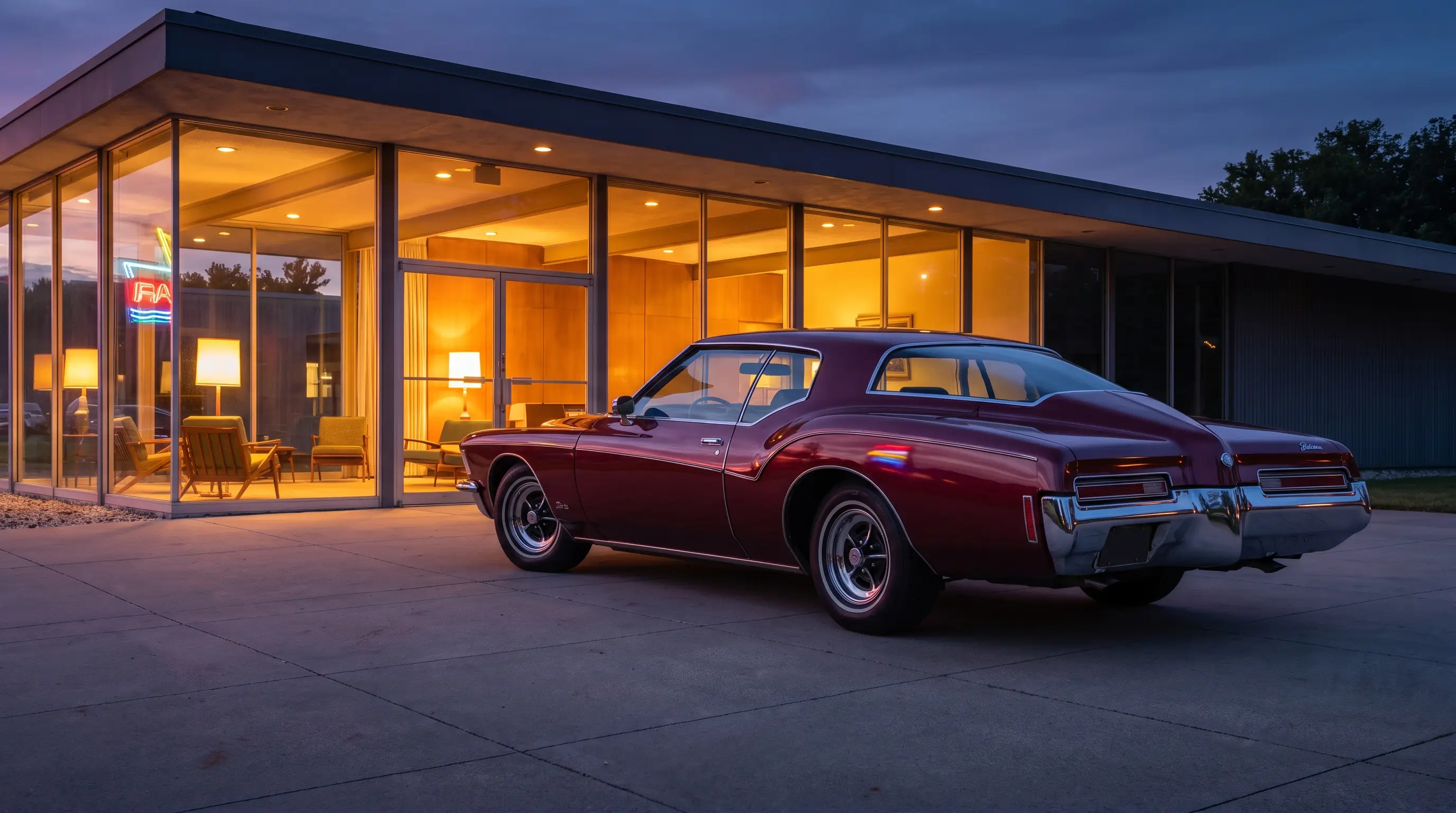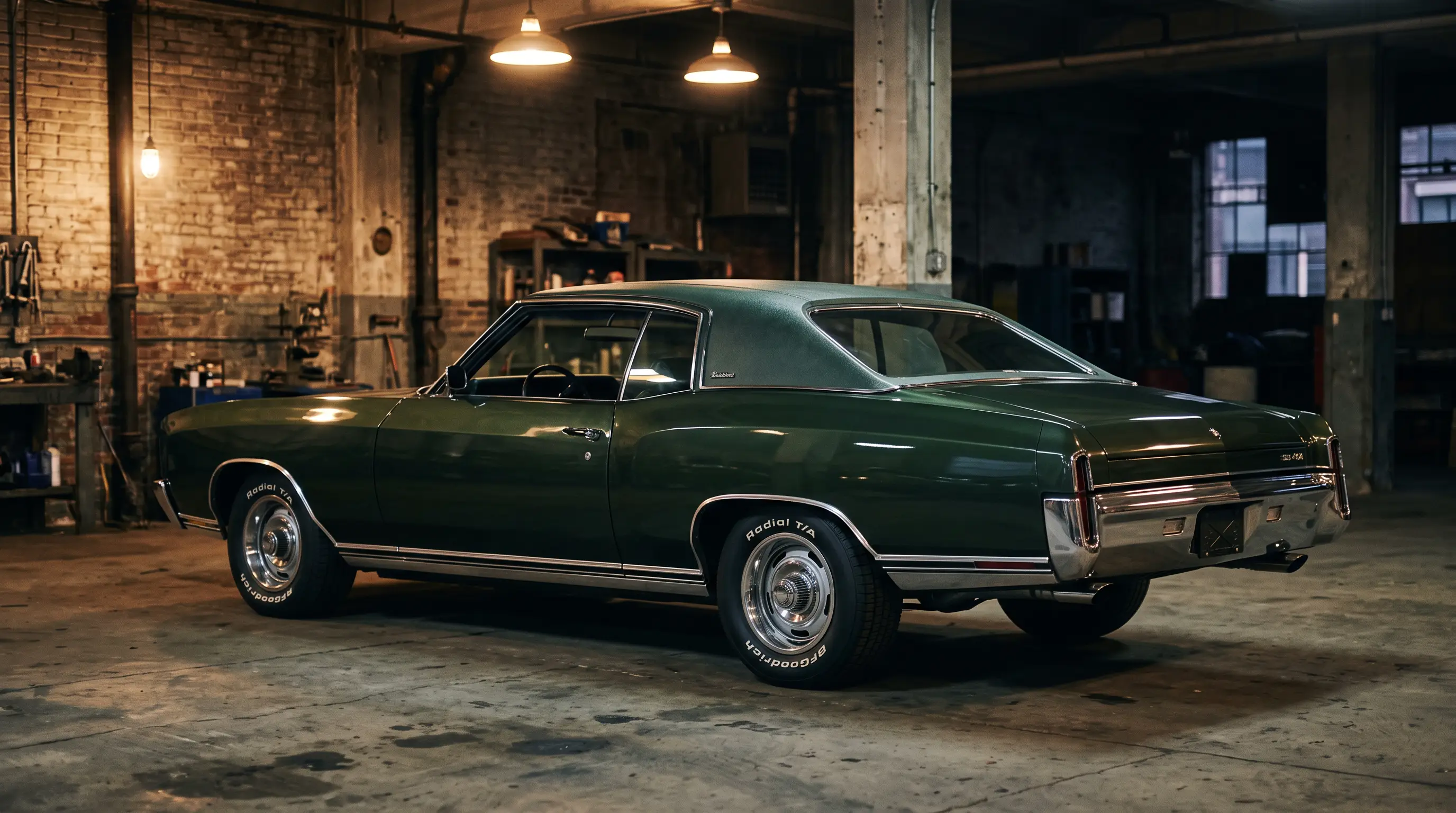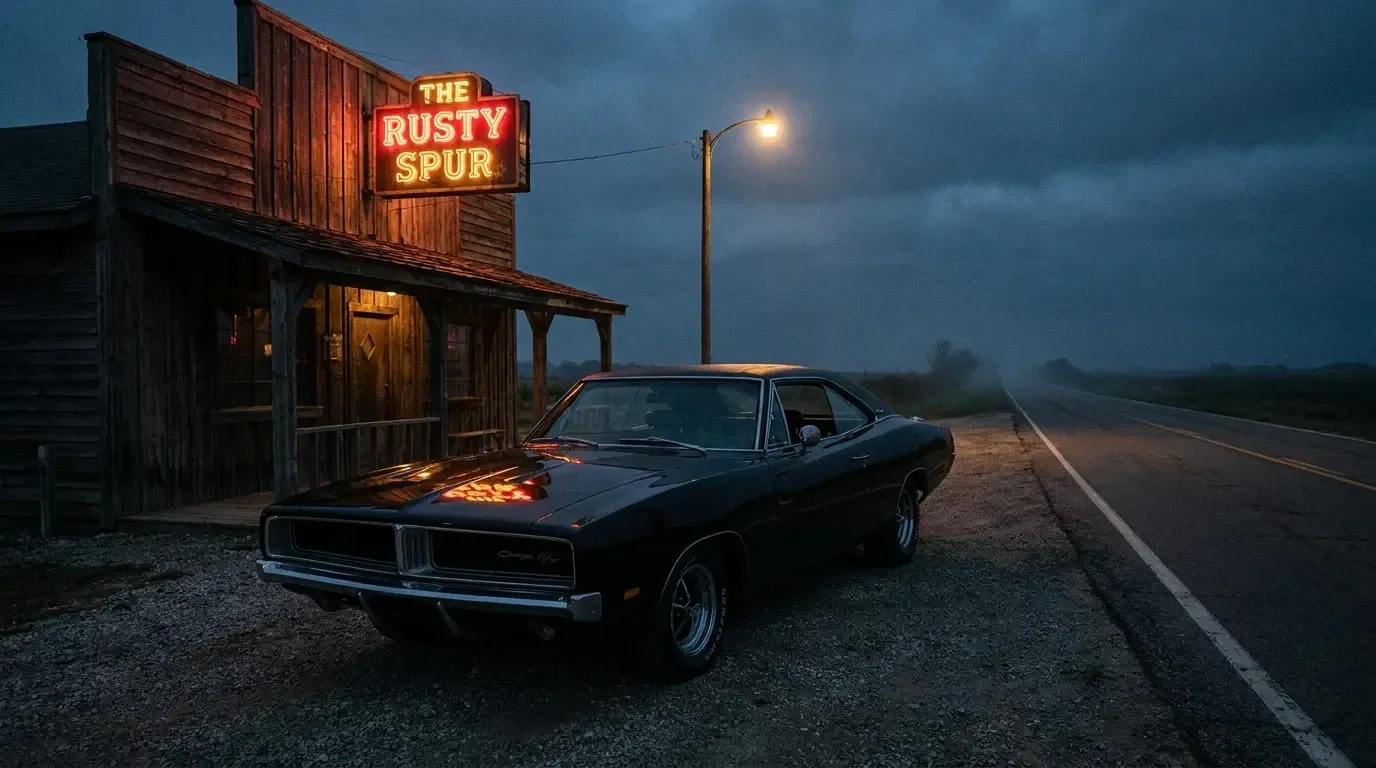
There's a particular kind of song where the singer never says much about the car beyond the name, and somehow that's enough. Say "Charger" over a bar chord and the picture arrives on its own: a low fastback roof, hidden headlights, a plate from somewhere the interstate forgot. Musicians have been reaching for that image since the car was new, not because the Charger was the fastest thing Dodge built, but because it looked like it belonged to somebody who had already left before the song started.
I've spent a long time thinking about why some cars get to be lyrics and some just get to be transportation. The classic Charger, the 1966 through 1978 B-body in all its shapes, earned its spot in music the same way it earned its spot in film: by looking like trouble that hadn't happened yet.
Why songwriters reached for this car
A Charger on a record label almost never shows up doing something practical. It's leaving town, outrunning a sheriff, parked outside somebody's house at two in the morning with the engine still ticking as it cools. Songwriters use cars as shorthand for a character's freedom or their trouble, and the Charger, especially the 1968 to 1970 coke-bottle body, reads as both at once. The roofline dips like a shoulder about to shrug. The grille recedes into shadow. It looks like a decision that's already been made.
Country and outlaw rock songwriters in particular gravitated toward the car through the 1970s and 1980s, often without naming a specific model year, because by then the Charger in pop culture era had already given the silhouette a reputation that didn't need explaining. You said "Charger" and the audience filled in a Confederate flag on the roof or a black paint job disappearing down a back road, depending on which decade of pop culture they'd absorbed it from.
"I used to think the songs were about the car. They're not. They're about the fifteen seconds before the car does something the singer can't take back. The Charger just happens to be the vehicle everybody agreed to use for that fifteen seconds."
— Nora Beckett
Album covers that leaned on the shape
Cover art has its own relationship with the Charger, separate from lyrics entirely. A number of Southern rock and outlaw country releases through the 1970s used a dark, low fastback silhouette on their sleeves, sometimes a Charger and sometimes a car built to evoke one, because art directors understood the same thing songwriters did: the shape alone communicated a mood before a single track played. Specific album credits for Charger imagery are murkier than fans assume, since a lot of period sleeve art borrowed the silhouette without licensing an actual factory car, and some fan-cited "Charger covers" turn out on close inspection to be a Coronet or a Superbird with the wing airbrushed out.
That confusion is itself worth noting. The Charger's lines were distinctive enough to be recognizable at a glance from across a record store bin, but generic enough within Chrysler's B-body family that art directors could fudge details and nobody complained. It was an icon before it needed to be exact.
The soundtrack effect
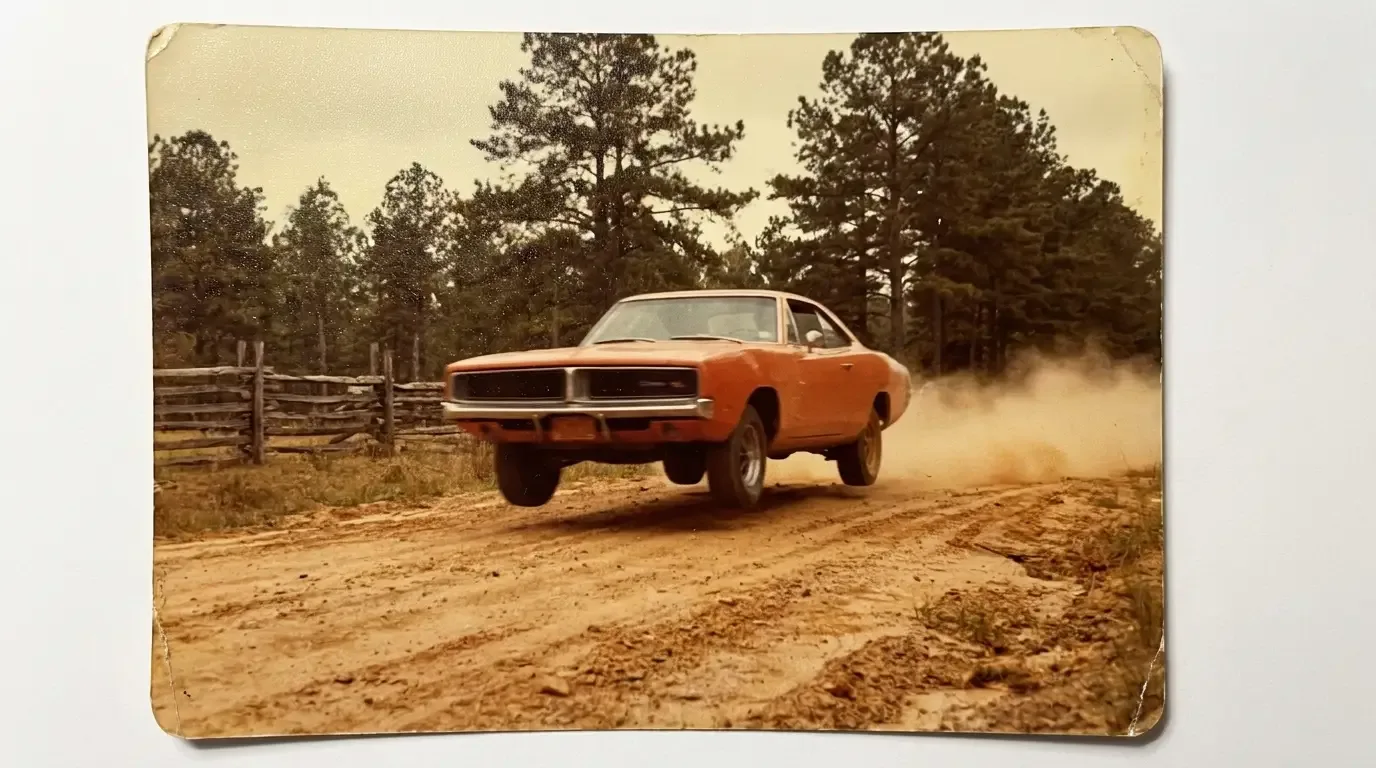
Film and television did more to plant the Charger in music culture than music did on its own. Once a black 1968 Charger became a fixture of car-chase cinema and a bright orange 1969 became a fixture of Friday night television, composers and music supervisors started reaching for a specific sonic palette to go with it: driving guitar riffs, a low-end rumble mixed to sit under dialogue, banjo-inflected rock for the rural chase scenes. That pairing trained a generation of listeners to hear certain chord progressions and picture the car before they ever saw it. By the time the Charger showed up again in 2000s action films, filmmakers were often selecting music that consciously echoed those earlier soundtrack choices, which is a strange kind of feedback loop: the car shaped the music, and thirty years later the music shaped how audiences expected the car to sound.
Live performance and the car as prop
Beyond records, the Charger has shown up as an actual stage prop and tour visual more than once, usually for Southern rock or country acts leaning into a rebel persona. A Charger parked on stage, lit from underneath, does something a video screen can't: it makes the mythology physical. Audiences who grew up watching a Charger jump a ditch on television get to stand twenty feet from the real shape, and that proximity sells more tickets than most bands would admit.
The car's presence in touring production design points back to the same core appeal that put it in lyrics in the first place. It's not subtle. It doesn't ask to be interpreted. It just sits there looking like it's about to do something, and performers have leaned on that promise for five decades running.
What the songs get right about the car
Here's the thing that separates the Charger's musical reputation from pure marketing myth: the car actually could do what the songs implied. A 440 Magnum or Hemi car from 1968 to 1971 had the low-end torque to make that departure-from-town moment plausible, not just cinematic. Songwriters weren't inventing a fantasy machine. They were describing, in broad strokes, a car that genuinely had the shove to match its silhouette. That's rarer than it sounds. Plenty of cars look fast in a lyric and would disappoint anyone who actually floored one. The Charger, at least in its performance trims, generally didn't.
If you want the fuller arc of how this car crossed from showroom curiosity to cultural fixture, read more here on the people who owned and shaped that reputation off screen and off record. The music was never separate from that story. It was just another room the Charger walked into and, somehow, still owned.
Sources and notes
- Dodge Charger (B-body), Wikipedia - confirmed the 1966-1978 body shapes, engine lineup, and the car's broad cultural footprint.
- Bullitt, Wikipedia - confirmed the black 1968 Charger's film-chase role that shaped the car's on-screen sonic identity.
- The Dukes of Hazzard, Wikipedia - confirmed the orange 1969 Charger's weekly television presence that trained audiences to associate the shape with a musical mood.
- General Lee (car), Wikipedia - confirmed the car's markings and its status as a widely recognized silhouette across pop culture.
- Mental Floss, "What Happened to All Those Chargers?" - confirmed the second-gen Charger was a plentiful, affordable used car during its screen heyday.