Every muscle car market has a piece of internal corporate plumbing that turned into a legend, and for Chevrolet that piece was the Central Office Production Order system. COPO was never meant to build performance cars. It was meant to move paperwork for orders that did not fit the standard build sheet, and understanding that origin is the key to understanding why COPO cars, including the Nova, carry the premium they do today.
A fleet ordering tool, not a performance program
Central Office Production Order existed inside General Motors as a mechanism for special requests that fell outside the normal dealer order guide. A police department wanting a specific radio delete and heavy-duty alternator combination, a taxi fleet wanting vinyl bench seats with a particular gear ratio, a rental company wanting a specific trim delete to cut cost. These were exactly the kind of orders COPO was built to process, quietly and in volume, without requiring every regional zone office to sign off individually.
The system worked because it routed around the standard passenger-car option validation process. That process existed for good reason. Chevrolet's corporate policy in the late 1960s restricted how much engine could go into a compact or intermediate body, largely for insurance and liability reasons, and that policy applied squarely to the Nova and Camaro. A 427 cubic inch big block simply was not supposed to be orderable in either car through the regular build sheet.
How the loophole got used
What changed the math was a small number of Chevrolet insiders who understood the paperwork well enough to use it differently. Vince Piggins, a performance-minded engineer within Chevrolet, is the name most consistently tied to steering COPO toward big-block Camaros, Chevelles, and Novas rather than fleet sedans. Dealers who had the right relationships, most famously Don Yenko in Pennsylvania but also Nickey Chevrolet in Chicago and Dana Chevrolet in California, learned they could submit a COPO order requesting the L72 427 and the heavy-duty running gear that came with it, and for the Camaro and Chevelle, Chevrolet's plants would build it exactly as ordered. The Nova never got that same factory treatment, as the next section explains.
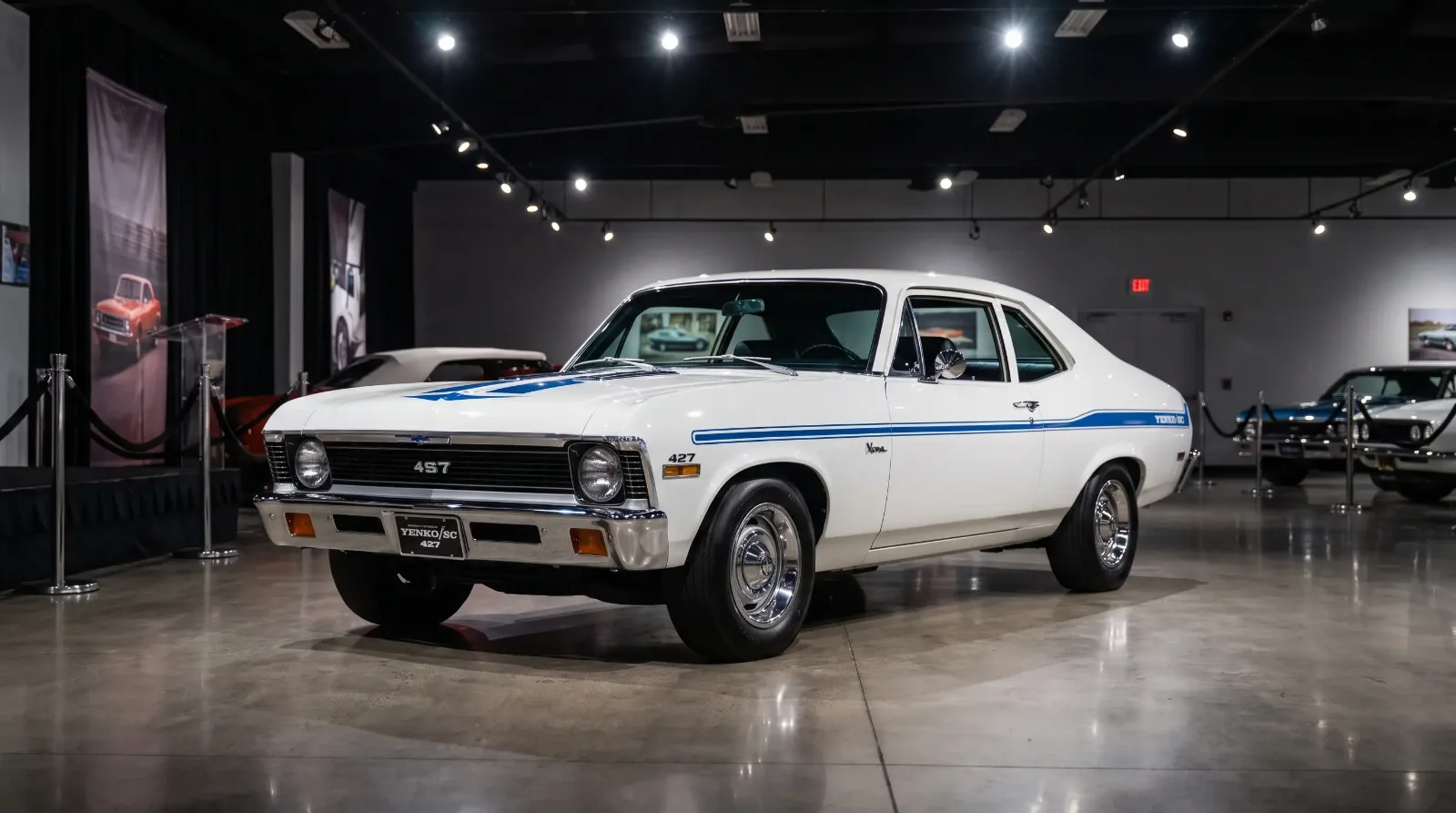
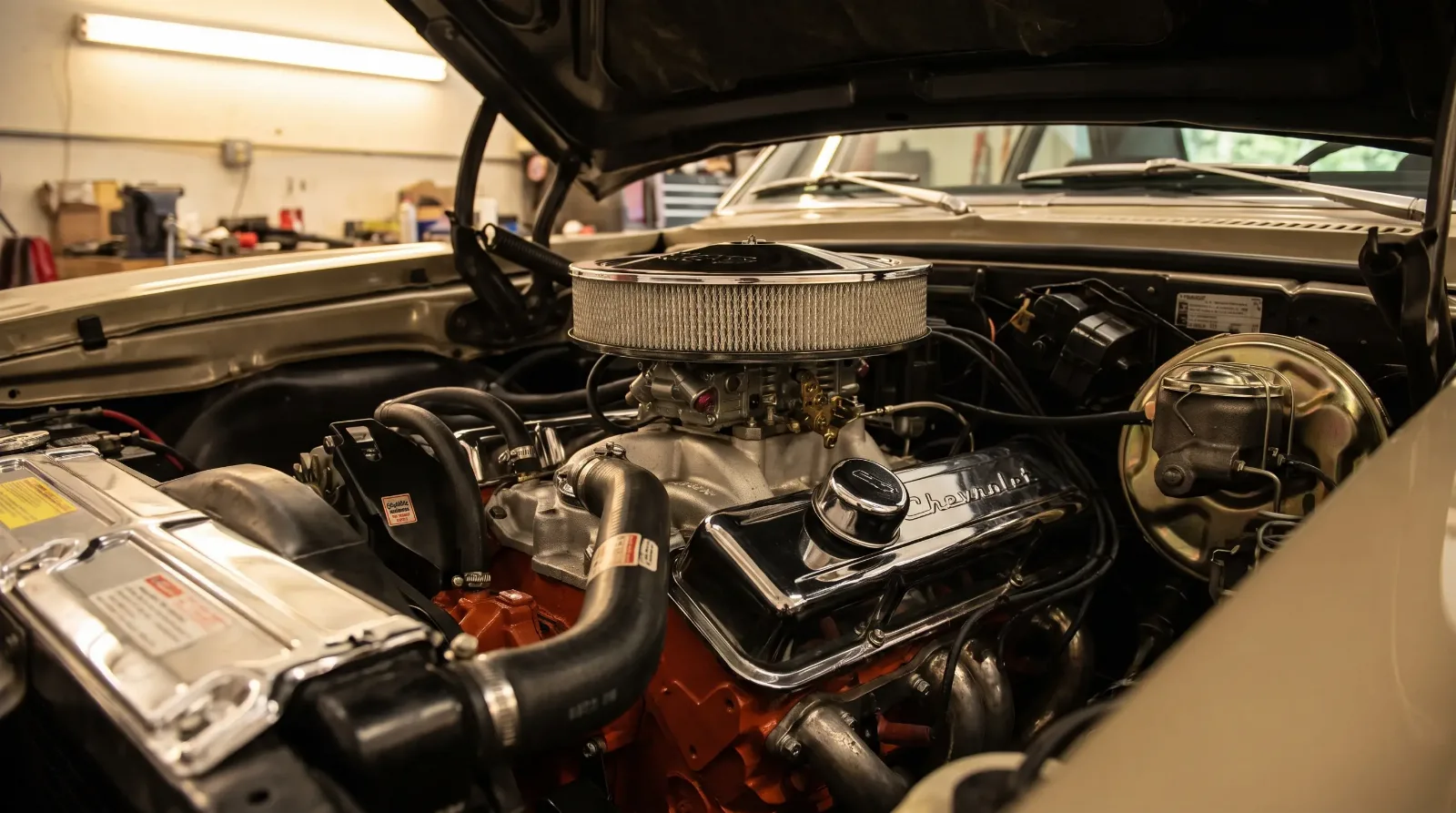
For the Nova, the number that matters is 9737, though it worked differently than most people assume. COPO 9737 was Chevrolet's code for a handling and appearance package, quicker steering, upgraded springs, and a 140 mph speedometer, not an engine order. Chevrolet's own management would not sign off on a factory-built 427 Nova at all; Yenko pitched the idea for 1969 and GM said no, citing the same liability concerns that shaped the rest of the displacement policy. Yenko's workaround was to order Novas through COPO 9737 with the 375 horsepower L78 396 already installed at the factory, then pull that engine at his own dealership and drop in an 11.0:1 compression L72 427, rated at 425 horsepower and 460 lb-ft, reusing the 396's cylinder heads, intake, and carburetor in the process. That kept the liability for the swap with Yenko, not General Motors, and it is why no factory build sheet anywhere actually lists a 427 Nova. None of this appeared in Chevrolet's mainstream advertising. There was no brochure page for the COPO Nova. A dealer who knew to combine order 9737 with the dealer-installed swap could get the car built. A dealer, or a customer, who did not know the process could not.
The volume stayed tiny because this was never a factory production program, it depended on Yenko doing the 427 swap himself, one car at a time, at his own dealership. Total production of the 1969 Yenko Nova 427 is documented at 37 production cars plus one automatic prototype, a small fraction of what the COPO Camaro program built in the same model year. That scarcity, combined with the fact that the 427 itself was never a documented factory installation, is a large part of why verified COPO Novas trade at a premium relative to their Camaro counterparts once you control for condition and paperwork.
Why the paper trail matters more than the parts
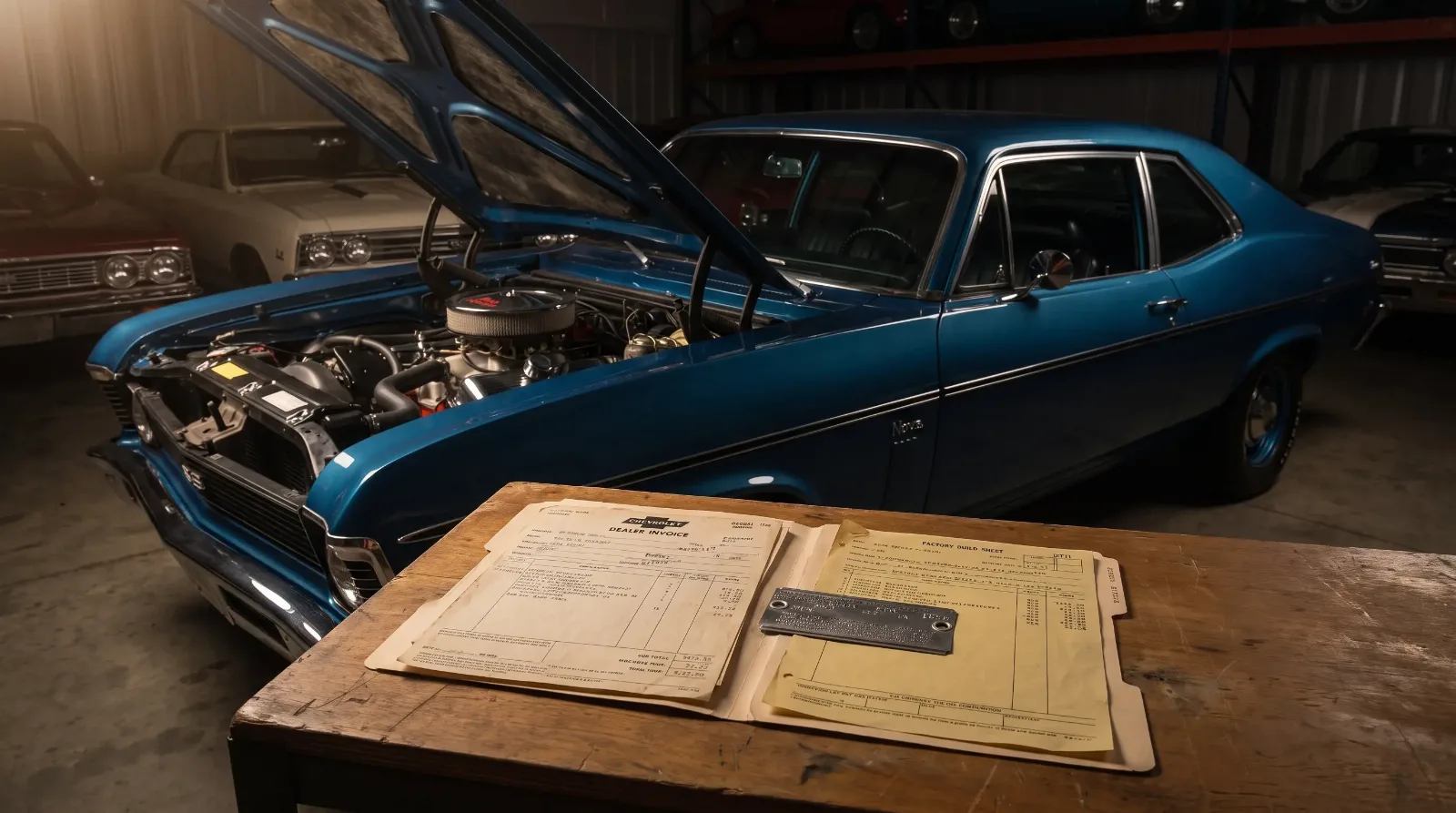
Because COPO orders were never advertised and never carried unique factory badging, the only reliable way to confirm a car is a genuine COPO build is through documentation: the Fisher body tag, the COPO order number stamped into the build sheet, and where one survives, the tank sticker that lists the specific option codes applied at the plant. None of these are cosmetic details. They are the entire basis for a COPO car's premium over a visually identical Nova SS built through the standard order process.
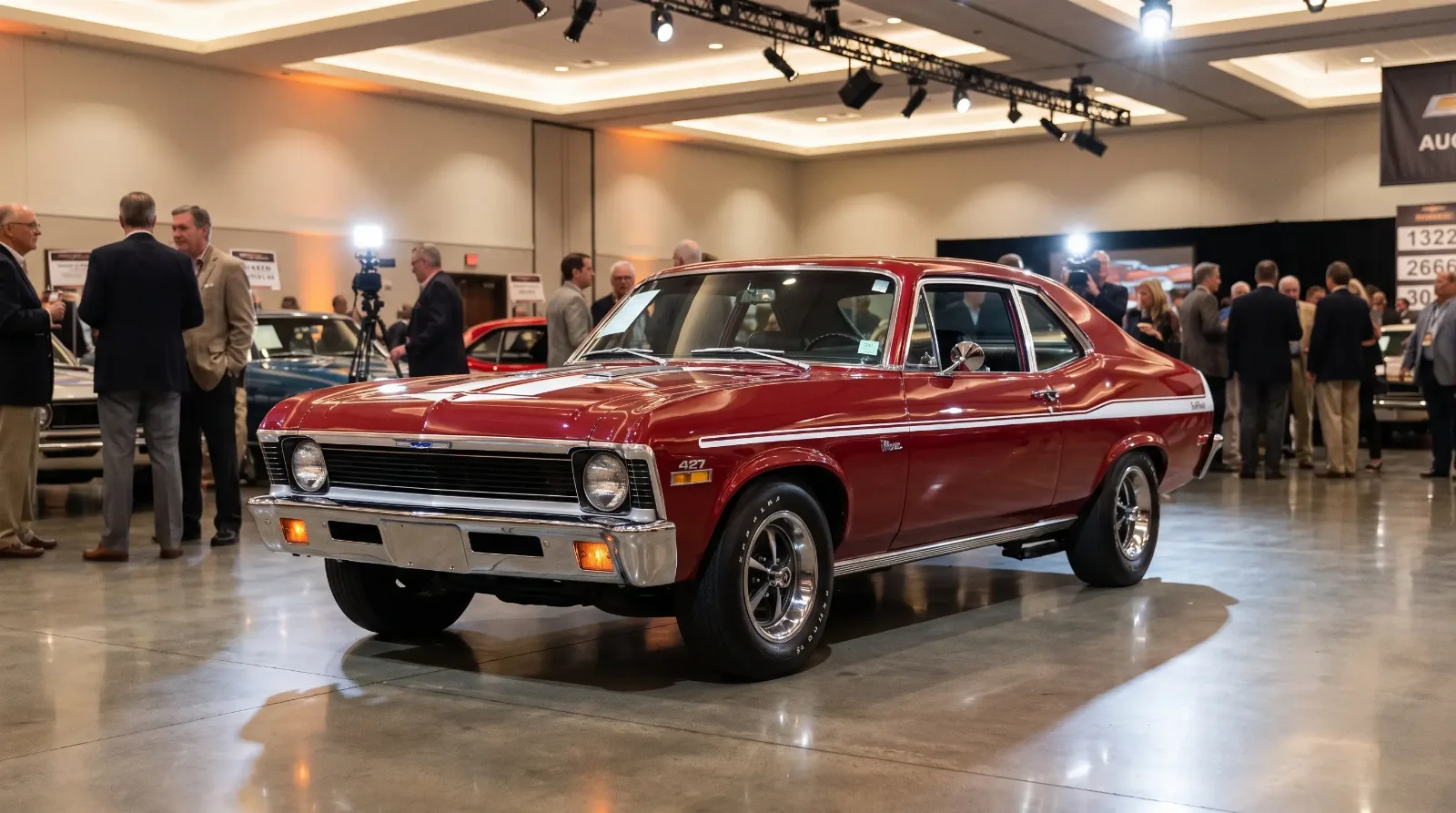
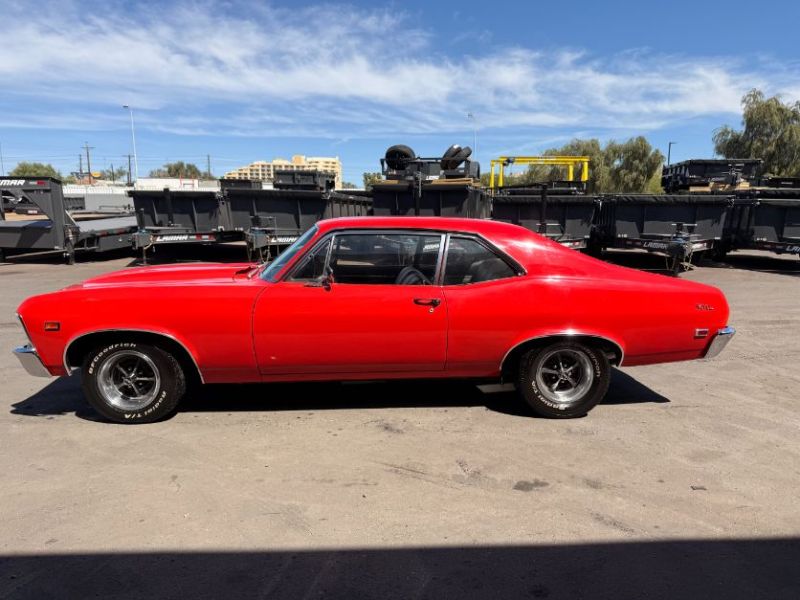
This is where I part ways with buyers who treat COPO as a look rather than a paper trail. A car with big-block displacement and the right stance can be built to resemble a COPO Nova without ever having been one. The market has become sharp enough that unverified "COPO" cars now sell at a steep discount to documented examples, sometimes selling for a fraction of a comparable verified car's price, because buyers have been burned before and now demand the paperwork up front.
| Verification item | What it confirms |
|---|---|
| Fisher body tag | Trim level, plant, and build sequence |
| COPO order number (9737 for Nova) | The specific special order applied to the build |
| Tank sticker (when surviving) | Exact factory option codes as installed |
| Dealer invoice or period records | Original selling dealer and any dealer-added work |
Reading the market today
David Mercer's rule for any COPO car, Nova or otherwise, is simple: value the documentation before you value the engine. Two cars with identical L72 427s under the hood can carry a five-figure gap in auction price depending entirely on whether one has a confirmed body tag and order number and the other has a seller's word. I covered how this plays out specifically for cars carrying the Yenko name in the Yenko chapter of this Nova coverage, and the same logic scales to any COPO-built car regardless of which dealer's name gets attached to it.
If you are shopping this segment, treat the COPO order number the way you would treat a matching-numbers claim on any other collector car: verify it independently before it factors into your offer. For a look at how these verification questions have actually played out at the auction block, another angle on this same story tracks specific sale results and what separated the winners from the disappointments.
"COPO built a real car with real hardware, but it built almost no paperwork by design. That is exactly backwards from what the collector market rewards, and it's why verification, not horsepower, drives the price on these cars today."
— David Mercer
The bottom line on COPO
The Central Office Production Order system was never a performance program, it was a paperwork shortcut that a handful of insiders and dealers bent toward building some of the fastest compacts and intermediates Chevrolet ever shipped. That origin explains both the appeal of these cars and the risk in buying one. The engine is not what makes a COPO Nova rare. The order number is. Confirm that first, and everything else about the deal gets easier to evaluate on its merits.
Sources and notes
- Street Muscle: Rare Rides, The 1969 Yenko Nova S/C 427
- HotCars: Here Is The Rarest Chevy Nova Ever Produced
- Street Muscle: Rare Rides, The 1968 Chevrolet COPO Nova SS 396
- Team Camaro Tech: 1969 COPO 427 production and survivor discussion
- The Supercar Registry: 1969 Yenko 427 Novas
- Wikipedia: Chevrolet Chevy II / Nova