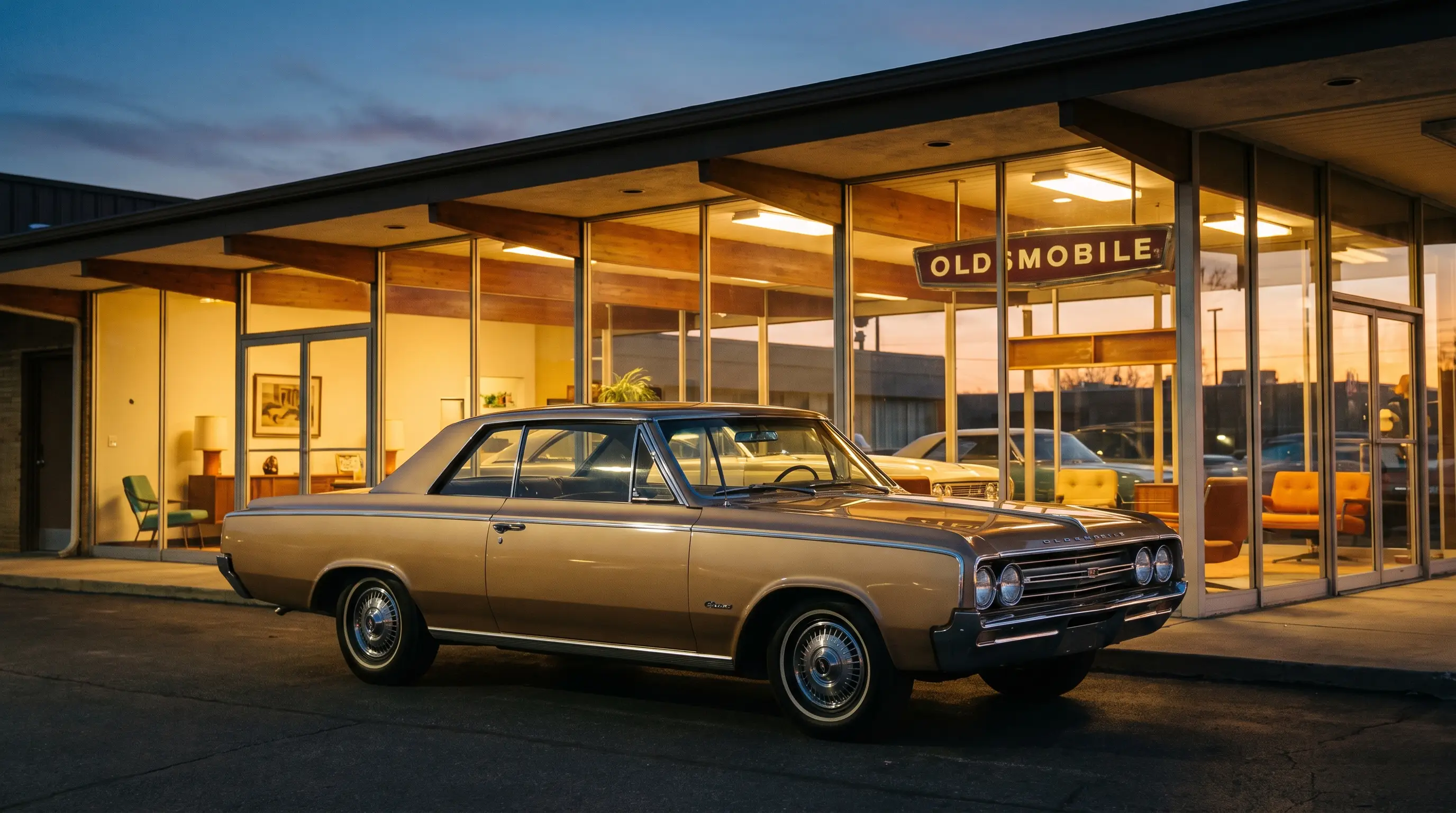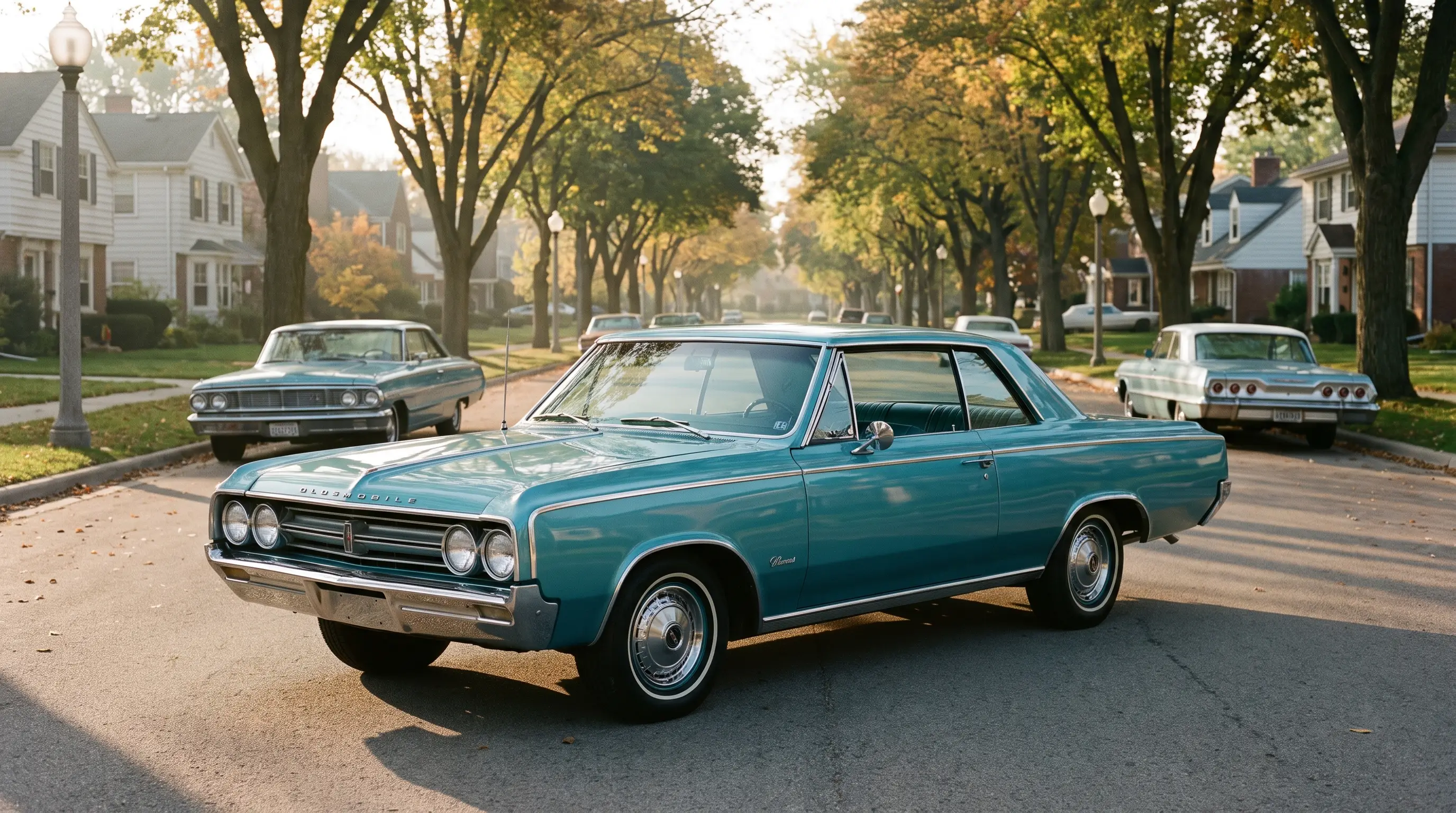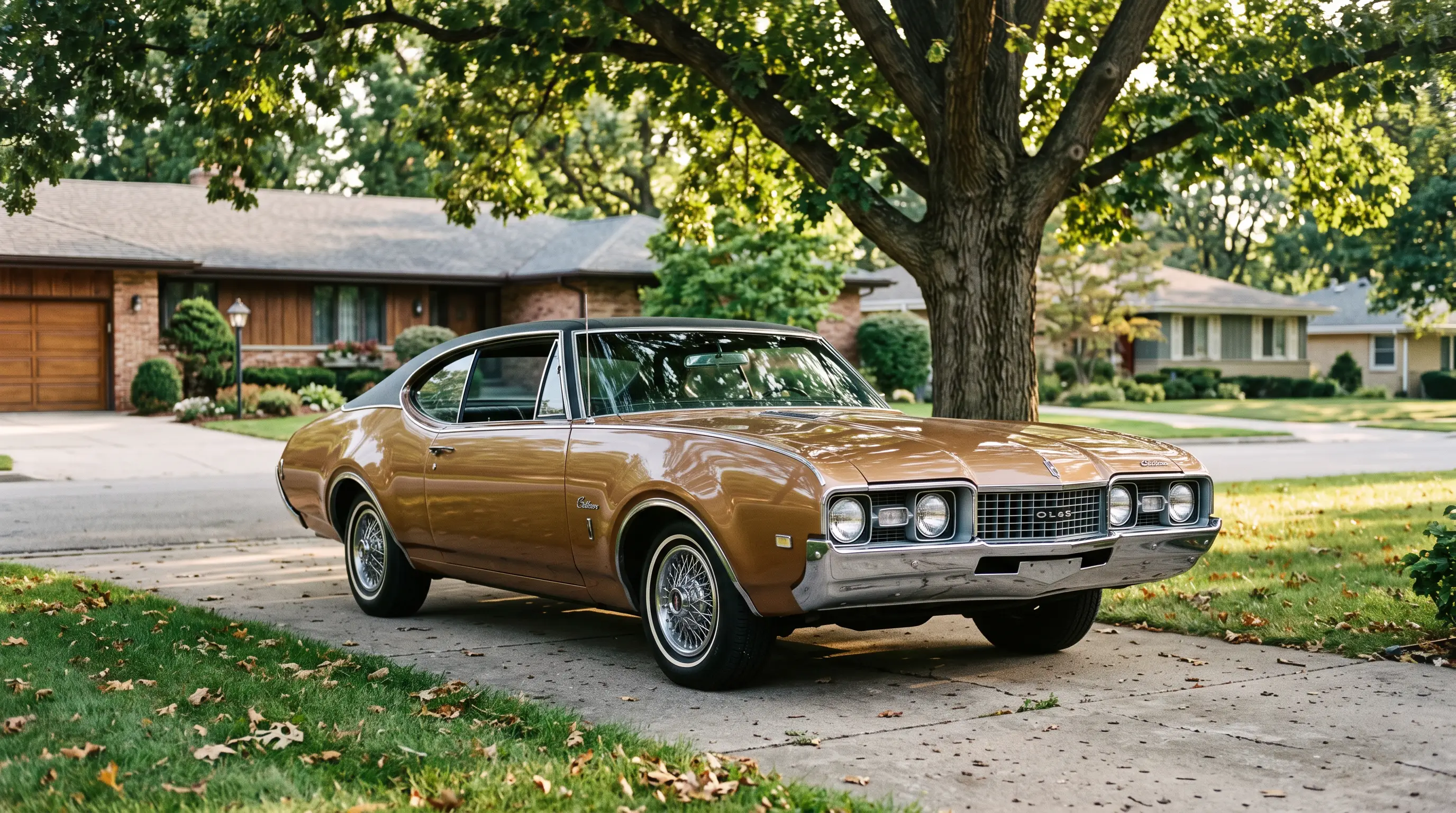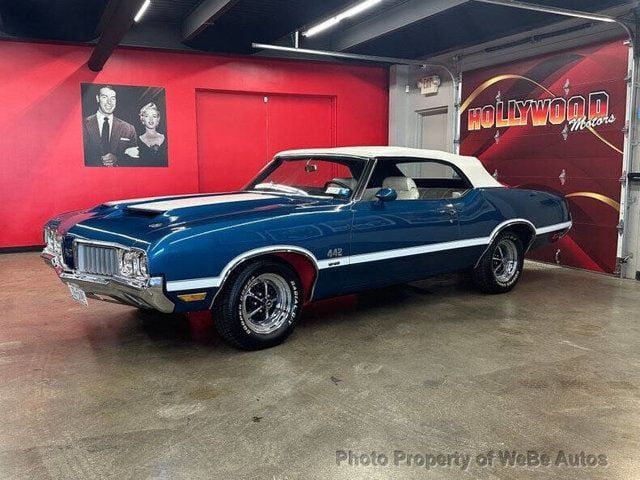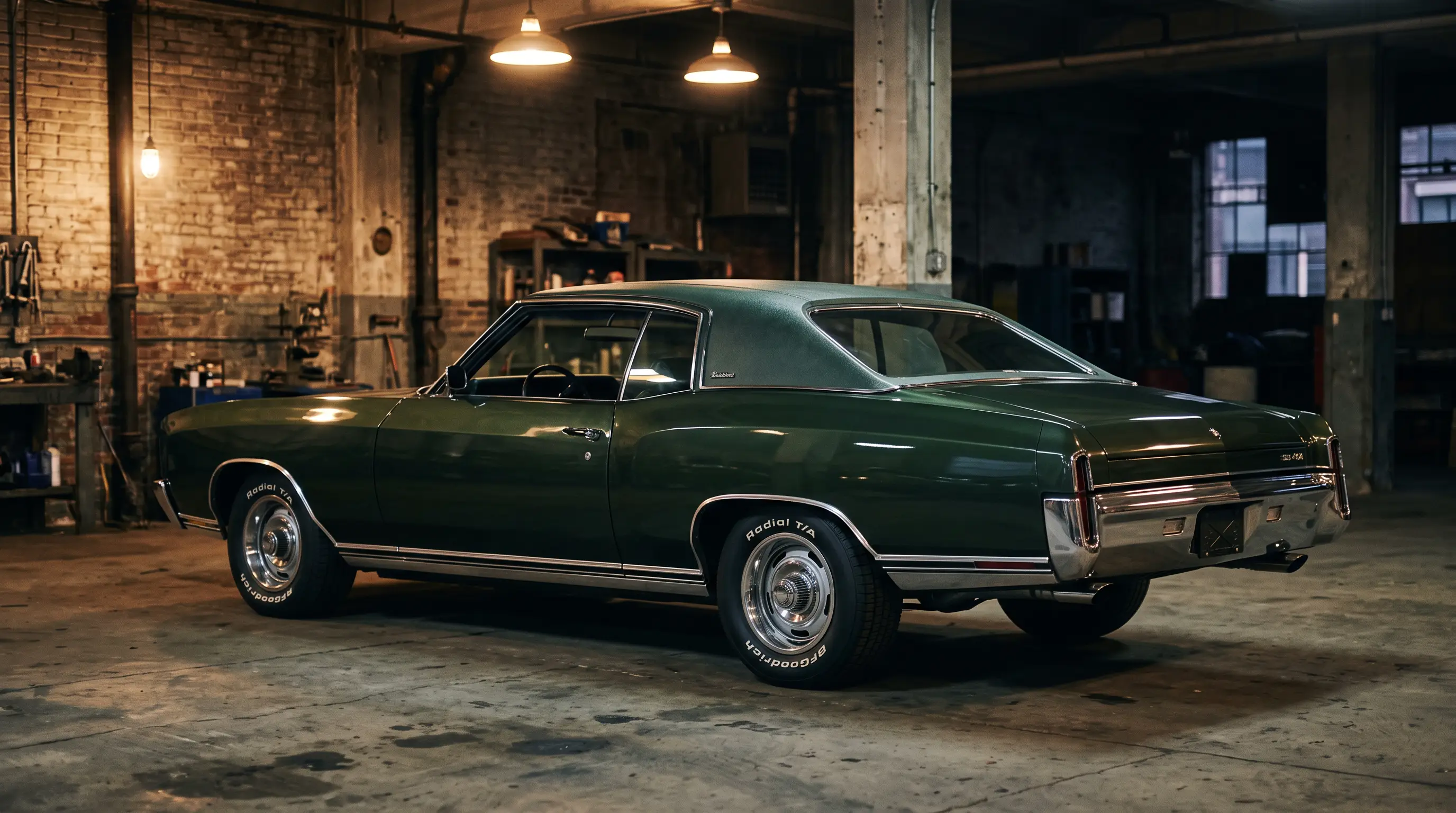
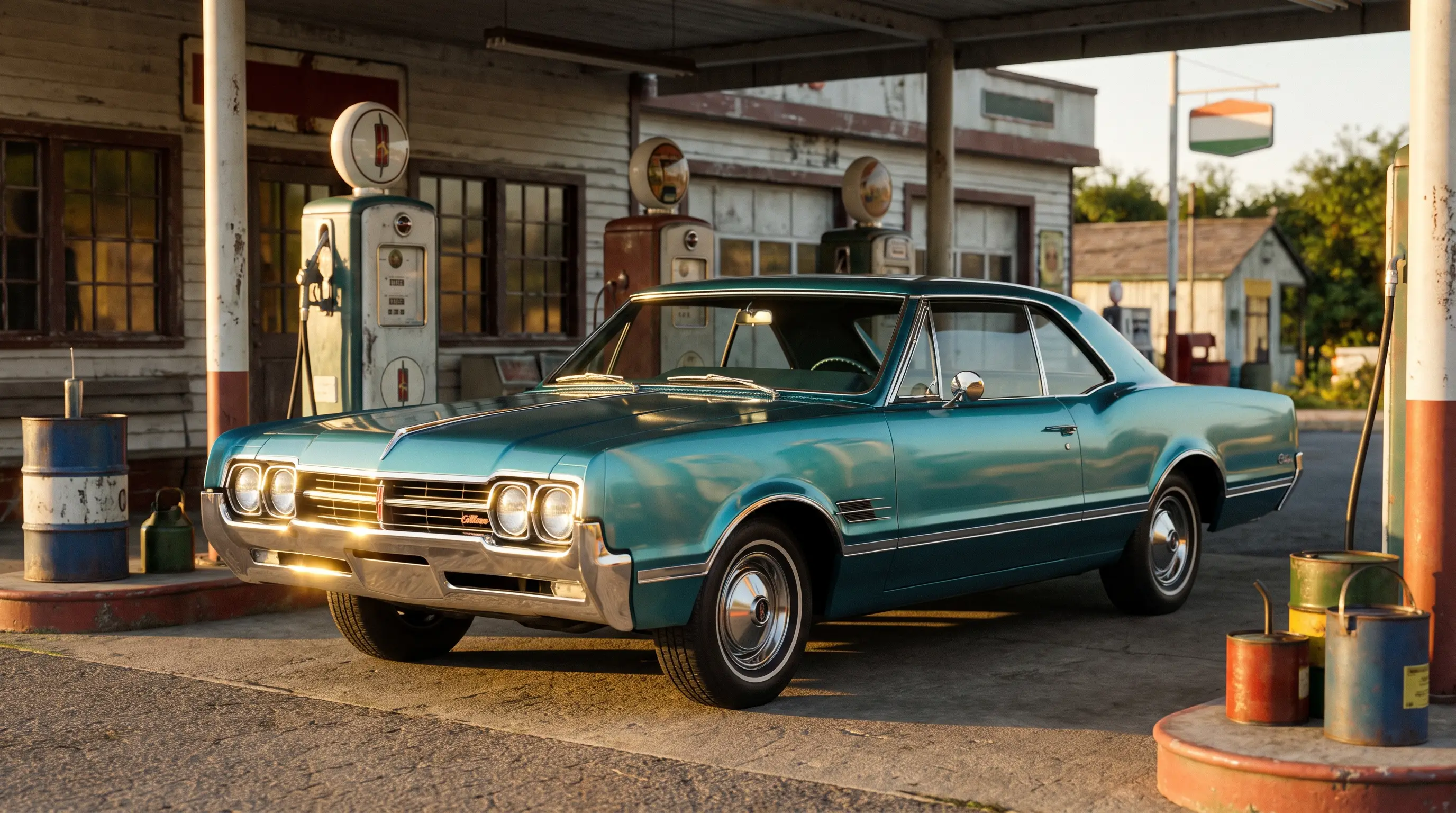
I met a fellow named Ray Petrocelli at a swap meet outside Akron who had owned the same 1966 Cutlass Supreme hardtop since he bought it used off a church secretary in 1974. He liked to tell people the car "grew up the same year I did," which is a nice line, but the more interesting part of his story is what he had to prove to the judges the first time he brought it to a regional show. Nobody doubted the car was a Cutlass. What they doubted was whether it was really a 1966 Cutlass Supreme, because that was the first year Oldsmobile let the Cutlass stand on its own as a full model series instead of hiding inside the F-85 lineup as a trim level, and the paperwork from that transition year is exactly the kind of thing that separates real history from a good story at the swap meet table.
The year Cutlass stopped being an F-85 with better options
Through 1965, Cutlass was the top trim on Oldsmobile's F-85 intermediate. For 1966, Oldsmobile flipped the hierarchy. F-85 became the base-level name, and Cutlass became its own series above it, with the newly introduced Cutlass Supreme sitting at the top as the most upscale trim in the whole intermediate lineup. It sounds like a marketing reshuffle, and in a narrow sense it was, but it also reflected something real: by the mid-1960s, buyers were choosing the Cutlass trim over base F-85 cars at a rate that made the old naming order backwards. Oldsmobile just made official what shoppers had already decided with their money.
Ray's Cutlass Supreme carries a build sheet confirming the Supreme designation, and that document matters more than it might seem to matter, because a well-optioned 1966 F-85 and a genuine Cutlass Supreme can look nearly identical to someone who does not know exactly which brightwork and interior trim pieces separated the two. That is a debate that comes up at every show field with a Cutlass class, and it gets settled by the build sheet or the dealer invoice, never by the emblem alone.
New sheet metal, and a roofline people either loved or argued about
Oldsmobile gave the 1966 Cutlass genuinely new styling, not a trim shuffle dressed up as a redesign. The hardtop coupe picked up a semi-fastback roofline that pulled visual cues from the full-size Toronado, Oldsmobile's front-drive personal luxury flagship that had launched the year before, and the whole car got a cleaner, more sculpted look than the outgoing 1964-65 body. I have sat at more than one club dinner where two guys argued for twenty minutes about whether the 1966 or 1967 roofline looks better, and the honest answer is they are close enough that it usually comes down to which one a person's father or uncle actually owned. That is how most of these arguments really get settled, not with an engineering paper but with a memory somebody isn't willing to let go of.
Under that new sheet metal, the 400 cubic inch V8 became available for the first time in 1966, a genuinely big step up in displacement that gave the top-tier 442 package real muscle car credibility alongside the GTO and Chevelle SS. The base Cutlass and Cutlass Supreme, meanwhile, continued to offer the 330 V8 as their volume engine, giving buyers a wide spread between a comfortable family cruiser and something that could embarrass a lot of cars at a stoplight.
What changed between 1966 and 1967, and why it's a real distinction
Plenty of casual shoppers lump 1966 and 1967 Cutlass models together as one generation, and mechanically that is close enough to fair since the basic body and platform carried over. But the corporate carburetor rule that killed Tri-Power for 1967 is a genuine dividing line, not a footnote. A 1966 car with the three-carburetor setup and a 1967 car with the single four-barrel replacement are running meaningfully different induction systems even though the block underneath might be the same displacement. Front-end trim and taillight treatments also changed enough between the two years that a knowledgeable eye can place a car's model year from thirty feet away without checking a single VIN digit.
Ray's car is a 1966, and he is quick to point out that his Supreme predates the whole Tri-Power ban entirely, which he considers a point of pride even though his particular car never came with the option. That is the kind of detail club members carry around less because it changes the value of any one car and more because it lets them place every Cutlass they see into the right year without having to ask.
| Detail | 1966 | 1967 |
|---|---|---|
| Series structure | Cutlass becomes standalone series above F-85 | Carries over |
| Top trim | Cutlass Supreme introduced | Carries over |
| Roofline | New semi-fastback hardtop, Toronado-influenced | Refined, minor trim changes |
| Big-block availability | 400 cid V8 debuts | Continues |
| Carburetion | Tri-Power three-carb option available | Tri-Power banned; single 4-barrel Quadrajet |
"Everybody's got a story about which year looks better. Fine, tell the story. But when it's time to figure out if a car is really what somebody's calling it, put the story down and pull the build sheet. The record doesn't care whose uncle owned which one."
— Wayne Coburn
Why this two-year stretch still draws a crowd at shows
The 1966-67 Cutlass represents the moment the nameplate became confident in its own identity, no longer riding underneath the F-85 name but standing in front of it, with a Supreme trim and a genuine big-block option to back up the new styling. It followed directly from the muscle-era Cutlass platform that had debuted just a couple years earlier, and it set up the fully restyled generation that followed. Anyone curious where the story goes from here should look at another angle on the next redesign, because the 1968 cars took the confidence this generation built and pushed the styling even further. Ray still parks his 1966 next to the newer cars at every regional show, and he still wins the argument about which generation started it, because he is the one holding the paperwork.
Sources and notes
- Oldsmobile Cutlass - Wikipedia
- Ate Up With Motor: Pontiac GTO model history (GM's 1967 multi-carburetor ban)
- Hagerty: Tri-carb induction and the horsepower race
- Mac's Motor City Garage: The Pontiac Tri-Power story
- Oldsmobile 442 - Wikipedia
- Conceptcarz: Oldsmobile Cutlass specifications and dimensions