A young man in a turtleneck leans against a fastback Dodge in a magazine spread from 1966, arms crossed, not smiling exactly, just certain of himself in a way that ad copywriters of the era clearly worked hard to manufacture. The headline above him reads something about joining the rebellion. He isn't rebelling against anything in particular. That was rather the point.
Dodge called the whole campaign the Dodge Rebellion, and it ran across the brand's entire 1966 lineup, but nowhere did it fit as naturally as it did wrapped around the new Charger.
A slogan built for a generation that wanted one
By the mid-1960s, Detroit had figured out that the customers with real disposable income weren't just the fathers who'd bought Coronets in 1962. They were the fathers' sons, and increasingly their daughters too, people in their twenties who wanted a car that said something about who they were rather than just how many kids it could carry to church. Pontiac had already proven the appetite existed with the GTO. Dodge's answer wasn't a specific car so much as an attitude, and the Rebellion campaign sold that attitude across everything from the Dart to the new Charger.
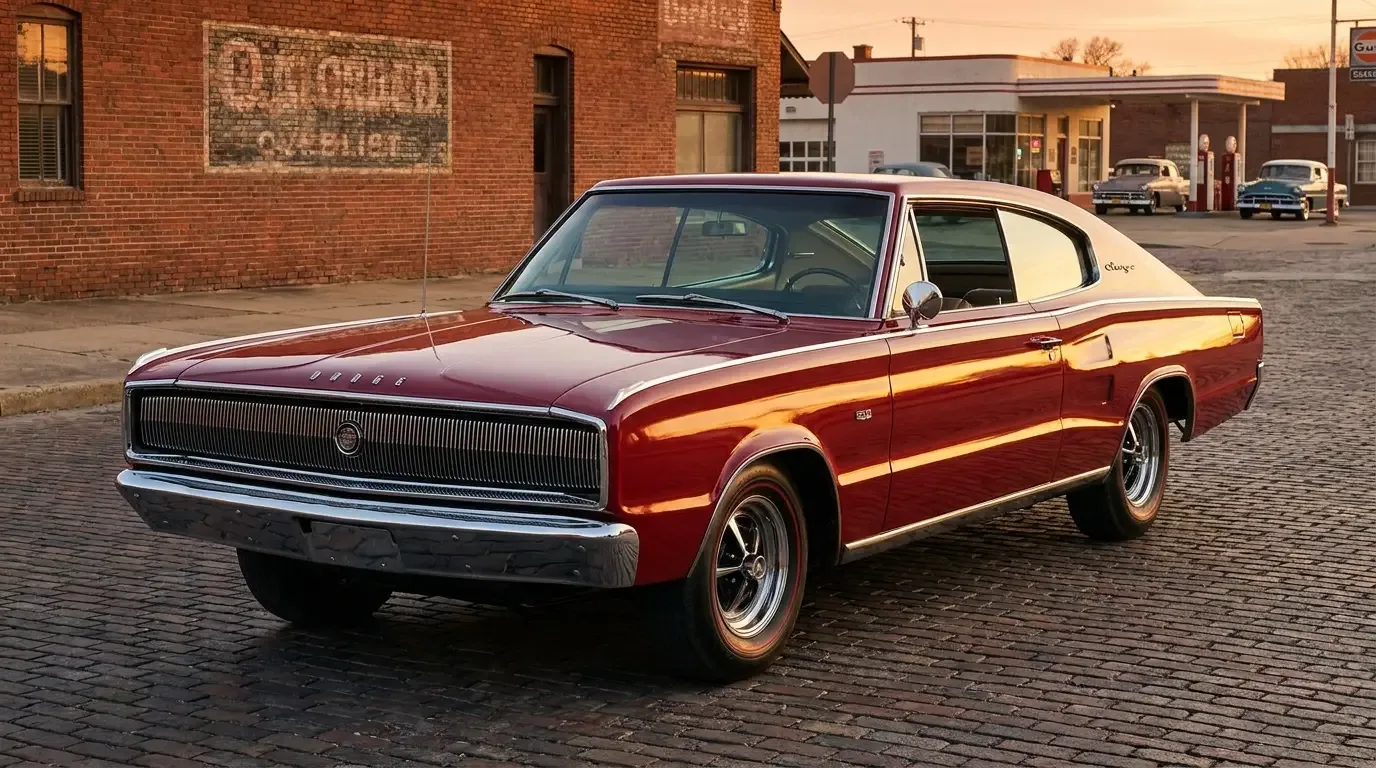
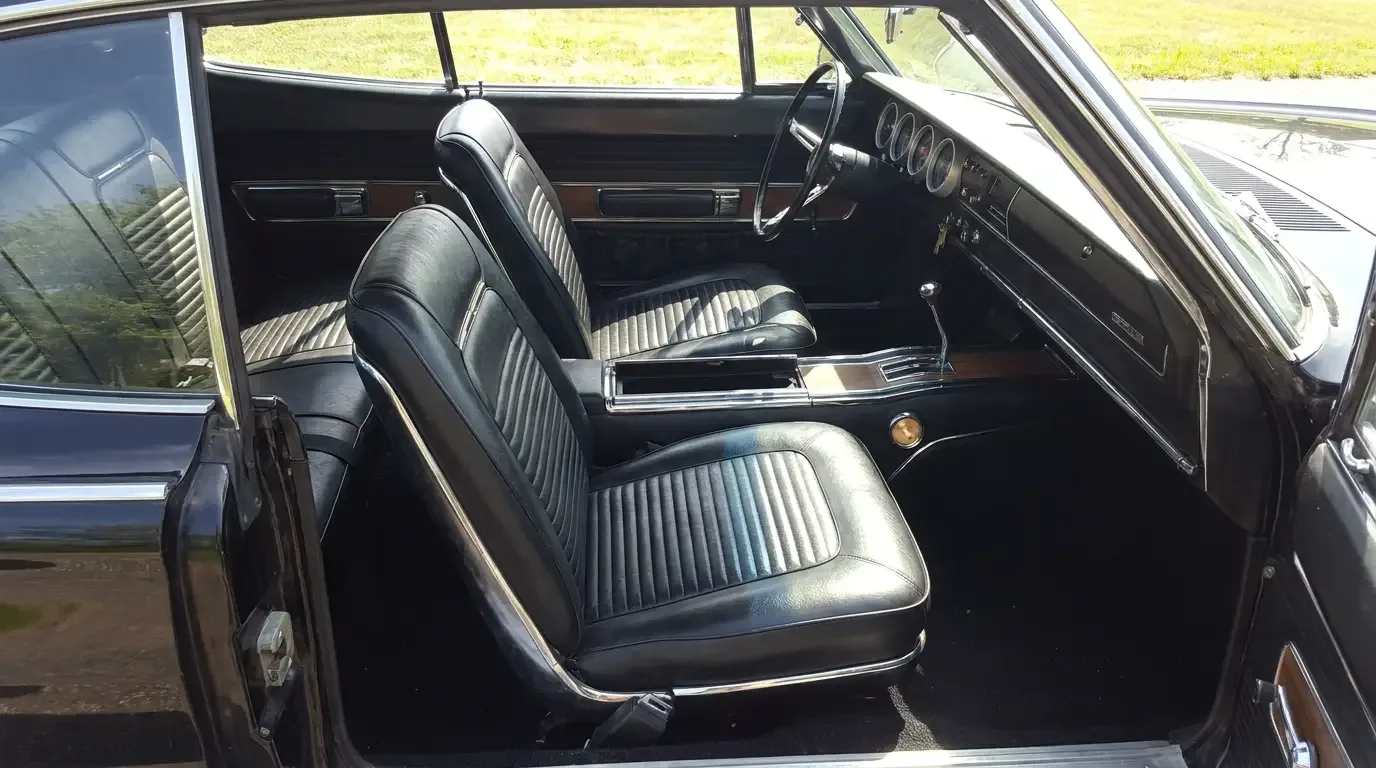
What made it work for the Charger specifically was that the car actually looked like it belonged in that ad copy. A fastback roofline, hidden headlights, bucket seats front and back joined by a full-length console. None of it needed exaggeration. The this story covers how deliberately every one of those design choices was made, and the marketing team clearly knew they had a car that could carry the message without much embellishment.
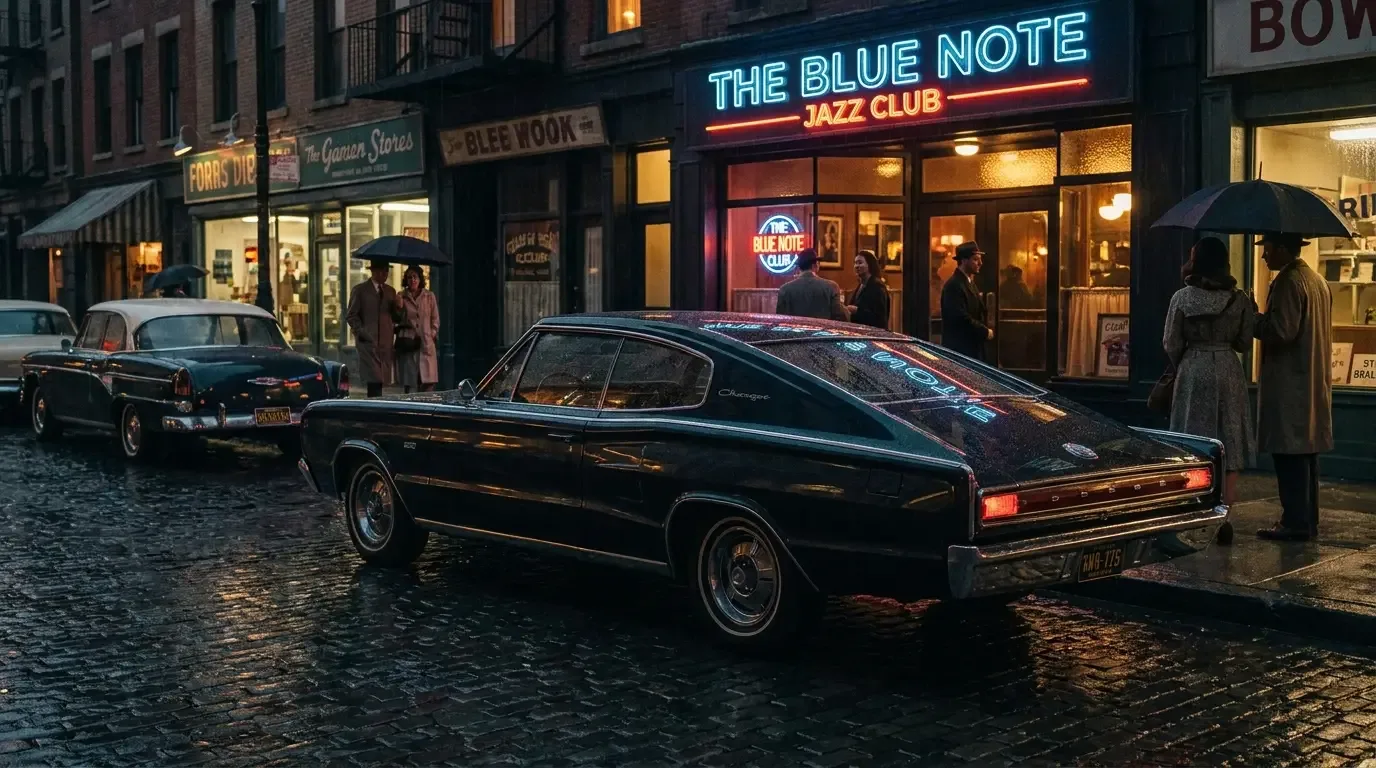
Print layouts from the campaign favored dark backgrounds and moody lighting over the bright, sun-drenched suburban settings Detroit had leaned on for most of the previous decade. The Charger photographed like something you'd find parked outside a jazz club at midnight rather than in a church parking lot on Sunday morning, and that visual language was as much a break from convention as anything the copy actually said.
How the campaign actually talked to people
The print ads leaned on language about breaking from convention, about a car for someone who wouldn't settle for what their father drove. Television spots, where Dodge could afford them, used quick cuts and rock-adjacent music cues that would have sounded absurd paired with a Coronet wagon but felt natural next to the Charger's fastback silhouette. The tone was confident bordering on cocky, which matched a car whose whole design language was built to look faster standing still than most of its competitors looked at speed.
It helped that the Rebellion tag line was vague enough to mean almost anything a buyer wanted it to. A twenty-six-year-old engineer and a thirty-four-year-old accountant could both read themselves into an ad that never specified exactly what they were rebelling against. That looseness was probably intentional. Specificity narrows an audience, and Dodge wanted the widest possible slice of a generation that had grown up watching Detroit build cars for their parents.
Where the campaign and the car didn't quite line up
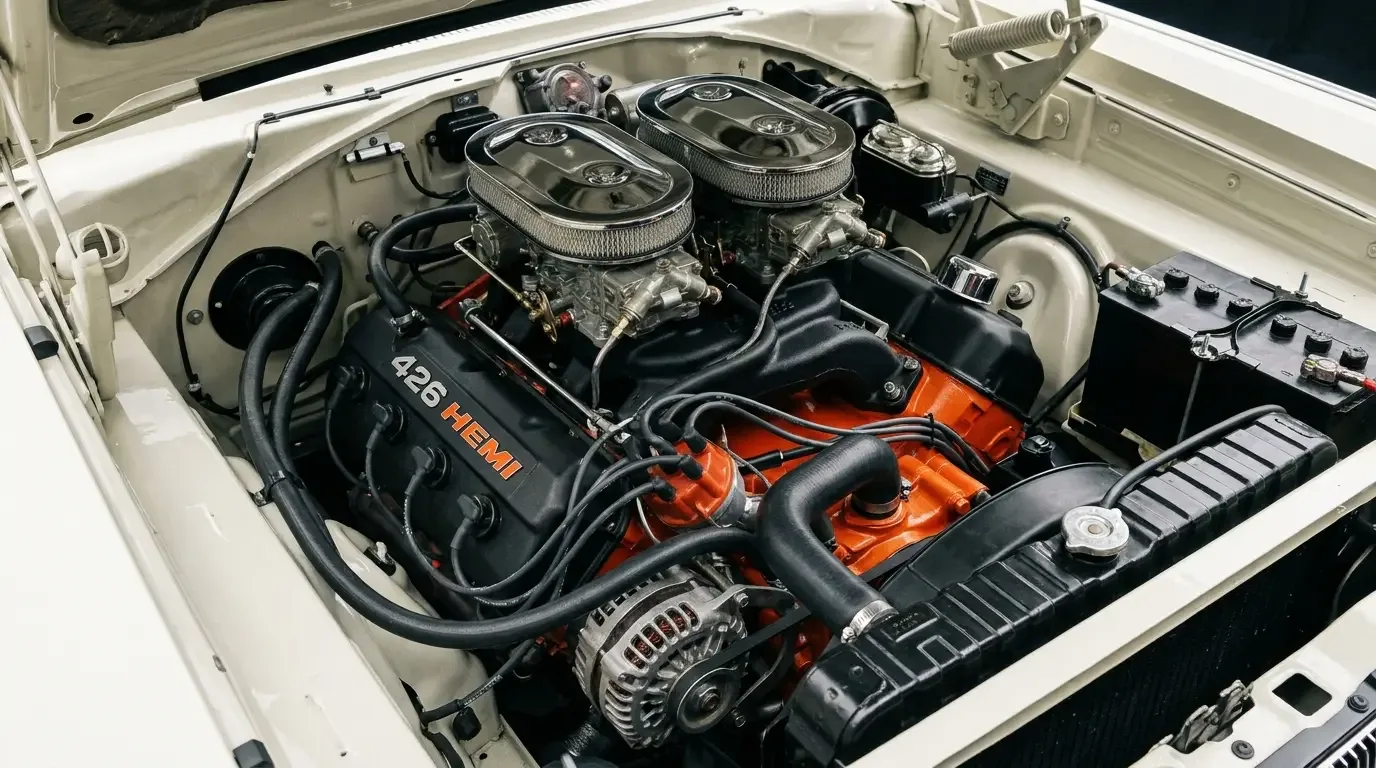
Here's the quieter part of the story. For all the rebellious posturing in the ads, most people who actually bought a 1966 Charger walked out with a 318 or a 383 under the hood, not the 426 Hemi the magazine road tests fawned over. The car in the advertisement and the car in most driveways were related but not identical, and that gap between the marketed fantasy and the delivered reality is a pattern that shows up again and again across the whole muscle car era, not just with Dodge.
It doesn't make the campaign dishonest, exactly. It just means the Rebellion was selling an idea the Charger was capable of fulfilling, even if most buyers never optioned their way to the version of the car the ads were built around.
There's a version of this story where that gap matters a lot, and a version where it barely matters at all. For a buyer today looking at a base-engine 1966 Charger, the version that matters is the second one. The car still has the fastback roof, the console, the hidden headlights, and the visual attitude the whole campaign was built around, regardless of what's under the hood. The Rebellion was never really selling horsepower. It was selling a silhouette and an idea, and both of those came standard.
"She told me she bought the Charger because the ad made her feel like she was choosing something, not just accepting whatever the dealer had on the lot. Fifty years later, she still remembers exactly which magazine she saw it in."
— Nora Beckett
Why it still resonates with collectors now
People who own these cars today often talk about them the same way that generation of buyers was taught to feel in 1966, as a choice that says something rather than just a way to get to work. The 1966 charger interior, with its long console and deep bucket seats, still photographs the way the Rebellion ads promised it would, which is a rare thing for advertising copy from that far back to have gotten right.
What the campaign sold wasn't really the fastback roof or the hidden headlights. It was the idea that buying this particular Dodge meant something about the person doing the buying, and enough people believed it that the car has kept its identity intact for sixty years, long after the ad agency that dreamed up the slogan closed its doors.
Talk to enough owners at a show and you hear echoes of that original pitch without anyone quoting the actual ad copy. People describe buying the car because it felt like theirs in a way a more conventional coupe wouldn't have, or because it reminded them of a specific summer or a specific person. That's the Rebellion campaign's real legacy. Not the slogan itself, which nobody remembers word for word anymore, but the emotional shorthand it built around a car that, six decades on, still gets people talking about who they were when they bought it.
Sources and notes
- OnAllCylinders - Leader of the Dodge Rebellion, the 1966 Charger - confirmed the Charger's positioning as the campaign's flagship.
- Mac's Motor City Garage - Leader of the Dodge Rebellion - background on the 1966 Rebellion advertising and the Charger's role in it.
- Wikipedia - Pamela Austin - confirmed BBDO's campaign, the "Dodge Rebellion Girl" persona and the "The Dodge Rebellion wants you!" tagline across ~20 commercials.
- Wikipedia - Dodge Charger (1966) - confirmed the design features (fastback, hidden headlights, console) the ads leaned on.
- Ate Up With Motor - Dodge's 1966-1967 Charger - corroborates that most buyers chose the 318 or 383 rather than the Hemi.