
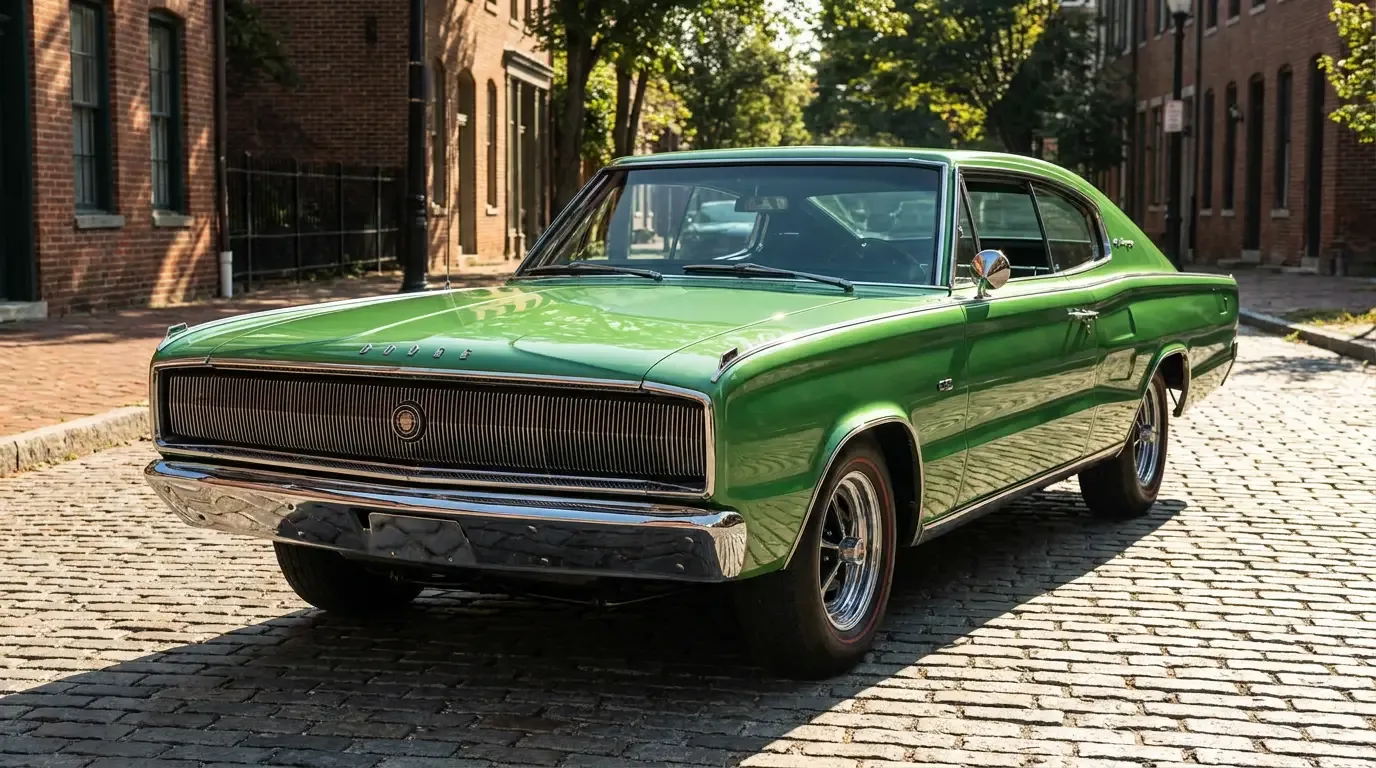
The Charger did not arrive as a clean-sheet design. It arrived as a roofline. In January 1966, Dodge took its mid-size Coronet, grafted on a full fastback, hid the headlights behind a rotating grille, and called the result a new model. The build records tell that story plainly: the first Charger shares its B-body platform, its cowl, and much of its structure with the car it was meant to outshine. What made it a Charger was the sheet metal above the beltline and the equipment inside.
Car Features
9 min read
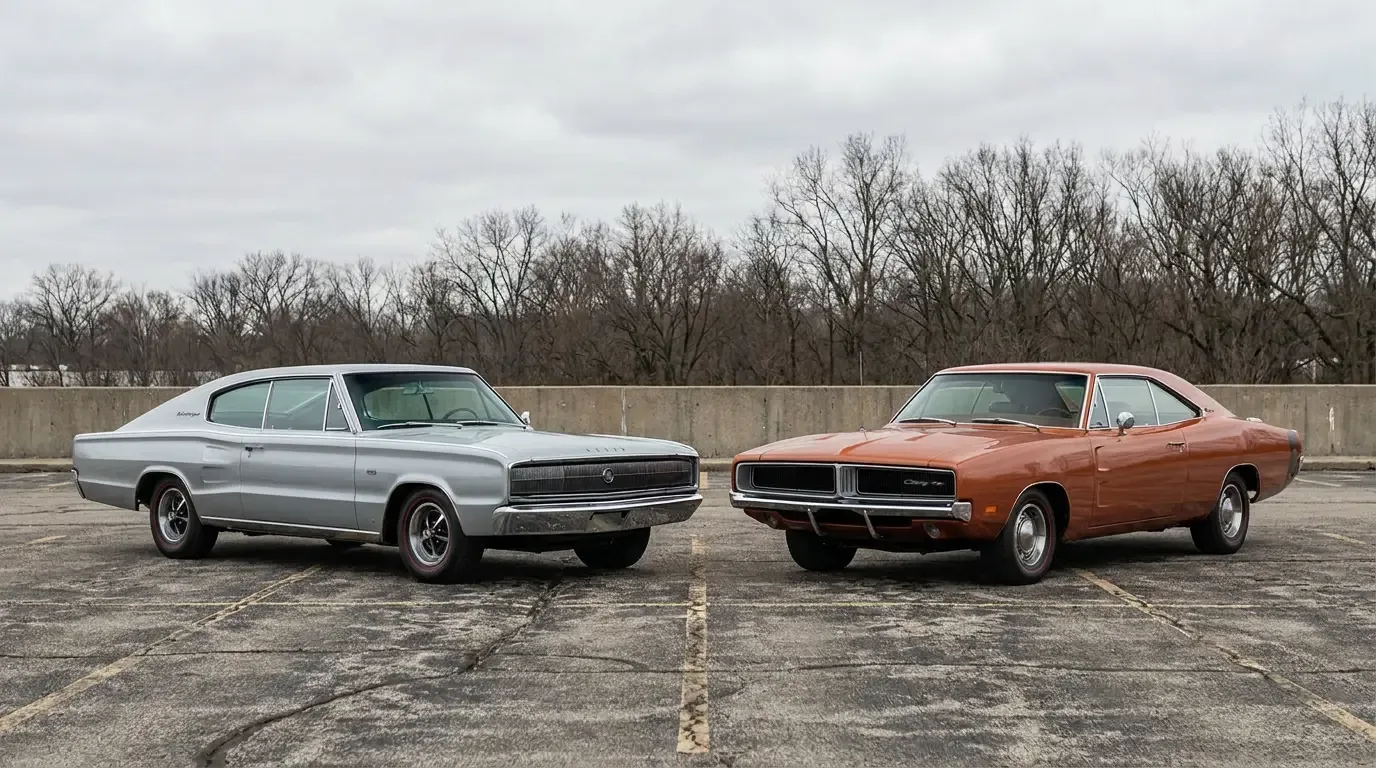
1966-1967: The Fastback That Launched the Charger
How Dodge turned a Coronet into a hidden-headlight fastback for 1966 and 1967, from the electroluminescent gauges to the 426 Hemi option.
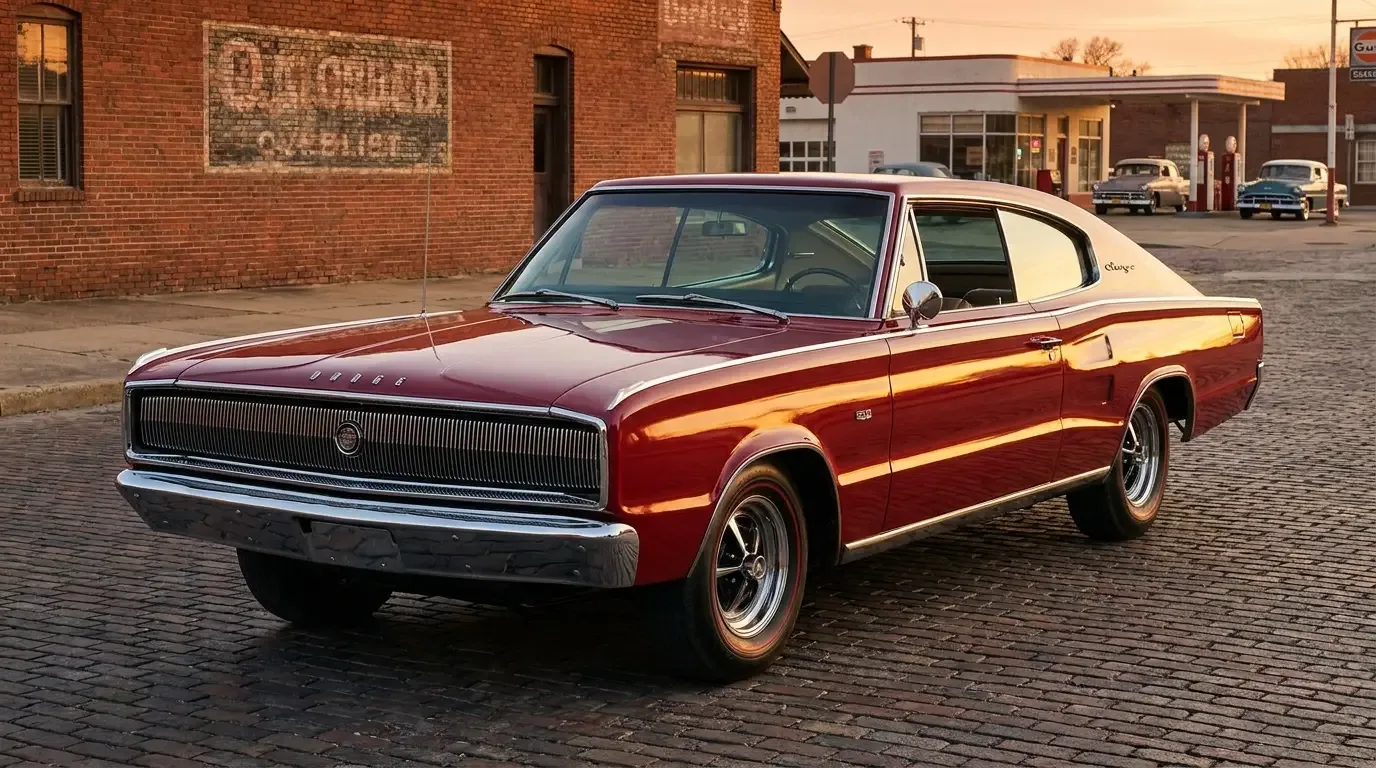
That origin is worth stating up front because it explains both the car's ambitions and its limits. Dodge wanted a personal-luxury fastback to answer the Rambler Marlin and to give the division something with presence. For the two years it wore this body, 1966 and 1967, the first-generation Charger was a specific thing: a large fastback with a distinctive interior, a broad engine range, and modest sales. If you want the arc that follows, the second-generation redesign is where the shape everyone remembers took hold, and you can read more here. This article stays with the cars that started it.
A fastback built on the Coronet
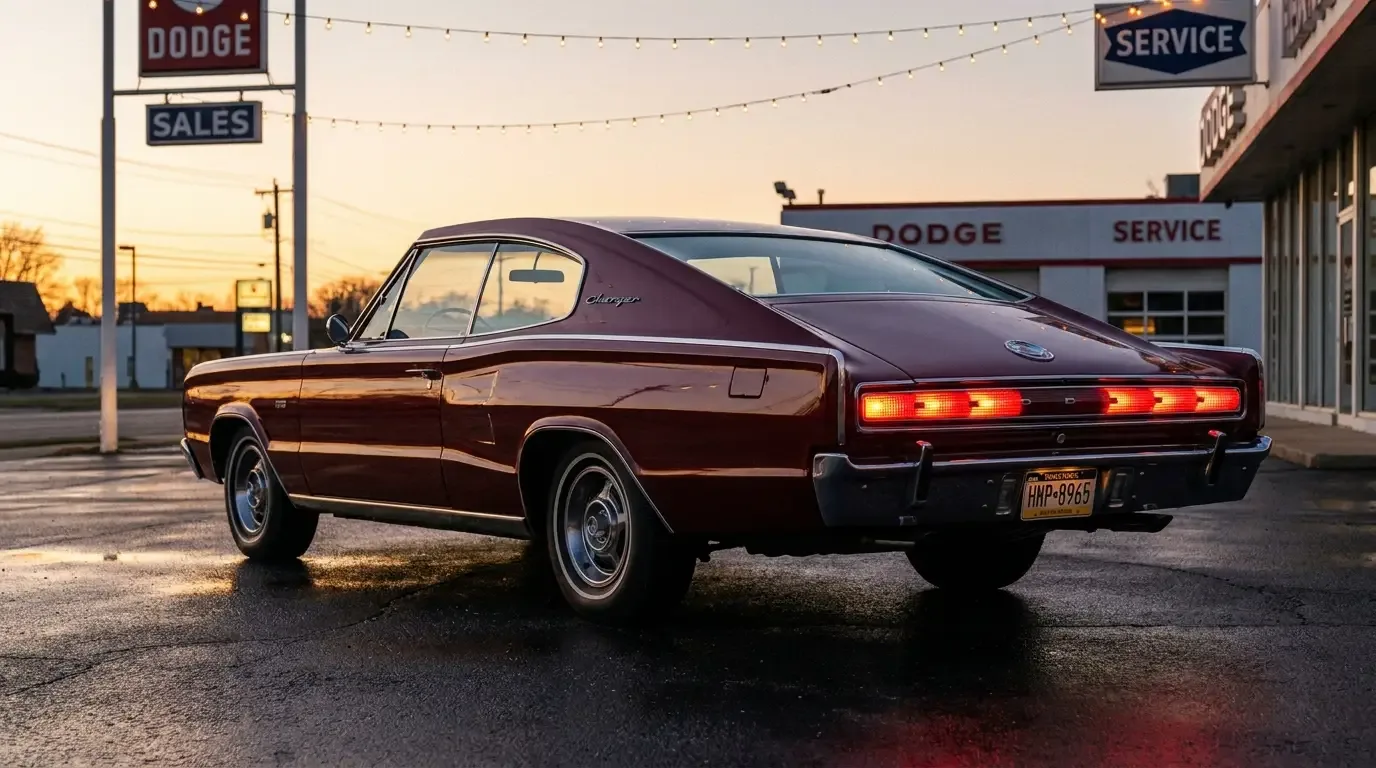
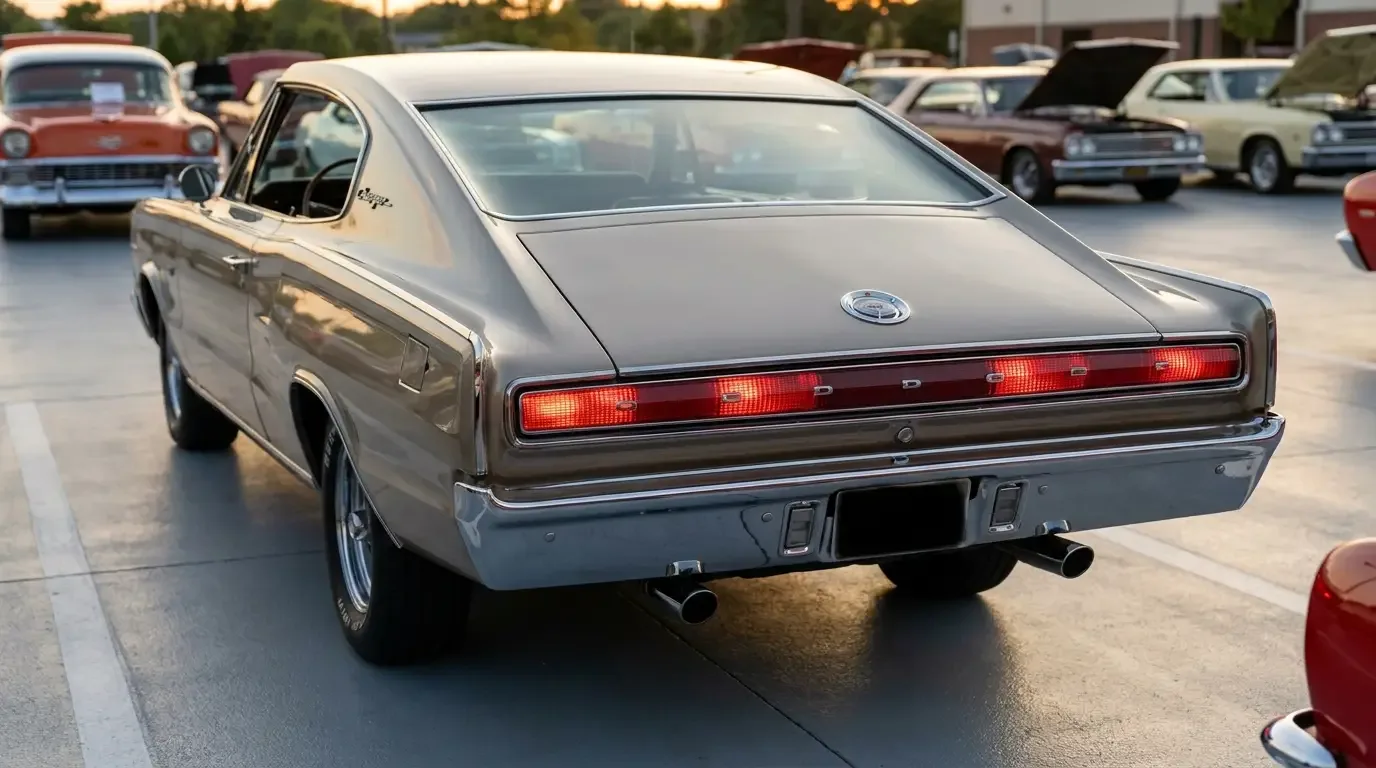
The 1966 Charger rode a 117-inch wheelbase, the same as the Coronet, and measured about 203.6 inches long. The distinguishing feature was the roof: an unbroken fastback sweep from the windshield header to the tail, ending in a short deck. Up front, the full-width grille concealed hidden headlights on a rotating mechanism, so with the lights off the nose read as a single clean band. At the rear, a full-width taillight panel carried the CHARGER name in block letters across the width of the car.
This was Dodge working within the constraints of an existing platform rather than against them. The doors, the glass ahead of the B-pillar, and the front fenders track closely with the Coronet. The investment went into the roof stamping, the interior, and the detailing at each end. It was a sensible way to build a halo car on a division budget, and it is the reason a first-generation Charger and a mid-1960s Coronet feel so similar from the driver's seat forward. For the wider model history across all the years, the the classic Dodge Charger story traces how the nameplate evolved from this starting point.
The interior was the real argument
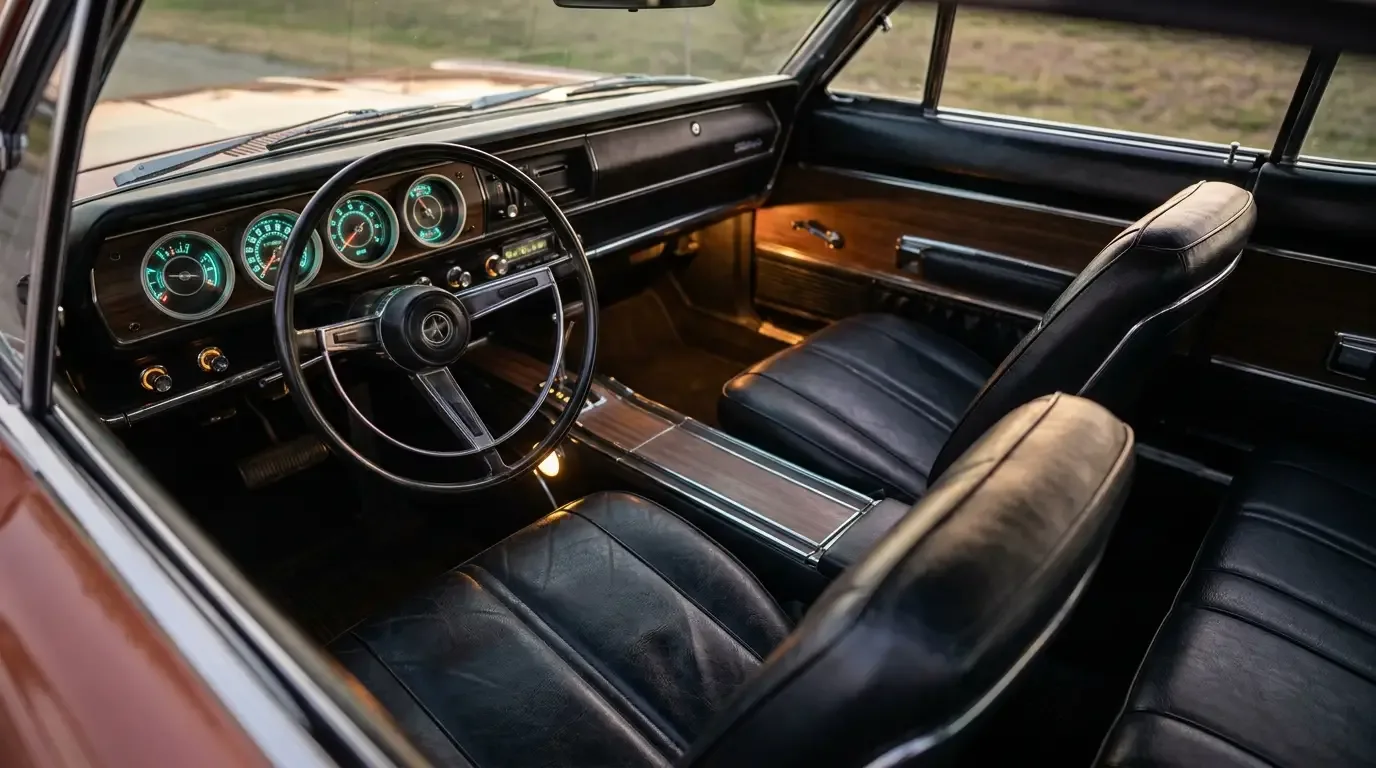
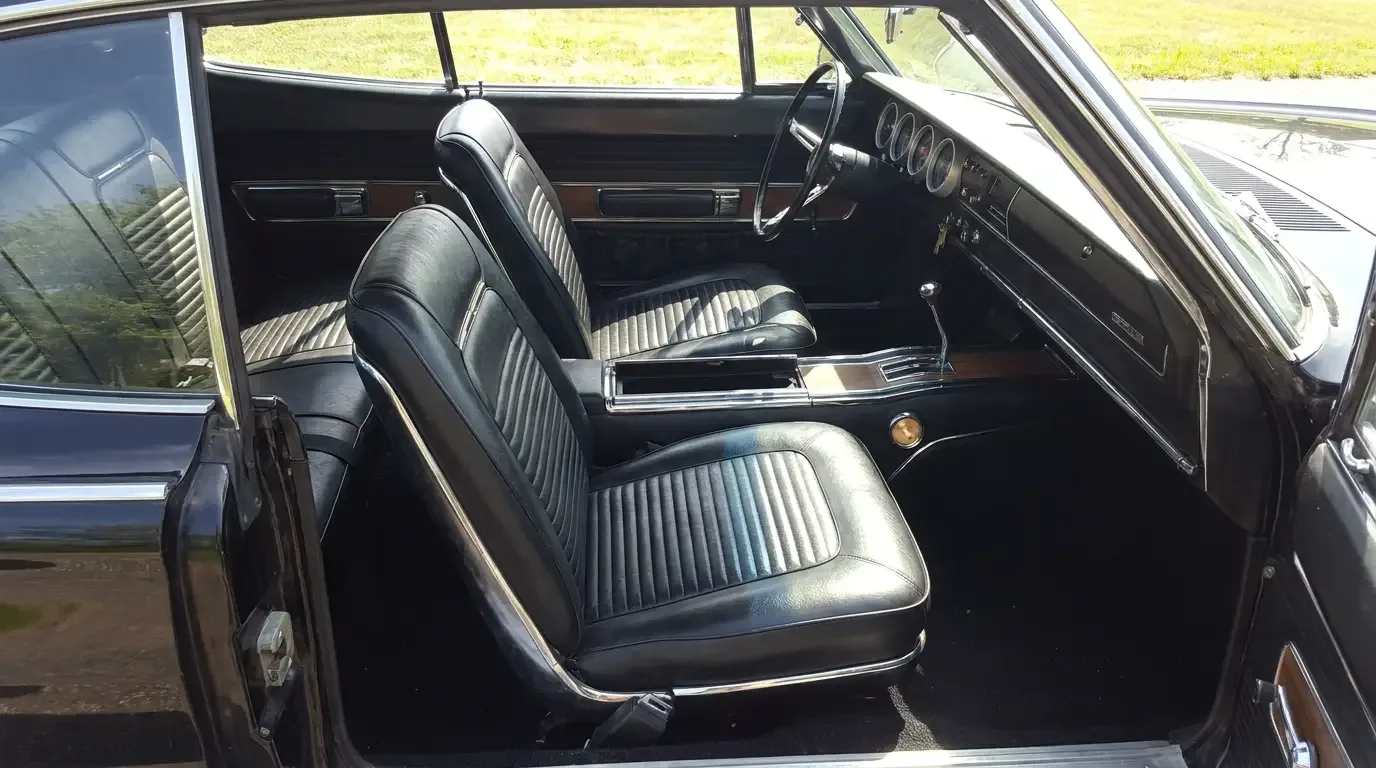
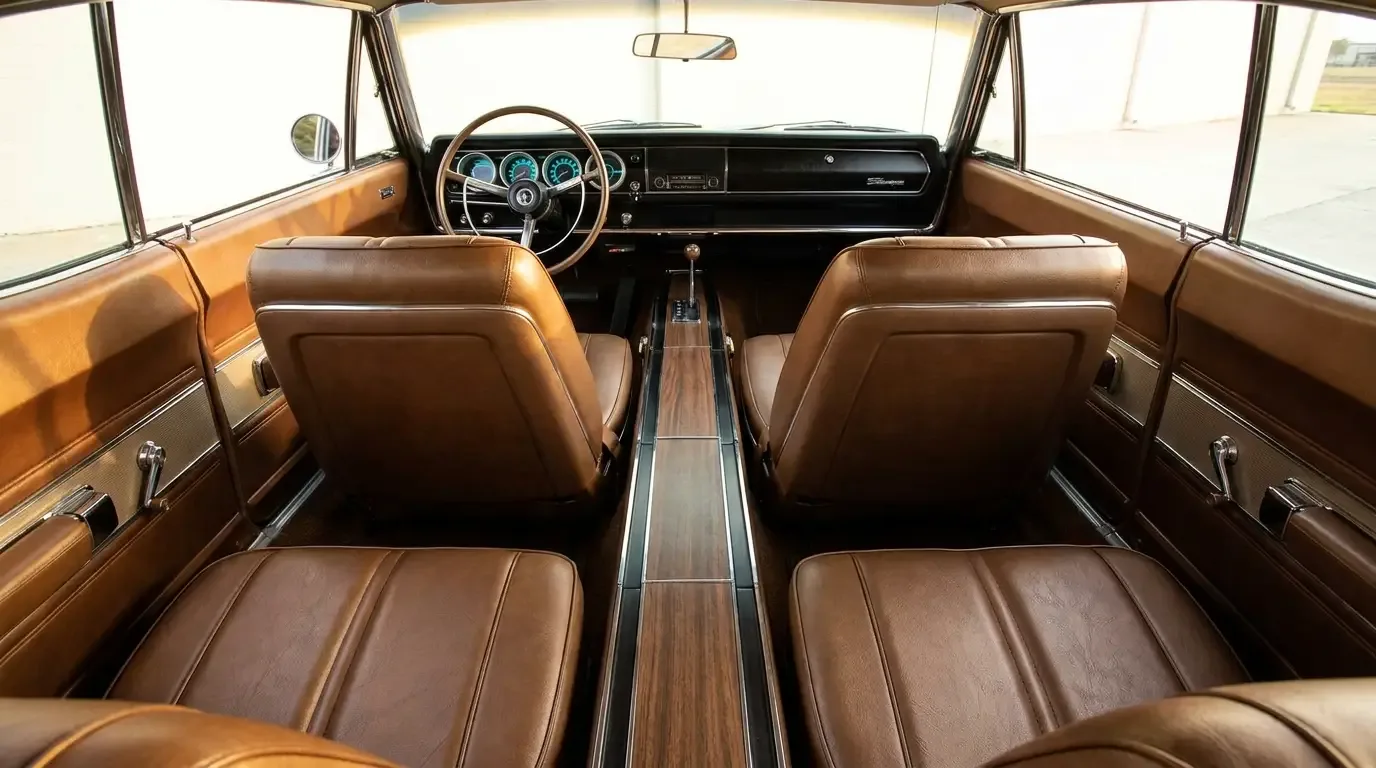
If the exterior borrowed from the Coronet, the interior is where Dodge spent its differentiation money. The 1966 Charger came standard with four individual bucket seats, front and rear, divided by a full-length center console that ran from the dash to the back of the cabin. The rear buckets folded flat, and the security panel between the trunk and the passenger compartment dropped down as well, opening a long load floor from the taillights to the front seatbacks.
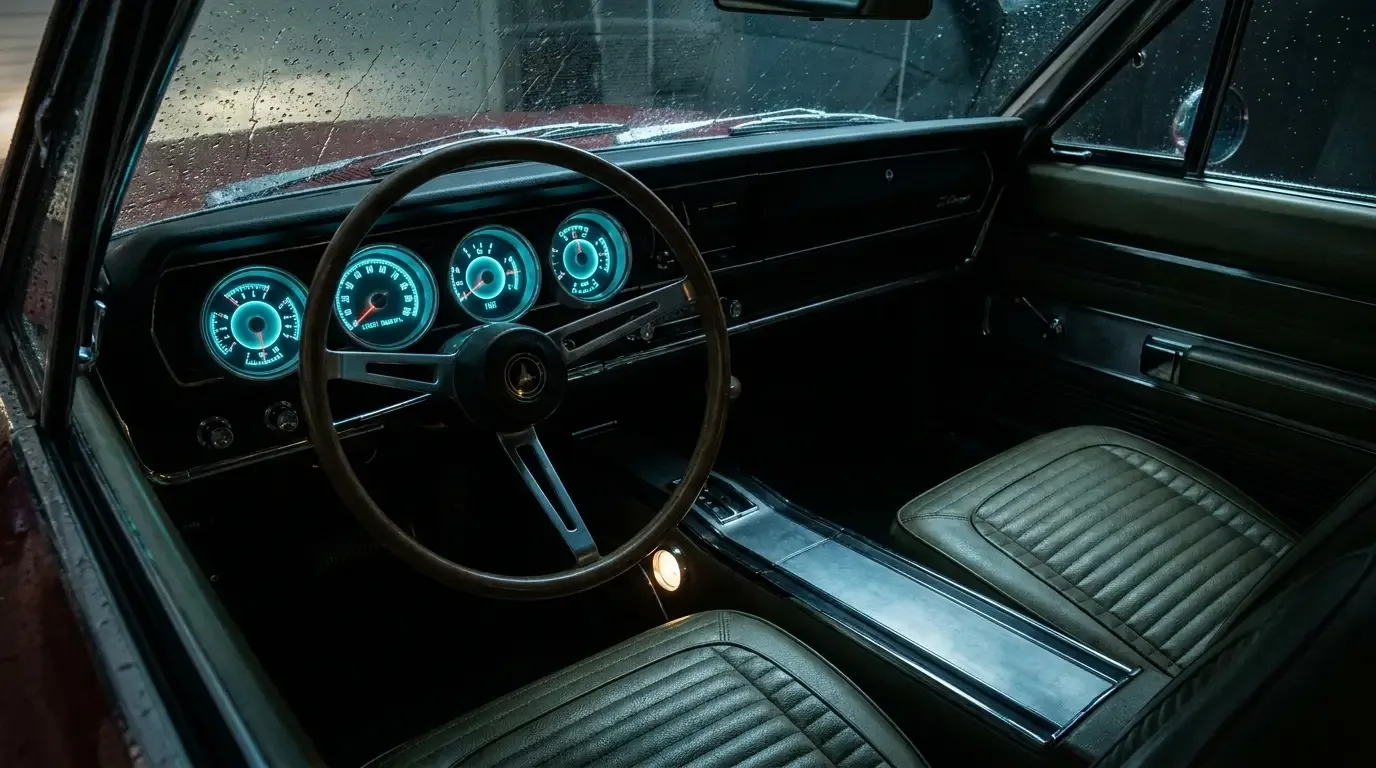
The instrument panel used four round electroluminescent gauges that glowed rather than relying on bulbs behind the faces. It was an unusual touch for a mid-priced 1966 car and one of the features owners still mention first. The console, the fold-down seats, and the lit gauges together made the interior feel purpose-built even though the shell underneath was shared. For a factory historian, the interior is the clearest evidence of what Dodge was actually trying to sell here: not raw performance, but a distinctive place to sit.
Engines: from the 318 to the 426 Hemi
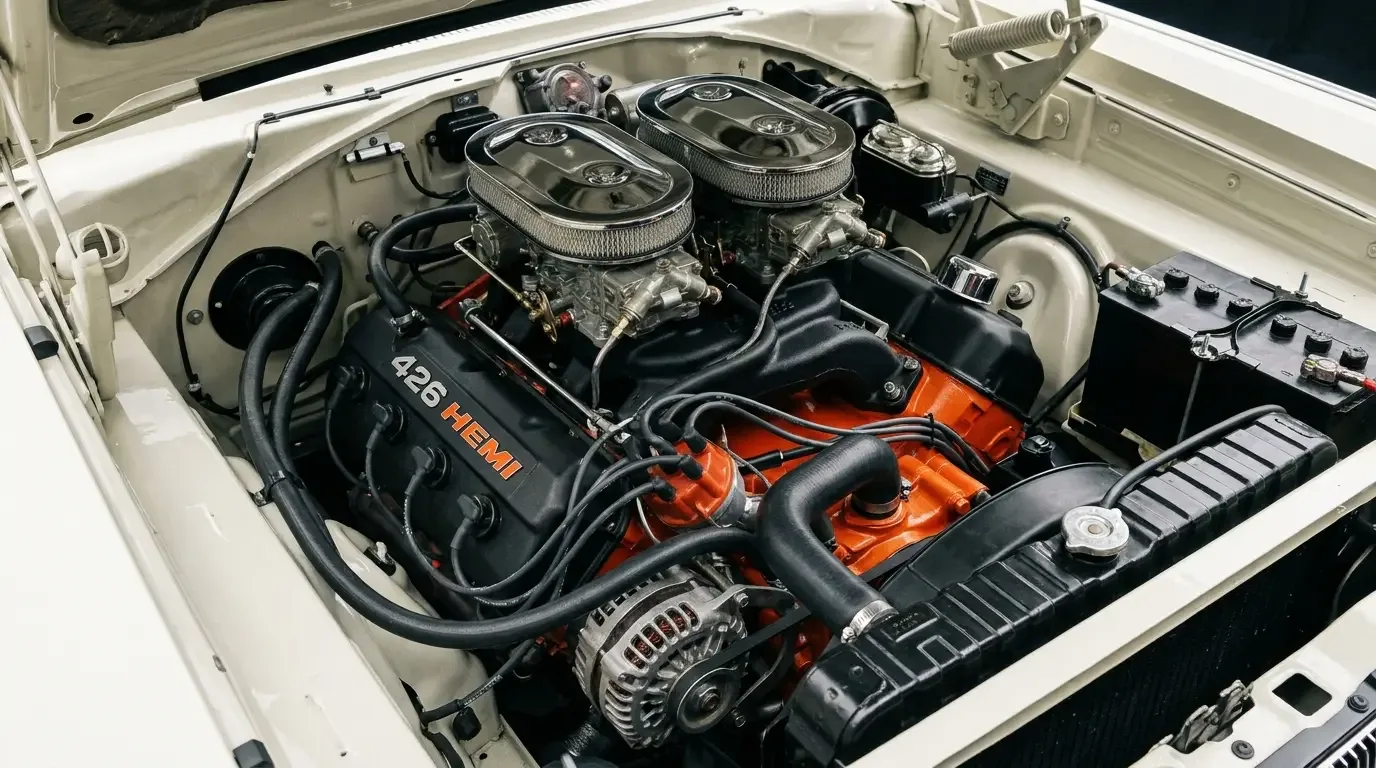
The engine range is where the first-generation Charger earns a second look. In 1966 the standard engine was a 318 cubic-inch V8, the older polyspherical-head design, rated at 230 hp. From there the options climbed: a 361 two-barrel at 265 hp, and the 383 four-barrel at 325 hp, which was the volume performance choice.
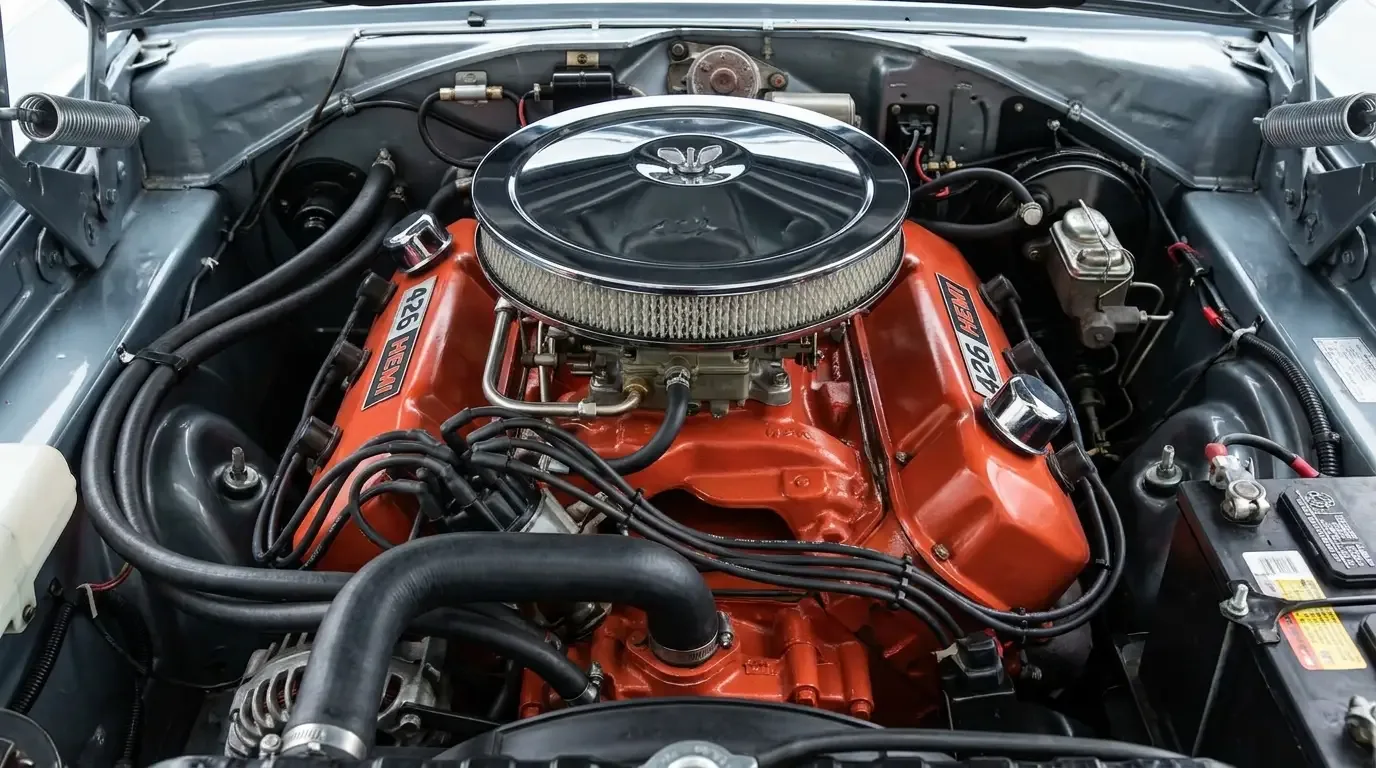
At the top sat the 426 Street Hemi, offered from the Charger's introduction and rated at 425 hp. The Hemi was expensive, added significant weight over the front axle, and was ordered by very few buyers. Only 468 Chargers left the line with the 426 Hemi in 1966, so surviving cars command a large premium today and documentation matters more than usual because the number built was so low. For 1967 the lineup shifted: the 440 Magnum joined the options list at 375 hp, giving buyers most of the big-block torque without the cost and complexity of the Hemi, while the Hemi remained available for those who wanted it.
Specifications at a glance
| Specification | 1966 | 1967 |
|---|---|---|
| Body style | 2-door fastback | 2-door fastback |
| Wheelbase | 117 in | 117 in |
| Standard engine | 318 V8, 230 hp | 318 V8, 230 hp |
| Top engine | 426 Street Hemi, 425 hp | 426 Street Hemi, 425 hp |
| New big-block option | 383 4-bbl, 325 hp | 440 Magnum, 375 hp |
| Seating | 4 buckets, fold-down rear | 4 buckets, fold-down rear |
| Production | 37,344 | 15,788 |
Two years, two very different sales stories
The first-generation Charger sold well in its debut and then fell off sharply. Dodge built 37,344 Chargers for 1966, a respectable result for a mid-year introduction. For 1967, with the novelty faded and the fastback shape drawing mixed reactions, production dropped to 15,788. That decline is a large part of why Dodge redesigned the car so quickly for 1968.
The 1967 model year brought detail changes rather than a new body. The most visible was a revised center console and the addition of the 440 Magnum to the options list. From a numbers standpoint, the low 1967 volume is exactly why clean, documented 1967 cars can be harder to find than the raw sales figures suggest, since fewer were built and the attrition rate on large 1960s fastbacks was high. Buyers looking at the market today can compare survivors among the 1967 Dodge Chargers for sale to see how condition and documentation separate the good cars from the projects.
"People assume the first Charger failed because it was slow. It wasn't slow. It sold twice as many cars in year one as in year two because the shape stopped being new, not because the engine bay was lacking. The build totals say that clearly, and they're the factory's own count."
Tom Ramirez
The fastback that fought the wind
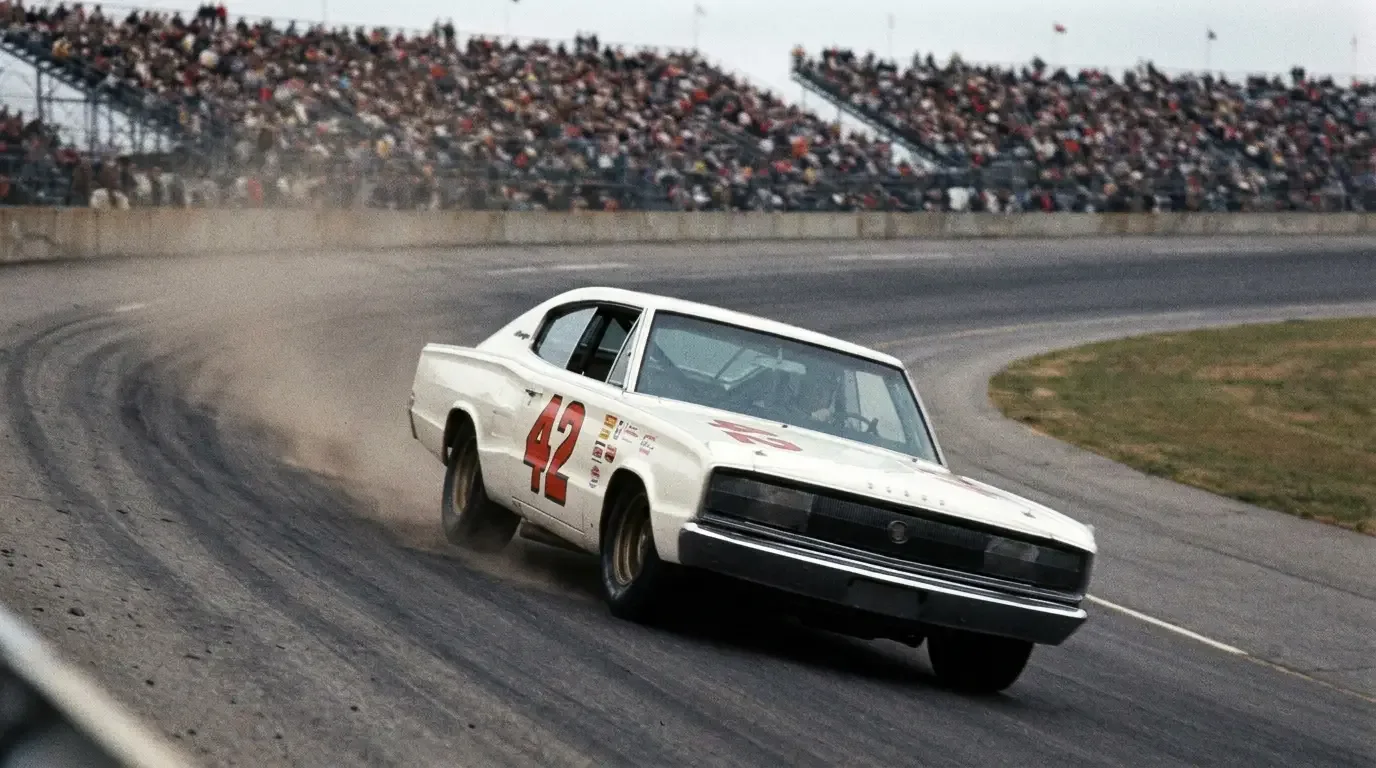
The first-generation Charger has a place in stock-car history that the road cars only hint at. On paper, a smooth fastback roof looks like an aerodynamic advantage, and Dodge campaigned the Charger in NASCAR expecting exactly that. In practice the shape worked against the car at speed. The long rear glass and the tunneled backlight created lift over the rear axle, and drivers reported the tail going light in the high-speed corners of the superspeedways.
Teams tried to manage it with a small spoiler on the deck, but the underlying problem was the roofline itself. That lesson fed directly into the redesign. When Dodge wanted a genuine aero weapon later in the decade, it did not simply reuse the first Charger's fastback; it developed flush grilles and specialized rear windows to solve the exact problems the 1966 car exposed. So the first generation matters twice: once as the road car that established the name, and once as the wind-tunnel lesson that shaped what came after. For a factory historian, the racing record is a reminder that a shape can look fast and still be wrong at 180 mph.
What to check on a survivor
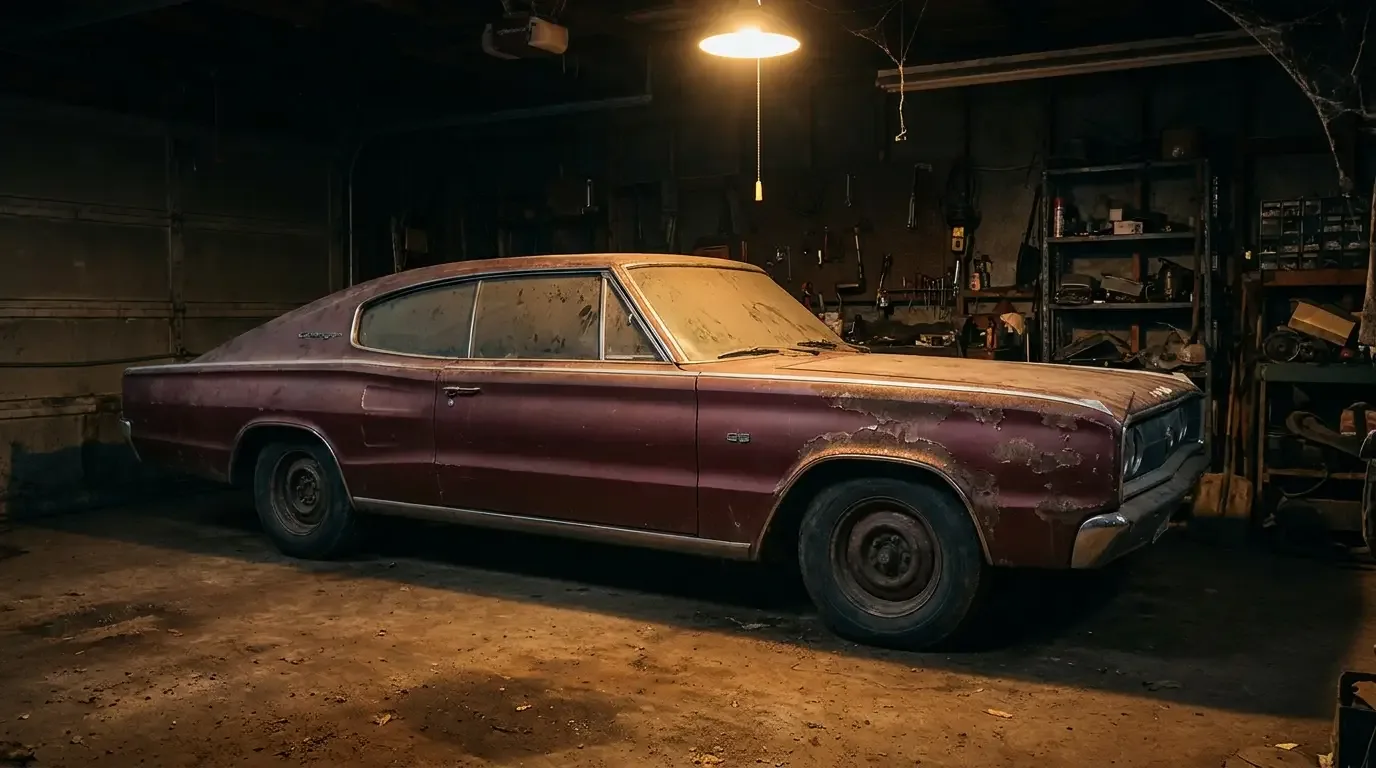
Because these cars shared so much structure with a common Coronet, some parts are easy to source and others are nearly impossible. The Charger-specific pieces, the tail panel, the interior console, the electroluminescent gauge cluster, and the hidden-headlight mechanism, are the hard ones. A car that runs and drives but has a dead gauge cluster or a seized headlight door is not a quick fix.
🔧 Inspection Priorities
- Hidden headlight operation. Confirm both pods rotate and seat fully. The electric motors and linkage are Charger-specific and rebuild parts are limited, so a non-working system points to real cost.
- Electroluminescent gauges. Check that the instrument panel lights and reads correctly. These units are unusual to the first generation and repair means finding a specialist or a good used cluster.
- Rear body and tail panel. Inspect the full-width tail panel and lower rear quarters for rust and past collision repair. Reproduction sheet metal here is thin compared with more popular Mopars.
- Engine documentation. For any big-block or Hemi claim, verify the fender tag and build documentation. The value gap between a real Hemi car and a clone is large, and the paperwork is the difference.
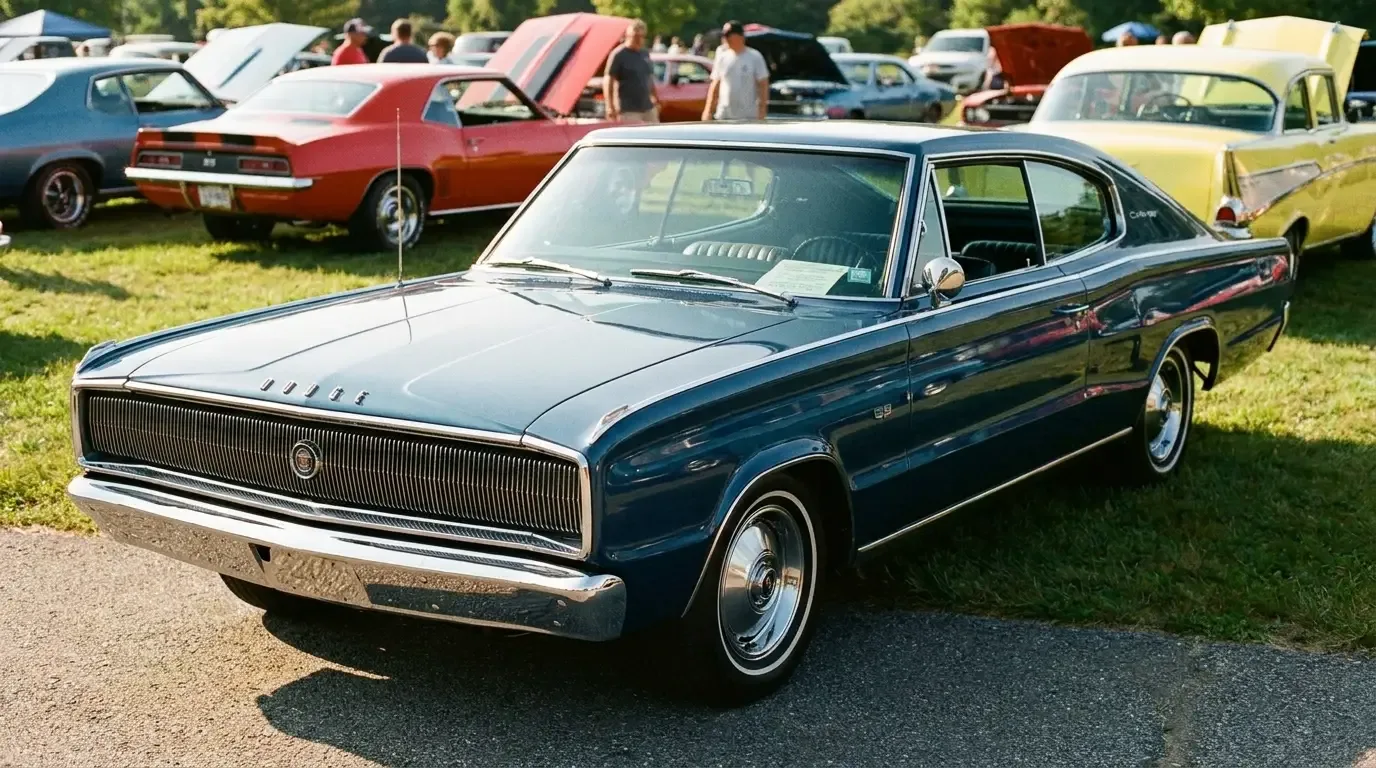
The first-generation Charger occupies an honest place in the model's history. It is not the most valuable Charger, and for two years it was not the best-selling one either. What it was is the car that established the name, the fastback ambition, and the engine range that the later, more famous Chargers would build on. Judged as a factory record rather than a legend, it holds up: a shared platform used well, an interior that justified the badge, and an option list that ran all the way to the Hemi.
Sources and notes
- Wikipedia - Dodge Charger (1966) - confirmed 1966/1967 production of 37,344 and 15,788, 117-in wheelbase, 203.6-in length, and 468 Hemi cars built in 1966.
- Muscle Car Facts - 1966 Charger - confirmed engine lineup (318/230 hp, 361/265 hp, 383/325 hp, 426 Hemi/425 hp) and the 468 Street Hemi installations.
- Muscle Car Facts - 1967 Charger - confirmed the 440 Magnum (375 hp) joining for 1967, the 361 being dropped, and 15,788 total build.
- Mac's Motor City Garage - Dodge 440 Magnum V8 - confirmed the 440 Magnum rating and its 1967 introduction.
- Conceptcarz - 1966 Dodge Charger specifications - confirmed dimensions, electroluminescent gauges, four-bucket interior, and the rotating hidden-headlight design.
- Mopar Connection Magazine - Charger hideaway headlights - confirmed the 1966 - 67 rotating pods were electric-motor operated, while vacuum-actuated covers arrived with the 1968 redesign.
Related Reading
Article
The Complete Classic Dodge Charger Story (1966-1978)
Article
1968-1970: The Charger Becomes a Legend
Article
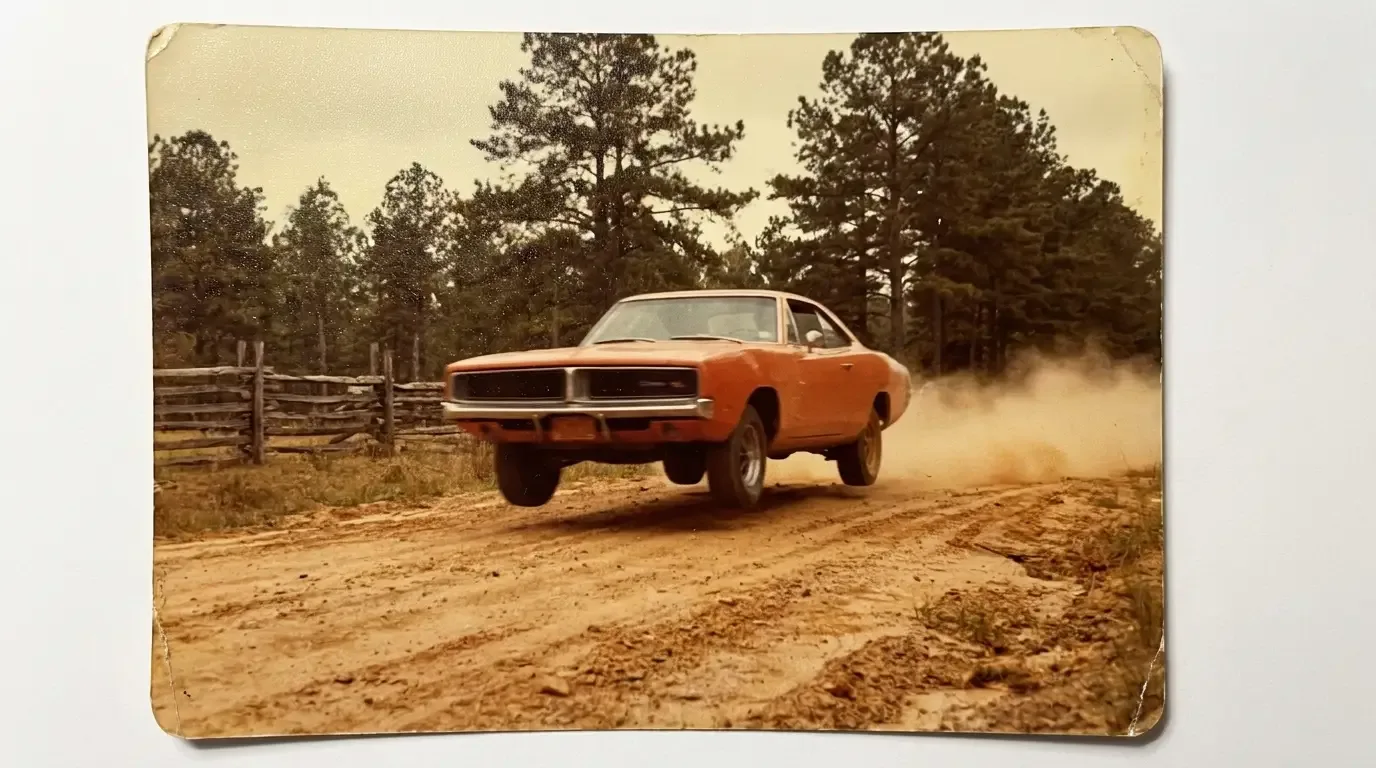
General Lee to the Silver Screen: The Charger in Pop Culture
Article
Why the 1966 Charger Fastback Shocked the Public
Article
The Electroluminescent Dash That Defined the First Charger
Article
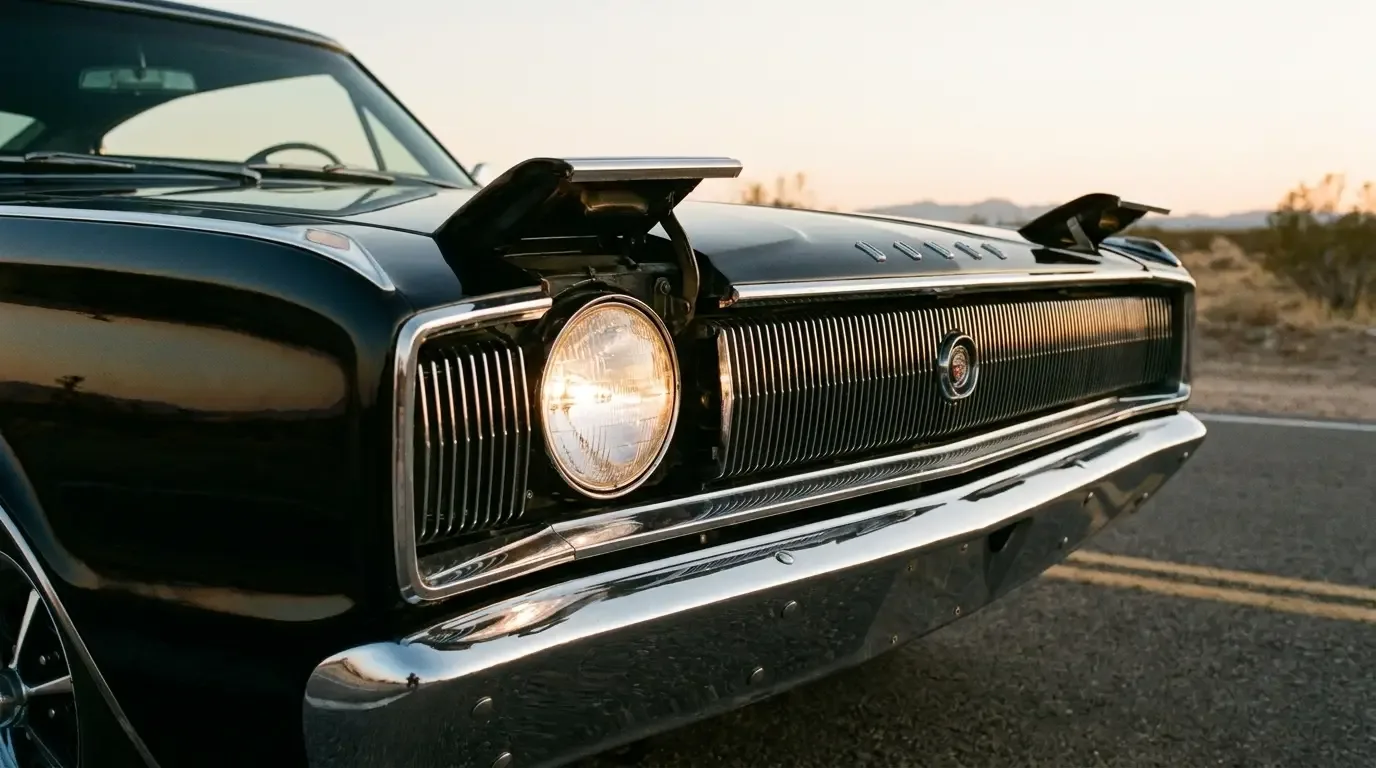
Hidden Headlights: The First Charger's Signature Face
Article
The 426 Hemi's Street Debut in the 1966 Charger
Article
The Dodge Rebellion and How the Charger Was Marketed
Article
The Fold-Down Rear Seat and Cavernous Fastback Interior
Article
Why the First-Gen Charger Sold Poorly - And Why It Matters Now
Article
The 1967 Charger: Subtle Changes, Lasting Rarity
Article
The Full-Width Taillight: A First-Gen Trademark
Article
NASCAR's First Charger and the 1966 Aero Experiment
Article
Bucket Seats and Console: The Gentleman's Muscle Car
Article
First-Gen vs Second-Gen Charger: What Changed and Why
Article
TorqueFlite or Four-Speed: First-Gen Charger Drivetrains
Article
How Many First-Gen Chargers Survive Today
Article
Collecting the Overlooked 1966-67 Charger
Have a
Dodge Charger
for Sale?
Reach thousands of serious classic car collectors across the US.
Sell It Here →
Are You a Classic Car Dealer?
List your full inventory and connect with targeted classic car buyers.
Join as a Dealer →
#classic dodge charger
#b-body charger
#1966 dodge charger
#1967 dodge charger
#first generation charger
#dodge charger fastback
#426 hemi charger
#charger production numbers

About the author
Tom Ramirez
Corvette researcher and historian based in Bowling Green, Kentucky. Two decades documenting Corvette production history from original factory records.
Related Listings - Dodge Charger
Comments
Be the first to comment on this article.