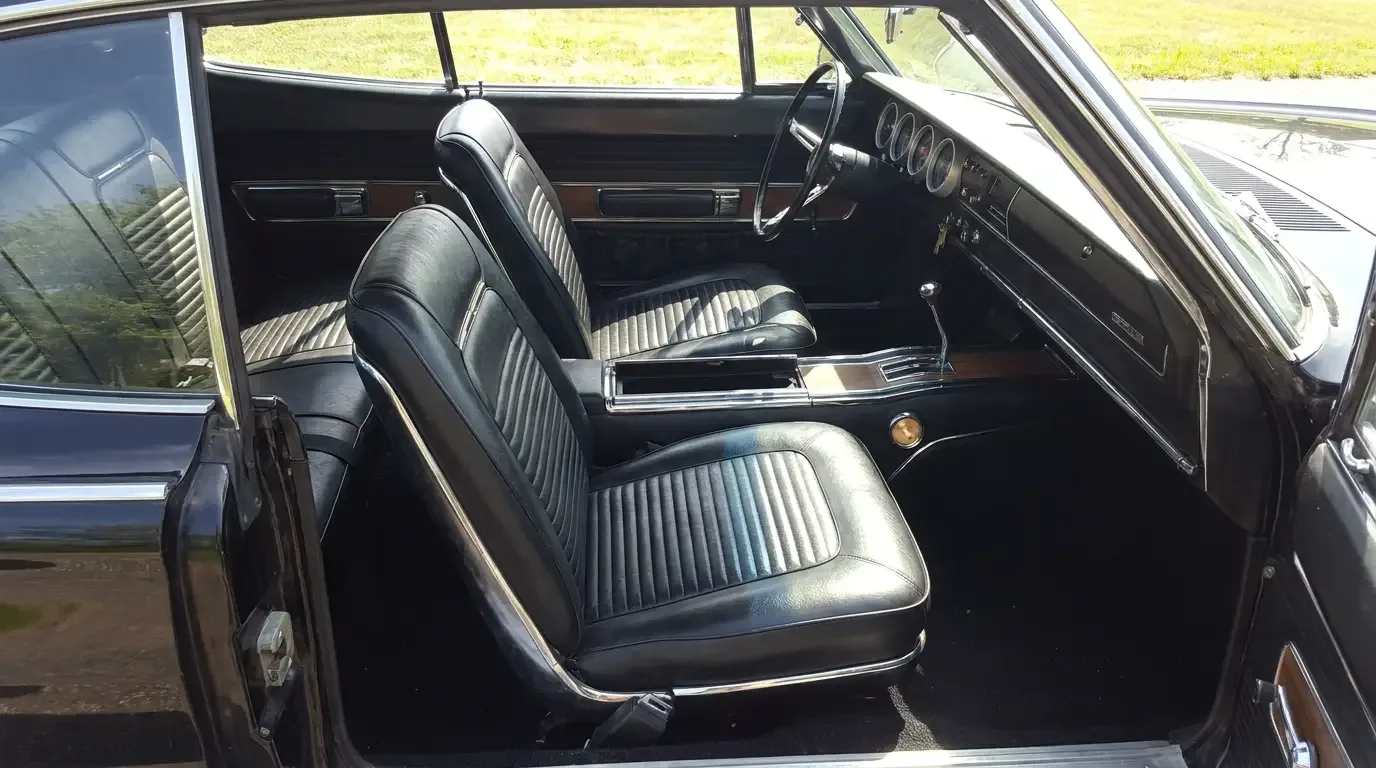
Most people who climb into a 1966 Charger for the first time reach for the rear seatback before they even start the engine, because word gets around that it folds down, and folks want to see it for themselves. It does fold, flat enough to slide a set of golf clubs or a couple of duffel bags straight through from the trunk into the cabin, and it's one of the more genuinely useful party tricks on any muscle car from this era.
I've worked on a fair number of these interiors over the years, restoring consoles, replacing bucket seat foam, chasing down console-mounted wiring gremlins. Here's what actually makes this cabin different, and what tends to go wrong with it.
Four bucket seats, one long console
Dodge built the 1966 Charger with bucket seats front and rear, four total, joined by a console that ran the full length of the passenger compartment rather than stopping at the front seats like most consoles of the era. That console housed the shifter up front and, depending on options, ran back to include a rear armrest and storage. It was a genuine departure from a bench-seat Coronet, and it reinforced the sporting, driver-focused image Dodge was chasing with the whole car.
The fastback roofline drove this layout as much as any marketing decision did. With a sloping roof cutting into rear headroom, individual bucket seats let Dodge angle the rear seatbacks slightly to work with the roofline instead of fighting it, something a straight bench couldn't do as gracefully.
The console itself was more than a shifter housing. Depending on how a particular car was optioned, it could carry a rear ashtray, additional storage, and trim that matched the door panels and dash, tying the whole cabin together visually in a way a lot of contemporary Coronets simply didn't attempt. It's one of the details that shows up clearly in period photography once you know to look for it, and it's part of why the interior gets brought up almost as often as the exterior when people talk about what made this car feel different.
The fold-down seat and why it mattered
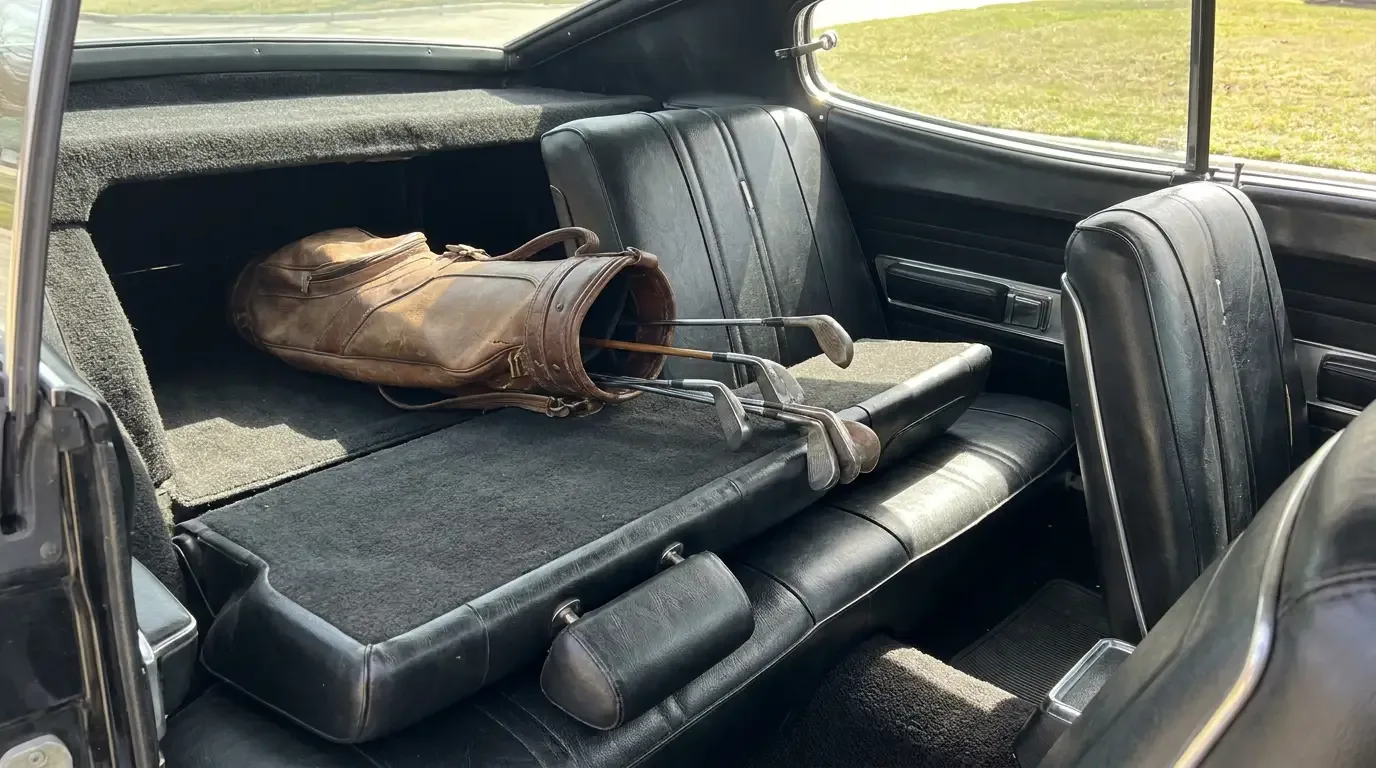
The rear seatback folded forward, opening a pass-through to the trunk that turned a two-door fastback with a fairly shallow trunk opening into something that could actually swallow long cargo. For a car marketed partly on driver excitement, this was a practical concession Dodge made without undercutting the sporting image, and period brochures made a point of photographing the seat folded down with luggage arranged just so.
It's a simple mechanism, hinges and a latch, but sixty years of use wears the latch mechanism loose on a lot of surviving cars, and the seatback rattles or doesn't sit flush when it's supposed to be up. If a seller tells you a fold-down seat "mostly works," that's the same warning sign as a hidden headlight door that mostly works. Something in the latch or hinge is already tired.
What actually wears out in this cabin
The bucket seat foam, front and rear, tends to collapse unevenly after decades, especially in the driver's seat bottom where most of the wear concentrates. Original vinyl and cloth trim is prone to cracking along stitch lines, particularly on cars stored without climate control. The console itself, being one long structural piece rather than a short front unit, can develop cracks at its mounting points if the car's been driven hard or poorly maintained, and replacement consoles in good original condition are not as easy to find as you'd hope for a car this well documented.
Wiring inside the console is worth a look too. It routes power to the shifter-mounted components and, on some option combinations, interior lighting, and decades of heat cycling in a tight console channel do wiring insulation no favors.
Carpet and underlayment are worth a look too, less because of the fabric itself and more because of what's often hiding beneath it. Floor pans on cars stored in humid climates can rust from underneath while the carpet on top looks presentable, and a quick lift of the front carpet edges near the floor pan seams tells you more about the car's real condition than the seats do. It's a five-minute check that a lot of buyers skip because they're focused on the more visible upholstery.
"The console looks like a simple piece of plastic and vinyl until you try to source a good used one. Then you find out how many people cracked theirs climbing over the console instead of walking around the car."
— Mike Sullivan
What to check before you buy
Fold the rear seat down and back up a few times and feel for a solid, positive latch. Look closely at the console for hairline cracks near the mounting bolts, and check that the shifter mechanism moves smoothly through its gates without catching on worn console plastic. Sit in both front and rear buckets and compare the seat height and firmness side to side. Uneven foam collapse is common and cheap to fix, but it tells you something about how the car was used and stored.
Ask about the car's storage history if the seller has any records at all. A Charger that spent thirty years in a heated garage in a dry climate is a fundamentally different proposition from one that sat in a barn near the coast, even if both look similar in photos. The interior, more than the sheet metal, tends to show that difference honestly once you know where to look for it.
This interior is one of the more underrated parts of the whole 1966 package, built around the same fastback thinking that shaped the roof and the hidden headlights outside. If you want the full context on how buyers reacted to the car when it was new, and why sales didn't quite match the hype the interior and everything else promised, read more here for the sales side of the story, and the first-gen Charger era covers the rest of the car this interior was built to match.
Sources and notes
- Ate Up With Motor - Dodge's 1966-1967 Charger - confirmed the four bucket seats, elongated center console and the fold-flat rear seat that increased cargo space.
- Wikipedia - Dodge Charger (1966) - corroborated the four individual bucket seats with full-length front-to-rear console.
- ClassicCars.com Journal - 1966 Dodge Charger - detail on the folding rear seats and cabin appointments.
- Conceptcarz - 1966 Dodge Charger - general interior and specification reference.
- Hagerty - Dodge's 1966-67 Charger Charts Its Own Path - context on how originality and condition drive first-gen values.