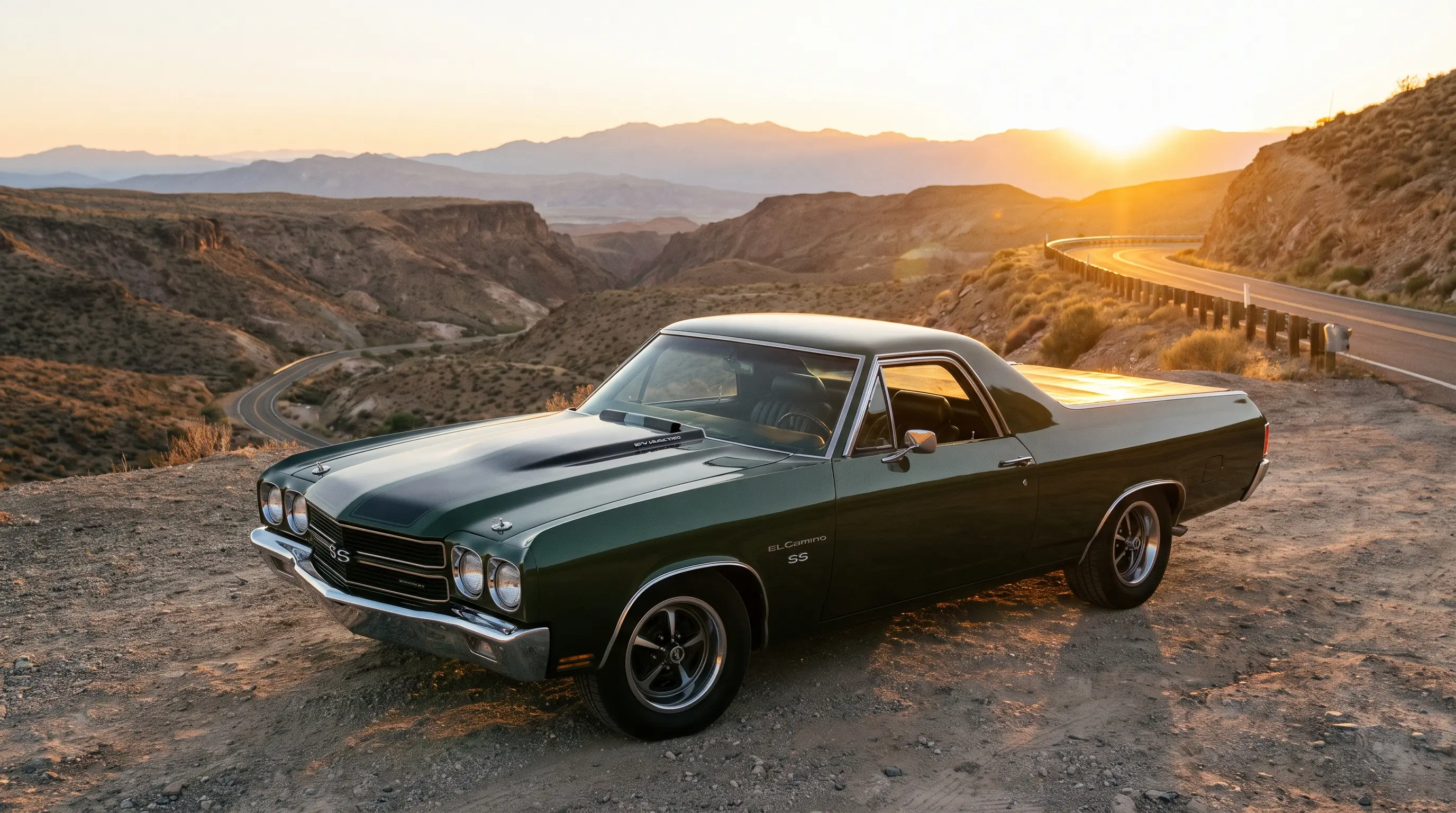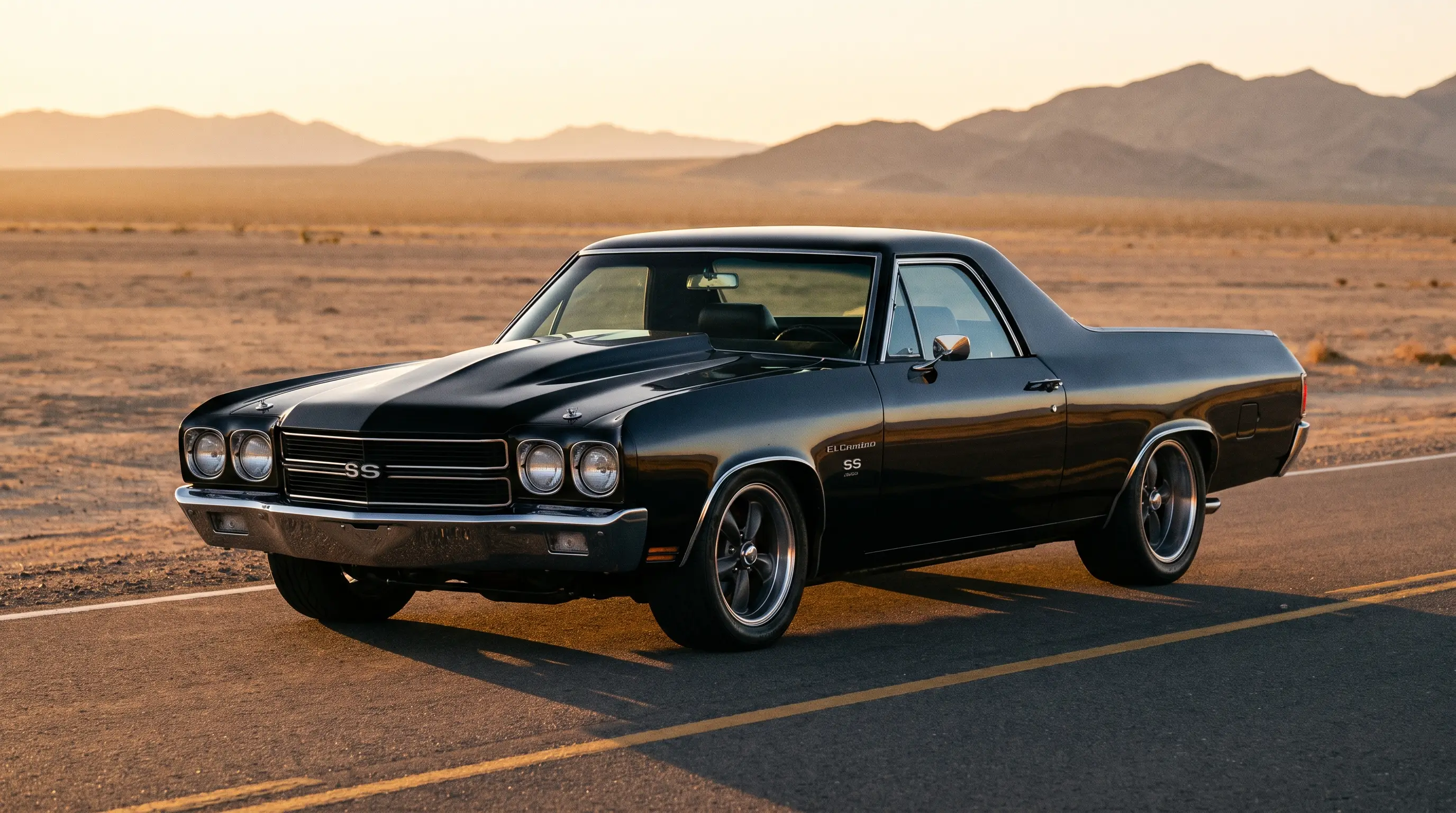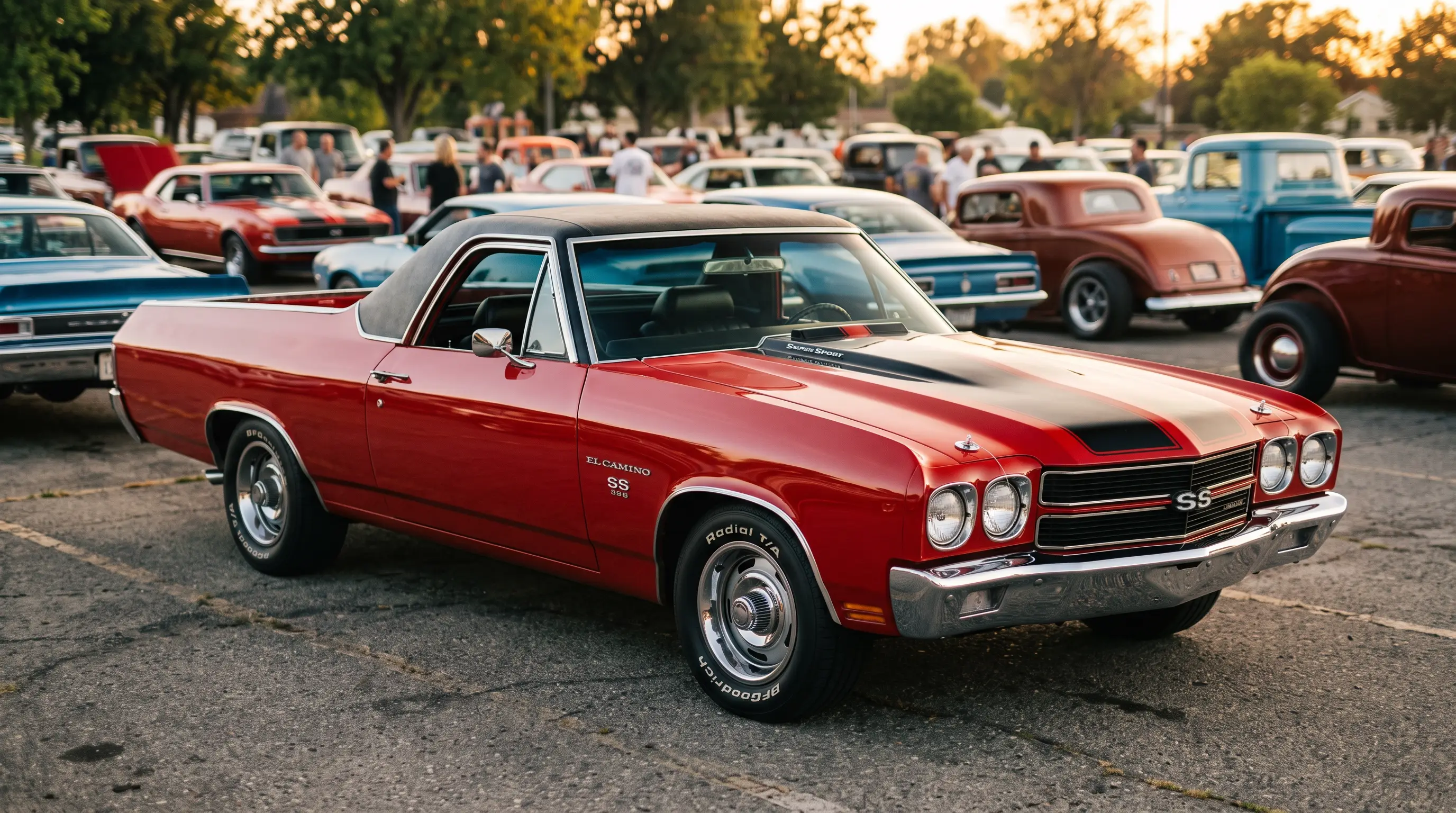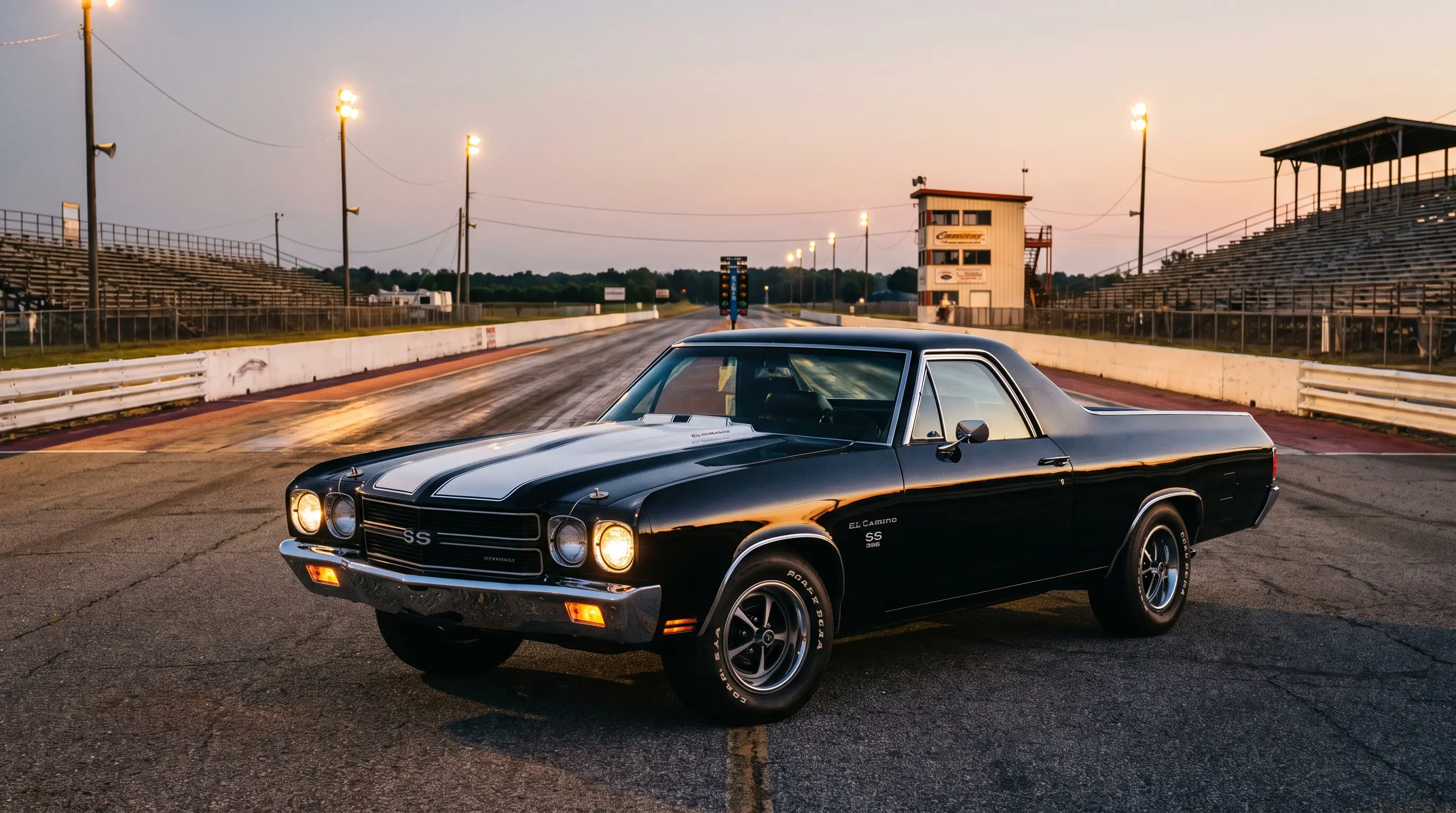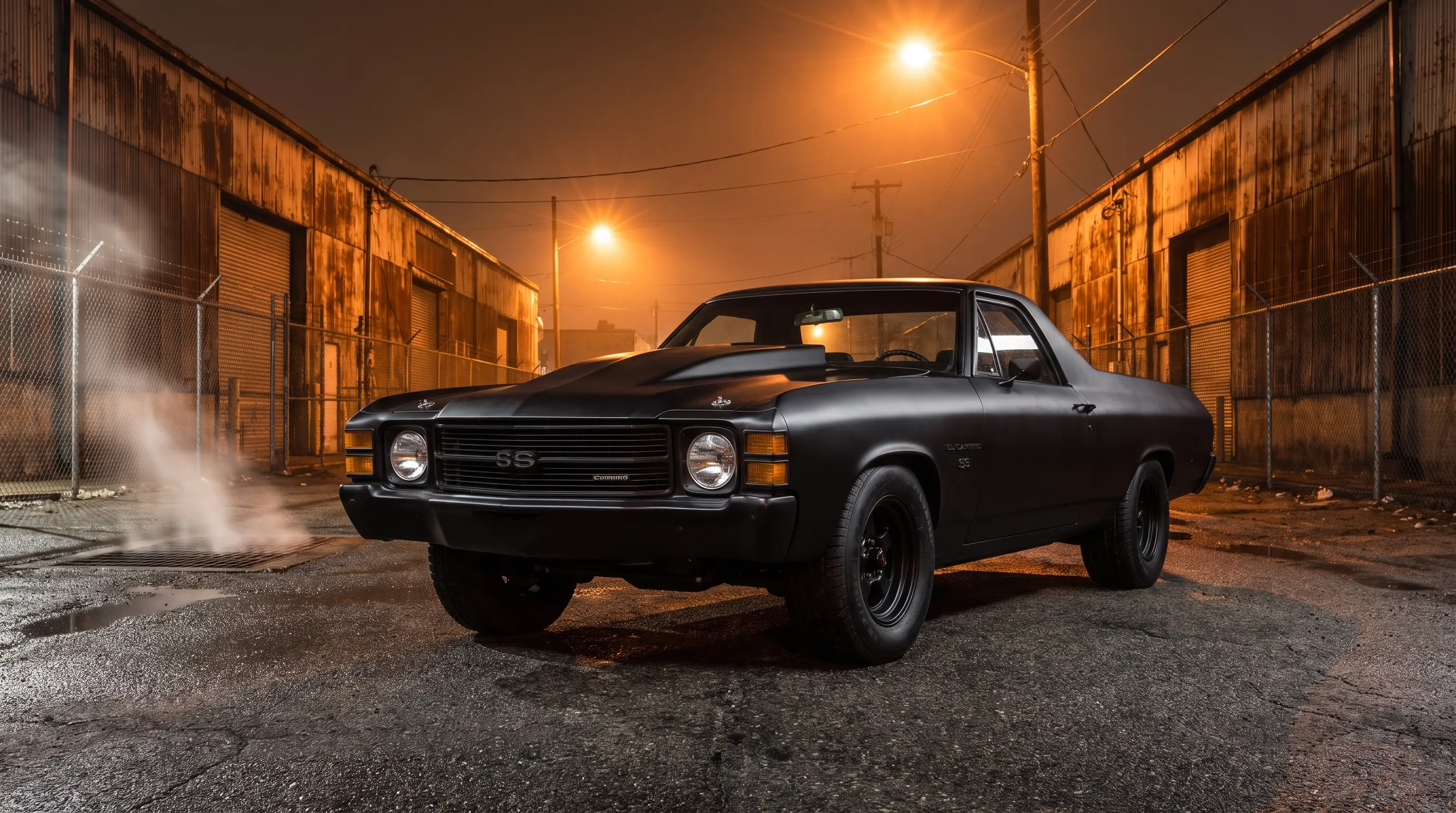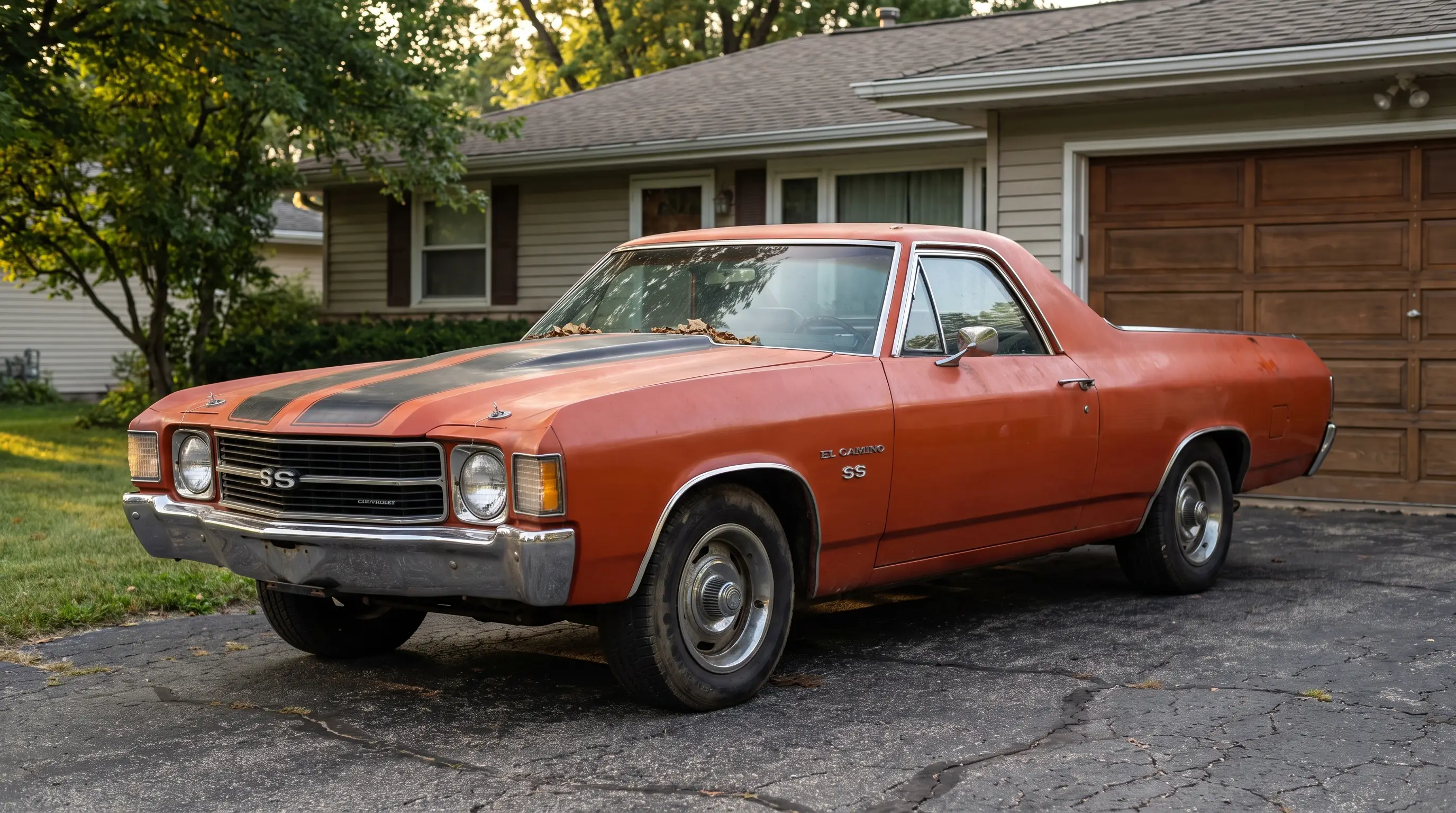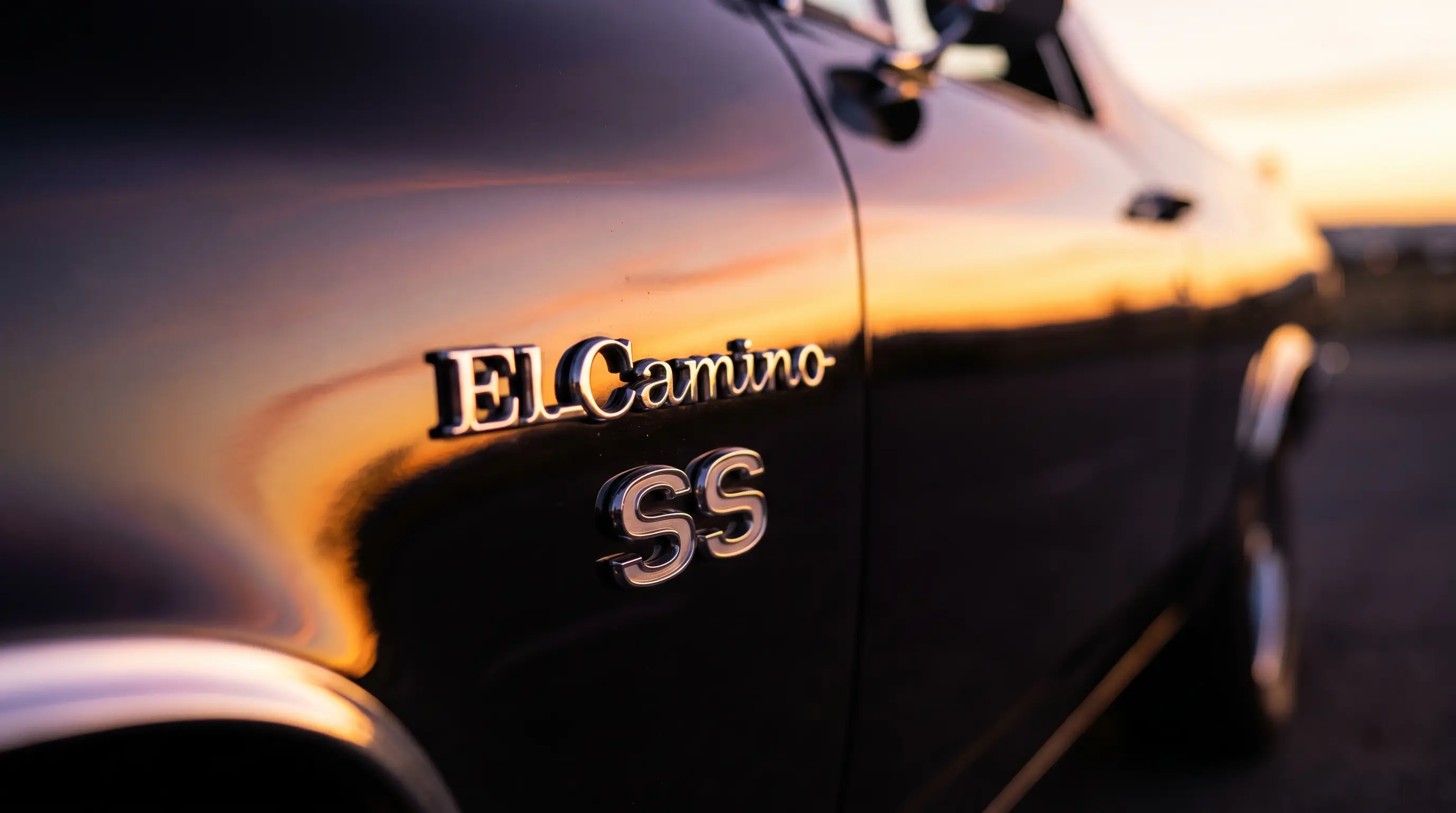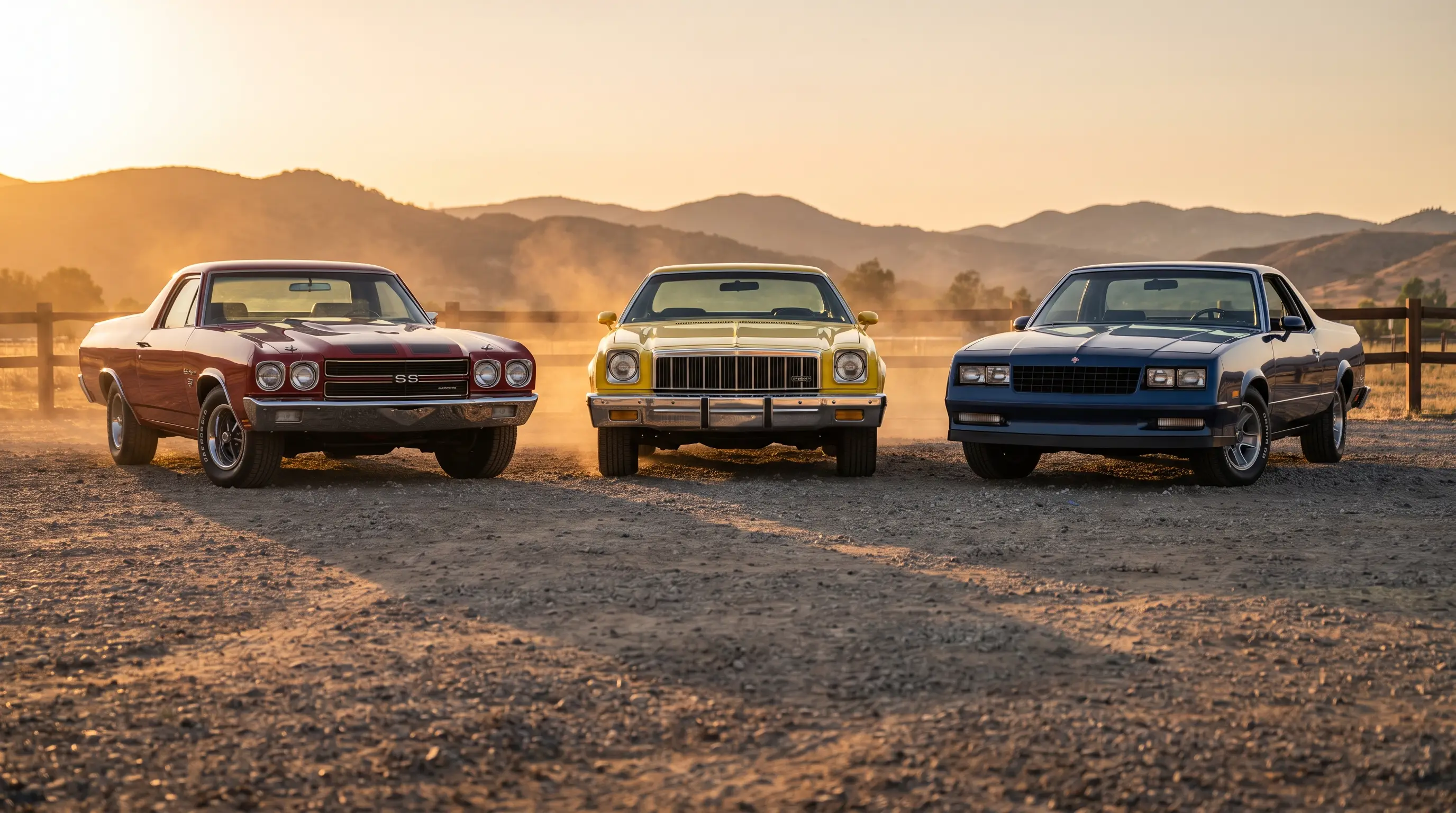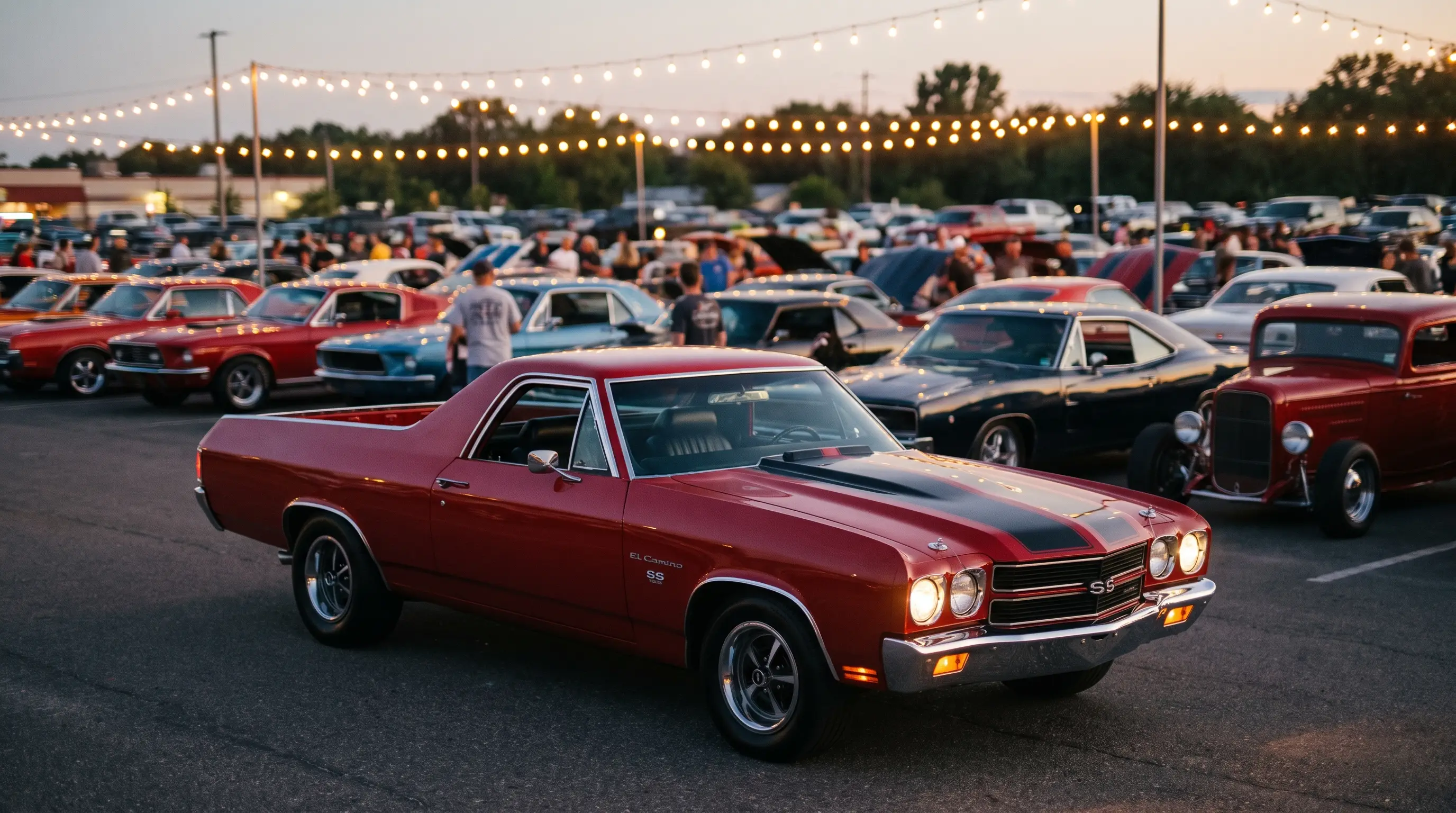
There is a man I know in Fresno who keeps three El Caminos under one carport, and he can tell you the year of each from across the street by the shape of the grille alone. He bought the first one, a 1972, from the original owner's widow. The other two followed the way these things do, one decision at a time, until the carport was full and his wife had opinions. What he chases, he told me once, is not the truck. It is the badge. Two letters that Chevrolet stamped onto the El Camino for the better part of twenty years, and that meant something different in every one of them. The el camino ss is not one car. It is a story told in installments.
To follow it you have to let go of the idea that a Super Sport was a fixed thing. It was a package, a bundle of parts and intentions that Chevrolet assembled differently as the decades turned. In 1968 it meant a big-block and a warning. By 1985 it meant a Monte Carlo nose and a stripe and a V8 that would have embarrassed the 1970 car at a stoplight. Both wore the same two letters. Both were honest to their moment. That is the whole fascination.
1968: the badge arrives with a big-block
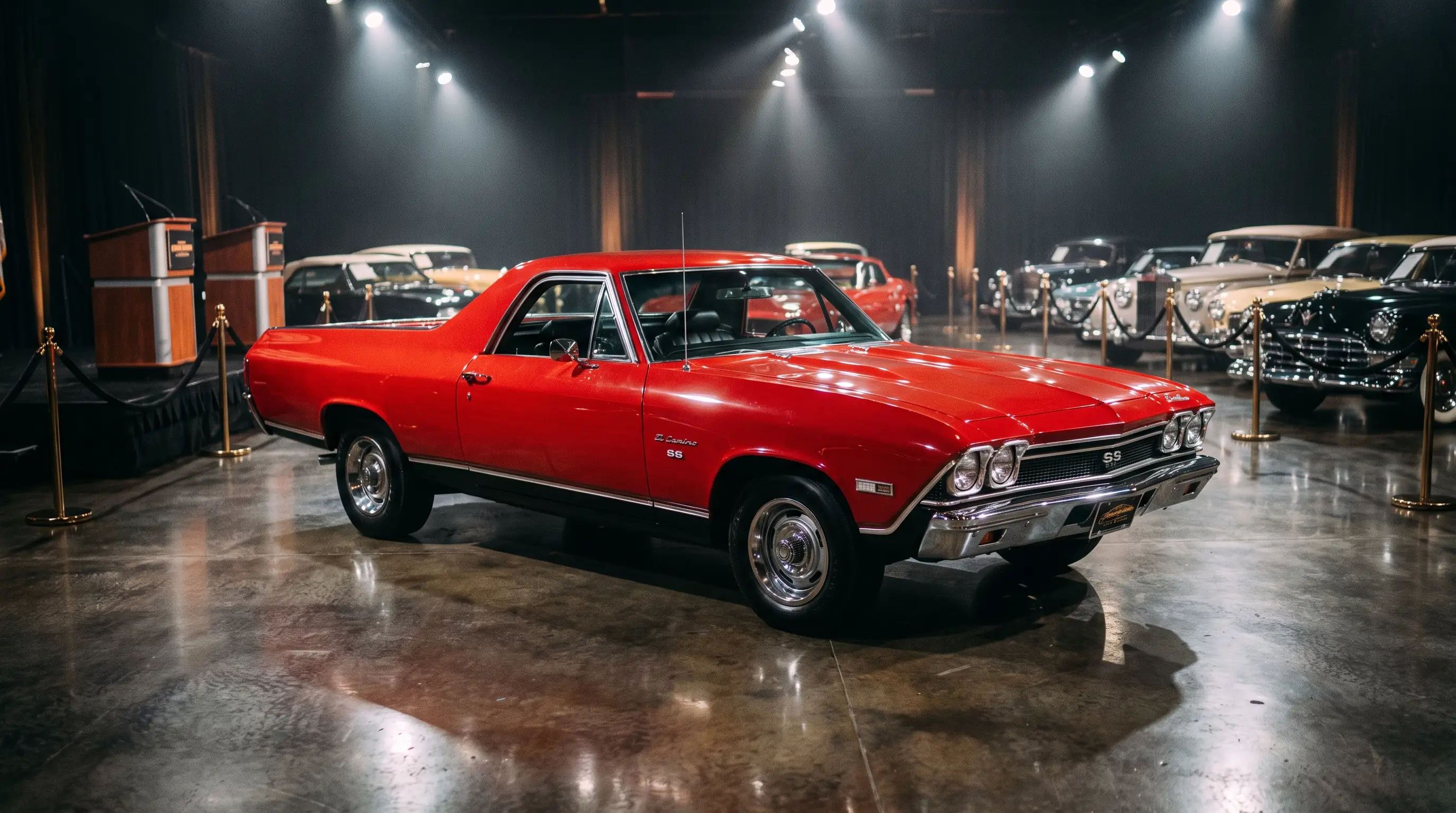
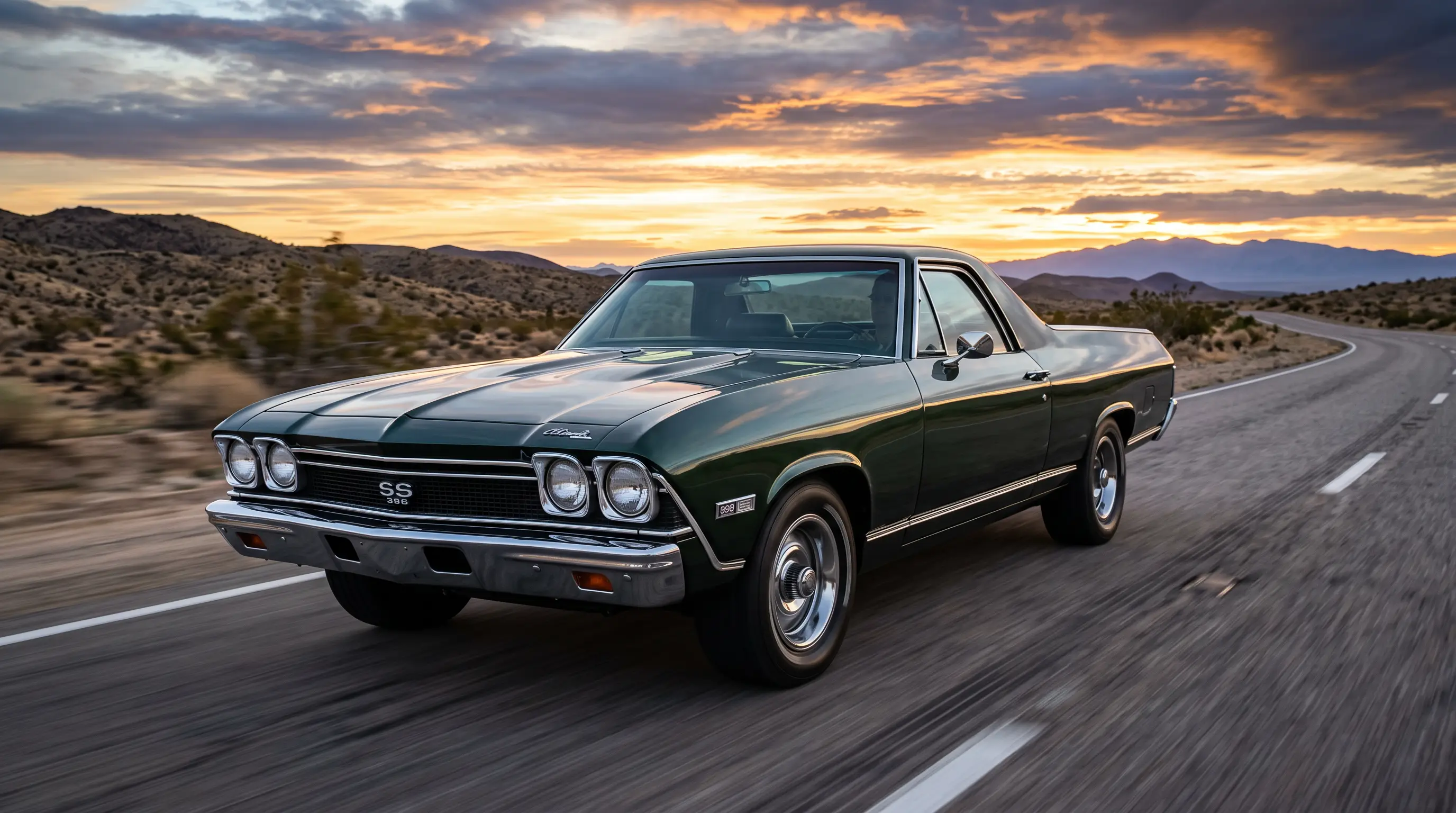
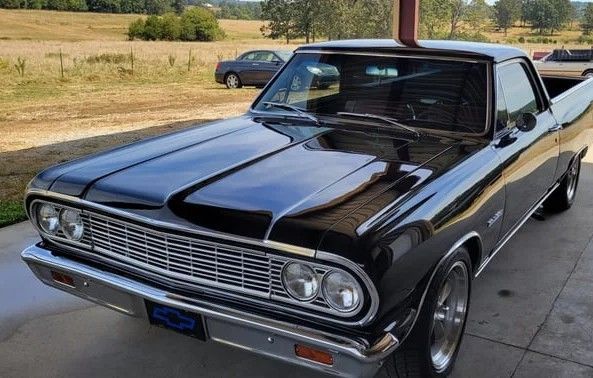
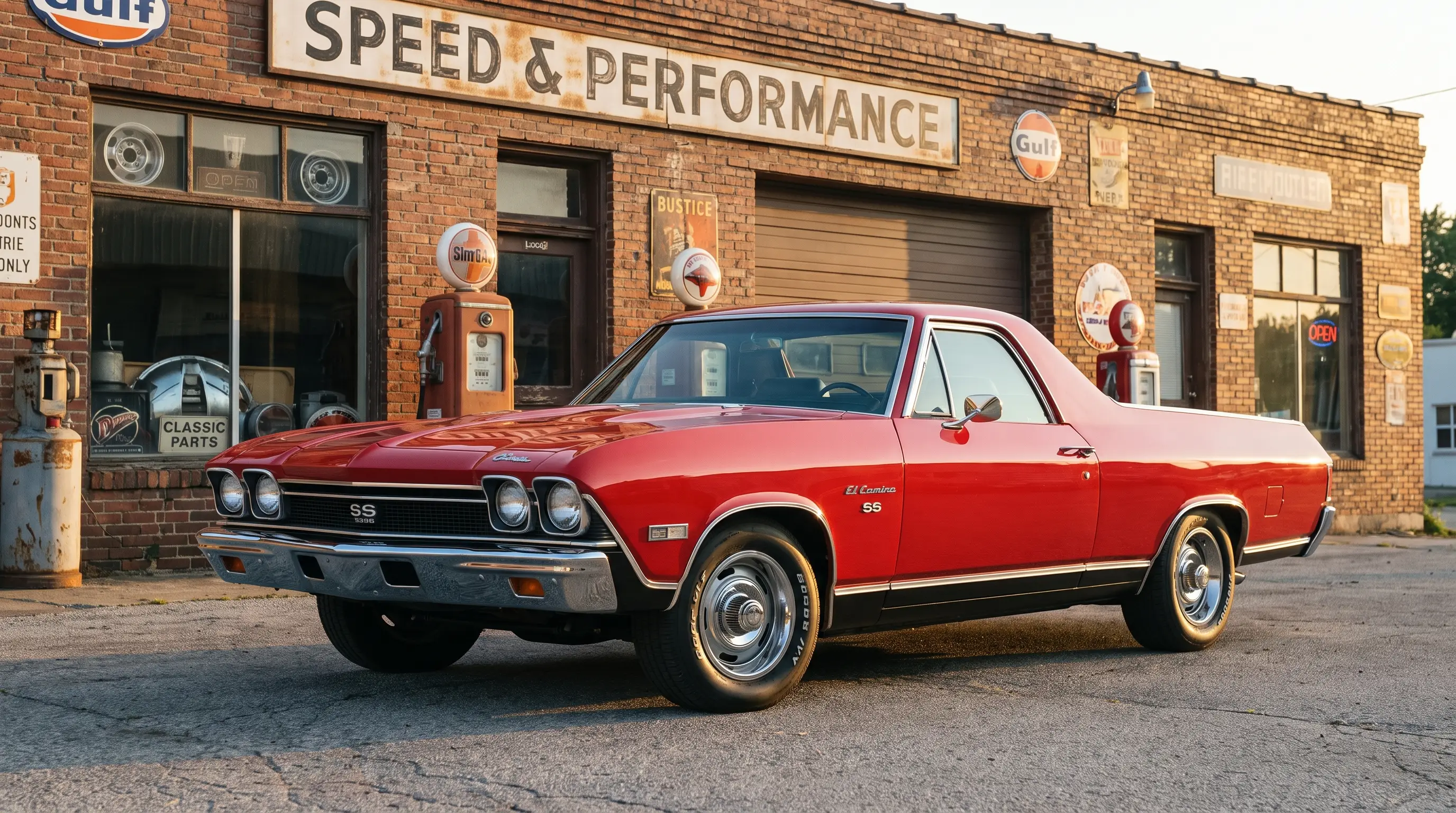
The Super Sport identity landed on the El Camino for 1968, the first year of the second-generation A-body with its longer, sculpted body and the semi-fastback roofline shared with the Chevelle. The SS396 was the headline. Under the hood sat a 396 cubic-inch big-block, offered in a range of outputs, and the package brought the suspension, the trim, and the badges that told the world this was not a fleet truck ordered by a lumber yard.
What made 1968 matter was the statement of intent. Chevrolet had decided the El Camino would run with the muscle cars, not behind them. The buyer who wanted a Chevelle SS but also wanted to haul his motorcycle to the desert now had exactly one vehicle that did both, and it did not apologize for either job. The bed was not a compromise. It was a feature you got for free on top of a genuine performance car.
1970: the year everything peaked
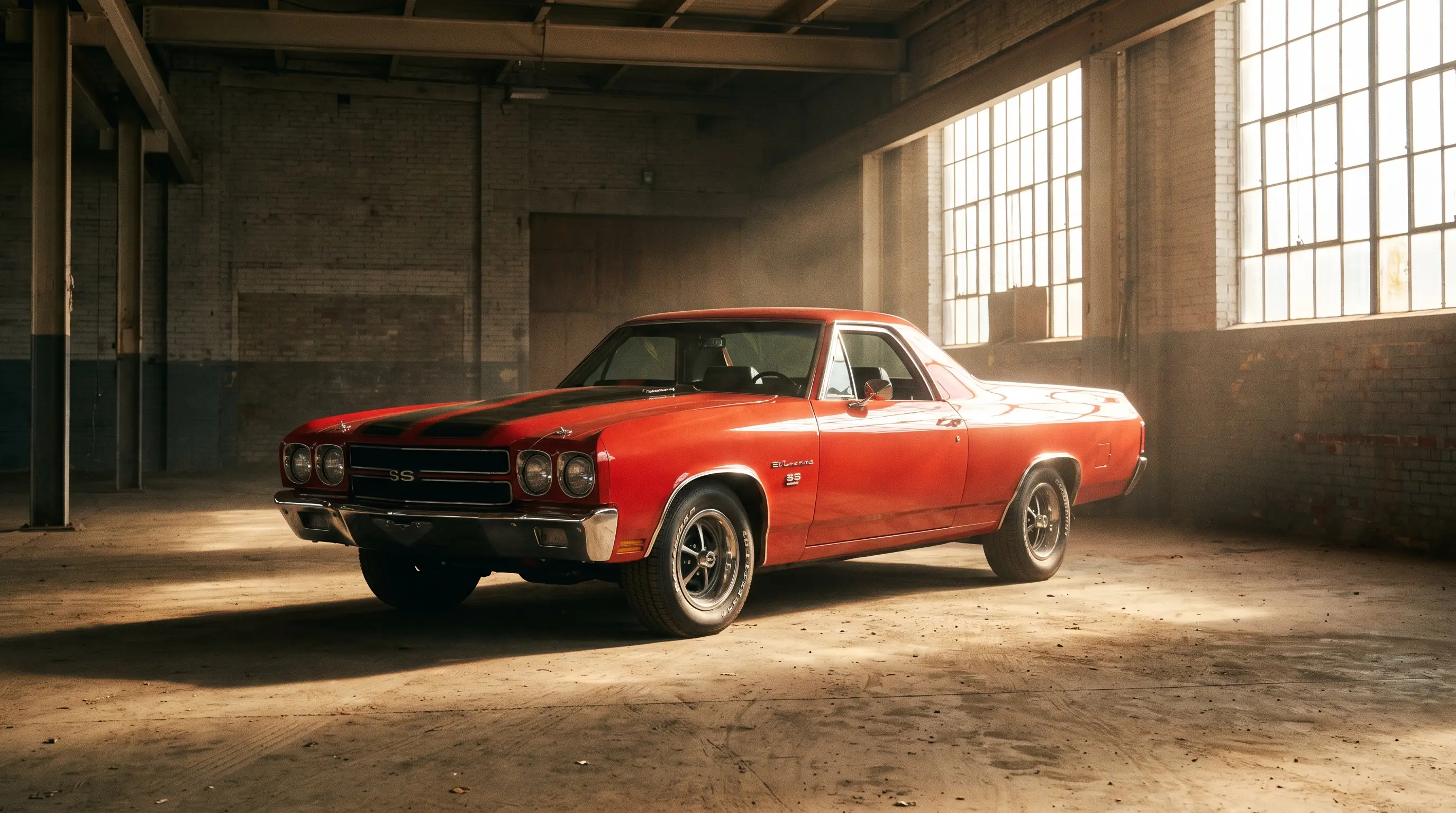
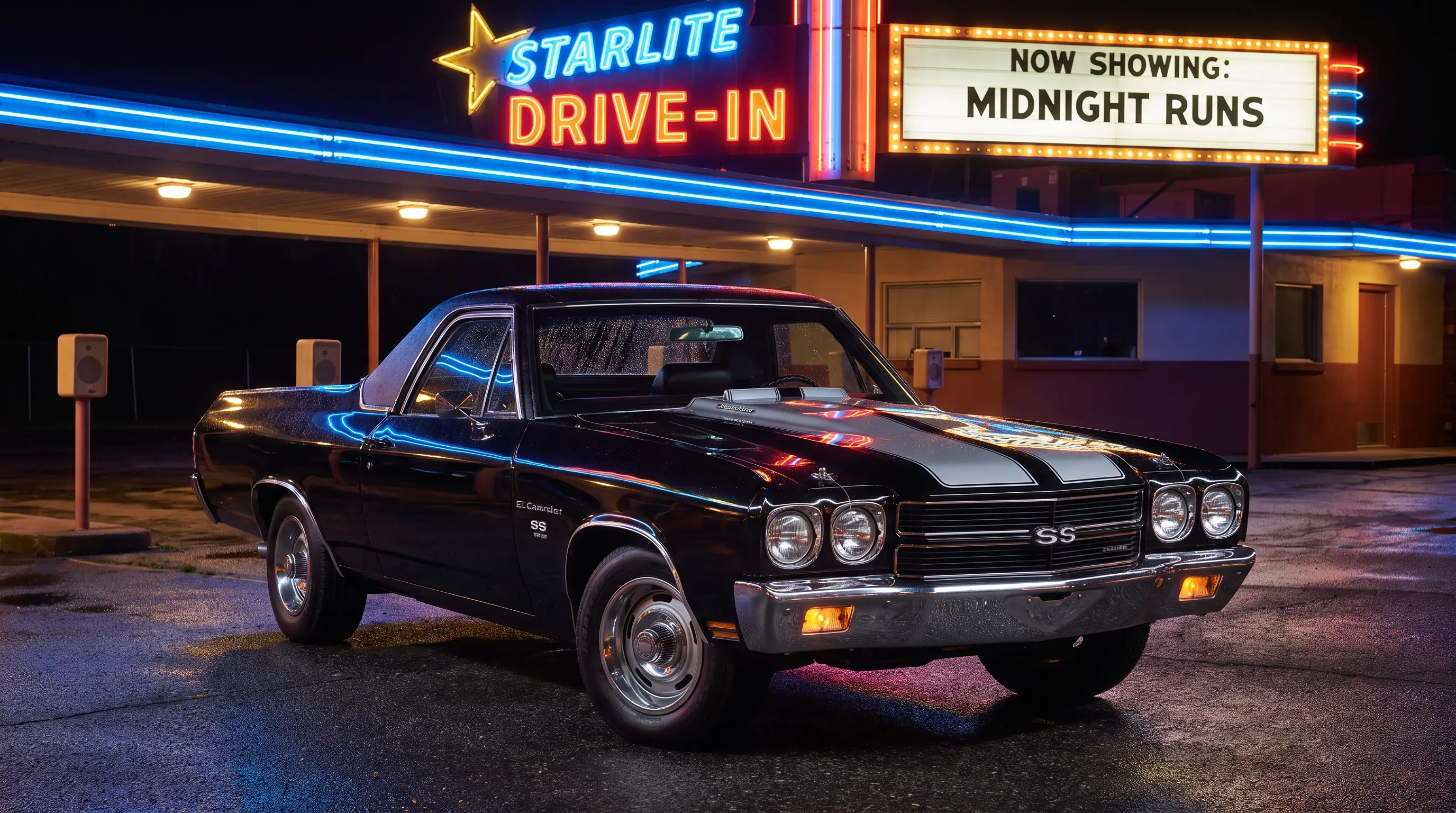
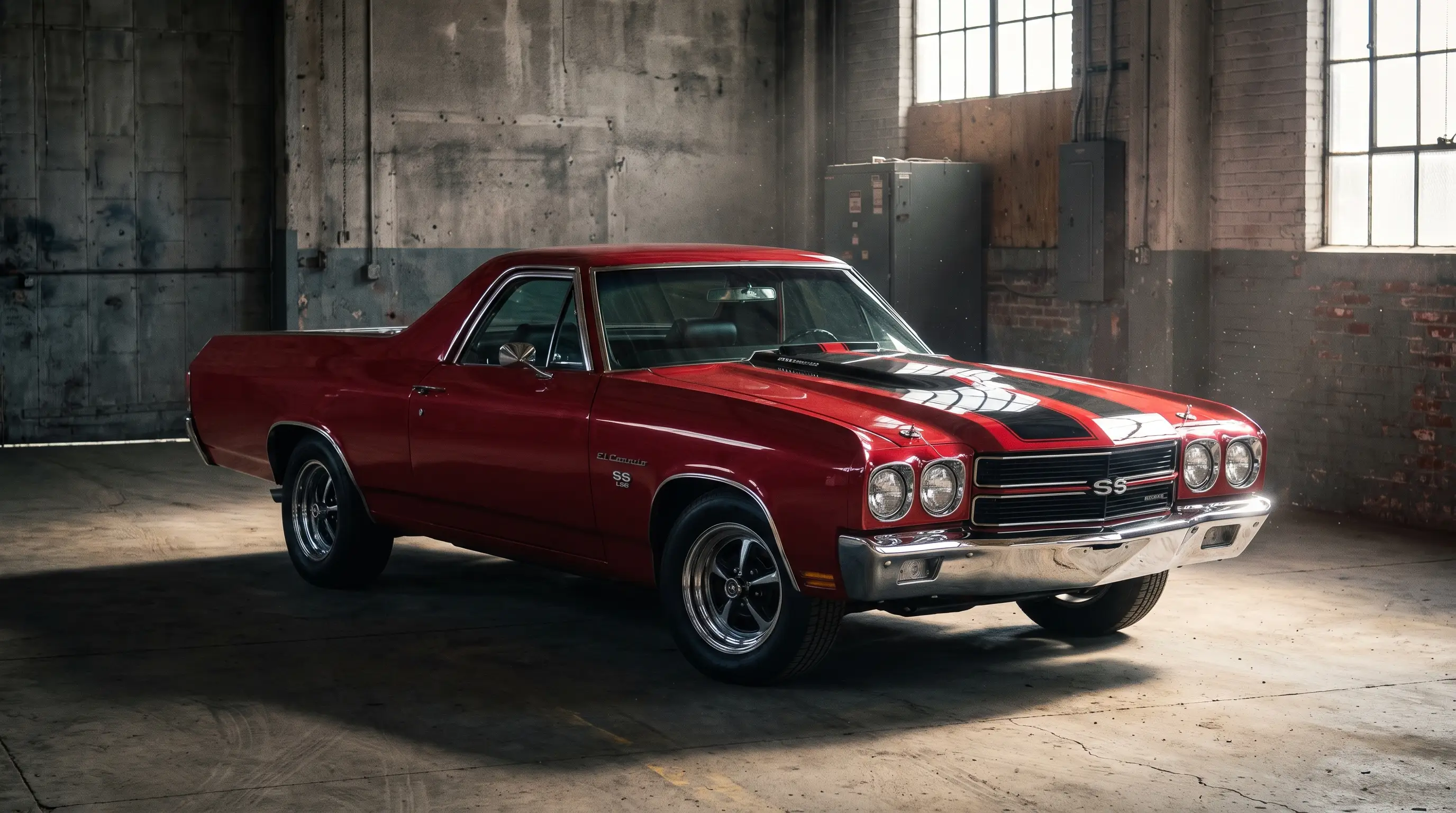
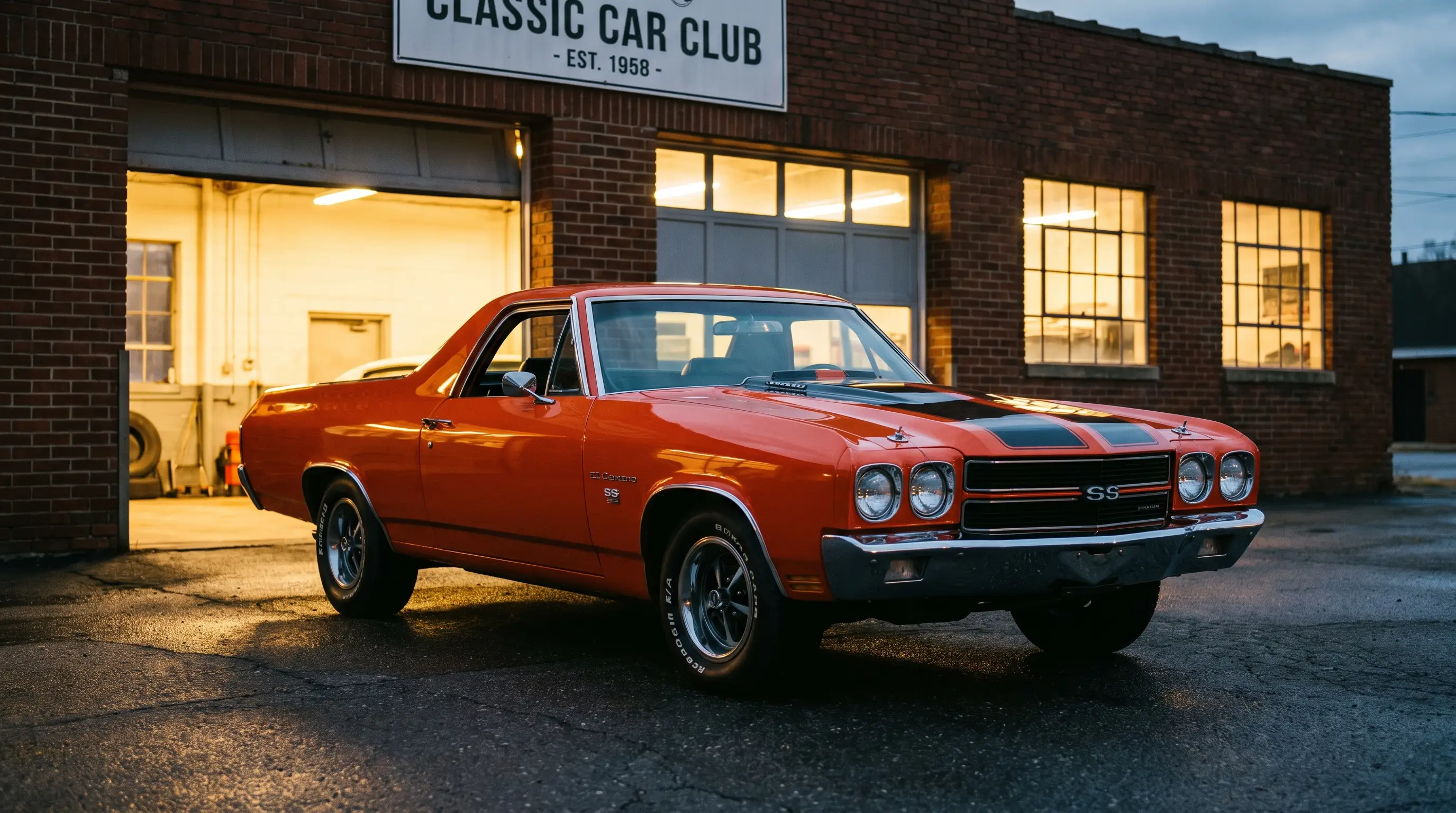
Then came 1970, and the story reached its loudest chapter. Chevrolet stretched the big-block to 454 cubic inches and offered the LS6 version rated at 450 horsepower, gross, at the flywheel. That figure was the highest the model would ever wear. The LS5 454 sat below it at 360, and the 396, now actually 402 cubic inches, stayed on the sheet for buyers who wanted the badge without the top tier.
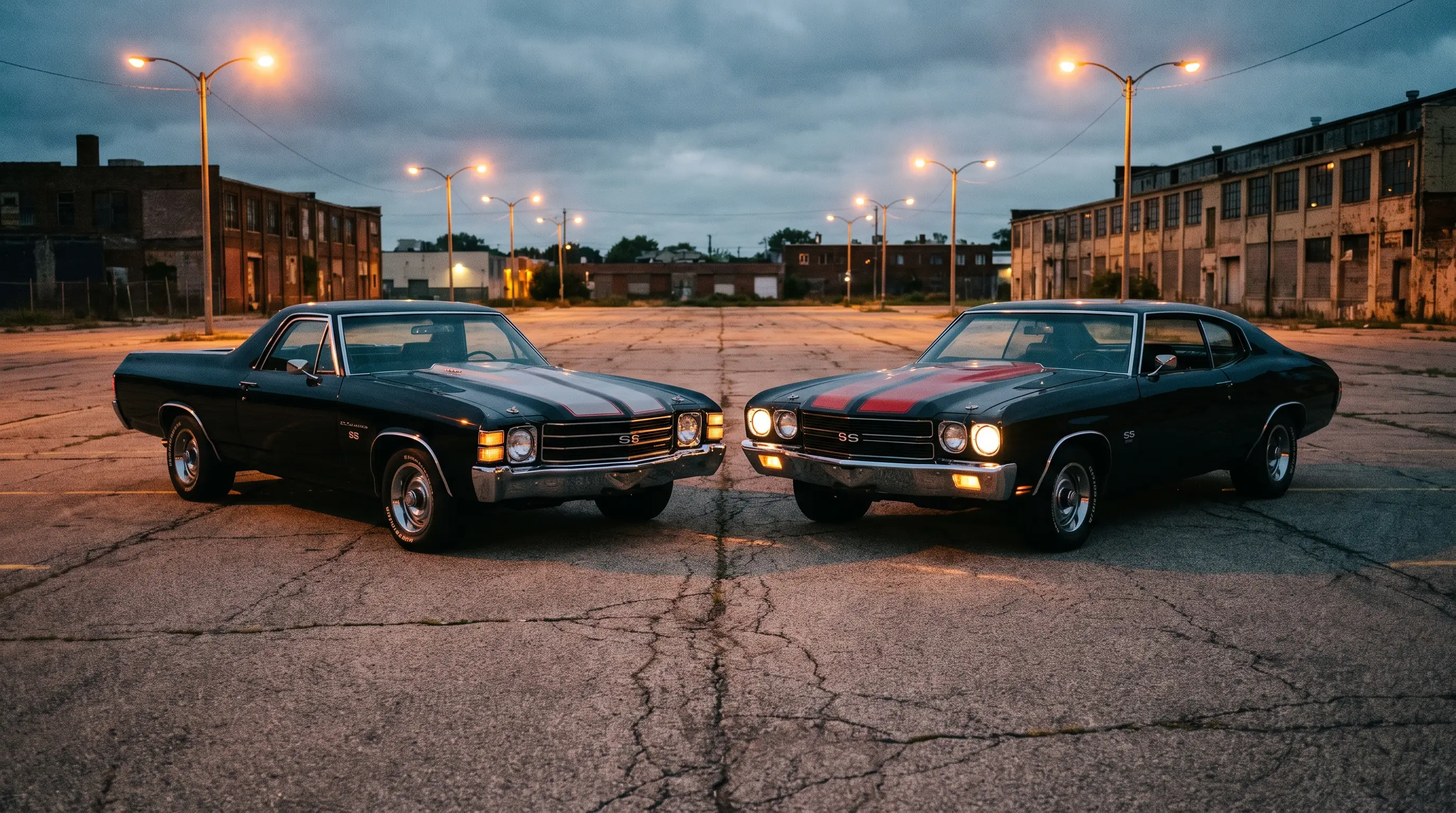
Stand next to a 1970 SS454 with the cowl-induction hood and you understand why collectors treat this one car as the summit of the whole run. The front end was aggressive, the stance was low, and the number under the hood was real. Road tests of the mechanically identical Chevelle put the quarter mile in the mid-13-second range from the factory. This was a pickup, on paper, that would out-drag most of what shared the road with it. For the complete generational arc that led to this moment, the chevrolet el camino story is worth reading start to finish; you can find the chevrolet el camino story laid out generation by generation.
| Era | What the SS meant |
|---|---|
| 1968-1969 | SS396 big-block, performance hardware, muscle-car intent |
| 1970 | SS454 peak, LS6 at 450 hp gross, high-water mark |
| 1971-1972 | Lower compression, falling ratings, net measurement arrives |
| 1973-1977 | Colonnade body, SS as trim and appearance more than muscle |
| 1978-1987 | Downsized G-body, Monte Carlo nose, small V8, style-led SS |
The retreat: 1971 and 1972
Every good story has the fall after the peak, and for the SS it came fast. For 1971 Chevrolet dropped compression ratios across the engine range to run on lower-octane, lead-reduced fuel, and horsepower ratings fell with them. For 1972 the industry switched to SAE net measurement, which counted power with the accessories and full exhaust attached, the way a driver actually experienced it. The numbers on the brochure collapsed even where the engine was barely changed.
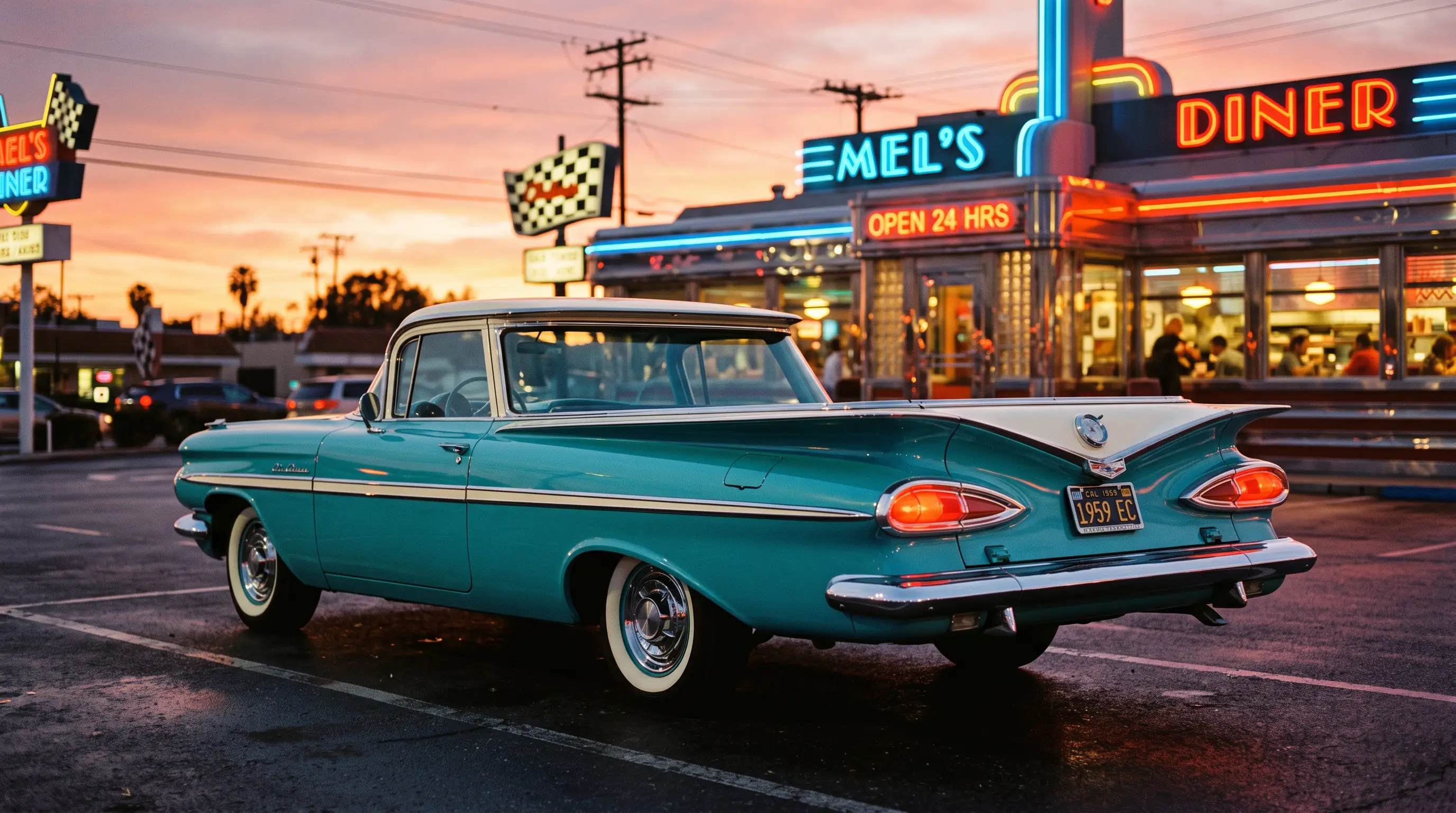
This is where enthusiasts argue, and my Fresno friend argues loudest, because his 1972 is the one he loves best. The retreat was real, but the 1972 SS was still a genuine performance package, still available with a big-block, and it was the last of the era before the body changed entirely. He calls it the honest one. It never pretended to be a 1970. It just did what it could in the world it was born into. If you want to sit with that argument yourself, the 1972 model is another one worth knowing alongside the very first full-size cars that started the whole idea.
Colonnade years: the badge becomes a look
In 1973 the A-body was replaced by the Colonnade styling, heavier, wider, with fixed rear quarter windows and the crash-era bumpers that the whole industry wore. The SS survived into this generation, but its character shifted. It leaned toward appearance and trim, stripes and badges and a specific wheel, more than toward a headline engine. The muscle era was over industry-wide, and the El Camino SS reflected that as honestly as everything else Detroit sold in the mid-1970s.
It would be easy to write these years off, and plenty of people do. I think that is a mistake. The Colonnade El Caminos were comfortable, they looked substantial, and they carried the SS identity through the lean years so that it survived to be reinvented. A badge that quits in 1973 never comes back. This one did not quit.
The G-body reinvention: 1978 to 1987
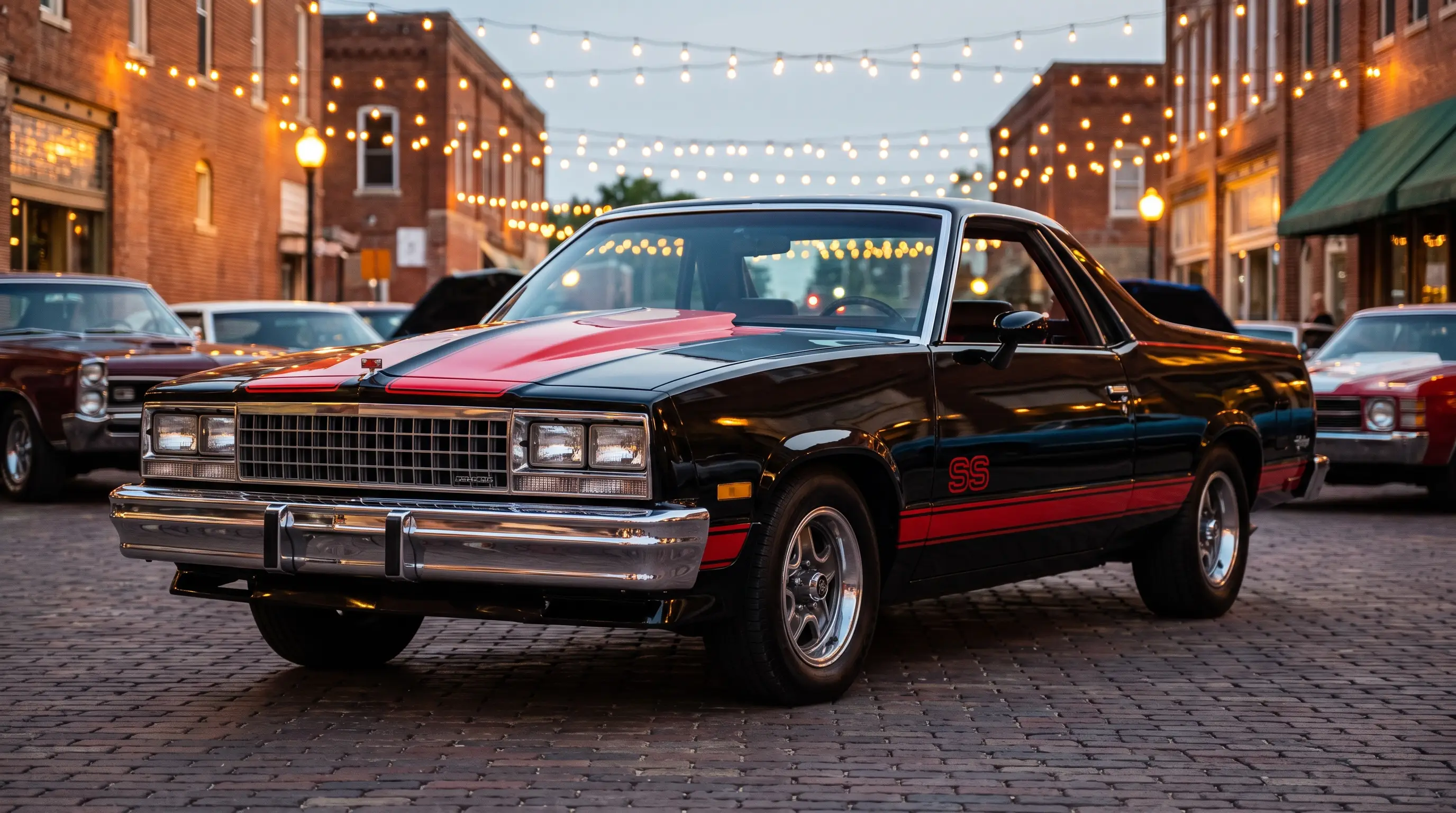
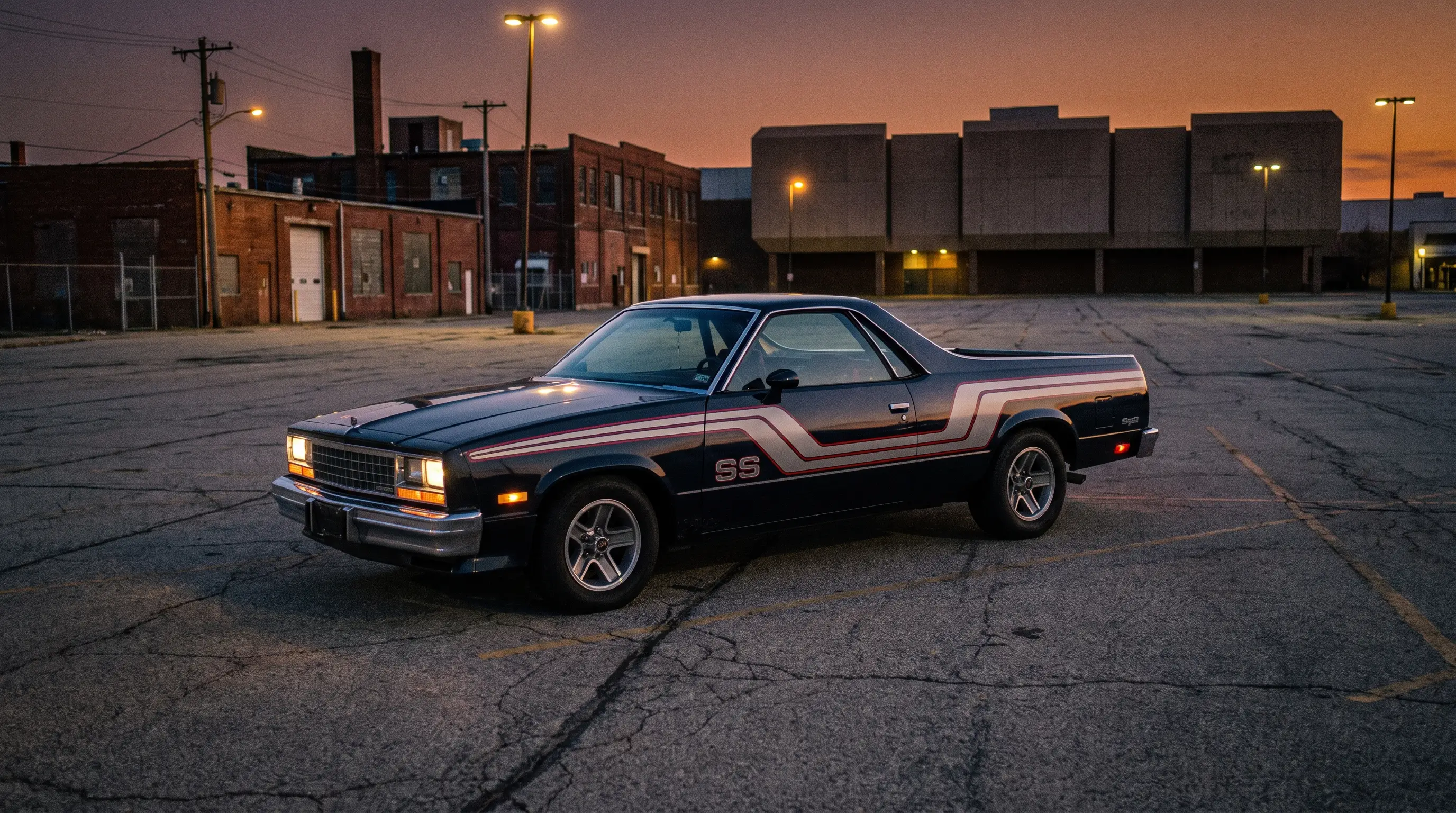
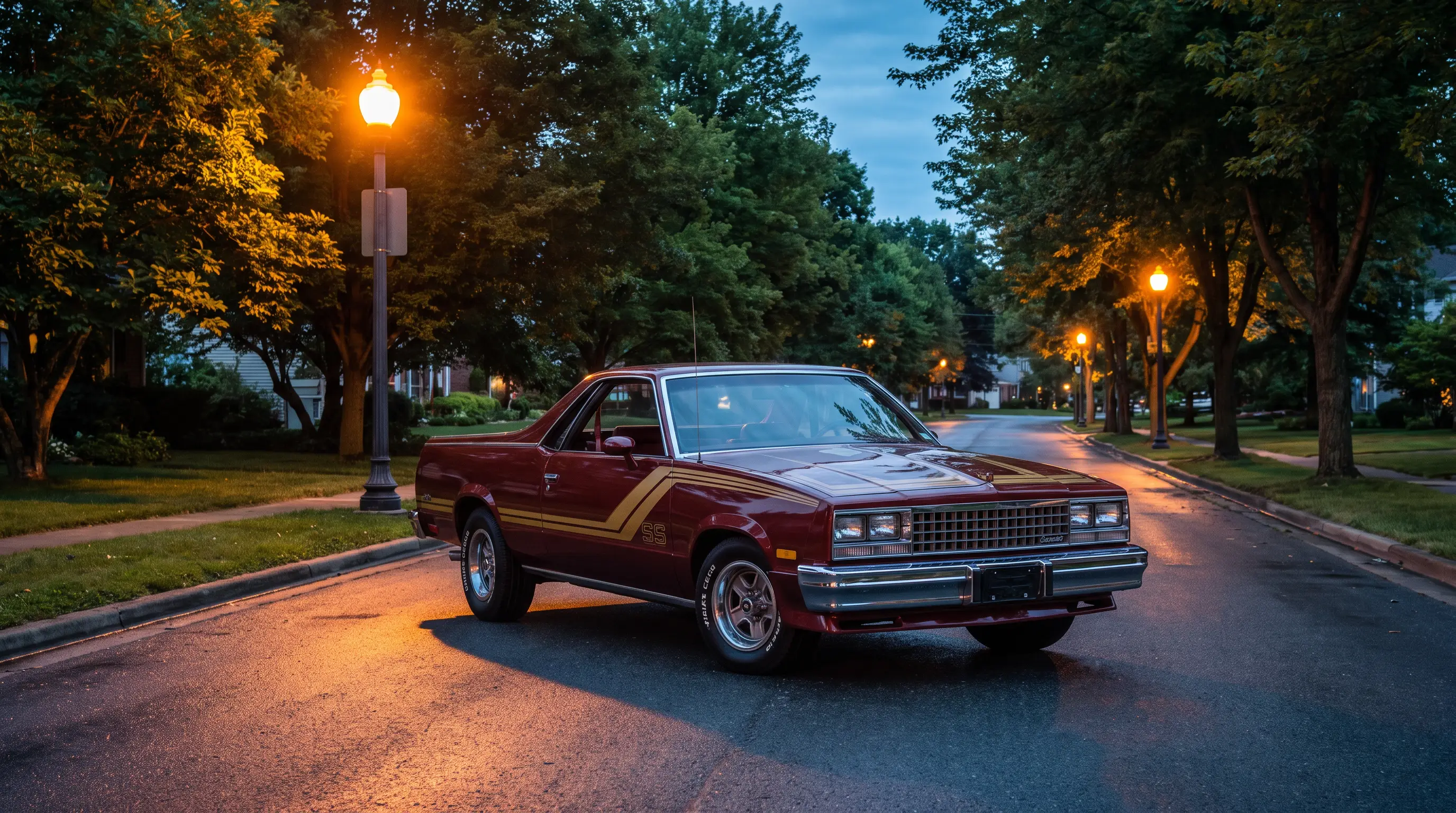
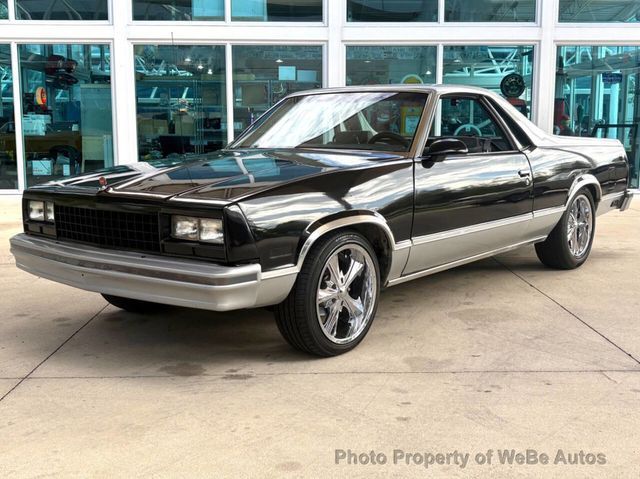
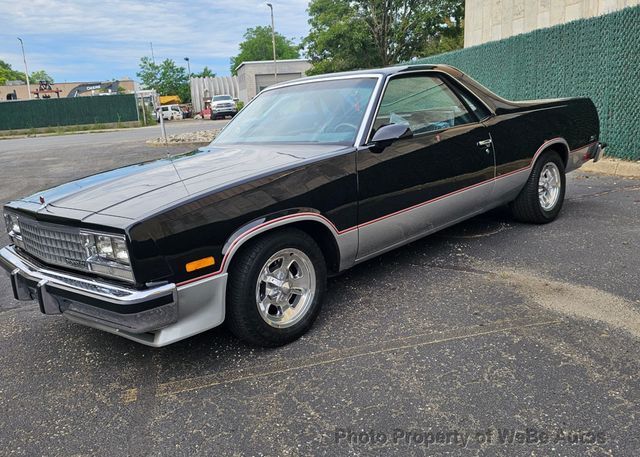
The final act surprised everyone. For 1978 the El Camino was downsized onto the G-body platform, lighter and tidier than the bloated Colonnade cars. A few years into that generation, the SS returned with a look borrowed from its sibling, wearing the front-end sheet metal of the Monte Carlo, with a stripe package, specific wheels, and a small-block V8 that made a fraction of the 1970 car's rated power.
On paper that sounds like a betrayal. In person it was something else. The G-body SS was a genuinely good-looking machine, low and clean, and it arrived as the muscle-car nostalgia wave was building. There were special versions too, including the Choo Choo Customs conversions that added a distinctive nose treatment and made those cars their own collectible subcategory. Production wound down through the mid-1980s, and the last El Caminos were built for the 1987 model year, assembled in Mexico as the platform reached the end of its life.
So the badge that began as a 450-horsepower threat ended as a stylish cruiser. Both were true. That is the thing people miss when they only chase the 1970 car. The SS story is the story of American performance itself across two decades, told through one improbable vehicle that was half car and half truck and never once ordinary.
"My friend in Fresno was right about the badge. You do not collect the El Camino SS. You collect the argument. Every year of it is a different answer to the same question, which is what a fast car should be when the rules keep changing. The 1970 answers with a number. The 1985 answers with a shape. Park them side by side and you are looking at twenty years of Detroit deciding what it could still get away with."
- Patrick Walsh
Why the badge stuck in the culture
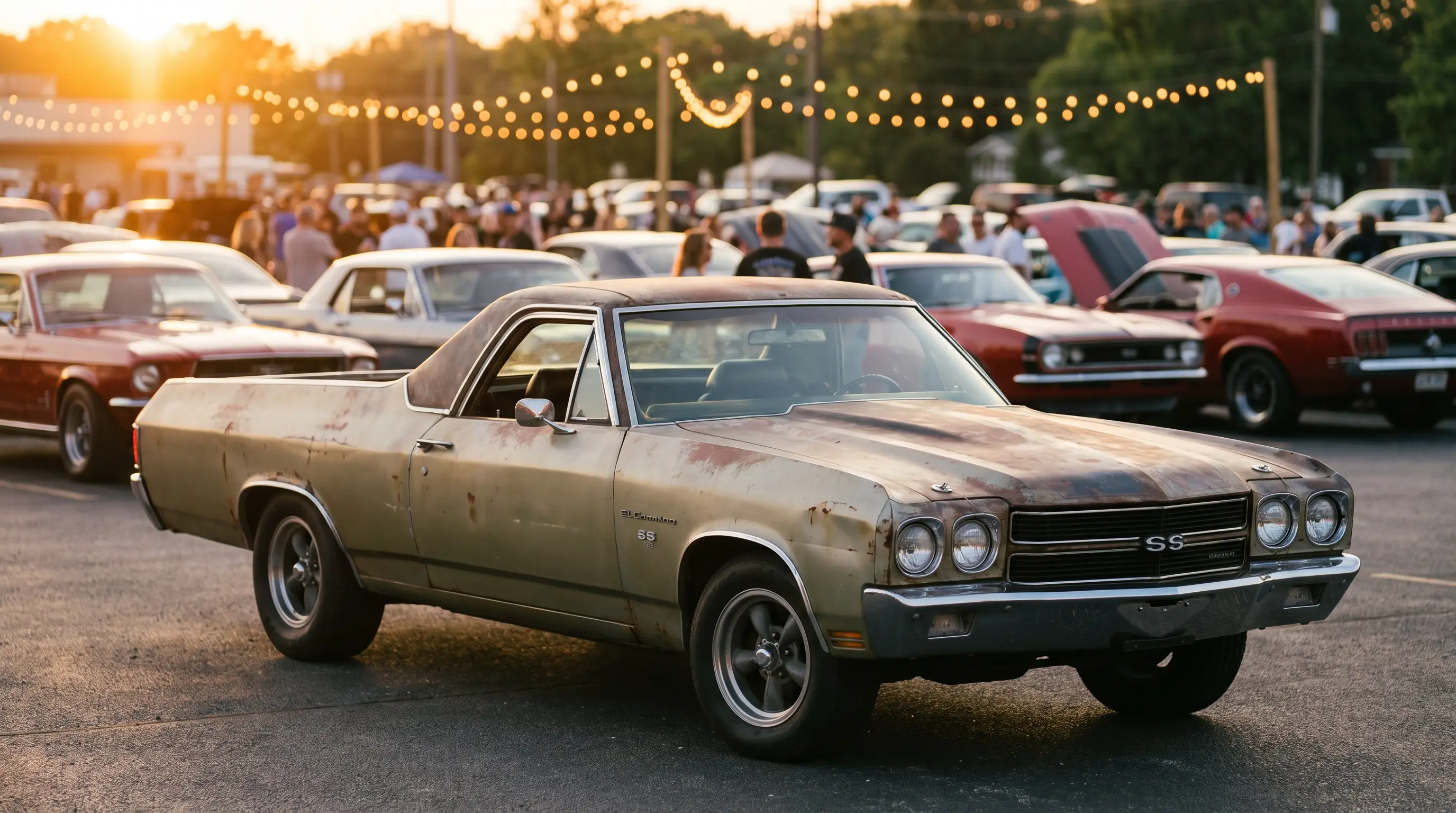
Part of what my friend in Fresno chases is not on any spec sheet. The El Camino SS occupies a strange, affectionate corner of American car culture, the vehicle people love partly because it refuses to make sense. It is a pickup that ran with muscle cars. It is a car you could haul lumber in. That contradiction is the joke and the appeal at once, and it has kept the SS badge alive in the imagination long after the factory stopped stamping it.
You see it in how people talk about these cars. Nobody is neutral about an El Camino. They either think it is the most sensible performance vehicle ever built, one machine that does two jobs, or they think it is a punchline, and the funny thing is both camps end up at the same shows admiring the same cars. The SS versions sit at the center of that conversation because they are the ones that back up the swagger. A base El Camino is a curiosity. An SS is a statement.
The badge also carried the model through decades of shifting taste. When big-blocks were king, the SS was a big-block. When the muscle era died, the SS became a look that kept the name respectable. When nostalgia arrived, the SS was the version everyone suddenly wanted. Two letters adapted to four decades of American ideas about what a fast, useful, slightly rebellious vehicle should be. That adaptability is why the story is still being told, and still being argued about, in carports like the one in Fresno.
Buying into the story today
If the SS badge is what draws you, know which chapter you are buying. A documented 1970 SS454, especially an LS6, sits at the top of the market and asks top money. The 1968 and 1969 SS396 cars trade strongly too, on the strength of the big-block and the first-year appeal. The Colonnade SS cars are the value entry into the name, and the G-body SS cars have their own following that has grown steadily as the people who wanted one in high school reach the age where they can finally have it.
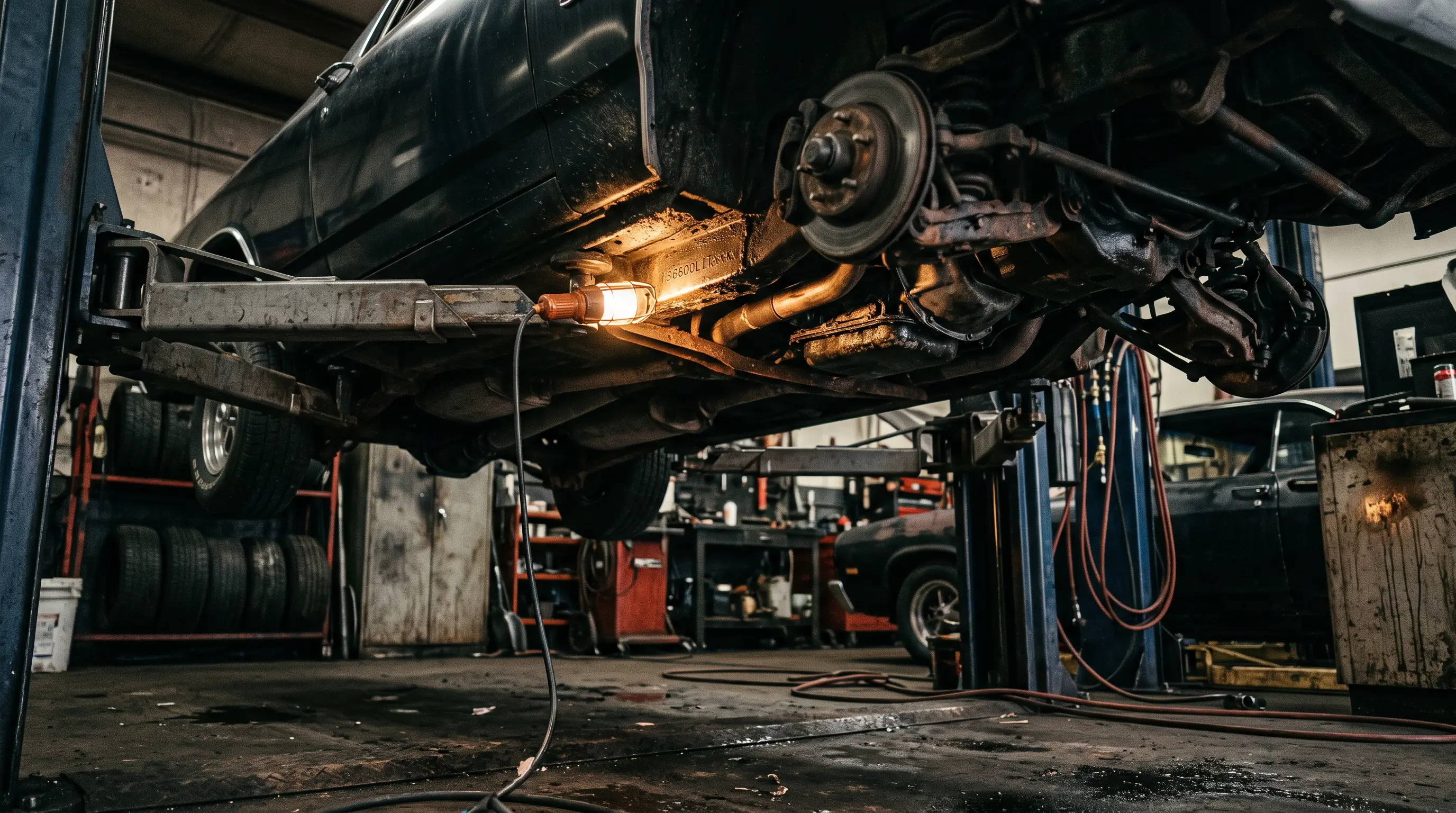
The constant across all of them is documentation. Because the SS was an option package and not a separate model, the badge alone has never proven what a car left the factory with. That is true of the 1970 LS6 and it is true of the 1985 G-body. Paperwork, casting dates, build records, and honest history separate the real cars from the dressed-up ones, and the price gap between those two categories is the widest in the whole hobby.
My advice, for whatever it is worth from someone who has fallen for the story more than once, is to buy the chapter that makes you happy rather than the one the market tells you to want. The 1970 is the trophy, but a clean Colonnade SS or a sharp G-body will give you the same grin in the driveway for a fraction of the outlay, and the same two letters on the fender. The badge does not care what you paid. It just tells everyone at the show that you understood the joke.
When you are ready to see what is actually out there across all the eras, browse classic El Camino listings and read them against this timeline. The good sellers tell you the year, the engine, and the story. The rest just tell you it says SS on the fender, which, by now, you know is where the real questions begin rather than end.