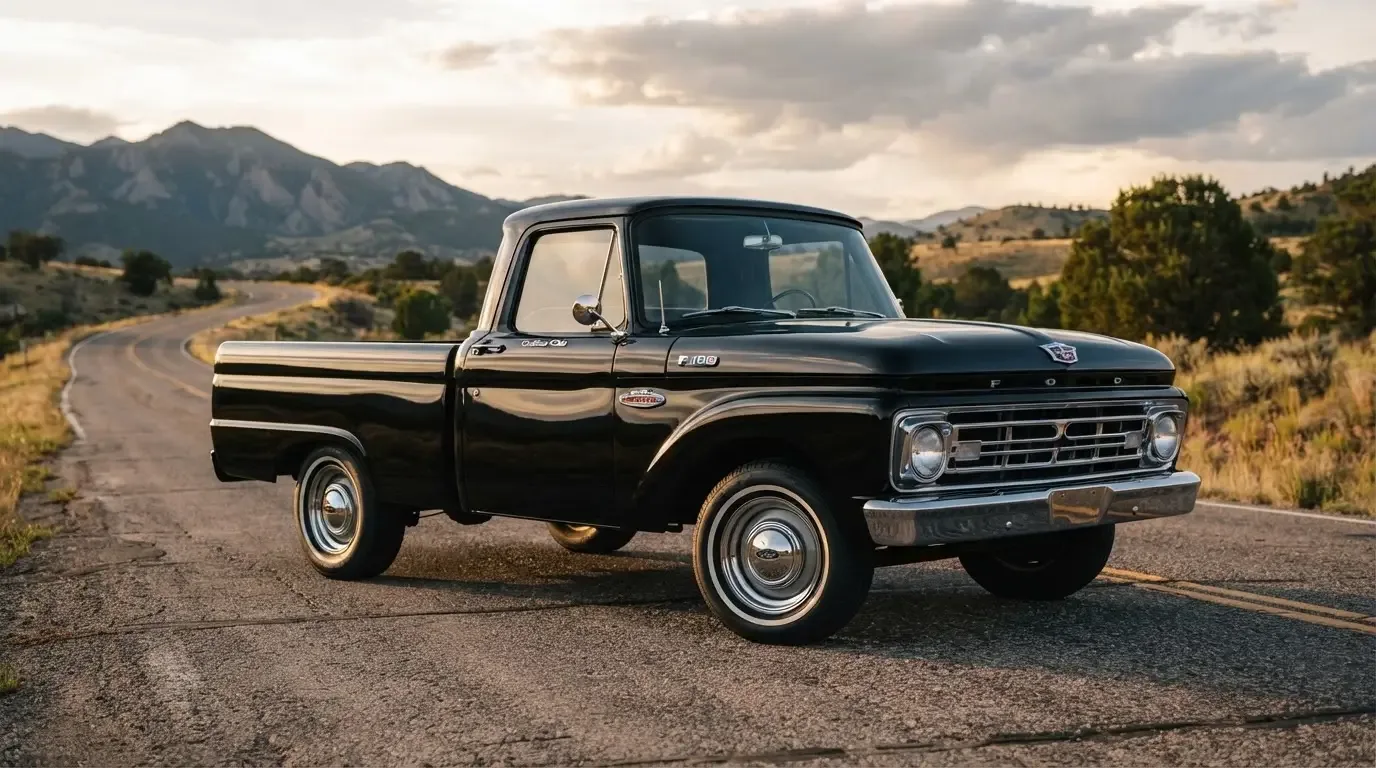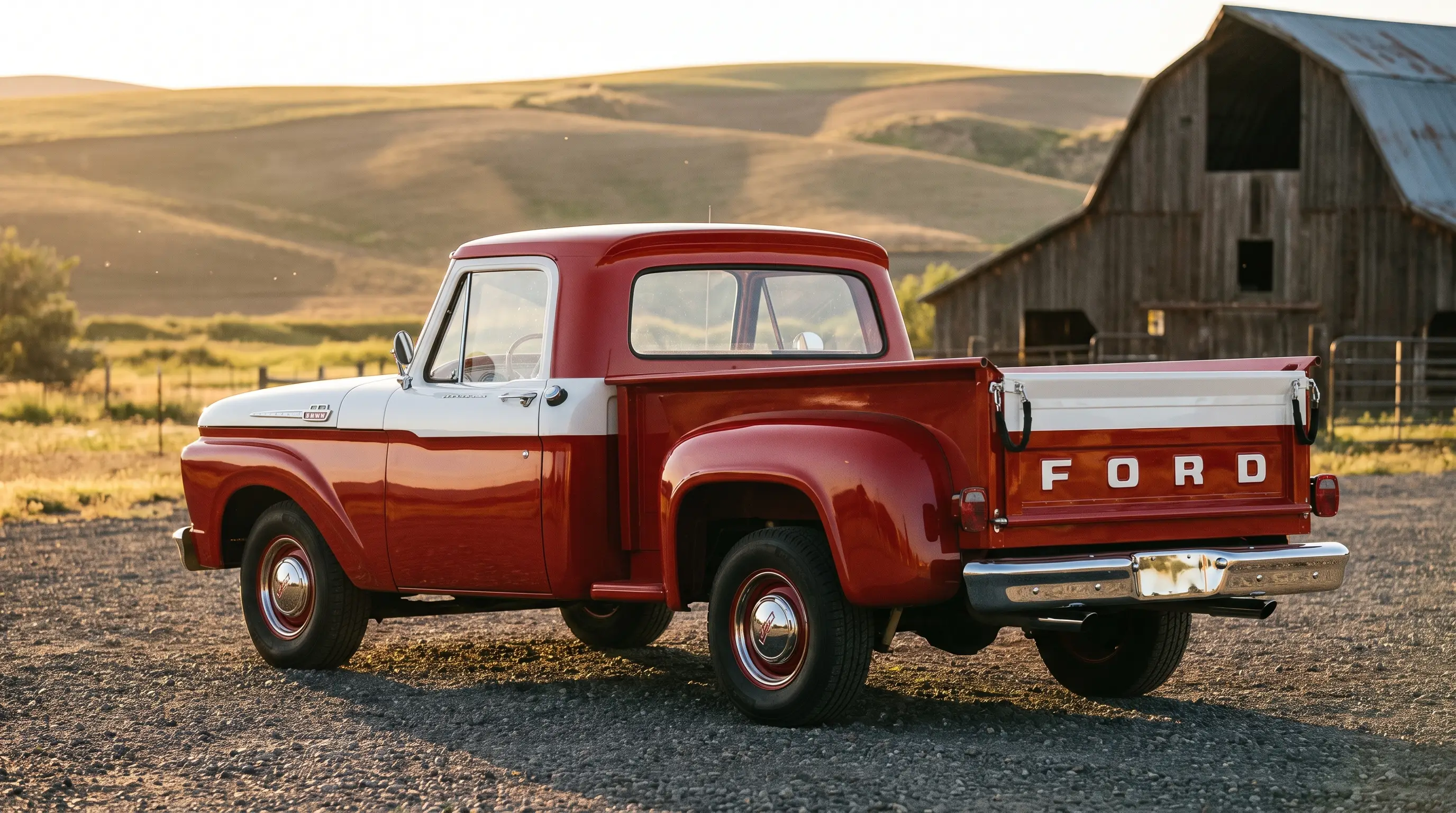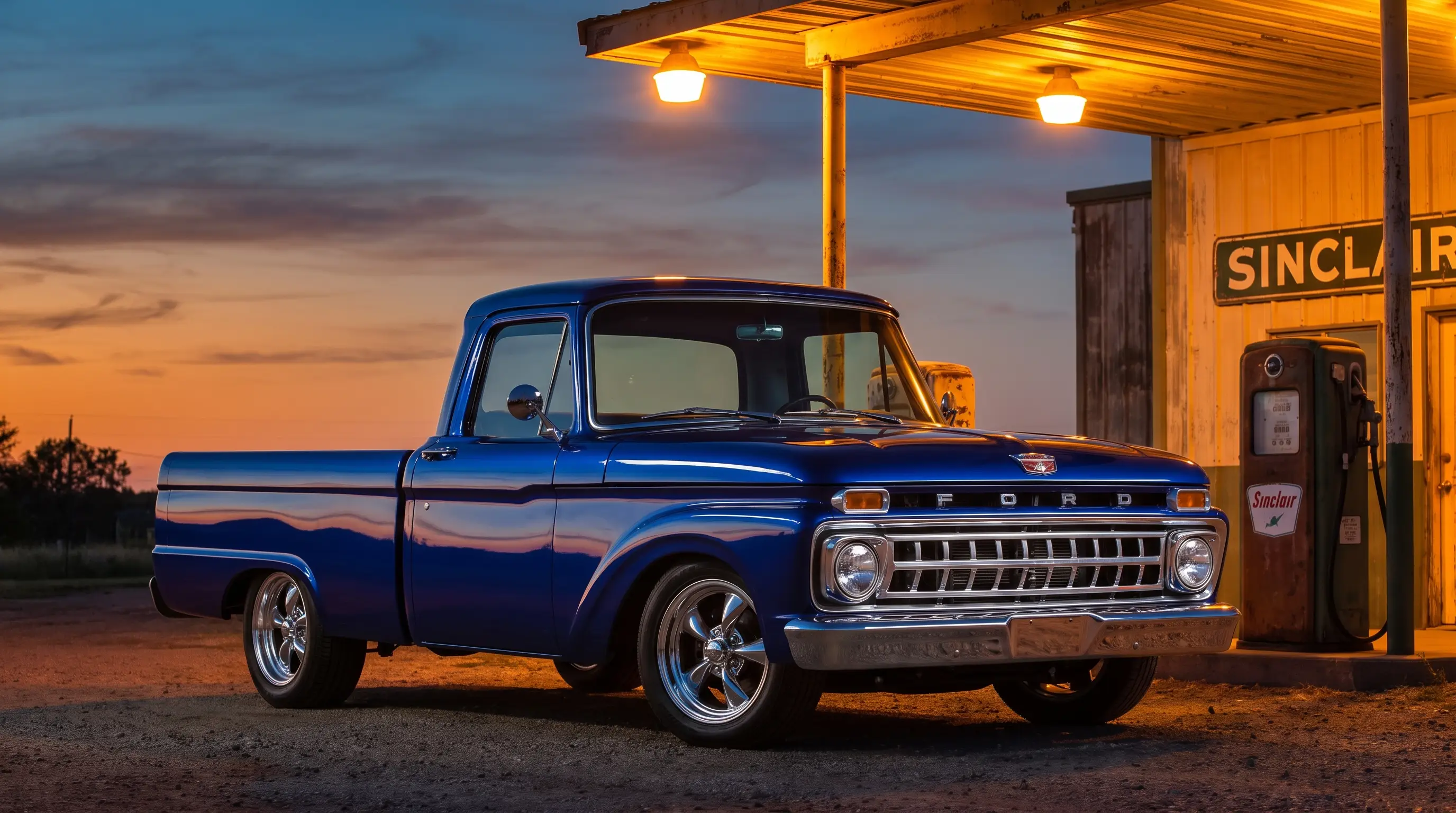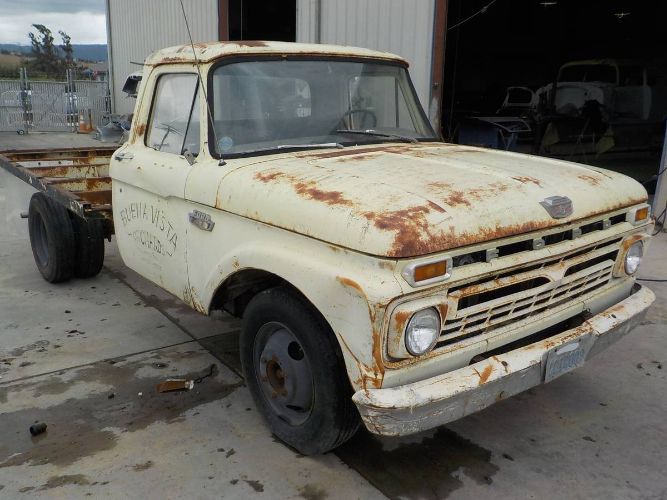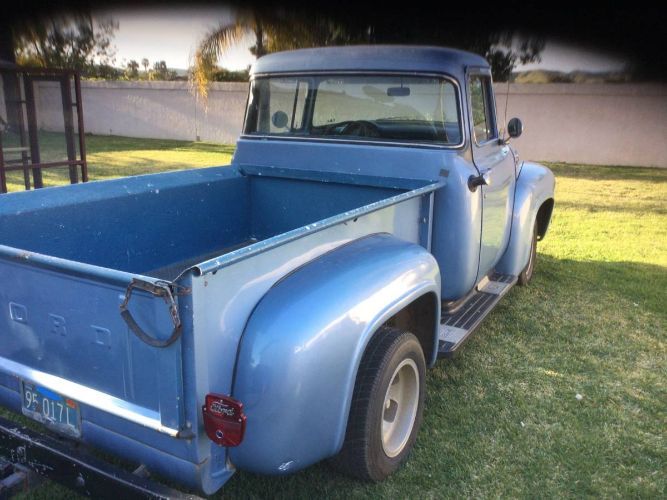
Ask any Ford truck lifer what changed the Ford F-100 forever and most will skip right past chrome and paint and land on a suspension system nobody could see from the curb. The Ford Twin I-Beam front end, introduced for the 1965 model year, is the kind of engineering story that never shows up in a brochure photo but shows up in every road test that followed it. It took a truck built for hauling lumber and cattle and gave it a ride quality that sedan owners noticed, and it stuck around under Ford trucks for the better part of three decades.
A straight axle that had run out of road
Through the early 1960s, the F-100 rode on a solid front axle, the same basic layout trucks had used since the Model T era. It was simple and it was tough, but it had one unavoidable trait: when one front wheel hit a bump, the whole axle tilted and both wheels moved. On a rutted farm lane or a washboard county road, that meant the whole cab shuddered along with it. Ford's engineers had been chasing a better answer since the late 1950s, and by 1963 the pressure was on. Chevrolet and Dodge were not standing still, and Ford needed something that felt like a genuine leap rather than a trim update.
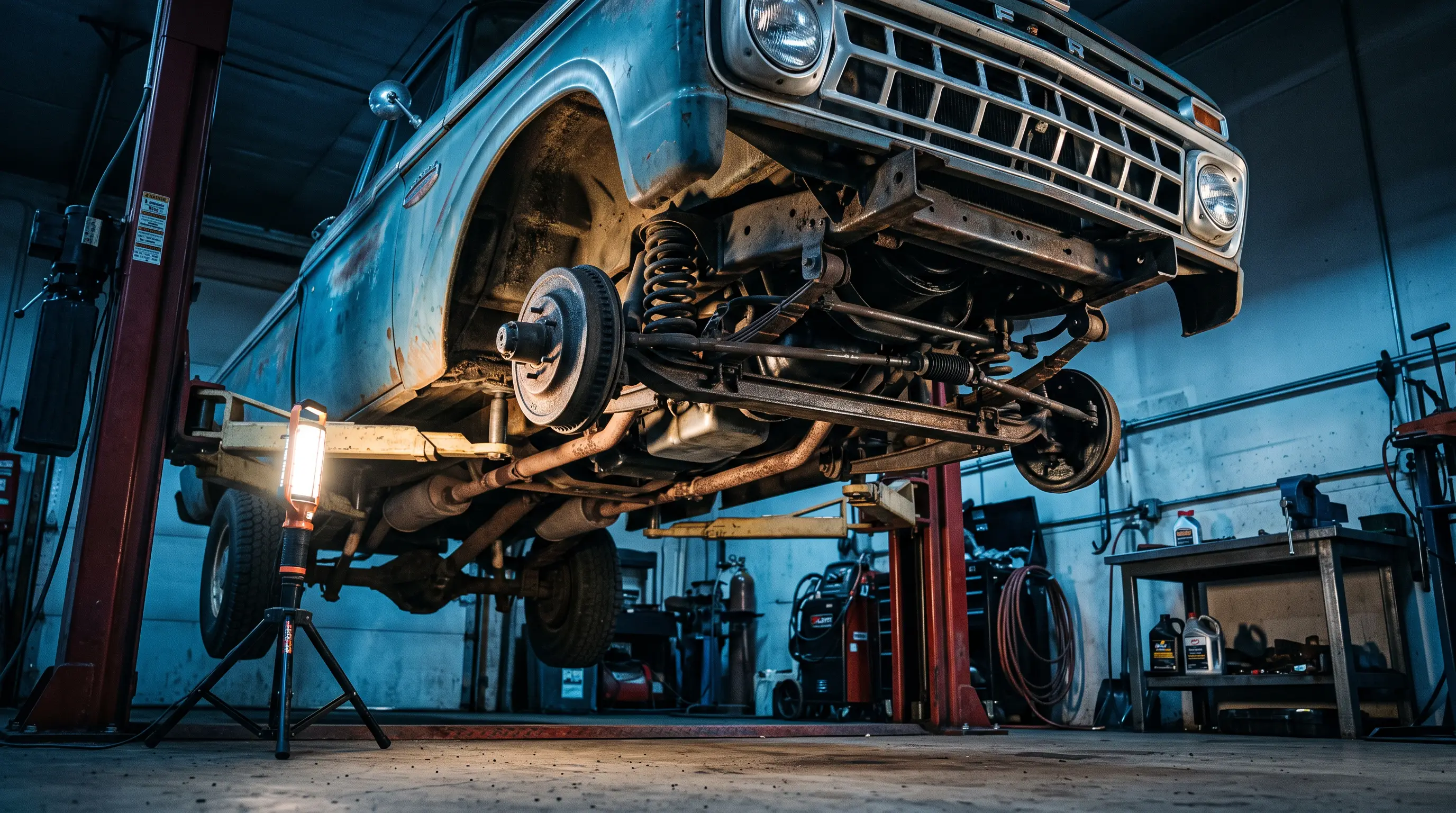
The solution came from an unlikely place inside Ford's own back catalog. Engineers looked at how the company had handled independent front suspension on cars and adapted the core idea, two separate I-beam axles, one for each front wheel, pivoting independently from opposite sides of the frame. Each wheel could now move up and down on its own without dragging its partner along for the ride.
What the Twin I-Beam actually changed
The result was a front suspension that kept the load-carrying strength of a solid beam axle, which fleet buyers trusted, while adding the independent motion of a car-like setup. Ford's engineers claimed a dramatic reduction in front-end bounce over rough surfaces, and road testers of the day backed that up. Reviewers pointed out that a loaded F-100 with Twin I-Beam tracked straighter and transmitted less shock through the steering wheel than the straight-axle trucks it replaced. For a work truck, that translated directly into less driver fatigue on long routes, and for anyone towing a trailer or hauling a camper shell, a more predictable front end at highway speed.
It was also a durability play. Twin I-Beam used coil springs and long control arms mounted to a heavier frame section, and the whole assembly was engineered to survive years of curb hits, potholes, and off-road abuse without needing the kind of babying an independent car suspension might. Ford marketed it hard as a truck-specific solution, not a borrowed car part, and that distinction mattered to buyers who cross-shopped it against the competition's more conventional setups.
The 1965 reveal and what owners noticed first
When the 1965 trucks hit showrooms, Twin I-Beam was the headline mechanical change, paired with a redesigned grille and a broader trim lineup that included the new more on the 1965 ford f100 Ranger package for buyers who wanted a dressed-up truck rather than a bare work unit. Owners who drove both the outgoing 1964 and the new 1965 back to back described the difference in blunt terms: the old truck felt like a truck, the new one felt like it had learned some manners. Dealers used demonstration drives over rough lots specifically to show off the softer ride, because it was the single easiest thing to feel in five minutes behind the wheel.
Why it outlasted every rival's straight axle
Competing trucks eventually adopted their own independent front suspension designs, but Ford's Twin I-Beam had a head start and a reputation that stuck. Part of that longevity came from how well it suited Ford's broader lineup strategy. The same basic geometry could be tuned for a light half-ton F-100 or scaled up for heavier three-quarter and one-ton trucks, which meant Ford did not need a separate suspension engineering program for every weight class. It also aged well in the used market. Twin I-Beam trucks earned a name for holding alignment reasonably well under moderate abuse, which is more than could be said for some of the independent setups that followed on other brands.
There was also a competitive angle Ford leaned on hard in its own advertising. Rival trucks of the mid-1960s still leaned on solid front axles years after the F-100 made the switch, and Ford's sales literature made sure buyers noticed the gap. Salesmen were trained to walk prospective buyers over a rough section of the lot in a straight-axle competitor first, then repeat the same walk in an F-100, letting the difference speak for itself rather than relying purely on spec sheets. That kind of direct, physical comparison proved more persuasive than any brochure copy could have been, and it is part of why Twin I-Beam became such a durable talking point in period Ford advertising well past its debut year.
Living with a Twin I-Beam truck today
Owners of surviving Twin I-Beam trucks generally report that the system has aged with reasonable grace, provided the truck was not abused or left to sit with worn bushings for years on end. Because the design uses conventional coil springs and serviceable control arm bushings rather than anything exotic, parts availability has stayed healthy across the collector market, and a shop familiar with Ford trucks of this era rarely struggles to source replacement components. That practical serviceability, on top of the ride quality itself, is part of why so many enthusiasts specifically seek out 1965 and later trucks over the earlier straight-axle years when shopping for a driver rather than a static display piece.
"You can date a lot of what people love about driving an old Ford truck back to one decision made on a test track in the early sixties. Nobody buys a pickup for its front suspension, but everybody notices when it's gone wrong, and Twin I-Beam is the reason so many F-100 owners never had that complaint."
- Patrick Walsh
The Twin I-Beam's place in F-100 lore
Today, the Twin I-Beam era F-100s sit at an interesting crossroads in Ford truck history. They came after the short-lived unibody experiment of 1961 to 1963, a chapter covered in depth in where this started, and before the F-100 name gave way entirely to the F-150 in the late 1970s. Collectors who chase the 1965 and 1966 trucks specifically often cite the suspension upgrade as part of the appeal, not because they plan to off-road their restored truck, but because the improved ride makes these trucks genuinely pleasant to drive on modern roads, unlike some older straight-axle trucks that feel like a chore beyond a slow cruise night.
That usability is a real factor in today's market too. Shoppers looking at classic F-100s on the market tend to gravitate toward the Twin I-Beam trucks precisely because they blend period-correct looks with a driving experience that does not punish anyone for taking the long way home. It is a rare case of a mechanical upgrade becoming part of the emotional case for buying the truck, decades after the engineers who designed it had any say in the matter.
What started as an answer to washboard roads and dealer demonstration drives turned into one of the defining traits of the mid-1960s F-100, and it is a big part of why this generation still gets singled out by people who actually drive their old trucks rather than trailer them from show to show.