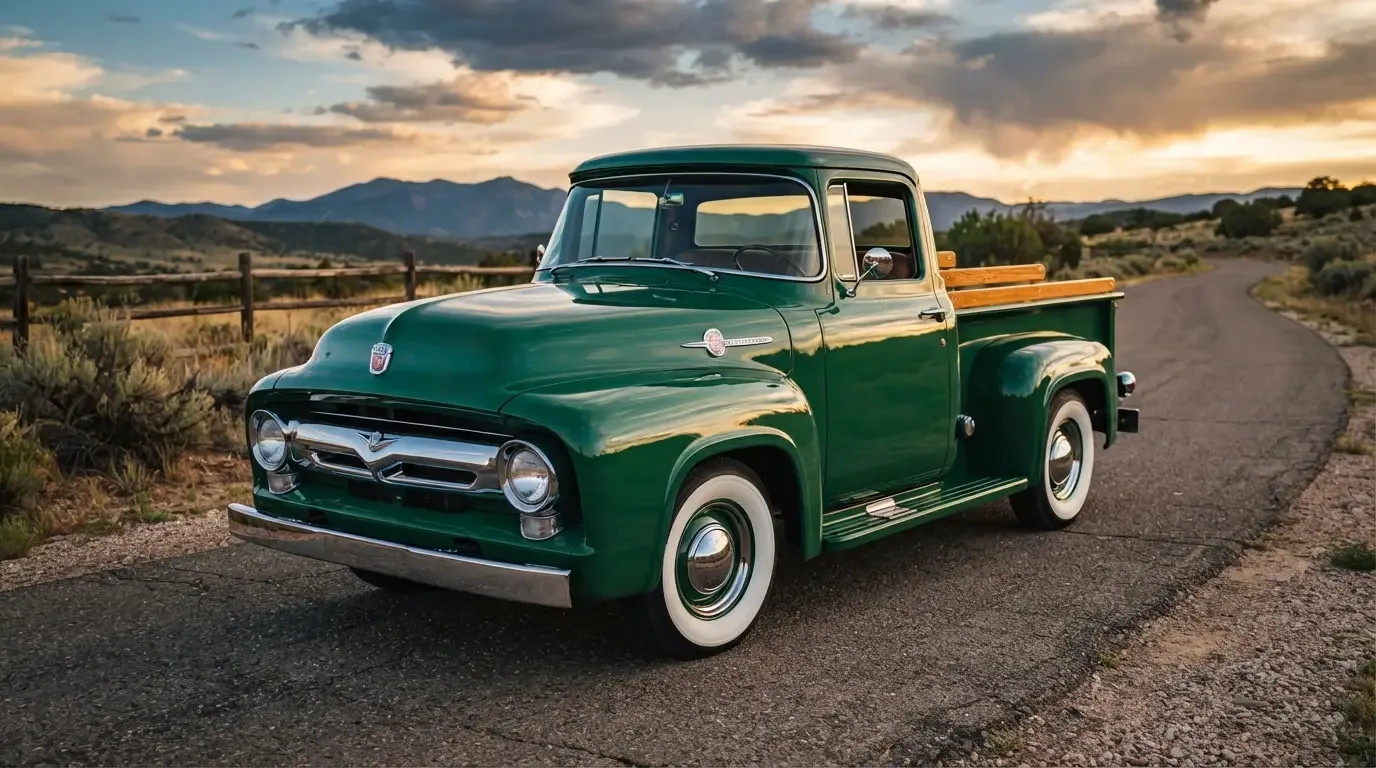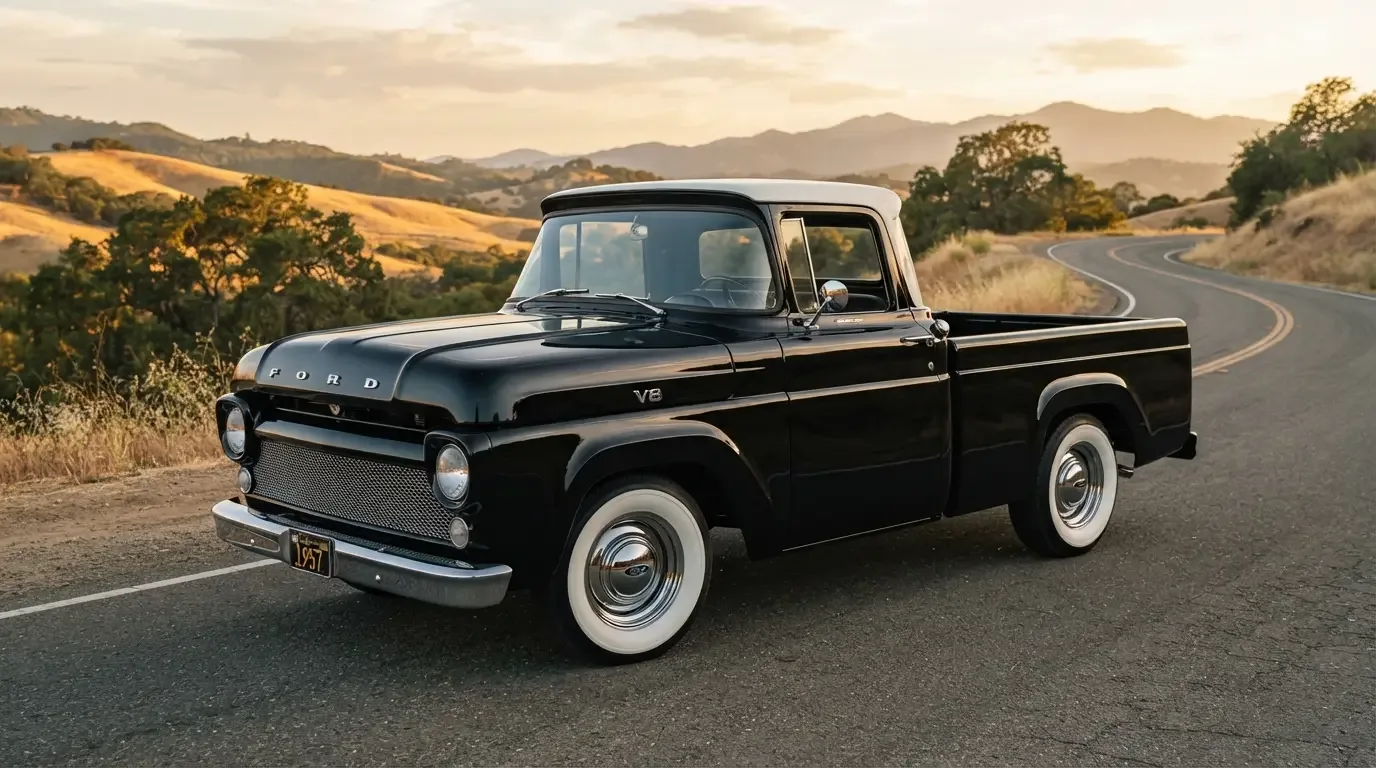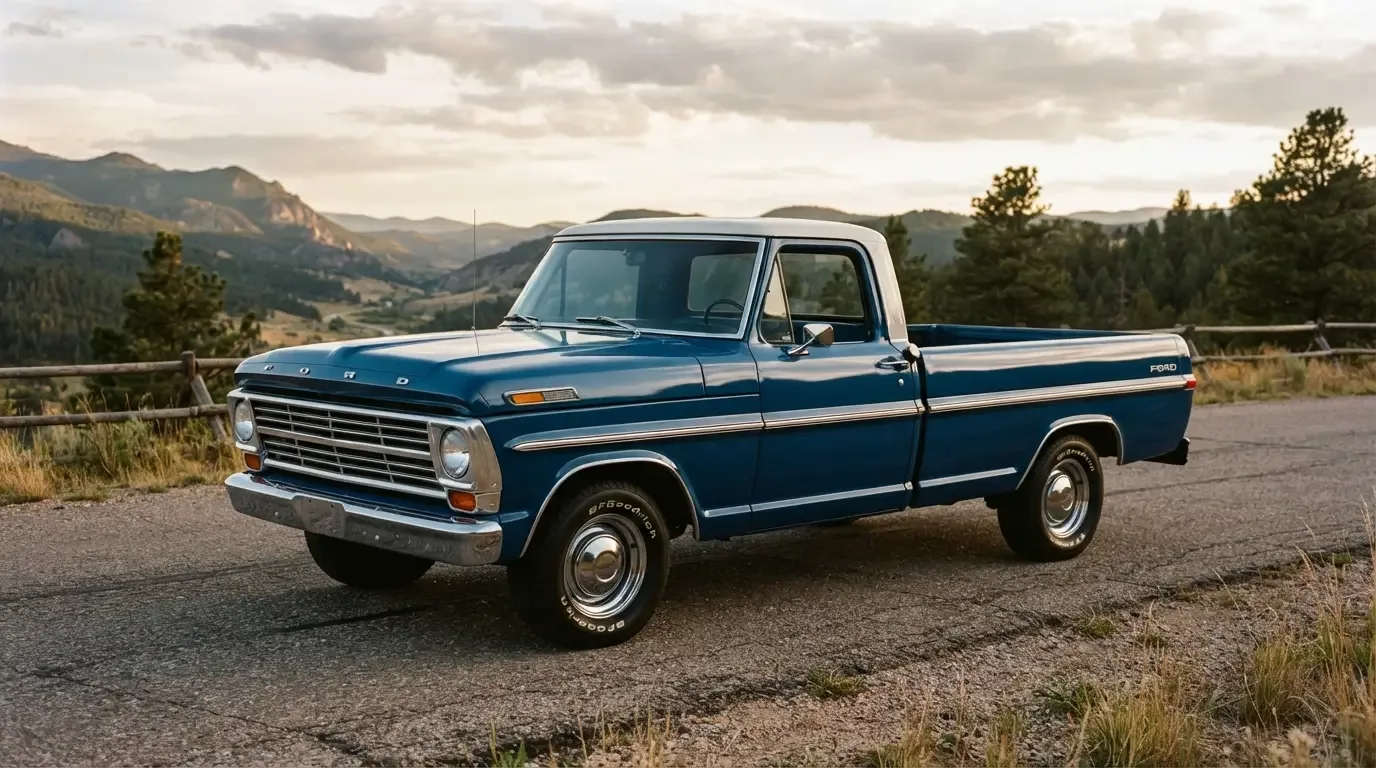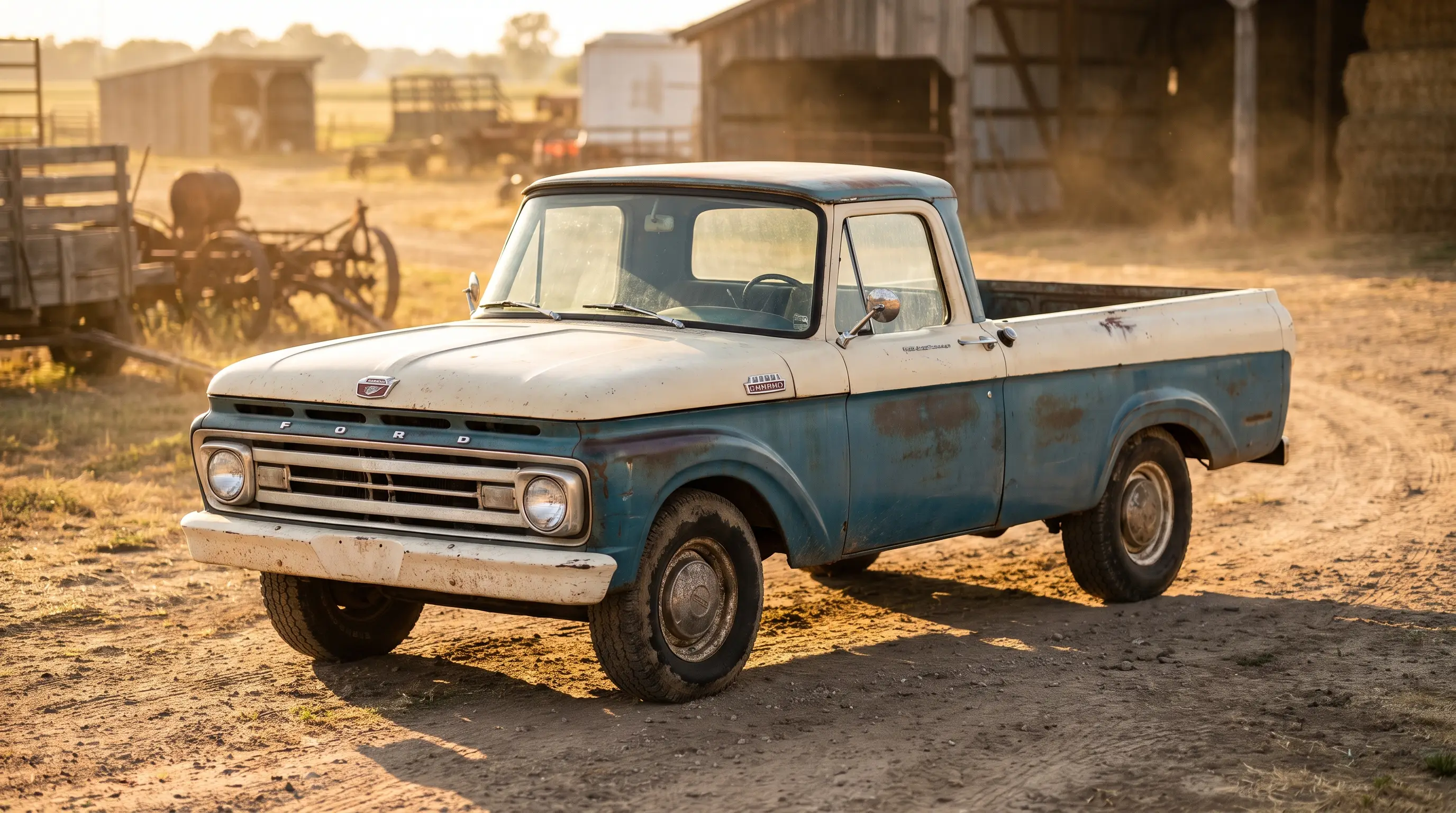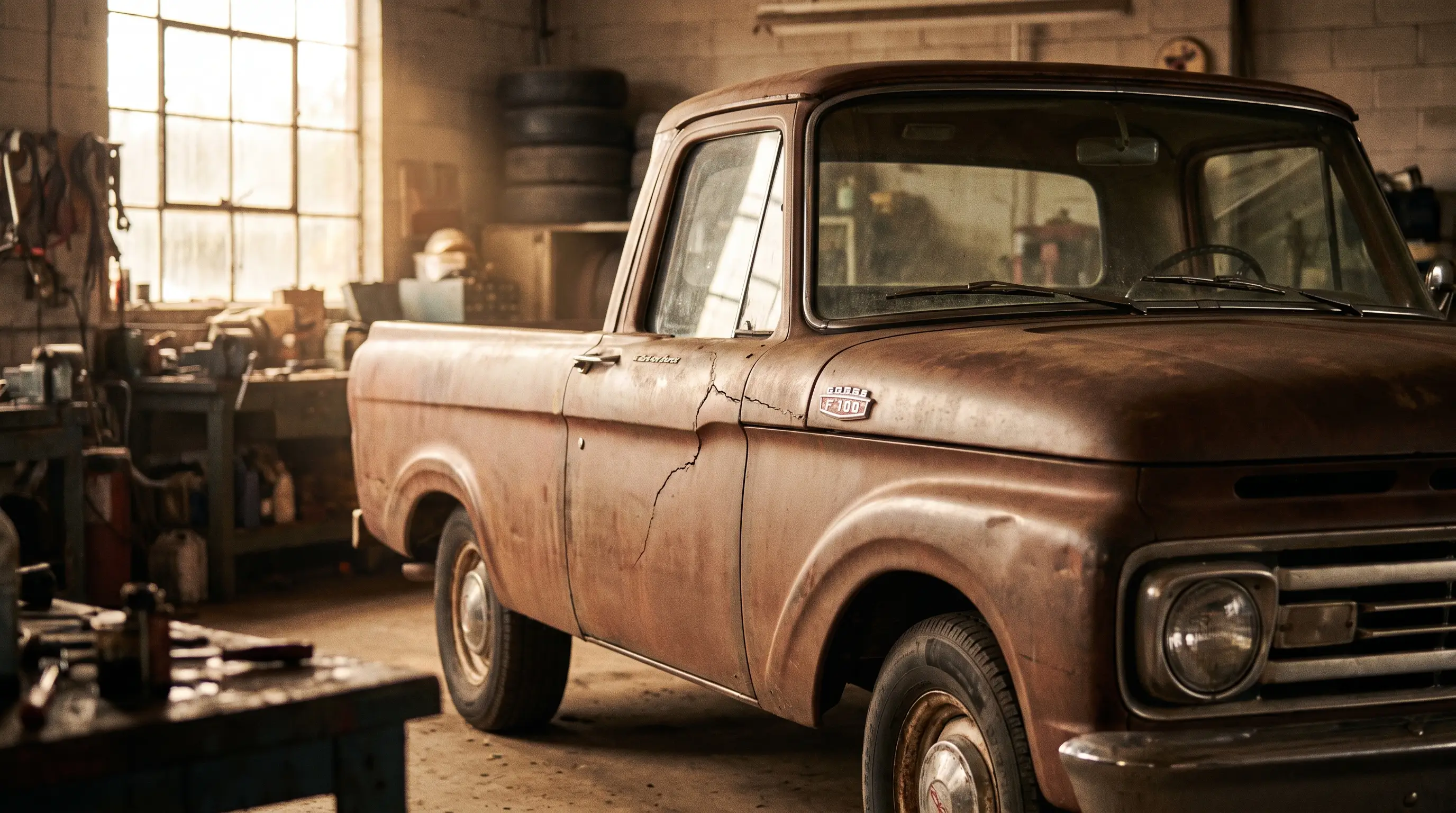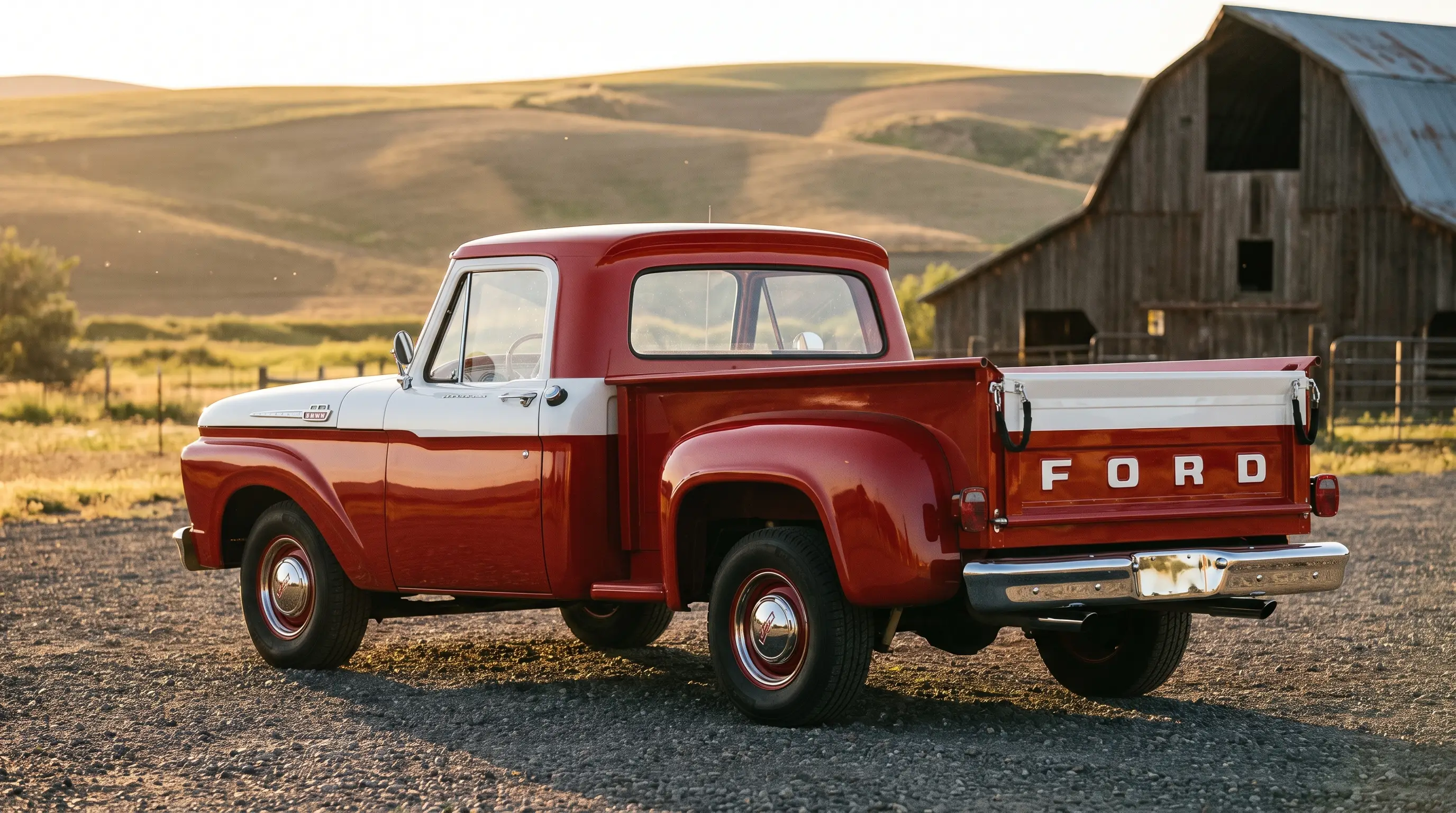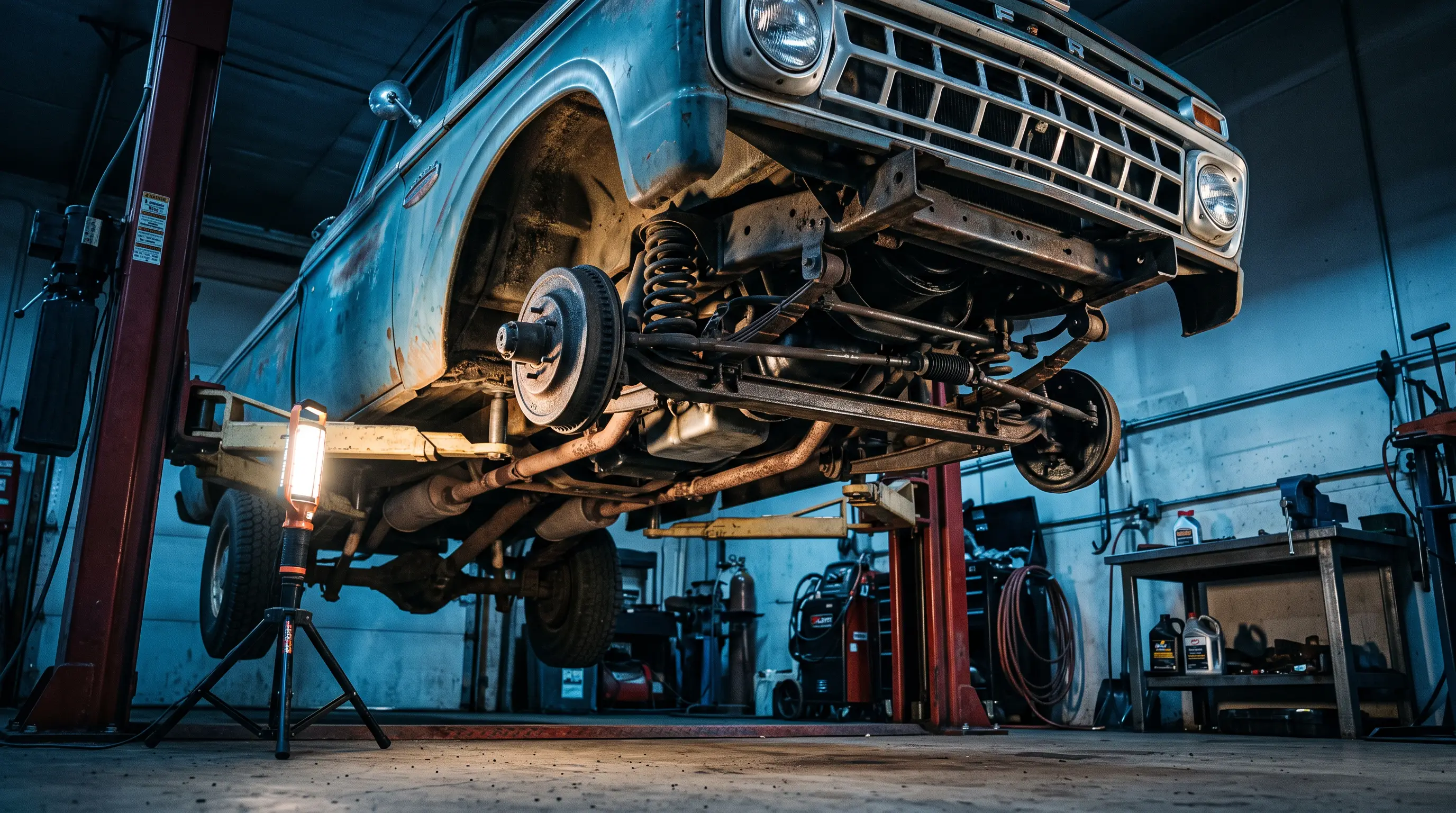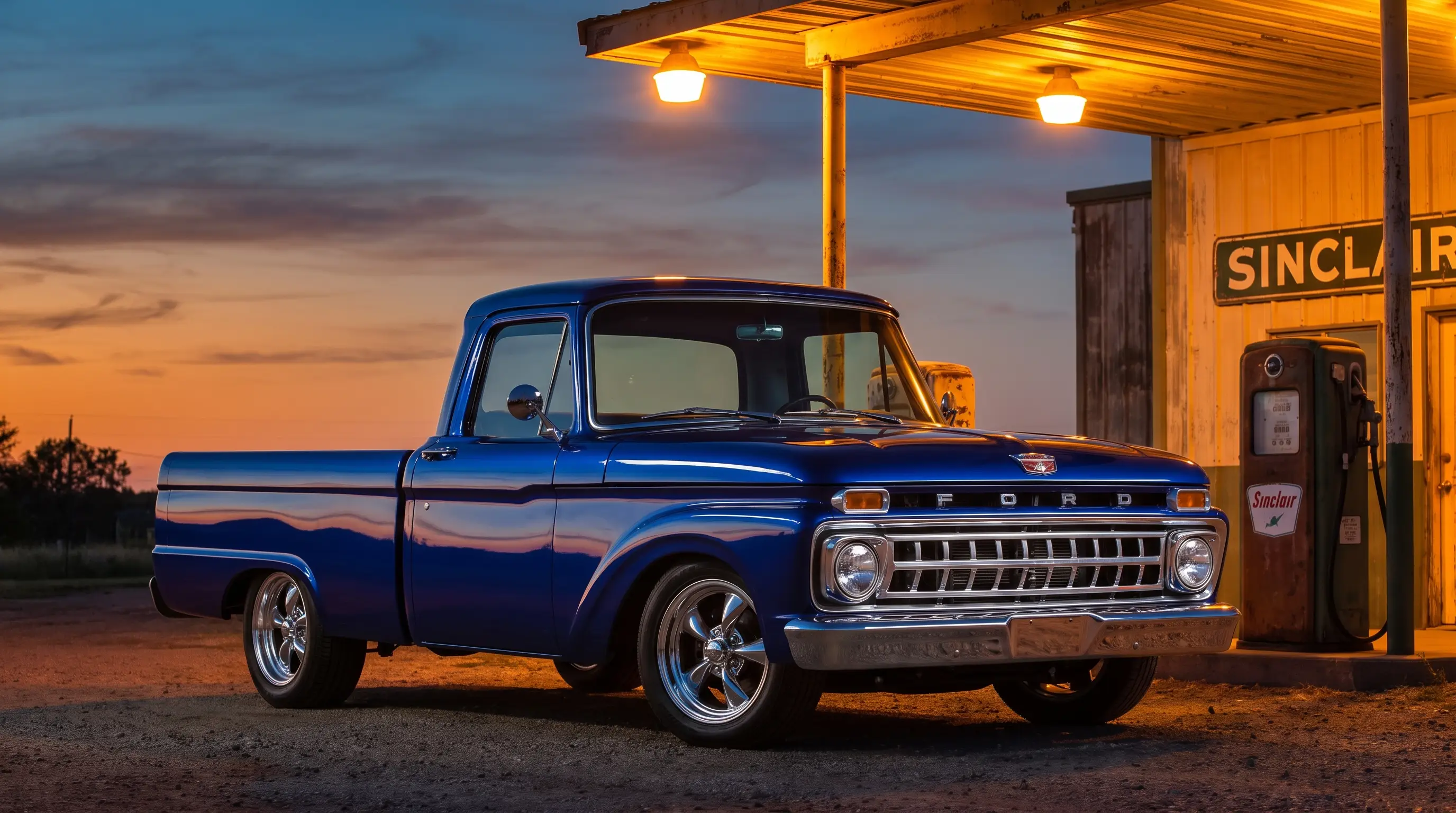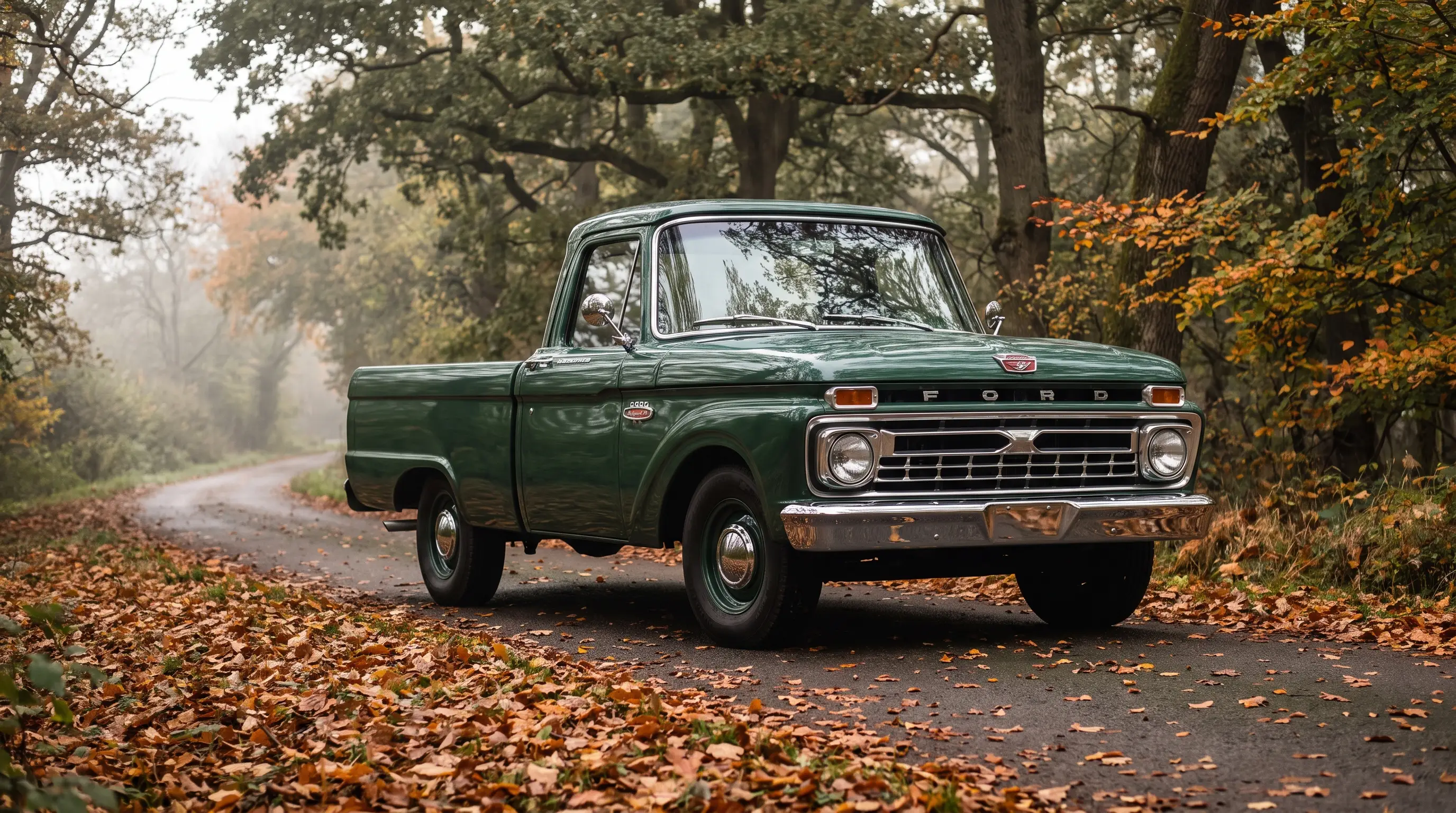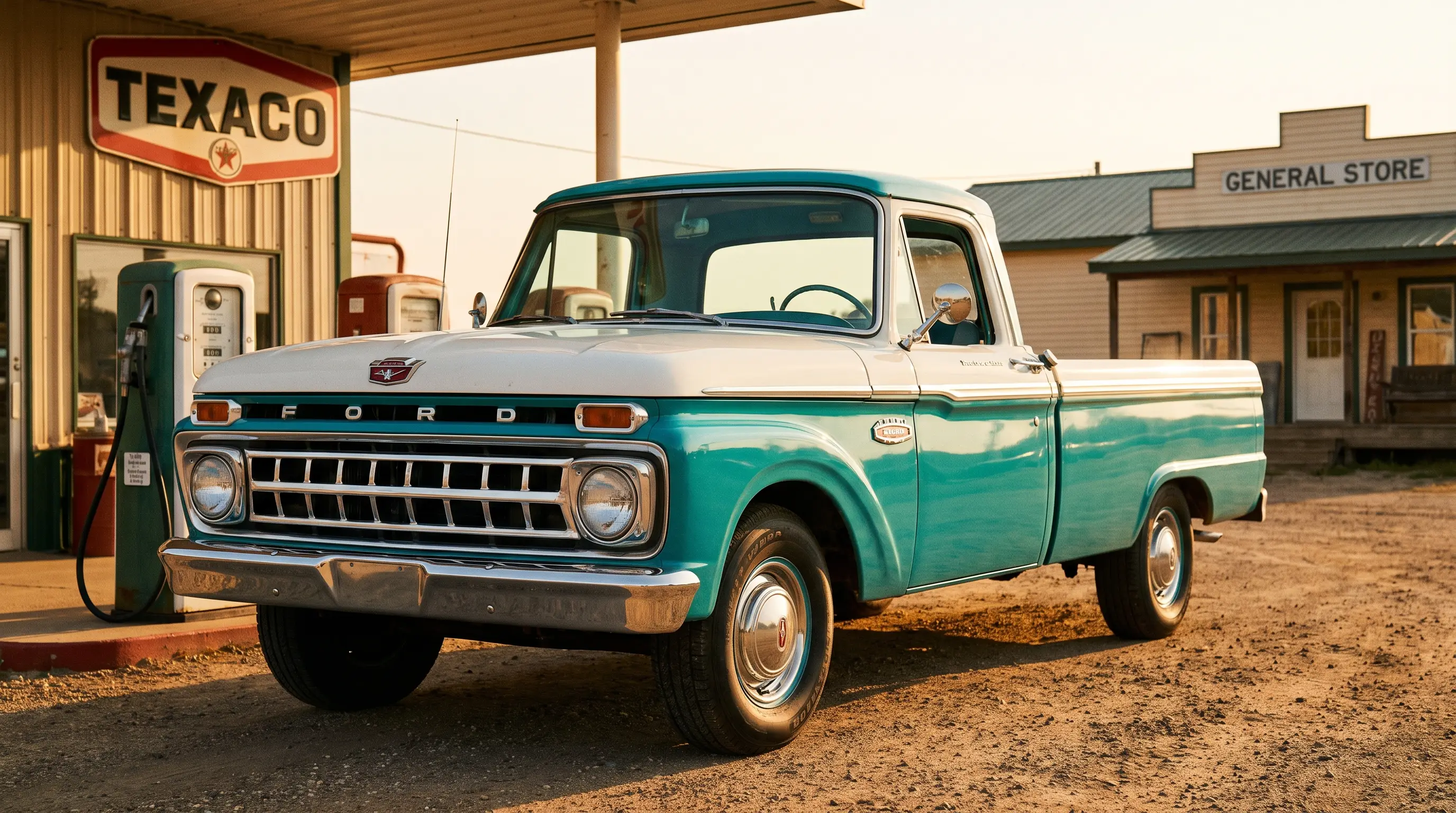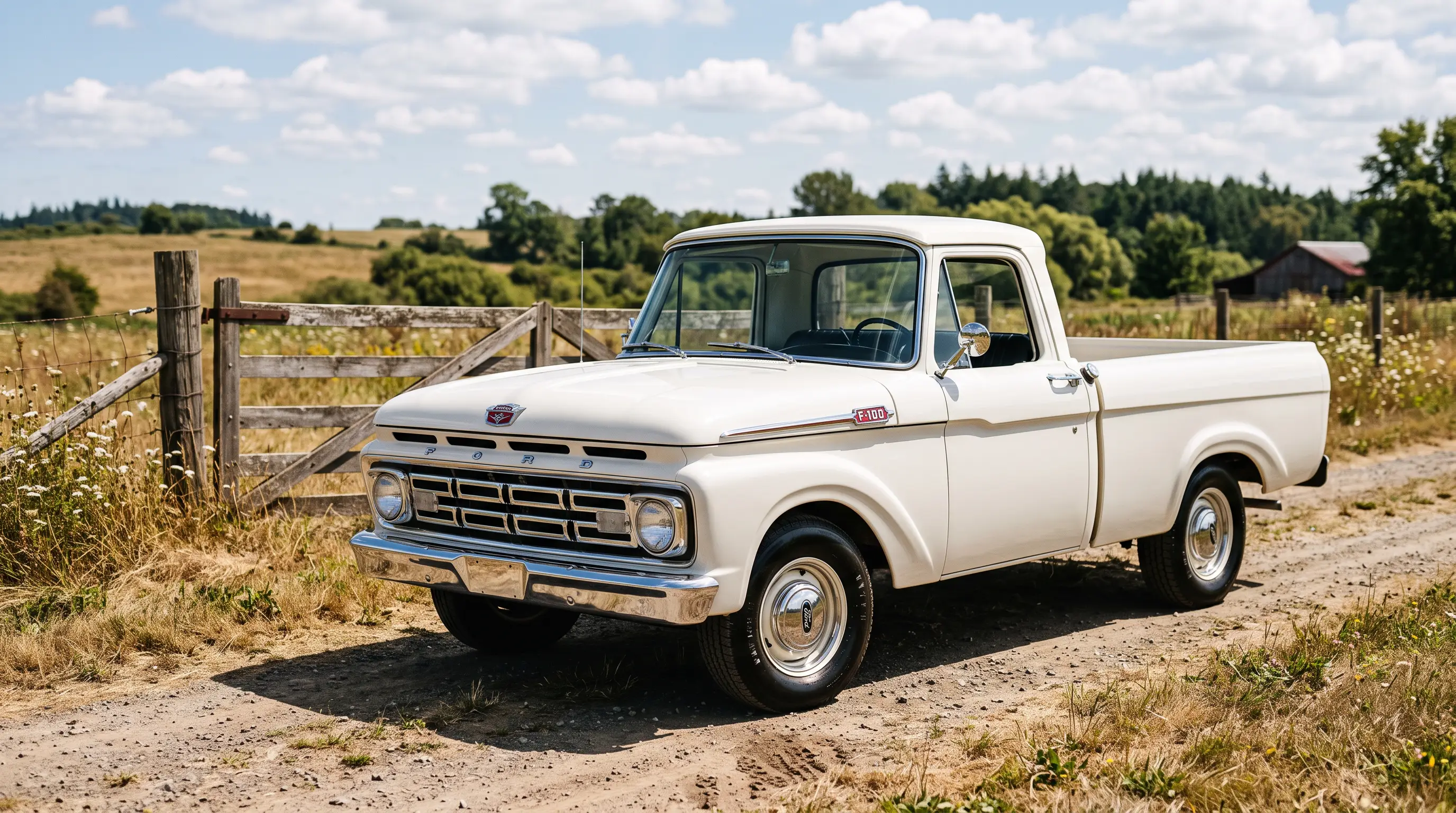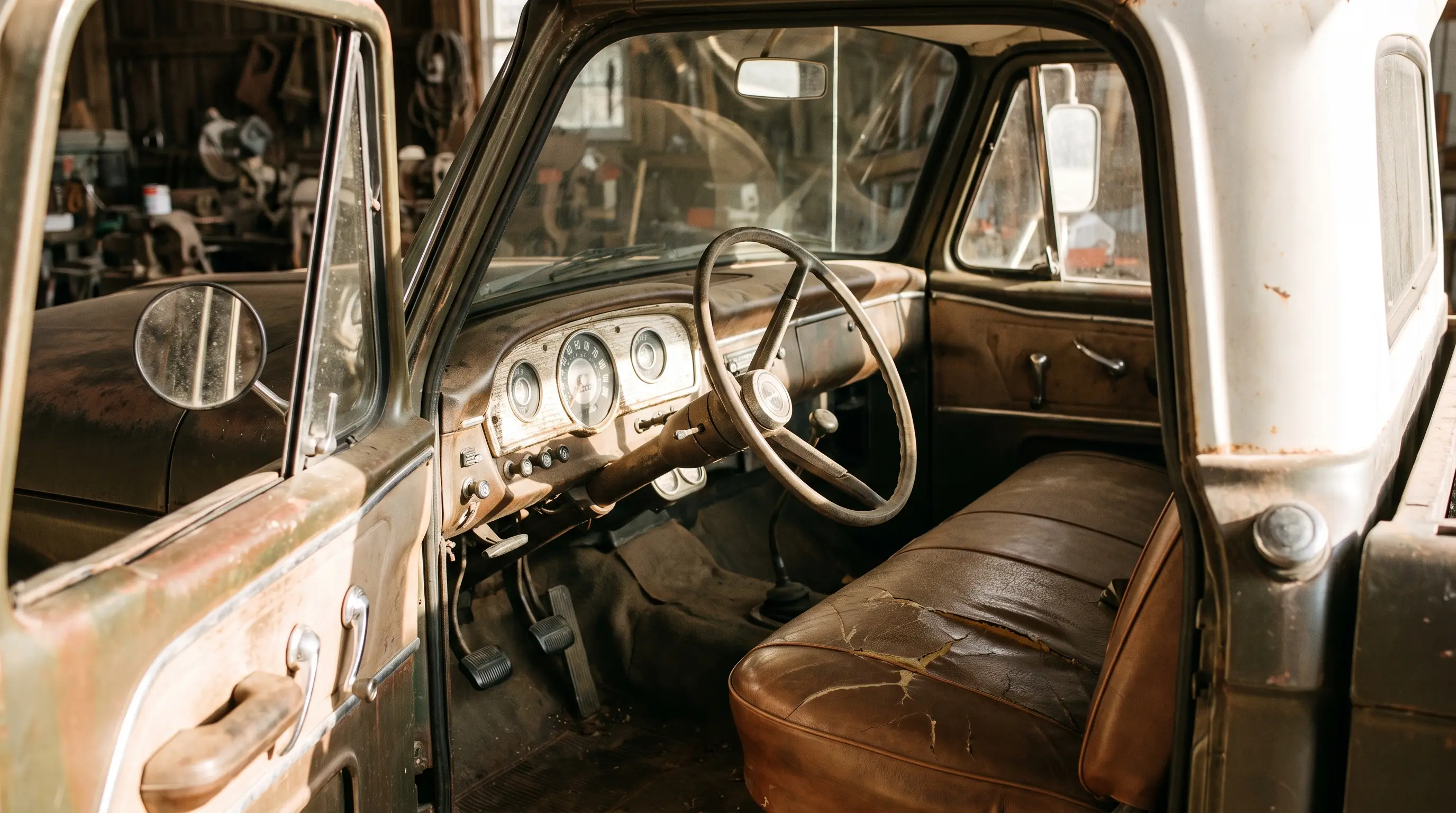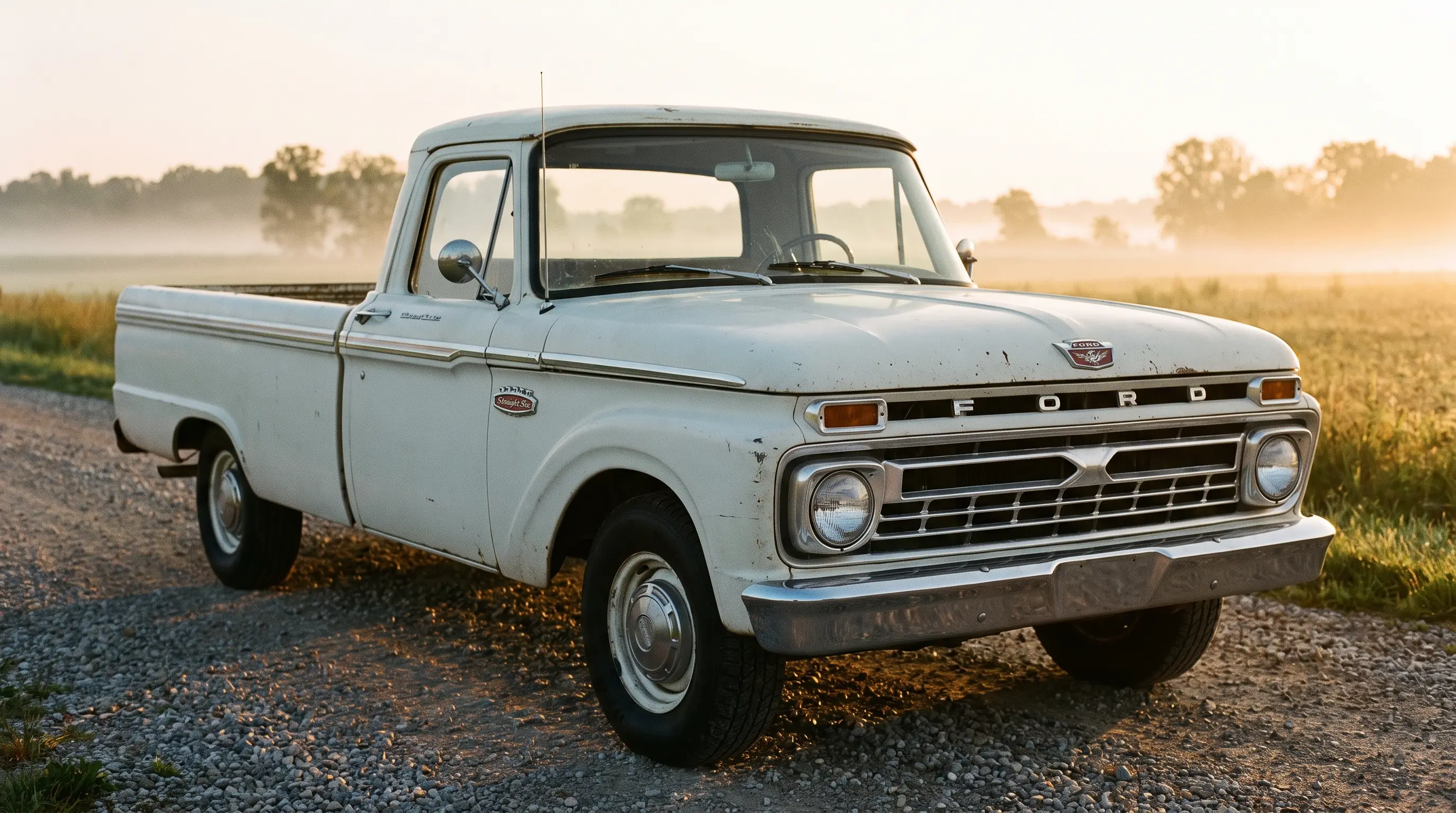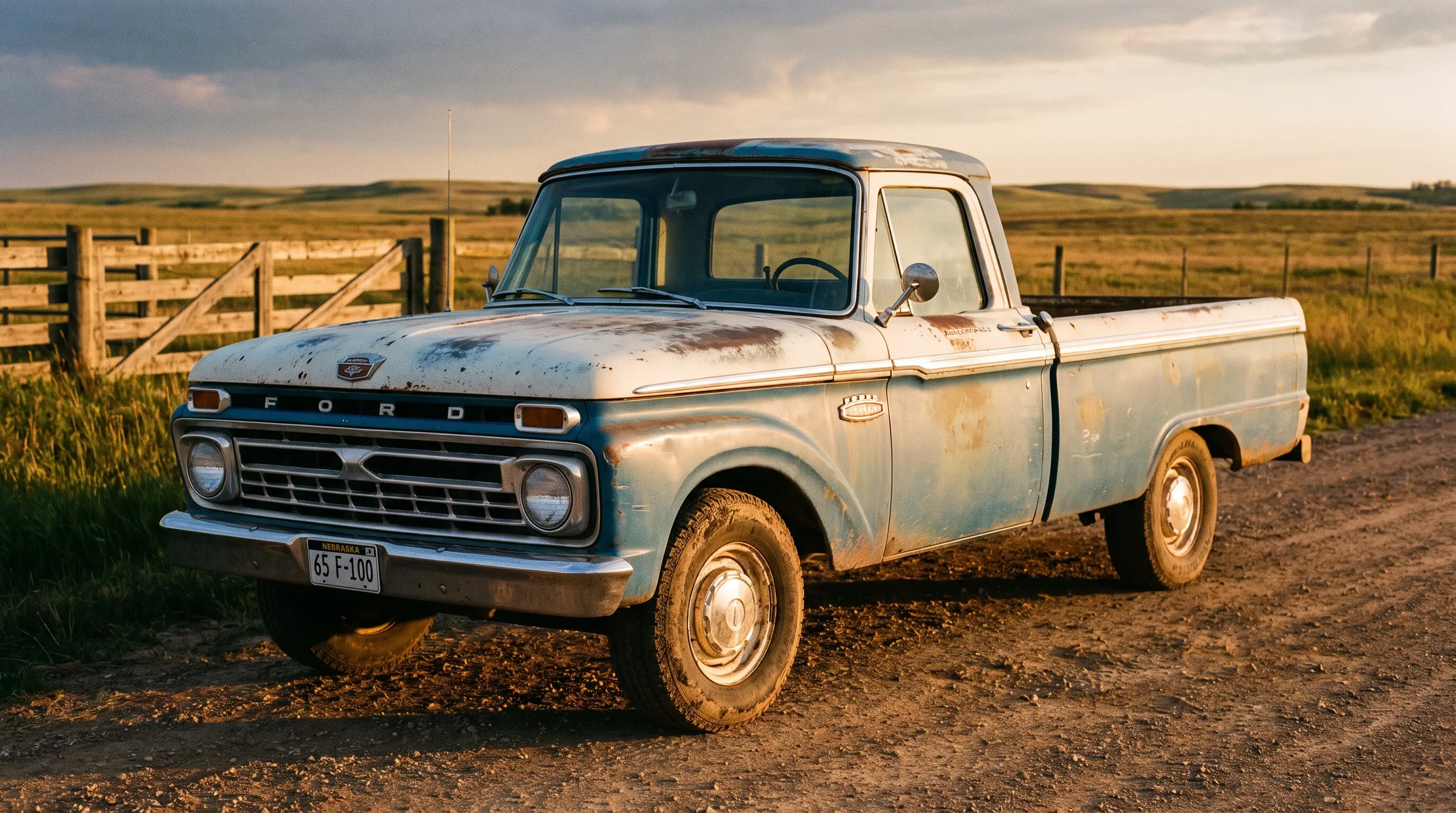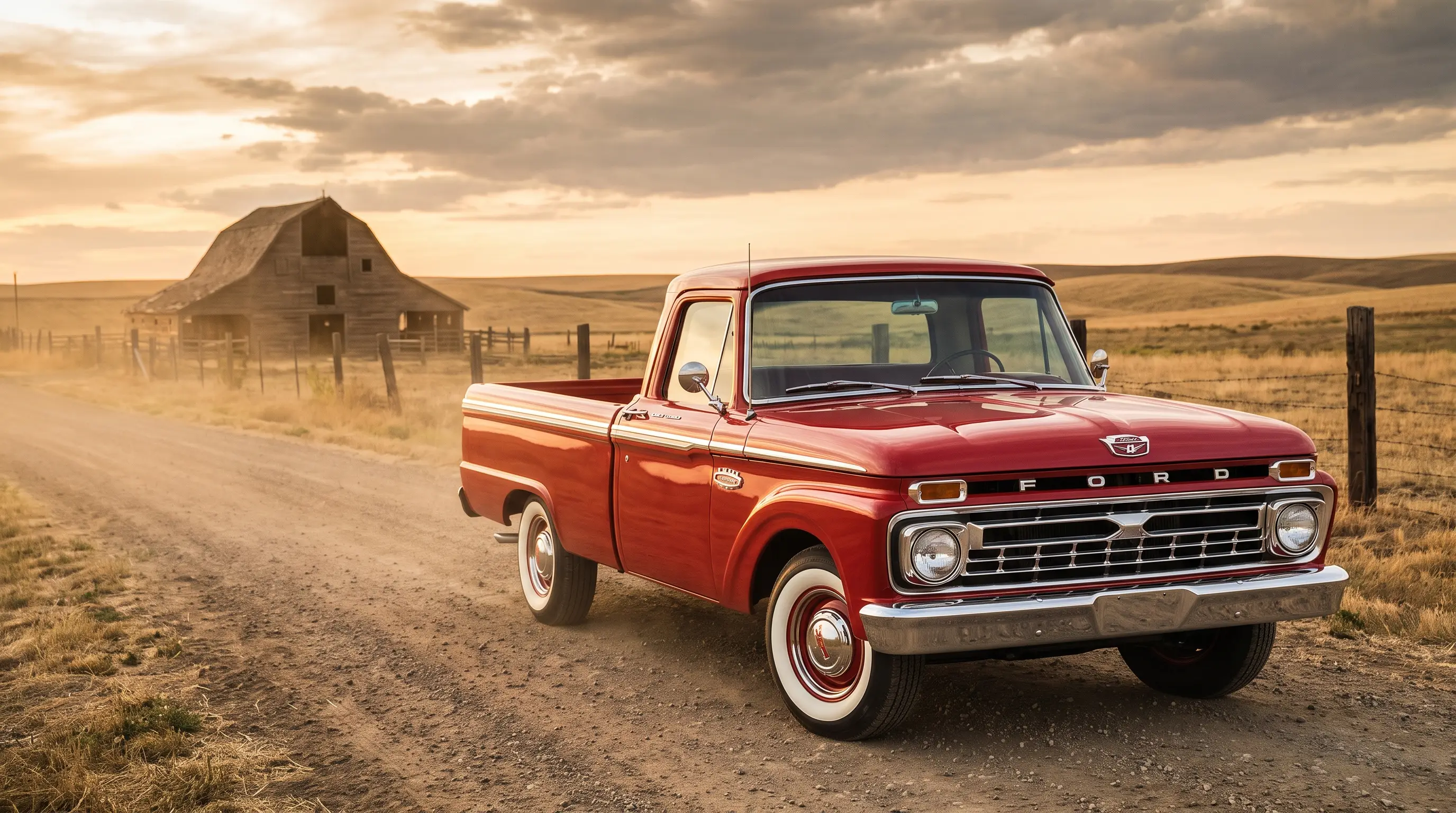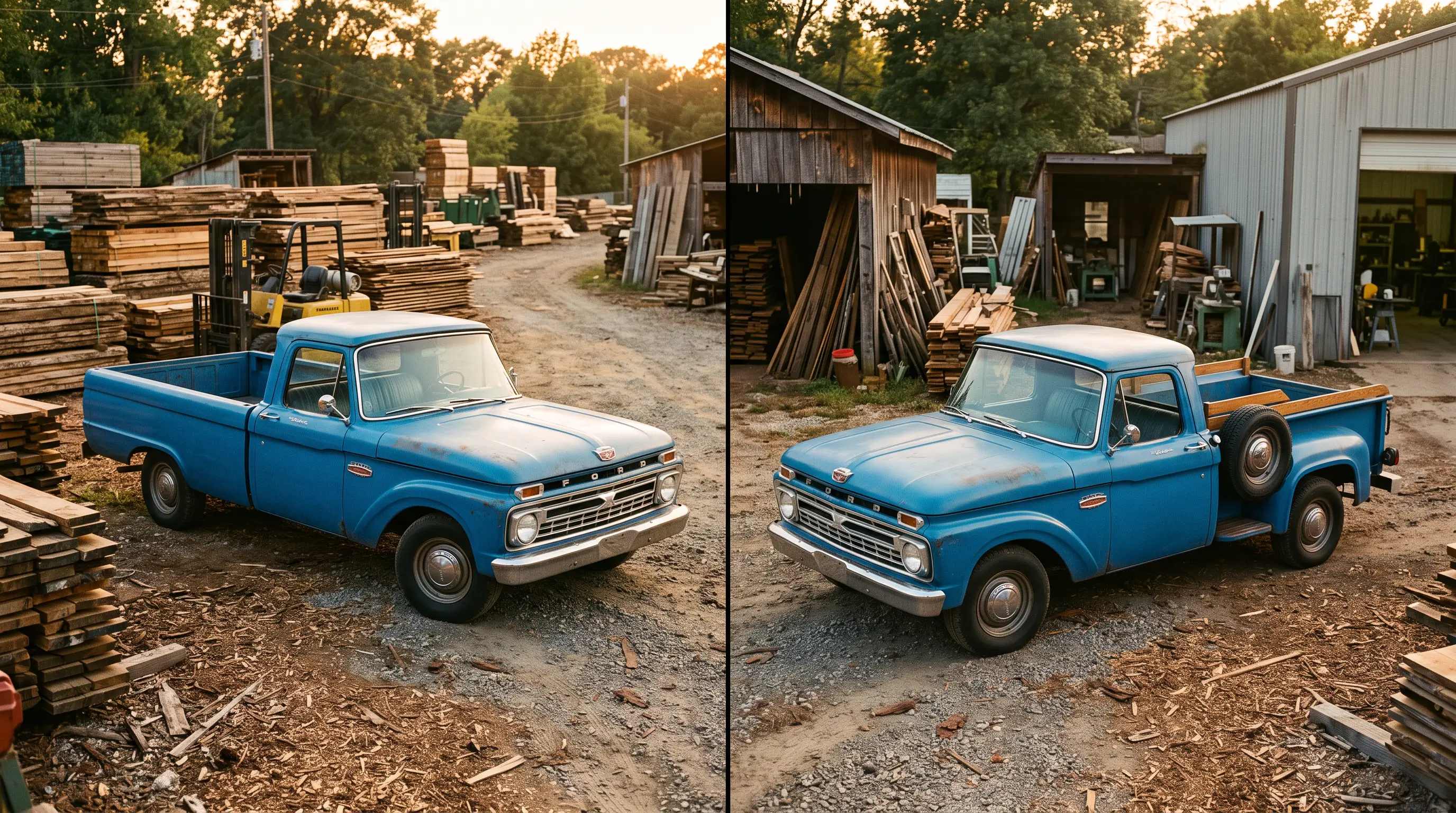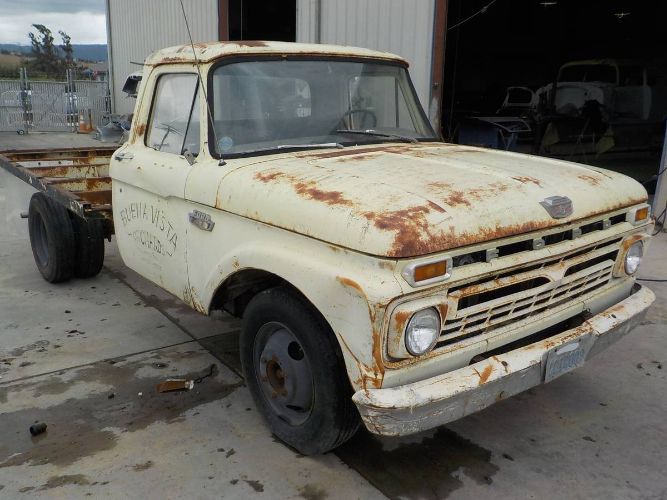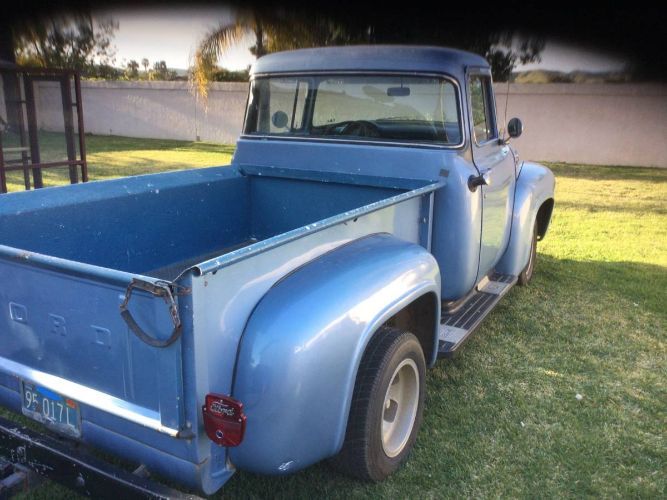
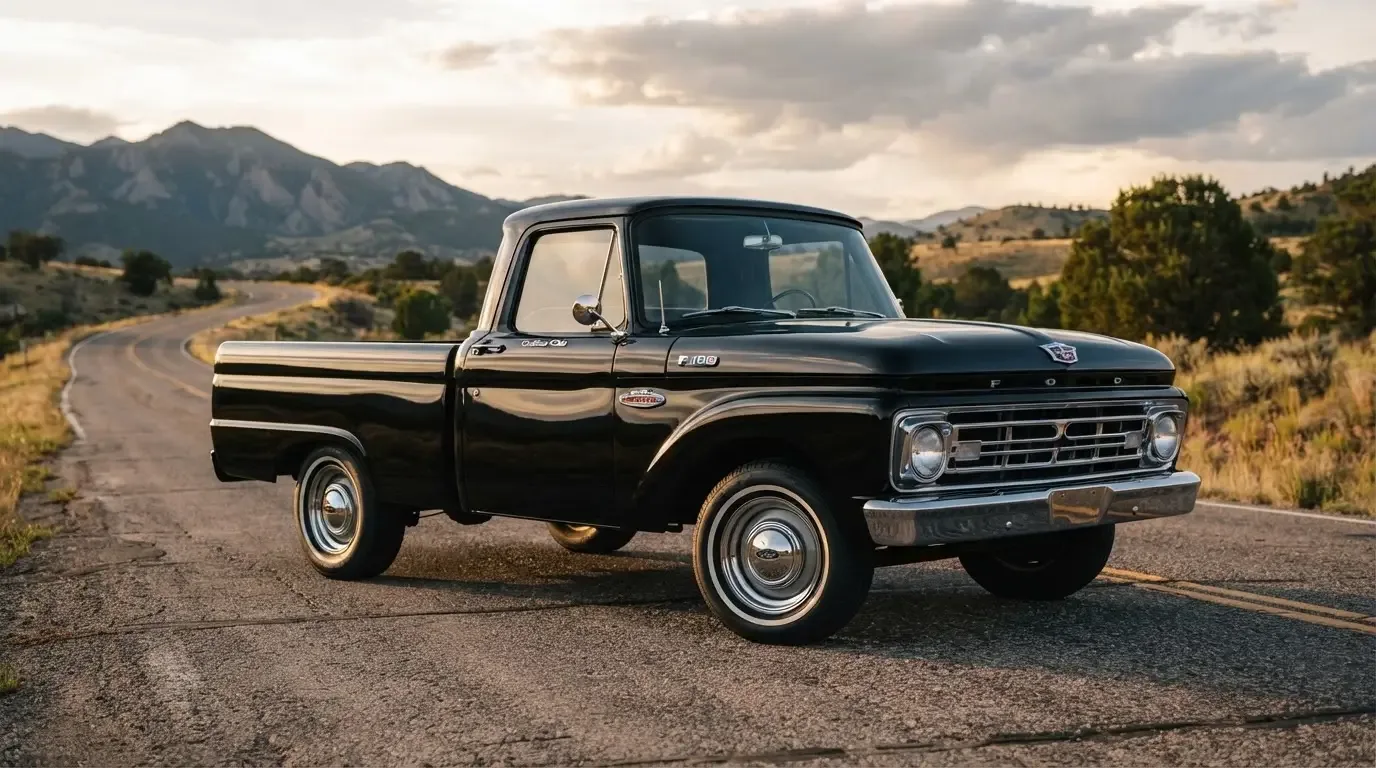
The 1965 Ford F100 is the one most people point to when they talk about this generation, and there is a reason for that beyond the calendar. But you cannot understand 1965 without starting a few years earlier, because the 1961 through 1966 F-100 is really two trucks wearing the same skin. Ford tried something bold at the front of this run, backed away from it partway through, and then dropped in a piece of front suspension that outlived every other idea from the era. If you have ever worked on one of these, you already know the truck has a split personality. If you have not, here is how it breaks down.
This was the fourth generation of the F-Series, and it arrived for 1961 with the lowest, longest look Ford had ever given a pickup. The styling was cleaner than the busy late-fifties trucks, almost plain by comparison, and that restraint has aged well. What did not age well was one particular engineering decision Ford made at the start, which I will get to, because it is the single most important thing to know before you buy one of the early trucks.
The unibody experiment nobody warned you about
From 1961 through 1963, Ford offered the F-100 with an integrated cab and bed, where the cab and the cargo box were a single continuous body unit instead of two separate pieces bolted to the frame. Ford marketed this as a sleeker, more modern design, and on paper it was. One smooth flank ran from the door to the taillight with no break, and the truck looked lower and longer for it.
Here is the problem, and it is the kind of thing you only learn by owning one. Because the cab and bed were joined, any real chassis flex under a heavy or awkward load could bind the doors. Put a serious load in the bed, park on uneven ground, and the body twist could make the doors hard to open or close. For a work truck, that is close to a fatal flaw. Buyers noticed, the trades grumbled, and Ford quietly brought back the separate-bed body for 1964 while keeping the integrated version available briefly alongside it. If you are shopping the 1961 to 1963 trucks, know which body you are looking at, because the integrated ones are a distinct and slightly cranky breed. Our our ford f100 retrospective puts this stumble in the context of a nameplate that mostly got things right.
Why 1964 mattered as much as the styling
Nineteen sixty-four is the reset year. Ford went back to a conventional separate cab and pickup box, and the doors-jamming problem went with it. The trucks from 1964 forward are the ones most people actually want to live with, because they have the clean fourth-generation look without the structural headache. The styling stayed handsome and restrained, and the truck finally behaved like a truck under load.
This is also the point where I will say something blunt about buying advice. People get romantic about the earliest year of a generation because it is the purest expression of the original idea. With this truck, the original idea had a bug in it. The 1964 and later trucks are the better buy for anyone who wants to use the thing, and they are usually no more expensive than the early ones. That is a rare case where the smarter purchase is also the cheaper one, so take the win.
| Year | Body | Front suspension |
|---|---|---|
| 1961-1963 | Integrated cab and bed available | Straight axle, leaf sprung |
| 1964 | Separate cab and bed returns | Straight axle, leaf sprung |
| 1965 | Twin I-Beam front suspension debuts | Twin I-Beam independent front |
| 1966 | Final year, trim updates | Twin I-Beam independent front |
Twin I-Beam: the 1965 change that stuck
Now the 1965 Ford F100. This is the year Ford introduced Twin I-Beam front suspension, and it is the reason 1965 gets the attention. Twin I-Beam was an independent front suspension that used two long forged beams, each carrying one front wheel, pivoting from opposite sides of the frame and crossing over each other. It gave the F-100 a smoother ride than the old straight axle without giving up the toughness a truck front end needs.
The thing about Twin I-Beam is that it worked. Ford was proud enough of it to advertise it hard, and it stayed under Ford trucks for decades afterward, long after this generation was gone. From a mechanic's chair, it is a genuinely good design: simple, strong, and forgiving. If somebody hands you a choice between a 1964 straight-axle truck and a 1965 Twin I-Beam truck and everything else is equal, the 1965 rides better, and that is not marketing talk, that is time in the driver's seat. This is the single most consequential piece of engineering to come out of the whole generation.
Engines and the honest work of the fourth generation
Under the hood, this generation carried Ford's inline sixes and V8s through a period of change. Early in the run the trucks used engines carried from the previous era, and across the generation Ford's newer six-cylinder and V8 families found their way into the lineup, with displacements that grew to meet the demands of buyers who were asking their trucks to do more. The six was the workhorse economy choice, and the V8 was there for anyone hauling or towing in earnest.
I will not pretend these were exciting engines. They were durable, straightforward, and easy to keep running, which for a work truck matters more than a dyno number. That plainness is part of why these trucks survive in usable condition today. There is not much on a 1965 F-100 that a patient owner with basic tools cannot sort out, and the aftermarket support is deep enough that keeping one on the road is a realistic weekend proposition rather than a fantasy.
Trim on this generation ran from bare-bones work spec up through nicer packages with better interior appointments and exterior chrome. The plain trucks are honest and cheap, and there is nothing wrong with one for a buyer who wants the look without the fuss. The dressier trucks carry a small premium and turn up less often, since a fleet buyer ordering work trucks by the dozen was not paying for chrome. If you find a well-kept upper-trim truck with its brightwork intact, that is a harder thing to locate than a stripped work unit, and the market treats it accordingly.
One more practical note that owners learn fast. Because this generation spans a real engineering break in 1964 and again in 1965, parts are not always interchangeable across the whole run the way you might assume. A component off a 1962 integrated-body truck will not necessarily bolt to a 1966, and the front suspension parts split cleanly at the 1965 Twin I-Beam changeover. That is worth knowing before you start ordering pieces, because buying the wrong-year part for the right-looking truck is a rite of passage nobody enjoys.
"The early integrated-body trucks look great in a photo and then jam a door on you the first time you load them heavy on a slope. Ford fixed it in 1964, added Twin I-Beam in 1965, and that combination is the truck you actually want in your driveway."
- Mike Sullivan
What to know before you buy one
If you are shopping this generation, the decisions are simpler than they look. First, figure out whether an early truck in front of you is the integrated-body type, and if it is, go in with your eyes open about the door and load behavior. Second, decide whether you want the ride of the Twin I-Beam trucks from 1965 on, because once you have driven both, most people do. Third, do the same rust checks you would on any old truck, because these were used hard and the cab corners and bed floors take the worst of it.
Value-wise, this generation is still one of the more reachable classic Ford truck eras, which is good news for a first-time buyer. It does not carry the automatic premium of the mid-fifties trucks, and clean drivers turn up at prices that a normal person can consider. The Twin I-Beam years tend to lead the pack, the separate-body trucks are easier to recommend than the integrated ones, and a solid V8 truck holds its value better than a tired six. If a related chapter of the pickup's story interests you, the trucks that followed are covered in a related story that picks up right where this generation leaves off.
The generation that learned from its own mistake
The 1961 through 1966 F-100 is the rare classic that got more sensible as it aged. It started with a swing-for-the-fences idea that did not pan out, corrected course in 1964, and then landed a genuine engineering home run with Twin I-Beam in 1965. That arc, a bold gamble followed by a smart fix and a lasting improvement, is a more honest story than the usual straight-line progress you read about, and it makes this generation more interesting than its plain looks suggest.
For the buyer, the takeaways are clear. The later trucks are better than the earlier ones, the 1965 Ford F100 rides better than what came before it, and the whole generation is still affordable enough to be a sensible first classic truck. If a clean one turns up near you, this generation is a smart place for a working owner to start. When you are ready to shop, the F-100s for sale now listings are a fair place to see what these trucks bring in real money.